


новости компании

China Furniture Sourcing Agent: Roles for High-End Buyers
China Furniture Sourcing Agent Roles for High-End Buyers What a China Furniture Sourcing Agent Actually Does for High-End Buyers Every finished luxury room sits on


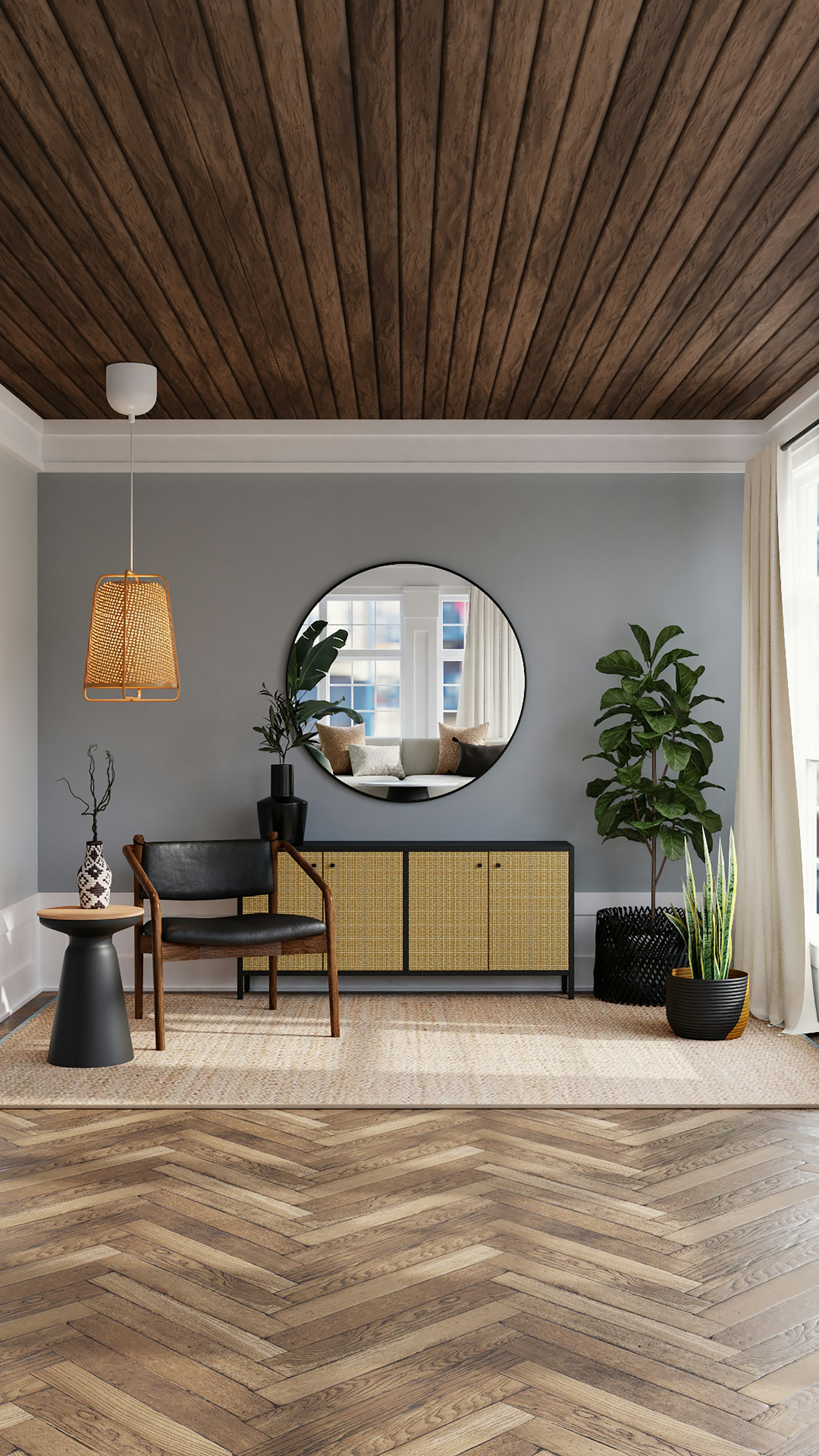
Every finished luxury room sits on top of hundreds of small decisions: which factory, which timber lot, which lacquer batch, which crate. A good sourcing agent makes those decisions with you.
Here’s a situation many importers know well. You approve a walnut dining table sample in March. In July, 40 tables land at your warehouse. The grain is flat-sawn instead of quarter-sawn, the edge profile is 3 mm thicker than drawn, and the “smoked brass” feet look like polished gold under your showroom lights.
None of these are defects the factory would log. Each one still makes the pieces hard to sell at a premium price.
That’s the real risk in sourcing high-end furniture from China. Catastrophic failures are rare. The usual problem is a slow pile-up of small deviations, and in luxury furniture those deviations decide whether a piece is worth $8,000 or $2,500.
A professional China furniture sourcing agent is a company or specialist based in China. They represent you as the buyer. They find and vet factories, check designs, manage samples, inspect production, and coordinate shipping. You can think of them as your operations team on the ground.
The right agent is a strategic partner, not a middleman who adds a margin. They:
At JL&C Furniture, we see both sides of this every week. We manufacture neo-classical and modern furniture in Shanghai, and we work closely with agents, designers, and FF&E teams who manage the wider project around our pieces. This guide covers what a strong agent does at each stage, so you can judge whoever you hire against it.
Industry insight: In the premium segment, a sourcing agent earns their fee mainly through avoided costs: a delayed hotel opening, a rejected container, a lost designer referral. Negotiated price savings come second. Buyers who judge agents only on commission rate usually end up paying more in rework.
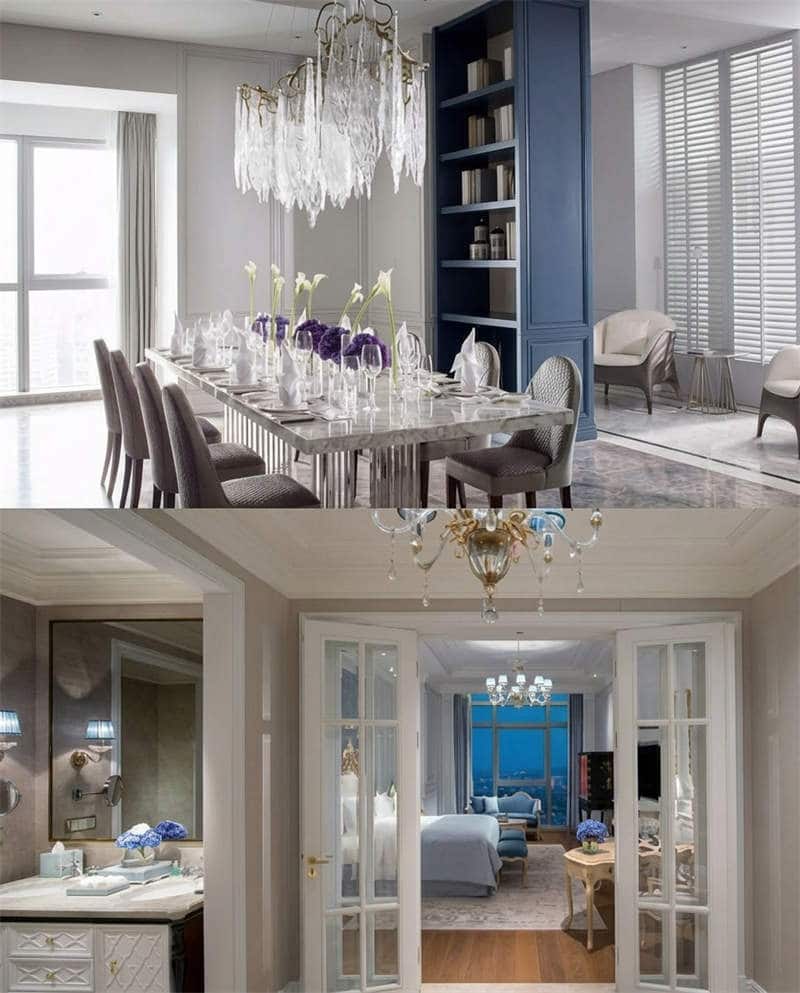
A villa interior like this can involve 60+ custom pieces from four or five production workshops. Someone has to own the whole picture.
A professional agent does three jobs at once.
A capable agent acts on your behalf in daily dealings with factories. They review contracts and pro-forma invoices, negotiate payment milestones, and can sign off (or refuse to sign off) on samples and shipments. Some agents also help you register designs or draft China-enforceable agreements with local counsel.
In plain terms, when the factory wants to ship and you’re asleep in London, your agent has the authority to say “not yet.”
Your agent carries the project from start to finish:
Most furniture mistakes start with translation, and not only the language kind. “Champagne gold” on your spec sheet can become “light bronze” on a production ticket. A Chinese factory saying “no problem” to a deadline often means “we will try,” not “we commit.”
A good agent translates intent. They turn your design language into workshop terms: foam density grade, sheen level in gloss units, veneer cut type. Then they get the factory to confirm each point in writing.
For a deeper look at why this matters on luxury projects, read our breakdown of the sourcing agent advantage on high-end furniture projects.
Here’s the full scope in the order it usually happens.
Due diligence means checking a factory’s real capability before you commit money. A strong agent looks at:
A factory that makes excellent lacquered cabinetry may be the wrong choice for hand-carved classical beds. Matching the craft to the product is half the job. Our guide on how to choose reliable Chinese furniture suppliers covers the audit criteria in more detail.
A tech pack (technical package) is the document set a factory builds from. It usually includes CAD drawings, dimensions in millimetres, material specs, finish codes, hardware, and tolerances.
The agent reviews it for gaps. Common catches include:
The agent manages the loop between prototype, your feedback, and the revision. Most high-end pieces need 2–3 rounds. The approved piece becomes the golden sample: the physical reference every production unit is compared against. Ideally it’s signed, photographed, and kept at the factory.
AQL (Acceptance Quality Limit) is the statistical standard that decides how many defective units a random inspection sample can contain before the batch fails. If you’re new to it, QIMA’s AQL sampling guide explains the tables clearly.
For luxury goods, agents usually set tighter limits than mass-market retail. Critical defects get zero tolerance.
Incoterms are the global rules that define who pays for freight and who carries risk at each point. The ICC publishes the official Incoterms rules. For furniture, three matter most:
| Incoterm | What it means | Best for |
|---|---|---|
| FOB (Free On Board) | The factory delivers goods loaded onto the vessel at the Chinese port. You handle ocean freight onward. | Experienced importers who have their own forwarder |
| CIF (Cost, Insurance & Freight) | The seller pays freight and minimum insurance to your port. Risk still passes to you at loading. | Buyers who want simple quotes but have a local customs broker |
| DDP (Delivered Duty Paid) | The seller covers everything to your door, including duties and customs clearance. | Villa owners, designers, and first-time importers |
After delivery, the agent helps you document damage or defects, file claims with the factory or insurer, and arrange replacements or credit notes. Spare fabric, extra hardware, and touch-up kits should be agreed before shipment, not after.
Buyers often mix up these three. They work very differently, and each one’s incentives shape the result you get.
| Factory | Trader | Sourcing agent | |
|---|---|---|---|
| Who they work for | Their own production line | Their own resale margin | You, the buyer |
| Product range | Limited to their own crafts | Wide, drawn from many factories | Wide, matched to your spec |
| Design flexibility | High within their own craft, low outside it | Low. They often push stock designs | High. They find the right workshop |
| Transparency | You see the real factory | Factory identity is often hidden | You know exactly who makes what |
| Quality control | Self-inspected | Varies, often only at final loading | Independent, at multiple stages |
| Holds inventory? | Yes | Often | No |
| Best for | Buyers who know that factory’s strengths | Low-risk catalog items | Custom, multi-category, or high-value projects |
Factories can be excellent partners, especially when their core craft matches your product. A Shanghai manufacturer like JL&C Furniture produces sofas, beds, and dining collections under its own roof, so for those categories you’re dealing with the maker directly. The limit shows up when your project needs lighting, stone, rugs, or outdoor pieces that no single factory produces well.
Traders buy from many factories and resell. Some are useful for fast catalog orders. The risk is that you rarely know who actually built your goods, so consistency across reorders is hard to guarantee. For context, here’s what wholesale furniture suppliers in China can offer high-value buyers.
Sourcing agents hold no inventory and have no incentive to steer you toward stock designs. Their job is to meet your standard.
Watch out: Some “agents” quietly take commissions from factories. Ask directly whether they receive any payment from suppliers, and get the answer in writing. Our sourcing agent red-flags checklist covers the warning signs.
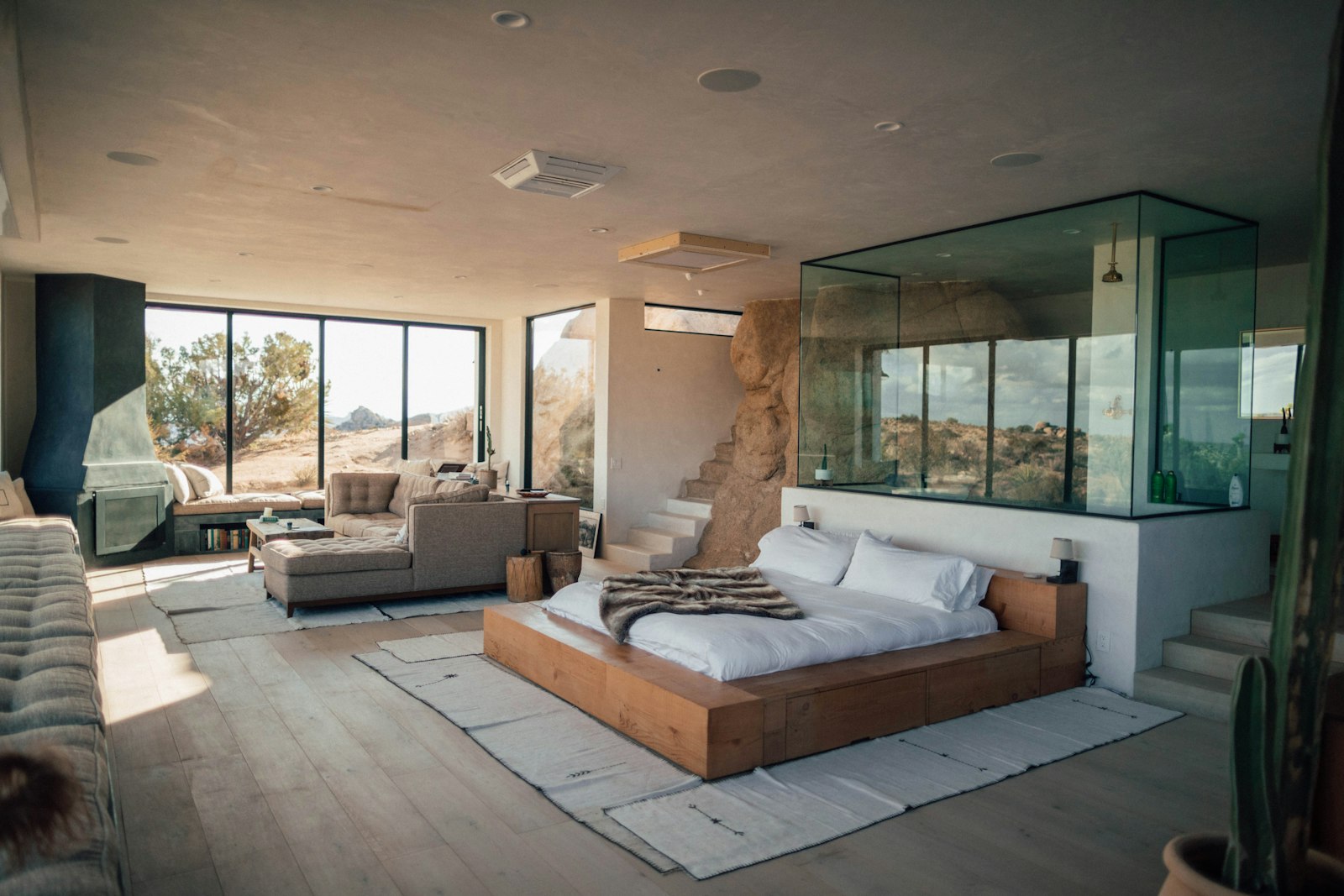
In a 200-key hotel, this one room layout gets repeated 200 times. Every tolerance gets multiplied.
Here’s how the agent’s role changes depending on who you are.
Your challenge: You need one-off pieces, such as a 3.6 m dining table in book-matched marble or a curved sofa sized to a specific bay window, with exact finishes that match your architect’s material board.
What the agent does: Confirms stone slab selection with photos of the actual slabs, not catalog images. Arranges finish swatches on the real timber species. Plans oversized crating before production even starts.
Your challenge: You’re running three projects at once, with 40–120 SKUs each, spread across different factories, and every client has a move-in date.
What the agent does: Keeps one master tracker per project, groups orders across factories to fill containers efficiently, and warns you about lead-time risks early enough for you to adjust the spec.
Your challenge: Your designs are your business. You need reorder #6 to match reorder #1, and you can’t have your collection turning up on Alibaba under another name.
What the agent does: Puts IP agreements in place, locks material lots and finish formulas, and runs side-by-side checks between batches. Our full playbook on building a private label furniture brand with China suppliers goes deeper.
FF&E (Furniture, Fixtures & Equipment) covers every movable item in a hotel, from beds to lobby chairs.
Your challenge: High volumes, brand-standard specs, fire codes, and an opening date that can’t move.
What the agent does: Runs a mock-up room before mass production, manages compliance testing, labels crates by floor and room number, and delivers in phases that follow the construction schedule. Beds and upholstered headboards are usually the longest lead items, so the agent starts those first. Pieces like our luxury bedroom furniture collections are typical examples of what gets fast-tracked.
Your challenge: You want turnkey furniture packages with a fixed budget and fixed milestones, not 30 vendor relationships.
What the agent does: Consolidates suppliers into one contract structure, one payment schedule, and one reporting line. They also flag value-engineering options, for example “this veneer saves 18% with no visible difference at 1 m,” before anyone signs the contract.
Your challenge: The bespoke furniture has to fit the built space exactly, including millwork junctions, power points in bedside tables, and clearances around structural columns.
What the agent does: Checks shop drawings against architectural drawings, and coordinates changes when the site dimensions differ from the plans.
You can see how this plays out across villas, hotels, and commercial spaces in our villa and hotel project portfolio.

Most quality is decided here, at frame and finish stage, long before a final inspector sees the piece.
Before cutting starts, the agent holds a pre-production meeting (PPM) with the factory. They check:
| Inspection stage | When | What’s checked |
|---|---|---|
| In-line (DUPRO) | 20–50% of production done | Frame joinery, first-off finish quality, dimensions |
| Pre-upholstery | Before fabric goes on | Webbing, springs, and frame strength that will be hidden later |
| Final Random Inspection (FRI) | 100% produced, at least 80% packed | Random sample checked against the golden sample under AQL rules |
| Loading supervision | At container loading | Crate condition, quantities, labels, and stacking |
DUPRO stands for “during production” inspection.
Every visit should produce timestamped photos and short videos: a sofa frame being load-tested, a lacquer panel under raking light, drawer runners opening fully. That record becomes your evidence if a dispute comes up later.
A professional agent doesn’t just report defects. They agree on a rework plan, re-inspect the reworked units, and hold the balance payment until everything passes.
Here’s a typical example. A batch of 60 dining chairs shows seat-height variation of ±6 mm against a ±3 mm tolerance. The agent spots it during the in-line inspection, the factory re-jigs the cutting template, and only 8 chairs need rework instead of all 60 arriving wrong.
For what to do on your side once the order is placed, see our guide on working better with your China furniture supplier after ordering.
Watch: How product inspection and quality control work in China
https://www.youtube.com/watch?v=3Du489cWhtk
A practical walkthrough of how inspections are structured in Chinese factories, and what to ask for in an inspection report.

An illustrative breakdown of the issues premium buyers raise most often. Note that more than half trace back to communication and spec control, not to the factory’s skill.
Agents reduce language and culture gaps by:
Common traps in high-value furniture sourcing:
For IP, a standard Western NDA offers weak protection in China. Specialists recommend an NNN agreement (Non-Disclosure, Non-Use, Non-Circumvention) drafted under Chinese law. Harris Sliwoski’s China law team explains NNN agreements well.
| Standard | What it covers | Where it matters |
|---|---|---|
| FSC | Wood from responsibly managed forests. Verify certificates on the FSC official site. | EU, UK, ESG-driven hotel brands |
| CARB Phase 2 / TSCA Title VI | Formaldehyde emissions from MDF, plywood, and particleboard. See the CARB composite wood program. | United States |
| BIFMA | Durability and safety testing for commercial furniture. See BIFMA standards. | Contract, office, hospitality |
| Fire safety (e.g., UK FFR, CAL TB 117-2013, BS 5852) | Flammability of upholstery foams and fabrics | Hotels, public spaces, UK homes |
| REACH | Chemical safety of finishes and materials | European Union |
A good agent tests before shipment. Finding out at customs that a whole container of upholstery fails local fire rules costs far more than a lab test.
Our checklist of common China furniture sourcing mistakes lists more traps to plan around.
Illustrative scenario for a custom 80-SKU order. Most of the time saved comes from fewer sample rounds and less rework, not from faster production.
A single QC trip from Europe or North America to Guangdong or Shanghai often costs $4,000–$8,000 once you add flights, hotels, drivers, and lost working days. Complex projects may need three or four such trips. An agent already on site replaces most of them with scheduled visits and live video walk-throughs.
When a hinge supplier is late, an agent can drive there the same afternoon. When a fabric mill runs short, they can source an approved alternative locally within days, instead of waiting through a week of emails across time zones.
| Hidden cost | Without an agent | With a managed process |
|---|---|---|
| Sample rounds per custom piece | 3–5 | 2–3 |
| Defects found after arrival | Common, and expensive to fix abroad | Mostly caught in China |
| Re-shipping replacement parts | Air freight at premium rates | Rare |
| Buyer staff hours chasing updates | Высокий | Weekly report replaces most follow-ups |
Industry insight: Fixing a defect in China costs a fraction of fixing it after arrival. A lacquer flaw found at in-line inspection means one panel gets re-sprayed. The same flaw found on a hotel site means the unit gets uninstalled, a local refinisher gets hired, and the room opens late.
For the full landed-cost picture, read our guide to importing furniture from Chinese suppliers.

Tufting depth, button spacing, and seam alignment on a piece like this should appear in your inspection photos, not only in the final delivery.
Well-run agents give you a shared dashboard or tracker, often in Airtable, Smartsheet, or a custom portal. It shows every SKU with its status:
Expect a weekly report that includes:
WeChat is the working language of Chinese factories. Email is the record. A good agent uses both. Quick questions get answered on WeChat or WhatsApp, and every decision gets confirmed by email so nothing depends on memory or a deleted chat.
Time zones work in your favour here. The factory can act on your end-of-day message while you sleep, so you wake up to answers.

Repeat business is where sourcing really pays off. The second and third orders go faster, cost less, and need fewer corrections.
After two or three successful orders, a strong agent can help you secure:
More hotel groups and developers now require documented ESG data. Agents can collect FSC chain-of-custody certificates, low-VOC finish data sheets, and social audit reports (BSCI or SA8000), so your sustainability claims hold up.
The last few years have brought tariff swings, freight rate spikes, and timber shortages. A resilient setup includes:
For a deeper framework on custom projects, see our custom furniture sourcing guide for designers and distributors. Or browse luxury dining room furniture collections to see the kind of pieces that benefit most from long-term production partnerships.

Hospitality spaces like this reward the buyers who plan the supply chain as carefully as the design.
| Term | Plain-English meaning | Example |
|---|---|---|
| AQL | The maximum defect level allowed in a random inspection sample | “AQL 1.5 for major defects” means only a small number of flawed units are allowed in the sample |
| Golden sample | The approved physical reference piece every unit is checked against | A signed, photographed armchair kept at the factory |
| Tech pack | The full technical instructions for building a product | CAD drawings plus foam spec plus finish code plus hardware list |
| FRI | Final Random Inspection, done after production is complete | 80 of 200 chairs checked before loading |
| DUPRO | Inspection during production | Checking sofa frames before upholstery |
| FF&E | Furniture, Fixtures & Equipment | Every bed, chair, and lamp in a hotel |
| MOQ | Minimum Order Quantity | “MOQ 20 pcs per colour” |
| Incoterms | Global rules for who pays for and risks what in shipping | FOB, CIF, DDP |
| NNN agreement | China-law contract for protecting designs | Stops a factory from selling your design to others |
| CBM | Cubic metre, the unit for freight volume | A 40HQ container holds about 68 CBM |
Maybe you’re planning a villa, a 150-key hotel, or your brand’s next collection. Either way, the questions stay the same: who makes it, who checks it, and who’s accountable when something drifts.
Share your drawings, mood boards, or spec sheets with our Shanghai team. We’ll tell you honestly what we can manufacture in-house, what the realistic lead times are, and where the risks sit. You can also learn more about our 20 years of design and manufacturing in Shanghai, or browse signature luxury sofa designs to get a feel for our finishing standards.
Start your project conversation with our team
A professional agent protects your IP with a China-law NNN agreement (Non-Disclosure, Non-Use, Non-Circumvention) signed by the factory. They also limit which drawings each workshop sees, and they make sure tooling and moulds are marked as your property. For ongoing collections, agents often recommend registering key designs in China, because that’s where copying usually happens.
Yes, if the standard is defined physically, not just in words. The agent works from your swatches, colour codes, and reference pieces, gets samples made on the real timber and fabric, and has you approve a golden sample. Production is then inspected against that sample, not against a photo.
Going direct works well when one factory’s core craft matches your product and you can manage QC yourself. An agent adds value when your project spans several categories or factories, when you can’t be in China regularly, or when one delivery failure would damage your reputation with a client.
Through an on-site audit. The agent checks licenses, looks at the real production floor rather than just the showroom, reviews machinery and finishing facilities, confirms export history, and inspects work in progress for other premium clients. A paid trial sample before any bulk order is the final test.
Yes. Experienced agents coordinate mock-up rooms, multi-factory production, compliance testing, room-by-room labelling, and phased deliveries that follow the construction schedule. The key is starting long-lead items such as beds, upholstery, and stone first.
The agent runs a pre-production material check, in-line inspection, pre-upholstery checks, a final random inspection under agreed AQL limits, and loading supervision. For consistency across batches, they lock dye lots and timber sources and compare new units side by side with the golden sample.
A proactive agent spots slippage at milestone checks, usually weeks before a deadline is missed. Options include overtime, splitting the order across approved workshops, or re-sequencing shipments. For quality issues, they agree a rework plan, re-inspect, and hold the balance payment until everything passes.
Yes. Agents can source FSC-certified timber and check the certificate numbers, arrange CARB or TSCA test reports for composite boards, and collect low-VOC data sheets for lacquers and adhesives. Ask for the documents themselves, not just verbal confirmation.
Many agents and manufacturers do. DDP means the seller handles freight, customs clearance, and duties to your door. It’s convenient for villa owners and designers. Experienced importers often prefer FOB so they can control freight costs themselves.
A reputable agent gives you itemised quotes covering factory price, agent fee (flat or a percentage), inspection costs, packing, and freight. Ask directly whether the agent earns anything from factories. Transparent agents answer in writing.
Yes. This usually covers design development, sample rounds, branded labels and hang tags, custom cartons and inserts, IP agreements, and batch-to-batch consistency control for reorders.
Your contract should define this in advance: defect categories, how long you have to report problems, and whether the remedy is replacement, repair, or credit. With inspection reports and loading photos on file, the agent can show whether a problem came from production or from transit, and pursue the factory or the insurer accordingly.
Yes. Agents check shop drawings against architectural plans, flag clearance and dimension conflicts, and coordinate site changes with the factory. The earlier they’re brought in, the fewer surprises you get on site.
Most agents send a written daily or weekly update, schedule video calls in your morning or evening, and keep an emergency line for urgent decisions. The time difference often helps: you send a question at night and wake up to an answer.
Yes, and most real projects need both. A typical hotel mixes custom lobby pieces with semi-custom catalog guestroom items. The agent consolidates everything into one timeline and one set of shipments.

China Furniture Sourcing Agent Roles for High-End Buyers What a China Furniture Sourcing Agent Actually Does for High-End Buyers Every finished luxury room sits on
How to Vet a China Furniture Sourcing Agent Before Signing A single curved sofa like this goes through dozens of approvals, including frame, foam, fabric

China Furniture Sourcing Agent vs Direct Factory Buying: A Strategic Guide for High-Value Buyers When one project includes 400 hotel rooms, a 20-seat marble dining
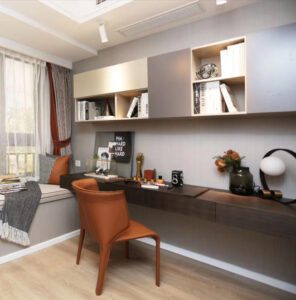
Advanced Tips to Get More from Your China Furniture Sourcing Agent Powerful Strategies for High-Performance Sourcing – Tailored for Elite Buyers, Designers & Operators Your
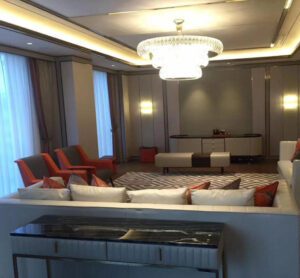
What Wholesale Furniture Suppliers in China Can Offer High-Value Buyers A statement luxury living room — the kind of space that begins with the right

How to Work Better With Your China Furniture Supplier After Ordering A Practical Playbook for High-End Furniture Importers, Interior Designers, FF&E Buyers, Villa Owners, Private
