
новости компании

China Furniture Sourcing Agent: Roles for High-End Buyers
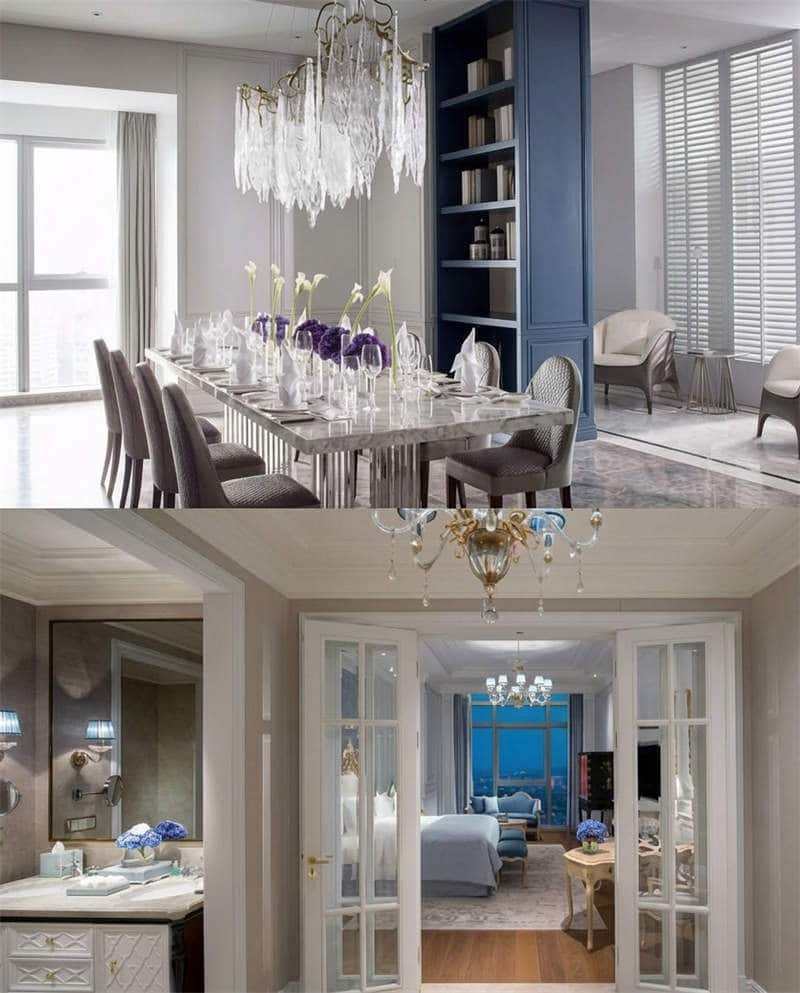
China Furniture Sourcing Agent Roles for High-End Buyers What a China Furniture Sourcing Agent Actually Does for High-End Buyers Every finished luxury room sits on

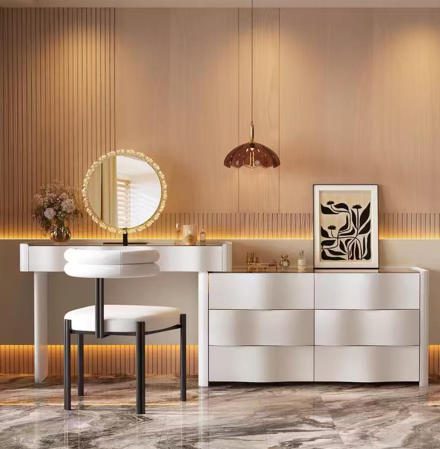
A strategic guide for high-end furniture importers, FF&E buyers, interior designers, and property developers who need to protect their margins, their timelines, and their brand.
 The FF&E quality your hotel and villa clients expect — and the sourcing precision required to deliver it reliably from Chinese manufacturing.
The Real Complexity of High-End Cross-Border Sourcing
China manufactures approximately 37% of the world’s furniture — and the gap between what the best Chinese factories produce and what most Western buyers experience is enormous. The best factories in Foshan, Dongyang, and Anji are producing hospitality and residential furniture that competes directly with Italian and Scandinavian output in finish quality, material precision, and structural integrity. The challenge is not whether that quality exists. It is knowing how to access it, protect it, document it, and deliver it to your clients without the margin erosion, timeline disasters, and quality surprises that make importing feel like a gamble.
This guide is written for buyers who already understand the opportunity. You are sourcing or considering sourcing from China for villa projects, hotel FF&E programs, private label product lines, or high-volume distribution. You are not a first-time importer impressed by a Alibaba storefront. You need operational intelligence: the specific frameworks, legal protections, logistics decisions, and supplier evaluation criteria that separate buyers who import successfully from those who absorb expensive lessons.
Every section here addresses a real challenge from real sourcing relationships — not a generic guide recycled from trade blogs.
Cross-border sourcing for high-end furniture is not complicated in the same way that mass-market import is complicated. The challenges at the premium end are different in kind, not just degree.
A mass-market importer is primarily managing price and lead time. A luxury importer, a hotel FF&E buyer, or a designer sourcing for a villa project is managing design integrity — the gap between what was specified and what arrives. They are managing brand equity — because a delivery that deviates from specification does not just generate a return, it generates a client relationship risk. And they are managing the kind of reputational exposure that does not appear in a freight invoice.
The global furniture market reached $791 billion in 2025 and is growing at 5.4% annually. Within that market, the premium and contract furniture segment is growing faster — driven by hotel development pipelines, luxury residential construction, and the expanding appetite of high-net-worth clients for furniture that is both exclusive and documented in origin. The buyers capturing that market are those who have built Chinese supplier relationships that match their brand standards, not just their price requirements.
Three specific risks define the high-end import challenge:
Quality control drift is the gap between the approved prototype and the production batch — a gap that widens predictably when volume scales, production pressure increases, or the supplier substitutes materials without disclosure.
Design integrity erosion happens when communication gaps between your design specifications and the factory’s interpretation produce furniture that is close but not correct — and close is a significant problem when you have specified custom dimensions for a hotel guestroom where every centimeter is accounted for.
Brand reputation exposure is the downstream consequence when either of the above reaches your client. A hotel operator who opens with 60 guestrooms where the furniture finish deviates from their brand standard does not absorb the cost quietly.
Understanding these risks is not cause for pessimism about Chinese manufacturing — it is the foundation for building the systems that prevent them.
The Vetting Framework That Actually Differentiates Premium from Mass-Market Factories
The most expensive mistake high-end buyers make is conflating production capability with production reliability. A factory that can produce an extraordinary prototype — shown to you at a trade fair or sent as a marketing sample — may not have the quality management systems to reproduce that standard across 200 units in a commercial production run.
The vetting criteria that matter for premium buyers are different from standard B2B evaluation:
| Vetting Criterion | What to Ask | What You’re Really Evaluating |
|---|---|---|
| Portfolio of international luxury projects | Request client references with verifiable contact details | Whether their production standard is documented at your market level |
| Material sourcing documentation | Timber origin, foam grade spec sheets, fabric mill certificates | Whether “premium materials” means something specific or is marketing language |
| QC system documentation | Defect rate per production run, third-party audit reports | Whether quality is managed systematically or inspected post-production |
| MOQ flexibility | Minimum order quantities for custom vs. catalog products | Whether they can accommodate your project scale without deprioritizing you |
| Export reference verification | Shipping records, customs documentation, bank references | Whether their claimed export volume is documented or estimated |
| Sample batch accuracy | Request samples from production batches, not showcase stock | Whether their production output matches their best work |
How to Verify Supplier Credibility Before You Commit
Factory visits — physical or virtual — remain the most reliable single vetting input. The specific areas to observe: raw material storage (are certified and uncertified materials segregated and labeled?), production floor organization (is there a documented workflow between cutting, assembly, finishing, and inspection?), and the quality inspection bay (is QC a station in the production line, or a table near the exit?).
If a physical visit is not possible, commission a third-party factory audit through SGS, Bureau Veritas, or Intertek. These agencies produce structured audit reports covering production capacity, quality systems, worker conditions, and compliance documentation — typically for $400–$800. This cost is irrelevant relative to the risk of a failed first production run on a premium project.
Red Flags That Separate Mass-Market Suppliers from High-End Specialists
At trade fairs like the Canton Fair, industry research suggests that approximately 70% of booths claiming “factory-direct” pricing are in fact trading companies — intermediaries who will source your order from multiple factories, with limited control over quality consistency. For high-end buyers where material traceability and production control are non-negotiable, trading companies represent a structural risk.
Specific red flags to watch for:
JL&C Furniture works directly with production facilities — providing buyers with full visibility into manufacturing processes, quality systems, and material sourcing, not a polished intermediary layer between the buyer and the factory.
Why “Lost in Translation” Is a Financial Problem, Not Just a Cultural One
Communication failures in cross-border furniture sourcing do not usually present as obvious misunderstandings. They present as furniture that arrived on time, packaged correctly, with all the paperwork in order — and is three centimeters narrower than specified, or finished in a lacquer that is noticeably cooler in tone than the approved sample, or upholstered with fabric running in the wrong grain direction.
These are not factory errors in the sense of carelessness. They are specification errors — failures of communication precision at the point where your design intent was translated into production instructions. And they cost real money: a designer specifying 80 custom armchairs for a boutique hotel received a production batch where the seat depth was 48cm rather than the specified 52cm. The factory had interpreted a dimension from a drawing that was ambiguous about whether the measurement was to the front of the cushion or the front of the frame. The entire production run required rework at a cost that represented 35% of the original order value.
Strategies for Specification-Perfect Communication
The communication standards that eliminate this risk are specific:
Technical drawings with absolute dimensions. Never describe a piece with relative dimensions (“similar to the sample but slightly deeper”). Provide AutoCAD, Rhino, or SolidWorks files with every dimension explicit, every material specified by grade and origin, and every finish referenced by Pantone number, RAL code, or physical sample.
3D renders and BIM integration. For hotel FF&E projects, BIM (Building Information Modeling — a digital representation of the physical space that allows furniture to be positioned and dimensioned within an accurate 3D model of the building) integration allows furniture dimensions to be verified against room layouts before production begins. Suppliers who can work with BIM files — or at minimum with dimensionally accurate 3D renders — reduce the risk of dimensional misinterpretation dramatically.
Physical material samples as production standards. For every custom finish, fabric, hardware, and timber species, a physical signed-off sample should be in the factory’s possession before production begins. The sample is the legal reference point; written descriptions are supplementary.
Bilingual project management. For custom or large-volume projects, hiring a bilingual project manager or China-based sourcing agent — someone who can verify technical specifications in Mandarin against your English-language design documents — eliminates the layer of interpretation where most specification errors originate. This is not an optional luxury on projects above a certain value threshold; it is a risk management investment.
Why Single-Point Inspection Fails Premium Production
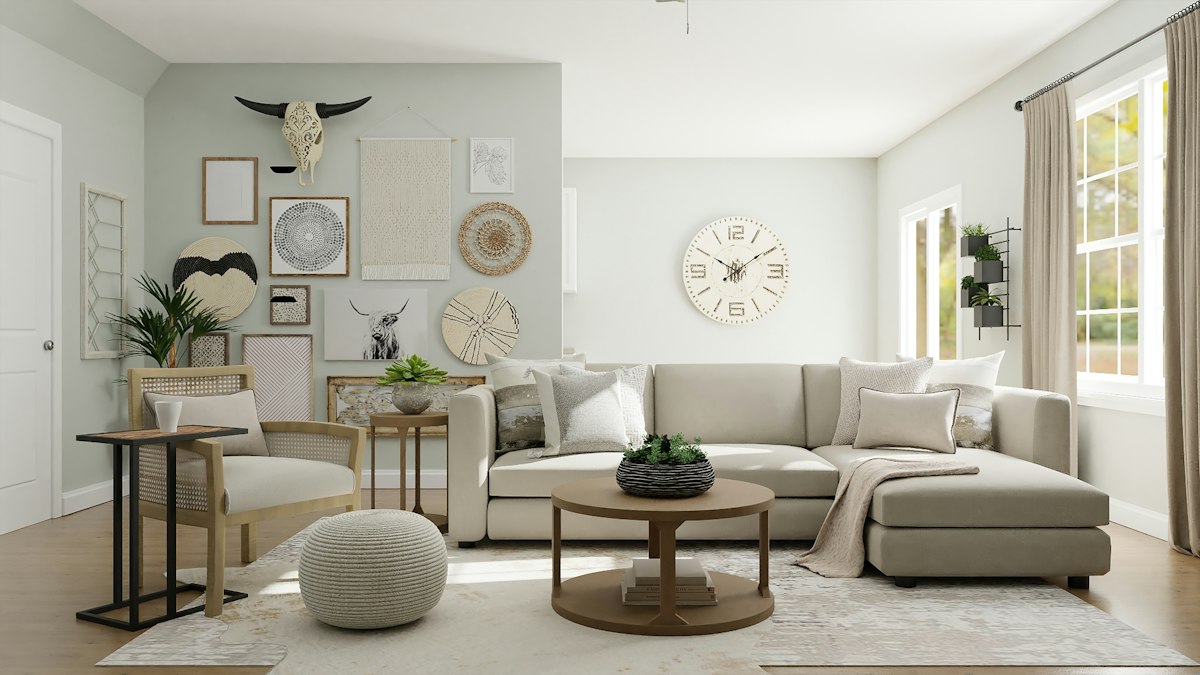 Book-matched veneer and bespoke upholstery at this level of execution require quality control embedded throughout production — not inspected at the exit.
The standard quality control model in mass-market furniture import is pre-shipment inspection: a third-party agency reviews finished goods before loading. For premium furniture — custom dimensions, specified material grades, book-matched veneers, bespoke upholstery — pre-shipment inspection is too late. By the time all 200 pieces are finished and staged for inspection, addressing a systematic production error is a renegotiation, not a quality management action.
The Multi-Stage QC Framework for Luxury Production
Premium buyers should require — and document in their purchase orders — a three-stage quality control process:
Pre-production QC confirms that all materials have been received, verified against specification, and approved before cutting begins. This stage catches material substitution before it enters production — which is where it is least expensive to address. Questions to confirm at pre-production: Have certified materials (FSC timber, specified foam density, approved fabric lots) arrived and been documented? Has the production sample been signed off against the approved prototype?
In-line QC places inspection checkpoints at critical production stages: frame assembly (structural integrity), surface preparation (finish adhesion and uniformity), upholstery (fabric alignment, seam quality, cushion density), and hardware installation (torque, alignment, finish match). For large runs, a 10–15% sample inspection at each stage captures systematic issues before the full batch is committed.
Final pre-shipment QC evaluates finished goods against the signed-off production sample and the purchase order specifications. Dimensional accuracy, finish uniformity, upholstery quality, hardware function, and packaging integrity are all documented against a standard checklist. Any units outside tolerance are documented with photographs and flagged for resolution before loading.
Third-Party Inspection Protocols
For the highest-value orders — hotel FF&E programs, villa fit-out projects, private label product launches — commission third-party pre-shipment inspection through QIMA, SGS, or Bureau Veritas. These agencies conduct standardized AQL (Acceptable Quality Level — a statistical sampling standard that defines the maximum acceptable defect rate in a production batch) inspections and produce written reports with photographs that serve as formal documentation of the production batch condition at the point of departure.
This documentation matters in two contexts: as legal protection if quality disputes arise after delivery, and as supply chain documentation for clients whose ESG or procurement standards require audit trails.
Choosing the Right Freight Model for Your Project Profile
Freight decisions for furniture import have direct implications for cost, damage risk, and delivery timing. The two primary sea freight options for furniture:
FCL (Full Container Load): You book the entire container — typically a 20ft (approximately 33 CBM capacity) or 40ft standard (approximately 67 CBM) or 40ft high-cube (approximately 76 CBM). Your furniture loads exclusively into your container, sealed at origin and opened at destination. FCL is appropriate for any shipment of sufficient volume to justify the full container cost, and almost always for high-end furniture where the damage risk of shared loading is unacceptable.
LCL (Less-than-Container Load): Your shipment shares container space with other importers’ goods, consolidated and deconsolidated at origin and destination freight stations. LCL is appropriate for trial orders, sample shipments, and volumes where the FCL cost cannot be justified. The damage risk is higher — consolidated loading creates more handling touchpoints — which is why LCL is rarely appropriate for finished luxury furniture above a threshold of approximately 5–8 CBM.
| Metric | FCL 20ft | FCL 40ft HC | LCL |
|---|---|---|---|
| Typical capacity | 33 CBM / ~300 dining chairs | 76 CBM / ~700 dining chairs | Per CBM billing |
| Transit time (China → EU) | 28–35 days | 28–35 days | 35–45 days (added handling) |
| Damage risk | Низкий | Низкий | Higher (multi-handling) |
| Cost per CBM at low volume | Высокий | Высокий | Cost-effective below 15 CBM |
| Custom clearance | One consolidated entry | One consolidated entry | May require separate entries |
| Best for | Large project orders | Full FF&E programs | Samples, trial orders |
Understanding HS Codes, Duties, and Documentation
HS codes (Harmonized System codes — an internationally standardized numerical system for classifying traded products) determine the import duty rate applied to your shipment. For furniture, the primary HS chapters are:
Misclassification — whether intentional undervaluation or genuine error — is one of the most common causes of customs delays and penalties. An incorrectly classified shipment can be held at port while customs authorities conduct a physical examination, generating demurrage charges (port storage fees, typically $50–$200 per container per day after the free period of 5–7 days expires) that accumulate rapidly on high-value shipments.
In the US market as of 2026, Chinese furniture imports face Section 301 tariffs of 25% on most categories, in addition to standard MFN (Most Favored Nation) duty rates. For current US tariff rates on furniture, the USITC HTS database provides the definitive reference. EU importers face standard MFN duties of 2.7–6.3% on most furniture categories without the Section 301 equivalent.
Documentation checklist for customs clearance:
The Hidden Costs Most Importers Underestimate
Beyond the unit price, freight, and import duty, the full landed cost of furniture imports from China includes costs that frequently surprise less experienced buyers:
| Hidden Cost | Typical Range | Notes |
|---|---|---|
| Cargo insurance (All-Risk) | 0.3–0.8% of CIF value | Approximately $1,500–$5,000+ per container for high-value shipments |
| Customs brokerage | $150–$400 per shipment | Varies by port and complexity |
| Port handling / THC | $150–$300 per container | Destination terminal handling charges |
| Demurrage (if delayed) | $50–$200 per container per day | After 5–7 free days at port |
| Last-mile delivery | $300–$1,500 per delivery | White-glove delivery for luxury furniture |
| Product liability insurance | $1,500–$5,000+ annually | Required for US market importers |
| Customs examination | $200–$1,000 if selected | Random or targeted inspection |
Building these costs into your landed cost model before quoting clients prevents the margin erosion that occurs when they arrive unexpectedly. The JL&C Furniture Landed Cost Calculator guide provides a detailed framework for modeling the full cost of China furniture imports.
Why a Standard NDA Does Not Protect You in China
 Custom design work at this level represents significant IP value — and requires protection mechanisms that are enforceable in the Chinese legal system, not just familiar in yours.
The most common IP protection mistake high-end buyers make when working with Chinese manufacturers is signing a standard NDA (Non-Disclosure Agreement — a contract requiring parties to keep shared information confidential). In most Western legal systems, an NDA is a reasonable starting point for design protection. In China, it is not.
A standard NDA prevents a factory from sharing your designs with outside parties. It does not prevent them from using your designs for their own products, selling similar designs to competing buyers, or circumventing the relationship to approach your clients directly. These are the specific risks that high-end furniture buyers face when sharing proprietary design files with Chinese manufacturing partners.
The NNN Agreement: China-Specific IP Protection
The legally appropriate tool for protecting proprietary designs shared with Chinese manufacturers is the NNN Agreement — covering Non-Disclosure, Non-Use, and Non-Circumvention. Unlike a standard NDA, an NNN agreement:
A China-specific NNN agreement drafted with the assistance of a Chinese IP attorney is the foundational protection layer. For additional protection, design registration with China’s National Intellectual Property Administration (CNIPA) — for designs that will remain in commercial use for more than one project cycle — provides registered rights that are enforceable independently of any contractual agreement.
Practical Risk Mitigation Strategies
Beyond legal documentation, structural precautions reduce the operational IP risk:
The China Law Blog by Harris Sliwoski is the most reliable English-language resource for current guidance on China-specific IP protection strategies, updated regularly by practicing China trade attorneys.
The Quality Consistency Problem at Scale
The production challenge that most frequently surprises buyers who have successfully completed small custom orders is the quality consistency problem that emerges when volume scales. A factory that produced 20 exceptional custom dining chairs for a design studio may not reliably reproduce that standard across 200 chairs for a hotel project — not because their capability is lower, but because their quality management system is not structured for the volume.
At higher volumes, factories face production pressure — they have deadlines, capacity constraints, and cost optimization incentives that can lead to material substitutions, shortcut processes, and quality inspection shortcuts that would not occur on a small, closely managed custom order. Understanding how a factory manages this production pressure is one of the most important due diligence questions for large-scale buyers.
Capacity Planning and Lead Time Management for FF&E Projects
For hotel FF&E programs and large residential developments, production lead times need to be understood as a capacity planning equation, not a simple timeline:
A factory producing 80 custom dining chairs per day (a reasonable output for a mid-size Foshan upholstery workshop) requires 25 production days for a 2,000-unit hotel FF&E order — before any quality buffer or shipping is factored in. If their current capacity is 60% committed to other clients, your effective daily output may be closer to 32 chairs, extending production to 63 days.
These calculations should happen before you commit delivery dates to your client, not after you have already made promises.
Phased Deliveries for Large Developments
For hotel projects or large residential developments where construction phasing creates sequential furniture installation requirements, phased deliveries structured around floor completion dates reduce storage requirements, minimize damage exposure from extended on-site storage, and allow quality verification from early batches to inform inspection priorities for later ones.
Structure phased delivery contracts with:
The sustainable furniture market reached $53.7 billion in 2025 and is growing at a compound annual rate of 10% through 2033. For high-end buyers serving hotel groups, luxury real estate developers, and corporate clients, sustainability documentation has moved from a preference to a procurement requirement.
Material Certifications That Matter in 2026
The eco-friendly furniture demand statistics for 2025 show that FSC-certified and reclaimed wood accounted for 34.6% of US sustainable furniture sales — a proportion that has grown consistently as corporate procurement standards have raised certification requirements. For high-end buyers, the relevant certifications by client type:
For hotel groups and hospitality clients:
For LEED-certified residential or commercial developments:
For corporate clients with ESG reporting obligations:
Assessing Supplier Labor Practices
Third-party social audits — conducted by accredited agencies against frameworks like SA8000 (Social Accountability International’s standard for ethical labor practices) — provide documented verification of factory labor conditions. For buyers whose clients require ESG reporting, social audit reports are the supply chain documentation equivalent of financial audit reports: the evidence that your supply chain claims are verified, not self-declared.
From Transactional to Strategic: What Changes When Relationships Deepen
The buyers who achieve the most consistent results from Chinese furniture manufacturing — reliable quality, preferential lead times, better pricing as volume grows, and genuine problem resolution when issues arise — are invariably those who have invested in supplier relationships over multiple years, not those who re-evaluate the market competitively for every project.
The transition from transactional to strategic partnership has specific commercial manifestations:
A transactional relationship is reset with every order: each new project requires full specification negotiation, production scheduling from scratch, and quality establishment from zero. A strategic partnership accumulates institutional knowledge — the factory understands your specifications, your clients’ standards, your quality benchmarks, and your production scheduling rhythm. That accumulated understanding translates directly into fewer specification errors, more responsive communication, and a production team that has internalized your standards rather than relearning them each time.
Co-Developing Private Label Lines with OEM/ODM Suppliers
OEM (Original Equipment Manufacturing — where the factory produces your specified design under your brand) and ODM (Original Design Manufacturing — where the factory develops the design and you brand the finished product) relationships represent the highest-value form of Chinese furniture supplier partnership for distributors, showroom owners, and private label brands.
An ODM relationship at its best: you brief a manufacturer on your target market, aesthetic direction, price points, and functional requirements. They develop design concepts, produce prototypes for your approval, and refine through iterations until you have a product that is genuinely co-created and exclusively yours under the NNN and exclusivity frameworks described in Section 6. This is how high-end furniture brands build product lines that are simultaneously exclusive, commercially viable, and manufactured to standards that their brands require.
Performance Incentives and Partnership Frameworks
Long-term supplier relationships should be structured rather than informal. The elements of a structured supplier partnership:
Real-Time Production Visibility: What the Best Suppliers Now Offer
 Custom lacquer finish and precision joinery at this level — now verifiable remotely through production milestone tracking and live video QC protocols.
Production tracking technology has moved from a premium offering from the most sophisticated manufacturers to a standard expectation among experienced high-end buyers. The practical applications in 2026:
Production milestone dashboards — shared buyer portals where real-time updates mark production stages (material confirmation, cutting complete, frame assembly complete, finishing in progress, QC pass, packaging complete, loading scheduled) — replace the weekly “how is production going?” email cycle with live data. Buyers can share accurate delivery updates with their clients without chasing status reports.
Live video QC sessions — structured video calls where a factory QC manager walks through finished units against the specification checklist with the buyer observing in real time — allow buyers who cannot be physically present to conduct meaningful quality reviews before sign-off on pre-shipment. Some sophisticated factories are now integrating structured lighting rigs and macro cameras for finish detail review that was previously only possible in person.
Blockchain-based material traceability is entering commercial furniture supply chains. The blockchain supply chain market was valued at $1.2 billion in 2025 and is projected to reach $14.7 billion by 2035. The practical furniture application: a tamper-proof digital record of timber origin, processor identification, and custody transfers that satisfies even the most rigorous FSC verification requirements — and that provides the kind of supply chain documentation that corporate and hospitality ESG audits increasingly require.
Integrating Supply Chain Data into Project Management Tools
For hotel FF&E buyers and interior designers managing complex multi-vendor projects, integrating supplier production data into project management platforms like Procore (construction project management) or Asana eliminates the information gap between factory production status and on-site installation scheduling.
The practical setup: key production milestones are shared between the manufacturer’s tracking system and your project management timeline, triggering automatic updates to installation scheduling and client communication when production phases are completed. This level of integration reduces the manual coordination overhead on large projects and eliminates the situation where installation teams are confirmed and on-site waiting for furniture that the factory finished three days ago but whose shipping status was not communicated.
Predictive Analytics for Lead Time Forecasting
Experienced importers managing multiple concurrent supplier relationships are increasingly applying historical production data to lead time forecasting — using actual delivery performance across previous orders to build more accurate timelines than the factory’s stated standard lead times.
The insight: a factory with a stated 45-day lead time that has delivered 12 consecutive orders with an average of 52 days has a real lead time of 52 days. Building that actual performance data — rather than the stated lead time — into your client commitments is the difference between a delivery promise you can keep and one you are perpetually managing apologies around.
This video walks through the key challenges, supplier evaluation framework, and logistics decisions that experienced furniture importers use when sourcing from Chinese manufacturers.

▶️ How to Import Furniture from China — Full Professional Guide
FCL (Full Container Load): A shipping arrangement where one importer books an entire container, sealed at the factory and opened at the destination. Lower damage risk and typically lower cost per CBM at higher volumes than LCL.
LCL (Less-than-Container Load): A shared-container shipping arrangement where multiple importers’ goods are consolidated in one container. Cost-effective for smaller shipments but involves more handling touchpoints and higher damage risk.
HS Code (Harmonized System Code): An internationally standardized numerical classification system for traded goods. The HS code determines the applicable import duty rate and regulatory requirements.
FOB (Free on Board): An Incoterm where the seller is responsible for goods until they are loaded onto the vessel at the origin port. The buyer manages and pays for freight, insurance, and customs from that point.
CIF (Cost, Insurance, and Freight): An Incoterm where the seller arranges and pays for freight and insurance to the destination port. The buyer manages customs clearance and last-mile delivery.
EXW (Ex-Works): An Incoterm where the seller’s responsibility ends at the factory gate. The buyer manages all freight, insurance, customs, and delivery. Maximum buyer control but maximum logistics responsibility.
Demurrage: Port storage charges that accumulate after the free period (typically 5–7 days) if a container is not collected or returned. Can reach $50–$200 per container per day.
AQL (Acceptable Quality Level): A statistical sampling standard that defines the maximum acceptable defect rate in a production batch. AQL 1.0 for critical defects is the typical standard for premium furniture inspection.
NNN Agreement: A China-specific legal protection covering Non-Disclosure, Non-Use, and Non-Circumvention — more comprehensive than a standard NDA and enforceable under Chinese law.
BIM (Building Information Modeling): A digital representation of a building’s physical and functional characteristics. Furniture specified within a BIM model can be verified dimensionally against room layouts before production.
OEM (Original Equipment Manufacturing): Production of your specified design by a factory, sold under your brand.
ODM (Original Design Manufacturing): Co-development of a new product design with a factory, subsequently branded and marketed by the buyer.
EPD (Environmental Product Declaration): An independently verified document quantifying a product’s environmental impact across its full lifecycle, from raw material extraction to end-of-life disposal.
1. How do I verify if a Chinese furniture supplier is capable of producing high-end custom pieces?
Request portfolios of completed international luxury projects with verifiable client references — not just photographs, but contact details for buyers you can call. Ask specifically for clients in your market segment (hotel FF&E, villa, private label) who can speak to production consistency across a full order run, not just prototype quality. Commission a third-party factory audit through SGS, Bureau Veritas, or Intertek to verify production capacity, quality management systems, and certification documentation independently. The $400–$800 audit cost is the most cost-effective risk mitigation available before committing to a first high-value order.
2. What steps should I take to ensure furniture matches my design specifications exactly?
Provide all specifications in the most unambiguous format available: AutoCAD or Rhino technical drawings with every dimension explicit, Pantone or RAL references for every finish and color, physical material samples for every fabric, leather, timber species, and hardware finish. Establish a formal sample approval process — prototype approval, production sample approval, and pre-production sign-off — with signed documentation at each stage. For hotel FF&E projects, integrate furniture specifications into BIM models so dimensional accuracy can be verified against room layouts before production begins.
3. How can I prevent delays in delivery for time-sensitive hotel or villa projects?
Build real lead times into your planning — not the factory’s stated lead time but their actual historical delivery performance, which you should request in writing. Build a 10–15% buffer into your project timeline beyond the realistic lead time. Monitor production milestones through a shared tracking system rather than periodic status update requests. Include contractual delivery incentives (small bonuses for early delivery) and delay provisions (defined cost sharing for delays beyond an agreed threshold) in your purchase order to align the factory’s scheduling priorities with your deadline requirements.
4. Are there hidden costs I should be aware of when importing from China?
Yes — and they are substantial. Beyond unit price and freight: cargo insurance (0.3–0.8% of CIF value), customs brokerage fees ($150–$400 per shipment), port handling charges ($150–$300 per container), potential demurrage if customs clearance is delayed ($50–$200 per container per day after the free period), last-mile white-glove delivery ($300–$1,500 per delivery point), product liability insurance for US importers ($1,500–$5,000+ annually), and in the US market, Section 301 tariffs of 25% on most Chinese furniture categories. Building all of these into your landed cost model before quoting clients prevents the margin erosion that catches importers unprepared.
5. How do I protect my custom furniture designs from being copied?
A standard NDA is not sufficient in China — it covers disclosure but not use or circumvention. Use a China-specific NNN Agreement (Non-Disclosure, Non-Use, Non-Circumvention) written in Chinese and enforceable under Chinese law, drafted with a qualified China IP attorney. For designs with ongoing commercial value, register them with China’s CNIPA (National Intellectual Property Administration). Share technical files in stages — sufficient detail for quoting and sampling, complete production files only after the NNN is signed and a deposit received. Include specific IP clauses and financial penalties for breach in your manufacturing contract.
6. What is the best way to inspect quality without being physically on-site in China?
Commission third-party pre-shipment inspection through QIMA, SGS, or Bureau Veritas — these agencies conduct standardized AQL inspections and produce written reports with photographs that provide legally defensible documentation of production batch condition. For high-value orders, supplement with structured live video QC sessions where a factory QC manager walks through units against your specification checklist in real time. Request production milestone updates with photographic documentation at each stage (material confirmation, frame assembly, finishing, pre-shipment). The combination of documented milestone reviews and formal pre-shipment inspection provides meaningful remote quality oversight.
7. Can I request sustainable materials and eco-certifications from Chinese suppliers?
Yes — and in 2026, the most sophisticated Chinese manufacturers for the premium market maintain a portfolio of environmental certifications as a standard offering. Specify FSC Chain of Custody certification for all timber components (verifiable at info.fsc.org), GREENGUARD Gold for low-VOC finishes and materials (verifiable through UL’s SPOT database), OEKO-TEX STANDARD 100 for all upholstery textiles, and CARB Phase 2 compliance for formaldehyde emissions in panel products sold to the US market. Request the original certification documents with registration numbers and verify them independently — do not rely on digital copies of certificates provided by the factory.
8. How do I handle furniture damage during shipping?
Prevention is more effective than remedy. For high-end furniture, FCL shipping minimizes handling touchpoints; custom wooden crating for fragile or high-value pieces adds $50–$200 per piece but eliminates the most common damage modes; interior packaging with custom-cut foam inserts protects finished surfaces during transit. Purchase All-Risk cargo insurance (not basic carrier liability, which is typically capped at a nominal per-kg rate). If damage is discovered on delivery, document it immediately with photographs before signing the delivery receipt, notify the carrier in writing within 3 days, notify your insurance broker, and document each damaged piece with detailed descriptions and photographs. Delay in documentation weakens your insurance claim significantly.
9. What’s the difference between FOB, EXW, and CIF pricing — and which is best for my situation?
EXW (Ex-Works) places all logistics responsibility from the factory gate with the buyer — maximum control but requires you to manage China-side collection, export customs, freight booking, import customs, and last-mile delivery. FOB (Free on Board) transfers responsibility at the origin port after loading — the seller manages export customs and China-side logistics, you manage everything from vessel loading onward. CIF (Cost, Insurance, Freight) includes freight and insurance to the destination port — the seller arranges shipping, you manage import customs and last-mile. For buyers without established China-side freight relationships, FOB is the most practical starting point — you control freight selection and insurance from the export port, without the complexity of managing China-side logistics. CIF simplifies the import process further at the cost of less visibility into freight costs and carrier selection.
10. How can I scale production for a large hotel project without compromising quality?
Partner with manufacturers who have dedicated production lines or client-segregated capacity for premium clients — not factories where your 500-unit hotel order competes for production time with mass-market runs. Conduct pre-production planning meetings to agree on capacity allocation, production scheduling, and milestone checkpoints before placing the order. Implement the three-stage QC framework (pre-production, in-line, final) to catch systematic issues before they affect the full batch. Appoint a dedicated production liaison — either your own bilingual project manager or a China-based sourcing agent — to monitor production progress daily and escalate issues before they compound. Phased delivery contracts aligned to construction phases reduce production pressure while maintaining quality standards across the full run.
Last updated: August 2026 | Data references: Research and Markets furniture market statistics 2025–2026, Grand View Research eco-friendly furniture market report, SNS Insider blockchain supply chain market analysis, Jadeant.com hidden costs analysis, TariffsTool furniture tariff data 2026

China Furniture Sourcing Agent Roles for High-End Buyers What a China Furniture Sourcing Agent Actually Does for High-End Buyers Every finished luxury room sits on
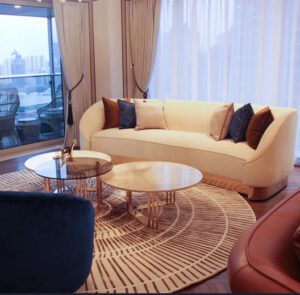
How to Vet a China Furniture Sourcing Agent Before Signing A single curved sofa like this goes through dozens of approvals, including frame, foam, fabric

China Furniture Sourcing Agent vs Direct Factory Buying: A Strategic Guide for High-Value Buyers When one project includes 400 hotel rooms, a 20-seat marble dining
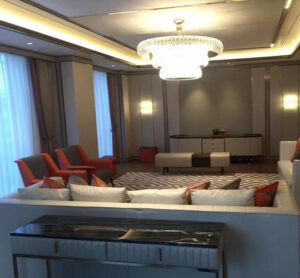
Advanced Tips to Get More from Your China Furniture Sourcing Agent Powerful Strategies for High-Performance Sourcing – Tailored for Elite Buyers, Designers & Operators Your
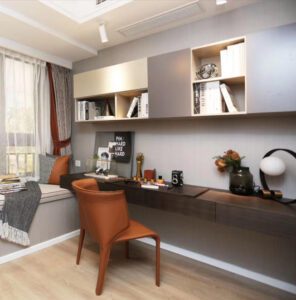
What Wholesale Furniture Suppliers in China Can Offer High-Value Buyers A statement luxury living room — the kind of space that begins with the right

How to Work Better With Your China Furniture Supplier After Ordering A Practical Playbook for High-End Furniture Importers, Interior Designers, FF&E Buyers, Villa Owners, Private