The premium furniture market demands a fundamentally different approach than…
The premium furniture market demands a fundamentally different approach than mass-market sales. This comprehensive guide reveals the specific obstacles your B2B furniture business faces — and provides actionable strategies to overcome them, accelerate sales cycles, and build lasting relationships with high-net-worth clients.
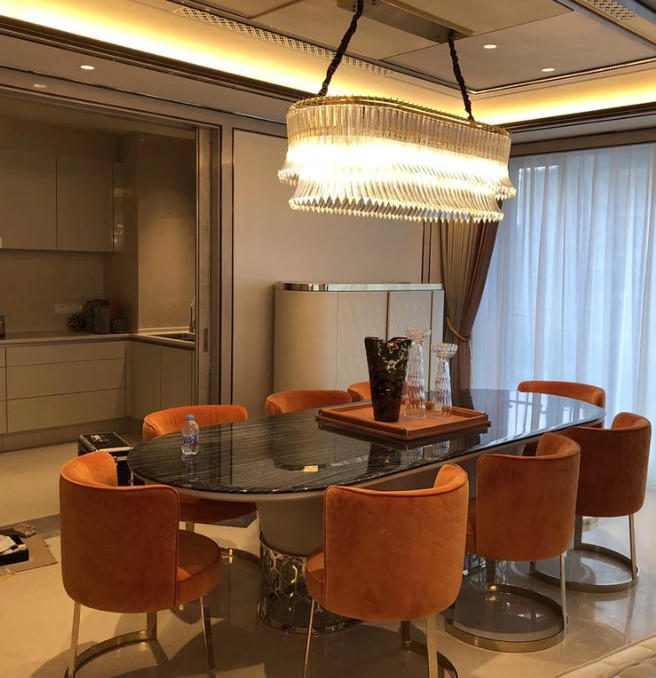
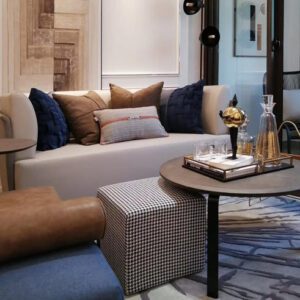
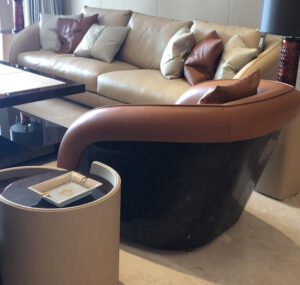
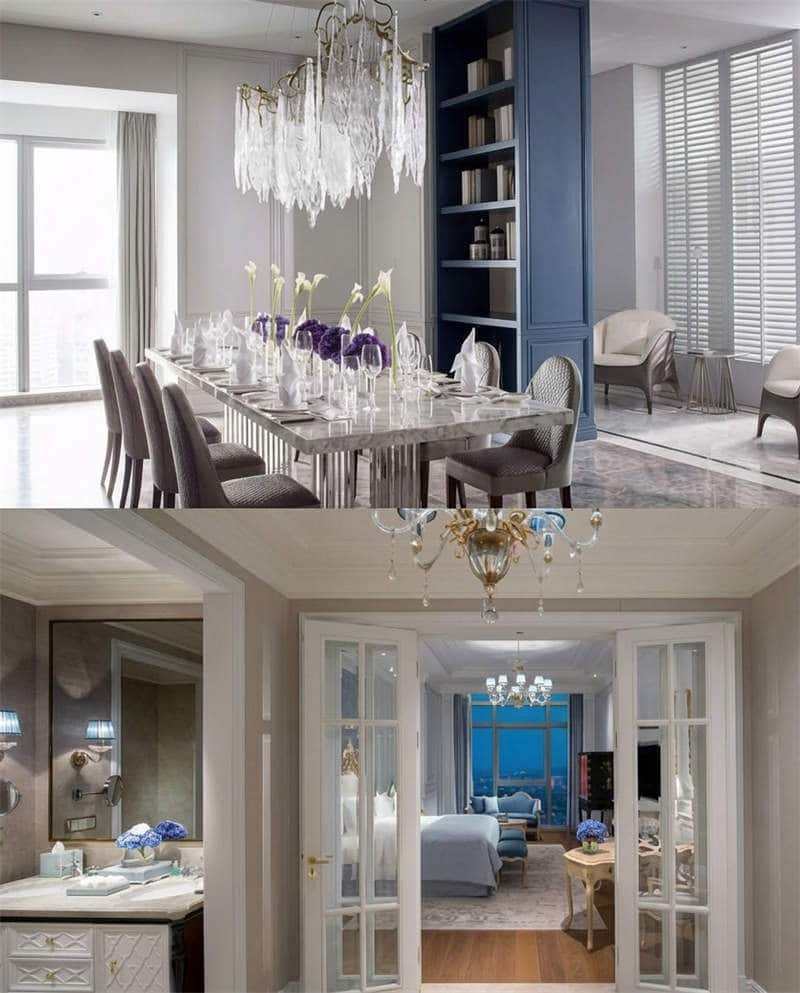
A high-end showroom environment isn’t just about the furniture — it’s the primary proof point that tells B2B buyers you understand their clients’ world.
Why Your Current Marketing Tactics Aren’t Working for Luxury Furniture Distribution
Here’s an uncomfortable truth that most luxury furniture distributors eventually arrive at the hard way: the strategies that built your business in the mid-market don’t scale upward. The sales playbook that works when you’re moving 200-unit container loads of category furniture becomes actively counterproductive when you’re trying to sell a $45,000 custom dining suite to an interior designer who has three competing suppliers in their inbox and a client who changes her mind every two weeks.
The global furniture market reached $597 billion in 2025, with the premium segment projected to grow at a 6.96% CAGR through 2031 — faster than any other category. That growth is not evenly distributed. It is concentrating among distributors and showrooms who have recognized that luxury B2B furniture sales is a distinct discipline, requiring distinct systems, distinct communication approaches, and a fundamentally different understanding of how decisions actually get made.
This guide is not about general marketing theory. It is built specifically for furniture distributors, showroom managers, interior designers, and hotel fit-out specialists who are already operating at the high end of the market — and who know that their current approach is leaving money, and relationships, on the table.
The Reality Check for Furniture Distributors and Showroom Managers
Affluent buyers — and the professionals who serve them — do not behave like standard B2B purchasing managers. They are not optimizing for lowest price. They are optimizing for certainty: certainty that the product will perform as specified, certainty that the supplier will deliver on commitments, certainty that recommending you will not damage their professional reputation with clients who pay $10,000+ per day for their services.
This means that every element of your business — your website, your pricing communication, your customization process, your account management structure — is constantly being evaluated as either evidence of reliability or evidence of risk. The designers and hospitality professionals who become your most valuable long-term partners are the ones who decided, at some point in their evaluation of you, that working with you would reduce the complexity and risk of their projects — not add to it.
Understanding that dynamic is the foundation of everything that follows.
1. The Extended Decision Cycle Problem
Why Luxury Furniture Buyers Take Months (Not Days) to Decide
The average B2B sales cycle has lengthened to 6.5 months according to recent industry data — up from 4.9 months in 2019. In luxury furniture, that baseline is often the optimistic scenario. A hotel fit-out project with a 300-room specification may take 12 to 18 months from initial brief to final purchase order. A high-end residential renovation with a custom furniture specification can run 6 to 9 months through design development, client approval cycles, and budget sign-off before a single unit is ordered.
This is not a problem to be solved by pushing harder. It is a structural reality of how luxury purchasing works — and your marketing system needs to be architected around it.
The Psychology of High-Ticket Purchases
Interior designers and hotel fit-out professionals making high-value furniture specifications are not primarily making financial decisions — they are making reputation decisions. When a designer specifies a $60,000 furniture package for a client’s penthouse renovation, they are putting their professional standing on the line in every dimension: will it look as good in the space as it did in the showroom? Will it arrive on time for the client’s move-in date? Will the quality hold up under the client’s scrutiny when she runs her hand along the finish?
This is why high-ticket furniture decisions involve multiple stakeholders and multiple approval stages. In a hospitality project, a furniture specification may need sign-off from the interior designer, the hotel brand’s design standards team, the property owner or developer, and the procurement manager — each with different priorities and different veto rights. Budget approval processes in commercial and hospitality settings routinely extend decision timelines by four to eight weeks at each stage.
Understanding who all the stakeholders are — and what each one needs to feel confident — is not optional intelligence. It is the architecture of your sales process.
The Financial Stakes That Slow Everything Down
When a purchase requires board-level or senior client approval, the decision-making framework shifts from “which product do I prefer?” to “how do I justify this expenditure?” A hotel developer approving a $2M furniture specification for a new property needs to account for that decision to investors, brand partners, and their own risk management process. A private client approving a $150,000 custom furniture package needs sufficient confidence in the outcome to commit that capital without the ability to “return” the investment if they change their mind.
Risk aversion at this spending level is not irrational — it’s appropriate. Your role as a B2B supplier is not to overcome that risk aversion, but to systematically eliminate the risks that are within your control to eliminate, and document the fact that you have.
How to Shorten Cycles Without Sacrificing the Sale
The most effective cycle-shortening tools are not urgency tactics or promotional pricing — they are documentation and pre-qualification. Providing detailed specification sheets, technical drawings, material certifications, and production timeline commitments upfront gives decision-makers the evidence base they need to advance through their internal approval process without waiting for answers from you at each stage.
Pre-qualification processes — structured discovery conversations that identify decision-makers, budget availability, project timeline, and decision criteria early — prevent you from investing months in opportunities that have a structural obstacle to closing. Case studies specific to a designer’s project type (hospitality, high-end residential, commercial) answer the “has this worked for a project like mine?” question before it becomes a conversation-stopper. Transparent pricing and lead time commitments remove two of the most common friction points in luxury furniture decision cycles.
2. The Customization and Specification Challenge
Managing Complex Custom Orders Without Losing Profitability
The Customization Expectations Game
Luxury clients don’t buy off the shelf. They never have. When an interior designer is specifying furniture for a $5M private residence, the brief is not “find something close in the catalogue” — it is “create exactly what this space requires.” And when a hotel brand is rolling out a custom furniture programme for a new property, their specification will reflect brand standards, interior design intent, and operational requirements that no standard product perfectly addresses.
This is both the appeal and the commercial challenge of the luxury segment. The ability to deliver genuinely custom solutions is a differentiator. The cost of getting customization wrong — scope creep, uncontrolled revision cycles, tooling charges that weren’t anticipated, production delays caused by late design changes — is a margin destroyer.
One client request for “just one small change” after production has begun can add $3,000 to $8,000 in costs to a single custom piece, depending on what needs to be disassembled, modified, and rebuilt. Multiplied across a project of 40 custom pieces, a single late change request can eliminate the entire margin of the order.
Technical Documentation as Your Competitive Advantage
The most underused competitive tool in luxury furniture B2B is comprehensive technical documentation — and the distributors who have invested in it are measurably ahead of their competitors. A specification library that includes dimensional drawings, material performance data, finish and fabric options with professional photography, installation requirements, and lead time by configuration gives designers everything they need to incorporate your product into their own client documentation.
Designers work with tools like CAD (Computer-Aided Design) software and specification management platforms. Suppliers who provide compatible digital assets — DWG or DXF drawings, high-resolution material samples, BIM (Building Information Modelling) compatible objects — become the path of least resistance. Those who require the designer to request everything manually, one item at a time, become the friction point that the designer avoids when deadlines are tight.
Using 3D renderings and physical sample kits to answer visual questions before the prototype stage reduces revision cycles significantly. At JL&C Furniture, providing detailed pre-production visualization support has consistently reduced revision cycles on custom orders, because clients are confirming against a specific visual reference rather than their own mental image of the finished piece.
Building Systems That Scale Customization
The solution to the customization profitability problem is not to limit customization — it is to systematize it. Modular design frameworks define which elements of a product are variable (fabric, finish, dimension within defined ranges, hardware selection) and which are fixed (structural components, engineering principles, production processes). This approach delivers the perception of bespoke without the production economics of true one-of-a-kind manufacturing.
Designer-friendly ordering portals that show available customization options, real-time configuration pricing, and current production lead times give designers the autonomy to explore options without requiring your team’s involvement at every step. Communication protocols that establish approval gates — specific sign-off points where the client confirms the specification before the next production stage begins — protect against scope creep without making the client feel over-managed.
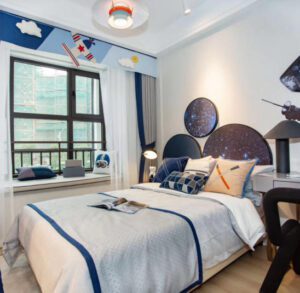
Custom hotel bedroom furniture packages demand precise specification management — every dimension, every finish, every hardware detail confirmed before production begins.
3. The Trust-Building Imperative
Why Luxury Buyers Won’t Risk Their Reputation on Unknown Distributors
The Credibility Gap You Must Close
An interior designer who recommends a furniture supplier to a client with a $300,000 design budget is not making a product recommendation — they are extending a professional guarantee. If the furniture arrives six weeks late, if the finish doesn’t match the approved sample, if the quality disappoints a client who is paying premium fees for premium results, the damage is not just to the supplier’s reputation. It is to the designer’s.
This is why interior designers and showroom managers evaluate suppliers against a credibility threshold that is significantly higher than standard B2B purchasing. They are not asking “is this product good?” — they are asking “is this supplier reliable enough that I can stake my professional reputation on recommending them?”
Third-party validation matters more in the luxury segment precisely because the self-interest in claiming quality is obvious. A manufacturer who says their product is exceptional is expected to say that. A manufacturer who has third-party certifications, completed project documentation, and named references from established design firms is providing verifiable evidence — which is an entirely different kind of claim.
Proof Points That Actually Convince B2B Buyers
The proof points that close credibility gaps in luxury B2B furniture follow a clear hierarchy. Portfolio documentation from completed luxury projects — with specific project type, location, scope, and (where client permission allows) named design firm — is the most compelling evidence of real-world capability. A hotel fit-out designer evaluating a supplier for a 200-room property opening wants to see that you’ve successfully delivered a comparable scope project, not just that you manufacture product of the right category.
Testimonials from established interior design firms carry weight precisely because those firms have their own reputation to protect. A statement from a principal at a recognized design practice that they trust your product and your process is worth more than any marketing copy you can write about yourself. Industry certifications — sustainability credentials, quality management certifications, material safety testing — provide the documentary foundation that supports every other credibility claim.
Long-term relationships and referral networks are the ultimate proof of staying power. A supplier who has maintained active partnerships with the same design firms for five or more years is demonstrating something that marketing cannot manufacture: consistent delivery against professional standards over time.
Creating Touchpoints That Build Confidence Over Time
Trust is not built in a single meeting. It is accumulated across multiple interactions, each of which either adds to or subtracts from the relationship balance. Exclusive showroom events — private previews of new collections for design professionals, product education evenings that combine learning with experience — create the kind of high-quality in-person interaction that accelerates trust-building in ways that digital communication cannot replicate.
White-glove consultation services — project-specific briefings where a product specialist works through the designer’s requirements and delivers a tailored specification recommendation — demonstrate expertise in a context that adds immediate practical value. Guaranteed lead times, documented and contractually backed, eliminate one of the most trust-corrosive sources of uncertainty in B2B furniture relationships. Dedicated account managers who know their clients’ project pipelines, preferences, and past orders create the continuity that transforms a supplier relationship into a partnership.
4. The Pricing Transparency Problem
How Vague Pricing Undermines Sales in the Luxury Market
Why “Call for Pricing” Doesn’t Work Anymore
“Call for pricing” was a defensible strategy in an era when information asymmetry was a feature of the sales process. A buyer who didn’t know your price had to engage with your sales team to find out — creating an opportunity to build relationship and context before the number landed. That era ended when buyers gained access to competitive alternatives with a Google search.
Today, “call for pricing” communicates something specific to B2B buyers: either the prices are too high to be stated publicly, or the pricing is inconsistent enough that the supplier doesn’t want them visible. Neither interpretation builds confidence. Interior designers who have been burned by surprise charges after a long project engagement — tooling fees that weren’t disclosed, delivery premiums that weren’t mentioned, handling charges that appeared on the final invoice — have learned to treat pricing opacity as a risk signal.
The information asymmetry that “call for pricing” creates doesn’t favour the supplier in the luxury segment. It creates the distrust that makes a buyer choose a competitor who is transparent.
Communicating Premium Price Points Without Losing Sales
The challenge with luxury furniture pricing is not the price — it is the justification. An interior designer who understands exactly what they are paying for — the quality of the timber frame, the density and specification of the foam, the provenance and performance characteristics of the fabric, the production time required for a hand-finishing process — can communicate that value to their own client. A designer who has only been told a price with no context cannot defend it.
The most effective approach to premium price communication decomposes the price into its components: materials, manufacturing process, quality assurance, lead time, and the service wrapper around delivery and installation. This is not an exercise in justifying price — it is an exercise in making the price legible. A legible price is a defensible price.
Tiered options that serve different project budgets — a signature collection, a core collection, and a project/contract collection at different price points — allow designers to match products to clients without abandoning your brand for a competitor when the budget doesn’t stretch to the top tier.
Creating Pricing Models That Work for Distributors and Resellers
Volume-based pricing structures that reward loyal distribution partners — structured transparently with clear thresholds and discount tiers — allow your distribution network to plan their own margins and client pricing with confidence. Opacity in wholesale pricing structures creates the same distrust downstream that it creates with end buyers.
Project-specific quoting systems — where the distributor or designer submits a detailed project brief and receives a comprehensive quote within a defined turnaround time — deliver the personalization that luxury projects demand while maintaining price discipline. Transparent margin structures at each distribution tier allow your partners to price competitively in their own markets without the margin anxiety that opaque pricing creates.
Pricing Model
Best For
Key Benefit
Watch Out For
Published Base Pricing
Showroom & catalogue product
Builds immediate trust with designers
Ensure customization premium is clearly defined
Project-Specific Quoting
Custom & large volume orders
Reflects true complexity & scope
Set a defined quote turnaround (48–72 hrs)
Tiered Volume Discount
Distributors & resellers
Rewards loyalty, enables partner planning
Define tiers clearly and publish to partners
Modular Component Pricing
Custom configuration projects
Transparency at each design decision
Prevent “death by a thousand upgrades”
Seasonal Programme Pricing
Repeat partners with forecast
Forecasting incentive, deepens relationship
Require minimum commitment for access
5. The Digital Presence Disconnect
Why Your Website Isn’t Converting High-Value Buyers
The Luxury Furniture Website That Fails to Impress
The luxury furniture website that fails its audience is almost always identifiable by the same cluster of symptoms. The photography shows product against white studio backgrounds — technically clean, but entirely disconnected from the environments where designers imagine the piece living. The product pages list dimensions in a single table but contain no CAD drawings, no material specification detail, no finish photography under different lighting conditions. The mobile experience, optimized for a consumer browsing experience, compresses the product imagery that communicates craftsmanship into thumbnails that could be from any mid-market catalogue.
A hospitality procurement professional evaluating your website for a potential hotel project is making a rapid assessment that goes far beyond the product: do these people understand my world? Do they have the technical depth to support a complex project? Can I trust that the product I see here will be the product I receive?
A website that cannot answer those questions is not a passive non-performer — it is actively creating doubt at the earliest stage of the relationship.
Content That Speaks to Designers, Showroom Managers, and Hotel Developers
The content architecture of a B2B luxury furniture website should be built around the questions your target clients are actually trying to answer. Detailed material guides — covering fibre content, wear ratings, cleaning protocols, and performance characteristics for every fabric option — answer the “will this hold up?” question that every hospitality buyer asks. Finish option photography under multiple lighting conditions answers the “will this match my scheme?” question that every residential designer asks.
Project case studies showing completed real-world applications — with floor plan context, installation photography, and a brief on the design challenge and solution — answer the “has this worked for a project like mine?” question. Technical specifications with CAD drawings available for download answer the “can I work with this in my own design process?” question. Design trend content — thoughtful, specific, evidence-based — answers the “do these people understand where design is going?” question that separates credible B2B partners from product vendors.
Building Digital Experiences That Support Long Sales Cycles
A B2B website for luxury furniture is not a destination — it is a platform that supports an ongoing relationship across a 6- to 18-month sales cycle. Password-protected designer portals with exclusive resources — early access to new collections, downloadable specification libraries, project planning templates — create a tangible incentive for designers to register and engage before they have an active project. Virtual consultation booking systems allow designers to initiate a product specialist conversation at the moment they have a specific question, rather than waiting for their next showroom visit.
Email nurture sequences — not promotional newsletters, but genuinely useful content timed to where a prospect is in their decision process — maintain relevance through the extended periods between touchpoints that characterize luxury furniture sales cycles. A designer who received a useful material guide from you three months ago, and then a relevant case study last month, is far more likely to think of you when a new project arises than one who received only a monthly promotional email.
🎥 Watch: How to Simplify Sourcing as an Interior Designer
This practical guide walks through how interior designers manage vendor relationships, simplify the sourcing process, and select suppliers who make their projects run more smoothly — directly relevant to every B2B furniture distributor watching from the other side of the relationship.
6. The Relationship Management Challenge
Converting One-Time Buyers Into Repeat Distribution Partners
Why Luxury Furniture Relationships Require Active Maintenance
The difference between a transactional supplier relationship and a partnership is not sentiment — it is frequency and quality of value exchange between purchase events. A designer who bought from you 18 months ago and has heard nothing since is not a client — they are a lapsed contact who may or may not return when their next project arises, depending entirely on whether a competitor has occupied the space you vacated.
Interior designers choose their preferred suppliers based on a multi-factor evaluation: product quality, delivery reliability, pricing competitiveness, and — critically — the quality of the working relationship. Suppliers who are proactive, communicative, and genuinely interested in the designer’s project success are not interchangeable with those who are not. In a segment where the interpersonal dimension of the relationship is valued highly, consistent and substantive communication between purchase cycles is not optional maintenance — it is competitive strategy.
Account Management Strategies for High-Value Clients
Assigning dedicated account managers to key design firms and showrooms — rather than routing all communications through a general sales contact — is the structural foundation of professional client relationship management. A dedicated account manager who understands a design firm’s aesthetic preferences, project pipeline, and past purchase history can anticipate needs, provide relevant recommendations, and respond to inquiries with the context that makes the interaction feel like a partnership rather than a transaction.
Regular business reviews — structured quarterly or biannual conversations that assess what’s working, what could be better, and what the client’s forward pipeline looks like — serve two purposes simultaneously. They provide operational intelligence that allows you to plan production and resource allocation more accurately. And they signal to the client that the relationship is valued beyond the revenue it generates today.
Early access to new collections — private previews before the trade launch, sample priority before the collection is in general availability — is a loyalty benefit that creates genuine excitement and rewards the relationship investment the designer has made with you. Loyalty programmes that translate volume into tangible benefits (additional discount tiers, dedicated production priority, exclusive product access) create a financial incentive structure that makes switching to a competitor measurably costly.
Building Communities That Strengthen Distributor Relationships
The most durable B2B furniture relationships are embedded in community — professional networks where your brand is the connective tissue between designers, developers, and complementary suppliers. Hosting designer appreciation events that combine education with experience (a masterclass in a specific material category, a trend presentation by a credible design voice, an exclusive factory tour) creates shared experiences that anchor relationships in memory rather than just transaction history.
Online communities where interior designers share work, ask technical questions, and connect with peers — with your brand facilitating the conversation rather than dominating it — create the ambient presence that keeps you top-of-mind through the long intervals between active project engagements. Continuing education programmes that offer genuine professional development value — material science, sustainability credential training, design history — position your brand as a knowledge partner, not just a product supplier.
The best B2B furniture relationships begin in the showroom but are maintained through consistent value exchange — education, early access, and genuine professional support between projects.
7. The Supply Chain and Lead Time Reality
Managing Expectations When Production Takes Months
Why Lead Times Matter More in Luxury Furniture
In luxury furniture, lead time is not a logistical detail — it is a client relationship risk. An interior designer whose client has confirmed a move-in date built a timeline around your stated lead time. If your production runs six weeks longer than committed, that designer is facing one of two outcomes: a client who moves into their new home with an unfinished interior, or an emergency re-specification from an alternative supplier. Either outcome ends the relationship.
Hospitality project timelines are even less forgiving. A hotel opening date drives a construction programme, a marketing launch, a pre-opening operations build-up, and a revenue projection. A furniture supplier who misses the delivery window for a hotel opening is not just disappointing — they are causing measurable financial damage to a project that may involve hundreds of millions of investment.
According to recent hospitality procurement research, furniture lead times for complex custom projects in the hospitality sector currently run 12 to 24 weeks from approved specification to delivery — a timeline that requires project management discipline on both sides of the relationship.
Creating Realistic Lead Time Communication
Publishing transparent production schedules by product category — standard product, customized product, fully bespoke — gives designers the information they need to plan their own project timelines accurately. This is not optional transparency for suppliers who want to be taken seriously in the luxury segment.
Offering expedited options for rush projects — with honest pricing that reflects the real cost of priority production — serves two purposes. It gives designers a viable option when their timeline is compressed. And it signals that you understand the commercial reality of project work, rather than hiding behind standard lead times regardless of client circumstances.
Milestone updates — automated or manual communications that confirm key production stages (materials ordered, production commenced, QC completed, dispatched) — keep stakeholders informed without requiring them to chase for status. Delivering more communication than expected is a low-cost, high-impact service differentiator in a market where silence breeds anxiety.
Building buffer time into your lead time commitments — quoting 14 weeks when you’re confident you can deliver in 12 — creates the opportunity to exceed expectations rather than manage disappointment. In B2B luxury furniture, arriving early is a positive surprise. Arriving late is a relationship event.
Using Lead Times as a Competitive Advantage
The reframing that transforms lead time from a liability into a selling point is this: in luxury furniture, production time is quality evidence. A custom sofa that can be delivered in three weeks was not hand-crafted. A dining table with a 16-week lead time for a specific timber species and custom finish was. The production time is part of what the client is paying for, and communicating it as such — with specific detail about what happens during those weeks — converts a potential objection into a quality signal.
Pre-order programmes that allow designers to lock in specifications and production slots for future projects — booking production capacity against a confirmed brief but a later delivery date — solve the lead time problem at its root. Designers who plan ahead can guarantee their clients’ delivery windows. Designers who plan ahead are also committing their future business to you rather than leaving it available to competitors.
8. The Content Marketing Strategy That Works
Becoming the Trusted Resource for Luxury Furniture Information
Content Types That Drive B2B Furniture Sales
The content that drives B2B furniture sales is not promotional — it is operational. It answers the questions designers, showroom managers, and hotel developers are actually asking in the course of their work. In-depth design guides addressing specific project types — how to specify contract-grade upholstery for a high-traffic hospitality environment, how to manage a custom kitchen furniture package across a multi-unit residential development — solve real problems in formats that designers save and refer to repeatedly.
Material science content — explaining the performance differences between full-grain and top-grain leather under commercial use conditions, or the durability characteristics of different foam density specifications — gives designers the technical knowledge they need to make confident recommendations to their own clients. This type of content is rarely produced by competitors because it requires genuine product expertise. It is exactly the content that builds authority.
Trend forecasting — grounded in real design intelligence, not vague aesthetic observations — positions your brand as a voice worth listening to, not just a product catalogue. Technical documentation (CAD drawings, specification sheets, installation guides, care and maintenance manuals) supports designer decision-making at every stage from specification to project completion.
Distribution Channels That Reach Your Audience
LinkedIn is the primary professional social platform for interior designers, hotel developers, and procurement professionals — and it rewards consistent, substantive content more reliably than any other channel for B2B audiences. Content that shares genuine industry insight, provokes professional discussion, or provides practical guidance generates the kind of engagement that builds follower relationships over months and years.
Industry publication placements — contributed articles in titles like Interior Design magazine, Hospitality Design, or Sleeper — reach concentrated, highly qualified audiences who are actively seeking industry knowledge. The credibility signal of a featured placement in a respected trade title is difficult to replicate through owned media alone.
Exclusive webinars addressing designer pain points — “Managing Custom Furniture Specifications Across Multi-Unit Hospitality Projects,” “Sustainable Material Selection for High-End Residential Interiors” — create high-quality touchpoints that gather qualified prospects into a concentrated engagement event, with the lead data and follow-up opportunity that flows from it.
Measuring Content Performance in Long Sales Cycles
The trap in luxury furniture content marketing is measuring too early and too narrowly. Revenue attribution to a specific content piece, in a sales cycle that spans 6 to 18 months, is almost never meaningful at the individual touchpoint level. What matters is the aggregate pattern: which content types generate the most qualified engagement? Which topics correlate with designers who go on to place orders? Which distribution channels deliver prospects who complete longer journeys through the decision process?
Engagement metrics that indicate buying intent — time spent on specification pages, downloads of technical documentation, repeat visits to project case study content — are more predictive in a long-cycle B2B context than top-of-funnel traffic metrics. Tracking these signals, and attributing sales conversations to the content touchpoints that preceded them, is the analytical discipline that transforms content from an activity into a measurable driver of revenue.
9. The Technology Infrastructure Gap
Systems That Support Complex B2B Furniture Sales
Essential Tools for Managing Luxury Furniture Distribution
Managing luxury furniture distribution without purpose-built technology is like running a custom manufacturing business on spreadsheets — it works until it doesn’t, and when it fails, it fails expensively. The core technology stack for a serious B2B luxury furniture operation includes four capability areas.
A CRM (Customer Relationship Management) system configured for long sales cycles and multiple stakeholders — not a generic contact database, but a system that can track where a specific designer is in a specific project’s decision process, who the other stakeholders are, what documents have been shared, and what commitments have been made. HubSpot, Salesforce, or industry-specific platforms all offer this capability; the implementation matters more than the platform.
Project management tools that track customization specifications, production status, and delivery coordination across multiple concurrent projects prevent the information fragmentation that causes quality failures and missed deadlines. Digital asset management systems that organize high-resolution product photography, technical drawings, and marketing materials by product, collection, and project type make your team more responsive and your designers more self-sufficient.
Creating Designer-Friendly Ordering and Communication Platforms
Self-service portals where designers can check product availability, access specification libraries, configure product options, and track order status without requiring your team’s involvement at every step are becoming the standard expectation in professional B2B relationships. Designers who can answer their own questions at 10pm when they’re finalizing a client presentation are not being made less dependent on you — they are being made more productive with you.
Real-time customization tools that show available options, indicate pricing implications of specific selections, and display current production lead times give designers the autonomy to explore configurations that fit their client’s brief and budget without a back-and-forth quotation process. Automated order tracking notifications that update stakeholders at each production and logistics milestone replace the reactive status-chasing that currently consumes your team’s time.
Using Data to Optimize Your Sales Process
The data generated by a properly implemented B2B technology stack is a competitive asset that most luxury furniture distributors are currently generating but not analysing. Understanding which product categories drive the highest repeat purchase rates, which designer profiles convert fastest, which content types precede purchase decisions, and where in the sales process prospects most commonly stall — this intelligence is the foundation of a continuously improving commercial operation.
Personalizing communications based on past purchases, stated project types, and observed engagement patterns transforms your outreach from broadcast to conversation. A designer who primarily works on high-end hospitality projects should be receiving different content and product recommendations than one who specializes in luxury residential work. Technology makes this segmentation systematic rather than dependent on individual account manager memory.
Technology Capability
Business Problem Solved
Recommended Tools
CRM (Multi-stakeholder tracking)
Losing context across long sales cycles
HubSpot, Salesforce, Pipedrive
Digital Asset Management
Slow response to designer specification requests
Bynder, Canto, Extensis Portfolio
Designer Self-Service Portal
Team bottleneck in order configuration & status
Custom portal, Studio Designer integration
Project Management
Customization & production coordination failures
Monday.com, Asana, ClickUp
Marketing Automation
Staying relevant across 6–18 month sales cycles
HubSpot, Klaviyo, ActiveCampaign
3D Product Visualisation
Reducing revision cycles on custom orders
Vividworks, Roomvo, Sketchup
10. The Competitive Differentiation Strategy
Standing Out When Multiple Distributors Offer Similar Products
Beyond Product: What Actually Differentiates in Luxury Furniture
When multiple distributors offer access to comparable product quality at comparable price points, the competition is no longer about the product. It is about everything around the product: the responsiveness when a designer has a technical question at a critical project moment, the accuracy of the production timeline that protects a hotel opening date, the quality of the account management that makes a designer feel valued rather than processed, the expertise that helps a designer solve a brief they weren’t sure how to resolve.
Service excellence that consistently exceeds designer expectations is the most defensible competitive position in luxury B2B furniture, because it is the hardest to replicate quickly. A competitor can source a similar product line in six months. They cannot replicate five years of relationship investment and service culture refinement in the same timeframe.
Exclusive collections or partnership arrangements that are genuinely unavailable through competing distributors create scarcity value that product comparisons can’t erode. Brand reputation and design credibility — built through sustained presence in the right industry publications, events, and communities — creates the ambient awareness that means your brand is in the consideration set before the designer even starts their active search.
Building a Defensible Market Position
Deep relationships with specific designer communities — becoming the go-to supplier for a cluster of design firms who work in a particular segment (luxury hospitality, super-prime residential, corporate headquarters) — creates network effects that make each new relationship easier to initiate. When a designer whose work you know refers a colleague, that referral carries relationship credibility that no marketing programme can create.
Creating exclusive product lines for your distribution network — whether through co-development with manufacturers or through exclusivity arrangements on existing collections — protects margin by removing the product from direct price comparison. Offering services that competitors don’t — custom design support, installation coordination, white-glove delivery, post-installation maintenance programmes — expands the value you deliver beyond the product transaction and deepens the dependency that drives loyalty.
Positioning around a specific value dimension — sustainability credentials with documented supply chain traceability, design heritage with a clear aesthetic point of view, craftsmanship with specific production detail that substantiates the claim — gives designers a clear reason to choose you that they can communicate to their own clients.
Communicating Your Unique Value Proposition
The value proposition that resonates with luxury B2B buyers is not a generic claim of quality — it is a specific, evidence-backed answer to the question “why should I risk my professional reputation on you rather than the supplier I already know?” Articulating that answer requires knowing, in detail, what your most loyal clients value most about working with you — and communicating those specific points to prospects in the language those clients used when they described them.
The team at JL&C Furniture works directly with distributors, showroom owners, and design professionals to help articulate and operationalize exactly this kind of differentiated value proposition — because in the luxury segment, how you position is as commercially significant as what you sell.
Competitive differentiation in the luxury B2B segment is built through service, expertise, and relationship depth — not product specification alone.
Conclusion: Your Roadmap to Luxury Furniture Marketing Success
The Integrated Approach That Drives Results
The ten challenges addressed in this guide are not isolated problems — they are interconnected symptoms of a single underlying condition: a sales and marketing system designed for a different market, applied to the luxury B2B segment without the structural adaptations that segment requires.
An integrated approach starts with the customer’s decision-making reality — the extended cycles, the multiple stakeholders, the risk aversion, the reputation calculus — and builds backwards from there to create a system where every element reinforces the others. Trust-building content supports extended nurture. Transparent pricing removes friction from the decision process. Technical documentation enables designer self-sufficiency. Account management infrastructure converts first transactions into long-term partnerships. Technology enables scale without sacrificing the personal quality that luxury relationships require.
No single element is sufficient alone. A designer who trusts you but can’t get technical documentation delivered promptly will eventually find a supplier who can. A supplier with exceptional documentation but opaque pricing creates a friction point that a transparent competitor eliminates. The premium furniture market is unforgiving of systemic gaps.
Starting Small and Building Momentum
The practical starting point is not to implement everything simultaneously — it is to identify which of these ten challenges is currently costing your business the most, and address it with the most specific and actionable solution available. For most luxury furniture distributors, the highest-leverage starting points are trust-building (because it gates every other stage of the relationship), pricing transparency (because it removes friction from the earliest evaluative stage), and digital presence (because it is the first environment most prospects encounter).
From that foundation, each additional improvement compounds: better documentation reduces revision cycles, which improves lead times, which builds trust, which generates referrals, which reduces customer acquisition costs. The luxury B2B furniture businesses that are growing most consistently are not doing more things than their competitors — they are doing the right things more deliberately, with better systems behind them.
CTA: Ready to Transform Your Luxury Furniture Distribution Strategy?
The strategies in this guide work when they are implemented with the right supply partnerships behind them. JL&C Furniture works with furniture distributors, showroom managers, interior design firms, and hotel fit-out specialists to provide the product quality, documentation depth, and responsive partnership support that luxury B2B marketing requires at its foundation.
Download our Luxury Furniture Marketing Diagnostic — a structured self-assessment that maps your current capability against each of the ten challenge areas in this guide, and identifies your highest-priority improvement opportunities. Use it as the starting point for your 90-day marketing improvement plan.
Glossary of Key Terms
B2B (Business-to-Business): Commercial transactions between businesses — in furniture, typically between manufacturers, distributors, showrooms, interior design firms, and hospitality developers — as distinct from B2C (business-to-consumer) retail.
Sales Cycle: The complete sequence of stages from initial prospect contact to closed purchase. In luxury furniture B2B, this typically spans 6 to 18 months and involves multiple stakeholders and approval stages.
FF&E (Furniture, Fixtures & Equipment): The industry term for movable furniture, fixtures, and equipment in commercial and hospitality projects — the category that hotel fit-out designers and hospitality procurement managers work with.
CAD (Computer-Aided Design): Digital design software used by interior designers to create accurate floor plans and 3D visualizations. Suppliers who provide CAD-compatible product files eliminate a significant workflow obstacle for designers.
Scope Creep: The gradual expansion of a project’s requirements beyond the original specification — in custom furniture, typically driven by client-requested modifications after production has commenced. Scope creep is the primary driver of cost overruns on custom furniture projects.
White-Glove Service: A premium service tier for delivery and installation of high-value furniture, typically including specialist handling, room placement, assembly, and packaging removal — standard expectation in the luxury residential and hospitality segments.
BIM (Building Information Modelling): Digital infrastructure used in commercial construction and interior design to create precise building models. Furniture suppliers who provide BIM-compatible product objects integrate directly into the design workflow of commercial and hospitality projects.
GEO (Generative Engine Optimization): The practice of structuring content to be accurately retrieved and cited by AI-powered search and answer engines — an emerging complement to traditional SEO for B2B content visibility.
Questions fréquemment posées
1. How can we realistically shorten the decision cycle when our clients have multiple stakeholders involved?
The most effective lever is removing information gaps that cause stakeholders to pause and request more data. Build a comprehensive pre-qualification brief that identifies all decision-makers and their specific approval criteria at the outset. Create documentation packages — specification sheets, compliance certificates, case studies from comparable projects — that answer each stakeholder’s questions without requiring a new sales conversation at each stage. Track where in your sales process deals most commonly stall, and create specific content or documentation that addresses the question that’s causing the delay. Milestone check-ins at predictable intervals maintain momentum without feeling like pressure.
2. What’s the best way to manage customization requests without destroying our profit margins?
Define your customization framework before the client conversation begins, not during it. Establish clearly which modifications are standard (included in base pricing), which are premium (quoted at a fixed additional cost per modification type), and which are out-of-scope (requiring a bespoke development process with separate quoting). Use 3D visualization tools to get client sign-off on the specification before any production begins — post-production changes are where margin destruction occurs. Implement formal approval gates at sample sign-off, specification finalization, and material confirmation, each requiring written client approval before the next production stage begins.
3. How do we build credibility with interior designers who’ve never heard of our brand?
Start with proof, not claims. Compile a portfolio of completed projects with professional photography, project context, and — where permissible — client attribution. Approach three to five of your most satisfied existing clients and request a structured testimonial that speaks to specific service qualities, not just general satisfaction. Enter industry awards programmes relevant to your product category. Participate in trade events and designer community forums where your team’s expertise can be demonstrated in real conversation. Consider offering a structured designer pilot programme — a smaller first project with premium service commitment and a post-project feedback review — that reduces the risk of the initial recommendation for a designer considering you for the first time.
4. Should we publish our prices online, or is “call for pricing” still acceptable in luxury furniture?
Publish base prices, pricing frameworks, and the factors that drive cost variation. In the luxury segment, complete price transparency may not be practical for custom or project work — but complete opacity is actively counterproductive. A page that shows starting prices, explains what drives variation, and provides a clear pathway to a project-specific quote gives designers the orientation they need without requiring them to commit to a sales conversation before they’ve decided you’re worth their time. Designers who encounter “call for pricing” with no other pricing context increasingly interpret this as a signal to keep searching.
5. What content actually converts designers and showroom managers into customers?
Content that solves a specific, practical problem in their professional workflow. Detailed material performance guides that help designers make confident specification decisions. Case studies from completed projects in their specific project type (hospitality, high-end residential, commercial). Technical documentation — CAD files, specification sheets, installation guides — that integrates directly into their design process. Trend content that gives them credible intelligence they can pass on to their own clients. The common thread is utility: content that saves them time, increases their confidence, or makes them more effective at their work is content they return to and share with colleagues.
6. How do we maintain relationships with designers between purchases?
Create a structured value delivery calendar — not a promotional schedule, but a calendar of genuinely useful touchpoints. New collection previews four to six weeks before trade availability. Material or trend guides timed to the point in the year when designers are briefing new projects. Invitation to an exclusive education event or factory experience. An account review call to understand the forward project pipeline. The discipline is consistency: a designer who receives predictable, substantive value from your relationship between purchases is not at risk of being replaced by a competitor who calls when they have something to sell.
7. What’s the right way to communicate long lead times without losing sales?
Contextualize the lead time within the quality story. Explain specifically what happens during those weeks — timber selection, frame construction, hand-finishing, quality control — so the time represents craftsmanship, not delay. Provide a milestone update schedule at order confirmation so the designer knows exactly when they’ll hear from you. Offer a pre-order programme that allows designers who plan ahead to lock in production slots, transforming the lead time from an obstacle into a planning tool. For urgency cases, have a clearly priced expedited option that demonstrates you understand the commercial realities of project work.
8. How can we use our website to support long sales cycles with multiple decision-makers?
Structure the website for multiple audience entry points — separate resource sections for interior designers, hospitality procurement, and showroom buyers, each with content specifically relevant to their role in the decision process. Password-protected designer portals with exclusive technical resources create both a registration mechanism (generating leads) and a service differentiator (rewarding relationship). Offer virtual consultation booking from every product page so a designer who reaches a specification question in your catalogue can immediately initiate a conversation. Implement email nurture sequences triggered by specific content engagement — a designer who downloads your hospitality specification guide should receive a follow-up case study from a comparable project within three days.
9. What metrics should we track to understand if our luxury furniture marketing is working?
In a long-cycle B2B business, lagging indicators (revenue, orders placed) are poor early warning systems. Focus on leading indicators: engagement with technical specification content (indicating active project context), time-to-quote-request from first website visit, quote-to-order conversion rate by prospect type, repeat purchase rate and account growth among existing clients, and designer referral volume. Track which content pieces appear most frequently in the paths of prospects who eventually convert. Monitor designer community engagement — event attendance, portal usage, content downloads — as indicators of relationship depth that precede purchase.
10. How do we differentiate when competitors offer similar products at similar price points?
Differentiation at this price point is almost never won on the product alone — it is won on the totality of the working experience. Audit your service against the specific friction points that luxury B2B buyers most commonly cite: response time on technical queries, accuracy of production timeline commitments, quality of account management continuity across team changes, ease of accessing documentation, and proactiveness of communication during production and delivery. The competitor who is easiest to work with — who makes a designer’s project management burden lighter rather than heavier — wins the repeat business regardless of comparable product quality.
11. What’s the best approach to pricing for distributors and resellers who have their own markup requirements?
Build your wholesale pricing structure in transparent tiers that reflect volume commitment and relationship depth. Publish the tier thresholds and discount levels to your distribution partners so they can plan their own client pricing with confidence. Ensure that your retail positioning — whatever you communicate to the market about the value and craftsmanship of the product — supports the retail price your distribution partners need to apply their margin and remain competitive. A distribution partnership where the partner is squeezed on margin because the manufacturer’s own pricing is too transparent is a distribution partnership under structural pressure.
12. How do we handle the technical complexity of luxury furniture sales without overwhelming our team?
Systematize the knowledge that currently lives in the heads of your most experienced team members. Create a comprehensive product knowledge base — accessible to all client-facing staff — that covers specification details, customization options, compliance certifications, and common technical questions by product category. Implement a CRM that captures project context so that any team member handling a client inquiry has immediate access to the history of the relationship. Train your team in consultative selling techniques rather than product presentation — the skill of understanding a designer’s specific project need and recommending a solution, rather than presenting a catalogue.
13. Should our marketing focus on B2C (end consumers) or B2B (designers and showrooms)?
For luxury furniture distributors, showroom owners, and manufacturers supplying the trade, the answer is unambiguous: focus exclusively on B2B. Your end consumers are reached most efficiently through the designers and showroom professionals who influence and specify their purchases. B2B-focused marketing — trade events, designer portals, specification libraries, professional content — reaches the decision-makers who drive the volume of your business. B2C marketing at scale in the luxury segment requires the brand investment of a retail luxury brand, with a corresponding cost structure that most distribution and sourcing businesses cannot justify. Own the professional relationship; the consumer relationship follows.
14. How do we measure ROI on relationship-building activities like designer events and community programs?
Track both direct and indirect returns with a deliberate attribution approach. For direct returns: record attendance at each event, tag attendees in your CRM, and track orders placed by attendees in the 90 and 180 days following the event. For indirect returns: measure repeat purchase rate and account growth among event participants versus non-participants, and track referral volume from established community members. The ROI horizon for relationship investment is 12 to 24 months, not 30 days — evaluate accordingly, and resist the pressure to cancel relationship-building programmes because they don’t show immediate revenue lift.
15. What should we do if a designer chooses a competitor despite our superior product and service?
Request a debrief conversation — genuinely curious, not defensive. The information value of understanding why you lost is worth more than the discomfort of asking. In most cases, the deciding factor was not product quality — it was relationship strength, lead time, price, or a service detail that the competitor handled better. Use this feedback specifically: if lead time was cited, address the structural cause of that lead time disadvantage. If price was cited, evaluate whether your pricing structure is aligned with the designer’s project economics. If relationship was cited, evaluate the frequency and quality of your pre-bid engagement. And stay in touch — project circumstances change, and a designer who chose a competitor today may return when that competitor underdelivers.
For further resources on luxury B2B furniture marketing, explore Business of Home for trade industry intelligence, BIFMA’s industry research for commercial furniture market data, and Interior Design magazine for design industry trend content that informs your content strategy.
Want to cooperate with a Leading Luxury Furniture Manufacturer and Supplier? Or do you want to get custom furniture?
Shanghai JL&C Furniture Co., Ltd. is a leading manufacturer and solution provider of luxury furniture and customized furniture in China.
Best Ways to Order Furniture from China: Factory, Agent, or Marketplace A decision guide for high-end furniture importers, FF&E buyers, hotel developers, villa owners, interior
How to Order Furniture from China Without Costly Mistakes A Strategic 8-Step Roadmap for High-End Furniture Importers, Interior Designers, FF&E Buyers, Developers & Private Label
Advanced Tips to Streamline Repeat Furniture Orders from China: A Strategic Guide for High-Value Buyers Alt: Luxury bespoke furniture showroom with custom upholstered seating, solid
Custom furniture sourcing done right starts here — before a single factory conversation, before a single sample request. The Ultimate Guide to Custom Furniture Sourcing
Top Trends in Custom Furniture for Villa Owners and Private Label Brands A strategic guide for the designers, developers, importers, and brand owners who need