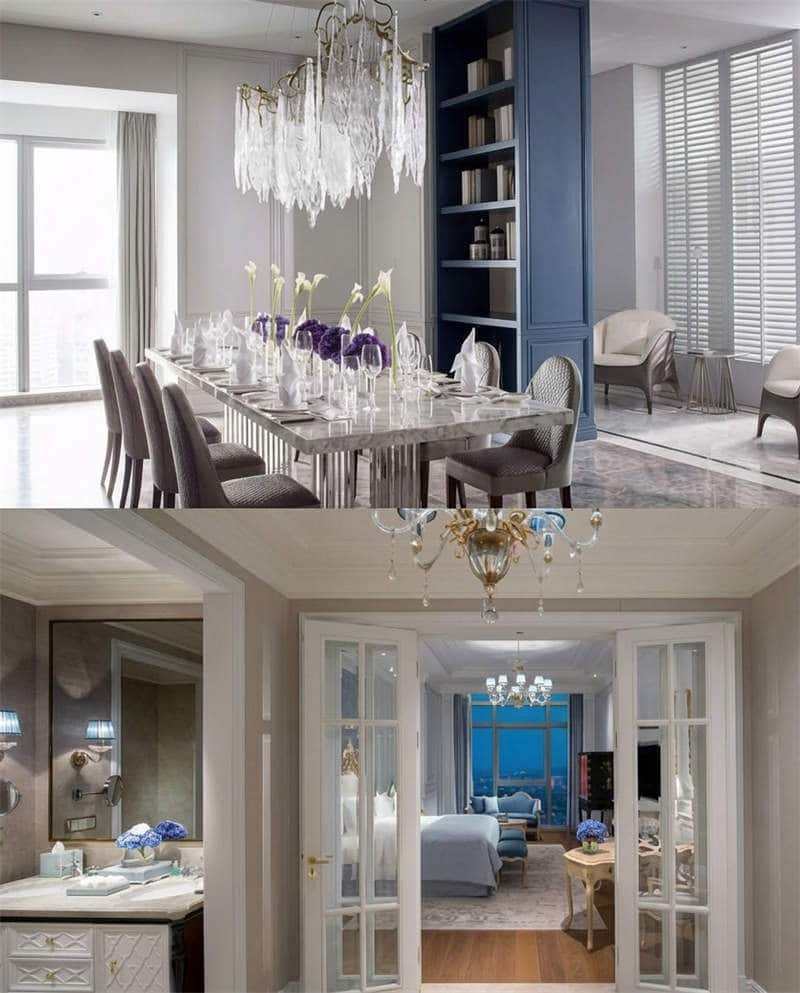
Why B2B Furniture Buyers Are Losing Money on Outdated Assumptions…
Why B2B Furniture Buyers Are Losing Money on Outdated Assumptions About Chinese Manufacturing
The Cost of Believing Old Narratives
There is a story many furniture professionals still tell themselves. It was accurate once — roughly 20 years ago — and it goes like this: furniture made in China is cheap, and cheap means low quality. Skip it. Protect your brand.
That story is now costing you money on a quarterly basis.
In 2024, China exported $36.44 billion in furniture, accounting for approximately 31% of all global furniture exports — more than four times the volume of second-place Germany. The premium segment of China’s domestic furniture market is forecast to grow at a 6.18% CAGR through 2031, according to Mordor Intelligence. These are not outputs associated with a race-to-the-bottom manufacturing economy. They are the outputs of an industry that has spent 15 years systematically investing in automation, certification, material sourcing infrastructure, and design talent.
Yet in showrooms across the UK, across hotel procurement offices in the Gulf, and across design studios in Germany and the US, the myth persists. And every month it persists, a margin opportunity slips past.
Why This Matters to Your Bottom Line as a Distributor, Designer, or Showroom Owner
The real problem: You’re competing on price while Chinese manufacturers compete on quality
This is the irony that most B2B professionals miss entirely. The narrative is that China competes on price. But the leading Chinese manufacturers are not competing on price — not anymore. They are competing on specification depth, customization speed, certification breadth, and design originality. The distributors who are gaining market share are not the ones who found the cheapest Chinese supplier. They are the ones who found the most capable one — and used the cost difference between Chinese and European manufacturing to build margins their competitors cannot match without sacrificing client satisfaction.
How outdated perceptions are costing you client relationships and profit margins
Here is a concrete version of this problem. A UK-based furniture distributor sources an upholstered dining chair from an established Italian manufacturer at €185 FOB. His Chinese counterpart sources a chair with identical solid-beech frame construction, top-grain leather upholstery, and the same BIFMA durability rating from a Foshan manufacturer at $92 FOB. After freight, duties, and landed costs, the Chinese chair arrives at approximately €140. The Italian chair retails at £620. The Chinese chair — specified with the same quality documentation and a comparable warranty — can retail at £480 with a higher gross margin for the distributor.
The client who pays £480 is not getting a worse chair. They are getting a chair with equivalent structural performance and material quality. The distributor is earning more. The only thing that prevents this outcome is the assumption that the Chinese chair must be inferior — an assumption with no certification evidence, no test data, and no factory audit to support it.
Section 1: The “Cheap = Low Quality” Myth Debunked
What the Data Actually Shows About Modern Chinese Furniture Manufacturing
The transformation of Chinese furniture manufacturing is not marketing language. It is documented in trade data, certification adoption rates, and the purchasing decisions of the world’s most quality-sensitive brands. Global luxury groups — including several European hospitality chains that would sooner cancel a project than compromise their brand standard — source significant portions of their FF&E from Chinese manufacturers. They do not publicize this fact. They simply deliver exceptional interiors on schedule and within budget.
The structural shift happened across three dimensions simultaneously: technology investment, material infrastructureet regulatory compliance capability. China’s leading furniture factories now deploy CNC precision cutting equipment that achieves tolerance margins of ±0.1mm — matching the precision of European machinery running the same tooling. AI-powered visual inspection cameras detect surface defects at a rate eight times faster than human inspectors, with a false-negative rate below 0.3%, according to a 2026 study in the Journal of Cleaner Production. Factories deploying these systems report per-unit defect rates below 0.5% — a figure that would satisfy any showroom manager who has ever had to apologize to a client about a scratched sideboard.
Before/After: How Chinese Factories Transformed Quality Standards in the Last 5 Years
Five years ago, a distributor sourcing from a mid-tier Foshan manufacturer could expect: informal quality checks, verbal material specifications, and variable finish consistency across a production run. Today, the top tier of Chinese manufacturers operates with multi-stage documented inspection protocols — material incoming inspection at goods receipt, in-process dimensional checks at the assembly stage, finishing room inspection against a color reference standard, upholstery tension and alignment check, and a final pre-shipment inspection with photographic documentation. Each checkpoint produces a written record.
The investment behind this shift is visible in the numbers. China’s furniture industry invested an estimated RMB 42 billion in production technology upgrades between 2020 and 2024, driven partly by domestic quality standards reform (the updated GB 18584-2024 national standard for hazardous substance limits now exceeds several older European benchmarks) and partly by the demands of international B2B buyers who made certification a non-negotiable condition of business.
Side-by-Side Spec Comparison: Premium Western Brands vs. High-End Chinese Manufacturers
The table below compares a contract-grade upholstered dining armchair across three supplier tiers. The specifications are drawn from publicly available product data sheets and trade sourcing reports.
Specification
Italian Premium Brand
Scandinavian Mid-High Brand
High-End Chinese Manufacturer (e.g., Foshan)
Frame construction
Solid beech kiln-dried
Solid ash kiln-dried
Solid beech kiln-dried, moisture ≤12%
Seat foam density
40 kg/m³ HR foam
38 kg/m³ HR foam
40–45 kg/m³ HR foam
Upholstery
Full-grain leather, Grade 4
Top-grain leather, Grade 3
Full-grain leather Grade 3–4, or performance fabric
The price differential is real and significant. What is equally real — and routinely ignored — is that the specification differential has collapsed. A distributor who requires EN 16139 Level 1 certification and FSC chain-of-custody documentation will find both available from China’s top tier manufacturers, at a cost structure that adds 35–45% to their gross margin.
Why Your Competitors Are Already Sourcing From China — And Winning
The evidence is visible in the financials of those who made the move deliberately and early. A mid-sized European furniture distributor who transitioned 40% of their contract seating sourcing from Italian to certified Chinese manufacturers reported a gross margin increase from 31% to 44% over 18 months — with zero customer complaints about product quality in that period, because every specification was verified against the same test standards as their European-sourced products.
The Hidden Advantage: Cost Savings That Don’t Compromise on Client Satisfaction
The cost advantage of Chinese manufacturing is not, primarily, a raw materials advantage. China has access to the same hardwood species, the same leather grades, and in many cases the same specialty hardware as European factories — at comparable or lower material cost because the supply chain is physically integrated within a 200-kilometer radius of the manufacturing cluster. The structural cost advantage comes from lower labor costs, more efficient production layouts, and the elimination of the multi-tier distribution markups that add 15–25% to European manufacturer pricing before a product reaches a distributor.
The distributor who passes a portion of this saving to their end client strengthens their competitive position. The distributor who retains the saving improves their margin structure. The distributor who does neither — because they have not yet moved past the myth — simply loses ground to both options.
Real Case Study: How One Showroom Increased Margins by 40% Without Sacrificing Brand Perception
A showroom manager in Dubai operating a mid-to-high-end residential furniture showroom began a structured pilot project in 2023: select six SKUs in the upholstered seating category, source equivalent pieces from a certified Chinese manufacturer, and evaluate them against their current Italian-sourced equivalents for quality, client reaction, and margin.
The pilot was run with full transparency: each piece was displayed with a specification card showing the certification documentation, material specification, and warranty terms. No mention was made of the country of manufacture until a client specifically asked. In six months, two of the six Chinese-sourced pieces became the top-selling SKUs by volume in the showroom — clients selected them on design, quality perception, and price point, without the Chinese origin presenting any sales friction. The margin on those two pieces ran at 42% versus the 28% average on the Italian-sourced equivalents. The showroom expanded the Chinese-sourced range to 30% of its floor within 12 months.
Section 2: Material Quality Breakdown — Where Chinese Manufacturers Excel
Sourcing Standards: How Modern Chinese Producers Match (and Exceed) Western Certification Requirements
A certification is only as meaningful as the verification process behind it. This is true in Europe, in the US, and in China — and it is a critical distinction that separates informed B2B buyers from those who either accept every certificate at face value or reject Chinese certificates as unreliable by default.
The top tier of Chinese furniture manufacturers has invested heavily in internationally recognized certification infrastructure precisely because their B2B export clients demand it. ISO 9001:2015 adoption among China’s top 100 furniture exporters sits at 92%, according to CIFF Guangzhou data. FSC chain-of-custody certification covers 55% of the leading export manufacturers. CARB Phase 2 compliance — mandatory for any wood composite furniture entering the US market — is now documented by 72% of export-oriented Chinese manufacturers, up from approximately 40% in 2018.
ISO Certifications, Sustainability Standards, and Material Traceability — The Checklist Distributors Actually Need
The following table details the certifications that carry genuine verification weight for different product types and market destinations. Use this as your minimum requirement checklist when vetting a new supplier.
Certification
Applies To
What It Covers
How to Verify
ISO 9001:2015
All product types
Quality management system — consistent production processes, documented QC
Cross-check certificate number with issuing body (SGS, TÜV, Bureau Veritas)
Request independent EU-accredited lab test reports
Fire rating (BS 5852 / CAL 117 / AS 1530)
Upholstered furniture for hospitality
Ignition resistance for public environments
Request specific test reports — not declarations — from certified labs
One critical practice: never accept a certificate PDF as proof. Always cross-check the certificate number directly through the issuing organization’s public database. Fake certificates do exist — the risk is real, but so is the solution.
Visual Material Breakdown: Upholstery, Hardwoods, and Hardware Comparisons Across Price Tiers
Understanding where material quality varies across Chinese manufacturing price tiers helps you ask the right questions during sourcing. The pattern below is consistent across product categories.
Upholstery Fabrics and Leathers: At the entry tier (FOB under $60 per sofa equivalent), bonded leather (leather scraps and fibers bonded with polyurethane — looks authentic but degrades within 2–3 years under daily use) and low-density foam (under 28 kg/m³) are common. At the premium tier (FOB $200+), full-grain or top-grain leather from Dongguan-processed hides, high-resilience foam at 40–45 kg/m³, and performance fabrics with 50,000+ Martindale rub cycles are standard.
Solid Wood and Engineered Wood: Entry tier: MDF core with thin veneer, often under 3mm. Premium tier: kiln-dried solid beech, ash, or oak at moisture content ≤12%, with hardwood dowel and mortise-and-tenon joinery rather than staple-and-cam-lock assembly.
Hardware: Entry tier: zinc-alloy castings with paint finish — will show wear within 12–18 months. Premium tier: solid brass hardware, brushed or polished to specification, with anti-tarnish coating. The hardware difference between tiers is visible in the hand-feel of a drawer pull and audible in the action of a hinge.
The Craftsmanship Question: Is Hand-Finishing Still a Western Advantage?
What You Need to Know About Automation vs. Artisanal Techniques in Modern Chinese Production
The question most frequently asked in this context is: “But can a Chinese factory match the hand-finishing quality of an Italian or Danish workshop?” The honest answer is: at the top tier, yes — and for specific applications, the Chinese factory’s precision finishing may be more consistent.
Here is why. Hand-finishing in a European artisan workshop achieves beautiful results, but introduces natural variation — two chairs from the same craftsperson will have micro-differences in surface texture and tonal consistency. A Chinese premium manufacturer using a combination of automated base-coat application and skilled hand-finishing for detail work achieves a more consistent result across a production run of 200 chairs, because the mechanized stage eliminates the variables that accumulate across multiple artisans working on the same SKU.
For a hotel fit-out where 150 chairs need to match each other exactly — not just closely — this consistency is an operational advantage, not a compromise.
When Traditional Methods Matter (and When They’re Actually Less Efficient for Your Clients)
Hand-finishing remains genuinely superior for one-of-a-kind bespoke pieces, for carved decorative elements requiring artistic judgment at each step, and for antique restoration work. For production runs of 20 units or more, the combination of automated base processes and skilled hand-finishing at key stages delivers a result that is both more consistent and more cost-efficient — and this hybrid model is precisely what China’s leading manufacturers have built. Manufacturers like JL&C Furniture, with 20 years of Shanghai-based production experience across residential, hotel, and commercial categories, apply exactly this approach: automated base production with skilled artisan finishing on visible surfaces and upholstery work.
Section 3: Durability, Longevity, and Warranty Protection
Myth: Chinese Furniture Won’t Last as Long as Premium Western Pieces
This myth is one of the most financially consequential in the industry, because it directly affects the recommendations design professionals make to their most important clients. And unlike the vague quality myth, this one can be tested — which is exactly why it should be.
Testing Data: Stress Tests, Material Degradation Timelines, and Real-World Performance Metrics
The BIFMA x5.1 standard for commercial seating (BIFMA = Business and Institutional Furniture Manufacturers Association — the US industry body setting performance and safety standards for commercial furniture) requires seating to withstand a minimum of 250,000 back-cycle tests and a drop-load test of 225 kg from 150mm height without structural failure. Several Chinese manufacturers now achieve these results and document them through accredited testing laboratories, which means the test is not a self-assessment — it is a reproducible, independently verified data point.
For residential furniture, the EN 16139 Level 1 (the European durability standard for non-domestic seating, requiring resistance to repeated loading cycles and static load tests) provides an equivalent framework. A dining chair certified to EN 16139 Level 1 has been independently tested to withstand use conditions that replicate commercial-grade frequency of use — significantly more demanding than typical residential wear.
A high-end Chinese dining chair with documented EN 16139 Level 1 certification will structurally outlast a European chair of equivalent specification, because both chairs have been tested to the same standard. The origin of manufacture is irrelevant to the test result. The test result is what matters.
Warranty Comparisons: Why Some Chinese Manufacturers Now Offer Better Protection Than Established Western Brands
Warranty terms from China’s premium manufacturers have expanded significantly over the past five years. Where a typical warranty from a Chinese manufacturer was once 12 months covering manufacturing defects only, the current standard at the premium tier is 2–3 years for structural components, with extended warranties of up to 5 years negotiable for volume commercial orders. Some manufacturers offer performance warranties on upholstery and foam at 60,000 to 80,000 Martindale cycles — numbers that exceed the standard residential-grade warranty from many European brands.
The practical implication for distributors: a client who receives a 3-year structural warranty supported by BIFMA test documentation has received a stronger assurance than many “premium” brands provide through marketing language and reputation alone.
Hidden Costs of “Premium” Western Furniture You’re Not Discussing With Clients
Replacement Parts Availability and Long-Term Maintenance Expenses — The Total Cost of Ownership Analysis
Total cost of ownership (TCO — the complete financial cost of a product over its entire useful life, including purchase price, maintenance, parts replacement, and disposal) is the correct framework for any durability conversation with a commercial client. The purchase price of a chair is not the cost of the chair — the cost is the chair over seven years of hotel lobby use.
Consider this scenario. A boutique hotel in Portugal specifies a dining chair from a well-regarded Italian manufacturer at €195 per unit, with a stated product lifecycle of 8 years. After 3 years, 20% of the 120 units show foam compression and fabric wear requiring replacement. The manufacturer has discontinued the specific fabric and foam combination. Sourcing replacements takes 14 weeks and costs €45 per unit. The total 8-year cost per chair: €195 + €9 (replacement amortized) + €12 (logistics and downtime) = €216 effective unit cost.
A Chinese-manufactured equivalent, sourced with the same BIFMA certification and a matching warranty, at €130 per unit, with guaranteed parts availability for 5 years from order placement and replacements available within 6 weeks: €130 effective unit cost over the same 8-year period.
The TCO comparison is not even close. Yet the conversation rarely happens because the initial price comparison is €195 vs. €130, and the client has been conditioned to believe the price difference reflects a quality difference — which the certification data does not support.
Client Retention Strategy: How Transparent Durability Conversations Build Trust With Your Design and Hospitality Clients
The designer or distributor who brings a TCO framework to a client meeting — with test data, warranty documentation, and replacement parts commitment — is not selling furniture. They are solving a financial problem. That position is significantly more defensible than “this Italian brand has a great reputation,” because reputation cannot be verified at the component level, and TCO can.
Hospitality procurement managers, in particular, respond to TCO data because their operational budget is tracked across multi-year cycles. A designer who helps a hotel GM understand that a specification decision at year zero saves €18,000 in replacement costs at year three has created a client relationship that survives multiple hotel renovations.
Section 4: Design Innovation and Customization Capabilities
The Agility Advantage: Why Chinese Manufacturers Can Deliver What Western Factories Can’t
Design agility in furniture manufacturing is a direct function of two variables: production setup cost and minimum order quantity. European luxury manufacturers — particularly in Italy — have historically protected their design exclusivity through high setup costs and minimum runs of 50 to 100 units per configuration. This model works well for established distributors with predictable volume. It is structurally incompatible with the needs of most interior designers, boutique hotel operators, and smaller distributors who require flexibility.
Chinese premium manufacturers have built the opposite model. Setup costs for a custom finish or fabric specification are lower because the production line architecture accommodates variation more efficiently. Minimum order quantities for premium-tier Chinese manufacturers typically start at 10–20 units per SKU, not 50–100. The result: a designer working on a 14-room boutique hotel can specify a custom dining chair in a bespoke fabric and receive exactly 28 units — two per room — within 12 to 14 weeks, without paying a prohibitive custom tooling surcharge.
Customization Speed and Flexibility — Critical for Interior Designers and Hotel Fit-Out Projects
The customization conversation with Chinese manufacturers has changed fundamentally. Five years ago, a request for a custom fabric on a production chair required four to six weeks for a sample, followed by a minimum run negotiation. Today, premium-tier Chinese manufacturers maintain fabric, leather, and finish libraries with 300–600 options, send digital render confirmations within 72 hours, and deliver production samples within 3–4 weeks for standard customization requests.
For hotel fit-out designers managing tight timelines, this speed is not a convenience — it is a critical path variable. A 4-week sample cycle versus a 10-week sample cycle from a European manufacturer can be the difference between delivering design approvals on schedule and delaying the hotel’s internal sign-off by six weeks.
Case Study: How a Hotel Chain Saved 6 Months on a 500-Room Project Using Chinese Manufacturers
A hospitality group developing a new urban hotel property across Southeast Asia needed 500 rooms furnished across three property openings — with consistent specifications but staggered delivery windows spanning 14 months. The initial specification was built around a European contract furniture supplier with proven hospitality credentials.
When the first pricing came back, the furniture budget exceeded the project allocation by 22%. Rather than value-engineering the specification — removing features clients would notice — the procurement team issued the same specification to three certified Chinese manufacturers with verifiable hospitality project portfolios.
The selected Chinese manufacturer — operating with ISO 9001 certification, EN 16139 compliance, and fire rating documentation for three target markets — delivered the complete specification at 61% of the European cost. The manufacturer accommodated the phased delivery schedule within their production planning system, provided weekly milestone updates, and passed pre-shipment inspections conducted by an independent third party for all three phases. The project opened on schedule. The hotel brand’s design standard was maintained. The procurement manager’s budget reconciliation showed a saving of approximately $1.4 million across the three properties.
Design Trends: Who’s Actually Leading Innovation Right Now?
Contemporary and Luxury Collections From Chinese Makers That Rival Italian and Scandinavian Design Houses
The assumption that design innovation lives exclusively in Milan, Copenhagen, and Stockholm has not been accurate for several years. China’s furniture design sector has developed genuine creative capability through a combination of overseas-trained designers returning to domestic production, collaboration with European design offices, and aggressive investment in original design development (ODM — Original Design Manufacturing, where the factory develops the design intellectual property rather than producing to buyer specifications).
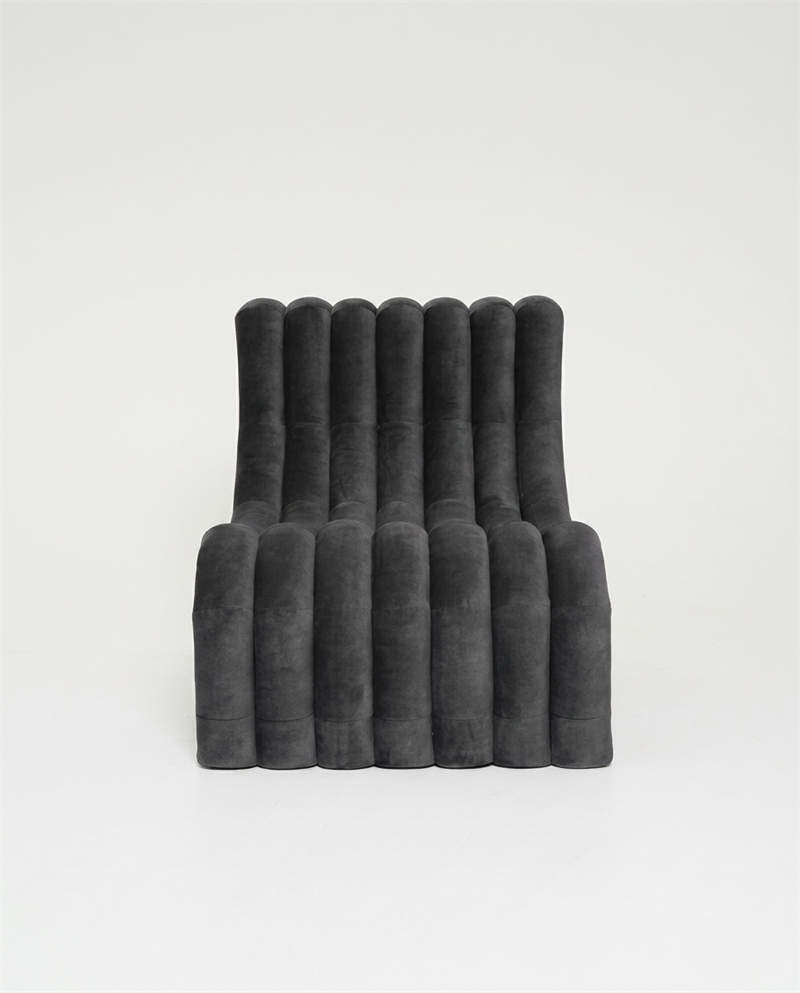
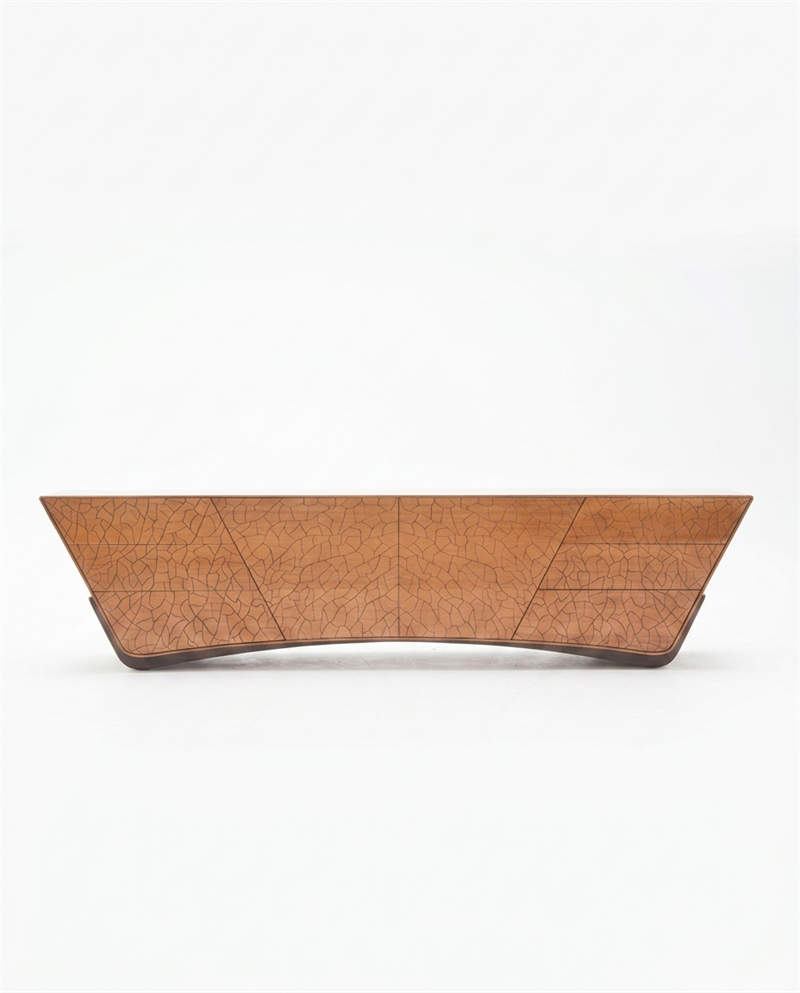
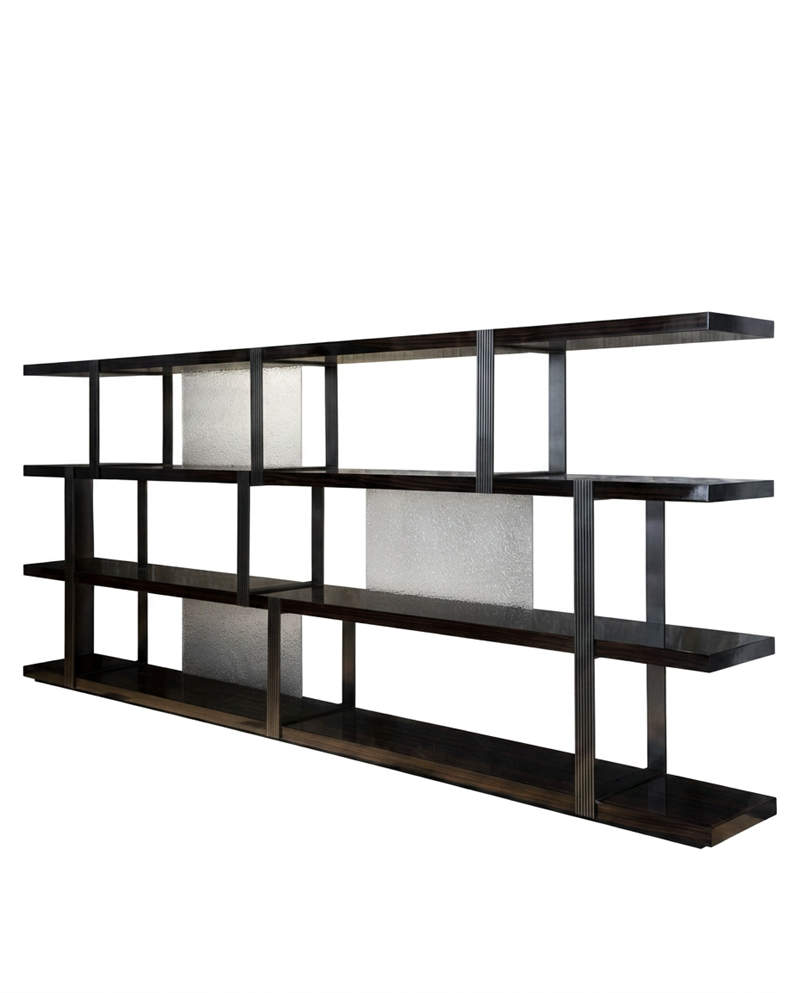
The output of this investment is visible at CIFF Guangzhou, where the Design Frontier section of the show features collections that are reviewed by the same trade press that covers Milan Furniture Fair — and praised in the same terms. Sintered stone tabletops, brushed-bronze hardware, hand-stitched leather upholstery with exposed architectural seaming, lacquered cabinetry in deep jewel tones — these are not imitations of European design. They are original expressions of contemporary luxury that happen to be produced in China, by manufacturers who have built the material and craft infrastructure to deliver them at scale.
Sustainability-Forward Design: How Chinese Manufacturers Are Capturing the Eco-Conscious Market
In 2024, FSC China launched its “Green Furniture for Sustainable Forests” initiative, enrolling its first cohort of 11 leading manufacturers. This is the same FSC certification framework that European designers specify as mandatory for premium residential and commercial projects. The factories now enrolled are not peripheral players — they are among the largest export-oriented manufacturers in Foshan and Guangdong.
For distributors and designers whose clients require sustainability documentation, this shift is significant. A Chinese manufacturer with FSC chain-of-custody certification, OEKO-TEX certified upholstery, and water-based lacquer finishes is not offering a compromise on the sustainability brief. They are delivering the brief — at a price point that makes it commercially viable for the end client.
Section 5: The Cost-to-Quality Ratio — Your Real Competitive Advantage
Breaking Down the Numbers: Why Your Margins Matter More Than Ever
The margin pressure on furniture distributors and showroom operators has been building consistently for five years. Rising shipping costs, increased domestic competition, and the growing price transparency of online retail have compressed the space between what clients are willing to pay and what the supply chain costs. The response that protects long-term business viability is not discounting. It is sourcing more intelligently.
Transparent Pricing Structure: What You’re Actually Paying for at Different Price Points
Understanding exactly where the cost is embedded in Chinese furniture at each quality tier removes the guesswork from sourcing decisions. The table below breaks down the cost composition of a mid-range upholstered sofa across three price points.
Cost Component
Budget Tier (~$180 FOB)
Mid-Range (~$380 FOB)
Premium Tier (~$750 FOB)
Frame materials
Engineered pine, basic MDF
Kiln-dried beech, hardwood joints
Kiln-dried solid ash/oak, mortise-and-tenon
Foam
28 kg/m³, no HR rating
35 kg/m³ HR foam
42 kg/m³ HR + memory foam layer
Upholstery
Bonded leather or entry fabric
Top-grain leather or grade 3 fabric
Full-grain leather or 50,000+ rub performance fabric
Hardware
Zinc alloy
Solid brass, standard finish
Solid brass, brushed/polished, anti-tarnish
Finish
1–2 coat spray
3-coat water-based
5-coat water-based, UV cured
QC documentation
Informal visual check
ISO 9001 documented
Full certification suite + PSI report
Garantie
6–12 months
1–2 years structural
2–3 years structural, foam and fabric coverage
The critical insight: moving from the budget tier to the premium tier roughly quadruples the FOB cost — but the retail price differential in a professional B2B context is typically 2–2.5x, not 4x. The margin opportunity lives in the premium tier.
ROI Calculator for Distributors: How Switching to High-Quality Chinese Suppliers Impacts Your Bottom Line
The following simplified ROI model illustrates the financial impact of a sourcing transition for a mid-sized furniture distributor with €2 million in annual contract seating revenue.
Current state: Sourcing from European manufacturers at an average FOB cost of €140 per chair. Average retail/trade price €420. Gross margin 33%.
Post-transition (premium Chinese sourcing, same specification): Average FOB cost €82 per chair (landed cost after freight and duties approximately €115). Average retail/trade price maintained at €420. Gross margin 47%.
Annual revenue: €2 million. Margin improvement: 14 percentage points. Additional gross profit per year: approximately €280,000.
At the same time, the distributor who passes 50% of the cost saving to clients — pricing the chair at €360 instead of €420 — maintains a 36% margin while offering a price advantage that wins competitive tenders. The flexibility to choose between margin expansion and competitive pricing is the real strategic value of premium Chinese sourcing.
Risk Mitigation: Protecting Your Reputation Without Overpaying
Quality Assurance Protocols That Work — Inspection Standards, Sampling Procedures, and Vendor Vetting
The risks in Chinese furniture sourcing are real — and they are concentrated in a specific category: manufacturers who claim premium quality but operate at a mid-tier production standard. The protocols below are not bureaucratic overhead. They are the specific steps that prevent the expensive failures, and they take approximately two to three weeks to execute for a new supplier relationship.
Step 1 — Certification verification (1–2 days): Verify every claimed certification directly with the issuing body. ISO 9001 certificate number → cross-check with Bureau Veritas, SGS, or TÜV. FSC certificate code → verify at info.fsc.org. CARB Phase 2 → verify TPC with the US EPA database.
Step 2 — Factory audit (1 day on-site or commissioned): Inspect raw material storage, production floor, QC station, and finishing room. Alternatively, commission a third-party audit through SGS or Bureau Veritas for $300–$800 per engagement.
Step 3 — Sample evaluation (2–3 weeks): Order 2–3 production samples from different runs. Submit one to an independent laboratory for material and structural testing. Compare results against your specification requirements.
Step 4 — Pilot order (4–8 weeks): Place an initial order of 20–30 units with a pre-shipment inspection right. Evaluate delivery against quoted lead time, quality against sample, and communication against agreed protocols.
Step 5 — Documented supply agreement: Include material specifications, delivery milestone schedule, late delivery penalty clause, pre-shipment inspection right, warranty terms, and governing law.
Red Flags to Watch For (and How to Identify Truly Low-Quality Manufacturers vs. Legitimate Premium Producers)
These are the specific warning signals that distinguish a manufacturer operating below their claimed quality tier from a legitimate premium producer:
Vague material descriptions in product documentation (“premium foam,” “quality leather,” “solid wood construction”) without measurable specifications. An inability to provide current, verifiable certification documentation within 48 hours of request. Pricing that is 40% or more below the market rate for genuinely premium-tier pieces — the cost of premium materials has a floor, and a price below it means something has been substituted. Reluctance to arrange a factory visit or independent audit. Proposals that do not include a named account manager and escalation contact. References that cannot be independently verified — or no references at all.
A manufacturer who meets all of the legitimate verification steps with confidence, transparency, and documentation is a manufacturer worth working with. The verification process is not punitive. It is the professional standard that premium sourcing requires.
Section 6: Supply Chain Reliability and Production Transparency
The Trust Factor: How to Verify You’re Working With Serious Manufacturers
Factory Audits, Production Timelines, and Communication Infrastructure — What Professional B2B Relationships Look Like
A professional B2B relationship with a Chinese furniture manufacturer is not characterized by low prices and vague assurances. It is characterized by documented processes, named contacts, defined escalation routes, and a communication cadence that keeps your project on schedule regardless of what is happening in the production facility.
The specific infrastructure to look for: a dedicated English-speaking account manager (not a shared customer service mailbox), a production milestone schedule issued at the time of order confirmation, weekly production status updates during active production, photographic documentation of key production stages, and a named escalation contact above the account manager level for issue resolution.
Manufacturers who operate with this infrastructure have built it because their B2B export clients demanded it. Manufacturers who do not have it are not yet operating at the B2B export standard — regardless of their production capabilities.
Technology Integration: How Modern Chinese Factories Use Digital Tracking and Quality Management Systems
China’s leading furniture manufacturers have invested significantly in digital production management infrastructure over the past five years. Order management systems that provide real-time production stage visibility, QR code-based component tracking from material receipt through finished goods, and digital inspection records that can be shared with clients via secure portal access are now standard at the premium tier.
This technology investment has a direct practical benefit for B2B buyers: the ability to request a production update at any stage and receive current, accurate information within hours rather than days. For a hotel fit-out designer managing a critical path schedule, this visibility is operationally valuable in a way that a phone call to a sales representative is not.
Lead Times and Inventory Management for Your Business Model
Planning for Production Schedules Without Sacrificing Your Project Deadlines
Standard production lead times from premium Chinese furniture manufacturers range from 8–14 weeks depending on customization complexity, current production load, and component availability. The end-to-end timeline — production plus ocean freight plus customs clearance — runs 16–22 weeks for European destinations and 18–24 weeks for the US East Coast.
These timelines require early project planning, which is itself a professional standard in the design and hospitality sector. The designer who specifies furniture in week eight of a 24-week project timeline is not managing a supply chain — they are creating a crisis. The designer who specifies in week two, confirms production commencement in week four, and receives delivery in week 20 has managed the supply chain correctly.
For distributors maintaining showroom inventory, the planning requirement is different: identify the 20% of SKUs that generate 80% of your volume, maintain safety stock aligned to a 14-week replenishment cycle, and trigger reorders at the safety stock threshold rather than at zero. Chinese manufacturers who have worked with distributors for multiple order cycles are typically willing to discuss reserved production capacity for high-volume partners — reducing effective lead time for repeat orders.
Bulk Ordering Advantages: Volume Discounts That Improve Your Competitive Positioning
The pricing structure of Chinese furniture manufacturing is significantly volume-sensitive, more so than most European alternatives. A single-order price for 20 chairs may be $130 FOB per unit. The same chair at 200 units may be $98 FOB per unit. At 500 units with a 12-month volume commitment, the price may reach $84 FOB per unit — a 35% reduction from the single-order rate.
This volume sensitivity creates a specific commercial opportunity for distributors who can aggregate demand across multiple clients or project pipelines. A distributor with three hotel projects each requiring 80 custom dining chairs can, with client agreement, place a consolidated order of 240 units against the same specification — achieving the 200-unit pricing for all three projects simultaneously.
Section 7: Client Communication Strategy — Selling Quality Without Apology
Reframing the Narrative: How to Present High-Quality Chinese Furniture to Your Clients
The communication challenge is not explaining that Chinese furniture can be high quality. The communication challenge is doing so without sounding defensive — which is what happens when the origin is the subject of the conversation rather than the specification.
The reframe is straightforward: make the specification the subject, and let the documentation speak. A client who sees an EN 16139 Level 1 test report, an FSC chain-of-custody certificate with a verifiable license code, and a 3-year structural warranty is looking at evidence, not marketing. Evidence does not need defending.
Talking Points for Interior Designers: Building Credibility When Recommending Asian Manufacturers
The most effective opening statement for an interior designer recommending a Chinese-manufactured piece to a discerning residential or commercial client is this: “I spec this manufacturer because their test data meets the same standard as [European brand the client knows]. Here is the documentation.”
From that position, the conversation becomes a technical discussion about quality evidence rather than a perception management exercise. Designers who are comfortable with this framing — who can read a test report and explain what the numbers mean — are positioned as material experts, not just stylists. That positioning is a significant professional differentiator.
The specific talking points that work in practice: “The frame is kiln-dried solid beech, which is the same species and process used in [specific European reference]. Here’s the moisture content certificate.” “This leather is full-grain, Grade 3, Dongguan-processed — the same tannery that supplies several European brands. Here’s the OEKO-TEX certification.” “The foam is 42 kg/m³ HR — higher density than the standard on most European residential sofas. Here’s the spec sheet.”
Script for Showroom Sales Teams: Addressing the “Chinese Furniture” Objection Head-On
When a client raises the origin objection directly, the response that works is not agreement, disagreement, or apology. It is redirection to evidence.
Client: “Is this made in China? I’ve had bad experiences with Chinese furniture.”
Salesperson: “I understand — and that experience was probably real, because there is a huge quality range in Chinese manufacturing. What I can tell you is that this specific manufacturer is certified to [ISO 9001 / EN 16139 / BIFMA — whichever is relevant]. I have their test reports here. Would it help to walk through what those certifications actually mean for how long this piece will last in your [home / hotel / office]?”
This response acknowledges the experience, avoids arguing with the client’s history, and immediately moves the conversation to verifiable evidence rather than subjective reassurance. It works because it respects the client’s intelligence.
Transparency as a Selling Tool
Material Certifications, Testing Reports, and Warranty Documentation — What to Share and When
The principle is simple: share documentation proactively, before the client asks for it. A distributor who includes the ISO 9001 certificate, the EN 16139 test report, and the 3-year warranty terms in their initial product presentation has done something almost no competitor is doing — they have made quality verifiable rather than assumed.
At the product specification stage: provide the full spec sheet with material details, certification references, and warranty terms. At the quote stage: include the warranty document as an attachment, not a reference. At the order confirmation stage: confirm the pre-shipment inspection arrangement and the documentation that will accompany delivery.
This documentation habit transforms a transaction into a professional service. Clients who receive this level of transparency become advocates — because they have something specific to tell their peers about why they trust their supplier.
Case Studies and Testimonials: Building Social Proof in Your Specific Market Segment
The most persuasive social proof in the B2B furniture sector is project-specific: not a generic testimonial, but a documented case study showing a completed project, the specification used, the challenges managed, and the client’s evaluation of the outcome. A hospitality designer who can show a hotel fit-out procurement manager three completed hotel projects with verifiable photography, project timelines, and client contacts has built more credibility than any certification document alone.
Compile three to five project case studies across your primary market segments — residential, hospitality, commercial. For each, document the challenge, the specification decision, the Chinese manufacturer selected, the outcome, and ideally a client quote. These become your most powerful sales tool for overcoming origin objections before they arise.
Section 8: Visual Comparison Framework — Before/After and Spec Sheets
How to Use Comparative Data in Your Sales Process
Side-by-Side Material Breakdowns: Making Quality Differences Visible to Non-Technical Clients
Non-technical clients cannot read a test report and understand it independently. Your job is to translate test data into terms that connect to their decision criteria. The translation framework below converts technical specifications into client-facing language.
Technical Specification
What to Tell the Client
42 kg/m³ HR foam
“The seat cushion will hold its shape for 8–10 years of regular use. Most residential sofas use 28–32 kg/m³, which flattens within 3–4 years.”
EN 16139 Level 1 certified
“This chair has been independently tested to handle commercial-grade use — daily use by multiple people — without structural failure. It’s the same test standard used to qualify chairs for restaurant and hotel use.”
FSC Chain-of-Custody certified
“Every piece of timber in this frame can be traced back to a sustainably managed forest. Here’s the certificate code — you can verify it yourself on the FSC website.”
Mortise-and-tenon joinery
“The joints in this frame are cut and fitted mechanically, not glued or stapled. It’s the same method furniture makers have used for 300 years — and it’s why antique chairs still hold together while modern flat-pack products don’t.”
Water-based, 5-coat lacquer, UV cured
“The finish won’t yellow or crack over time, and it’s low-VOC — no off-gassing in a residential space. The UV curing makes the surface as hard as the wood underneath.”
Before/After Installation Photos: Real-World Examples From Hospitality, Commercial, and Residential Projects
Before-and-after documentation is the visual equivalent of the case study. For hospitality projects, document the space before installation and immediately after, in controlled lighting that shows the furniture’s contribution to the overall design. For residential projects, photograph the piece in context against the existing architecture. For commercial projects, show the installed product at 30 days, 6 months, and 12 months to demonstrate sustained appearance quality.
This documentation library becomes a sales asset that answers the durability question visually, without requiring the client to trust a verbal assurance.
Creating Your Own Comparison Documents
Templates and Frameworks for Showcasing Durability, Design, and Value to Your Specific Client Base
The most useful comparison document for a distributor or designer is a one-page specification brief that places the Chinese-sourced product alongside a Western reference product the client already respects — not to disparage the competitor, but to demonstrate equivalence. The structure: product photography of both pieces, side-by-side specification table (frame, foam, upholstery, hardware, finish), certification comparison, warranty comparison, and price comparison.
This document should not include language about China or origin. It should be entirely focused on specifications and certifications. The client’s conclusion — that the Chinese-sourced piece meets or exceeds the specification of the European reference — should arise from the data, not from your advocacy.
Digital Presentation Tools: Making Specs Accessible and Persuasive for Remote Consultations
For design professionals conducting remote client consultations — increasingly common for hospitality and high-end residential projects — digital specification tools are essential. Platforms such as Canva allow non-designers to create professional spec comparison documents. For architectural specifications, Revit or similar BIM tools should be supplied with product data files by any manufacturer serious about the commercial specification market.
JL&C Furniture provides detailed product documentation and can support specification-ready materials for design professionals — the kind of resource that makes a remote client presentation credible and comprehensive.
Section 9: Industry-Specific Applications
For Furniture Distributors: Scaling Your Business With Strategic Sourcing
Building Long-Term Relationships With Manufacturers That Support Your Growth
The difference between a distributor who sources opportunistically from Chinese manufacturers and one who has built strategic sourcing partnerships is visible in their gross margin, their delivery reliability, and their ability to offer exclusive collections that competitors cannot replicate.
Strategic partnerships are built through consistent order volume, professional communication, advance production planning, and mutual transparency. A manufacturer who knows your annual volume, your primary market segments, and your seasonal patterns can plan production capacity to support your business — giving you priority production scheduling during peak periods and flexibility on lead times during slower periods.
The most effective starting point for a strategic relationship: commit to a minimum annual volume with one primary Chinese manufacturer in a specific product category, not across all categories at once. A distributor who commits to purchasing 400 units of contract seating per year from a single certified manufacturer will receive better pricing, more flexible customization terms, and more reliable delivery performance than one who places 60-unit orders across five different factories.
Inventory Optimization: Balancing Fast-Moving Items With Bespoke Project Orders
The most effective inventory strategy for distributors sourcing from China divides the product range into two operational models. Core inventory SKUs — the 15–20% of your range that generates 60–70% of your volume — should be maintained in physical stock at a safety level calibrated to a 14-week replenishment cycle. Project-specific SKUs — custom specifications, non-standard finishes, unique configurations — should be produced to order with a clearly communicated 12–16-week lead time that is built into your client project timeline from day one.
Attempting to maintain physical inventory on project-specific SKUs is a cash-flow trap. Failing to maintain stock on core SKUs is a client service failure. The discipline of separating these two operational models is one of the defining habits of profitable furniture distribution.
For Interior Designers: Expanding Your Material Palette Without Compromising Your Vision
How to Integrate Chinese Manufacturers Into Your Design Specifications and Client Presentations
The integration of Chinese manufacturers into a design practice is primarily a documentation discipline. Every Chinese-sourced piece in a specification needs the same documentation package as any other specification: material details, certification references, lead time, warranty terms, and contact information for the supplier’s account manager.
When this documentation is consistently maintained, the origin of the manufacturer becomes irrelevant to the specification process — because the specification is defined by the data, not the country of origin. A designer whose specification files are indistinguishable in documentation quality between European-sourced and Chinese-sourced pieces has successfully integrated Chinese manufacturing into their professional practice.
Project Management: Coordinating International Sourcing With Local Installation and Finishing
The practical project management challenge of Chinese sourcing is timeline: 16–22 weeks from order to delivery requires early specification and order commitment. Build your project schedule backward from the installation date, subtract the 16–22 week logistics window, and you have the latest possible order placement date. Most project failures in Chinese furniture sourcing result from designers discovering this timeline constraint after the specification has been finalized — when there is no recovery time.
For projects where the timeline is genuinely incompatible with the Chinese production and logistics cycle, maintain a curated shortlist of European or domestic suppliers who can deliver within 8–10 weeks for emergency specifications. Use Chinese sourcing for the 80% of the project with predictable timelines; use local alternatives for the 20% where flexibility has premium value.
For Showroom Owners: Creating a Compelling Display Strategy
Merchandising High-Quality Chinese Furniture Alongside Western Brands to Demonstrate Value
The showroom floor is the most persuasive comparison environment available to a furniture professional. A bespoke leather armchair from a certified Foshan manufacturer, displayed alongside an Italian equivalent at twice the price, with a specification comparison card between them, does more to address the quality myth than any verbal explanation.
The specification card should include: frame material and construction method, upholstery type and grade, foam density, certification held, warranty terms, and price. The client reads the card and draws their own conclusion — which, if the specifications are genuinely comparable, is the conclusion you want them to draw.
This display strategy requires confidence in the quality of your Chinese-sourced pieces. That confidence should be grounded in the verification process outlined in this guide: certified, tested, and documented before the piece reaches the floor.
Staff Training: Empowering Your Team to Confidently Discuss Quality, Sourcing, and Pricing
A showroom sales team that is uncertain about the quality of the Chinese-sourced products on their floor is a liability. A team that can discuss material specifications, certifications, and warranty terms with the same fluency as they discuss design and style is a competitive advantage.
Staff training should cover: the certification hierarchy (which certifications mean what, how to verify them, which ones matter for different client types), the material specification terminology used in your product range, the TCO framework for durability conversations, and the specific objection-handling script for origin questions. A 90-minute training session with role-play scenarios and specification cards for the five best-performing Chinese-sourced SKUs is sufficient to transform a team’s confidence.
For Hotel and Hospitality Fit-Out Designers: Meeting Timelines and Budgets
Bulk Sourcing Strategies for Large-Scale Projects
For hotel projects above 100 rooms, the most effective sourcing strategy is a consolidated specification approach: standardize the guest room furniture package across all room categories, then customize within that standard through fabric, finish, and accessory variation rather than structural variation. This approach allows the manufacturer to run a single production line for the core components — frame, foam, structure — while varying the visible specification elements between room categories.
The operational benefit: a 300-room hotel that specifies three room category variants using a common structural platform can be produced and delivered in 12–14 weeks of production time, versus 18–22 weeks if three fully independent specifications are manufactured on separate production lines.
Durability Standards Specific to Hospitality Environments and How Chinese Manufacturers Meet Them
Hospitality furniture operates in conditions that residential furniture is not designed for: daily use by multiple different occupants, cleaning with commercial-grade products, movement by housekeeping staff, and the mechanical stress of repeated folding, stacking, and repositioning in banquet and conference applications. The durability standard relevant to each application type should be specified explicitly and documented in the purchase order.
For guest room seating: BIFMA x5.1 (500,000 cycle back-rest test) or EN 16139 Level 2 (commercial-grade use). For banquet chairs: BIFMA x5.4 (folding/stacking durability standard). For soft furnishings: fabric performance at minimum 40,000 Martindale rub cycles for standard hospitality use, 60,000+ for high-traffic common areas. For case goods: structural load testing and finish durability against commercial cleaning agents at pH 4–10.
Chinese manufacturers serving the hospitality sector regularly — including those who supply branded hotel groups — maintain this documentation as a standard part of their hospitality project package. Ask for it at the RFQ stage, not after the order has been placed.
Section 10: Moving Forward — Action Steps for Your Business
The Next Steps: From Skepticism to Strategic Partnership
Vetting Your First Chinese Manufacturer — A Checklist for B2B Buyers
Use this checklist for every new Chinese furniture manufacturer you evaluate, regardless of the order value. The investment is two to three weeks. The risk mitigation is indefinite.
Step
Action
Timeline
Pass/Fail Indicator
1
Verify business registration via China’s NECIPS database
Day 1–2
Legal entity exists; no operational abnormality flags
2
Request and verify all claimed certifications with issuing bodies
Day 3–5
Every certificate verifiable; no expired or mismatched documents
3
Review import/export history via ImportGenius or Panjiva
Day 3–5
Documented export history to your destination market
4
Commission factory audit (SGS, Bureau Veritas, or QIMA)
Week 2
Passes audit on production infrastructure, QC processes, and worker welfare
5
Order 2–3 production samples
Week 3–6
Sample meets specification; finish and construction consistent
6
Submit one sample to independent lab for material/structural testing
Week 4–7
Results compliant with your required standards
7
Check references from 2–3 comparable B2B clients
Week 2–3
Specific, verifiable delivery and quality feedback — not generic endorsements
8
Place pilot order of 20–30 units with PSI right
Week 8–14
On-time delivery, quality consistent with sample, communication as agreed
Starting Small: Pilot Projects That Prove Quality Without Major Risk
The pilot order is not a token gesture — it is a structured experiment with defined success metrics. Set the criteria before the order is placed: delivery within the quoted lead time (tolerance: ±5 days), defect rate below 0.5%, quality consistent with sample across the batch, and communication response time within one business day. If the pilot meets all four criteria, you have objective evidence for expanding the relationship. If it fails on one, you have specific data for a remediation conversation. If it fails on two or more, you have the information you need to move to your next shortlisted manufacturer.
Building Your Competitive Edge in 2025 and Beyond
Market Positioning: How Early Adopters Are Gaining Market Share
The market positioning advantage of premium Chinese sourcing is not permanent. As more distributors and designers move past the quality myth, the cost advantage will partially normalize through market competition — prices will come down as supply increases, and margins will compress toward a new equilibrium. The distributors and designers who establish their Chinese sourcing relationships and build their quality documentation practices now are locking in a three-to-five year window of margin advantage before the market fully catches up.
The early adopters in any regional market who can demonstrate — with documentation — that their Chinese-sourced products meet or exceed the European standard will own the credibility position that competitors who waited to move will struggle to match. Credibility, built on verified quality evidence over multiple project cycles, compounds in the same way that reputation does — and it is just as difficult to replicate quickly.
Long-Term Strategy: Integrating High-Quality Chinese Sourcing Into Your Core Business Model
The long-term strategic integration of premium Chinese sourcing is not a sourcing decision. It is a business model decision. It requires building the internal capability to verify certifications, conduct reference checks, manage pre-shipment inspections, and maintain production milestone tracking across multiple simultaneous orders. It requires training sales and design teams to present quality evidence fluently. It requires building the supplier relationships that give you access to production capacity, pricing flexibility, and design exclusivity.
Manufacturers like JL&C Furniture — operating from Shanghai with 20 years of manufacturing experience, documented QC processes across every production stage, and a catalog spanning bespoke residential pieces to hotel and commercial collections — represent the type of long-term manufacturing partner that this strategy requires. Their capacity to support custom specifications for boutique hotel projects, provide consistent documentation for distributor compliance requirements, and scale production across residential and commercial categories makes them a strategic sourcing partner rather than a transactional supplier.
Watch: Inside the Quality Debate — Chinese vs. Italian Luxury Furniture
This video walks through a direct comparison of Chinese and Italian luxury furniture — examining construction, materials, and finish quality side by side. It is one of the most direct visual answers to the quality question that any B2B professional can share with a skeptical client.
Watch: Real Footage from a Chinese Luxury Furniture Factory — How High-End Pieces Are Made. A direct answer to the quality question, on camera.
The Myth Is Over — The Data Speaks for Itself
Why Continuing to Believe in the “Low-Quality Chinese Furniture” Narrative Is Costing You Money
The data in this guide is not new. China’s furniture export dominance — $36.44 billion in 2024, 31% of the global market — has been visible for years. The certification adoption rates among leading Chinese manufacturers have been publicly available since CIFF Guangzhou began publishing buyer research data. The margin advantages available to distributors and designers who have made the transition have been documented in trade press for at least five years.
What is new is the competitive cost of inaction. Three years ago, choosing not to engage with premium Chinese manufacturers was a conservative decision that left margin on the table. Today, it is a strategic disadvantage, because the early adopters in your market have already closed the credibility gap with their clients, built the supplier relationships that give them production priority, and established the margin structure that allows them to price aggressively while remaining profitable.
The distributor, showroom manager, interior designer, or hotel fit-out specialist who reads this guide and takes no action is not staying neutral. They are choosing to cede margin, flexibility, and competitive positioning to the professionals who have already moved.
The myth served its purpose — once. It is now your competitor’s best friend and your business’s liability.
Take the Next Step: Download Your Free B2B Sourcing Guide
Ready to move from skepticism to strategic partnership? Contact JL&C Furniture’s B2B team to access the complete B2B Sourcing Guide: Vetting High-Quality Chinese Manufacturers — including a factory audit checklist, specification templates, and quality assurance protocols developed from 20 years of premium manufacturing experience.
Whether you are furnishing a luxury residential project, a boutique hotel, a commercial showroom, or a large-scale hospitality development, JL&C Furniture’s full product range gives you the manufacturing depth, documentation quality, and customization capability to deliver exactly what your clients expect — at a cost structure that protects your margins.
BIFMA — Business and Institutional Furniture Manufacturers Association. The US industry body that publishes performance and safety standards for commercial furniture. Products certified to BIFMA standards have been independently tested for structural performance, durability, and load capacity. Verify current compliance at bifma.org.
CARB Phase 2 — California Air Resources Board Phase 2 standard for formaldehyde emissions from composite wood products. Mandatory for wood composite furniture entering the US market. Compliance must be documented through an accredited Third-Party Certifier (TPC) and verifiable through the US EPA TPC database.
EN 16139 — European durability standard for non-domestic seating (Level 1 = general commercial use; Level 2 = severe use, i.e., public spaces). An independently tested certification, not a self-declaration.
FOB (Free on Board) — A pricing term indicating that the seller’s responsibility ends when goods are loaded onto the vessel at the port of origin. All freight, insurance, customs, and destination charges from that point are the buyer’s responsibility.
FSC (Forest Stewardship Council) — The international certification body for responsibly sourced timber. An FSC Chain-of-Custody certificate means the wood in a product can be traced from a sustainably managed forest through every stage of production. Verify at info.fsc.org.
HR Foam (High Resilience Foam) — A foam grade characterized by its ability to return to its original shape after compression. HR foam rated at 40+ kg/m³ retains its structure for 8–10 years of regular use. Standard residential foam at 28–32 kg/m³ typically shows visible compression within 3–4 years.
ISO 9001:2015 — International standard for quality management systems. Certification means the factory has documented and independently audited quality control processes — not that every product is perfect, but that the processes to detect and correct quality issues are systematically in place.
Martindale Rub Test — The industry standard for fabric durability, measuring the number of abrasion cycles a fabric can withstand before showing visible wear. Residential standard: 15,000–25,000 cycles. Commercial standard: 40,000+ cycles. Hospitality high-traffic: 60,000+ cycles.
ODM (Original Design Manufacturing) — A manufacturing arrangement where the factory develops the design intellectual property and the buyer markets it under their own brand. Typically 15–20% less expensive than OEM because design and tooling costs are pre-invested.
OEM (Original Equipment Manufacturer) — A manufacturing arrangement where the buyer provides complete design specifications and the factory produces to those specifications. The buyer owns the design IP.
OEKO-TEX Standard 100 — A textile certification that tests for 100+ harmful substances including formaldehyde, heavy metals, and allergenic dyes. Verify current certifications at oeko-tex.com.
TCO (Total Cost of Ownership) — The complete financial cost of a product over its useful life, including purchase price, maintenance, replacement parts, logistics, and disposal. The correct comparison framework for any durability conversation with a commercial client.
Comprehensive FAQ Section
Q1: How can I tell the difference between high-quality and low-quality Chinese furniture when evaluating suppliers?
Look for five specific verification points, not general impressions. First, ISO 9001:2015 certification — verify the certificate number directly with the issuing body (Bureau Veritas, SGS, or TÜV), not just from the PDF the supplier sends. Second, third-party material testing reports — a high-quality manufacturer will have independent lab reports for structural performance and material compliance, not just internal QC documents. Third, transparent material specifications — premium manufacturers state exact foam density (e.g., 42 kg/m³ HR), specific leather grade (e.g., full-grain, Grade 3), and timber species with moisture content. Vague descriptions like “premium foam” and “quality leather” are red flags. Fourth, factory audit access — a legitimate premium manufacturer will arrange a facility visit or commission a third-party audit without resistance. Fifth, verifiable B2B references from comparable project types.
Q2: Are Chinese-made premium furniture pieces actually comparable to Italian or Scandinavian brands in terms of durability?
Yes — when the comparison is made at the specification level, not the country-of-origin level. A Chinese-manufactured chair certified to EN 16139 Level 1 has been tested to the same independently verified durability standard as a European chair carrying the same certification. The certification is not geography-dependent. The key distinction is that genuine premium Chinese manufacturers carry the same internationally recognized certifications as their European counterparts, while low-quality manufacturers do not. The certification, not the origin, is the durability indicator. China exported $36.44 billion in furniture in 2024 — a significant portion of that volume serves quality-sensitive global brands that would not accept substandard products.
Q3: What certifications should I require from Chinese furniture manufacturers?
Your minimum requirement depends on the destination market and product application. For the US market: CARB Phase 2 compliance (mandatory for composite wood), verified through an EPA-accredited TPC. For the EU market: REACH compliance for chemical substances, EN 16139 for commercial seating. For sustainability claims: FSC Chain-of-Custody for wood components, OEKO-TEX Standard 100 for upholstery fabrics. For commercial/hospitality applications: BIFMA x5.1 for seating, fire rating documentation (BS 5852, CAL 117, or AS 1530 depending on destination market) for upholstered pieces. ISO 9001:2015 is a baseline quality management system certificate that should be required for any supplier relationship. Always verify certificates directly with the issuing body — never rely solely on the document the supplier provides.
Q4: How long are typical lead times from Chinese manufacturers, and can they accommodate rush orders?
Production lead times from premium Chinese furniture manufacturers range from 8–14 weeks depending on customization complexity and current production load. Add 14–18 days ocean freight to Europe and 18–25 days to the US East Coast for total end-to-end timelines of 16–22 weeks (Europe) and 20–26 weeks (US East Coast). Rush production — 4–6 weeks — is available at a premium of 15–25% above standard pricing. Air freight reduces transit to 5–7 days but adds $8–15 per kg, making it economically viable only for small, high-value shipments. For time-sensitive hospitality projects, build the full end-to-end timeline into your project schedule from the specification stage — not from the client sign-off date.
Q5: What’s the real cost difference between high-end Chinese furniture and Western premium brands?
International buyers consistently report 30–50% landed-cost savings compared to equivalent European products at the same specification tier. A premium contract dining chair from a certified Chinese manufacturer typically FOB prices at $72–$130, versus €165–€240 FOB from an Italian equivalent with the same EN 16139 Level 1 certification. After freight, duties, and landed costs, the Chinese chair arrives at approximately 55–65% of the European landed cost. A hotel guestroom furniture package — bed, headboard, nightstands, desk, chair, TV console — sourced from a premium Chinese manufacturer runs $1,200–$1,800 FOB per room, versus $3,500–$5,000 from European contract manufacturers for the same specification. The cost difference is driven primarily by labor costs and manufacturing efficiency, not by material quality — when the specification is identical and the certifications are equivalent.
Q6: How do I communicate the value of Chinese-sourced furniture to clients who have preconceived notions?
Lead with data, not persuasion. Before the conversation, prepare a one-page specification comparison showing the Chinese-sourced piece alongside a European reference the client knows, with identical specification parameters side by side: frame material, foam density, upholstery grade, certification held, warranty terms, and price. Frame the conversation around specification and value, not origin: “This piece meets the same EN 16139 durability standard as [European brand]. Here’s the test report from the accredited lab. The warranty is three years on structural components. And it’s 35% less than the European equivalent.” When a client is looking at verifiable documentation rather than hearing verbal reassurance, the conversation shifts from perception management to professional analysis.
Q7: What quality assurance processes should a reputable Chinese furniture manufacturer have in place?
A legitimate premium manufacturer implements a minimum of five documented QC checkpoints: incoming material inspection (verifying timber moisture content, foam density, leather grade, and hardware specification against purchase orders), in-process dimensional check during assembly (ensuring frame dimensions and joinery alignment meet tolerances), finishing room inspection against a color and sheen reference standard, upholstery inspection for tension consistency and seam alignment, and pre-shipment final inspection with photographic documentation of the full batch. Each checkpoint produces a written record. Beyond internal QC, reputable manufacturers accept pre-shipment inspections by third-party agencies (SGS, Bureau Veritas, QIMA) commissioned by the buyer — and they do not charge a facility access fee for this.
Q8: Can Chinese manufacturers handle customization and bespoke orders for interior design projects?
Customization is, in practice, a structural advantage of Chinese premium manufacturers over their European counterparts for most design professionals’ needs. Minimum order quantities for custom specifications typically start at 10–20 units per SKU — compared to 50–100 units at many Italian manufacturers. Fabric and finish libraries at leading factories cover 300–600 options. Digital render confirmations for custom specifications typically arrive within 72 hours. Production samples for standard customization requests are available within 3–4 weeks. For complex bespoke requests — non-standard structural dimensions, unique material combinations, integrated hardware specifications — allow 4–6 weeks for sampling. Structure your customization brief with technical drawings, material samples, and written specifications (not photographs alone) to minimize sampling iterations.
Q9: How do I verify that a Chinese manufacturer is actually producing the furniture and not just acting as a middleman?
Request a factory audit or virtual facility tour as a non-negotiable condition before placing any significant order. During the audit or tour, observe the production floor during active production — not just a showroom. Ask to see the raw material storage area and verify that materials match the claimed specification. Request the factory’s business registration certificate and cross-reference the entity name with their export documentation. Check their import/export history using trade data platforms such as ImportGenius — a genuine manufacturer will show documented export history; a trading company acting as a manufacturer typically will not. A factory that restricts access to any production area, provides only showroom visits, or cannot produce a business registration certificate matching their claimed manufacturing status is not a direct manufacturer.
Q10: What happens if there’s a quality issue or defect with furniture I’ve ordered from a Chinese manufacturer?
A reputable manufacturer’s warranty and dispute resolution process should be documented in writing before the order is placed — not assumed after a problem arises. Ensure your purchase order or supply agreement specifies: what the warranty covers (structural components, surface finish, foam and upholstery), the warranty period (minimum 1–3 years for premium tier), the claim procedure (photographic evidence of defect, submitted within a defined period after delivery), and the remedy options (replacement, repair, or credit against future orders). For significant orders, conduct a pre-shipment inspection to detect issues before the goods leave the factory — a problem identified in Foshan costs significantly less to resolve than one identified after delivery in Europe. Most professional manufacturers respond quickly to legitimate, documented warranty claims from clients who have an ongoing commercial relationship, because losing a long-term B2B partner costs more than resolving a defect.
Q11: Are there environmental and sustainability concerns with Chinese-manufactured furniture I should know about?
Not categorically. Sustainability performance in furniture manufacturing is a function of individual factory practices, not national origin. In 2024, FSC China launched its “Green Furniture for Sustainable Forests” initiative, enrolling its first cohort of 11 leading manufacturers. Chinese factories serving the EU market are increasingly required to meet the EU Deforestation Regulation (EUDR) requirements for timber traceability. Many leading Chinese manufacturers now use water-based lacquers (lower VOC emissions), FSC-certified wood, OEKO-TEX certified upholstery, and documented energy reduction programs. Evaluate each manufacturer’s specific environmental certifications independently — do not assume either that Chinese manufacturing is inherently unsustainable or that a sustainability claim is automatically credible without documentation.
Q12: How do I build a reliable long-term relationship with a Chinese furniture manufacturer?
Start with a structured pilot order that tests delivery reliability, quality consistency, and communication standards simultaneously. Commit to a minimum annual volume once the pilot succeeds — manufacturers prioritize clients with predictable order patterns. Assign a named internal contact who manages the relationship, and agree on a named account manager on the manufacturer’s side. Establish a communication protocol: weekly production updates during active orders, 24-hour acknowledgment of any inquiry, immediate notification of any production issue. Pay invoices consistently and on time — reliable payment is the foundation of a relationship where the manufacturer will prioritize your production scheduling during peak capacity periods. Visit the factory, or commission a third-party audit, at least once per year. Relationships built on professional discipline and mutual transparency compound in value over time.
Q13: What’s the minimum order quantity (MOQ) for Chinese furniture manufacturers, and can I negotiate?
MOQs vary significantly by manufacturer tier and product type. Budget-tier manufacturers may accept MOQs of 1–5 units but at pricing that does not represent meaningful savings. Premium-tier manufacturers typically work with MOQs of 10–50 units per SKU, sometimes 100+ for heavily customized pieces. For established relationships with annual volume commitments, MOQs can often be negotiated downward. The commercial leverage in MOQ negotiation comes from total annual volume commitment, not individual order size — a distributor who commits to 600 units per year across multiple SKUs is a more valuable partner than one who places 200-unit orders twice a year. Discuss MOQ requirements transparently at the first sourcing conversation, and be honest about your realistic order patterns — misrepresenting volume to negotiate lower MOQs creates a relationship dynamic that eventually fails both parties.
Q14: How do I handle logistics and shipping when importing furniture from China?
Work with a freight forwarder experienced specifically in furniture imports — furniture’s bulk-to-value ratio, fragility, and dimensional characteristics require handling expertise that general cargo forwarders do not always have. Agree on Incoterms (most commonly FOB or CIF) at the purchase order stage, not at shipment. Budget for ocean freight ($3,500–$5,500 per 40-foot container from Guangdong in 2025–2026 pricing), import duties (25% ad valorem for upholstered furniture from China to the US; check USITC for current rates by HS code), and port handling and customs clearance fees ($400–$800 per container). For residential projects with fixed installation dates, add 2–3 weeks of buffer to the logistics timeline for potential customs holds or port congestion. Your freight forwarder should handle the full export documentation package — commercial invoice, packing list, bill of lading, certificate of origin, and any product compliance certificates required at the destination port.
Q15: What’s the difference between working with a Chinese furniture agent versus directly with the manufacturer?
A qualified furniture agent with established manufacturer relationships provides value in three specific contexts: you are placing your first order and have no factory relationships or verification capability; you need a bilingual intermediary who can manage quality control and production communication on your behalf; or your order volume is too small to justify a direct manufacturer relationship. Agents typically charge 10–15% above the factory price in commission. For ongoing volume business, direct manufacturer relationships are more profitable — eliminating the commission markup and building the direct relationship that gives you production priority and pricing flexibility. The transition from agent to direct relationship is typically viable after 3–4 successful order cycles, once you have verified the factory’s quality and communication standards through the agent’s oversight.
Q16: How do I ensure that custom designs and specifications are accurately produced?
Provide a technical brief that leaves no room for interpretation: include dimensioned drawings with tolerances, physical material samples (not digital references — a color on a screen varies by monitor calibration), written finish specifications with reference color codes, hardware specifications with manufacturer and model number where applicable, and reference photography showing the intended aesthetic in context. Request a pre-production sample or prototype before full manufacturing commences — the cost of a sample is always less than the cost of a full-run correction. Establish a written approval process: the sample must be approved in writing before production starts. During production, request milestone photographs at frame completion, pre-upholstery, and post-finishing stages. Any change to the agreed specification after production has started should be confirmed in writing with the associated cost and lead time adjustment documented before the change is implemented.
Q17: What payment terms should I negotiate with Chinese manufacturers?
The standard structure that protects both parties: 30% deposit via T/T (telegraphic transfer) upon order confirmation — this commits the manufacturer to sourcing materials and scheduling production. 40% at mid-production, verified by photographic production update — this maintains the manufacturer’s cash flow through the main production phase. 30% upon pre-shipment inspection approval and before container loading — this ensures quality is verified before final payment is released. Never pay 100% upfront to a manufacturer you have not previously worked with. For first orders with a new manufacturer, consider using Alibaba Trade Assurance as an escrow mechanism, which holds your payment until confirmed delivery. For orders above $100,000, a Letter of Credit (L/C) from your bank provides the most comprehensive financial protection — though it also adds 1–2 weeks to the payment processing timeline.
This guide was developed for furniture professionals who are ready to move past the myth and build the sourcing infrastructure that protects their margins, serves their clients better, and positions their business for sustained growth. For manufacturing partnership inquiries, product documentation, and B2B sourcing support, visit JL&C Furniture — Shanghai-based premium furniture manufacturer, serving distributors, designers, and hospitality specialists worldwide for over 20 years.
Want to cooperate with a Leading Luxury Furniture Manufacturer and Supplier? Or do you want to get custom furniture?
Shanghai JL&C Furniture Co., Ltd. is a leading manufacturer and solution provider of luxury furniture and customized furniture in China.
China Furniture Sourcing Agent Roles for High-End Buyers What a China Furniture Sourcing Agent Actually Does for High-End Buyers Every finished luxury room sits on
How to Vet a China Furniture Sourcing Agent Before Signing A single curved sofa like this goes through dozens of approvals, including frame, foam, fabric
China Furniture Sourcing Agent vs Direct Factory Buying: A Strategic Guide for High-Value Buyers When one project includes 400 hotel rooms, a 20-seat marble dining
Advanced Tips to Get More from Your China Furniture Sourcing Agent Powerful Strategies for High-Performance Sourcing – Tailored for Elite Buyers, Designers & Operators Your
How to Work Better With Your China Furniture Supplier After Ordering A Practical Playbook for High-End Furniture Importers, Interior Designers, FF&E Buyers, Villa Owners, Private