Custom furniture sourcing done right starts here — before a…
Custom furniture sourcing done right starts here — before a single factory conversation, before a single sample request.
The Ultimate Guide to Custom Furniture Sourcing for High-End Distributors and Interior Designers
Let’s start with what this guide won’t do: it won’t tell you that sourcing custom furniture is simple. It isn’t. The supply chain is international, the timelines are unforgiving, the specifications are complex, and the clients at the end of the process — villa owners, hotel operators, luxury residential developers — have zero tolerance for the gap between what was promised and what was delivered.
What this guide will do is give you a complete, stage-by-stage framework for eliminating that gap. Every decision point, every vetting criterion, every contract clause, every logistics option, every quality checkpoint — structured in the sequence that professional buyers, interior designers, FF&E procurement teams, and private label brand owners actually need to work through.
Custom furniture sourcing, done well, is a strategic advantage. The designer who can specify bespoke pieces with confidence — on specification, on time, on budget — wins projects that catalog-dependent competitors cannot touch. The importer who has built a factory relationship that delivers exclusive collections reliably controls a market position that no one can replicate by browsing the same trade directories.
This is how you build that advantage.
Why Custom Furniture Sourcing Is a Strategic Advantage
The premium that custom furniture commands is not primarily about materials or labor — though both matter. It is about exclusivity and precision. A villa owner commissioning a bespoke sofa in dimensions that fit their specific living room geometry, in a fabric that matches the architectural palette exactly, carrying the story of its maker — is not buying a product. They are buying a solution to a problem that no catalog can solve.
For interior designers, this precision capability is a business differentiator that compounds over time. A designer who can reliably deliver custom pieces — communicating clearly with manufacturers, managing timelines accurately, presenting finish options that translate faithfully from sample to installation — builds a client reputation that sustains referral business. A designer who has been burned by a failed custom order — wrong finish, late delivery, defective joints — learns the lesson expensively.
For FF&E buyers and hospitality developers, custom furniture is often the only answer to the design brief. A 200-room resort with a specific design narrative — biophilic, locally inspired, material-consistent across all room categories — cannot be furnished from a standard catalog. It requires custom development, custom production, and a supply chain that is managed with the same rigor as any other construction trade package.
The pain points are consistent across all of these client profiles: quality inconsistency between samples and production, lead times that slip without warning, specifications that get lost in translation between brief and factory floor, and a supply chain that is opaque until something goes wrong.
Every section of this guide addresses one or more of these pain points directly.
Understanding Your Project Requirements: Design Intent, Scale & Timeline
Defining project scope with precision — spatial context, scale, material register, and timeline — before sourcing begins is what makes the difference between a smooth project and a reactive one.
The single most common source of custom furniture problems is not manufacturer failure. It is an underspecified brief. When the designer or buyer doesn’t know exactly what they want — in dimensions, materials, finishes, and timeline — the factory cannot know either. And ambiguity at the brief stage becomes a defect at the delivery stage.
Defining project scope starts with the client category: residential (private villa, penthouse, high-end apartment), hospitality (hotel, resort, serviced apartment, restaurant), or commercial (luxury retail, office, co-working). Each category has different specification requirements, compliance expectations, commercial durability standards, and delivery logistics.
A private villa commission in a high-rise context has different scale constraints than a standalone villa, and both differ from a 120-room beach resort FF&E package. The project scope definition should capture: total number of SKUs, quantity per SKU, room types and spatial dimensions, installation access constraints, compliance requirements (fire rating for hospitality, ADA for commercial), and the client’s visual reference library.
Aligning design vision with manufacturability is the step most frequently skipped by designers working with custom manufacturers for the first time. A mood board communicates aesthetic intent — but it does not communicate joint construction, foam specification, fabric tensile requirements, or the relationship between a curved form and the production tooling required to achieve it. The earlier a manufacturer’s technical team is involved in reviewing a design for production feasibility, the fewer expensive corrections arise later.
The technical package — the documentation that governs production — should include at minimum: dimensioned CAD (Computer-Aided Design) drawings with elevations and cross-sections for each piece, a finish schedule (referencing specific colors by Pantone or RAL number, and surface treatments by type and sheen level), a material specification list (timber species, leather grade and origin, fabric specification including test requirements), hardware specification (type, finish, dimensions), and packaging and labeling requirements. This package is not a creative document — it is a manufacturing contract in technical form, and every ambiguity in it is a potential dispute.
Identifying and Vetting High-Quality Custom Furniture Manufacturers
Finding a manufacturer who can produce the piece in the rendering is a different skill set from finding one who can produce it consistently, at commercial scale, on time, with documentation that satisfies your import and compliance requirements. The vetting process separates these two capabilities.
The qualification criteria for a custom furniture manufacturer operating at luxury specification level:
Design engineering capability comes first — does the factory have in-house technical designers who can translate a design brief into a production-ready drawing? Factories that rely on the buyer to supply complete production drawings are limiting, particularly for buyers who are developing new pieces rather than reprinting existing designs.
Export documentation competency matters as much as production skill for international buyers. A factory with a dedicated export team — fluent in commercial invoices, certificates of origin, packing lists, material safety data sheets, and the compliance documentation required for your specific destination market — is a fundamentally different logistics experience from one that outsources export administration.
Certifications provide independent verification of claims that are otherwise self-reported. FSC certification (Forest Stewardship Council, verifying responsible timber sourcing), ISO 9001 (quality management system), OEKO-TEX Standard 100 (fabric chemical safety), and BIFMA (Business and Institutional Furniture Manufacturers Association, for commercial durability) are the core certifications to verify. Request certificate numbers and verify them through the issuing body’s online registry — not just the manufacturer’s marketing materials.
Geographic sourcing intelligence matters because different manufacturing regions have genuine and distinct strengths, and aligning your product category with the right regional capability is a sourcing efficiency gain:
Manufacturing Region
Primary Strengths
Best For
Considerations
Italy
Luxury craftsmanship, material innovation, brand heritage
Quick turnaround, full compliance, domestic logistics
Urgent projects, North American residential
Premium cost structure
Red flags in factory qualification are as diagnostic as positive signals. Resistance to a factory audit or virtual tour is a red flag without exception — a manufacturer who produces to international luxury standards does not need to hide their facility. Lack of a documented quality management process (evidenced by no ISO certification and no quality manual available for review) is a structural warning. Inconsistency between claimed production capacity and visible evidence — staff count, machinery, production floor size — indicates over-representation. And a factory that cannot provide reference contacts from buyers in markets similar to yours has not yet built the track record that your project requires.
Building Strategic Supplier Relationships for Long-Term Success
A manufacturing relationship built on mutual investment — your design intelligence, their production capability — produces outcomes that transactional sourcing cannot.
The distinction between a supplier and a manufacturing partner is the difference between a transaction and a competitive moat. A supplier takes your order and fulfills it. A manufacturing partner invests in understanding your design language, your market, and your client expectations — and brings that understanding to every production conversation.
Building this kind of relationship requires intentional investment on both sides. From the buyer’s side: clear and consistent communication, prompt decision-making on approvals, payment terms that treat the factory as a business partner rather than a service provider, and the willingness to invest in the relationship through regular visits, design briefings, and honest feedback.
Memoranda of Understanding (MOUs) — formal but non-binding agreements that establish the framework for a commercial relationship, including intent to collaborate, general working terms, and mutual expectations — are the appropriate first formal step with a manufacturer you intend to develop a long-term relationship with. They signal seriousness without the complexity of a full commercial contract, and they establish a documented baseline for the relationship.
Exclusivity agreements — contracts that prevent a manufacturer from producing your specific designs or collections for competitors — are commercially valuable for private label brand owners and designers with strong proprietary design identities. Negotiate exclusivity at the SKU level (for specific designs) or at the category and market level (the manufacturer will not supply direct competitors in your specified markets) rather than blanket exclusivity, which is difficult to enforce and may not align with the factory’s commercial interests.
NDA and IP protection at the preliminary stage: before sharing any design documentation, technical drawings, or proprietary brand information, execute a documented confidentiality agreement. In international manufacturing relationships — particularly with Chinese factories — a China-specific NNN (Non-Disclosure, Non-Use, Non-Circumvention) Agreement provides significantly stronger protection than a standard NDA, as it prevents the factory from using your information for its own benefit or to work around your relationship directly with your clients. Consult an international IP attorney familiar with the manufacturing jurisdiction before drafting these documents.
A practical example: a Dubai-based interior design studio developing a signature residential collection for high-net-worth clients in the Middle East identified a Turkish atelier with exceptional upholstery capabilities and a strong sense of contemporary European design. After a factory visit, they executed a mutual NDA and an exclusivity agreement covering the Middle East and GCC markets, followed by a twelve-month trial period with quarterly design reviews. By year two, the atelier had become the studio’s primary production partner for bespoke residential commissions — with a 14-week average turnaround from brief approval to site delivery, half the lead time they had been managing with European producers.
Design Development & Prototyping: Ensuring Precision and Aesthetic Fidelity
The prototype stage is where the gap between intention and reality is closed — or, if skipped or rushed, where it becomes embedded in the production run. Every dollar and every hour invested in the prototype stage returns multiple on the production side by eliminating the corrections, remakes, and client conversations that result from approving production from renderings alone.
The development sequence for a custom furniture piece moves through three defined stages:
3D Renderings and CAD Models provide the dimensional and visual foundation for client and factory alignment. A photorealistic render allows a client to visualize the piece in its intended environment before any physical material is committed. A CAD model provides the factory’s technical team with the geometry they need to assess production feasibility, identify tooling requirements, and generate a manufacturing drawing. These stages should be completed and approved before any physical material is ordered for prototyping.
Physical samples — individual material and finish components presented as samples rather than in the context of a completed piece — allow clients and buyers to evaluate the actual tactile and visual quality of each specified component: the specific grain and color of the selected timber, the exact feel and lustre of the specified leather, the weight and texture of the proposed hardware. Approving materials in isolation, before they are assembled, prevents the late-stage discovery that components that looked right individually don’t work together in the finished piece.
Mock-ups and prototypes — full or partial physical pieces produced to production specification — are the final and most critical approval stage. The prototype should be evaluated against the approved CAD drawing with a structured checklist: dimensional accuracy (measured against tolerance specifications), joint quality (structural integrity and visual consistency), finish quality (color match to the approved reference, surface consistency, edge treatment), and hardware fit and function. Any deviation from specification is a revision trigger — documented in writing, acknowledged by the factory, and resolved in a revised prototype before production authorization.
The tolerance expectations that need to be defined before prototyping begins: for upholstered furniture, ±10mm on overall dimensions is typical. For precision case goods (wardrobes, cabinetry, dining tables), ±2–3mm is the appropriate specification. For pieces with mechanical elements (motorized mechanisms, drawer slides), functional tolerances must be defined separately from dimensional ones. The factory needs these numbers before the prototype — not after.
Avoiding costly revisions is largely a function of the quality of the design brief. A brief that contains annotated images identifying specifically what to replicate and what to adapt, Pantone or RAL color references rather than qualitative descriptions, physical sample swatches rather than digital material references, and written notes about known production constraints — will produce a prototype that requires fewer iterations and less calendar time than a brief built on mood boards and verbal descriptions.
Material Sourcing & Sustainability: Balancing Luxury and Responsibility
The material decisions made at the brief stage determine every downstream quality outcome. And in the luxury market of 2025–2026, material decisions also carry sustainability implications that an increasing proportion of end-clients — villa owners, hotel operators, ESG-reporting developers — are requiring to be addressed with documentation rather than assurances.
Premium materials for luxury custom furniture operate at several specification levels:
Solid hardwoods — walnut, oak, ash, teak — provide the structural longevity that engineered wood alternatives cannot replicate under sustained occupancy. Kiln-dried hardwood, specified with a moisture content of 6–8% for interior use, resists warping and joint failure. The timber specification should always include species, grade, and drying method — not just “hardwood.”
Natural stone (marble, travertine, onyx) in tabletops and case good surfaces requires specification of quarry origin, thickness, finish type (honed, polished, leathered), and edge profile. Stone is heavy, fragile in shipping, and requires specialist packaging — factor this into logistics planning early.
Performance upholstery fabrics — Crypton, Sunbrella, and Kvadrat’s commercial grades — are specified by Martindale abrasion cycle rating: 25,000+ for residential luxury, 40,000+ for hospitality, 100,000+ for high-traffic commercial. Request the test certificate, not just the marketing claim.
Artisanal metals — hand-forged iron, cast brass, patinated bronze — add material authenticity to pieces that would otherwise read as commercially produced. The specification distinction: “antique brass” refers to a surface treatment applied to a base metal, not to the metal itself; specify “solid brass with hand-applied antique patina” if that is what the design requires.
The sustainability certification stack for materials sourced in luxury custom furniture:
FSC certification for all timber components — verifiable through the FSC’s online registry against a certificate number. OEKO-TEX Standard 100 for upholstery fabrics — verifying testing against 100+ harmful substances. GREENGUARD Gold certification for finished products intended for LEED-certified or WELL-certified environments — verifying low chemical emissions in indoor settings. Cradle to Cradle certification for materials specified under circular economy or carbon neutrality briefs.
Communicating sustainability to end-clients is most effective when framed as a functional value — “the FSC certification on the timber in your villa’s bedroom furniture means the forest where those trees grew will still be there in 50 years” — rather than as compliance language. Clients who are investing in a luxury property are also often investing in a legacy, and the environmental story of their furniture connects to that narrative in a way that abstract certification codes do not.
Quality Control & Inspection Protocols at Every Stage
Quality control in custom furniture manufacturing is a process, not an event. The buyers who treat it as a single pre-shipment checkbox are the ones who discover defects in their client’s installation. The buyers who implement a staged inspection protocol catch issues when they are still correctable — before production has committed materials to a flawed specification.
The four-stage inspection framework:
Pre-Production Inspection (PPI) verifies that raw materials and components arriving at the factory match the approved specification before any manufacturing begins. A PPI that catches a wrong leather grade or a timber batch with moisture content outside the specification range saves the cost of reworking or discarding finished goods. For first orders with a new manufacturer, a PPI is non-negotiable.
During Production Inspection (DUPRO) is conducted when 20–50% of the order is complete — early enough that corrections are practical, late enough that production processes are fully established. A DUPRO checks dimensional accuracy, joint quality, and finish consistency against the Golden Sample (the approved pre-production sample that serves as the reference standard for the entire production run). Any deviation at the DUPRO stage that is not corrected will be replicated across the remaining 50–80% of production.
Pre-Shipment Inspection (PSI) is the most commonly used single-stage inspection, conducted when 80–100% of production is complete and packed. It evaluates finished pieces against the Golden Sample, the technical specification, and the purchase order. It also inspects packaging for adequacy — because damage sustained in transit from inadequate packaging is a quality failure that began at the factory, not on the container ship.
Container Loading Supervision confirms that the pieces loaded into the container match the PSI-approved inventory, that packing and positioning inside the container protects pieces from contact damage, and that shipping documentation matches the contents.
Third-party inspection services — SGS, Intertek, Bureau Veritas, V-Trust — provide independent, internationally recognized inspection reports at each stage. The commercial case for third-party inspection: an inspection report from an accredited third party carries legal and commercial weight in any dispute with a manufacturer that a buyer’s own inspection report does not. For first orders, large volume orders, or any order where the client has a fixed delivery deadline, third-party PSI is the appropriate standard.
QC documentation — inspection reports, defect classification logs (critical, major, minor), photo records of checked pieces, deviation records with corrective action requirements — creates the evidence trail that protects the buyer in any subsequent dispute and provides the institutional memory that improves future production runs.
Logistics, Import Compliance & Duty Optimization
The logistics stage is where months of careful specification and production work can be undone in a single poorly executed container load.
Logistics decisions for custom furniture are not freight decisions — they are margin decisions. Every choice in this section has a direct impact on your delivered cost and therefore your project margin or retail price.
Shipping mode selection is the first decision, and it is primarily a function of volume and urgency:
FCL (Full Container Load) — booking an entire 40-foot container for your exclusive use — is the right choice when your shipment fills 15+ cubic meters (CBM). A standard 40-foot container holds approximately 65–75 CBM of furniture, and a 40-foot high-cube (HC, with an extra 30cm of height) holds 75–85 CBM — the standard specification for furniture given the height of most pieces. Current FCL rates from China to the US West Coast range from $2,500–$5,000 per container; Europe to US runs $2,000–$4,500.
LCL (Less than Container Load) — consolidating your cargo with other shippers into a shared container — is appropriate for smaller volumes below 15 CBM. LCL is priced per CBM and is typically cost-effective in that range, but adds complexity: your goods may be handled multiple times during consolidation and deconsolidation, increasing damage risk for fragile luxury pieces.
Air freight carries a premium of 8–16 times the ocean freight cost per kilogram and is viable for custom furniture only in genuine emergencies — a hotel soft opening, a villa completion event with a fixed date — where the freight premium is less costly than the consequence of a late delivery. Plan to avoid it by building accurate lead times into your project schedule from the outset.
Customs documentation for furniture imports requires at minimum: commercial invoice (itemizing pieces, quantities, unit values, and HS codes), packing list (listing dimensions, weights, and quantities of each carton or crate), bill of lading (the shipping contract between shipper and carrier), certificate of origin (verifying where the goods were produced — relevant for duty rate and free trade agreement eligibility), and any material compliance certificates required by the destination market (FSC certificates for timber, REACH compliance for EU imports, TSCA compliance for US imports).
Duty optimization is an underutilized margin lever for furniture importers. HTS (Harmonized Tariff Schedule) code classification — the system that determines the applicable customs duty rate for imported goods — can vary significantly for furniture depending on material composition, construction method, and intended use. A sofa classified as “upholstered seats with wooden frames” (HTS 9401.61) carries a different duty rate than the same sofa classified differently. Customs brokers with furniture-specific experience can identify the correct classification that minimizes duty liability without misrepresentation.
Bonded warehousing — a customs-controlled storage facility where imported goods can be held without paying duty until they are released for sale — provides a duty deferral mechanism that improves cash flow for importers and allows duty payment to be triggered by actual sales rather than by arrival at port. For importers managing inventory across multiple client projects with different delivery timelines, bonded warehousing aligns duty payment with revenue receipt.
Watch: How Profitable Furniture Sourcing Actually Works
For interior designers and design professionals managing custom furniture procurement, this podcast-format video covers the practical sourcing and vendor management strategies that experienced designers use to protect their margins and their client relationships:
Pricing Negotiation & Contract Management for Maximum ROI
The pricing conversation with a custom furniture manufacturer should not start with “what’s your best price?” It should start with a complete cost breakdown analysis that identifies where costs are generated — because that understanding determines which elements are actually negotiable.
The cost components of a custom furniture piece include: raw materials (typically 35–50% of factory cost for solid wood and leather pieces), skilled labor (20–35%), factory overhead (15–20%), factory profit margin (10–15%), and tooling or mold amortization for custom hardware or shapes (variable, spread across the production run). Understanding this breakdown lets you negotiate intelligently: volume commitments reduce per-unit overhead amortization; tooling cost sharing for molds or custom hardware used exclusively by your brand is commercially reasonable to propose; payment terms that improve the factory’s cash flow (e.g., higher deposit percentage in exchange for a unit price reduction) are a legitimate trade.
Negotiation tactics that work in custom furniture manufacturing:
Volume commitment — offering a confirmed minimum annual volume in exchange for a lower unit price — is the most effective single lever. A factory’s pricing is fundamentally a function of how much certainty they have about their production schedule; buyers who provide that certainty earn the discount that uncertainty normally prices in.
Tooling cost sharing — proposing that the buyer and manufacturer share the upfront cost of custom molds, jigs, or tooling, in exchange for ownership of those tools remaining with the buyer — reduces the factory’s capital risk and can unlock custom capabilities that would otherwise require a prohibitively large initial order.
Payment terms — the standard structure is 30–50% deposit at order confirmation and the balance before shipment — can be adjusted in exchange for price concessions. A 50% deposit versus 30% gives the factory significantly better cash flow on material purchasing, and this liquidity benefit can translate into a 3–5% price reduction on the production cost.
Contract essentials for custom furniture orders — the clauses that protect your business:
Delivery timeline with milestone dates (production start, sample approval, production completion, shipping date) and a liquidated damages clause that specifies a financial consequence for each week of delay beyond the contracted delivery date. IP ownership clause specifying that all tooling, molds, CAD files, and design documentation developed for the buyer’s account are the buyer’s property. Quality standards reference — the approved Golden Sample is incorporated by reference as the production standard, with a defect classification system and remediation obligations defined. Force majeure clause covering extraordinary events outside either party’s control — but with a maximum suspension period after which either party can terminate. Dispute resolution clause specifying the governing law and dispute resolution mechanism (arbitration is generally preferable to litigation for international contracts). Payment terms, currency, and banking details confirmed in the contract body.
The delivery is not the end of the sourcing process. For clients who have invested in custom furniture for a villa, a hotel, or a branded showroom, the quality of the handover experience is part of the product — and handling it poorly after getting everything else right is a self-inflicted damage to a client relationship that took years to build.
Assembly and installation management for luxury custom furniture requires planning that begins before the pieces arrive on site. Confirm site readiness (access routes, lift dimensions, installation sequence in relation to other trades) before shipping. Arrange white-glove delivery and professional assembly by technicians familiar with the pieces — not general laborers who will improvise. Provide installation documentation: assembly instructions, hardware diagrams, torque specifications for critical fasteners.
A practical detail that separates professional delivery from adequate delivery: bring touch-up kits to every installation. Small finish repairs — a scratch on a lacquered surface, a compression mark on an upholstered arm — are inevitable in installation environments, and resolving them on the day rather than scheduling a return visit is the difference between a client who remembers the handover positively and one who remembers the scratched credenza.
Warranty frameworks for luxury custom furniture should distinguish between categories: structural integrity (frame, joinery, and mechanism warranties are typically 5–10 years for commercial-grade production — the industry standard for hotel furniture warranties is five years minimum), finish durability (lacquered and upholstered surfaces typically carry 1–2 year warranties against manufacturing defects under normal use), and fabric and leather (typically 1–3 years against defects, excluding wear under commercial occupancy).
Establish the warranty claim process in writing before delivery: what constitutes a warranty-covered defect, how defects are to be documented (photographs, written description, date of discovery), the response timeline from the manufacturer, and whether remedy is repair, replacement, or credit. A client who experiences a warranty issue that is resolved promptly and professionally becomes a long-term client. One who experiences a warranty issue that is disputed and delayed does not.
Client handover documentation — a package delivered with every custom furniture project — should include the complete technical specification for each piece (for future reference ordering), care and maintenance instructions specific to each material, warranty documentation, and contact details for the manufacturer and the sourcing partner for any post-delivery matters. For hotel projects, provide additional documentation suitable for the housekeeping and maintenance teams: what cleaning products are safe on which surfaces, how to report damage, and whom to contact for emergency replacement.
At JL&C Furniture, the post-delivery process for our custom sourcing clients includes warranty documentation, installation support coordination, and a direct line to the production partner for any post-delivery matters — because the client relationship we’re protecting is yours as much as ours.
Glossary: Key Terms in Custom Furniture Sourcing
Bespoke furniture: Fully handcrafted from scratch to a specific brief, with no reference to an existing design. Each piece is unique, and the making process is entirely customized. Higher cost and longer lead time than custom; appropriate for the highest-specification residential and signature hospitality pieces.
Custom furniture: Made to specified dimensions and material choices, typically derived from or inspired by an existing design that is modified to meet the client’s brief. The most common format for high-end private label and FF&E production.
Semi-custom furniture: An existing design modified within defined parameters — usually dimensions and finish — without structural redesign. Faster and lower cost than full custom; appropriate for projects where the catalog design meets the brief with minor adjustments.
FCL (Full Container Load): A shipping arrangement where the buyer books an entire container. More cost-effective per CBM above 15 CBM; provides more control over cargo handling and reduces damage risk versus shared containers.
LCL (Less than Container Load): Cargo consolidated with other shippers into a shared container. Cost-effective for smaller volumes; involves more handling events and higher damage risk for fragile pieces.
Martindale rub test: An abrasion resistance test for upholstery fabrics, measuring how many cycles of rubbing a fabric withstands before showing wear. The result is expressed as a number of cycles — 25,000 is the residential minimum; 40,000+ is the commercial minimum; 100,000+ for high-traffic commercial environments.
Golden Sample: An approved pre-production sample that serves as the physical reference standard for every unit in the production run. Held by both buyer and factory; every QC inspection compares production against this sample.
HTS Code (Harmonized Tariff Schedule): The classification code used by customs authorities to determine the applicable import duty rate. The correct HTS classification is one of the most important and least managed margin variables in furniture importing.
Bonded warehouse: A customs-controlled storage facility where imported goods can be held before duty payment is triggered. Allows duty deferral until goods are released for sale, improving cash flow for importers.
Force majeure: A contract clause excusing one or both parties from their obligations in the event of extraordinary circumstances beyond their control — natural disasters, war, pandemic, major supply chain disruption. Should always specify a maximum suspension period and termination rights.
Questions fréquemment posées
How do I verify the capability of a custom furniture manufacturer to meet luxury quality standards?
The verification sequence that experienced buyers use: request physical production samples of pieces comparable in complexity to your brief, evaluated against a structured specification checklist rather than a general aesthetic impression. Commission a third-party factory audit through SGS, Intertek, or Bureau Veritas to assess production capability, quality management systems, and certification status. Request references from buyers in markets similar to yours and speak to them by phone, not email — the willingness to give a reference and the directness of the conversation both tell you something. Verify certification numbers against the issuing body’s online registry. And visit the factory — virtually or in person — before committing to a significant order.
What is the realistic lead time for custom furniture production?
For a full cycle from design brief approval to warehouse delivery, plan 12–20 weeks: 2–4 weeks for design development and prototype approval, 6–10 weeks for production, and 3–6 weeks for ocean freight and customs clearance depending on destination. Complex pieces with custom tooling requirements may add 2–4 weeks to the prototype stage. Air freight is available for genuine emergencies but adds 300–500% to freight cost per kilogram and is rarely viable for furniture at commercial scale. The design and prototype stage is where most schedule pressure can be absorbed by prompt decision-making — delays in client approvals at this stage compress the later stages with no way to recover the time.
How do I protect my design IP when working with overseas custom manufacturers?
IP protection requires active legal structure, not passive trust. Before sharing any design documentation, execute a China-specific NNN Agreement (if working with Chinese manufacturers) or a comprehensive bilateral NDA (for other jurisdictions). Register your designs with the relevant intellectual property authority — CNIPA for China, EUIPO for the EU, USPTO for the US — before production conversations begin, because first-to-register jurisdiction rules mean waiting until you’re in production may already be too late. Include explicit contractual provisions in your manufacturing agreement specifying that all tooling, molds, CAD files, and design documentation remain your property. Consult an international IP attorney with experience in your manufacturing jurisdiction before finalizing these agreements.
How do I ensure finish consistency across a large custom furniture order for a hotel project?
Finish consistency management is a production protocol, not a delivery inspection. It requires: an approved batch color standard (a physical sample, not a digital reference, held by both buyer and factory) that every production piece is checked against in ambient light conditions; in-line inspection at the 30–50% production stage to catch batch variation before it propagates through the remaining production; and a documented tolerance specification — acceptable variation in gloss level, color, and surface texture — that defines pass/fail criteria objectively. For lacquered finishes, batch numbers of the finishing material used should be recorded in the QC documentation so that any variation can be traced to its source.
What are the most capable countries for high-end custom furniture manufacturing, and what should I source from each?
Italy leads for luxury craft heritage — joinery, upholstery, and material finishing at the absolute top specification level, with the brand credibility that justifies premium pricing in the most demanding luxury markets. Turkey delivers design-forward upholstery and metal furniture at competitive pricing that works for mid-to-high hospitality and residential distributors. Vietnam has genuine artisanal woodworking strength, particularly for solid timber and natural material pieces, with a growing compliance infrastructure for EU and US market requirements. China’s premium tier offers the deepest customization capability, the most integrated supply chain for multi-category FF&E packages, and the fastest turnaround for volume orders. The practical sourcing strategy for most professional buyers is to match production category to regional capability rather than concentrating in one geography.
How can I reduce import duties on custom furniture shipments?
The three levers that experienced importers use: correct HTS code classification — furniture duty rates vary by material, construction method, and intended use, and working with a customs broker who specializes in furniture can identify the correct classification that minimizes liability without misrepresentation; free trade agreement eligibility — preferential duty rates are available under FTAs between many manufacturing and import markets, but require specific certificate of origin documentation from the manufacturer; and bonded warehousing — which defers duty payment until goods are released for sale, improving cash flow even when it doesn’t reduce the total duty liability. For the highest-volume importers, working with a customs attorney to conduct a full HTS code audit across your product range typically identifies duty savings that far exceed the cost of the review.
What must be included in a custom furniture specification sheet?
A complete specification sheet for a custom furniture piece includes: dimensioned drawings (plan, elevations, and cross-sections with tolerances); material specification for every component (timber species and grade, leather type and thickness, fabric by manufacturer and code, hardware material and finish); finish specification with color references (Pantone, RAL, or NCS numbers) and surface treatment descriptions; structural requirements (frame construction method, joint types, foam specification with density and ILD values); hardware specification (type, dimensions, finish, supplier if proprietary); quality standards (reference to Golden Sample and applicable test certifications); and packaging requirements (individual wrapping specification, carton or crate dimensions, fragility markings). A specification sheet that can be handed to any competent manufacturer and produce a correct result without further verbal explanation is the standard to aim for.
How do I handle quality issues or defects discovered after delivery?
Document everything immediately: dated photographs of every defect, written description of the defect type (structural, dimensional, finish, or functional), and the quantity affected. Review your manufacturing contract’s defect classification and remediation provisions — these should specify acceptable defect rates, remediation obligations (rework, replacement, or credit), and response timelines. Contact the manufacturer’s quality team in writing with the documented defect report, referencing the contract provisions. For defects below the contractual acceptable defect rate, negotiate a mutually acceptable remedy — replacement parts, on-site repair, or partial credit depending on the nature and severity. For defects above the acceptable rate, the contract should provide for full remediation at the manufacturer’s expense. Third-party inspection reports from the PSI stage are your strongest evidence in any dispute about whether a defect originated at the factory or in transit.
What is the difference between custom, bespoke, and semi-custom furniture, and when does each apply?
Custom furniture is made to specified dimensions and material choices, typically derived from an existing design modified to the client’s brief — the standard format for private label production, FF&E packages, and designer collections. Bespoke furniture is designed and crafted entirely from scratch — no reference to an existing template — by an artisan or atelier working exclusively to the client’s specification. Each bespoke piece is unique; the making process is entirely individual. Bespoke applies to the highest-specification residential commissions and signature hospitality statement pieces where uniqueness is part of the value. Semi-custom furniture modifies an existing standard design within defined parameters (usually dimensions and finish only), without structural redesign — the fastest and most cost-effective route when the catalog design meets the brief with minor adjustments.
How can I accelerate production without compromising quality?
The calendar time that can be recaptured without quality compromise is almost entirely in the approval stages, not the production stages. Pre-approving materials — confirming timber, leather, fabric, and hardware selections before the production brief is submitted — removes 1–3 weeks from the prototype timeline. Streamlining the internal approval process (designating one decision-maker with authority to approve, rather than routing approvals through multiple stakeholders) removes further calendar time from each revision cycle. Working with manufacturers who have in-house material sourcing — so they don’t need to wait for components from external suppliers — reduces production cycle time. What cannot be compressed without consequence: production time for solid wood joinery (which requires proper drying and curing), multi-coat finishing (which requires interlayer drying times), and upholstery by skilled artisans (which requires the time the work actually takes). Rush fees can sometimes accelerate scheduling, but they cannot speed up the chemistry of curing lacquer or the mechanics of hand stitching.
Want to cooperate with a Leading Luxury Furniture Manufacturer and Supplier? Or do you want to get custom furniture?
Shanghai JL&C Furniture Co., Ltd. is a leading manufacturer and solution provider of luxury furniture and customized furniture in China.
Best Ways to Order Furniture from China: Factory, Agent, or Marketplace A decision guide for high-end furniture importers, FF&E buyers, hotel developers, villa owners, interior
How to Order Furniture from China Without Costly Mistakes A Strategic 8-Step Roadmap for High-End Furniture Importers, Interior Designers, FF&E Buyers, Developers & Private Label
Advanced Tips to Streamline Repeat Furniture Orders from China: A Strategic Guide for High-Value Buyers Alt: Luxury bespoke furniture showroom with custom upholstered seating, solid
Custom furniture sourcing done right starts here — before a single factory conversation, before a single sample request. The Ultimate Guide to Custom Furniture Sourcing
Top Trends in Custom Furniture for Villa Owners and Private Label Brands A strategic guide for the designers, developers, importers, and brand owners who need

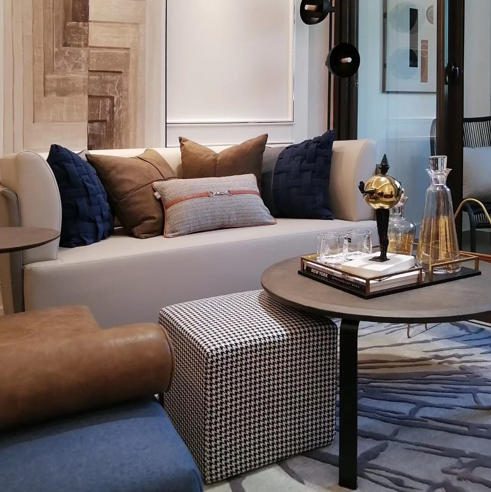

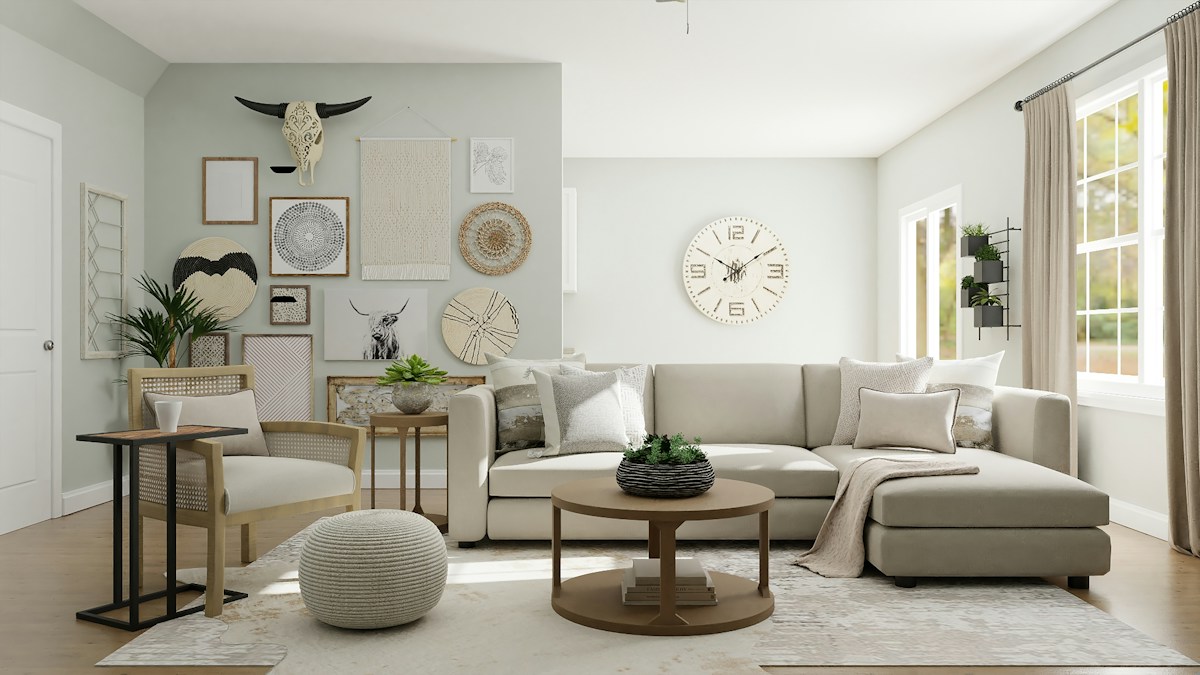 Defining project scope with precision — spatial context, scale, material register, and timeline — before sourcing begins is what makes the difference between a smooth project and a reactive one.