Top 5 Quality Control Tips for High-End Furniture Importers from…
Top 5 Quality Control Tips for High-End Furniture Importers from China
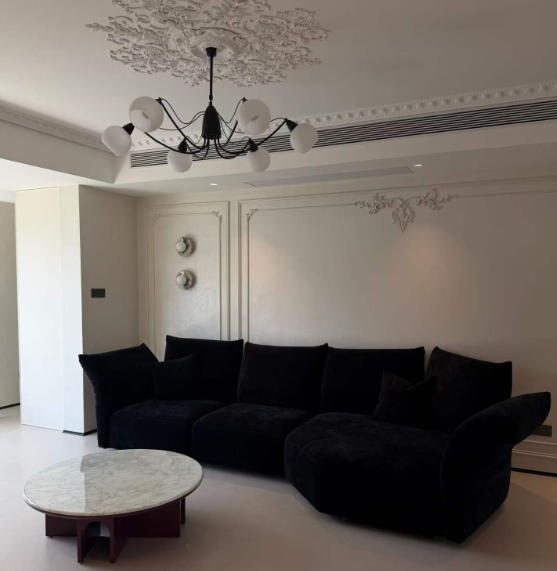
Every piece in a luxury installation like this represents a production decision that was either verified or assumed. The importers who build great reputations choose verification, every time.
There is a moment that every experienced furniture importer dreads. The container arrives. The installation team opens the first carton. And something is wrong — a lacquer finish with the wrong sheen, foam at a different density than approved, timber joints that shift under pressure. By this point, your options have narrowed dramatically and none of them are good.
Shipping the goods back costs time and freight you do not have if a hotel opening or villa handover is imminent. Accepting the goods and absorbing the quality shortfall costs you client confidence and potentially your next referral. On-site rework costs labor, delays the installation, and produces results that rarely match factory finishing. Every one of these outcomes was preventable — and preventable at a cost far lower than any of the remedies.
This guide is written for the importers, FF&E buyers, interior designers, and developers who have either experienced that scenario or are determined never to. It covers the five quality control practices that consistently separate profitable import operations from expensive ones — with the data, checklists, and industry context to implement them properly.
The Real Cost of Getting It Wrong
Before the tips, the numbers. Because “quality control costs money” is only a compelling argument when you have quantified what not doing it actually costs.
Quality control investment in furniture imports typically represents 0.1–0.3% of order value. Quality failures — returns, re-shipping, rework, project delays, and client compensation — cost importers 300–500% more than the inspection that would have caught the problem. On a $150,000 FF&E order for a boutique hotel, that math means a $300–450 inspection investment versus a potential $450,000–$750,000 exposure from a failed delivery.
A $1,400 inspection investment has been shown in documented case analyses to eliminate liability exposure worth multiples of that figure on a single shipment. The ROI of furniture QC is not marginal — it is structural.
The global hotel FF&E market alone is valued at $63.1 billion in 2025 and is projected to reach $107.9 billion by 2033. China accounts for approximately 31% of all global furniture exports, representing $36.44 billion in 2024. The professionals operating at the intersection of these two markets — importing high-end furniture from China for luxury hospitality and residential projects — are the ones for whom this guide was written.
Failed shipment: rework on arrival (15% defect rate)
$8,000–$25,000+
Labor, materials, delay
Hotel opening delay (1 week, 150-room property)
$50,000–$150,000+
Lost revenue + penalty clauses
Client relationship repair after project failure
Unquantifiable
Long-term referral impact
Tip #1: Conduct Pre-Production Factory Audits with Third-Party Experts
A factory audit is not a courtesy visit. It is the due diligence step that tells you whether a manufacturer’s capability matches their catalog — before a purchase order has been placed.
The most common sourcing mistake among importers who later experience quality failures is not placing trust in the wrong supplier. It is placing trust without verification. A factory audit conducted before the first order eliminates the single most avoidable category of sourcing risk.
What a factory audit actually examines: A professional pre-production audit covers seven domains. Production infrastructure — CNC (Computer Numerical Control, the precision machining equipment that determines dimensional accuracy) equipment quality, finishing booth configuration, in-house upholstery operation. Raw material storage — timber stored flat on level racking in humidity-controlled conditions, foam protected from moisture, upholstery fabrics stored away from UV exposure. Quality control structure — whether the QC team operates independently from production, with authority to stop a run and reject non-conforming pieces, rather than as a final-stage rubber stamp. Workforce — skills visible in active production, not in a curated demonstration. Certifications — every ISO 9001, FSC, BIFMA, and market-specific compliance document verified on-site against the issuing body’s registry, not accepted as a PDF. Order book — current production load relative to your intended volume, to assess whether your order will receive genuine production priority. Environmental and social compliance — waste management practices and worker conditions, relevant to BSCI (Business Social Compliance Initiative — an audit framework evaluating labor practices and worker rights) requirements for European and North American buyers.
Who should conduct the audit: In-house staff who are not trained in QC protocols consistently miss the structural quality signals that predict production consistency. Third-party audit firms — QIMA, Bureau Veritas, SGS, Intertek, and specialist furniture QC agencies — conduct structured audits using standardized criteria and produce written reports with photographic documentation. The cost of a professional factory audit runs $350–$700 per man-day. That figure needs to be evaluated against the alternative: discovering a supplier’s production limitations after a container has been shipped.
The red flags that end the conversation immediately: A supplier who restricts which areas of the facility you may access. Samples on display that are visually different in finish quality from pieces visible on the production line. A QC station that is staffed by production workers rather than independent quality personnel. Certification documents whose numbers cannot be confirmed via the issuing body’s public registry. Any of these signals individually warrants serious concern; any two of them together are disqualifying.
Compare showroom samples to production floor pieces
No visible quality gap between the two
Order book and capacity
Current load relative to your order volume
Confirmed production slot available
Communication infrastructure
Named account manager, English technical fluency
Direct contact, not sales team inbox
Tip #2: Request and Rigorously Evaluate Physical Samples Before Mass Production
There is a specific and well-documented failure mode in furniture importing: the beautiful sample that does not represent production. The supplier produces a prototype by hand, using slightly better materials than the production stock, applying finish with more care than is possible at production speed, and presenting it under favorable showroom lighting. The importer approves. The container arrives and looks different.
The solution is straightforward: require that your evaluation sample is pulled directly from a production run — not made as a bespoke presentation piece. Request this explicitly in your sample procurement agreement, and have it confirmed in writing.
What to evaluate — and how: Physical sample assessment should be conducted by everyone whose standards the final piece must meet. The interior designer evaluates aesthetic compliance. The engineer or construction manager evaluates dimensional accuracy against space planning drawings. Where the client is available and the project timeline allows, their input at this stage eliminates the far more costly process of client-requested changes after production is underway.
The evaluation should be systematic and documented, not impressionistic. The following checklist covers the critical dimensions:
Physical Sample Evaluation Checklist
Assessment Area
What to Test
Acceptance Criteria
Finish quality
Visual inspection under multiple light angles
No brush marks, runs, inconsistent sheen, or open grain
Finish adhesion
Cross-hatch test (score lacquer in grid pattern, apply tape, pull)
No flaking; adhesion ≥90% of test area
Joinery strength
Push/pull test on all frame joints under load
No movement, creaking, or visible flex
Dimensional accuracy
Measure all key dimensions against approved drawings
±2mm tolerance on specified dimensions
Wood moisture content
Moisture meter reading on timber components
8–12% MC for interior furniture (USDA Forest Products Laboratory standard)
Request density certificate; press-and-release test
Per specification (typically 28–45 kg/m³ for seating)
Hardware functionality
Open/close, extend/retract all moving components × 20 cycles
Smooth operation, no misalignment, no resistance
Color accuracy
Compare against approved color reference (RAL/Pantone) under D65 daylight
ΔE ≤1.5 (standard color difference tolerance for premium goods)
Packaging assessment
Inspect proposed packaging materials and method
Adequate protection for each contact surface
The approval documentation that protects you: Once a sample passes evaluation, produce a formal Sample Approval Document that includes: photographs of all surfaces under multiple light conditions, dimensional measurements with sign-off, a written description of any approved deviations from the original specification, and signatures from all reviewing parties. This document becomes the production benchmark — and the reference against which the pre-shipment inspection is conducted.
Tip #3: Define and Document Clear Quality Standards with Suppliers
This tip addresses the single most preventable source of quality disappointment in furniture importing: the assumption that “high quality” means the same thing to a buyer in Dubai and a manufacturer in Foshan.
It does not. “High quality” is not a specification. It is an aspiration that every supplier can agree to and interpret differently. The manufacturers who consistently deliver to luxury standards do so because their buyers give them the precision they need to do so — not because they independently share their clients’ definition of excellence.
The Quality Specification Sheet (QSS): Every production order for high-end furniture should be accompanied by a Quality Specification Sheet — a document that translates your quality expectations into measurable, unambiguous criteria. If it cannot be measured, it cannot be consistently produced, and it cannot be meaningfully inspected.
A complete QSS covers: material specifications (timber species with genus-level botanical name, not just “oak”; fabric grade and Martindale count; foam density in kg/m³; leather grade and surface treatment); finish specifications (sheen level measured by gloss unit — 20°, 60°, or 85° gloss; color reference in RAL or Pantone code; application method); dimensional tolerances (±2mm is standard for luxury furniture; ±5mm may be acceptable for non-critical dimensions); hardware specifications (brand name and model number, or equivalent performance requirements); AQL (Acceptable Quality Level — a statistical sampling standard defining the maximum acceptable defect rate per inspection lot) settings for each defect category; packaging requirements (material specifications, wrapping method for each surface type, inner and outer carton structure); and labeling requirements (country of origin marking, warning labels, brand labeling, care instructions).
AQL — what it means in practice: AQL is defined as the maximum percentage of defective units that is considered acceptable as a process average in a production inspection. For luxury goods, the standard professional recommendation is AQL 1.0 or stricter for critical defects (structural failure, material substitution, significant dimensional error) and AQL 2.5 for major defects (visible finish inconsistency, hardware misalignment). AQL 4.0 is too lenient for any high-end residential or hospitality application.
An AQL of 1.0 means that if your inspection sample contains more than 1% critical defects, the batch fails inspection and must be reworked before shipment. It does not mean 1% of pieces will have defects — it means defects above that threshold trigger a mandatory hold.
The language that creates problems: Specification documents that use terms like “premium materials,” “first-class finish,” “superior craftsmanship,” or “as per sample” without defining what those terms mean technically are creating conditions for disappointment. Every one of those phrases has been attached to furniture that disappointed a luxury client, because the supplier’s interpretation was not aligned with the buyer’s. Replace every subjective term with a measurable criterion.
For an excellent reference framework on structuring technical product specifications for Chinese manufacturing sourcing, the product specifications template guide from QualityInspection.org provides a practical format for organizing the technical documentation that production-line manufacturers need to execute precisely.
Tip #4: Implement In-Line Inspections During Production
Catching a defect at 30% completion costs a fraction of catching it after 100% of the production run has been built. In-line inspection is not additional overhead — it is the mechanism that prevents full-batch rejections.
Pre-shipment inspection is essential. But an importer who only inspects at the end of production is accepting one of two outcomes: the batch passes, or the batch fails and they now have a container-load of defective goods and a project deadline bearing down on them. Neither outcome fully serves their interests.
In-line inspection — conducting quality checks at defined points during the production run — catches defects when they are still inexpensive to correct. A structural assembly error discovered at 25% completion affects 25% of the order. The same error discovered at pre-shipment affects 100% of it.
When to inspect: The professional standard is to conduct in-line inspection at 20–30% production completion. This checkpoint is chosen specifically because it is early enough to allow meaningful correction but late enough that the production process is operating at its normal pace and producing output representative of what the full run will look like.
A 20–30% in-line inspection verifies that the production is tracking to the approved sample in all critical dimensions: structural assembly quality, finish application consistency, material compliance (are they using the approved fabric and hardware, or have substitutions been made?), and dimensional accuracy. Discovering at this checkpoint that the manufacturer has substituted a different foam density — a change that would be invisible in a pre-shipment photo report but is immediately apparent on physical inspection — allows you to halt production, document the non-conformance, require corrective action, and restart on specification.
The cost savings that make in-line inspection pay for itself: Consider a hotel FF&E project: 150 dining chairs, $180 per unit, $27,000 total. Pre-shipment inspection discovers a structural defect in 60% of units. Options: reject the entire batch (losing the production lead time and delaying the hotel opening), accept and rework on-site (cost: $40–80 per chair in local labor, plus the risk of finish-matching failures). Total cost of discovery-at-shipment: $6,000–$12,000 in rework, plus timeline impact.
The same defect discovered at the 30-chair checkpoint (20% completion): stop production, correct the jig causing the assembly error, rework 30 chairs while the remaining 120 are built correctly. Rework cost at the factory: minimal. Timeline impact: days, not weeks.
Practical implementation for importers without China-based staff: Most third-party QC firms offer in-line inspection services at the same day rates as pre-shipment inspection — $200–$450 per man-day. For orders above $30,000, a single in-line inspection typically pays for itself by catching the corrections that would otherwise become full-batch problems at shipment. Book the in-line inspection when you confirm the production start date, specifying the inspection window as “20–30% completion” and requiring the manufacturer to notify you when that milestone is reached.
Tip #5: Perform Final Random Inspections Before Shipment
The pre-shipment inspection is the final verification checkpoint before a container leaves China — and for many importers, it is the first moment they have independent confirmation of what they are actually receiving. For the five-tip quality framework in this guide, it is also the safeguard that catches anything earlier checkpoints did not.
How the pre-shipment inspection works: An independent inspector — commissioned by you, not the manufacturer — visits the factory when production is 100% complete and goods are ready for packing (or already packed, in which case a representative sample is re-opened for inspection). The inspector evaluates a statistically significant sample of production units against your approved QSS, your approved production sample, and your AQL criteria.
For luxury goods, AQL Level II sampling is the professional standard. This means the sample size is determined by the total production quantity using AQL tables from ISO 2859-1. For a batch of 150 units, AQL Level II requires inspection of 32 units — enough to provide statistically meaningful results without inspecting every piece.
Each inspected piece is evaluated against the full QSS criteria: finish quality (comparison to approved reference under calibrated lighting), dimensional accuracy (spot-check key dimensions against technical drawings), structural integrity (functional stress testing of joints, hardware cycles, load-bearing capacity), material compliance (visual and specification check for any material substitution), and packaging integrity (protection adequacy for each contact surface, correct labeling, and shipping marks).
The inspection report as a contractual document: Pre-shipment inspection reports are not operational memos. They are commercial documents that determine whether final payment is released. Your purchase contract should specify that the balance payment (typically 70% of order value) is released only against a satisfactory inspection report from an inspector of your designation — not against the manufacturer’s confirmation that goods are ready to ship.
A report that finds defect rates above your agreed AQL threshold triggers a production hold. The manufacturer reworks the non-conforming pieces, and a re-inspection is conducted before goods are approved for shipment. This sequence is contractually enforceable when documented in your purchase agreement — and it is the mechanism that prevented an expensive recall in the case study below.
Trusted third-party inspection firms for China furniture sourcing:Intertek’s furniture inspection services cover assembly, finishing, product design, and packaging. QIMA, Bureau Veritas, and SGS offer comparable capabilities. Costs range from $200–$500 per man-day depending on location in China and complexity. For perspective: the inspection of a $50,000 furniture order costs approximately 0.4–1% of order value — and provides the documentation to withhold final payment if the inspection fails.
▶ Watch: How Quality Control Inspectors Actually Work — A Step-by-Step Walkthrough
Understanding what a professional furniture QC inspection looks like in practice — the tools, the criteria, the checkpoints — makes you a significantly more effective buyer when commissioning your own inspections.
A practical overview of the step-by-step process QC inspectors use when evaluating furniture production — from dimensional checks and finish assessment to structural load testing and packaging verification.
Bonus Tip: Build Long-Term Relationships with Vetted Suppliers
The five tips above are most powerful when applied within a manufacturing relationship that deepens over time. This is not sentiment — it is operations. A supplier who has delivered consistent quality across four orders with you has a production team that understands your standards. A supplier who values your account because you are a reliable, professional client prioritizes your production in peak periods and calls you when a material substitution is necessary rather than hoping you won’t notice.
The economics of long-term manufacturing partnerships are quantifiable. Committed annual volume clients at premium Chinese manufacturers typically receive 8–15% below standard commercial pricing. Priority production scheduling during factory peak periods — typically October through January when Chinese New Year preparation compresses everyone’s lead times. Lower MOQs on repeat specifications (because tooling, material sourcing, and production workflows are already established). First access to new material options and design capabilities before they are available to the general buyer market.
How to transition from transactional to strategic: Begin with a structured pilot order — 20–30 units per specification — that generates documented data on production quality, communication responsiveness, and delivery accuracy under commercial conditions. If the pilot validates the supplier’s performance, formalize the partnership in a written agreement: minimum annual volume, corresponding pricing, priority scheduling provisions, quality performance standards with defined consequences for non-compliance, and a named account manager with documented response time commitments.
For the manufacturers who consistently serve high-end importers, interior designers, and hotel operators across multiple markets, this kind of structured partnership is their preferred model — it provides production planning visibility they value as much as the buyer values the priority access it secures.
JL&C Furniture has built its B2B operations around exactly this model over 20 years of manufacturing for clients in 30+ countries. Their quality control process runs from raw material receiving through cutting, assembly, finishing, upholstery, and final inspection — with independent QC sign-off before any order leaves the facility. That operational structure is not a marketing claim; it is the documented process that allows their clients to reduce inspection frequency over time as the track record is established.
Common Quality Issues in Chinese-Made High-End Furniture (And How to Prevent Them)
The following table maps the most frequently documented quality failures in premium Chinese furniture exports to their root causes and the QC intervention that prevents them. This is based on field data from multiple inspection agencies and importer case histories.
Quality Issue
Root Cause
Preventive QC Action
Detection Point
Wood warping or cracking
Timber moisture content >12% at production; climate variation during transit
Moisture meter testing at IQI stage; kiln drying specification in QSS
Incoming material inspection + sample approval
Mixed wood grades within an order
Supplier substituting lower-grade material to reduce cost
Material specification by species and grade in QSS; IQI verification
Incoming material + in-line inspection
Finish inconsistency (sheen variation, color drift)
Inconsistent spray settings, environmental variation in finishing booth
Gloss unit specification (20°/60°/85° meter reading) in QSS; dedicated finishing booth requirement
Sample approval + in-line inspection
Lacquer adhesion failure
Inadequate surface preparation; incompatible primer
Cross-hatch adhesion test in sample approval + in-line inspection
Sample evaluation + pre-shipment
Weak or loose joints
Inadequate glue cure time, poor tenon tolerances
Joint load testing in sample approval; structural integrity check in pre-shipment
Sample + pre-shipment inspection
Foam density mismatch
Cheaper foam substituted after sample approval
Foam density certificate required per SKU; physical test (density in kg/m³) in pre-shipment
Pre-shipment inspection
Hardware brand substitution
Brand specified in QSS replaced with cheaper equivalent
Hardware model number verification in QSS; visual check in in-line and pre-shipment
In-line + pre-shipment inspection
Dimensional inaccuracy
Cutting template drift over production run
±2mm tolerance in QSS; dimensional spot-check in in-line and pre-shipment
In-line + pre-shipment inspection
Packaging damage on arrival
Inadequate corner protection, no inter-layer cushioning
Packaging method specified in QSS; packaging integrity check in pre-shipment
Pre-shipment + container loading check
Off-gassing / VOC emission
Non-compliant finishes or adhesives
CARB Phase 2 / REACH compliance documentation required; VOC test report from accredited lab
Pre-order certification verification
Case Study: How a 5-Star Hotel Chain Avoided a $200,000 Furniture Recall
The project: a 180-room business hotel in Southeast Asia completing a full guestroom FF&E refurbishment. The furniture specification included custom lacquered dining chairs for all in-room dining settings — 180 units, specified at $380 per unit, $68,400 total order value.
The importer had an established relationship with the Chinese manufacturer and had placed two previous orders without significant issues. Based on this track record, the internal team proposed skipping the pre-shipment inspection to save the $380 inspection fee and recover two days in the delivery schedule.
The project manager overruled this decision and commissioned the inspection. The third-party inspector arrived at the factory when production was complete and sampled 32 units per AQL Level II protocol.
What the inspection found: Lacquer adhesion failure on 78% of inspected pieces. The cross-hatch adhesion test — in which a grid pattern is scored into the lacquer surface and adhesive tape is applied and removed — produced flaking on three or more grid sections, indicating that the lacquer had been applied over an incompatible primer. Visual assessment under raking light revealed micro-blistering on approximately 80% of units. Under normal use conditions, this finish failure would have manifested within 60–90 days of installation — during the hotel’s first full operating quarter.
The inspection report triggered a production hold. The manufacturer identified the root cause — a primer formulation change made mid-production when their standard primer was unavailable — and agreed to strip and re-lacquer the entire batch. Re-inspection was conducted three weeks later. All 32 sampled units passed. The container shipped.
The avoided costs: If the defective batch had shipped and been installed: replacement production for 180 units ($68,400+), return freight for the defective pieces, labor for de-installation and reinstallation, and operational disruption during a hotel’s opening quarter. Conservative estimate: $180,000–$220,000.
The cost of the inspection that caught it: $380. The contractual quality clause that required the manufacturer to absorb the rework cost rather than splitting it: $0 (included in the original purchase agreement).
This case illustrates the principle that shapes every quality-focused importing operation: the inspection clause in your contract is worth more than the inspection itself, because it determines who pays when something goes wrong. A supplier who has agreed in writing to rework at their cost any batch that fails pre-shipment inspection has a powerful financial incentive to get it right before the inspector arrives.
For operational context on how professional QC agencies structure hotel furniture inspections, InTouch Quality’s hotel furniture inspection case study documents a comparable real-world scenario with detailed methodology.
The Full QC Framework: Stage by Stage
Furniture like this — where the grain continuity across the table surface, the precision of the apron joinery, and the consistency of the finish reflect production discipline at every stage — does not happen by accident. It happens because each decision point was verified.
There is a reframe that experienced importers make at some point in their careers: quality control stops feeling like overhead and starts feeling like the foundation of every margin they protect, every client relationship they maintain, and every project they deliver on time.
The importers and designers whose businesses grow through referral — where a hotel operator recommends their FF&E buyer to a developer friend, where a villa client introduces their designer to every new property purchase — have something in common. They deliver pieces that match what was agreed, arrive when they are supposed to, and perform as specified for years after installation. That is not luck. It is a supply chain that is managed with the same rigor their clients apply to their own standards.
The five tips in this guide — factory audits, sample evaluation, quality specification documentation, in-line inspection, and pre-shipment verification — are not five separate activities. They are five stages of a single continuous process that begins before an order is placed and ends when a satisfactory inspection report releases final payment. Applied systematically, they reduce defect rates, eliminate the worst-case delivery scenarios, and create the kind of supplier relationships that compound in value over time.
For deeper guidance on evaluating Chinese furniture manufacturers and building the kind of supply chain that supports luxury-grade quality at scale, JL&C Furniture’s complete guide to spotting reliable Chinese furniture suppliers covers the full due diligence process — from business legitimacy verification through certifications, QC structure, and long-term partnership development. For importers ready to start a conversation about sourcing requirements, the JL&C Furniture contact page connects directly with their Shanghai-based team.
Your reputation is only as strong as your last delivered piece. Inspect with intent.
Glossary of Key QC Terms
AQL (Acceptable Quality Level): A statistical sampling standard that defines the maximum acceptable defect rate per inspection lot. AQL 1.0 means defects in more than 1% of a sampled batch trigger a fail. The lower the number, the stricter the standard. For luxury furniture, AQL 1.0 (critical defects) and AQL 2.5 (major defects) are the professional baseline.
IQI (Incoming Quality Inspection): The first QC checkpoint — inspection of all raw materials (timber, fabric, foam, hardware) against specification before they enter the production line.
QSS (Quality Specification Sheet): A document that translates quality expectations into measurable, production-line criteria. Includes material grades, dimensional tolerances, finish specifications, hardware model numbers, and AQL settings.
Cross-Hatch Adhesion Test: A standardized test for lacquer and paint adhesion. A grid pattern is scored into the finish, tape is applied and removed, and adhesion is rated by how much of the finish remains. Used to detect incompatible primer/lacquer combinations before goods ship.
Martindale Rub Count: The laboratory test for upholstery fabric durability. Measures the number of abrasion cycles before visible wear. Residential: ≥25,000 cycles; contract hospitality: ≥50,000 cycles; heavy commercial: ≥100,000 cycles.
Moisture Content (MC%): The percentage of water in timber relative to dry wood weight. Furniture-grade solid wood should measure 8–12% MC. Wood above 12% will warp, crack, or develop joint failure as it dries in a climate-controlled interior.
CARB Phase 2: California Air Resources Board formaldehyde emission limits for composite wood products. Mandatory for all furniture entering the US market containing particleboard, MDF, or plywood.
REACH: European Union regulation restricting hazardous chemical substances in products, including furniture finishes and adhesives. Compliance documentation is required for EU market entry.
BSCI (Business Social Compliance Initiative): An audit standard evaluating a factory’s labor practices, worker rights, and social compliance — increasingly required by European and North American institutional buyers.
FOB (Free On Board): Incoterm under which the supplier’s responsibility ends when goods are loaded onto the vessel at the origin port. Transit risk transfers to the buyer at that point.
Pre-Shipment Inspection (PSI): Third-party quality verification conducted when production is 100% complete, before goods are loaded for export. The most widely used QC tool for furniture importers.
Questions fréquemment posées
Why should I pay for third-party inspections when my supplier claims their quality is excellent? Because supplier self-assessment is structurally compromised by the supplier’s financial interest in getting the order shipped. A manufacturer who tells you their quality is excellent has no independent validation for that claim and significant incentive to believe it. A third-party inspector has no financial relationship with the manufacturer and no stake in the outcome — their only job is to verify whether the goods meet your specification. The cost ($200–$450 per man-day) is approximately 0.3–0.5% of a typical order value. The cost of a defective container that shipped without inspection is typically 300–500% of the inspection cost.
How much does a professional quality inspection in China cost? Pre-shipment and in-line inspections from established third-party firms (QIMA, SGS, Bureau Veritas, Intertek, and comparable agencies) run approximately $200–$500 per man-day in China, depending on location and inspection complexity. Factory audits run $350–$700 per man-day. For most furniture orders, a single inspection requires one man-day. The all-in cost for a complete inspection cycle — factory audit, one in-line inspection, and pre-shipment inspection — typically runs $800–$1,600 for a standard production order. On a $30,000+ order, that represents less than 5% of order value as comprehensive quality insurance.
Can I rely solely on product photos or videos from the factory as quality verification? No — and this is one of the most common and costly shortcuts importers take. Photographs cannot measure foam density, joinery strength, lacquer adhesion, or dimensional accuracy. They can be taken of the best pieces in a batch while non-conforming units are out of frame. Videos can be curated to show correct-quality pieces without representing the full production run. Physical inspection by a trained inspector using calibrated tools is the only verification method that catches the problems that matter — and the problems that photographs miss are precisely the ones that become expensive after delivery.
What is AQL, and why does it matter for high-end furniture? AQL stands for Acceptable Quality Level — a statistical sampling standard defined in ISO 2859-1 that determines both the sample size for an inspection lot and the pass/fail threshold. For luxury furniture, AQL 1.0 for critical defects (structural failures, material substitutions, significant dimensional errors) and AQL 2.5 for major defects (visible finish inconsistency, hardware misalignment) are the professional standard. AQL 4.0 — often used for general consumer goods — is too lenient for high-end residential or hospitality applications where every piece is visible to a discerning client. The AQL setting in your QSS is one of the most consequential quality decisions you make before production begins.
How early should I request a sample before production? At minimum, allow 2–3 weeks between sample request and planned production start — enough time for the sample to be produced, shipped to your evaluation location (or inspected in China), reviewed by all relevant parties, and, if revisions are required, reworked and re-reviewed. For complex custom pieces with multiple finish or material variables, 4–6 weeks is more appropriate. Starting production before a sample is formally approved — because a deadline is pressing — is consistently where the “beautiful sample, disappointing production” failure mode begins.
What should be included in a Quality Specification Sheet? A complete QSS covers: material specifications (timber species with grain and grade requirements; fabric grade and Martindale rub count; foam density in kg/m³; leather grade and surface treatment type); finish specifications (sheen level in gloss units; color reference in RAL or Pantone code; application method); dimensional tolerances (±2mm for luxury grade, applied to all critical dimensions in the technical drawing); hardware specifications (brand name and model number, or equivalent performance criteria); AQL settings per defect category; packaging requirements (material type, wrapping method per surface, carton construction); and inspection criteria (the specific tests that must pass, with pass/fail criteria). Every element should be measurable. Subjective terms like “premium quality” provide no production guidance and create no accountability.
Is it necessary to inspect every shipment, even from trusted factories? Yes — and this is the position of every professional QC consultancy that works with serious importers. Even suppliers with strong established track records experience quality lapses due to staff turnover, material supply changes, production overload during peak periods, or machine calibration drift. The case study in this article involved a supplier with two successful previous orders who still had an 80% finish failure rate due to an undisclosed primer substitution. Inspection frequency can be reduced — and inspection scope can be streamlined — as a track record develops, but eliminating inspections entirely is a risk management decision that experienced importers consistently regret.
How do I handle a failed inspection? A failed inspection is a contractual trigger, not a crisis — provided your purchase agreement is structured to make it one. The correct process: the inspection report documents all non-conformances with photographic evidence and AQL analysis. You formally notify the supplier in writing that the inspection has failed, citing the specific defects and the contractual quality clauses that require rework at the supplier’s cost. The supplier acknowledges, proposes a remediation timeline and method, and executes the rework. A re-inspection is commissioned before goods are approved for shipment. Final payment is released only against a satisfactory re-inspection report. The entire process is documented in writing. This sequence works when the contract clause exists. It is significantly more difficult to enforce when quality terms were agreed verbally.
What are the most common material issues in Chinese furniture exports? The documented high-frequency failures, in order of importer complaint frequency, are: timber with moisture content above 12% at production (produces warping and joint failure in service — caught by moisture meter testing at IQI); foam density substitution after sample approval (produces seat compression within months of use — caught by foam density certificate requirement and physical testing in pre-shipment); lacquer adhesion failure due to incompatible primer (produces peeling or blistering within 90 days of installation — caught by cross-hatch test in sample approval and in-line inspection); mixed wood grades within an order (produces visual inconsistency across a matched suite — caught by material specification in QSS and in-line inspection); and off-gassing finishes containing VOCs above CARB Phase 2 or REACH limits (compliance failure caught by test report requirement before production begins).
How can I ensure the furniture matches my design vision exactly? Precision in output requires precision in input. The combination that consistently delivers exact design compliance is: complete technical CAD drawings with full dimensioning and material callouts; physical color and finish references (not digital representations, which vary by screen calibration); a formal sample approval process with documented sign-off; at least one in-line inspection checkpoint to catch drift from the approved sample mid-production; and a pre-shipment inspection comparing finished production to the approved sample against documented criteria. The importers and designers who report the most consistent design compliance are those who treat the QSS as a design document as much as a quality document — and invest the time in specifying it completely before production begins.
Do QC agencies help with post-inspection logistics or claims? This varies by agency and service tier. Most established inspection firms — QIMA, Bureau Veritas, SGS, Intertek — primarily provide inspection reports and coordinate re-inspections following failed batches. Some offer expanded services including supplier dispute documentation support, customs clearance coordination, and insurance claim documentation. For importers who experience a significant quality failure that leads to a formal dispute, a well-documented inspection report is the most important piece of evidence — both in negotiations with the supplier and in any insurance or legal claim process. Ensuring that your inspection reports include photographic documentation of every defect, AQL analysis with clear pass/fail determinations, and inspector certification details maximizes their value as commercial documents.
China Furniture Sourcing Agent Roles for High-End Buyers What a China Furniture Sourcing Agent Actually Does for High-End Buyers Every finished luxury room sits on
How to Vet a China Furniture Sourcing Agent Before Signing A single curved sofa like this goes through dozens of approvals, including frame, foam, fabric
China Furniture Sourcing Agent vs Direct Factory Buying: A Strategic Guide for High-Value Buyers When one project includes 400 hotel rooms, a 20-seat marble dining
Advanced Tips to Get More from Your China Furniture Sourcing Agent Powerful Strategies for High-Performance Sourcing – Tailored for Elite Buyers, Designers & Operators Your
How to Work Better With Your China Furniture Supplier After Ordering A Practical Playbook for High-End Furniture Importers, Interior Designers, FF&E Buyers, Villa Owners, Private

 Every piece in a luxury installation like this represents a production decision that was either verified or assumed. The importers who build great reputations choose verification, every time.


 Furniture like this — where the grain continuity across the table surface, the precision of the apron joinery, and the consistency of the finish reflect production discipline at every stage — does not happen by accident. It happens because each decision point was verified.