How Leading Design Firms and Hospitality Brands Are Scaling Exclusive…
How Leading Design Firms and Hospitality Brands Are Scaling Exclusive Collections While Protecting Their Margins and Brand Positioning
Why This Shift Matters to Your Business Right Now
There is a conversation happening in the back offices of the world’s most successful interior design practices, hospitality procurement teams, and furniture showroom networks — and it isn’t about aesthetics. It’s about math.
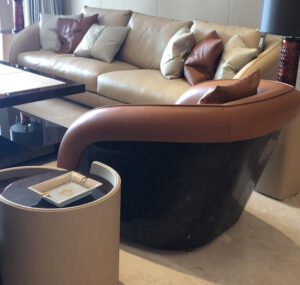
A velvet sectional that carries a $6,500 retail price tag in a London or New York showroom has a factory origin cost of approximately $800 FOB Foshan. Between that factory floor and your client’s sitting room, the same piece has passed through a sourcing agent, a wholesaler, a brand headquarters, a marketing budget, and a retail markup — each layer compounding the previous. This is the “middleman multiplier” that has defined premium furniture pricing for decades. And for the first time in the industry’s modern history, the B2B professionals who understand this structure are quietly dismantling it in their favor.
The designer firms, hospitality brands, and distribution networks that have built direct relationships with elite Chinese manufacturers are not compromising on quality to access this margin. They are discovering that China’s leading luxury furniture producers now operate at technical specifications, customization capabilities, and finish quality that were, a decade ago, exclusively associated with Italian or Scandinavian ateliers.
This article is written specifically for distributors, agents, showroom operators, interior designers, and hotel fit-out specialists who are asking the right question: not “is Chinese luxury furniture real?” — but “how do I build a sourcing model that captures this advantage systematically, protects my brand positioning, and scales?”
Bespoke upholstered pieces manufactured in China’s leading furniture production clusters now routinely pass BIFMA and EN contract-grade testing — at price structures that protect distributor and designer margins.
The Economics That Nobody’s Talking About — Why Premium Designers Are Turning to Chinese Manufacturing
The Margin Crisis in Luxury Furniture Design
How Traditional European Sourcing Is Eating Into Your Project Profitability
A mid-tier Italian furniture manufacturer supplying to international distributors operates with a factory-to-retail markup ratio of approximately 4x to 6x on most upholstered and solid wood products. For a piece retailing at €3,200, the distributor buys at €1,800–€2,200 and the factory produces at €400–€600. The distributor’s gross margin — before showroom overhead, logistics, client service costs, and returns — is typically 30–38%.
That margin sounds workable until you factor in the structural pressures that have tightened over the past five years: rising Italian labor costs (up approximately 22% since 2019), euro-dollar volatility, shipping disruptions, and the competitive reality that end clients — particularly hotel groups and commercial developers — are increasingly equipped to benchmark pricing. When a procurement-savvy hotel brand’s FF&E manager has already run a competitive tender and knows what comparable products source for from China, your Italian-origin pricing premium becomes a negotiation liability.
The Real Cost of Maintaining Exclusivity Through Domestic Manufacturing
The hidden cost of European-only sourcing is not just per-unit pricing — it’s the constraints it places on your ability to offer true customization at the speed and cost that premium clients now expect. A bespoke dining chair specification from an Italian manufacturer — custom leg profile, proprietary fabric, client-specific dimensions — carries a prototype development cost of €800–€2,000 and a minimum production commitment of 100–200 units before pricing becomes defensible. For a boutique hotel project requiring 240 guestroom chairs in a unique specification, the development cost and commitment risk are significant barriers.
This is precisely the economics that is driving premium design firms toward Chinese manufacturing — not as a cost-reduction play, but as a capability unlock.
What’s Changed in Chinese Production Capabilities
How Bespoke Craftsmanship Now Rivals Italian and Scandinavian Standards
The factories supplying the global hotel and luxury residential markets from Foshan, Dongguan, and the wider Pearl River Delta are not the factories of 2005. The leading producers in this sector have invested systematically in the capabilities that define artisan furniture quality: master craftspeople trained in hand-finishing techniques, Italian-specification leather processing from Dongguan’s tannery clusters (which supply both European luxury brands and Chinese export manufacturers), and solid wood joinery that employs dovetail, mortise-and-tenon, and dowel construction methods.
A meaningful benchmark: a 500-room five-star hotel in Dubai fitted with custom Chinese-manufactured FF&E in 2022 passed its post-installation brand standards audit on first inspection — the same audit that had previously been used to mandate European supplier requirements. The audit team’s assessment: “production quality meets or exceeds specification.” That outcome is now routine, not exceptional, among China’s tier-one contract furniture producers.
Quality Control Systems That Guarantee Consistency on High-End Projects
Consistency across multiple production runs is the quality concern that separates a single good shipment from a bankable supplier relationship. The quality management infrastructure that now characterizes leading Chinese contract manufacturers includes ISO 9001:2015 certified process controls, digital production management systems with milestone documentation, and dedicated QC teams that operate independently from production supervisors. For a 600-room hotel project spanning six production runs over eight months, this infrastructure is what makes Chinese manufacturing viable — not just for a one-time order, but as a long-term production partnership.
The Strategic Advantage of Dual-Sourcing Your Collections
Protecting Your Brand While Optimizing Your Supply Chain
The most sophisticated B2B furniture professionals are not making a binary choice between European and Chinese sourcing. They are building dual-sourcing models where the strategic logic determines the origin of each product category. Heritage pieces with strong brand equity and established European provenance narratives remain European-sourced. New custom collections, hospitality-specific lines, and scale-dependent projects shift to Chinese manufacturing, with quality specifications and certification requirements maintained at equivalent levels.
This approach preserves the credibility capital accumulated through European sourcing while creating the margin headroom and customization agility that Chinese manufacturing provides. It also creates a natural hedge against supply chain disruptions — an insight that many design practices learned expensively during 2020–2022 when European production capacity was constrained for 18+ months.
How to Position Chinese-Manufactured Pieces Without Diluting Your Market Positioning
The positioning framework that works is performance-first, origin-agnostic. Your clients — hotel brands, residential developers, commercial interior specifiers — do not purchase furniture on the basis of national origin. They purchase on the basis of lead time certainty, finish quality, specification compliance, warranty coverage, and total cost. When you lead with BIFMA test reports, EN compliance documentation, FSC certification, and a five-year structural warranty, the origin conversation becomes secondary to the performance evidence.
JL&C Furniture has built its supplier network specifically around this framework — connecting designers and distributors with Chinese manufacturers whose quality credentials are independently verified, and whose production capabilities are documented at a level that supports premium project specification.
Building Client Trust Without Revealing Your Manufacturing Strategy
Transparency That Protects Your Margins
What Luxury Clients Actually Need to Know (and What They Don’t)
There is an important distinction between transparency and disclosure that every design professional and distributor needs to internalize. Your clients are entitled to accurate information about product performance, compliance, and warranty — and you should provide all of it without hesitation. What your clients are purchasing is a design outcome: a finished, installed, functional space that performs to specification. The manufacturing geography is not a product specification.
The critical point: if a client asks directly where their furniture is made, answer honestly. The strategic protection comes not from concealment, but from having already established the performance narrative so thoroughly — certifications, test results, samples, references — that origin is simply not the relevant question by the time the contract is signed.
Communicating “Bespoke” and “Limited Edition” Without Compromising Integrity
“Bespoke” and “limited edition” are accurate descriptions of custom-manufactured furniture, regardless of where it is produced. A dining chair manufactured to your proprietary specification — unique leg profile, exclusive fabric colorway, client-specific dimensions — is genuinely bespoke. A seasonal collection produced in a limited run of 200 units with a design that is exclusive to your brand is genuinely limited edition. These descriptors are defined by production specification and exclusivity, not by manufacturing geography.
Certification and Documentation as Your Competitive Shield
Quality Certifications That Justify Premium Pricing
For B2B professionals presenting Chinese-manufactured luxury furniture to sophisticated clients, your certification portfolio is your pricing justification infrastructure. The certifications that carry real weight in premium procurement conversations include the following, organized by market relevance:
Certification
Issuing Body
What It Proves
Market Relevance
ISO 9001:2015
Accredited Certification Bodies (SGS, Bureau Veritas)
Domestic seating and office chair performance standards
EU residential and contract
FSC Chain of Custody
Forest Stewardship Council
Responsibly sourced timber with traceability
European, hospitality, ESG-focused clients
GREENGUARD Gold
UL (USA)
Low chemical emissions — indoor air quality
Premium residential, healthcare, education
ISO 14001
Accredited Certification Bodies
Environmental management system
ESG-reporting clients, European procurement
CARB Phase 2 / EPA TSCA
California ARB / US EPA
Formaldehyde limits in composite wood
USA mandatory
Each of these certifications can be verified independently by your clients — which is precisely why they protect your pricing position. A price challenge from a competing supplier who cannot produce equivalent documentation is a challenge you welcome.
Creating Provenance Narratives That Enhance Perceived Value
Provenance — the story of where and how something was made — is a legitimate and powerful value driver in premium furniture. The provenance narrative available for high-quality Chinese-manufactured luxury pieces is genuinely compelling: master craftspeople in China’s furniture capital, leather processed in tanneries that supply European luxury brands, timber sourced through FSC-certified chains from sustainably managed forests, and production technology that represents the cutting edge of global furniture manufacturing. This is an authentic story, not a fabrication — and it is far more interesting than “assembled in northern Italy from Chinese-origin components,” which describes a significant proportion of European-branded furniture.
The Showroom Experience: How to Present Chinese-Made Luxury
Display Strategies That Emphasize Craftsmanship Over Origin
The showroom environment is where the client’s purchase decision is made — and the physical experience of a well-crafted piece does the most important persuasion work. Your display strategy should structure the client’s engagement with the product around the quality elements that matter: joint construction (visible on open-frame designs), material quality (leather grain, fabric texture, wood finish), hardware precision (drawer mechanism action, hinge tolerance), and dimensional consistency across multiple units.
Place third-party test reports and certification documentation in accessible display materials — not as defensive documents, but as part of the product story. A well-designed product card that includes “Tested to BIFMA X5.1 / Martindale 50,000 rubs / 3-year structural warranty” communicates quality confidence before the client raises a single concern.
Building Confidence in Your Supply Chain Through Transparency
For clients who ask directly about manufacturing origin, having a prepared and confident response — supplemented by factory photography, third-party audit summaries, and installation references — demonstrates exactly the kind of supply chain professionalism that premium clients respect. The design firms and distributors that stumble on this conversation are typically those who have not yet formalized their quality assurance documentation. Those who have built the documentation infrastructure answer confidently, because they have nothing to hide and substantial evidence to share.
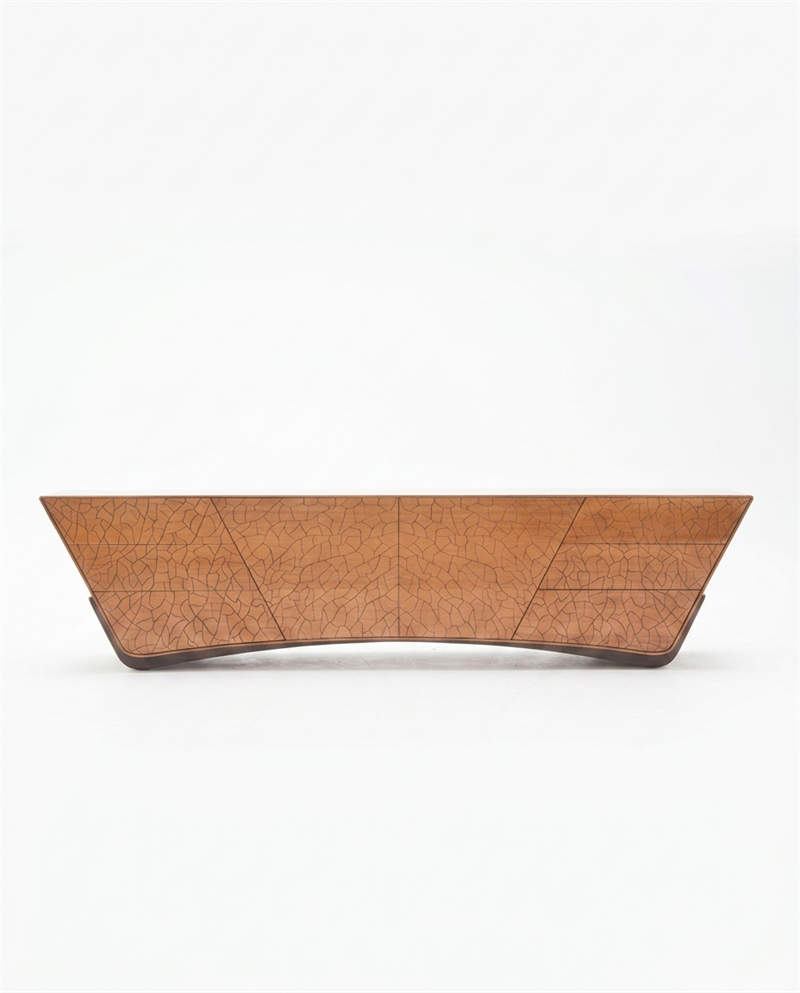
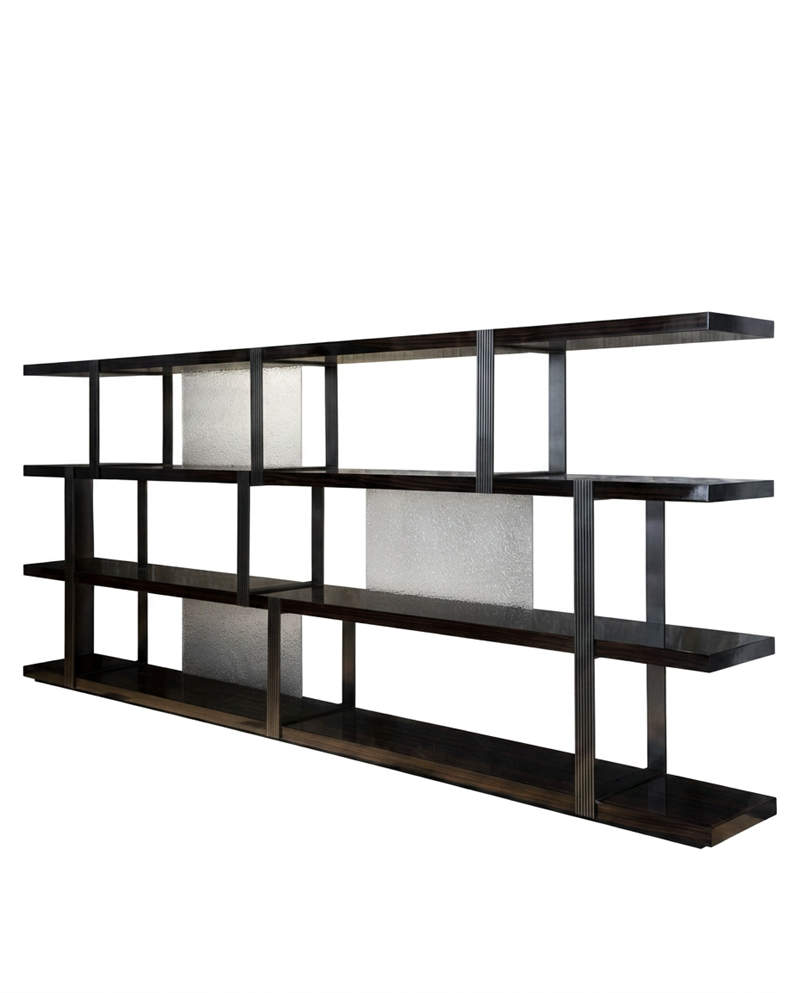
Hand-applied oil finishes on solid walnut case goods — a quality level routinely achieved by China’s tier-one contract manufacturers supplying the global luxury residential and hospitality markets.
Navigating the Bespoke Customization Challenge at Scale
Managing Custom Orders Without Sacrificing Lead Times
How to Set Realistic Timelines That Protect Your Reputation
The most common source of relationship damage between design professionals and their clients in furniture procurement is not quality failure — it is timeline failure. Overpromised delivery dates that cannot be achieved, followed by repeated revisions, erode confidence in ways that product quality issues (which are manageable through replacement) rarely do.
For custom orders from Chinese manufacturers, the realistic full-cycle timeline breaks down as follows: design approval and specification finalization (1–2 weeks), prototype development and approval (2–4 weeks), production (6–10 weeks depending on complexity and volume), pre-shipment inspection (1 week), ocean transit (2–5 weeks depending on destination), and inland delivery (1 week). Total: 13–22 weeks from design approval to site delivery.
The professional standard is to communicate the upper end of this range to clients, not the lower end. A delivery that arrives in week 16 when you said “16–22 weeks” is a success. A delivery in week 16 when you said “12 weeks” is a failure — regardless of the identical physical timeline.
Building Buffer Capacity Into Your Production Schedules
The structural risk in custom furniture production is the prototype revision cycle. A specification that requires two prototype iterations adds 4–6 weeks to the timeline and is significantly more likely for genuinely custom designs than for catalog modifications. Build this contingency into your client communication and your project scheduling as a standard assumption, not a pessimistic exception.
For hospitality projects where the furniture delivery is on the critical path of a hotel opening, build a minimum 20% time buffer into your contracted delivery milestone. The cost of a hotel opening delay caused by furniture late delivery is measured in hundreds of thousands of dollars — and the relationship and reputational cost to the design firm or distributor responsible is disproportionately severe.
Design Flexibility That Justifies Premium Pricing
Customization Options That Competitors Can’t Match
The customization range available from China’s leading luxury furniture manufacturers is genuinely competitive with Italian and Scandinavian producers — and in several dimensions, it exceeds it. Dimension modification, COM (Customer’s Own Material) production, custom wood species and stain specification, proprietary hardware integration, custom leg and base profiles, and multi-finish options within a single collection are all standard capabilities at China’s tier-one contract producers.
The operational advantage that Chinese manufacturers add is scale flexibility: the same manufacturer who produces a full 600-room hotel FF&E package can also produce a 30-piece custom collection for a boutique design brand, with the same quality control infrastructure applied to both. European equivalents at comparable quality levels typically have structural minimum commitments that make small-batch custom production economically nonviable.
Creating Exclusive Variations That Maintain Your Brand’s Uniqueness
Exclusivity in custom furniture is created through specification control, not manufacturing geography. A dining chair collection where you own the leg profile tooling, the proprietary fabric colorway, and the finish specification is exclusive — because no other brand can reproduce it exactly. Building your design library around proprietary specifications for the elements that are most visible and tactile (leg profiles, hardware details, fabric families) creates genuine differentiation that competitors cannot replicate without your specific tooling and material arrangements.
Minimum Order Quantities: Turning Constraints Into Advantages
How to Structure MOQs That Work for Your Distribution Network
MOQ (Minimum Order Quantity) — the minimum number of units a manufacturer will accept per production run — is a constraint that experienced buyers convert into a distribution strategy. Standard MOQs for luxury custom furniture from Chinese manufacturers range from 20–50 units per specification for upholstered pieces, 30–100 units for solid wood case goods, and 10–30 units for more complex, hand-finished pieces.
Rather than treating the MOQ as a ceiling limitation, structure your distribution agreements to aggregate demand across multiple accounts. A 50-unit MOQ that represents the combined quarterly orders from three showroom partners in different geographic markets is not a constraint — it is a mechanism for securing consistent production scheduling and favorable pricing. The manufacturers who see you as a reliable, predictable volume source are the ones who invest in understanding your specifications deeply, prioritizing your production slots, and escalating quality concerns proactively.
Bundling Strategies That Increase Order Value Without Increasing Client Burden
For distributors and showroom operators, bundling strategies — offering complementary pieces within a collection as a package — increase average order value while remaining within individual client budgets. A dining table and chair set sold as a collection at a programmatic price point, rather than individually specified and priced, also supports the exclusivity narrative: the collection is presented as a curated, designed whole, not a catalog selection.
Protecting Your Brand Positioning in a Competitive Market
The Exclusivity Problem — How to Stay Premium When Supply Increases
Limited Edition Strategies That Maintain Scarcity and Desirability
The most durable form of exclusivity in custom furniture is specification control — you own the tooling, the design files, the material specifications, and the production relationship. But specification control alone is not sufficient if the same collection is available in every showroom in your market. Scarcity is maintained through distribution discipline: limiting the number of accounts that carry each collection, establishing geographic exclusivity by territory, and controlling total production run volumes.
Limited run numbering — where each piece in a collection is produced in a fixed quantity and individually numbered — is a straightforward mechanism for communicating scarcity that premium clients understand and respond to. It requires no deception and no unusual production arrangement; it is simply a commitment to honor a production ceiling.
Seasonal Collections That Create Urgency Without Overproduction
Seasonal collection releases — two or four per year, depending on your category — create natural buying urgency and prevent the stale inventory problem that undermines premium positioning. Each new release should have a defined end-of-production date communicated at launch: “this collection closes for production on [date], after which these specifications will not be available.” This mechanism works because it is honest and because it is structurally consistent with how the best fashion and luxury goods brands manage their collections.
Preventing Channel Conflict and Gray Market Sales
Distribution Agreements That Protect Your Dealer Network
Gray market sales — authorized products appearing in unauthorized channels at unauthorized prices — are among the most corrosive threats to premium brand positioning. In the furniture sector, gray market risk arises when dealers facing slow inventory turn liquidate at discount through unauthorized channels, or when production overruns find their way into discount wholesale markets.
Protection mechanisms include: exclusive distribution agreements with geographic and channel restrictions; MAP (Minimum Advertised Price) policies with contractual teeth — not just stated preferences; serialized product identification that allows unauthorized sale instances to be traced; and production run volume control that prevents manufacturing overruns from creating surplus inventory.
Pricing Strategies That Prevent Unauthorized Discounting
MAP policy enforcement requires active monitoring and consistent enforcement. The moment a dealer knows that MAP violations are tolerated, the policy collapses. Establish a clear violation procedure — first occurrence: written warning; second occurrence: probationary period; third occurrence: distribution agreement termination. Document and communicate this procedure to all dealers at onboarding. Consistency is the only mechanism that makes MAP credible.
Building Brand Loyalty Beyond Price Competition
Service and Support Systems That Justify Premium Positioning
The service infrastructure that justifies premium pricing is not the furniture itself — it is the certainty of experience that surrounds it. Pre-sale: design support, specification consultation, sampling service. During production: regular milestone updates, pre-shipment inspection reports, packaging confirmation. Post-delivery: installation support, warranty claims handling, spare parts availability. This service architecture is what premium clients are actually buying when they choose a premium supplier over a cheaper alternative. The furniture is the product; the service is the differentiator.
Creating Switching Costs Through Exclusive Design Partnerships
The most powerful switching cost in design-led furniture distribution is design investment. When a hotel brand or commercial developer has invested in co-developing a proprietary collection with you — including prototype iterations, specification development, and installation planning — switching to a competitor supplier means abandoning that investment. Building co-development relationships with your most valuable clients, where you invest production and design time and they invest specification ownership, creates mutual commitment that price-based competitors cannot replicate.
The Technical Reality: Quality Assurance for High-End Projects
Material Sourcing That Meets Luxury Standards
Vetting Suppliers for Leather, Fabrics, and Hardware
Material quality is the first and most consequential decision in luxury furniture production. The material specifications that define the difference between a product that performs at luxury standard and one that merely presents as luxury include the following:
For leather, specify top-grain (the full thickness outer layer with natural grain retained) rather than corrected-grain (sanded and embossed to conceal surface imperfections) or split leather (the inner layers, significantly weaker). Request the chromium content certificate for chromium-tanned leathers if European REACH compliance is required. Ask for a sample tested to EN 13336 (upholstery leather testing standard). Dongguan tanneries processing top-grain hides for export supply both Chinese furniture manufacturers and European luxury brands — the same material, differently labeled.
For upholstery fabrics, specify the Martindale rub count minimum: 25,000 for luxury residential, 50,000 for contract/hospitality, 100,000+ for high-traffic commercial. Request the Wyzenbeek abrasion test results if supplying North American hospitality clients (the US hotel sector uses Wyzenbeek, not Martindale). Ask for the pilling resistance rating and the lightfastness rating (minimum 5/8 on the blue wool scale for window-adjacent installations).
For hardware, specify the zinc alloy grade (Zamak 3 or Zamak 5 for high-quality furniture hardware), the plating thickness and salt spray test hours (minimum 200 hours for standard applications, 500 hours for coastal or high-humidity environments), and the cycle test results for any mechanical hardware (drawer slides, hinges, adjustable feet).
Ensuring Consistency Across Multiple Production Runs
Material consistency across production runs is the most technically demanding aspect of luxury furniture sourcing from China, and the one that generates the most post-delivery issues. The mechanisms that ensure consistency include: approved supplier lists for all materials (maintained by the manufacturer, auditable by the buyer), golden sample approval for each material at the start of each production run, and material batch testing documentation that accompanies each shipment.
For fabric and leather, maintain physical reference samples from the approved first production run. These become your contractual benchmark: deviations in color (measured by Delta E on a spectrophotometer — acceptable tolerance is typically Delta E < 1.5), texture, or hand feel are assessed against the reference sample, not against a verbal description.
On-Site Inspection and Quality Control Protocols
Third-Party Inspection Systems That Provide Peace of Mind
For any production order above $50,000 in value, commission independent third-party inspection through accredited bodies such as SGS, Bureau Veritas, or Intertek. The standard pre-shipment inspection (PSI) occurs when production is 80–100% complete and covers dimensional verification, finish quality assessment, hardware function testing, upholstery workmanship inspection, and packaging specification compliance.
The PSI report — issued by the independent inspector, not the manufacturer — is your primary protection mechanism. A product that passes an independent PSI has been assessed by professionals with no financial interest in passing it. A product that fails provides documented grounds for rejection and remediation before the goods leave the factory.
Documentation Standards That Protect You and Your Clients
The documentation package for each production order should include: the approved golden sample specification sheet; material certificates for wood, fabric, leather, and hardware; production QC records at each stage milestone; the independent PSI report; the test reports for applicable certifications; packaging photographs before container sealing; and the bill of lading confirming container contents. This documentation package serves three functions: it confirms the production met specification, it provides your liability protection evidence, and it constitutes the provenance documentation for your client if requested.
Managing Defects and Returns Without Damaging Relationships
Warranty Structures That Build Confidence in Your Product
A warranty that is clearly documented, consistently honored, and actively communicated is one of the most powerful premium positioning tools available to luxury furniture distributors. For contract and hospitality grade products, structure warranty coverage as follows: 5-year structural warranty covering frame integrity, joinery, and load-bearing components; 2-year warranty covering upholstery (seam integrity, foam resilience, fabric wear); 1-year warranty covering hardware, finishes, and surface treatments.
Communicate warranty terms proactively at the point of sale, not after a claim arises. Clients who know their warranty structure before they need it trust you more. Clients who discover warranty limitations when they file a claim lose trust permanently.
Replacement Protocols That Maintain Your Premium Positioning
For luxury-project defect remediation, the response protocol determines whether a quality incident becomes a relationship ending event or a trust-building opportunity. Establish the following as your standard response structure: acknowledgment of the defect within 24 hours of notification; independent assessment (photographs, measurements, inspector report) within 72 hours; remediation proposal (replacement, repair, or credit) within 5 business days; replacement production initiated within 15 business days if replacement is the agreed remedy.
A hotel client whose defect was resolved within three weeks, with professional communication throughout, consistently rates their supplier relationship more positively than a client who never experienced a defect at all — because the resolution demonstrated the professionalism of the entire system.
Custom hotel guestroom FF&E — a 500-room hotel package including headboards, casegoods, and seating can be sourced from Chinese contract manufacturers at $1,200–$1,800 per room FOB, compared to $3,500–$5,000 for European equivalents at comparable specification.
Scaling Your Design Capabilities Without Expanding Your Team
Leveraging Chinese Design Capabilities for Proprietary Collections
How to Collaborate With Manufacturers Without Losing Creative Control
China’s leading contract furniture manufacturers have invested in design capability alongside production capability — CAD (Computer-Aided Design) modeling, 3D visualization, prototyping workshops, and in some cases, full industrial design teams. This infrastructure exists because their international clients increasingly bring creative briefs rather than finished drawings, and the manufacturers who can engage at the design development stage secure longer-term, higher-value relationships.
For design firms and distributors developing proprietary collections, the collaborative model works most effectively when creative control is maintained through documentation rigor: your design team controls the creative brief, the reference imagery, the material palette, and the approval criteria. The manufacturer contributes production feasibility input, material sourcing capability, and prototype execution. The approved sample — physically signed off by your design director — is the contractual production benchmark. Any deviation from the approved sample is a contract breach, not a judgment call.
Protecting Your Intellectual Property in Bespoke Collaborations
IP (Intellectual Property) protection in Chinese manufacturing relationships requires proactive legal infrastructure, not optimistic assumptions. The NNN (Non-Disclosure, Non-Use, Non-Circumvention) agreement — not the standard Western NDA — is the appropriate contract structure for Chinese manufacturing relationships. Unlike an NDA, which is primarily useful for litigation (a slow, expensive remedy for IP theft), an NNN agreement creates financial penalties that are enforceable under Chinese law, making compliance commercially rational for the manufacturer.
Register your core designs with China’s National Intellectual Property Administration (CNIPA) before sharing design files with any manufacturer. Chinese design registration is fast (typically 12 months for substantive examination), relatively inexpensive ($200–$400 per design), and creates enforceable domestic rights that contractual provisions alone do not provide.
Split your production so that no single manufacturer has complete access to all proprietary elements: one supplier for frames, a separate supplier for upholstery, your specification controlling the assembly. This structural IP protection is more reliable than legal mechanisms alone.
Rapid Prototyping and Iteration at Minimal Cost
Testing New Designs Without the Risk of Large-Scale Production
Chinese manufacturers’ rapid prototyping capability — the ability to produce one to five physical samples of a new design for testing and approval — is one of the most underutilized advantages in the China sourcing model. A physical prototype of a dining chair in your specified material, finish, and dimension can be produced in Foshan for $150–$400, and delivered within 3–4 weeks of design approval. The equivalent from an Italian furniture manufacturer would typically run €1,200–€2,500 and require a 6–8 week lead time.
For design firms developing new collections, this economics fundamentally changes the product development model. Rather than committing to a production design based on CAD renderings and material samples, you can produce and evaluate a physical sample, iterate once or twice based on client or team feedback, and go to production with a physically validated approved sample — at a total prototype development cost that is a fraction of the European equivalent.
Creating Custom Samples That Impress Clients and Secure Orders
In competitive design tenders — particularly for significant hospitality projects where multiple design firms are presenting — presenting a physical, custom-specified sample of your proposed furniture at a client presentation is a competitive differentiator that firms without rapid prototyping access cannot easily match. A design firm presenting a physical chair prototype in the client’s specified fabric, with the client’s preferred leg finish and dimensional requirements, is not just showing design competency — it is demonstrating supply chain capability. That combination is what wins long-form hospitality procurement competitions.
Building a Design Library That Becomes Your Competitive Moat
Developing Exclusive Collections That Can’t Be Replicated
The cumulative investment in proprietary tooling, approved samples, and material specifications across multiple collections constitutes a design library — a portfolio of production-ready, exclusively owned designs that no competitor can replicate exactly. Each proprietary leg profile tool ($200–$800 investment per tool), each exclusive fabric colorway (developed with your textile partner under a minimum commitment), and each approved construction specification contributes to this library.
Over three to five years of systematic design investment, a distribution brand or design practice with a 40–60 piece exclusive design library has created a competitive moat that is genuinely difficult to bridge. The designs are yours, the tooling is yours, the manufacturer relationships are yours — and a competitor starting today would need years of equivalent investment to replicate the portfolio.
Using Customization as a Barrier to Entry for Competitors
The structural competitive advantage of exclusivity-through-specification is that it operates in reverse against competitive entry. The more deeply embedded your proprietary specifications are in your clients’ specified projects — the headboard profile registered in the hotel brand’s design standard, the dining chair profile specified in the restaurant chain’s interior guideline — the more costly it is for a client to switch to a competitor supplier who cannot produce the exact same specification. This is switching cost created through design investment, not through price competition — which is the only kind of switching cost that is durable in premium markets.
Managing Relationships With Chinese Manufacturers — The Practical Reality
Finding Partners Who Understand Luxury Standards
Vetting Manufacturers Beyond Price and Capacity
The vetting questions that matter most when evaluating a Chinese manufacturer for luxury and premium projects are not about price or capacity — any capable factory can quote competitively and claim available capacity. The questions that reveal quality orientation and reliability are:
Who are your current international luxury or hospitality clients, and can you provide references with contact details? (A legitimate supplier in this tier will have verifiable relationships with named hotel brands or design firms.) Can I see the QC records — non-conformance reports and defect rate data — for the past 12 months? (Quality management maturity shows in the data, not in the presentation.) How does your production team handle a specification change that arrives two weeks into a production run? (This question reveals whether quality systems are procedural or political.) What is your process when a material shortage threatens a production timeline? (This reveals supply chain resilience and communication standards.)
Red Flags That Indicate Quality or Reliability Problems
Beyond the standard vetting concerns that apply to all Chinese sourcing relationships, the specific red flags for luxury manufacturing partnerships include: a showroom sample that is materially different in finish quality, material feel, or dimensional precision from what you can verify on the production floor; inability to produce traceability documentation for any material component; a quality team that reports to the production manager rather than independently; and contract proposals that resist specifying material grades, finish standards, or acceptance criteria in writing.
The last point is particularly telling. A manufacturer who resists committing to specific, measurable quality criteria in the purchase contract is communicating that they do not expect to meet them consistently — because if they expected consistent compliance, there would be no commercial downside to committing.
Communication and Expectation Setting Across Time Zones
Establishing Clear Specifications and Design Standards
Every quality failure in a custom furniture order can be traced to an ambiguity in the specification. “Dark walnut finish” is not a specification. “Finish to match approved sample S-2024-038, Delta E tolerance < 1.5” is a specification. “High-quality fabric” is not a specification. “Maharam Kvadrat Alto, colorway 001, Martindale minimum 50,000 rubs, verified by pre-shipment testing” is a specification.
The investment in writing specifications precisely — using physical reference samples, measured tolerances, and named material grades — is the single highest-return activity in luxury furniture sourcing. It eliminates the ambiguities that generate post-delivery disputes, simplifies pre-shipment inspection, and protects your margins by removing the manufacturer’s ability to make cost-reducing substitutions that fall within a loosely defined specification.
Building In Quality Checkpoints Throughout Production
Establish written production milestones at order placement: material approval (before cutting commences), frame completion approval (before upholstery or finishing), pre-finishing approval (before paint or lacquer application), and pre-shipment inspection. Each milestone should require photographic documentation and, for critical checkpoints, a video verification call or independent inspector visit.
This checkpoint structure does not create adversarial dynamics with professional manufacturers — it creates the communication cadence that both parties need to manage a complex production program across time zones and language differences.
Building Long-Term Partnerships That Protect Your Interests
Contract Structures That Ensure Consistent Quality and Exclusivity
The contract structure for a luxury furniture production partnership should address six areas: quality standards (material specifications, construction standards, finish standards, acceptance criteria); exclusivity (territorial restrictions on sale of the same or similar designs to named competitors); IP ownership (design rights, tooling ownership, NNN provisions); production scheduling (capacity commitments, priority scheduling for agreed volume, lead time guarantees); warranty and remediation (coverage terms, response protocols, replacement production obligations); and dispute resolution (governing law, arbitration venue, language of record).
Have contracts reviewed by legal counsel experienced in international trade and Chinese commercial law before signature. The cost of professional review — typically $1,500–$4,000 for a comprehensive manufacturing agreement — is negligible against the value at risk in a luxury production partnership.
How to Handle Disputes and Production Issues Professionally
Production issues are inevitable in any manufacturing relationship, including the most professional ones. The variable is not whether issues occur — it is how they are handled when they do. Establish dispute escalation procedures in writing before the first order: who is the primary contact for quality concerns, what is the response time expectation, what constitutes grounds for independent arbitration versus internal resolution?
The design and distribution firms that maintain the best long-term Chinese manufacturer relationships are consistently those who approach quality issues as collaborative problem-solving exercises, not as adversarial confrontations. Manufacturers who experience a professional, constructive quality resolution process with a B2B partner invest more in the relationship — not less — because they understand the long-term value of a client who manages disputes professionally.
The Financial Model: How to Maximize Margins While Remaining Competitive
Pricing Strategy for Luxury Chinese-Manufactured Furniture
Cost-Plus Models That Maintain Profitability Without Triggering Price Resistance
The landed cost structure for a luxury custom piece from a Chinese manufacturer, using a real-world example of a fully upholstered dining chair in top-grain leather at commercial grade specification:
Cost Component
Approximate Value
Factory cost (FOB Foshan)
$180–$240
Ocean freight (per unit, FCL allocation)
$18–$28
US import duty (upholstered seating, current rates)
The margin structure here — with an equivalent Italian-origin piece retailing at $1,800–$2,400 and landing at $900–$1,200 for the distributor — creates 35–50 percentage points of additional gross margin on equivalent retail price positioning, or the ability to offer competitive pricing at dramatically higher unit economics.
Value-Based Pricing That Justifies Premium Positioning
For luxury B2B markets, cost-plus pricing alone leaves margin on the table. Value-based pricing — setting price against the value delivered to the client, not the cost of production — requires a clear articulation of what your product offers beyond the physical object: exclusive design, specification certainty, supply chain reliability, warranty protection, and the design expertise that selected and specified the product. Clients who understand and have experienced the value of these elements are not comparing your price to a factory price. They are comparing it to the cost of a failed project.
Managing Currency Fluctuations and Supply Chain Costs
Hedging Strategies That Protect Your Margins
The primary currency risk in Chinese furniture sourcing is CNY/USD or CNY/EUR volatility. Contracts denominated in USD (the standard for Chinese furniture export transactions) eliminate the CNY conversion exposure for the international buyer. For significant forward commitments — annual volume agreements or large project purchase orders — consider forward currency contracts through your commercial bank to lock the USD exchange rate against your domestic currency for the payment dates.
For freight cost volatility — which has historically been significant (container rates fluctuated from $1,200 to $14,000 for a 40-foot container between 2019 and 2022) — the most practical protection is long-term freight forwarder relationships with rate agreements that provide cost predictability on rolling 90-day horizons.
Building Price Adjustments Into Contracts Responsibly
For multi-year supply agreements or large-volume hospitality projects with extended delivery schedules, build documented price adjustment mechanisms into the contract — anchored to specific, measurable indices (e.g., the Baltic Dry Index for freight, the LME copper price for hardware-intensive products). A price adjustment mechanism that references objective external indices is commercially defensible; a manufacturer who simply announces a unilateral price increase mid-production is not.
Volume Discounts vs. Margin Protection
Tiered Pricing Structures That Reward Loyalty Without Commoditizing
Offer volume-based pricing tiers based on annual commitment rather than individual order size. This structure rewards loyalty and planning without creating transactional pressure on individual orders: Tier 1 (annual volume under $250K): standard pricing; Tier 2 ($250K–$750K): 8–12% reduction on selected lines; Tier 3 ($750K+): 15–20% reduction with priority production scheduling and dedicated account management. This architecture rewards the clients who invest in the relationship without commoditizing the product for clients who buy opportunistically.
How to Negotiate With Larger Clients Without Undermining Smaller Accounts
The risk in accommodating large client volume requests at significant discounts is that smaller accounts — who are aware of market pricing — begin to feel disadvantaged and question whether their pricing is competitive. Protect smaller account relationships by ensuring that volume pricing tiers are applied consistently and transparently, that service differentiation (not price alone) distinguishes large account treatment from smaller accounts, and that non-price value additions (design support, priority sampling, preferential lead time) are offered to smaller accounts as relationship builders.
🎬 Industry Insight: Inside China’s Luxury Furniture Manufacturing
The following video provides a direct, honest comparison of Italian versus Chinese furniture — covering material quality, production methods, and the price-quality relationship that every design professional sourcing at premium level needs to understand.
Buying Luxury Furniture in China: Italy vs. China Quality Comparison — YouTube
Case Studies: How Leading Design Firms Are Winning With This Model
Case Study 1: The Boutique Designer Scaling Internationally
How a 12-Person Design Studio Now Serves 50+ Hospitality Projects Annually
A boutique hospitality design studio based in Amsterdam had built a strong regional reputation for hotel interior design but was hitting a structural ceiling on project volume. The constraint was not design capacity — it was procurement: the team’s European-only sourcing model meant that each project’s FF&E procurement was a bespoke manual process, with long lead times, high product development costs, and margin structures that made scaling project numbers economically unviable.
The Systems and Partnerships That Made Scaling Possible
The studio established direct relationships with two Chinese manufacturers — one specializing in upholstered seating and soft goods, one in casegoods and millwork — through a structured vetting process that included factory visits, independent audits, and a pilot project on a 40-room boutique hotel. The pilot project’s quality outcome passed the hotel brand’s standards audit on first inspection. The studio formalized the relationships with NNN agreements, proprietary material specifications, and annual volume commitment structures.
The infrastructure built over 18 months — approved sample libraries, material specification databases, production milestone protocols, and direct relationships with quality managers at both factories — meant that each new project could be managed with dramatically less procurement resource per project.
The Results — Margin Improvement and Market Expansion
Within two years of implementing the model, the studio’s annual project volume grew from 12 to 51 hospitality projects. Project FF&E margin improved from an average of 22% to 38%, driven by both improved unit economics and the elimination of middleman layers. The studio added three junior designers to handle additional project volume — not procurement overhead. It now has a four-year waitlist for new hospitality commissions.
Case Study 2: The Showroom Network Expanding Its Exclusive Collections
How a Multi-Location Showroom Increased SKU Offerings by 300% Without Additional Overhead
A high-end furniture showroom group operating six locations across the UK was carrying approximately 280 active SKUs across its combined floor space, sourced entirely from European and US manufacturers. Gross margin averaged 41%. Inventory turnover was 2.1x per year — acceptable, but below the 2.8–3.0x that the business’s financial model required for target returns.
The Inventory and Logistics Strategies That Made It Work
The group’s buying director established a direct sourcing program with three Chinese manufacturers, deploying the collections as “exclusive studio editions” — presented under the showroom’s own design brand, with independent certification documentation and provenance materials focused on craftsmanship and material quality. SKU count expanded to 840 within 18 months, with 65% of new SKUs at higher margin than the existing European-sourced range.
The logistics model — consolidating orders across all six showroom locations into quarterly container shipments — reduced per-unit freight costs to $18–$32, and the larger consolidated order volumes secured favorable production scheduling and pricing. Inventory turnover improved to 3.2x within 24 months, driven by the broader collection range and more competitive pricing on comparable quality tiers.
The Results — Margin Improvement and Market Expansion
Overall showroom gross margin improved from 41% to 54% across the Chinese-sourced exclusive lines. Two of the six locations expanded their floor space to accommodate the broader collection. The group’s private-label brand — built on Chinese-manufactured product with proprietary specifications — now represents 47% of total revenue, at disproportionately high margin contribution.
Case Study 3: The Hotel Group Developing Signature Furniture Lines
How a Luxury Hotel Brand Created Proprietary Collections at Factory Prices
A luxury hotel group operating 23 properties across Southeast Asia and the Middle East was spending $4,200–$5,800 per room on FF&E procurement for new property openings, sourcing from a combination of European contract manufacturers and regional suppliers. The per-room budget was not the primary concern — the consistency problem was. Across 23 properties in different geographic markets, maintaining the brand’s visual identity standards through multiple supplier relationships and regional procurement agents was generating finish variations, lead time overruns, and significant quality remediation costs.
The Competitive Advantage This Created in Their Market Segment
The group’s procurement team engaged a Chinese manufacturer — identified through a structured audit process — to develop a proprietary furniture collection: 14 core pieces covering all guestroom categories, produced to the group’s exclusive specifications with proprietary tooling and a dedicated production line. The collection passed the group’s brand standards audit with zero remediation items.
Per-room FF&E cost for the proprietary collection: $1,650–$1,900 FOB, landed $2,400–$2,800 per room. Total per-room savings versus previous sourcing model: $1,400–$3,000 per room. On a 180-room property, this represents $252,000–$540,000 per opening. Across five new property openings in a single year, the proprietary collection program delivered procurement savings of $1.26M–$2.7M — funds reallocated to public area FF&E and F&B concepts that drive guest experience differentiation.
Premium outdoor FF&E from leading Chinese contract manufacturers — weather-resistant finishes tested to 1,000+ hours salt spray, deployed across five-star resort properties in the UAE and Southeast Asia.
Future-Proofing Your Strategy: Staying Ahead of Market Trends
Sustainability and Ethical Manufacturing in Luxury Markets
How to Communicate Your Manufacturing Practices to Eco-Conscious Clients
The sustainability credentials of your supply chain have shifted from a differentiator to a procurement prerequisite for a growing proportion of luxury clients — particularly hotel groups subject to parent company ESG reporting requirements, commercial developers in European markets subject to the EU Corporate Sustainability Due Diligence Directive, and institutional clients with public sustainability commitments.
The communication framework that works for eco-conscious luxury clients is documentation-first: FSC Chain of Custody certificates for timber components (verifiable at info.fsc.org); ISO 14001 environmental management certification for your manufacturers; third-party reports on VOC emissions from coatings (GREENGUARD Gold for products entering US commercial spaces); and manufacturing carbon footprint data if available. These are the documents that compliance teams accept. Narrative sustainability claims without underlying documentation create liability rather than credibility.
Certifications and Standards That Matter to Premium Hospitality Brands
The major hotel brand groups — Marriott, Hilton, IHG, Accor — each maintain supplier standards frameworks that specify minimum certification requirements for FF&E procurement. FSC or PEFC timber certification, CARB Phase 2 formaldehyde compliance, and country-of-origin documentation are standard baseline requirements. For newly constructed or renovated properties targeting LEED or BREEAM green building certification, furniture products contributing to indoor air quality credits require GREENGUARD Gold or equivalent certification documentation.
Understanding which certifications your hospitality clients’ procurement frameworks require — before the first project specification is submitted — prevents the costly late-discovery that your products don’t qualify for the sustainability credits the project team is counting on.
Technology Integration in Bespoke Furniture
Smart Furniture Capabilities That Justify Premium Pricing
Smart furniture — pieces incorporating embedded technology such as wireless charging surfaces, integrated LED lighting, USB/USB-C charging ports, touch-control mechanisms, and IoT (Internet of Things) connectivity — is a growing category in the premium hospitality and residential sectors. Chinese manufacturers have established significant capability in this space, combining furniture production expertise with proximity to electronics manufacturing in Shenzhen and Dongguan.
For distributors and designers serving hotel clients, smart technology integration in guestroom furniture — wireless charging in nightstands, USB charging in desk surfaces, LED-integrated headboards — is increasingly a standard specification item rather than a premium upgrade. Manufacturers who can integrate these capabilities into furniture production (rather than requiring post-production technology installation) offer a meaningful quality and cost advantage.
How Manufacturers Are Evolving to Meet Emerging Demands
AI-powered CAD generative design tools — now deployed at leading Foshan manufacturers — can produce multiple design variant options from a creative brief in hours rather than days, dramatically compressing the concept development phase of custom collection work. Digital twin technology allows virtual production simulation before physical prototyping, reducing material waste and development cost. These capabilities are not theoretical future investments — they are operational today at the factories that are investing in the technology infrastructure that will define competitive advantage over the next decade.
Preparing for Increased Competition in This Space
Building Defensible Competitive Advantages Now
The window of advantage for early movers in the luxury Chinese manufacturing model will narrow as more B2B furniture professionals recognize the opportunity and build comparable sourcing relationships. The defenses that are being built now — proprietary design libraries, exclusive tooling ownership, long-term manufacturer partnerships with contractual production commitments — will be significantly more expensive and time-consuming to replicate in three years than they are today.
The first-mover advantage in any specific market segment is not permanent, but it is real and meaningful. A distributor or design firm that has spent two to three years developing a portfolio of exclusive, production-ready designs with documented quality credentials and established manufacturer relationships has a head start that a competitor cannot close in less than 18–24 months of equivalent investment.
Staying Ahead of Commoditization as More Players Enter the Market
The commoditization risk — as this sourcing model becomes mainstream — is that the price and quality advantages that currently differentiate early movers become available to all players, eliminating the margin advantage. The defense against commoditization is relentless design investment: continuously developing new exclusive specifications, retiring designs that have become widely recognized, and deepening the design library in ways that make your brand portfolio more distinctive, not more standardized.
The brands that will lead this market in 2030 are those that are treating their Chinese manufacturer relationships not as cost reduction exercises, but as creative partnerships that enable design investment at a speed and cost that European manufacturing cannot match.
Why This Opportunity Won’t Last Forever
The Window Is Open — But It’s Closing
How Market Consolidation Will Change This Landscape
The asymmetry that currently exists in the luxury furniture sourcing market — where a small proportion of B2B professionals are capturing the full advantage of China’s manufacturing capability while the majority are still operating on the outdated “cheap Chinese furniture” assumption — is a temporary condition. Market information diffuses, competitive pressure accelerates adoption, and the first-mover advantages compress as best practices become industry standard.
The consolidation dynamic that will close this window operates on two levels: demand-side consolidation, as more sophisticated B2B buyers enter the Chinese luxury sourcing market and create competition for production capacity at the best manufacturers; and supply-side consolidation, as leading manufacturers invest in the brand relationships and exclusivity arrangements that create structural barriers to new buyer entry.
Why Moving Now Gives You a Sustainable Competitive Advantage
The sustainable competitive advantage in this market is not the sourcing insight — which is increasingly public — but the accumulated investment in relationships, exclusive specifications, and verified quality infrastructure that cannot be replicated without time. Every month of delay in building manufacturer relationships, developing proprietary designs, and accumulating certification documentation is a month of competitive distance that later-moving competitors will have to close.
The math is clear. The quality evidence is documented. The margin advantage is measurable. The question for distributors, agents, showroom operators, interior designers, and hotel fit-out specialists is not whether this model works — the case studies demonstrate that it does, consistently, when implemented with professional rigor.
The question is whether you’ll build the infrastructure before your competitors do.
Ready to Transform Your Sourcing Strategy?
The team at JL&C Furniture works exclusively with B2B furniture professionals — distributors, agents, showroom operators, interior designers, and hotel fit-out specialists — to build custom-manufactured luxury sourcing programs that protect your brand positioning while delivering the margin structures that grow your business.
We don’t sell furniture to end consumers. We build supply chain partnerships with professionals who understand the opportunity and are ready to execute.
Customer’s Own Material — a specification where the buyer provides the fabric or leather, and the manufacturer produces the piece using the buyer’s supplied material
Delta E
A numerical measurement of color difference — Delta E < 1.5 is typically the tolerance for color consistency in luxury furniture production
FF&E
Furniture, Fixtures, and Equipment — the movable furnishings and equipment specified for a hospitality or commercial interior project
FOB
Free on Board — the seller’s cost and risk obligation ends when goods are loaded onto the vessel at the named port of origin
Golden Sample
The approved production reference sample, physically signed off by the buyer, against which all bulk production units are inspected
MAP
Minimum Advertised Price — a contractual floor below which authorized dealers may not advertise a product
Martindale
The EU/international standard abrasion test for upholstery fabrics, measuring the number of rub cycles before visible wear — 50,000+ for contract grade
MOQ
Minimum Order Quantity — the minimum number of units a manufacturer will produce per specification per order
NNN Agreement
Non-Disclosure, Non-Use, Non-Circumvention — the Chinese-law-appropriate IP protection contract for manufacturing relationships; stronger than a standard NDA for China
ODM
Original Design Manufacturing — the manufacturer develops the design and produces it; the buyer markets under their own brand
OEM
Original Equipment Manufacturing — the buyer provides the full design specification; the manufacturer produces to that exact specification
PSI
Pre-Shipment Inspection — independent third-party quality inspection conducted when production is 80–100% complete
Wyzenbeek
The US standard abrasion test for upholstery fabrics, used primarily in North American commercial and hospitality procurement
Comprehensive FAQ: What B2B Furniture Professionals Ask Most
1. How do we ensure our clients don’t discover that their “exclusive” furniture is Chinese-manufactured, and does that matter?
The more useful question is: what does your client actually need to know to make a confident purchase decision? Your clients are buying a design outcome — specified, certified, warranted furniture that performs to standard in their project. If you present the quality credentials (independent test reports, certifications, warranty documentation), the origin conversation becomes secondary. If a client asks directly, answer honestly — concealment creates risk, documentation creates confidence. The design firms and distributors who have navigated this successfully report that clients who receive quality evidence proactively almost never raise origin as a concern. The ones who discover it defensively, from a third party, do. Your protection is transparency combined with documentation, not concealment.
2. What quality certifications should we require from Chinese manufacturers to justify premium pricing?
The certification baseline for luxury and contract furniture sourced from China should include ISO 9001:2015 (quality management — verifiable with the issuing body), CARB Phase 2/EPA TSCA Title VI (mandatory for US market composite wood products), BIFMA X5.1 or X5.5 (for commercial and hospitality seating and tables in the US market), EN 12520 or EN 1335 (for European market residential and office products), FSC Chain of Custody (for timber products in sustainability-sensitive markets), and GREENGUARD Gold (for indoor air quality claims in the US commercial market). Each of these certifications can be independently verified by your clients — which is precisely why they protect your pricing position and provide genuine quality assurance rather than claims.
3. How do we set minimum order quantities that work for distributors and showrooms without creating inventory risk?
Structure MOQs around annual commitment rather than individual order size. A distributor who commits to 200 chairs annually across four orders of 50 units represents the same value to the manufacturer as one order of 200, but manages inventory risk across a longer cycle. For showroom operators carrying display samples plus active stock, consider a “stock and display” MOQ model: a minimum of 10 units for initial stock plus 2 display units, with restocking commitments at 80% sell-through. This structure aligns the manufacturer’s production efficiency requirements with the showroom’s capital deployment preferences. Bundling complementary pieces within a collection — chair plus table, sofa plus lounge chair — into programmatic package MOQs increases average order value while keeping per-SKU minimums manageable.
4. What’s a realistic timeline for custom orders from Chinese manufacturers, and how do we communicate this to clients?
From design approval to site delivery, plan for 16–24 weeks for genuinely custom orders (new tooling, proprietary specifications, new material development). Standard catalog modifications (dimension changes, COM fabric, finish options) run 12–16 weeks. Communicate the upper end of the range at project kick-off, not the optimistic scenario. For hotel projects where furniture delivery is on the critical path to opening, require written production milestone confirmations at order placement, and establish a clear communication protocol for any milestone that is at risk of slipping. Build a 20% time buffer into your committed delivery milestone with clients — under-promising and over-delivering on timeline is one of the most powerful relationship-building behaviors in luxury project management.
5. How do we protect our proprietary designs and prevent manufacturers from selling our designs to competitors?
Three-layer protection: legal, structural, and commercial. Legal layer: NNN (Non-Disclosure, Non-Use, Non-Circumvention) agreement governed by Chinese law — not a standard Western NDA. Register core designs with China’s National Intellectual Property Administration (CNIPA) before sharing design files. Structural layer: own the tooling — purchase all proprietary tooling in your name, not the manufacturer’s, and maintain custody rights in the contract. Split production across two suppliers so no single manufacturer has complete access to all proprietary elements. Commercial layer: build annual volume commitments into the relationship so the manufacturer has a financial incentive to protect your exclusivity. A manufacturer who earns $800,000 annually from your exclusive program has far more to lose from IP breach than one receiving sporadic orders.
6. What happens if there’s a quality issue mid-production? How do we handle defects without damaging client relationships?
Your pre-production investment determines your options mid-production. If you have weekly milestone check-ins, photographic documentation at each stage, and a production manager contact at the factory, a quality issue identified at week 4 of an 8-week production run can be remediated before it becomes a shipment problem. Issues identified at pre-shipment inspection — the last checkpoint — typically offer three remediation options: factory rework (additional 2–3 weeks), partial rejection and replacement of non-conforming units, or negotiated credit against future orders. For client-facing management: communicate transparently and immediately when an issue is confirmed. Clients who are informed early, with a clear remediation timeline, tolerate production delays far better than those who discover issues when expecting a delivery. Have a contingency plan for each major project: an identified alternative source for critical pieces, or a staged delivery option that allows the project to proceed with partial furniture while remediation continues.
7. How do we price Chinese-manufactured furniture competitively while maintaining margins that justify our design and curation work?
Use value-based pricing, not cost-plus-markup. Your price reflects the design expertise that selected and specified the product, the supply chain infrastructure that ensures quality and delivery reliability, the warranty and support structure that protects the client’s investment, and the exclusivity of the specification. A client who buys a proprietary-specification dining chair from you for $850 is not comparing that to a $400 catalog chair from a wholesale platform — they are paying for the total value proposition. Maintain your pricing discipline by being clear about what is included in your price that isn’t available from lower-cost alternatives. If you need a reference: landed cost for a well-specified dining chair from China runs $270–$380 (see the financial model section). Wholesale at $700–$950 and retail at $1,400–$1,800 is fully defensible at luxury specification — and still 20–30% below European-origin equivalents at comparable quality.
8. Can we truly customize designs at scale, or are we limited to slight variations of existing products?
True customization — new leg profiles, proprietary dimensions, exclusive material combinations, integrated technology — is available from China’s tier-one contract manufacturers, but it requires sufficient volume to justify the tooling investment and production setup. Tooling for a new leg profile costs $200–$800. A fully custom frame construction for a new seating design requires a prototype development process of 4–8 weeks and $400–$1,500 per sample. These are genuinely modest investment levels compared to European equivalents, which is why design firms are using Chinese manufacturers as product development partners. The practical ceiling on customization is your volume commitment: a manufacturer will invest in proprietary tooling for a buyer who commits to 100–200 units annually; they will not do so for a one-time order of 20 units. Build your customization investment roadmap around annual volume commitments, and the customization capabilities available to you are genuinely competitive with any global production alternative.
9. What are the hidden costs of working with Chinese manufacturers (inspection, logistics, customs) that we need to factor into pricing?
The full landed cost calculation for luxury furniture imported from China to the US market (2025/2026 rates) includes: FOB factory price; inland freight in China (factory to port, typically $30–$80 per cubic meter); ocean freight (a 40-foot FCL container from Guangdong to the US West Coast runs $3,500–$5,500; LCL rates run $60–$120 per cubic meter); import duty (upholstered seating: 6.7% + Section 301 tariff of up to 25%, check your specific HS codes for current rates); customs bond ($50 single entry, $400–$600 annual); customs clearance fees ($150–$300); port/destination terminal handling charges ($200–$400); inland delivery (US trucking from port to warehouse, $250–$500); and third-party inspection ($300–$500 per inspection day). Additionally, budget for prototype development ($400–$1,500 per design), factory audit costs ($1,000–$2,000 per supplier visit), and quality documentation (certification costs where applicable). Build all of these into your landed cost model before setting wholesale and retail prices.
10. How do we prevent gray market sales and unauthorized discounting that could damage our brand positioning?
Four mechanisms working together: enforceable MAP (Minimum Advertised Price) policies in all dealer agreements, with clear violation consequences documented and communicated at onboarding; serialized product identification (each piece carries a unique identifier that allows unauthorized sale instances to be traced to the originating dealer); geographic exclusivity in distribution agreements (no dealer may sell outside their agreed territory without prior written consent); and production run volume control (no overproduction — the manufacturer may not produce units beyond the confirmed purchase order without buyer consent). Monitor MAP compliance actively — use price monitoring tools or manual sampling of authorized dealer pricing quarterly. Enforce violations consistently from the first instance. MAP policies that are announced but not enforced train dealers to ignore them.
11. What legal protections should we have in place when manufacturing overseas, and how do we structure contracts to protect our interests?
The minimum legal infrastructure for a luxury furniture manufacturing relationship in China includes: an NNN (Non-Disclosure, Non-Use, Non-Circumvention) agreement governed by Chinese law, executed before sharing any design information; a manufacturing agreement covering specifications, quality standards, exclusivity obligations, tooling ownership, IP assignment, and dispute resolution; tooling ownership documentation (tooling purchased in your name, with storage and destruction terms if the relationship ends); design registration with CNIPA for core proprietary designs; and trademark registration in China for your brand name and any design-specific marks. For dispute resolution, specify Hong Kong or Singapore arbitration under UNCITRAL rules — these jurisdictions offer neutral, efficient, internationally enforceable arbitration. Have all contracts reviewed by legal counsel with China trade law experience. The investment in proper legal infrastructure — $3,000–$8,000 upfront — is negligible against the value at risk in a serious manufacturing relationship.
12. How do we manage relationships with multiple manufacturers without creating supply chain vulnerability?
Maintain a tiered supplier structure: 1–2 primary manufacturers (representing 70–80% of production volume) and 1–2 qualified secondary suppliers for each product category (qualifying them through small orders and audits before they are needed). The secondary suppliers are your supply chain resilience — they exist to be activated if a primary supplier experiences capacity constraints, quality issues, or relationship breakdown. Avoid single-source dependency on any supplier for more than 50% of your total production volume. Establish with each manufacturer the minimum annual volume that maintains the relationship’s commercial attractiveness to them — and ensure your actual volume stays comfortably above that floor. The manufacturers who value your business manage quality proactively; those who regard your volume as marginal manage quality reactively.
13. What’s the real lead time from design approval to delivery, and how do we build in contingency for delays?
For genuinely custom products (new tooling required, new material specification, first production run): 20–26 weeks from design approval to delivery at a US or European destination. Break this down as: design finalization and specification documentation (1–2 weeks), prototype production (3–5 weeks), prototype approval and revision (1–3 weeks), pre-production material sourcing approval (1 week), production (6–10 weeks), pre-shipment inspection (1 week), ocean transit (3–5 weeks), customs clearance and inland delivery (1–2 weeks). For standard catalog modifications (COM fabric, dimension adjustment, finish selection): 14–18 weeks. Build a contractual buffer of 15–20% above the nominal lead time when committing to clients. Communicate the milestone structure — not just a delivery date — so that clients understand where the project is in the production cycle at any point. The client who knows their furniture is “currently in pre-shipment inspection, on track for confirmed shipping date” is managing their project with certainty. The client awaiting an unexplained delivery date is accumulating anxiety that becomes a relationship problem.
14. How do we communicate sustainability and ethical manufacturing practices when sourcing from China?
Lead with documentation: FSC Chain of Custody certificates (verifiable at info.fsc.org), ISO 14001 environmental management certification, CARB Phase 2 formaldehyde compliance documentation, and any SA8000 labor standards certification your manufacturers hold. For clients subject to EU CSDDD requirements, provide supply chain transparency reports including manufacturer names, locations, and audit summaries. For LEED/BREEAM-targeting projects, confirm which of your products carry GREENGUARD Gold or equivalent indoor air quality certifications. The narrative that resonates with premium eco-conscious clients is specific and evidence-based: “Our manufacturing partners use FSC-certified timber [certificate number, verifiable here], water-based coating systems that reduce VOC emissions by 75% compared to conventional lacquers, and hold ISO 14001 environmental management certification audited annually by [SGS / Bureau Veritas].” Vague claims about “sustainable sourcing” without underlying documentation create skepticism. Specific, verifiable evidence creates trust.
This article was produced by the team at JL&C Furniture, specialists in luxury custom furniture sourcing for B2B professionals. For confidential sourcing consultations, factory introductions, and quality assurance programs, visit www.jlc-f.com.
Want to cooperate with a Leading Luxury Furniture Manufacturer and Supplier? Or do you want to get custom furniture?
Shanghai JL&C Furniture Co., Ltd. is a leading manufacturer and solution provider of luxury furniture and customized furniture in China.
Best Ways to Order Furniture from China: Factory, Agent, or Marketplace A decision guide for high-end furniture importers, FF&E buyers, hotel developers, villa owners, interior
How to Order Furniture from China Without Costly Mistakes A Strategic 8-Step Roadmap for High-End Furniture Importers, Interior Designers, FF&E Buyers, Developers & Private Label
Advanced Tips to Streamline Repeat Furniture Orders from China: A Strategic Guide for High-Value Buyers Alt: Luxury bespoke furniture showroom with custom upholstered seating, solid
Custom furniture sourcing done right starts here — before a single factory conversation, before a single sample request. The Ultimate Guide to Custom Furniture Sourcing
Top Trends in Custom Furniture for Villa Owners and Private Label Brands A strategic guide for the designers, developers, importers, and brand owners who need

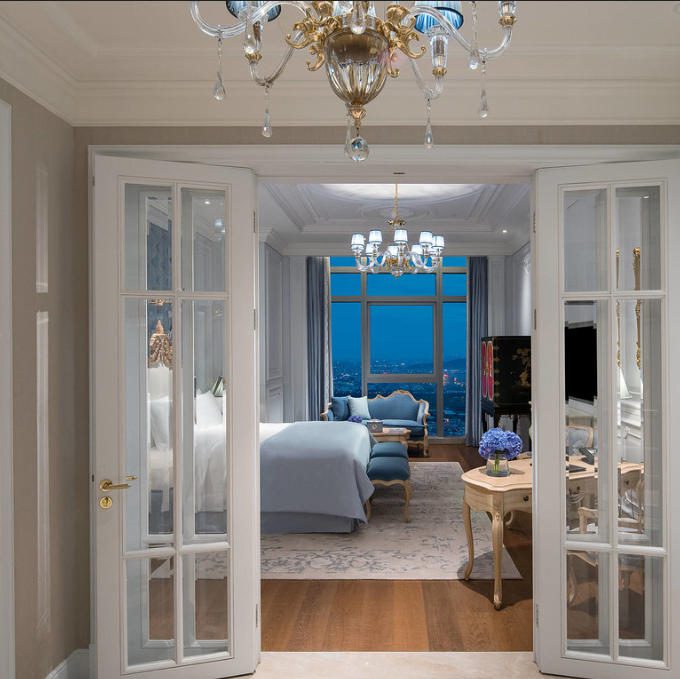

 Hand-applied oil finishes on solid walnut case goods — a quality level routinely achieved by China’s tier-one contract manufacturers supplying the global luxury residential and hospitality markets.

 Premium outdoor FF&E from leading Chinese contract manufacturers — weather-resistant finishes tested to 1,000+ hours salt spray, deployed across five-star resort properties in the UAE and Southeast Asia.