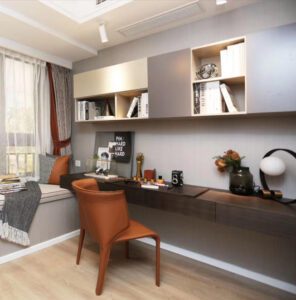
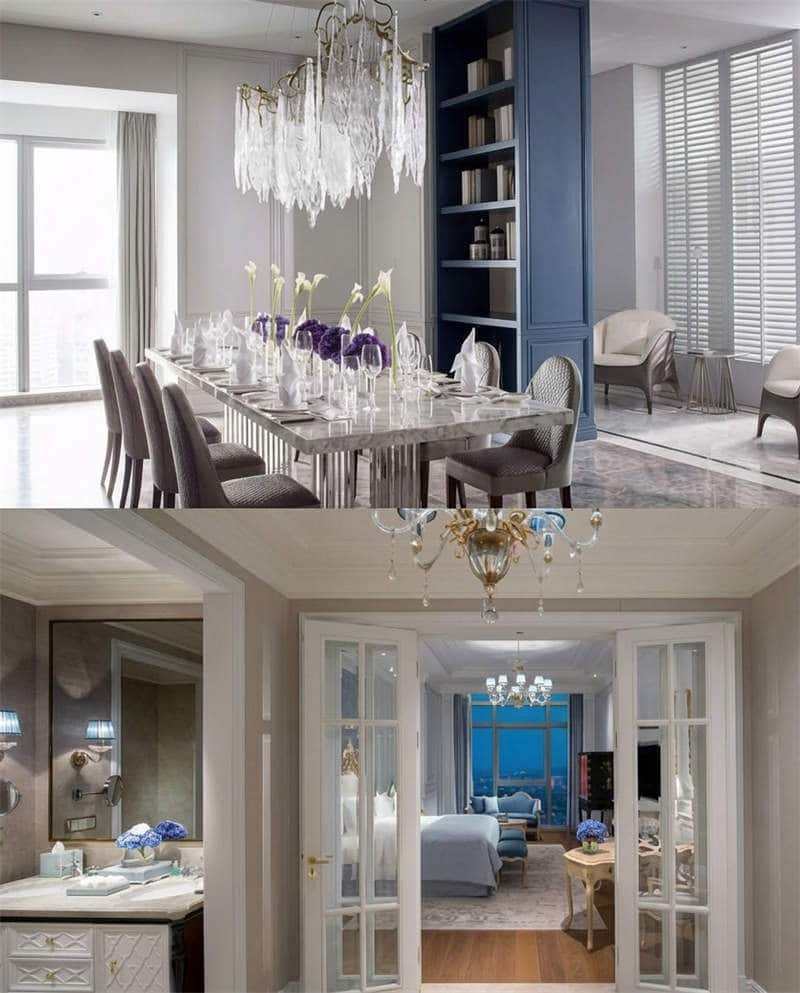
Partner with the right furniture manufacturer to deliver exceptional quality,...
Partner with the right furniture manufacturer to deliver exceptional quality, timely delivery, and design excellence on every hotel project
Why Furniture Manufacturer Selection Directly Impacts Your Hotel Projects’ Success
A hotel fit-out project is one of the most time-sensitive, high-stakes procurement exercises in the commercial design world. Every furniture piece — the upholstered armchair in Room 214, the dining chair in the restaurant, the headboard across 180 guestrooms — must be correct in specification, consistent in finish, and on-site before the contractor signs off. There is no margin for a wrong material, a missed shipment, or a manufacturer who misinterpreted your brief.
The global hotel furniture, fixtures, and equipment (FF&E) market was valued at $58.4 billion in 2025 and is projected to reach $112.8 billion by 2035 — a CAGR of 6.8%. That growth means more hotel projects, more competition for manufacturing capacity, and more pressure on fit-out designers to have supply chains that reliably deliver. The manufacturers who are easy to find are not always the ones who are reliable to work with.
The Cost of Partnering With Unreliable Suppliers
Industry data from hospitality procurement specialists indicates that 48% of hotel furniture projects experience delivery delays to varying degrees. The financial consequences of a delayed furniture delivery are not limited to the cost of the missing items. A hotel opening delayed by two weeks means cancelled bookings, compensation to pre-booked guests, idle staff payroll, and reputational damage with OTA (Online Travel Agency) platforms. For a 200-room hotel projecting $150 per room per night, a two-week delay represents roughly $420,000 in lost revenue before a single guest has checked in.
Quality failures carry their own cost structure. A manufacturer who substitutes an inferior foam or uses a finish that differs from the approved sample forces you into a choice between accepting substandard work and triggering a replacement process that your timeline cannot accommodate. Either option costs money, client confidence, and hours of your team’s time that should be spent on the next project.
What This Guide Covers
This guide provides a practical, step-by-step framework for hotel fit-out designers evaluating, selecting, and managing relationships with furniture manufacturers. It covers how to define your project requirements before you start searching, what quality standards and certifications to demand, how to assess production capacity and delivery reliability, how to structure contracts that protect your interests, and how to build long-term partnerships that grow more valuable over time.
The goal is not to give you a generic supplier checklist — it is to give you the decision-making framework that separates fit-out designers who consistently deliver exceptional hotel projects from those who spend their careers managing manufacturing crises.
Understanding Your Hotel Fit-Out Project Requirements Before You Search
Define Your Project Specifications and Timeline
Every conversation with a potential manufacturing partner should begin with a document, not a phone call. Before you approach any manufacturer, produce a project brief that specifies the furniture types and quantities by room category (guestroom, suite, restaurant, lobby, meeting room, corridor), the materials and finishes required, your target delivery date, and the phased delivery schedule if the hotel is being handed over floor by floor.
Vague requirements produce three problems simultaneously. They prevent manufacturers from quoting accurately, which means you cannot make a meaningful comparison between proposals. They leave room for interpretation during production, which means what arrives may not match what you imagined. And they complicate disputes, because without a written specification, it becomes difficult to establish what was actually agreed.
A brief that specifies “dining chair, walnut veneer on solid beech frame, seat height 460mm, upholstered in Performance Velvet Grade 3 in colour Ref. PV-412, CATAS-tested for 200,000 cycle durability” eliminates ambiguity at every stage. It is the document against which you will approve samples, accept deliveries, and raise quality claims.
Assess Your Volume and Ongoing Relationship Needs
A single hotel fit-out may represent a one-time procurement event from the manufacturer’s perspective, or it may be the beginning of a relationship where you are specifying the same manufacturer across a chain rollout or a pipeline of ongoing boutique hotel projects. These two scenarios call for fundamentally different conversations.
A one-time supplier for a single hotel will quote you on the merits of that order. A long-term manufacturing partner with visibility into your pipeline will invest in understanding your design language, your quality standards, and your communication preferences — and will offer better pricing, priority scheduling, and faster response times in exchange for the predictable volume.
Be transparent about your volume and pipeline when you approach manufacturers. A manufacturer who understands that a successful first project could lead to five more in 18 months will allocate better account management resources and more senior technical contacts than one who sees a single order.
Identify Your Design and Customization Requirements
Hotel projects vary enormously in their customisation demands. A budget hotel rollout may specify standard catalogue items in a limited colour palette. A luxury boutique property may require custom upholstered pieces in a specific proprietary fabric, case goods with a hand-applied lacquer finish in an exact RAL colour, and a headboard design that exists nowhere in any catalogue.
Understanding where your project sits on this spectrum before you start searching determines which manufacturers are even worth approaching. A factory optimised for high-volume, low-customisation production will struggle with the six-week back-and-forth of refining a bespoke piece. A custom atelier will be priced out of a high-volume standard rollout.
For most hotel fit-out projects, the answer lies in the middle: manufacturers who have a solid production base for standard hospitality categories and genuine capability for meaningful customisation — adjusting dimensions, specifying upholstery from a broad fabric range, offering finishes beyond a standard palette, and accommodating brand-specific design elements without adding excessive lead time or cost.
Evaluating Quality Standards and Manufacturing Certifications
Verify Industry Certifications and Compliance Standards
Certifications in hotel furniture are not marketing credentials — they are operational requirements. A manufacturer who cannot provide documentation for the certifications relevant to your project’s market is not just inconvenient; they are a compliance risk that becomes your problem when a hotel’s fire safety inspection finds non-compliant upholstery.
The certifications that matter for hotel furniture procurement fall into several categories. Quality management: ISO 9001 (an internationally recognised standard confirming documented, audited quality control systems across production) is the baseline. Fire safety: The relevant standard depends on the destination market. In the UK, BS 7176 and BS 5852 apply to upholstered seating in high-hazard occupancy environments like hotels. In the US, California Technical Bulletin CAL 117 and CAL 133 govern upholstered furniture fire resistance. In continental Europe, EN 1021 applies. Environmental and air quality: GREENGUARD Gold certification confirms that products meet strict chemical emission standards for indoor environments. FSC chain-of-custody certification verifies that timber is sourced from responsibly managed forests.
When a manufacturer provides certificates, do not accept them at face value. Verify each certificate directly through the issuing body’s public registry. A certificate is only as reliable as the verification behind it.
Red flags to watch for: Any manufacturer who responds to a certification request with “we meet all relevant standards” without providing specific documentation; certificates that show no issuing body details or expiry date; and manufacturers who become defensive when you ask to verify credentials independently.
Assess Material Quality and Durability Standards
Hotel furniture operates in a fundamentally different environment from residential furniture. A guest room chair may be sat on, climbed on, and subjected to cleaning chemicals 1,000 times per year. A restaurant dining chair in a full-service hotel sees continuous use across two or three service periods daily. Upholstery fabrics, frame joints, and finish systems that perform adequately in a residential setting will fail prematurely in high-traffic hospitality use.
The specifications that distinguish contract-grade hotel furniture from residential equivalents are specific and verifiable. Frame material should be solid hardwood (beech, rubberwood, or ash) with kiln-dried moisture content below 12% to prevent warping and joint failure. Foam density for seating should be a minimum of 40 kg/m³ with a High Resilience (HR) rating, which maintains its shape under repeated compression far longer than standard foam. Upholstery fabrics should meet a minimum 50,000 Martindale rub count (the industry test measuring fabric durability) for public area applications.
When evaluating a manufacturer’s material quality claims, ask for the specific test reports — not the brand name of the fabric or foam, but the documented test results. A manufacturer who can provide CATAS or SGS test reports for their standard hospitality materials is demonstrating a level of technical rigour that meaningfully reduces your risk.
Conduct Quality Control Inspections and Factory Visits
A factory visit before committing to a manufacturing relationship is one of the highest-ROI investments a hotel fit-out designer can make. What you observe in a factory in two hours will tell you more about a manufacturer’s reliability than any portfolio or reference list.
During a factory visit, look specifically at the following. The raw material storage area: are timber panels stored flat on level racking, or stacked in ways that will cause warping? Are upholstery fabrics stored in controlled humidity conditions, or exposed to sunlight that causes fading? The production floor: are QC checkpoints visible at distinct stages of production (frame assembly, finishing, upholstery), or is inspection confined to a final check at the end of the line? The finishing area: is there dust contamination in the spray booth that would produce defective surfaces? The packing and dispatch area: is furniture wrapped and protected adequately for container loading, or are scratches and transit damage being introduced at the last stage?
If a factory visit is not feasible — which is often the case when the manufacturer is overseas — request a structured virtual factory tour recorded on video rather than a curated presentation of showroom pieces. Ask specifically to see the QC inspection station and the pre-shipment packing area.
Request two or three production samples — pieces made on the production line under normal conditions, not showroom samples produced to a higher specification specifically for the presentation. Have those samples independently assessed before placing a production order.
Analyzing Production Capacity and Delivery Reliability
Confirm Manufacturing Capacity Matches Your Project Timeline
Lead time — the period between placing a confirmed purchase order and the goods being ready for shipment — is the metric that most directly determines whether your hotel opens on schedule. For custom hotel furniture, typical production lead times range from 8 to 16 weeks depending on customisation complexity, order volume, and the manufacturer’s current capacity utilisation.
The error most designers make is accepting a quoted lead time as a guaranteed commitment rather than an estimate. A manufacturer quoting 10 weeks at 70% capacity utilisation may not be quoting 10 weeks when their facility is at 90% because three other large orders arrived simultaneously. Ask specifically: what is your current production capacity utilisation? What percentage of your facility is already committed over the next 12 weeks? At what volume level would you need to add production shifts to meet our timeline?
Build buffer time into your project schedule regardless of what a manufacturer promises. A hotel project schedule that assumes furniture will arrive on the last possible day before the fit-out contractor needs it is a schedule that will fail. Ten to fifteen percent timeline contingency applied to the furniture delivery window is the difference between a manageable delay and a crisis.
Review Logistics and Delivery Track Record
Production completion and on-site delivery are not the same event. Between a finished piece leaving the factory and arriving correctly at a hotel installation site are freight booking, export packing, container loading, port processing, ocean transit (typically 18 to 35 days for Chinese manufacturers shipping to Europe or the Middle East), customs clearance, last-mile delivery, and installation sequencing. Each of these stages represents a delay point.
Ask potential manufacturers specifically about their delivery track record, and ask for data — not testimonials. What percentage of your last 20 hotel project shipments arrived within the agreed delivery window? What was the average deviation for those that did not? What is your reported damage rate on delivered furniture, and how is transit damage handled?
A manufacturer who cannot answer these questions with specific figures, or who quotes only their best-case delivery experiences, is signalling that they either do not track this data rigorously or that the data does not reflect well on their performance.
Establish Clear Communication Protocols for Order Management
The single most common complaint from hotel fit-out designers about furniture manufacturers is not quality failure or delivery delay — it is the absence of proactive communication that would have allowed those problems to be managed before they became crises. A delay that is communicated three weeks in advance is a problem you can solve. The same delay communicated on the morning the shipment was supposed to arrive is a crisis.
Before signing any purchase order, establish explicit communication standards: who is your named account manager and what is their direct contact; what is the committed response time for production queries (four hours during business hours is a reasonable standard); what production milestone updates will be provided and on what schedule; and what is the escalation procedure if a milestone is at risk.
Put these commitments in writing. A manufacturer who is unwilling to commit to specific communication standards before an order begins is almost certainly less responsive during production than you will need them to be.
Comparing Pricing Models and Financial Stability
Understand Transparent Pricing Structures
A furniture quotation that presents a single unit price with no breakdown of components is a document you cannot effectively evaluate or compare. A quotation that shows material cost, labour cost, finishing and upholstery cost, packaging, and logistics is a document you can interrogate, compare line by line with competing proposals, and use as a basis for negotiation.
Request itemised pricing on every quotation you receive. This discipline serves two purposes. First, it reveals where cost differences between competing manufacturers actually lie — whether one is using inferior materials to achieve a lower price, or whether they have genuine production efficiency advantages. Second, it establishes a baseline for mid-project change pricing: if you need to change a fabric specification after a sample review, an itemised quotation tells you exactly what that change should cost rather than giving the manufacturer latitude to absorb additional margin in an undocumented revision.
Be explicit about what is included in the quoted price: does it include export packing to container loading, or only factory-door pricing? Are customs documentation and certificates of origin included? Are samples charged separately? Hidden costs introduced after a purchase order is placed are one of the most common sources of budget overrun in hotel furniture procurement.
Evaluate Financial Stability and Payment Terms
A manufacturer who is financially unstable represents a specific category of risk: they may prioritise other clients’ orders ahead of yours if cash flow is constrained, accept orders they lack the working capital to fulfil, or in extreme cases, close during your production run. This is not a theoretical risk — it is a documented pattern in every industry that experiences rapid growth and consolidation.
Assess financial stability through several lenses. Request trade references from other B2B clients and contact them directly. Ask how long the manufacturer has been operating, whether ownership has changed in the past three years, and whether they can provide references from hotel projects completed in the past 12 months. During factory visits, observe whether the facility is well-maintained and whether the workforce appears stable.
Standard hotel furniture payment terms run approximately 30% deposit on purchase order, 40% at a mid-production milestone (typically after frame and material approval), and 30% against pre-shipment inspection. Manufacturers requesting 70% or more upfront, or who are unwilling to tie milestone payments to documented production stages, are either cash-flow constrained or do not have confidence in their own production schedule.
Calculate Total Cost of Ownership, Not Just Unit Price
The most expensive furniture decision a hotel fit-out designer can make is choosing a manufacturer on the basis of the lowest unit price. Commercial furniture specialists consistently report that premium-quality hotel furniture, properly specified and sourced, delivers a 10-year total cost of ownership substantially lower than budget alternatives — because it does not need replacing at years three and five.
Consider a concrete scenario: a restaurant dining chair at $85 per unit from a budget manufacturer versus $130 from a contract-grade manufacturer. The first chair shows wear at year two, requires reupholstering at year three ($45 per chair), and requires full replacement at year five. The second chair requires no maintenance intervention for seven years and reupholstering at year eight. Over ten years, the $85 chair costs approximately $215 in total; the $130 chair costs approximately $155. The “expensive” chair saves $60 per unit over the project lifecycle — across 120 restaurant chairs, that is $7,200 in lifecycle savings from a single furniture category.
Apply this calculation to every category where you are comparing a budget option against a premium alternative. The result consistently shifts the decision in favour of quality.
Assessing Customization Capabilities and Design Flexibility
Evaluate Design Support and Collaboration Process
There is a meaningful difference between a manufacturer who offers customisation in the catalogue sense — select from these ten fabrics, these five finishes — and one who offers genuine design collaboration. The latter can receive a mood board, a reference photograph, or a hand-drawn sketch and translate it into a production-feasible specification. The former requires you to fit your design vision to their limitations.
For hotel fit-out projects, genuine design collaboration capability matters because hospitality brands increasingly require design differentiation. A manufacturer who can engage with your concept, flag production feasibility issues early, suggest material alternatives that achieve the same aesthetic at lower cost, and produce technical drawings for your approval before production begins is not just a supplier — they are a project resource.
Ask potential partners to walk you through how they handled a specific customisation request on a recent hotel project: what was the original brief, what was the design challenge, what was their solution, and what was the final outcome? A manufacturer who can answer this question with specificity is demonstrating real design collaboration capability. One who responds with generic statements about being “flexible” is not.
Review Customization Options Without Excessive Lead Time Penalties
Customisation should be a design asset, not a commercial penalty. The range of modifications that experienced hotel furniture manufacturers can accommodate without significant lead time extension or cost uplift typically includes fabric and leather selection from a broad approved library, finish colour changes within a standard colour system, dimension adjustments of up to ±15% on standard frames, and hardware specification within an approved range.
Modifications that will typically extend lead time and incur genuine additional cost include entirely new frame profiles requiring tooling development, structural design changes, non-standard dimensions that require new cutting templates, and proprietary branding elements such as custom-woven logos or embossed hardware.
Understanding exactly where these boundaries lie before production begins allows you to plan your design iterations in the right sequence: lock the structural specification first, then resolve material and finish details once the form is approved. This approach minimises the number of design changes that fall into the expensive category.
Confirm Ability to Match Existing Furniture Lines
Hotel groups refurbishing one property in a chain expect new furniture to coordinate visually with existing pieces in sister properties. Boutique hotels completing a phased renovation expect new guestroom furniture to align with lobby and restaurant pieces installed two years earlier. Manufacturers who can match previously specified items — because they maintain detailed production records, retain finish reference samples, and store fabric details — are substantially more valuable for ongoing hotel relationships than those who treat every order as a blank-slate production run.
Ask specifically: how do you maintain continuity for repeat orders? Do you retain fabric samples and finish references from completed projects? What is your process for matching a previously specified piece when a client returns two years later for additional rooms?
The manufacturers who can answer these questions clearly have invested in the documentation and sample management systems that serve hotel clients across multi-year relationships. Those who cannot are optimised for single-transaction business.
Investigating References, Track Record, and Industry Reputation
Request and Contact Industry References
A reference list is only useful if you actually call the people on it. Designers who collect reference lists without contacting references are performing the appearance of due diligence without its substance. The references a manufacturer provides are, by definition, their most satisfied clients. What those clients tell you when you speak to them directly — including what they found frustrating, what they would have done differently, and whether they would use the manufacturer again — is far more revealing than any written testimonial.
When speaking with references, ask the following questions. Did the manufacturer deliver within the quoted lead time on your project? If not, by how long, and how was it communicated? Did the delivered furniture match the approved samples in finish and specification? How did the manufacturer respond when problems arose? Would you use them again, and have you?
A manufacturer whose references answer these questions with consistent positivity on delivery reliability, quality matching, and problem resolution is demonstrating a track record you can place meaningful confidence in.
Research Reputation in the Hospitality and Design Community
The hospitality and interior design communities are smaller and more connected than they appear. Designers, procurement managers, and project coordinators talk to each other — at trade shows, through professional associations, and in online communities. A manufacturer with a pattern of delivery failures or quality inconsistency will have a reputation in those conversations that does not appear on their website.
Use your professional network actively when evaluating manufacturers. Ask colleagues who have worked with a specific facility. Post in professional design forums about your experience. Check the manufacturer’s presence at major hospitality design trade events — Hospitality Design Expo and Heimtextil are venues where serious hospitality manufacturers invest in market presence and where industry peers gather to compare notes.
Be alert to patterns in peer feedback rather than individual opinions. A single negative experience may reflect an unusual project circumstance. A consistent pattern of concerns about the same issue — communication, finish consistency, post-delivery service — reflects a structural capability gap.
Review Case Studies and Portfolio of Completed Projects
A portfolio of completed hotel projects reveals several things simultaneously: the aesthetic range the manufacturer can work within, the scale of projects they have successfully delivered, and the types of hotel brands and designers they have collaborated with. A manufacturer whose portfolio consists entirely of budget hotel rollouts and residential projects is probably not the right partner for a luxury boutique hotel with complex bespoke requirements — regardless of what they claim in a sales conversation.
When reviewing project portfolio documentation, look for projects with similar parameters to yours: comparable room counts, similar design complexity, equivalent market positioning. Ask for references specifically from those projects rather than from the general reference list.
Manufacturers like JL&C Furniture, which has delivered hospitality furniture projects including work for established hotel brands in China, maintain documented project portfolios that allow prospective clients to assess their actual hospitality track record rather than relying on production claims alone.
Establishing Strong Contractual Agreements and Protections
Define Clear Terms for Quality, Delivery, and Performance
A hotel furniture contract that describes the scope of supply without specifying quality standards, delivery commitments, and acceptance criteria is not a contract that protects you. It is an agreement that commits you to pay and leaves the manufacturer with latitude on everything that matters.
Quality standards should be expressed in measurable terms: foam density specified in kg/m³, finish colour matched to a named Pantone or RAL reference, fabric specified by brand and grade with the Martindale rub count confirmed, and dimensional tolerances expressed as ±mm. A clause that says “furniture shall be of good quality” is unenforceable. A clause that says “seat foam shall be HR 40 kg/m³ minimum density, upholstery fabric shall be Performance Weave Grade 4 in Ref. PW-221, frame dimensions shall be within ±5mm of approved drawing” is the basis for a quality claim.
Delivery terms should specify the date by which goods must be ready for shipment (not just “on time”), the penalty for late delivery (typically 1-2% of the order value per week of delay, capped at 10-15%), and the procedure for communicating delays when they arise. Per hospitality procurement specialists, the most effective contracts also include an inspection window — typically 5 to 10 business days after delivery — within which defects can be documented and rejection or replacement can be triggered.
Include Detailed Specifications and Change Order Procedures
Every design specification — fabric reference, finish colour, hardware model, dimension schedule, upholstery detail — must be documented in the contract as an attached schedule, not referenced verbally or by implication. The production brief you prepared before approaching manufacturers becomes the contract schedule.
Change orders — any modification to the agreed specification after the contract is signed — must follow a formal written procedure. The procedure should require the designer to submit a written change request, the manufacturer to confirm the cost and lead time impact in writing, and both parties to sign off before the change is implemented. This process eliminates the conversation where the client believes a change was free because “they didn’t mention a cost,” and the manufacturer believes they have grounds for an additional charge because “obviously changing the fabric specification costs more.”
The change order process protects both parties. It gives you visibility into the cost and timeline consequences of every design decision made after contract signing. It gives the manufacturer a documented basis for recovering legitimate costs associated with your changes.
Secure Warranty and Liability Coverage
Warranty terms for hotel furniture should cover, at minimum, structural integrity (frame and joint failure) for three years and manufacturing defects in finish and upholstery for one year. High-quality manufacturers offering confidence in their product will typically exceed these minimums. A manufacturer who offers only a six-month warranty, or who restricts warranty coverage to defects visible at point of delivery, is not standing behind their product in any meaningful way.
Establish explicitly who bears responsibility for transit damage. If goods are shipped on EXW (Ex Works) terms — meaning the manufacturer’s responsibility ends when goods leave their factory — transit damage is your logistics contractor’s responsibility, not the manufacturer’s. If goods are shipped CIF or DAP, the manufacturer’s responsibility extends further into the supply chain. Align these logistics terms with your insurance coverage so there is no uninsured gap.
For high-value hotel furniture orders, consider requiring the manufacturer to maintain project-specific cargo insurance coverage for the duration of ocean transit and advising your client to ensure their project insurance includes FF&E in transit.
Building Long-Term Partnerships for Ongoing Success
Create Communication Frameworks for Continuous Improvement
A manufacturing relationship that produces excellent results on a first hotel project and then operates on autopilot is a relationship that will eventually disappoint. Manufacturers who understand your evolving design preferences, your clients’ standards, and your operational needs — because you have invested in ongoing communication — consistently outperform those who treat each order as a transactional event.
Establish a quarterly check-in cadence with your primary manufacturing partners. Use those sessions to review performance against agreed KPIs (on-time delivery rate, defect rate, specification accuracy), to brief upcoming projects so the manufacturer can plan capacity, and to discuss any design direction changes — new materials, new aesthetic influences, new client segment requirements — that will affect future specifications.
The feedback loop works in both directions. A manufacturer who understands what you needed them to do differently on the last project can apply that learning to the next. A manufacturer who never receives structured feedback cannot improve in the ways that matter to you specifically.
Negotiate Volume-Based Benefits and Preferred Pricing
The most significant commercial benefit of a long-term manufacturing relationship is pricing that reflects your cumulative volume, not your individual order size. A manufacturer who prices each order independently is treating you as a transactional client. A manufacturer who applies tiered pricing based on your rolling 12-month volume commitment is treating you as a partner.
Volume-based pricing structures for hotel furniture typically work on three levels: a standard commercial rate for one-off or infrequent orders, a preferred partner rate (typically 8-15% below standard) for clients who commit to a minimum annual spend, and a strategic partner rate for clients whose volume and pipeline visibility warrants priority production scheduling and dedicated account management.
Negotiate these structures explicitly rather than hoping they will be offered. Present your pipeline — upcoming hotel projects, anticipated room counts, estimated furniture values — and ask for a pricing structure that reflects the full value of your business rather than the value of a single order.
Align on Innovation and Future Capabilities
The hotel design landscape is evolving faster than most furniture manufacturing relationships account for. Sustainability requirements are moving from optional to mandatory as major hotel brands publish ambitious ESG targets. New materials — performance textiles with antimicrobial properties, recycled content foam, FSC-certified engineered timber — are becoming standard specifications in premium hospitality procurement. Operational requirements driven by post-COVID cleaning protocols have changed what hotel furniture needs to withstand.
A manufacturing partner who is actively investing in these capabilities — whose R&D conversations are about next-generation materials and sustainable production methods, not just how to produce the current catalogue more efficiently — is a partner whose capabilities will grow with your market. One who is not investing is one you will likely need to replace as your clients’ requirements evolve.
Ask potential and current partners directly: what new materials or production capabilities have you invested in over the past 12 months? What sustainability certifications are you working toward? How do you see your product capability evolving over the next three years? The quality of these answers tells you a great deal about whether the relationship will still be serving you well in five years.
Manufacturer Evaluation Scorecard
Use this weighted scoring framework to compare manufacturers objectively. Score each criterion from 1 (poor) to 5 (excellent), multiply by the weight percentage, and sum the totals for each manufacturer.
Evaluation Criterion
Weight
Manufacturer A Score
Manufacturer A Weighted
Manufacturer B Score
Manufacturer B Weighted
Manufacturer C Score
Manufacturer C Weighted
Quality Management (ISO 9001, QC processes)
20%
/5
/1.0
/5
/1.0
/5
/1.0
Fire Safety & Compliance Certifications
15%
/5
/0.75
/5
/0.75
/5
/0.75
Production Capacity & Lead Time Reliability
20%
/5
/1.0
/5
/1.0
/5
/1.0
Customisation Capability & Design Support
15%
/5
/0.75
/5
/0.75
/5
/0.75
Communication & Account Management
10%
/5
/0.5
/5
/0.5
/5
/0.5
Pricing Transparency & Value
10%
/5
/0.5
/5
/0.5
/5
/0.5
Financial Stability & References
5%
/5
/0.25
/5
/0.25
/5
/0.25
Sustainability Credentials
5%
/5
/0.25
/5
/0.25
/5
/0.25
Total Weighted Score
100%
/5.0
/5.0
/5.0
Scoring interpretation: 4.0–5.0 = Preferred partner candidate | 3.0–3.9 = Acceptable with documented reservations | Below 3.0 = Do not proceed without significant additional investigation.
Watch: Inside a Hotel Furniture Manufacturing Facility
Understanding what actually happens between a purchase order and a delivery container gives you the vocabulary to ask better questions of potential partners — and to recognise when a manufacturer’s answers do not match the reality of how hotel furniture production works.
A behind-the-scenes look at how large hospitality furniture projects are handled in a professional manufacturing facility. Covers production sequencing, quality control checkpoints, finishing processes, and packing for container shipment — the stages that determine whether your hotel project arrives on schedule and to specification.
Red Flags and Warning Signs to Avoid Unreliable Manufacturers
Recognize Common Pitfalls in Manufacturer Selection
The hotel furniture industry contains manufacturers at every point on the reliability spectrum. The ones who cause the most damage to fit-out designers’ businesses are not the obviously unqualified ones — those are easy to screen out. The most dangerous are the ones who present credibly in a sales conversation but lack the operational depth to deliver consistently once production begins.
Watch for these specific indicators. A manufacturer who cannot produce certification documentation within 48 hours of being asked is either not certified or does not have adequate administrative systems — neither is acceptable. A manufacturer who quotes lead times that are significantly shorter than industry norms (the standard for custom hotel furniture is 8-16 weeks; a quote of 4-6 weeks for complex custom pieces warrants immediate scrutiny) is either not accounting for realistic production time or planning to prioritise your order initially and deprioritise it once other business arrives. A manufacturer who is unwilling to discuss their quality control processes in specific terms — what is inspected, at what stages, by whom, and to what documented standard — either does not have robust QC systems or does not want you to understand them.
Pressure to commit quickly — “we have a production slot available this week but it will be gone by Friday” — is a sales tactic, not a genuine capacity constraint. Real manufacturing partners allow adequate time for proper evaluation because they are confident in their capability and are investing in relationships, not transactions.
Protect Yourself from Common Partnership Failures
The most effective protection against a manufacturing partnership failure is a structured trial before scale. For a new manufacturing relationship, identify a project where a pilot order of 15-30 units is feasible before committing the full hotel volume. Use the pilot to generate real performance data — actual lead time against quoted, actual quality against approved sample, actual communication responsiveness against committed standards — before your reputation and your client’s hotel opening are dependent on the relationship.
Document everything in writing. The conversations that cause the most expensive disputes in hotel furniture procurement are the ones that happened verbally. An email confirmation of a telephone discussion costs two minutes to send and eliminates the most common source of mid-project disagreement.
Build contingency into your supply chain structure for large hotel projects. This does not mean carrying backup inventory — it means having a second pre-qualified manufacturer identified for your most critical furniture categories, so that a production failure with your primary partner does not leave you without options. Hotel opening dates are not negotiable; your ability to pivot quickly when a manufacturer fails is the difference between a manageable problem and a catastrophic one.
Know When to Walk Away
Some manufacturing conversations should end before they reach a purchase order. A manufacturer who is consistently vague about specifications, timelines, or pricing across multiple interactions is not going to become more precise once you have placed a $200,000 order. A manufacturer whose references express serious reservations about communication or quality consistency is not going to perform differently for you than they did for their previous clients. A manufacturer who responds to your due diligence questions with defensiveness rather than transparency is signalling that scrutiny is not something they welcome.
The cost of walking away from a manufacturing conversation that raises serious concerns is the time spent in the evaluation. The cost of committing to a manufacturer who was giving you clear warning signals throughout the evaluation and ignoring them is your client relationship, your professional reputation, and potentially your contractual liability for a hotel opening that was delayed or compromised.
Trust your professional instincts. When a manufacturer’s communication style, responsiveness, or technical answers feel consistently off during an evaluation, that feeling is almost always grounded in something real.
Making Your Final Decision and Moving Forward
Create a Scoring System for Objective Comparison
Furniture manufacturer selection decisions made on the basis of a “gut feel” after seeing a showroom or reviewing a portfolio are decisions that systematically overweight aesthetic impression and underweight operational reliability. A structured scoring process corrects for this bias.
Use the weighted scorecard provided earlier in this guide, and adapt the weightings to your specific project priorities. For a luxury hotel project with complex customisation requirements, weight design support and customisation capability more heavily. For a budget hotel chain rollout with fixed specifications and non-negotiable opening dates, weight lead time reliability and production capacity more heavily.
Run every manufacturer you are seriously considering through the same scorecard. The comparative value of the tool is in its consistency: it prevents you from applying different standards of scrutiny to different manufacturers and then making a decision that cannot be explained or defended to a client who asks why you chose that particular partner.
Document your scoring and the evidence behind each score. When a manufacturing relationship later delivers excellent results, this documentation becomes the basis for your preferred partner designation. When a relationship disappoints, this documentation tells you at which criteria the manufacturer fell short — information you will use to refine your evaluation process for the next selection.
Plan Your First Project as a Trial Partnership
Treat the first hotel project with a new manufacturing partner as a structured evaluation, not just a production order. Increase your communication touchpoints: weekly production updates rather than milestone-only check-ins, a mid-production sample review in addition to the pre-shipment inspection, and a post-delivery debrief conversation within two weeks of installation completion.
Track the actual performance against every committed metric: lead time, quality match, communication responsiveness, delivery accuracy, packaging quality. Record specific examples — photographs of production updates received, timestamps on query responses, comparison photographs of delivered furniture against approved samples. This data is the foundation of the performance review you will conduct at three months and six months into the relationship.
If the first project demonstrates that the manufacturer can meet your standards consistently, move to a fuller partnership structure with the pricing and service benefits that come with committed volume. If it reveals gaps, address them explicitly in a structured conversation before deciding whether to continue the relationship or reallocate future projects.
Document Everything and Set Up Systems for Success
The administrative foundation of a successful long-term manufacturing partnership is a master project file for each manufacturer: the signed partnership agreement, all technical specifications and approved samples, production correspondence, inspection reports, delivery documentation, and warranty certificates. This is not bureaucracy — it is the evidence base you will need if a quality dispute arises two years into the relationship, and the institutional memory you will rely on when a new team member needs to manage a reorder.
Establish a regular review meeting cadence — quarterly for active manufacturing partners, annually for partners managing a lower volume of your business — and prepare for each meeting with your actual performance data: on-time delivery rate over the period, defect rate, communication response time average, any quality issues raised and their resolution. Manufacturing partners who understand that you track these metrics rigorously and review them with them formally are manufacturing partners who prioritise your orders and treat your standards as their standards.
Choosing a reliable furniture manufacturing partner is one of the most consequential decisions you will make as a hotel fit-out designer. The difference between a manufacturer who consistently delivers certified-quality furniture on schedule, to specification, with proactive communication and contractual accountability — and one who does not — is measured not just in project outcomes but in your business’s ability to win clients, protect margins, and build a professional reputation that grows year on year.
The framework in this guide — defining requirements before searching, evaluating certifications and material standards rigorously, assessing production capacity and delivery track record with specific data, structuring contracts that specify measurable quality and delivery standards, and building ongoing partnerships with the communication and commercial structures that drive continuous improvement — is not complex. It requires discipline and time invested upfront in evaluation rather than moving quickly to a purchase order.
That upfront investment consistently saves far more time, money, and client relationship capital than it costs. The designers who deliver exceptional hotel projects reliably are, in almost every case, the ones who invested in finding and managing the right manufacturing partners.
For hotel fit-out professionals ready to explore what a manufacturing partnership built on 20 years of hospitality project experience can deliver, JL&C Furniture’s hotel project portfolio provides documented examples of hospitality furniture projects — from custom guestroom packages to coordinated public-area installations — that demonstrate what specification-controlled, consistently delivered hotel furniture looks like in practice.
Ready to find your ideal manufacturing partner? Download our Furniture Manufacturer Evaluation Checklist — a practical tool used by leading hotel fit-out designers to systematically compare suppliers and make confident decisions. The checklist consolidates the evaluation criteria, factory visit questions, contract term requirements, and red flags covered in this guide into a single working document you can use on your next manufacturer evaluation.
Get Your Free Checklist — and start building manufacturing partnerships that deliver results, protect your reputation, and support your business growth through every hotel project.
Glossary of Key Terms
FF&E (Furniture, Fixtures & Equipment): The category of moveable, non-structural furnishings and equipment that equip a hotel for guest use, including all furniture, lighting, mirrors, in-room equipment, and decorative accessories.
ISO 9001: An internationally recognised quality management standard confirming that a manufacturer has documented, audited quality control processes across their entire production operation. The most widely required manufacturing quality certification in B2B procurement.
Martindale Rub Count: A standard laboratory test measuring fabric durability by counting the number of abrasion cycles a fabric withstands before showing wear. Contract-grade hotel upholstery fabrics should achieve a minimum of 50,000 cycles; public area applications typically specify 100,000 cycles or above.
GREENGUARD Gold Certification: Issued by UL Solutions, this certification confirms that furniture products meet strict chemical emission limits for indoor air quality — relevant for hotels with healthcare-adjacent positioning or clients with environmental procurement requirements.
FSC Certification (Forest Stewardship Council): Confirms that timber used in furniture production is sourced from responsibly managed forests. Required by enterprise hotel brands with sustainability procurement policies.
HR Foam (High Resilience): A foam type rated for its ability to return to original shape after repeated compression — the appropriate specification for hotel seating that will be sat on many times daily. Specified by foam density (kg/m³) and resilience rating.
CAL 117 / CAL 133: California Technical Bulletins specifying fire resistance requirements for upholstered furniture. CAL 133 is the more stringent standard applying to furniture in public occupancy environments including hotel lobbies and lounges.
MOQ (Minimum Order Quantity): The smallest number of units a manufacturer will produce in a single production run for a given product specification.
Incoterms: Internationally standardised trade terms defining who bears risk and cost at each stage of an international shipment. Common terms in hotel furniture procurement include EXW (Ex Works — buyer’s risk from factory door), FOB (Free On Board — seller’s risk until loaded on vessel), and CIF (Cost, Insurance, Freight — seller’s responsibility to destination port).
Change Order: A formal written document recording an agreed modification to a previously confirmed specification or contract scope, including the cost and lead time impact of the change.
Preguntas frecuentes
1. How do I know if a furniture manufacturer can handle the quality standards required for luxury hotel projects?
Request production-run samples — not showroom samples — and have them independently assessed against your specification. Verify all claimed certifications (ISO 9001, fire safety standards, GREENGUARD) directly through the issuing body’s public registry rather than relying on documents provided by the manufacturer. Contact references who have completed comparable luxury projects and ask specifically about quality consistency across an entire order, not just the sample approval stage. Visit the factory if feasible, or request a structured video tour focusing on QC inspection stations and pre-shipment packing processes.
2. What lead times should I expect when ordering custom furniture for hotel fit-outs?
Standard production lead times for custom hotel furniture range from 8 to 16 weeks from purchase order confirmation to goods ready for shipment, depending on customisation complexity, order volume, and the manufacturer’s current capacity utilisation. Add transit time (18 to 35 days for ocean freight from Asia to Europe or the Middle East), customs clearance (allow 5 to 10 working days), and last-mile delivery. Total door-to-door lead time from order confirmation to site delivery typically runs 16 to 24 weeks. Build a minimum 10% timeline buffer into your project schedule beyond the manufacturer’s committed lead time.
3. How can I ensure consistency when ordering furniture across multiple hotel properties?
Require manufacturers to maintain a formal specification control document — a written record of every approved design element including exact fabric references, finish colour codes (Pantone or RAL), foam density specifications, and hardware model numbers — that becomes the production standard for every batch across every property. Request that physical reference samples (fabric swatch, finish chip, hardware sample) are retained and matched against production batches. For chain rollouts, conduct a spot inspection of production samples from the second and third property orders to verify consistency before accepting full delivery.
4. What certifications should I look for when evaluating hotel furniture manufacturers?
The minimum certification standard for hotel furniture procurement should include ISO 9001 (quality management), fire safety certification relevant to your destination market (BS 7176 or BS 5852 for UK, CAL 117/CAL 133 for US, EN 1021 for European markets), and GREENGUARD Gold or equivalent for indoor air quality where required by your hotel brand or local building regulations. For clients with sustainability procurement requirements, FSC chain-of-custody certification for timber products is increasingly specified. For US commercial applications, BIFMA x5.1 (for seating) and BIFMA x5.4 (for lounge and public area seating) provide performance benchmarks for commercial durability.
5. How do I negotiate better pricing without compromising quality?
Present your pipeline — upcoming hotel projects, anticipated room counts, estimated furniture values — and negotiate tiered pricing based on cumulative annual volume rather than individual order quantities. Offer early payment terms (payment within 15 days rather than 30 or 60 days in exchange for a 2-3% discount). Commit to a longer-term relationship in writing rather than treating each order as a standalone transaction. Compare total cost of ownership across a 5-10 year period rather than unit price alone — quality furniture that requires no replacement for seven years is almost always cheaper than budget furniture that needs replacement at years two and five.
6. What should I do if a manufacturer fails to deliver on time?
Your contract should define exactly this scenario before it occurs. Standard hotel furniture contracts include a penalty clause of 1-2% of the order value per week of delivery delay, capped at 10-15%, triggered when delivery occurs after the confirmed date. If a delay is communicated in advance, request a revised production schedule in writing and assess whether the revised timeline is still consistent with your project schedule; if not, escalate to the manufacturer’s senior management and formally document the escalation. For chronic or severe delivery failures, most well-drafted contracts include a termination for cause provision that allows contract cancellation and recovery of advance payments when a manufacturer cannot demonstrate a credible path to delivery.
7. Can manufacturers handle rush orders, and what does that cost?
Some manufacturers can accommodate rush production through overtime and priority scheduling, but expect a premium of 20-50% on standard pricing for genuine rush capability, and reduced customisation options. The most important time to discuss emergency capacity is before you need it — during the initial partnership evaluation, not when a crisis has already occurred. Manufacturers who have priority production slots reserved for established partners deliver rush capacity at lower cost and with higher reliability than those responding to an unexpected request from an infrequent client.
8. How do I protect myself if there are quality issues with delivered furniture?
Your contract should include detailed acceptance criteria (measurable quality specifications, not general quality standards), an inspection window of at least 5 to 10 working days after delivery during which defects can be documented and rejection can be triggered, and a remedy framework specifying whether defective items are replaced, credited, or reworked and at whose cost. Photograph every delivery at the point of receipt, document any packaging damage that may indicate transit damage, and record specific defects with reference to the contract specification. Maintain warranty documentation — warranty terms should be captured in your contract, not referenced to a separate manufacturer document that may change without notice.
9. What customization options are worth paying extra for in hotel furniture?
The customisations that deliver the best return on investment in hotel furniture are those that directly affect durability, brand differentiation, and operational efficiency. Reinforced frame construction and high-density foam specification cost more upfront but reduce replacement frequency. Custom upholstery in a proprietary fabric or colour establishes visual brand identity that cannot be replicated by a competitor. Dimension modifications that allow furniture to fit a specific room layout precisely reduce installation inefficiency and maximise usable room space. Standard customisations such as colour changes within an approved palette are typically included in base pricing by reputable manufacturers and should not incur additional charges.
10. How often should I evaluate my manufacturing partnerships?
Conduct formal performance reviews quarterly for your primary manufacturing partners — suppliers responsible for 20% or more of your annual furniture spend. Use the review to assess on-time delivery rate, defect and return rate, communication responsiveness, and pricing competitiveness against current market alternatives. Conduct annual strategic reviews to assess whether the partnership’s capabilities are still aligned with your evolving client requirements and design direction. Supplement scheduled reviews with an immediate review after any project where significant problems occurred — do not wait for the next scheduled review to address a delivery failure or quality issue that affected a hotel project.
11. What happens if a manufacturer goes out of business mid-project?
Protect against this risk at contract level by structuring milestone payments that never expose you to advance payment exceeding 30-40% of the order value, so that your financial exposure in a manufacturer failure is limited. Require the manufacturer to provide a performance bond or parent company guarantee for high-value orders. Maintain relationships with at least one alternative pre-qualified manufacturer in each key furniture category so that, in a manufacturing failure, you have a credible alternative who already understands your standards. Regularly monitor signals of financial instability — communication delays, personnel changes, requests for early payment — and treat these as prompts to check your contingency position.
12. How can I ensure sustainable and environmentally responsible manufacturing?
Require specific documentation rather than accepting general sustainability claims. FSC chain-of-custody certification for timber, GREENGUARD Gold for chemical emissions, and OEKO-TEX Standard 100 for textiles are verifiable, third-party validated credentials. Ask specifically about the manufacturer’s own production sustainability: do they have documented waste reduction programmes, water treatment for finishing processes, and energy consumption data? For hotel brands with published ESG targets, align your manufacturing partner’s documented credentials with the specific requirements in the brand’s sustainability procurement policy before committing to a supplier who may not meet those standards at the point of contract compliance review.
13. What’s the difference between working directly with manufacturers versus using distributors or agents?
Working directly with a manufacturer offers better per-unit pricing (typically 15-30% lower than through a distributor), direct control over specification and customisation decisions, and a direct communication relationship for production management. The trade-off is that you bear full responsibility for supplier evaluation, quality management, and logistics coordination. Distributors and agents add a commercial margin but provide convenience — broader product access, established supplier relationships, and logistical support — that can be valuable for designers managing many concurrent projects across multiple product categories. The optimal model depends on your project volume: high-volume, focused hotel fit-out specialists typically benefit most from direct manufacturing relationships, while designers handling diverse project types across many categories may find distributor relationships more efficient for lower-volume categories.
Want to cooperate with a Leading Luxury Furniture Manufacturer and Supplier? Or do you want to get custom furniture?
Shanghai JL&C Furniture Co., Ltd. is a leading manufacturer and solution provider of luxury furniture and customized furniture in China.
China Furniture Sourcing Agent Roles for High-End Buyers What a China Furniture Sourcing Agent Actually Does for High-End Buyers Every finished luxury room sits on
How to Vet a China Furniture Sourcing Agent Before Signing A single curved sofa like this goes through dozens of approvals, including frame, foam, fabric
China Furniture Sourcing Agent vs Direct Factory Buying: A Strategic Guide for High-Value Buyers When one project includes 400 hotel rooms, a 20-seat marble dining
Advanced Tips to Get More from Your China Furniture Sourcing Agent Powerful Strategies for High-Performance Sourcing – Tailored for Elite Buyers, Designers & Operators Your
How to Work Better With Your China Furniture Supplier After Ordering A Practical Playbook for High-End Furniture Importers, Interior Designers, FF&E Buyers, Villa Owners, Private