The furniture industry is undergoing a green revolution. As your...
The furniture industry is undergoing a green revolution. As your clients increasingly demand eco-conscious interiors, understanding the latest sustainable manufacturing trends isn’t optional — it’s essential to staying competitive and delivering the solutions your projects require.
Sustainable manufacturing does not compromise on luxury — it redefines what luxury means for the clients who are increasingly specifying it.
Why Sustainable Furniture Manufacturing Matters for Your Business
Here is where the furniture industry stands in 2026: the global eco-friendly furniture market reached $55.1 billion in 2025 and is projected to more than double to $103.7 billion by 2034. The European sustainable furniture segment alone is growing from $13.37 billion in 2025 to $14.05 billion in 2026 — a market that is expanding not because consumers are becoming more idealistic, but because procurement requirements from hotels, corporations, and public sector clients are making sustainable specification a bid condition, not a differentiator.
For interior designers, distributors, and showroom owners, this shift creates a commercial imperative. Your clients are not just asking whether you can specify sustainable furniture. They are asking whether you know the difference between genuine sustainability and green marketing, whether you can document it, and whether you can deliver it without compromising on the aesthetic quality and functional durability they have always expected.
This guide gives you the specific, operational knowledge you need to answer those questions confidently: the certifications that actually matter, the materials that are entering commercial production, the manufacturing processes that separate credible suppliers from those who have swapped their brochure colors, and the client communication frameworks that turn sustainability into a competitive advantage rather than a project complication.
Understanding the Shift Toward Sustainable Manufacturing in Your Supply Chain
Why Your Clients Are Demanding Sustainable Furniture Options
The most important thing to understand about the sustainability demand in your client base is that it is not primarily ideological. It is structural.
Hotel chains are embedding sustainability standards into their FF&E (Furniture, Fixtures & Equipment) procurement specifications because their own ESG (Environmental, Social, and Governance — a framework for measuring a company’s environmental responsibility, labor ethics, and governance quality) commitments are now disclosed in annual reports reviewed by investors, regulators, and travel platforms. A 300-room hotel brand that publicly commits to net-zero operations cannot credibly procure furniture from factories with unverifiable material sourcing and no environmental audit trail.
Corporate offices face the same pressure from a different direction: 67% of Fortune 500 companies now require GREENGUARD Gold certification for furniture procurement as of 2026. Without that certification, suppliers — and by extension, the designers specifying them — are excluded from those contracts entirely.
The commercial implication for your practice is clear: the ability to specify and document sustainable furniture is rapidly becoming a qualification threshold, not a premium offering.
Corporate and Hospitality Client Expectations
The hotel sector has moved from voluntary sustainability commitments to mandatory supply chain requirements faster than almost any other commercial real estate segment. Major hotel groups including Marriott, Hilton, and IHG have published procurement standards that require suppliers to demonstrate:
Verified material sourcing (FSC certification for timber products, minimum)
Low VOC (Volatile Organic Compound — chemical off-gassing that affects indoor air quality) emission standards in guestroom environments
Labor practice documentation from manufacturing facilities
End-of-life recyclability or manufacturer take-back commitments
For hotel fit-out designers, this means that the supplier relationships you built five years ago may no longer qualify for current procurement requirements. Auditing your supplier portfolio against these standards — before a client project deadline creates pressure — is the strategic preparation this market shift demands.
Corporate office clients face parallel pressures from their own ESG reporting obligations under frameworks like the Global Reporting Initiative (GRI) and the European Sustainability Reporting Standards (ESRS), which apply to companies operating in EU markets. Furniture procurement is increasingly captured in Scope 3 emissions reporting — meaning your corporate clients need material traceability documentation from the manufacturers you specify.
Regulatory Compliance and Certification Standards
Understanding which certifications to require from your suppliers — and what each one actually certifies — is foundational knowledge for sustainable specification work.
Each certification answers a different question. FSC tells you where the wood came from. GREENGUARD Gold tells you what the finished product emits into the room. Cradle to Cradle tells you what happens to the product after your client is done with it. Matching the right certifications to your specific client’s procurement requirements is the critical skill — not simply specifying “sustainable” as a general category.
The Financial Impact: Pricing, Margins, and ROI for Your Business
Debunking the “Sustainable Costs More” Myth
The pricing premium on sustainable furniture is real but narrowing — and it is frequently misrepresented in client conversations.
European sustainable furniture carries a 15–30% premium over conventional options, according to Mordor Intelligence’s 2025 market analysis. However, this premium is not uniformly distributed: bamboo-based products now command only 5–12% above conventional wood furniture, down from significantly higher levels as manufacturing scale has increased. Recycled content seating and modular systems from certified manufacturers often reach cost parity with conventional equivalents when ordered at commercial volumes.
The more accurate framing for client conversations is: the premium on sustainable furniture today is almost always smaller than the cost of a failed ESG audit, a lost contract, or a brand reputation event. A hotel group that pays a 10% premium per chair for certified sustainable furniture is buying audit security, brand alignment, and the ability to publish its procurement practices publicly. For a hotel marketing its sustainability story, that is not a cost — it is a marketing asset.
For distributors and showroom owners managing their own margin structure, the sustainable furniture category often delivers better margin stability than conventional equivalents, because price competition is less commoditized at the certified premium end of the market.
Long-Term Value and Client Retention
Interior designers who have established sustainable specification expertise report a qualitatively different client relationship pattern from those who compete primarily on price or aesthetics. A design studio in Singapore that built a sustainable sourcing practice between 2021 and 2024 found that 78% of their corporate hospitality clients returned for subsequent phases of their properties — compared to a 45% repeat rate from clients on conventional projects.
The mechanism is straightforward: sustainability requires documentation, documentation creates detailed records of specifications and supplier relationships, and those records build a cumulative institutional knowledge of a client’s sustainability standards that becomes genuinely difficult for a competitor to replicate quickly. Sustainable specification expertise creates client relationships that deepen with every project.
Advanced Eco-Friendly Materials Transforming Furniture Production
Innovative Material Alternatives You Should Know
FSC-certified timber and certified low-VOC finishes at this level of finish quality — the commercial reality of 2026 sustainable manufacturing.
The materials entering commercial furniture production at scale in 2025–2026 represent a genuine shift in what designers can specify. This is no longer a category of compromises — it is a category of alternatives that frequently outperform their conventional equivalents in durability, aesthetic range, and documented environmental credentials.
Recycled and Upcycled Materials in Commercial Furniture
Post-consumer and post-industrial recycled content is now standard in several commercial furniture categories.
Recycled aluminum frames — processed from post-industrial waste streams — offer equivalent structural performance to virgin aluminum at lower embodied carbon (the carbon emissions associated with manufacturing a product). Leading contract seating manufacturers are achieving 80–95% recycled aluminum content in frame structures without performance compromise.
Recycled ocean plastic upholstery fabrics, produced from recovered marine waste collected by certified NGO programs, are now available from Tier 1 upholstery fabric suppliers at commercial widths and with commercial abrasion resistance ratings. A hospitality distributor in the UK recently completed an 80-room boutique hotel project specifying ocean plastic fabric dining chairs — the client’s sustainability report highlighted the procurement specifically, generating media coverage that the hotel valued at significantly more than the fabric premium.
Post-industrial wood fiber composites — panel materials made from wood manufacturing waste bonded with low-formaldehyde or formaldehyde-free resins — now represent a category where the environmental and structural performance cases are simultaneously strong. CARB Phase 2 (California Air Resources Board formaldehyde emission standards) and E0/E1 classified panels from certified manufacturers are the specification standard for responsible indoor furniture in 2026.
Plant-Based and Bio-Composite Solutions
Petroleum-based polyurethane foam has been the dominant seat cushion material in commercial furniture for decades. The alternatives entering commercial production in 2025–2026 are noteworthy:
Soy-based and plant-based polyurethane foam: Replaces 20–50% of petroleum feedstock with soy oil or other bio-based inputs. Available from manufacturers at commercial density grades (35–45 kg/m³) with equivalent performance and certification. Some formulations reduce VOC emissions by up to 30% compared to conventional foam.
Mycelium composites: Grown from agricultural waste and mushroom root structures, mycelium composites are currently entering commercial furniture at the accessory and structural panel level. Not yet available at high-volume commercial upholstery scale, but progressing rapidly. The biodegradable and compostable end-of-life profile positions mycelium as a transformative material for the next five years.
Algae-based resins and bio-resins: Used in surface finishes, adhesives, and composite materials. Reduces formaldehyde exposure and petroleum dependency simultaneously. Available from select certified manufacturers.
For hospitality and corporate applications, plant-based materials require the same performance verification as conventional alternatives — fire retardancy testing, abrasion resistance, UV stability. Do not specify on sustainability credentials alone; require the testing data.
Material Performance and Durability Specifications
Testing Standards and Performance Metrics
Sustainable materials must meet the same performance standards as conventional materials for commercial applications. The certification on the material tells you about its environmental profile. The test data tells you whether it will survive the use case.
For commercial seating upholstery, minimum specifications for high-traffic hospitality environments:
Performance Test
Minimum Standard
Testing Body
Abrasion resistance (Martindale)
30,000 cycles for hospitality
ASTM D4966
Fire retardancy (US)
Cal TB 117-2013
CPSC / NFPA 260
Fire retardancy (UK)
BS 5852 Crib 5
UKAS accredited lab
Seam slippage
≤ 6mm
ASTM D4034
Light fastness
≥ 5 on blue wool scale
ISO 105-B02
Sustainable fabric suppliers who understand the commercial specification market will provide these test results in standard format. Those who cannot should not be specified for commercial applications.
Maintenance and Lifecycle Considerations
One of the most commercially useful conversations you can have with hospitality clients is about maintenance cost reduction from sustainable furniture choices. Certified sustainable upholstery fabrics — particularly those made with solution-dyed fibers (where color is applied to the fiber before weaving, rather than dyed after) — demonstrate significantly better colorfast performance under commercial cleaning protocols.
A hotel purchasing manager in Australia reported that switching to certified solution-dyed sustainable fabrics on banquet chair upholstery reduced re-upholstery cycles from every 3 years to every 6 years — a maintenance cost saving that fully covered the fabric premium by year four. That is the total cost of ownership argument that converts cost-focused clients.
Manufacturing Processes That Reduce Environmental Impact
Water and Energy-Efficient Production Techniques
The environmental footprint of a furniture product is not just about the materials used — it is about the energy and water consumed to convert those materials into finished goods. For designers and distributors who need to provide supply chain documentation to clients, understanding what to ask manufacturers about their production processes is as important as knowing which materials they use.
Advanced Production Technologies
CNC (Computer Numerical Control — precision machine-guided cutting and machining) cutting technology reduces material waste by 15–25% compared to manual cutting processes, because digital nesting algorithms optimize the placement of cut patterns on material sheets. For timber panel products in particular, this waste reduction directly translates to fewer raw material inputs per unit of output — a measurable environmental improvement that manufacturers can quantify and document.
Waterjet cutting for metal components eliminates the chemical solvents and coolants used in conventional cutting operations. Automated edge-banding and adhesive application systems allow manufacturers to use lower-VOC adhesive formulations that would be too precise-application-dependent for manual processes.
For designers evaluating manufacturing partners, the relevant question is not “Are you sustainable?” — it is: “What percentage waste reduction have you achieved through production technology, and what metrics do you track?” Manufacturers with genuine environmental management systems can answer this specifically.
Renewable Energy Integration in Facilities
The carbon footprint of a manufacturer’s production is increasingly captured in EPD (Environmental Product Declaration — a standardized, third-party verified document quantifying a product’s environmental impact across its full lifecycle) data that sophisticated clients request. A furniture factory running on purchased renewable electricity from certified sources has a fundamentally different production carbon profile than an identical factory running on coal-grid power.
When evaluating suppliers, ask directly: What percentage of your production facility’s energy comes from renewable sources? Do you purchase Renewable Energy Certificates (RECs)? Manufacturers with ISO 14001 certification will have documented answers; those without may have genuine renewable commitments that are not yet systematically captured.
Waste Reduction and Circular Economy Practices
Zero-Waste and Near-Zero-Waste Facilities
Leading manufacturers in the sustainable furniture space are achieving sub-5% landfill diversion rates — meaning 95% or more of their production waste is either reused, recycled, or composted rather than sent to landfill. The mechanisms vary:
Timber offcuts and wood dust are redirected to biomass energy systems
Foam trim waste is collected and reprocessed into carpet underlay or acoustic panels by specialist recyclers
Fabric salvage from cutting operations is collected for textile recycling programs
For supply chain documentation, the metric you want is the manufacturer’s landfill diversion rate — the percentage of total waste that avoids landfill disposal. Request this in writing, with third-party audit verification where available.
Take-Back and Recycling Programs
End-of-life furniture management is emerging as a genuine competitive differentiator in the contract furniture market. Haworth’s Take-Back Program, documented in their sustainability reporting, offers reuse, repair, refurbishing, and recycling pathways for used furniture — providing corporate clients with documented end-of-life solutions that support their own waste reporting.
For interior designers and distributors, offering clients a manufacturer take-back commitment alongside initial specification closes the circular economy loop — which is increasingly what institutional procurement teams are looking for when evaluating proposals. It transforms the furniture specification from a purchasing event into an ongoing sustainability relationship.
Supply Chain Transparency and Traceability
Why Supply Chain Visibility Matters for Your Credibility
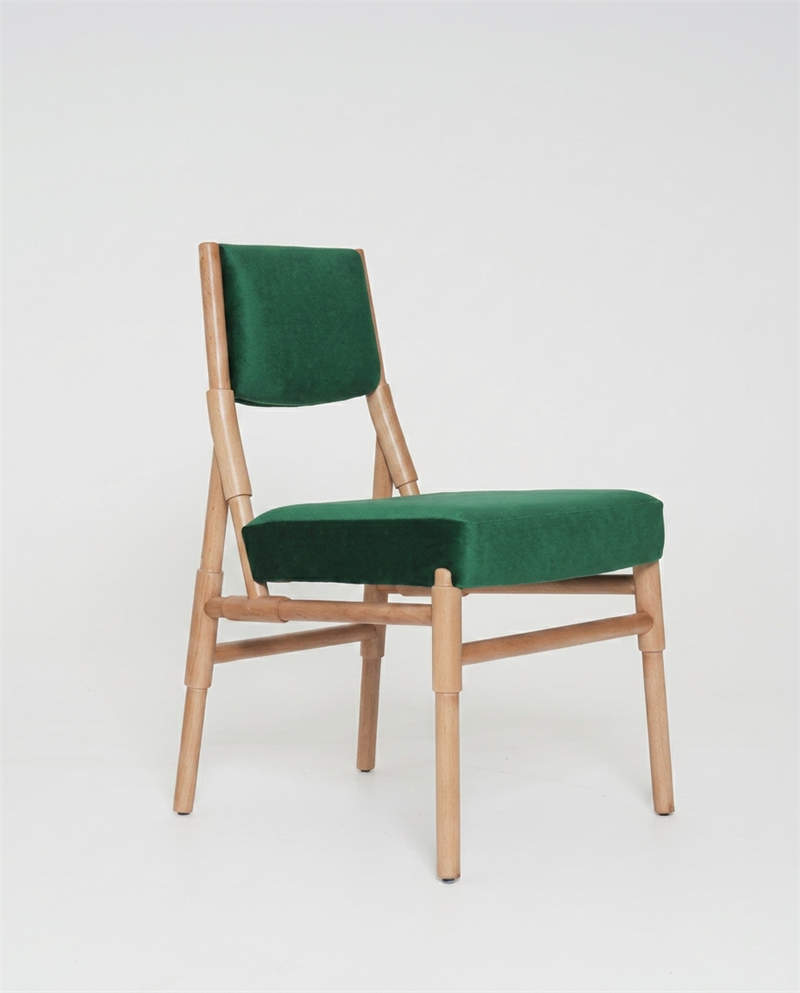
FSC-certified solid timber at this level of joinery craftsmanship — and the documentation trail that allows your client to verify every step of the chain.
Your professional credibility in sustainable specification is only as strong as your ability to verify the claims you make on behalf of your suppliers. A hotel client who asks to see the FSC certificate for the timber in their lobby furniture is not being unreasonable — they are protecting their own sustainability reporting integrity. If you cannot produce documentation, the conversation that follows is uncomfortable.
Building supplier relationships that support transparency is a structural practice, not a one-time activity. It means establishing documentation expectations before projects begin, maintaining a supplier certification library with expiry date tracking, and understanding which certifications need to be project-specific versus manufacturer-level.
Verifying Ethical Labor Practices and Fair Trade Standards
Labor practice verification has moved from a niche concern to a mainstream procurement requirement as ESG reporting frameworks have expanded. The questions to ask supplier partners:
Do you conduct regular third-party social audits of your manufacturing facilities?
Which audit standard do you use (SA8000, SMETA — Sedex Members Ethical Trade Audit, amfori BSCI)?
Are audit reports available for review?
Do your production sub-contractors meet the same labor standards?
Manufacturers who answer these questions with documentation are demonstrating supply chain integrity that protects both your credibility and their client base from ESG audit failure.
Material Sourcing Transparency
The Forest Stewardship Council’s chain of custody certification creates a documentable trail from certified forest to finished product — but the trail must be maintained at every processing step. A manufacturer with FSC certification on their facility can use FSC-certified timber from verified suppliers and produce FSC-labeled furniture. If any step in the chain is uncertified, the FSC claim does not apply to the finished product.
Understanding this chain of custody logic allows you to ask the right verification questions: Does your FSC certification cover your current production facility and all relevant product categories? Can you provide the FSC certificate number for verification?
Documentation and Certification Your Clients Require
Key Certifications and What They Guarantee
The certification landscape for sustainable commercial furniture in 2026 is maturing — and with maturity comes specificity. Different client types require different certification combinations:
For LEED-certified building projects: Furniture contributing to LEED credits under the U.S. Green Building Council’s Materials and Resources category requires EPDs and, for low-emission credits, GREENGUARD Gold certification. BIFMA level® certification also contributes to LEED points under the pilot credit framework.
For hotel and hospitality projects: Fire safety certifications (jurisdiction-specific), GREENGUARD Gold for guestroom environments, and FSC for timber products are the core requirements. B Corp manufacturer certification adds brand alignment value for hotel groups with public sustainability commitments.
For corporate office fit-outs: GREENGUARD Gold (mandated by 67% of Fortune 500 procurement programs as of 2026), Cradle to Cradle certification for circular economy compliance, and EPDs for Scope 3 emissions reporting are the priority credentials.
Creating Specification Sheets and Environmental Product Declarations (EPDs)
An EPD is an independently verified document — produced according to ISO 14025 and EN 15804 standards — that quantifies a product’s environmental impact across its full lifecycle: raw material extraction, manufacturing, transport, use phase, and end-of-life. It is the environmental equivalent of a nutritional information label.
For LEED project applications, EPDs are often mandatory. For clients with formal ESG reporting obligations, they provide the specific data needed for Scope 3 carbon footprint calculations. For design presentations to clients who care about sustainability but are not technically sophisticated, they provide credible third-party verification that conversations about sustainability are backed by evidence.
Creating client-facing sustainability summaries that combine EPD data with certification information and material composition — presented alongside standard specification data — normalizes sustainability documentation as a core part of your professional service, not a special request.
Customization and Design Flexibility in Sustainable Manufacturing
Balancing Sustainability with Custom Design Requirements
The persistent misconception among designers new to sustainable specification is that environmental commitments constrain creative flexibility. The 2026 reality is the opposite: the manufacturers who have invested most seriously in sustainable materials and processes have also invested most seriously in customization capability — because design-forward clients who care about sustainability also care deeply about specification control.
Modular and Scalable Production Systems
Modular production systems — where standardized components are manufactured sustainably at scale and assembled into project-specific configurations — are among the most compelling intersection points of sustainability and customization capability. The environmental logic is powerful: fewer unique components manufactured in larger runs creates less setup waste, fewer material transitions, and more efficient energy use per unit.
For hotel fit-out designers working across multiple properties of the same brand, modular systems allow specification consistency and scale efficiency while accommodating property-specific dimensional and finish variations. Understanding which manufacturers have invested in modular production infrastructure is one of the most commercially valuable pieces of supplier intelligence you can develop.
Lead Times and Production Planning
Sustainable manufacturing lead times vary significantly by manufacturer and customization complexity. The general industry picture in 2026:
Order Type
Typical Lead Time
Notes
Standard catalog (certified sustainable)
6–10 weeks
Similar to conventional at scale
Custom finish on sustainable base product
8–12 weeks
Sample approval adds 2–3 weeks
Fully custom sustainable specification
12–16 weeks
Allow additional time for material sourcing
Certified wood species with FSC documentation
Add 2–4 weeks
Dependent on certified timber availability
The lead time implications of sustainable specification are manageable with forward planning — and the planning discipline that sustainable sourcing requires often improves overall project coordination. Designers who build sustainable supplier relationships develop more rigorous project timelines as a byproduct, which reduces the last-minute specification changes that generate cost overruns on any project, sustainable or not.
Aesthetic Trends in Sustainable Furniture Design
Biophilic and Natural Design Elements
Biophilic design — the intentional incorporation of natural elements and materials into built environments to support human wellbeing — is one of the most commercially significant design trends of 2025–2026. Research published in environmental psychology journals documents measurable reductions in occupant stress and improvements in cognitive performance in biophilic environments, which is why corporate clients are embedding biophilic design into wellness-focused workplace strategies.
Sustainable furniture manufacturing supports biophilic design directly: FSC-certified solid timber with visible grain character, cork surfaces with their cellular texture, rattan and cane detailing sourced from certified managed plantations, and natural fiber upholstery in undyed or low-impact-dyed formats are all simultaneously sustainable and aesthetically aligned with the biophilic trend your hospitality and corporate clients are actively pursuing.
The insight for distributors and showroom owners: biophilic design is not a niche aesthetic — it is a mainstream corporate wellness strategy that sustainable furniture sourcing capability directly serves. Positioning your sustainable offering within the biophilic design context connects it to a client motivation (employee wellbeing outcomes) that is easier to budget than abstract environmental values.
Minimalist and Timeless Design for Longevity
The relationship between sustainable manufacturing and minimalist design is structural, not stylistic. A piece designed with considered proportions, durable materials, and timeless aesthetic character does not need to be replaced in three years when a trend cycle shifts. Longevity is, by definition, a sustainability strategy — the most sustainable piece of furniture is the one that does not need to be replaced.
Manufacturers who understand sustainability comprehensively design for longevity: replaceable components, modular configurations that can be reconfigured rather than retired, and aesthetic restraint that ensures pieces remain relevant across style evolution. Specifying for longevity is a sustainability conversation you can have with any client, regardless of where they sit on the environmental values spectrum — because longevity means lower total cost of ownership, and that is a universal client interest.
Building Relationships with Sustainable Manufacturers and Distributors
Evaluating Potential Suppliers and Partners
The most important due diligence skill in sustainable furniture specification is distinguishing genuine environmental commitment from sophisticated environmental marketing. These are genuinely different things, and the gap between them has significant professional risk consequences.
The framework for evaluating sustainable manufacturers:
Genuine commitment indicators:
Third-party certifications with verifiable registration numbers (not self-issued documents)
Specific, quantified environmental metrics (landfill diversion rate, renewable energy percentage, water recycling volume)
Published sustainability reports with year-on-year progress tracking
Willingness to provide facility audits and EPDs on request
Certifications that cover the specific product categories you are sourcing, not unrelated areas of production
Marketing-only signals:
General claims without specific metrics (“We care about the environment”)
Certifications that cannot be verified in the issuing body’s public database
Environmental claims that cover only one aspect of production while other areas are undocumented
Resistance to providing documentation or audit access
Questions to Ask Before Adding a Supplier to Your Portfolio
These are the specific questions that separate rigorous sustainable supplier evaluation from superficial sustainability checking:
What percentage of your raw materials are certified (FSC, Oeko-Tex, recycled content verified)?
What is your current energy mix, and what percentage comes from renewable sources?
What is your landfill diversion rate for production waste?
Do you hold a current ISO 14001 certification? Can I see it?
Which product lines are covered by your GREENGUARD certification?
Do you conduct third-party social audits of your facilities?
Can you provide EPDs for the products I intend to specify?
What end-of-life programs do you offer?
A manufacturer who answers these questions with specifics and documentation is demonstrating the supply chain integrity you can represent to clients with confidence. One who responds with generalities and deflects documentation requests is a reputational risk — because a claim you make on behalf of a supplier becomes your professional liability when a client audits it.
Site Visits and Facility Audits
A site visit to a manufacturing facility reveals environmental commitment in ways that no document can replicate. Specific areas to observe:
Raw material storage: Are certified and uncertified materials stored separately with clear labeling? Mixed storage without documentation trails creates chain of custody gaps.
Production floor: Is waste sorted at source? Are material offcuts collected systematically or swept into general waste? The discipline of waste sorting indicates whether environmental practices are operational or performative.
Energy infrastructure: Are solar panels visible? Is there a renewable energy certificate displayed? Ask specifically what percentage of facility energy is grid-supplied versus on-site renewable.
At JL&C Furniture, facility transparency is a standard part of supplier relationship development — because designers and distributors who have seen production operations firsthand can represent those operations to clients with a specificity and confidence that reference calls and brochures cannot provide.
Negotiating Terms and Building Long-Term Partnerships
Volume Commitments and Preferred Pricing
Sustainable sourcing at competitive price points requires relationship depth. The manufacturers offering the most compelling sustainable certification portfolios and the most genuine environmental commitments are also typically the manufacturers with the most sophisticated buyer relationships — and the ones who are most willing to structure preferred pricing for committed buyers.
The negotiation framework that works in sustainable manufacturing is the same one that works in conventional sourcing: a credible volume forecast creates the basis for tiered pricing discussions. A designer or distributor who brings a manufacturer 12 months of projected project volume — even as a non-binding forecast — creates a planning relationship that manufacturers value and reward with pricing structures that improve over time.
Collaborative Problem-Solving and Custom Solutions
The sustainable furniture manufacturers who consistently create the most value for designer clients are those who function as active specification collaborators — who can advise on which sustainable material will meet a specific fire rating requirement, which certified timber species is available at the required lead time, or which low-VOC finish formulation matches the color standard a designer has specified.
This advisory relationship is not automatic. It is built through the transparency of your project needs — sharing the specific sustainability criteria your client requires, the budget constraints you are working within, and the aesthetic outcome you are pursuing. Manufacturers who receive this complete picture can bring genuine expertise to the specification process; those who receive only a generic RFQ cannot.
Marketing Sustainable Furniture to Your Clients
Positioning Sustainability as a Business Solution, Not Just an Ethical Choice
Biophilic design at corporate specification level — sustainable materials and aesthetic precision working together, not competing.
The most common mistake in sustainability marketing to B2B clients is leading with environmental values rather than business outcomes. Environmental values are the reason sustainability matters. Business outcomes are the reason procurement decisions change.
For hospitality clients: sustainability supports brand differentiation, guest satisfaction data (research from Cornell Hospitality Quarterly shows that hotel guests in environmentally certified properties report higher satisfaction scores), and regulatory compliance in markets like the EU where hospitality sustainability reporting is increasingly mandated.
For corporate clients: sustainability reduces ESG reporting liability, supports talent retention (employees consistently report higher engagement in workplaces with demonstrated sustainability commitments), and protects against regulatory risk as Scope 3 emissions reporting becomes mandatory for large companies in major markets.
For luxury residential clients: sustainability is a quality signal — it communicates material traceability, manufacturing integrity, and product longevity in ways that conventional quality claims cannot.
Creating Case Studies and Project Portfolios
Document your sustainable projects with the specificity that creates professional credibility. A case study that says “We specified sustainable furniture for this hotel project” is marketing. A case study that says “We specified 180 FSC-certified solid timber dining chairs with GREENGUARD Gold upholstery fabric, reducing the project’s embodied carbon by 34% versus the original specification, and secured a $380,000 contract renewal for Phase 2 because the client’s procurement team cited our documentation quality” is professional evidence.
That level of documentation specificity requires you to capture it during the project. Build a documentation habit: record the certifications specified, the performance test data provided, the EPDs used, and the client’s response to the sustainability submission. Over time, this creates a portfolio of verifiable sustainability expertise that competitors who work less rigorously cannot replicate quickly.
Educational Content and Client Workshops
The interior designers and distributors who are capturing the growing sustainable furniture market most effectively are those who have positioned themselves as educators, not just specifiers. Quarterly client workshops on topics like “Understanding EPDs and What They Mean for Your LEED Project” or “The True Cost of Sustainable Furniture: A Total Cost of Ownership Analysis” create client relationships where you are the trusted expert rather than one of several quote sources.
This positioning is commercially defensive as well as offensive: clients who regard you as a sustainability authority are less likely to comparison-shop on price with a competitor who has not invested in the same knowledge depth.
Communicating Environmental Impact in Client-Friendly Terms
Visual and Narrative Storytelling
Certifications, EPDs, and technical specifications are the evidence. The story of a piece of furniture — where the timber was harvested, the factory that produced it and how, the material recycled content, and where it goes when a project lifecycle ends — is what creates emotional resonance with clients who are making values-aligned procurement decisions.
Develop a narrative template for your sustainable specifications: a concise one-page “Sustainability Story” for each major product or supplier that translates the technical documentation into accessible language. This serves dual purpose: it supports client presentations, and it forces the discipline of understanding the specification thoroughly enough to explain it simply.
ROI and Total Cost of Ownership Presentations
For cost-focused clients — and most corporate and hospitality procurement teams are cost-focused regardless of their sustainability commitments — the compelling sustainability argument is financial. Build a total cost of ownership model that includes:
Total Cost of Ownership=Unit Price+Freight & Installation+Maintenance Cost (Annual)×Lifecycle (Years)−Residual Value or Savings
When this model shows that a sustainable piece with a 12% higher unit price and a 60% longer replacement cycle costs less over a 10-year building lifecycle than a conventional alternative, the sustainability conversation becomes a financial recommendation. That is a conversation procurement teams are equipped to approve.
Overcoming Common Obstacles and Misconceptions
Addressing Client Concerns About Quality and Performance
“Sustainable furniture won’t hold up in a commercial environment” is the most common client objection you will encounter, and it is the one most easily countered with specific evidence.
The response that works: specific examples with documented performance data. A Tier 1 sustainable commercial seating manufacturer in Foshan producing FSC-certified solid timber and recycled aluminum frame dining chairs for a European hotel group reported zero structural warranty claims across 4,200 units over 18 months — a performance metric that is challenging even for conventional manufacturers at that scale. That specific data point — not a general claim about quality — is what converts a skeptical client.
Performance Testing and Warranty Information
Require warranty documentation that matches the use case. Commercial furniture for hospitality environments should carry minimum 5-year structural warranties. Upholstery components typically carry 2-year warranties, with fabric durability guaranteed by reference to specific test results (Martindale abrasion cycles, for example).
Manufacturers who provide warranties tied to specific performance tests — “This frame is warranted for 5 years under normal commercial use, as tested against BIFMA X5.1 seating standards” — are making commitments that are verifiable and defensible. General warranty language without specific performance references provides much weaker client protection.
Comparing Sustainable vs. Conventional Options
The most credible way to present sustainable options is honestly. Not every sustainable alternative is superior to its conventional equivalent in every performance dimension. Some bio-based foam formulations have slightly different comfort characteristics than conventional foam at equivalent density. Some recycled content textiles have a narrower colorway range than virgin fiber alternatives.
Acknowledge these trade-offs where they exist, present the net case (environmental credentials, durability, total cost of ownership, documentation capability), and let clients make informed decisions. This honest approach builds the trust that generates long-term client relationships. Overselling sustainability — and then having clients discover limitations you did not disclose — is a far more damaging professional outcome than a transparent specification conversation.
Managing Cost Expectations and Budget Constraints
Hybrid Approaches and Phased Implementations
For clients with genuine budget constraints, a hybrid specification strategy — sustainable materials for high-impact, visible, or frequently replaced elements; conventional materials for secondary applications — delivers meaningful environmental progress without project derailment.
Practical hybrid logic for hotel fit-out projects:
Guestroom specification: Prioritize sustainable upholstery fabrics and low-VOC finishes where occupant health impact is highest and marketing value is greatest
Case goods and millwork: Specify FSC-certified timber for visible surfaces; post-industrial content panels for interior components
Back-of-house and secondary areas: Conventional materials where sustainability premium delivers less visible client value
This approach allows you to document genuine sustainable commitment — with certifications and EPD data — while working within the budget reality of most commercial projects. It is more honest than over-promising a fully sustainable specification that gets value-engineered out entirely.
Value Engineering Without Compromising Sustainability Goals
When project budgets require sustainable specification adjustments, the discipline is to preserve the certification credentials while optimizing cost within the certified category. An FSC-certified timber species that is 15% lower cost than the originally specified species is a value engineering decision that preserves the sustainability credential. Removing the FSC requirement entirely to hit a price point is a sustainability goal compromise — and one that may have downstream consequences when the client’s own ESG audit reviews procurement decisions.
Understanding which elements of a sustainable specification are negotiable (specific material species, finish options, colorways) versus non-negotiable (certification coverage, performance testing data, chain of custody documentation) gives you a clear framework for value engineering conversations that protect the integrity of the sustainability commitment.
Future-Proofing Your Business with Sustainable Practices
Emerging Trends and Technologies on the Horizon
Innovations in Biodegradable and Compostable Materials
The next-generation materials entering furniture manufacturing R&D in 2025–2026 represent a significant shift from “less harmful” to “regenerative”:
Mycelium composites: Grown from agricultural waste and fungal mycelium, these materials are fully biodegradable and compostable at end-of-life. Currently available for accessories, panels, and packaging components; entering structural furniture applications in early pilot productions.
Algae-based bioplastics: Processed from cultivated algae, these materials sequester carbon during growth and biodegrade without toxic residue. Industrial-scale production for furniture components is 2–4 years from commercial availability at volume.
Bacterial cellulose: A material produced through fermentation processes, offering textile-like flexibility with biodegradable credentials. Under active development for upholstery and surface covering applications.
These materials are not ready for standard commercial specification today. They are, however, the direction in which leading manufacturers are allocating R&D investment — which means the distributor and designer relationships built with those manufacturers now will be the ones with access to competitive advantage when commercial-scale production arrives.
AI, Blockchain, and Supply Chain Transparency
Blockchain technology is increasingly applied to supply chain traceability in sustainable manufacturing — creating immutable, verifiable records of material provenance from raw material origin through every processing step to the finished product. The Deloitte analysis of blockchain in supply chains identifies supply chain transparency and administrative cost reduction as the two highest-value applications, with the blockchain supply chain market growing from $1.2 billion in 2025 to a projected $14.7 billion by 2035.
For furniture specification, the practical near-term application is timber traceability: FSC chain of custody verification that is logged on a distributed ledger rather than relying on paper certificates, creating an audit trail that is both more secure and more accessible for client verification. Manufacturers investing in this infrastructure are building a documentation capability that will differentiate them as corporate client ESG audit requirements intensify.
AI-driven design tools are simultaneously reducing the iteration cost of custom sustainable specifications — digital material sampling, 3D visualization of sustainable material options, and automated specification compliance checking against LEED or BREEAM credit requirements are all active development areas that will be standard workflow tools within the next 24 months.
Building Your Competitive Advantage
Certification and Credential Building
The professional development investments that deliver sustainable furniture expertise are specific and verifiable:
BIID (British Institute of Interior Design) Continuing Professional Development in sustainable specification: Relevant for UK-based designers working on hospitality and commercial projects.
WELL Accredited Professional (WELL AP): The WELL Building Standard certification, which covers indoor air quality, material health, and occupant wellness — increasingly specified alongside LEED for premium commercial interiors.
These credentials are not just professional development — they are marketing assets. Inclusion of LEED AP or WELL AP status in your practice credentials signals to corporate and hospitality clients that you have verified, examination-tested expertise in the specification standards their projects require.
Thought Leadership and Industry Involvement
The designers and distributors who are establishing genuine authority in sustainable furniture in 2026 are those who are creating knowledge, not just consuming it: publishing project case studies with specific sustainability metrics, presenting at industry events (NeoCon, Clerkenwell Design Week, Salone del Mobile), contributing to trade publications on sustainable specification practice, and participating in manufacturer advisory programs that provide early access to new sustainable product development.
This industry involvement creates a compounding advantage: each publication or presentation builds professional reputation, which attracts clients aligned with sustainable design values, which generates more project experience, which provides more case study material. The flywheel of thought leadership in a specialized niche is one of the most durable competitive advantages available in a market where product knowledge is increasingly commoditized.
The Competitive Advantage Is Available Now
The sustainable furniture manufacturing landscape is not a future trend you need to prepare for — it is the present reality of the contracts your corporate and hospitality clients are issuing, the procurement requirements they are imposing, and the professional expertise they are using to select their design partners.
Interior designers, distributors, and showroom operators who have built supplier relationships with verified certifications, mastered the documentation frameworks their clients require, and developed the client communication skills to translate environmental credentials into business outcomes are capturing a growing share of the commercial furniture market. Those who have treated sustainability as a peripheral concern are discovering that the mainstream contracts are moving away from them.
The entry investment is practical and specific: audit your current supplier portfolio against the certification standards in this guide, identify the gaps, and begin the supplier conversations that close them. Build your documentation practice. Develop the client communication frameworks. Build the professional credentials that signal expertise to the clients who are actively looking for it.
The sustainable furniture market is growing. The question is whether your business is positioned to grow with it.
Explore how JL&C Furniture approaches sustainable manufacturing capabilities for distributors, showroom owners, and design professionals who need certified, documentable, and aesthetically excellent options for their most demanding projects.
Ready to integrate sustainable furniture into your project specifications? Start by auditing your current supplier relationships against the certification standards and transparency benchmarks outlined in this guide.
Schedule a direct conversation with your key manufacturers to understand their sustainable practices, documentation capabilities, and end-of-life programs. Identify the gaps between what they currently offer and what your clients are beginning to require — then use those gaps as the basis for either supplier development conversations or new supplier qualification.
The clients who will define your project pipeline in 2028 are already specifying sustainable today. The suppliers who will support those specifications reliably — with documentation, with certifications, and with genuine manufacturing commitment — are the ones worth investing in building relationships with now.
🎬 Watch: Sustainable Furniture Design and Specification — A Professional Guide
This video covers the sustainable materials, certification landscape, and specification strategies that interior designers and commercial buyers are using on LEED and ESG-compliant projects in 2025–2026.
EPD (Environmental Product Declaration): An independently verified document, produced according to ISO 14025, that quantifies a product’s environmental impact across its full lifecycle — from raw material extraction through manufacturing, transport, use, and end-of-life disposal.
VOC (Volatile Organic Compound): Chemical compounds emitted as gases from certain solids or liquids — adhesives, finishes, foams — that affect indoor air quality. GREENGUARD certification measures and limits VOC emissions from furniture products.
FSC Chain of Custody: A Forest Stewardship Council certification that tracks timber from a certified, responsibly managed forest through every processing step to the finished product. Every link in the chain must be certified for the FSC label to apply.
Cradle to Cradle (C2C): A certification framework that evaluates products across five categories: material health, material reutilization, renewable energy and carbon management, water stewardship, and social fairness. Products certified at Silver level or above contribute to LEED credits.
ESG (Environmental, Social, and Governance): A framework for evaluating business practices across three dimensions: environmental responsibility (emissions, waste, resource use), social practices (labor conditions, community impact), and governance quality (transparency, ethics). Increasingly applied to supply chains by corporate and institutional buyers.
Biophilic Design: An approach to interior design that intentionally incorporates natural materials, patterns, and elements to support human health and wellbeing. Aligned with sustainable furniture specification because natural material certifications and biophilic aesthetics often reference the same material sources.
Scope 3 Emissions: Indirect greenhouse gas emissions in a company’s value chain, including the emissions from products and services it purchases. Furniture procurement falls within Scope 3 reporting for corporate clients — creating demand for manufacturer carbon documentation.
Embodied Carbon: The carbon emissions associated with manufacturing a product — the energy used in production, material processing, and transport — as distinct from the operational carbon of using the product over its lifetime. EPDs capture embodied carbon data.
LEED (Leadership in Energy and Environmental Design): The U.S. Green Building Council’s green building certification system. Furniture certifications (GREENGUARD Gold, FSC, C2C, EPDs) contribute to LEED points in the Materials and Resources and Indoor Environmental Quality categories.
Landfill Diversion Rate: The percentage of a facility’s total waste output that is redirected away from landfill disposal through recycling, reuse, composting, or energy recovery. A key metric for evaluating a manufacturer’s waste management practices.
Preguntas frecuentes
1. What does “sustainable furniture manufacturing” actually mean, and how is it different from using “eco-friendly” materials?
Sustainable manufacturing is a systems-based approach that encompasses the entire production lifecycle — material sourcing, energy consumption, waste management, labor practices, and end-of-life solutions. “Eco-friendly” materials are one component of that system. A manufacturer who uses recycled timber panels but powers their facility on coal-grid electricity and sends 40% of production waste to landfill is using eco-friendly materials without practicing sustainable manufacturing. The distinction matters for documentation purposes: your clients’ ESG auditors are evaluating the system, not just the material list.
2. Which certifications should I prioritize when specifying sustainable furniture for my clients?
FSC Chain of Custody is essential for any wood-based products; GREENGUARD Gold is critical for hospitality and corporate interiors where indoor air quality affects occupant health and LEED compliance; Cradle to Cradle certification demonstrates circular design commitment and contributes to LEED points. The prioritization depends on your client’s specific requirements — a hotel client needs fire safety compliance and low-VOC certifications; a corporate office client prioritizes GREENGUARD Gold and supply chain transparency documentation. Build your specification from your client’s procurement requirements outward, not from a generic sustainability checklist.
3. Will sustainable furniture cost significantly more than conventional options?
The premium is narrowing. Sustainable furniture in Europe currently carries a 15–30% premium over conventional equivalents overall, but within that range, bamboo products now command only 5–12% premiums as manufacturing has scaled, and recycled content products in some categories reach cost parity at commercial volumes. The more commercially relevant framing is total cost of ownership: sustainable products with longer replacement cycles, lower maintenance requirements, and documented performance often cost less over a 10-year building lifecycle than lower-priced conventional alternatives. The upfront premium conversation is easier when you can show the lifecycle cost model.
4. How do I verify that a manufacturer’s sustainability claims are genuine and not just marketing?
Ask for third-party certifications with registration numbers you can verify independently. Request their most recent EPDs and ISO 14001 audit report. Ask for specific environmental metrics — landfill diversion rate, renewable energy percentage, water recycling volume — rather than accepting general claims. Request a facility audit or, for major supplier relationships, commission one through an agency like SGS or Bureau Veritas. Manufacturers with genuine environmental management systems answer these questions with specific numbers and documentation. Those without deflect with generalities.
5. Can sustainable furniture meet the durability and performance requirements of high-traffic commercial environments?
Yes — when specified correctly and tested appropriately. Sustainable materials and manufacturing processes can produce commercial-grade furniture that matches or exceeds conventional performance when the specification includes verified performance testing. Abrasion resistance (Martindale test for upholstery), fire retardancy (BS 5852 for UK hospitality, Cal TB 117-2013 for US commercial), and structural load testing (BIFMA X5.1 for seating) are the performance standards that matter for commercial specification. A manufacturer who provides sustainable certification without performance test data is providing incomplete specification support.
6. What should I ask suppliers about their supply chain and material sourcing?
Ask where every significant material originates, what certifications apply at each stage of the supply chain, whether sub-suppliers are subject to the same environmental and labor standards as the primary manufacturer, and whether they conduct third-party audits across the full supply chain rather than just their own facilities. For wood products, verify FSC chain of custody coverage — not just facility-level certification. For upholstered products, ask specifically about foam chemical content and fabric dyeing processes. A supplier who cannot or will not answer these questions in specific terms should not be specified for clients with meaningful ESG reporting requirements.
7. How do I communicate the environmental benefits of sustainable furniture to clients who are primarily cost-focused?
Shift the conversation from environmental values to business outcomes. For hospitality clients: sustainability supports brand differentiation, regulatory compliance, and the growing evidence base connecting sustainable hospitality environments with higher guest satisfaction scores. For corporate clients: ESG reporting compliance, talent retention (employees consistently report higher engagement in sustainable workplaces), and Scope 3 emissions reduction are the commercial arguments. For all clients: total cost of ownership modeling that shows lifecycle cost parity or advantage for sustainable alternatives converts a values conversation into a financial recommendation.
8. Are there sustainable options for all furniture categories, or are some categories still difficult to source sustainably?
Most commercial furniture categories now have credible sustainable alternatives, but availability varies by category and customization level. Seating and case goods have the broadest sustainable certified supply. Upholstered pieces with specific fire retardancy requirements in complex jurisdictions require more sourcing effort. Outdoor and specialty applications are growing rapidly but have fewer certified options. For categories where sustainable options are limited, use a hybrid approach: certify the elements you can, document the gap for the elements you cannot, and show your client a roadmap to greater sustainability as the market develops. Transparency about current limitations is more professionally credible than overstating the available sustainable supply.
9. How do lead times for sustainable furniture compare to conventional manufacturing?
At commercial scale, certified sustainable manufacturers operate at comparable lead times to conventional producers for standard catalog products — typically 6–10 weeks. Custom sustainable specifications may add 2–4 weeks to source certified materials or accommodate sustainable process requirements. The more meaningful lead time variable is the documentation lead time: EPDs, certification verification, and specification documentation take time to prepare. Building supplier relationships where this documentation is maintained as a standard practice — rather than prepared on request for each project — reduces the administrative lead time significantly.
10. What’s the difference between “recycled content” and “recyclable” furniture, and which should I specify?
Recycled content means the product incorporates materials recovered from post-consumer or post-industrial waste streams — it addresses the waste problem upstream. Recyclable means the product can be processed back into raw materials at end-of-life — it addresses the waste problem downstream. Ideally, specify both: furniture that incorporates recycled content and is itself recyclable closes the circular loop. When both are not achievable within your budget or specification constraints, prioritize based on your client’s sustainability framework — LEED credits favor recycled content, while Cradle to Cradle certification evaluates both material health and recyclability as distinct criteria.
Last updated: August 2026 | Data sources: Dataintelo eco-friendly furniture market report, Mordor Intelligence Europe sustainable furniture market analysis, First Chair sustainable furniture demand statistics 2026, Deloitte blockchain supply chain analysis, U.S. Green Building Council LEED documentation
Want to cooperate with a Leading Luxury Furniture Manufacturer and Supplier? Or do you want to get custom furniture?
Shanghai JL&C Furniture Co., Ltd. is a leading manufacturer and solution provider of luxury furniture and customized furniture in China.
China Furniture Sourcing Agent Roles for High-End Buyers What a China Furniture Sourcing Agent Actually Does for High-End Buyers Every finished luxury room sits on
How to Vet a China Furniture Sourcing Agent Before Signing A single curved sofa like this goes through dozens of approvals, including frame, foam, fabric
China Furniture Sourcing Agent vs Direct Factory Buying: A Strategic Guide for High-Value Buyers When one project includes 400 hotel rooms, a 20-seat marble dining
Advanced Tips to Get More from Your China Furniture Sourcing Agent Powerful Strategies for High-Performance Sourcing – Tailored for Elite Buyers, Designers & Operators Your
How to Work Better With Your China Furniture Supplier After Ordering A Practical Playbook for High-End Furniture Importers, Interior Designers, FF&E Buyers, Villa Owners, Private