
company news

China Furniture Sourcing Agent: Roles for High-End Buyers
China Furniture Sourcing Agent Roles for High-End Buyers What a China Furniture Sourcing Agent Actually Does for High-End Buyers Every finished luxury room sits on

How Furniture Distributors and Designers Can Leverage Made-to-Order Models to Eliminate Inventory Risk, Reduce Costs, and Deliver Superior Client Solutions
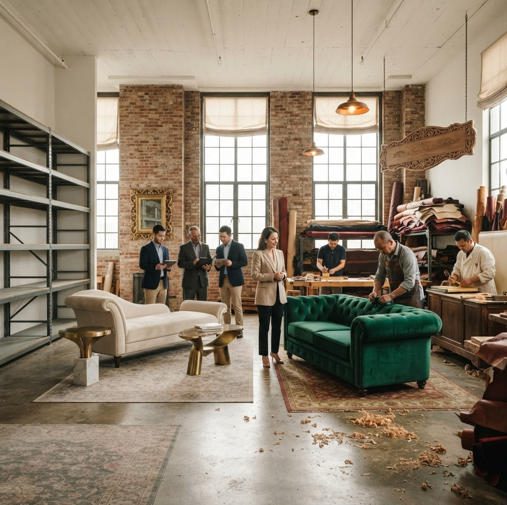
 The luxury custom furniture market has moved decisively toward build-to-order — and the financial logic is compelling. Image: Unsplash
Introduction: Why Supply Chain Disruption Has Changed the Furniture Industry Forever
If you were operating a furniture distribution business, showroom, or design practice between 2020 and 2023, you experienced something that textbooks hadn’t adequately prepared anyone for: a complete, simultaneous breakdown of the assumptions that mass production-based inventory models were built upon.
Port congestion stretched lead times from 8 weeks to 28 weeks. Container costs increased 900% at peak. Consumer demand surged, then collapsed. Manufacturers in China and Vietnam ran at maximum capacity one quarter and laid off workers the next. And B2B furniture buyers who had invested heavily in pre-stocked inventory found themselves holding the most expensive problem in their industry: large quantities of goods that either couldn’t arrive on time or couldn’t be sold once they did.
The businesses that came through that period with their margins intact — and in some cases, grew through it — shared one structural characteristic. They had shifted away from inventory speculation toward demand-driven production. They were operating, fully or partially, on a Build-to-Order (BTO) model: manufacturing triggered by confirmed customer orders rather than demand forecasts.
This guide examines that shift in detail — what the BTO model actually means for B2B furniture professionals, where the real cost advantages are found, and how distributors, agents, showrooms, interior designers, and hotel fit-out teams can implement and benefit from it. The goal is not to declare mass production dead. It is to give you a precise framework for deciding which model — or which combination of the two — gives your business the best financial and competitive position from here forward.
Section 1: Understanding the Mass Production Model and Its Critical Limitations
The Traditional Mass Production Approach in Furniture Manufacturing
How Bulk Manufacturing and Pre-Stocked Inventory Systems Work
The traditional furniture supply chain runs on forecasts and warehouses. A manufacturer produces large batches of standardized products — calculated against demand projections — and stocks finished goods in regional warehouses. Distributors and agents purchase from that stock (or pre-order production runs based on their own demand forecasts) and warehouse inventory at their own facilities, ready to fulfill customer orders quickly.
This model has genuine advantages when it works: fast fulfillment, predictable product specifications, and simplified client-facing operations. The problem is that it transfers enormous financial risk to everyone in the supply chain — each party is holding inventory that may or may not sell, at quantities that may or may not match actual demand.
The Cost Structure: What You Actually Pay for Excess Inventory
Inventory is not a free asset. The industry standard for inventory carrying cost — defined as the total annual cost of holding stock, including financing, storage, insurance, obsolescence risk, and handling — is consistently measured at 20–30% of total inventory value per year, according to Impact Analytics and corroborated across multiple supply chain research sources.
In practical terms: a distributor holding $500,000 of furniture inventory is spending $100,000–$150,000 annually simply to keep that stock on the shelf. That cost exists whether those products sell at full margin or sit until they’re marked down to move.
Supply Chain Vulnerabilities Exposed by Recent Disruptions
Port Congestion, Shipping Delays, and Their Impact on Your Margins
Between 2020 and 2022, the global shipping network experienced its most severe disruption in modern commercial history. Transpacific container shipping rates — the primary cost driver for furniture imported from China and Vietnam — rose from approximately $2,000–$3,000 per container to a peak of over $20,000. Lead times that buyers had built their inventory models around tripled.
For businesses operating on pre-stocked inventory models, this created a compound crisis: existing stock sold out faster than it could be replenished (damaging client relationships), while simultaneously, new stock ordered at pre-disruption assumptions arrived 6 months late — into a market that had shifted significantly in the intervening period.
Demand Forecasting Failures and Dead Inventory Accumulation
The post-disruption period produced the other side of the crisis: a massive inventory correction as demand normalized and the oversupply accumulated during the rush-ordering period became visible. By late 2022 and into 2023, the US furniture industry was working through one of the largest inventory gluts in recent memory, with major retailers and distributors reporting significant markdown pressure and write-offs.
This is the structural fragility that mass production models carry in their DNA: they convert demand uncertainty into inventory risk. When the forecast is wrong — as it always is, to some degree — the financial consequences sit on your balance sheet.
Hidden Costs That Erode Your Profitability
Storage, Warehousing, and Logistics Expenses Eating Into Margins
Warehousing costs are not simply rent divided by square footage. According to the 2024 Warehousing and Fulfillment Costs & Pricing Survey, warehouses now charge increasingly layered fees — receiving, put-away, pick-and-pack, long-term storage premiums, and handling charges — that compound against slow-moving inventory. A dining chair sitting in a third-party logistics warehouse for 120 days accumulates handling fees that can equal 8–12% of its wholesale cost before it’s touched by a customer.
Markdowns, Obsolescence, and Slow-Moving Stock Risks
Furniture design cycles accelerate constantly, driven by interior design trends, hospitality brand refreshes, and evolving consumer preferences. A product manufactured in bulk to a 2022 color palette may be competitively priced but aesthetically dated by 2024. The markdown required to clear that inventory — commonly 25–40% below original wholesale price — erases the margin advantage of bulk pricing entirely, and sometimes more.
Section 2: The Build-to-Order Advantage — A Strategic Shift for B2B Professionals
What Build-to-Order (BTO) Manufacturing Actually Means
On-Demand Production Triggered by Confirmed Customer Orders
Build-to-Order (BTO) — sometimes called Made-to-Order (MTO) — is a production strategy in which manufacturing begins only after a confirmed customer order is received. No finished goods inventory is pre-built. No demand forecast determines production volumes. The factory produces exactly what has been ordered, to the specifications that have been confirmed, at the quantity that has been sold.
For B2B furniture buyers, this means: you sell first, then the product is made. Your capital is deployed against confirmed revenue, not speculative inventory.
Customization Capabilities That Mass Production Cannot Match
The BTO model does not just reduce inventory risk — it fundamentally expands what you can offer clients. When production is triggered by order rather than driven by pre-set specifications, every order can be different. Fabric selection, frame finish, dimensional variations, configuration options — all become commercially viable without creating SKU complexity or inventory management burden.
This is the double advantage of BTO: lower financial risk and higher product differentiation simultaneously.
 Large-scale hotel interiors are among the most compelling use cases for build-to-order manufacturing. Image: Unsplash
How Interior Define and Leading Manufacturers Dominate with BTO
Real-World Case Study: Eliminating Inventory While Scaling Revenue
Interior Define — a made-to-order upholstered furniture brand — became one of the most closely watched supply chain case studies of the pandemic era. While competitors struggled with backordered stock, expedited air freight costs, and inventory imbalances, Interior Define’s BTO model insulated them from the primary disruption mechanism.
As Andrew Neelon, the company’s Vice President of Growth, explained to Business of Home: “All of our furniture is made-to-order, so our customers are used to long lead times. Supply chain delays have been an issue in terms of longer lead times but have not created an over-inventoried situation for us given our business model.”
While the company sourced from China and Vietnam — the same supply base experiencing disruption — their BTO structure meant that delays affected lead time rather than inventory position. There was no oversupply to manage, no markdown cycle to execute, no dead stock to write off. During a period when major furniture retailers were reporting significant inventory-related losses, Interior Define was reporting double-digit revenue growth and expanding its physical store footprint from 14 to 30+ locations.
Production Efficiency and Lead Time Optimization Strategies
Leading BTO manufacturers achieve production efficiency through modular design architectures — standardized component systems that enable extensive customization while maintaining consistent, efficient manufacturing workflows. Frames, suspension systems, and structural components are produced in standardized forms; customization is applied at fabric selection, finish specification, and final assembly stages where it adds design value without disrupting production economics.
Lean manufacturing principles — specifically, grouping similar orders into production batches, minimizing material handling between operations, and using data-driven production scheduling — enable BTO manufacturers to deliver 4–8 week lead times on complex custom upholstery, a window that was industry-standard prior to pandemic disruption and remains commercially viable for design-led clients.
The Competitive Edge for Distributors and Showrooms
Offering Unlimited Design Variations Without SKU Multiplication
A traditional showroom stocking 50 dining chair SKUs in 3 colorways each is managing 150 inventory positions, each carrying carrying cost, markdown risk, and reorder complexity. A showroom partnering with a BTO manufacturer can offer those same 50 chair designs in unlimited fabric and finish combinations — with zero additional inventory. Every variation exists as a possibility rather than a stocked position.
This transforms the showroom from a place where clients choose among what’s available to a platform where clients specify exactly what they want. That is a fundamentally different — and significantly more competitive — commercial proposition.
Ability to Quote Custom Solutions Within 24–48 Hours
With the right digital tools and manufacturer integration, BTO distributors can generate detailed custom quotations — including fabric specifications, dimensional variations, and finish selections — within one business day. This responsiveness is particularly powerful in competitive tender situations, where the ability to present a precisely tailored proposal faster than a competitor relying on stock alternatives creates a meaningful first-mover advantage.
Section 3: Cost Advantages That Directly Impact Your Bottom Line
Reduced Inventory Carrying Costs
Eliminating Warehouse Rent, Insurance, and Handling Expenses
The 20–30% annual inventory carrying cost figure translates directly to operating expense reduction for BTO-adopting distributors. Consider the financial model:
| Inventory Position | Mass Production Model | BTO Model | Annual Saving |
|---|---|---|---|
| Average inventory value | $600,000 | $60,000 (showroom samples only) | — |
| Carrying cost @ 25% | $150,000/year | $15,000/year | $135,000 |
| Markdown write-offs (est. 3% of inventory) | $18,000/year | ~$0 | $18,000 |
| Warehouse/storage fees | $36,000/year | $4,800/year | $31,200 |
| Total annual cost reduction | — | — | ~$184,200 |
Illustrative model based on industry-standard carrying cost data. Actual figures vary by business size, product mix, and regional logistics costs.
For a mid-sized furniture distributor, a shift to predominantly BTO sourcing can free $150,000–$200,000 annually in operating costs — capital that can be redeployed into sales capacity, marketing, or product development rather than warehouse rent.
Working Capital Freed Up for Growth Investments
Beyond the operating cost reduction, the working capital impact of BTO is significant. In a mass production model, capital is deployed when inventory is purchased — often 60–90 days before the goods can generate revenue. In a BTO model, capital is deployed when a customer order is confirmed, with a substantial portion of payment typically received upfront from the end client. This structural shift compresses the working capital cycle and reduces financing costs for the distributor.
Better Price Points for Your Clients
How BTO Manufacturers Pass Savings to Distributors
BTO manufacturers operate without finished goods warehousing costs, without markdown risk, and without the carrying costs of pre-built inventory. These structural savings create pricing headroom that well-run BTO manufacturers pass through to their distribution partners. In practice, distributor pricing from established BTO factories — such as those in JL&C Furniture’s partner network — reflects production cost rather than production cost plus inventory financing, resulting in more competitive landed costs for the same or superior product specification.
Competitive Pricing Strategies That Win Tenders and Contracts
The combination of lower inventory overhead and competitive factory pricing enables BTO distributors to submit tender proposals at price points that inventory-carrying competitors struggle to match — while still maintaining healthy margins. This is particularly impactful in hotel and hospitality FF&E tenders, where total project value creates meaningful financial leverage and the ability to offer custom specifications at competitive pricing is often the decisive differentiating factor.
Margin Improvement Through Operational Efficiency
Reduced Markdowns and Obsolescence Write-Offs
In a mass production inventory model, markdown is not an exception — it is a structural feature. Some percentage of every season’s inventory will not sell at full price. Industry estimates suggest that furniture distributors write off 3–7% of annual inventory value to markdowns and obsolescence. In a BTO model, this figure approaches zero: there is no inventory to mark down because no inventory was pre-built.
Predictable Cost Structures That Enable Accurate Project Budgeting
BTO pricing is determined at the order stage, not subject to retrospective adjustment based on inventory carrying costs or markdown requirements. This creates predictable, project-level cost structures that are particularly valuable for interior designers and hotel fit-out teams managing fixed-budget projects. When every line item is a confirmed price against a confirmed specification, project financial management becomes measurably more reliable.
Section 4: Customization as Your Competitive Weapon
Meeting Diverse Client Specifications Without Inventory Bloat
Fabric, Finish, Dimension, and Configuration Options at Scale
The customization vocabulary of a well-equipped BTO manufacturer is extensive. For upholstered furniture: hundreds of fabric options spanning performance grades (measured in Martindale cycles — the industry standard for fabric abrasion resistance, where commercial minimum is 30,000 cycles), color families, and texture categories. Frame finishes in dozens of lacquer colors, wood stains, and metal treatments. Dimensional variations — seat heights adjusted for specific user populations, widths modified for spatial constraints, depths calibrated for posture requirements.
This is not custom furniture in the artisanal sense — it is systematic, scalable customization enabled by modular production architectures. The client gets exactly what they specified; the factory runs efficiently against defined component libraries.
Adapting to Design Trends Without Holding Excess Stock
Design trend cycles in furniture have compressed. What was contemporary in 2022 may feel dated by 2025. For distributors holding bulk inventory of trend-driven products, this cycle creates write-off exposure at every trend inflection. BTO eliminates this exposure entirely: you offer the current trend palette because your manufacturer produces against current specifications — you hold nothing that can become obsolete.
Delivering Personalized Solutions to Interior Designers and Hotel Fit-Out Teams
Custom Dimensions for Unique Spatial Requirements
Interior designers working on high-end residential or commercial projects routinely encounter spatial constraints that standard product dimensions don’t serve. A lobby seating grouping where the architect’s millwork determines available depth. A hotel guestroom where the standard 86cm chair seat height creates awkward visual proportion against a bespoke bed frame. A restaurant banquette that must fit precisely within a structural bay.
Mass production cannot address these requirements without expensive special orders and minimum quantities that make small adjustments economically irrational. BTO manufacturers build dimension flexibility into their standard service offering — because every order is already a specific production run, accommodating a non-standard dimension adds minimal cost while delivering precisely what the design requires.
Bespoke Finishes and Materials for Branded Environments
Hospitality brands and corporate fit-out projects increasingly require furniture that is proprietary to their identity — specific color references, custom pattern work, or material combinations that cannot be purchased off any manufacturer’s standard catalog. BTO manufacturers with sophisticated finishing capabilities can match Pantone references, develop custom fabric colorways, and produce branded metalwork finishes that make the furniture itself a component of the brand experience.
This capability is not merely a service amenity — it is a competitive moat. A designer who can consistently deliver proprietary branded furniture solutions retains clients at a significantly higher rate than one offering catalog alternatives.
Building Client Loyalty Through Design Flexibility
How Customization Strengthens Relationships with Design Professionals
Interior designers select suppliers based on two criteria above all others: the ability to solve design problems and reliable delivery of what was specified. BTO addresses both directly. A designer who brings a client requirement that no catalog product satisfies, and receives a viable custom solution within 48 hours of inquiry, experiences a supplier relationship that feels like a design partnership — not a product search.
That experience generates repeat business, referrals, and the kind of supplier loyalty that translates into long-term revenue relationships. The team at JL&C Furniture hears this consistently from design firm clients: the relationship deepens when the manufacturer can say yes to the design, not redirect toward what’s available.
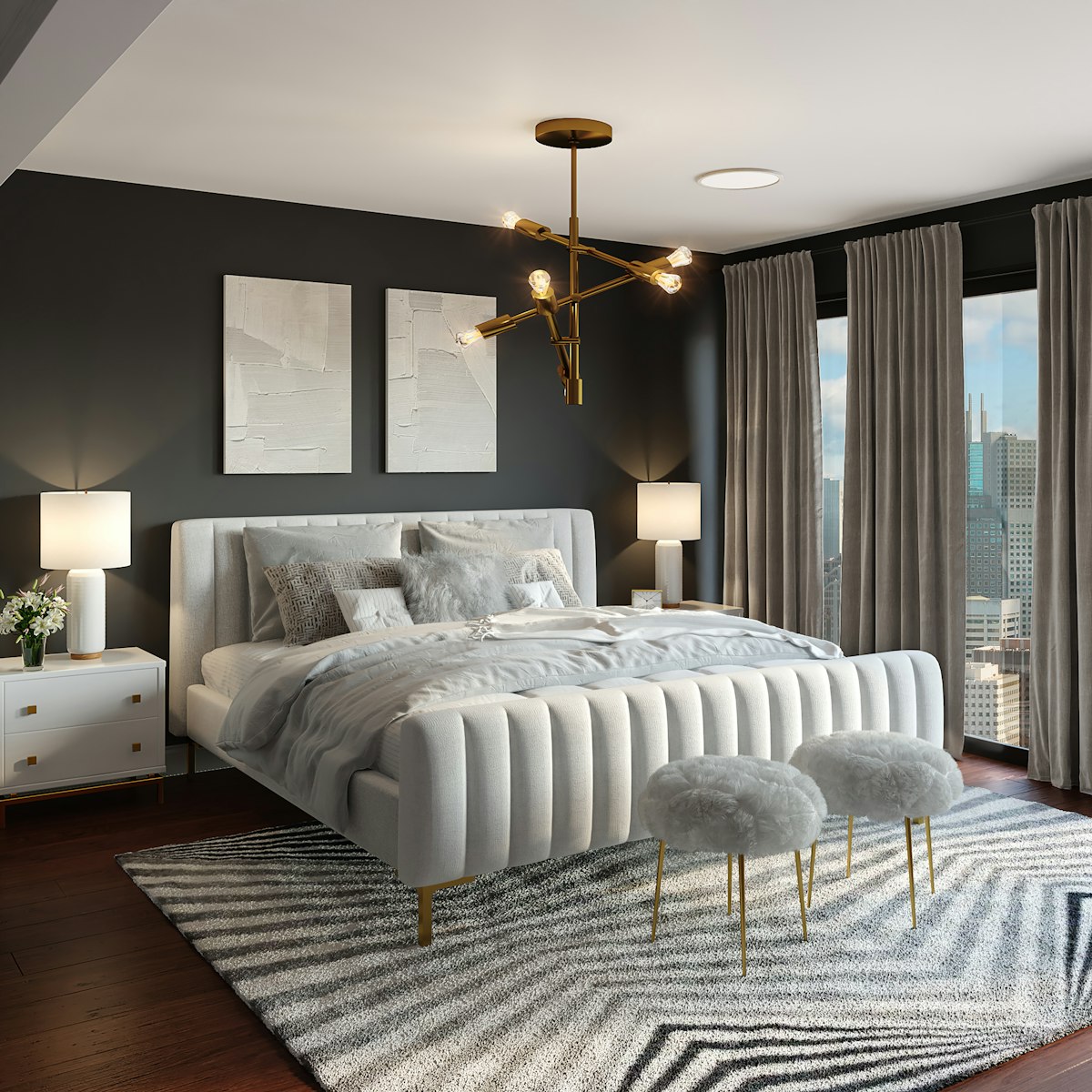 When every element is specified to exact dimensions and finishes, only a build-to-order manufacturer can deliver. Image: Unsplash
Section 5: Supply Chain Resilience and Risk Mitigation
Why BTO Models Are More Resilient to Disruptions
Reduced Dependency on Long-Term Forecasting and Speculation
The core vulnerability of mass production models is their dependence on accurate long-range demand forecasting. Forecast the wrong volume, or forecast into a market that shifts before your goods arrive, and the financial consequences are embedded in your inventory position. BTO eliminates this exposure by anchoring production to confirmed orders rather than speculative projections.
This does not mean BTO operations have no supply chain risk — they do. But the risk profile is fundamentally different: BTO operations face lead time variability rather than inventory value risk. A delay means a client waits longer; it does not mean a warehouse fills with unsellable goods.
Flexibility to Adjust Production Based on Real Demand Signals
BTO production can scale up or down in direct response to actual order flow — there is no committed inventory position creating pressure to sell at any price. When market demand softens, a BTO distributor simply has fewer orders in the production pipeline; they do not have an inventory problem to solve. This asymmetry — downside risk is bounded by reduced revenue rather than stranded asset value — is a structural financial advantage that compounds in value during periods of market uncertainty.
Protecting Your Business from Inventory Risk
Avoiding Overstock Situations That Damage Profitability
The 2022–2023 furniture industry inventory correction affected businesses proportionally to their inventory exposure. Distributors and retailers who had built up 6–9 months of forward inventory during the supply chain crunch period found themselves managing both the cash flow impact of that inventory and the margin pressure of selling it into a softened market. BTO operations experienced the same demand softening as revenue reduction — a manageable challenge — rather than an inventory write-down crisis.
Minimizing Exposure to Demand Volatility and Market Shifts
B2B furniture demand is influenced by commercial real estate cycles, hospitality investment levels, residential design spending, and macroeconomic confidence — all of which are inherently variable and partially unpredictable. BTO operations tolerate this variability more gracefully than inventory-intensive models because their financial exposure scales with confirmed orders, not forecasted volumes.
Building Sustainable, Scalable Operations
Production Capacity Planning Aligned with Actual Orders
BTO manufacturers plan production capacity against confirmed order backlogs — a significantly more reliable planning input than market forecasts. This enables more efficient labor allocation, material procurement, and production scheduling, which translates to better lead time reliability and lower production cost variance for the distributor and their clients.
Environmental Benefits of Reduced Waste and Overproduction
Every piece of furniture that is manufactured and never sold — or sold at a markdown after sitting in a warehouse for 18 months — represents wasted materials, wasted energy, and unnecessary carbon emissions. The furniture industry’s overproduction problem is not hypothetical: industry observers estimate that millions of units of furniture are destroyed or disposed of annually due to inventory clearance operations. BTO eliminates this category of waste entirely, producing only what has been confirmed as needed by a real client for a real project.
For distributors and designers serving clients with ESG (Environmental, Social, and Governance) commitments — increasingly standard in corporate, institutional, and high-end hospitality sectors — the ability to demonstrate a zero-overproduction supply chain is a commercially meaningful positioning advantage.
Section 6: Implementation Strategy for Distributors, Agents, and Showrooms
Transitioning from Inventory-Focused to Order-Focused Models
Identifying Which Product Categories Benefit Most from BTO
Not all products transition to BTO equally. The strongest candidates for BTO are products with high customization demand (where clients regularly request variations the catalog doesn’t offer), products with design trend sensitivity (where inventory obsolescence risk is high), high-value items (where carrying cost represents a significant percentage of unit margin), and low-velocity items (products that sell fewer than 2 units per month per location on average).
Products better suited for maintained inventory are fast-moving, standardized items where client expectations are built around immediate availability — basic task chairs for commercial fit-outs, standard dining chairs for restaurant chains with repeat orders, or commodity-grade products where the distributor’s competitive advantage is delivery speed rather than design flexibility.
Phased Approach to Shifting Your Business Model
A complete simultaneous transition from inventory to BTO is operationally risky and unnecessary. The recommended approach is a portfolio-based phase-in. Begin with 20–30% of your product range — specifically your highest-customization, highest-value, and lowest-velocity categories — on BTO. Maintain stock on your remaining high-velocity standards. As BTO competency develops and client confidence builds, progressively shift the ratio. Most distributors who execute this transition find themselves at 50–70% BTO within 24 months, with inventory holdings concentrated in the genuinely high-velocity, standardization-appropriate categories.
Technology and Systems Requirements
Digital Platforms for Order Configuration and Quoting
The commercial effectiveness of a BTO offering depends heavily on the tools used to present it. A sales conversation about unlimited customization options is overwhelming without a structured configuration tool. Leading BTO manufacturers — and manufacturers like those in the JL&C Furniture network — provide distributors and design partners with digital configuration systems: tools that allow clients to select dimensions, fabrics, finishes, and configurations, preview the result visually, and receive an immediate price. These tools transform a potentially complex conversation into a compelling, design-focused client experience.
Integration with Manufacturer Production Systems
Beyond client-facing configuration, efficient BTO operations require clean information flow from the distributor’s order management system to the manufacturer’s production scheduling system. Order specifications, quantities, delivery requirements, and production timelines should flow digitally — reducing transcription errors, accelerating production scheduling, and providing real-time order status visibility that distributors can share with clients during the lead time period.
Training Your Team to Sell Custom Solutions
Positioning BTO as a Premium, Professional Service
The transition from inventory selling to custom specification requires a sales approach shift. In inventory selling, the product is the hero — “here’s what we have in stock.” In BTO selling, the process is the hero — “tell me exactly what you need, and we’ll make it.” Training your team to open client conversations with needs discovery rather than product presentation is the fundamental behavioral change that unlocks BTO’s commercial potential.
Overcoming Client Objections About Lead Times
The most consistent client objection to BTO is lead time. “I need it in two weeks” is a genuine constraint in some situations — and for those situations, maintaining a limited stock of your fastest-moving items remains appropriate. But for most B2B furniture decisions — new showroom fit-outs, hotel FF&E projects, residential design commissions — the project timeline naturally accommodates 6–10 week lead times. Your role is to help clients plan to that timeline, framing the wait as the period during which their exact specification is being executed, rather than positioning it defensively as a limitation to apologize for.
Section 7: Lead Time Management and Client Expectations
Setting Realistic Production Timelines
Standard Lead Times for Different Product Categories
Lead times in BTO manufacturing vary meaningfully by product complexity and material sourcing requirements:
| Product Category | Standard BTO Lead Time | Expedited Option | Key Variables |
|---|---|---|---|
| Upholstered seating (standard fabrics) | 5–7 weeks | 3–4 weeks (+15% premium) | Fabric sourcing, frame complexity |
| Upholstered seating (COM — client’s own material) | 7–10 weeks | 5–6 weeks | COM procurement timeline |
| Case goods (solid wood) | 6–9 weeks | 4–5 weeks (+20% premium) | Wood drying, finishing cycles |
| Metal furniture (powder coat finish) | 4–6 weeks | 3 weeks (+10% premium) | Batch size, coating schedule |
| Custom outdoor furniture | 6–8 weeks | 4–5 weeks | Weather treatment, material sourcing |
| Large hospitality FF&E orders (50+ units) | 8–12 weeks | Subject to capacity | Production batch scheduling |
COM (Client’s Own Material): fabric or material supplied directly by the designer or client for use in their specific order.
Expedited Options for Urgent Projects
Most progressive BTO manufacturers can accommodate expedited production for premium pricing — typically 10–20% above standard pricing for 30–40% timeline compression. For clients with genuine deadline constraints, this option should be positioned as a professional service offering with transparent cost implications rather than a reluctant accommodation.
Communicating Value During the Waiting Period
Explaining Why BTO Lead Times Deliver Better Outcomes
The production period in a BTO relationship is not dead time — it is productive time in which your client’s exact specification is being manufactured. Communicate this proactively: a production update at the 50% completion mark, a pre-shipment notification with a container departure date, and a delivery logistics confirmation build anticipation and professional confidence in equal measure.
For hotel and hospitality projects, coordinate BTO production timelines explicitly with the project schedule at the outset. A hotel opening 22 weeks from order confirmation is a natural fit for an 8–10 week BTO lead time — the furniture arrives as the installation phase begins, not 4 months before it’s needed (creating storage costs) or 2 weeks after opening (creating operational delay). BTO timeline management and project schedule alignment is a professional service skill that distinguishes sophisticated distributors and designers from transactional sellers.
Section 8: Real-World Applications for Your Client Base
Solutions for Interior Designers
Custom Upholstery and Finishes Matching Design Specifications
Interior designers operate in a world of Pantone references, material boards, and precise specification documents. Their professional value to clients rests on executing a cohesive design vision — which requires furniture that fits the vision, not furniture that approximates it. BTO manufacturers with broad fabric libraries and custom finish capabilities enable designers to source furniture that is specified to their drawings rather than adapted from a catalog.
A designer specifying a custom linen in a precise off-white, on a sofa at 220cm rather than the catalog’s standard 215cm, with a walnut frame in a specific wire-brushed finish — this is a 10-minute BTO order confirmation, not a catalog search followed by months of back-and-forth on acceptable substitutions.
Unlimited Options Without Catalog Limitations
The BTO model effectively gives designers access to the manufacturer’s full production capability rather than the curated selection in a printed catalog. This is commercially significant: designers who can offer their clients genuinely unlimited specification options — rather than “choose from these twelve fabrics” — occupy a meaningfully stronger competitive position in their own client relationships.
Strategies for Hotel and Hospitality Fit-Out Designers
Branded Furniture Solutions with Proprietary Finishes
International hotel brands — particularly in the 4-star and 5-star segments — increasingly require furniture that is proprietary to their brand identity. Room furniture in the brand’s specific timber finish. Lobby seating in the brand’s fabric palette. F&B furniture in custom metal colors that align with brand guidelines. These requirements cannot be met from any manufacturer’s standard catalog — they require the production flexibility that only BTO manufacturing provides.
For fit-out designers serving these clients, a BTO manufacturing partnership is not an option but a prerequisite. The ability to present fully branded furniture proposals — with accurate lead times, confirmed pricing, and production quality guarantees — is the fundamental service these clients are paying for.
Large-Scale Projects with Consistent Quality Control
A 300-room hotel requires hundreds of pieces of guestroom furniture produced to identical specifications. In mass production, “identical” is theoretical — batch variation in wood color, fabric shade, and hardware finish creates visual inconsistency that is immediately apparent when 300 rooms are occupied simultaneously. BTO manufacturers producing a hotel order as a defined production run — same material batch, same production team, same quality approval cycle — achieve a level of consistency across volume that piecemeal stock sourcing cannot match.
Approaches for Furniture Showrooms and Agents
Display Strategies for Showcasing Customization Capabilities
A BTO-oriented showroom doesn’t need to display every fabric option — it needs to display enough options to make the customization vocabulary tangible. A well-designed sample library, organized by material category and presented with professionally photographed finished product examples, communicates range more effectively than warehoused stock. Physical touch points — a swatch of each fabric family, a sample of each finish — allow clients to experience the quality of the offering without requiring the showroom to stock every combination.
Sample Libraries and Digital Visualization Tools
Digital 3D configurators — either standalone web applications or integrated into the manufacturer’s B2B portal — enable clients to visualize their custom specification in realistic rendered form before committing to an order. Several progressive furniture manufacturers now provide these tools as standard to their distribution partners. For showrooms transitioning to BTO, digital visualization tools are not a luxury — they are the operational foundation that makes customization commercially viable at scale.
 Custom specification executed to precision — the standard that BTO manufacturing is designed to deliver every time. Image: Unsplash
Section 9: Financial Modeling and ROI Justification
Calculating Your Cost Savings with BTO Models
Inventory Carrying Cost Reduction Worksheets
To calculate your personal BTO financial case, apply this framework to your current procurement and inventory data:
Where BTO model annual carrying cost applies only to your retained stock of fast-moving, high-velocity standards — typically 15–30% of your current inventory value.
Example: A showroom with $400,000 average inventory at 25% carrying cost currently spends $100,000/year on carrying costs. Transitioning 70% of inventory to BTO (retaining $120,000 in fast-movers) reduces carrying cost to $30,000 — a saving of $70,000 annually.
Working Capital Impact and Cash Flow Improvements
Beyond carrying cost reduction, the cash flow impact of BTO is meaningful. In a mass production model, inventory investment precedes revenue by 90–180 days. In BTO, revenue is received (partially or fully, depending on your client terms) before or simultaneously with your factory payment obligation. This structural shift — from capital-out-then-revenue-in to revenue-confirmed-then-capital-deployed — reduces financing requirements and improves cash conversion cycle performance.
Revenue Growth Potential
Margin Expansion Through Eliminated Markdowns
If your current business writes off 3% of annual inventory value to markdowns (a conservative industry estimate), and your annual inventory value is $500,000, you are losing $15,000/year to price reductions on goods that couldn’t sell at full margin. BTO eliminates this category of loss in its entirety — you only produce what has been sold, at the price at which it was sold.
New Business Opportunities from Design Flexibility
Beyond cost reduction, BTO creates revenue opportunities that inventory models structurally cannot access. The tender for a 180-room boutique hotel that requires custom fabric specifications. The residential designer with a client requesting a non-standard sofa configuration. The corporate fit-out requiring branded colorways not available in any catalog. Each of these opportunities — which inventory distributors must decline or compromise on — is a natural BTO win.
Building a Business Case for Your Leadership
Competitive Analysis Showing BTO Market Leaders
The commercial results of leading BTO operators are increasingly documented. Interior Define’s supply chain resilience through the pandemic period — while inventory-dependent competitors struggled — is the most studied example. Globally, brands including Vitra, Knoll, and numerous contract hospitality furniture manufacturers have built significant competitive positions on BTO capabilities. The direction of market evolution is clear: customization capability and inventory efficiency are converging as the dominant competitive criteria in premium B2B furniture.
| Business Metric | Mass Production Model | BTO Model | BTO Advantage |
|---|---|---|---|
| Inventory carrying cost | 20–30% of inventory value/yr | ~5% of sample/display value/yr | ~$150K saving on $600K inventory |
| Markdown/write-off rate | 3–7% of inventory value/yr | ~0% | $18K–$42K saving on $600K |
| Working capital cycle | 90–180 days tied up | 30–60 days (order-triggered) | Improved cash conversion |
| Customization capability | Limited to SKUs in stock | Unlimited within production range | Competitive differentiation |
| Supply disruption exposure | High (inventory at risk) | Low (lead time affected only) | Structural risk reduction |
| ESG/sustainability positioning | Overproduction risk | Zero overproduction | Client ESG alignment |
Section 10: Future-Proofing Your Business Model
Emerging Trends in Furniture Manufacturing and Distribution
Sustainability Demands Driving BTO Adoption
Corporate sustainability commitments are moving from aspirational language to procurement criteria. A growing number of institutional clients — hotel groups, corporate real estate firms, healthcare facilities, and government bodies — are requiring suppliers to demonstrate sustainable production practices as a condition of approval. Zero-overproduction manufacturing, reduced transportation waste (through direct-to-project delivery), and material optimization (BTO manufacturers can optimize raw material usage for each specific order) are all BTO advantages that translate directly into procurement qualification criteria.
Digital Transformation and Industry 4.0 Capabilities
The furniture manufacturers investing most significantly in digital production capabilities — CNC automation, AI-assisted production scheduling, digital order management platforms, and 3D visualization tools — are almost universally BTO operators. These capabilities are not available in the same form in mass production environments because the value of digital precision scales with order specificity. As these capabilities mature, BTO production economics will continue improving relative to mass production, widening the competitive gap in favor of customization-capable manufacturers.
Staying Ahead of Market Disruption
Continuous Improvement and Process Optimization
BTO excellence is not a destination — it is a continuous improvement practice. Lead time reduction through process optimization, expansion of the customization vocabulary through new material and finish partnerships, and improvement of digital configuration tools through client feedback are the ongoing operational investments that maintain BTO competitiveness. Build relationships with manufacturers who demonstrate this improvement orientation, not just those who have achieved a current capability threshold.
Building Stronger Relationships with Progressive Manufacturers
The manufacturer relationship in a BTO supply chain is qualitatively different from a transactional inventory supplier relationship. In BTO, you and your manufacturing partner are co-executing client specifications together — your design expertise and client relationships combined with their production capabilities and quality systems. This partnership orientation, when it functions well, creates alignment that a purely transactional relationship cannot replicate.
Manufacturers like those in the JL&C Furniture partner ecosystem approach B2B relationships as long-term capability partnerships — investing in the digital tools, specification documentation systems, and communication infrastructure that enable distributors and designers to sell BTO confidently and deliver it reliably.
Scaling Your BTO Operations
Expanding Product Categories and Customization Options
As BTO competency builds — internal team capability, client expectation management, digital tools, manufacturer integration — the natural next step is expansion of the product categories offered on a BTO basis. Each new category added to your BTO portfolio is an inventory position eliminated, a carrying cost reduced, and a customization opportunity created. Most businesses that begin BTO transition with 20–30% of their range find, 3–4 years in, that the remaining 20–30% on stock inventory is the genuinely high-velocity, standardization-appropriate products — everything else has migrated to BTO.
Geographic Expansion and New Market Opportunities
BTO’s structural absence of inventory means geographic expansion doesn’t require warehouse infrastructure in every new market. A distributor expanding into a new city or country through BTO operates from a sample library and digital configuration capability — not from a warehouse full of speculative stock. This dramatically lowers the capital requirements and market entry risk of geographic growth.
Recommended Video Resource
Understanding how quality custom furniture manufacturing actually works at the production level is essential context for anyone transitioning to a BTO model. This video provides a practical look inside a CNC-equipped furniture production environment:

▶ Watch: CNC Tour — How Custom Furniture Is Made Using Modern Manufacturing Technology (Brick Mill Furniture)
 Every detail in this custom dining room — from the table’s dimensions to the chair fabric’s exact weave — was specified by the designer and executed by a BTO manufacturer. Image: Unsplash
Your Competitive Advantage in a Chaotic Market
Why BTO Models Are No Longer Optional — They’re Essential
The furniture industry’s supply chain experience of 2020–2023 was not an anomaly — it was a preview of the operating environment that B2B furniture professionals will continue to navigate. Geopolitical trade policy volatility, climate-related logistics disruptions, demand cycle compression, and sustainability regulatory pressure are all structural features of the market going forward, not temporary anomalies to wait out.
Mass production inventory models carry these risks in their architecture. Every speculative inventory position is a bet on an uncertain future — a bet that carries 20–30% annual carrying cost regardless of outcome and that creates write-off exposure when the bet is wrong.
Build-to-order is not a trendy alternative. It is a structurally superior response to this operating environment — one that reduces financial risk, expands competitive capability, aligns with sustainability commitments, and improves client relationships simultaneously. The businesses adopting it are building advantages that compound over time. The businesses deferring the transition are carrying costs that compound in the opposite direction.
Taking Action: First Steps for Your Organization
Begin with an honest inventory audit: what percentage of your current stock positions have carried more than 90 days? What is your actual markdown rate over the past 24 months? What is your warehouse and carrying cost as a percentage of gross margin? These three numbers will define the financial urgency of your BTO transition more powerfully than any general recommendation.
From that baseline, identify your top 3–5 product categories by customization demand and inventory turn rate. These are your BTO pilot candidates. Find a manufacturer partner who can execute BTO in those categories with reliable lead times and digital order management support. Run the pilot for 6 months. Measure the financial and commercial results against your inventory model baseline.
Building Partnerships with Forward-Thinking Manufacturers
The quality of your BTO capability is ultimately determined by the quality of your manufacturing partnerships. A manufacturer who can execute complex specifications reliably, communicate proactively during production, maintain consistent quality across high-volume runs, and support you with digital tools and technical specification support — this is the partnership that makes BTO commercially powerful rather than operationally stressful.
That partnership is worth investing in before the numbers fully justify it, because the relationship depth that makes BTO excellent takes time to build. Start now, with one manufacturer, in one product category. The compounding returns begin from the first order.
Ready to transform your furniture distribution or design business through build-to-order manufacturing?
→ Schedule a Consultation with Our Supply Chain Optimization Team — connect with the JL&C Furniture team to explore BTO partnerships tailored to your product range and client base.
→ Explore Our Custom Manufacturing Capabilities — see how our BTO production infrastructure supports distributors, designers, and hospitality projects across global markets.
→ Download the BTO Financial Model Template — calculate your specific inventory carrying cost savings and ROI from transitioning to build-to-order.
Frequently Asked Questions (FAQ)
1. How much longer is the lead time for build-to-order furniture compared to stock items?
Typical BTO lead times range from 4–10 weeks depending on product complexity, customization level, and manufacturer capacity. Standard upholstered seating in catalog fabrics typically runs 5–7 weeks from confirmed order; case goods in solid wood run 6–9 weeks due to finishing and drying requirements. This is longer than off-the-shelf inventory fulfillment (1–2 weeks from stock), but for most B2B projects — hotel fit-outs, residential design commissions, showroom fit-outs — the project timeline naturally accommodates a 6–8 week production period. Many manufacturers including those in the JL&C Furniture network offer expedited options (3–4 weeks) at a 10–20% premium for deadline-critical orders.
2. What happens if a client changes their specifications after placing a build-to-order order?
Most BTO manufacturers allow specification changes during a 7–14 day window from order confirmation, before production begins — at no additional charge or for a nominal modification fee. Changes requested after production has started typically incur additional charges proportional to materials already committed and labor already invested. This is why thorough pre-order specification review — using digital configuration tools and physical sample approval — is standard professional practice in BTO sourcing. A well-documented specification approval process, where the client signs off on all parameters before production commences, virtually eliminates costly mid-production changes.
3. Can build-to-order work for smaller distributors with limited order volumes?
BTO is particularly advantageous for smaller distributors because it removes the minimum order quantity barrier that mass production creates. Progressive BTO manufacturers accept single-unit or small-batch orders — enabling smaller operations to offer the same customization depth as large distributors without pre-funding inventory positions they can’t afford. The competitive playing field is fundamentally leveled: a 2-person showroom operation offering unlimited custom specification through a BTO manufacturer can win business from clients that a 20-person inventory-heavy competitor cannot serve because their stock doesn’t match the client’s specification requirements.
4. How do BTO manufacturers maintain quality consistency without mass production standardization?
Leading BTO manufacturers achieve consistency through modular design architectures — standardized structural component libraries that underpin every product in their range. Customization is applied at the specification layer (fabric, finish, dimension) while structural components are produced to consistent, documented standards. Automated cutting and CNC routing processes ensure dimensional precision regardless of order size. Quality control protocols — material inspection on receipt, in-process checks at structural assembly, and final pre-shipment inspection against the approved sample — apply to every order, whether it’s 1 unit or 500.
5. What are the minimum order quantities typically required for build-to-order furniture?
Most progressive BTO manufacturers accept single-unit orders as standard — this is one of the model’s defining commercial advantages over mass production factories that require 50–200 unit minimums per SKU. Some manufacturers offer tiered pricing where volumes of 5–10 units receive a modest discount (typically 5–8%) over single-unit pricing. This flexibility is commercially essential for interior designers working on residential projects and showrooms quoting custom solutions — the ability to order exactly the quantity the client needs, without being forced into excess inventory, is the foundation of the BTO value proposition.
6. How does build-to-order pricing compare to mass production when ordering in volume?
For large-volume orders of identical specifications (50+ units), mass production can achieve lower per-unit factory pricing through economies of scale — but this advantage narrows significantly when inventory carrying cost, markdown risk, and working capital cost are included in the comparison. BTO pricing reflects production cost rather than production cost plus inventory financing, and the total cost of ownership analysis — including carrying cost at 20–25% of inventory value annually — often favors BTO even at volumes where mass production has a raw per-unit price advantage. Additionally, BTO allows those 50+ units to carry customized specifications, enabling the distributor to charge premium pricing to their end client that mass-produced standard alternatives cannot command.
7. What digital tools do I need to effectively sell build-to-order furniture?
The minimum viable digital toolkit for BTO selling includes a product configuration system (3D visualizer or specification guide that allows clients to select fabrics, finishes, and dimensions and preview the result), a real-time pricing calculator that reflects selected options, an order management platform for tracking production status, and a physical sample library for tactile reference during client consultations. Many BTO manufacturers — including those accessible through JL&C Furniture’s B2B partner program — provide these tools to distribution and design partners as part of the commercial relationship, at no additional cost.
8. How do I explain longer lead times to clients without losing the sale?
The most effective approach is to reframe the lead time as a feature of the value proposition rather than a limitation. The production period is the time during which their specific specification — the exact fabric weight, the precise finish color, the custom dimension — is being executed by skilled craftspeople with their order as the focus. Compare this explicitly to the alternative: selecting from available stock, accepting the compromise on specification that “close enough” represents, and receiving it in 2 weeks in a color they didn’t quite want, in a size that doesn’t perfectly fit the space. For sophisticated clients — hotel designers, interior designers, specification-driven corporate buyers — this framing resonates because it aligns with how they already think about quality and specification precision.
9. What inventory should I maintain for a hybrid mass production + BTO model?
The optimal hybrid inventory approach is: stock fast-moving, high-velocity, standardized items — products that sell more than 3–4 units per month per location and where clients have no meaningful customization requirements. For everything else, transition to BTO. A practical starting ratio is 80% stock on volume, 20% BTO on value — meaning your stocked items may represent 80% of your unit volume but typically a smaller percentage of your total revenue, while BTO captures the higher-value, higher-margin custom orders. As your BTO capability matures, this ratio typically inverts toward 30–40% stock by unit volume and 60–70% BTO by revenue value.
10. How do I handle logistics and delivery coordination for build-to-order projects?
For individual and small orders, many BTO manufacturers offer direct-to-client or direct-to-project-site shipping — eliminating your handling costs and reducing the risk of transit damage through unnecessary intermediate touchpoints. For large projects (hotel FF&E, corporate fit-outs), coordinate production and shipping timelines directly with the manufacturer at the order stage, building delivery windows into the project schedule. Use project management tracking tools to monitor production progress against the schedule, and build 1–2 week logistics buffers into your client-facing delivery commitments. The professional value you deliver is not just the product — it is the predictable, coordinated delivery that enables your client’s project to stay on schedule.
11. Can build-to-order work for high-volume hospitality and corporate fit-out projects?
Yes — and for complex, multi-category FF&E projects, BTO is increasingly the preferred model. A hotel order for 300 identical guestroom chairs represents a single production run against one confirmed specification, allowing the manufacturer to optimize material purchasing, schedule production efficiently, and maintain absolute consistency across all units. Phased delivery coordination — where furniture arrives in sequence with the construction program — is standard practice for BTO manufacturers experienced in hospitality projects. This approach reduces on-site storage requirements, minimizes damage risk during the construction period, and aligns financial commitments with project cash flow.
12. What’s the environmental and sustainability advantage of build-to-order furniture?
BTO manufacturing produces zero overproduction waste by definition — every piece manufactured has a confirmed client and a confirmed destination. This contrasts with mass production models where industry estimates suggest 5–15% of production may ultimately be marked down, discontinued, or disposed of without reaching its intended end use. At the material level, BTO manufacturers can optimize material yields for each specific order rather than cutting for standardized dimensions, reducing material scrap. For distributors and designers serving clients with formal ESG commitments — including sustainability-focused hotel brands, corporate real estate operators, and institutional buyers — the ability to demonstrate a zero-overproduction, waste-optimized supply chain is increasingly a procurement qualification criterion, not merely a brand positioning point.
Glossary of Key Terms
This guide is published by the JL&C Furniture team for B2B furniture professionals. For build-to-order manufacturing partnerships, custom product consultations, or supply chain optimization guidance, contact our team at www.jlc-f.com or reach us directly.

China Furniture Sourcing Agent Roles for High-End Buyers What a China Furniture Sourcing Agent Actually Does for High-End Buyers Every finished luxury room sits on
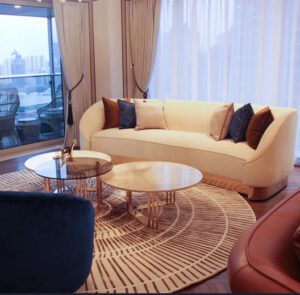
How to Vet a China Furniture Sourcing Agent Before Signing A single curved sofa like this goes through dozens of approvals, including frame, foam, fabric

China Furniture Sourcing Agent vs Direct Factory Buying: A Strategic Guide for High-Value Buyers When one project includes 400 hotel rooms, a 20-seat marble dining
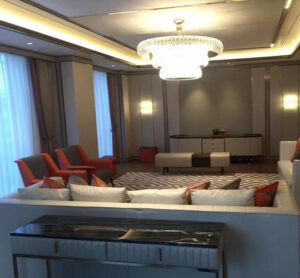
Advanced Tips to Get More from Your China Furniture Sourcing Agent Powerful Strategies for High-Performance Sourcing – Tailored for Elite Buyers, Designers & Operators Your
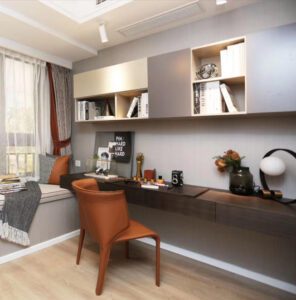
What Wholesale Furniture Suppliers in China Can Offer High-Value Buyers A statement luxury living room — the kind of space that begins with the right

How to Work Better With Your China Furniture Supplier After Ordering A Practical Playbook for High-End Furniture Importers, Interior Designers, FF&E Buyers, Villa Owners, Private