


company news

China Furniture Sourcing Agent: Roles for High-End Buyers
China Furniture Sourcing Agent Roles for High-End Buyers What a China Furniture Sourcing Agent Actually Does for High-End Buyers Every finished luxury room sits on

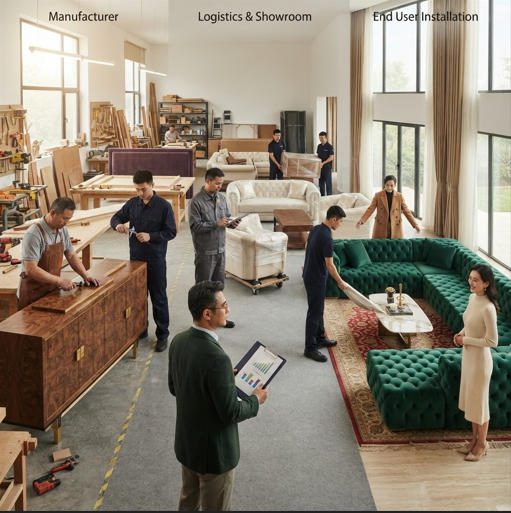
Understanding the complex journey of furniture through manufacturer representatives, dealers, and designers—why lead times extend, costs accumulate, and how B2B professionals can optimize their supply chain decisions.
 The polished showroom floor is just the final act of a multi-year, multi-continent supply chain story that most buyers never fully see.
Why the Furniture Supply Chain Remains Misunderstood
Walk into any high-end furniture showroom or browse a manufacturer’s trade catalog, and what you see looks deceptively simple: a sofa with a price tag, a lead time, and a finish option sheet. What you do not see is the four to six organizational layers, the two to four continents, and the dozens of handoffs that brought that piece to that page.
For B2B furniture professionals — distributors managing multi-warehouse inventory programs, interior designers specifying for concurrent residential projects, hospitality procurement teams outfitting 400-room hotels — this invisibility is expensive. A procurement director at a mid-size hospitality firm once shared that their team had consistently underestimated project lead times by 30–40%, not because they were careless, but because they could only see the manufacturing phase. The logistics, customs, consolidation, and last-mile layers were effectively black boxes.
Understanding how the furniture supply chain actually works is not an academic exercise. It directly shapes your project timelines, determines where your negotiating leverage sits, explains why your margins compress in ways that feel arbitrary, and reveals the structural opportunities that separates strategic sourcing from reactive purchasing.
This guide is built to make those invisible layers visible — with real markup data, lead time breakdowns, case examples from distributors and design firms, and practical optimization strategies for every role in the B2B furniture channel.
The Furniture Manufacturing Ecosystem: Who’s Really Involved
Primary Players in the Supply Chain
The furniture supply chain is not a straight line from factory to end user. It is a network — with manufacturers at one end, end clients at the other, and a web of intermediaries in between. Each intermediary exists because they solve a specific problem that the layer above or below them cannot efficiently solve on their own.
Manufacturers and Production Facilities
Manufacturers are where everything begins — and where the widest range of capabilities exists. At one end of the spectrum are full-service production facilities in Foshan or Ho Chi Minh City with 1,000+ employees, CNC machining centers, in-house upholstery operations, and dedicated quality control teams. At the other end are smaller specialty workshops producing 50 custom pieces per week for a narrow niche market.
Most furniture manufacturers can be characterized along two dimensions: their production model (made-to-stock versus made-to-order) and their minimum order requirements. Made-to-stock manufacturers maintain finished goods inventory for quick-ship programs, typically committing to 10–15 business day turnarounds on in-stock items. Made-to-order manufacturers — the majority in the mid-to-high quality segment — do not begin production until an order is confirmed, meaning lead times reflect both the factory queue and the actual production time.
Quality control standards vary enormously at this level. The best manufacturers operate with incoming material inspection (verifying that the foam, fabric, or hardwood meets specification before it enters production), in-process inspection at key assembly milestones, and final quality audit before packaging. Less rigorous factories rely on end-of-line inspection only — which catches gross defects but misses the dimensional inconsistencies, finish variations, and structural marginal cases that create problems downstream.
Lead time variables at the manufacturing stage include factory capacity utilization (a factory running at 90% capacity books new orders 6–8 weeks out; at 60% capacity, 2–3 weeks), material availability (a fabric cut-out-of-stock adds 3–6 weeks for reordering), and order complexity (standard configurations clear production faster than custom dimensions or COM — Customer’s Own Material — specifications).
Manufacturer Representatives (Reps)
Manufacturer representatives — often called reps or agents — are independent professionals who represent one or more furniture manufacturers within a defined geographic territory. They do not take physical possession of goods; their role is relationship management, market intelligence, and order facilitation.
A rep managing the Southeast territory for three complementary furniture brands might call on 40–60 active dealer accounts, maintain awareness of major specification opportunities (a new hotel under development, a corporate campus renovation), and relay that market intelligence back to the manufacturers they represent. They are the human connective tissue between a production facility in Vietnam or North Carolina and the 200 dealers, designers, and showrooms in their territory.
Reps earn commission — typically 5–12% of the wholesale order value — paid by the manufacturer, not the buyer. This has an important implication: when you build a relationship with a rep, you are accessing a resource whose expertise costs you nothing directly. The most effective B2B buyers treat their manufacturer reps as strategic intelligence sources, not just order processors.
The Distributor Layer: Why It Exists and What It Costs
Regional and National Distributors
Distributors are the inventory owners of the supply chain. They purchase goods from manufacturers at wholesale prices, hold that inventory in regional warehouses, and sell to dealers, showrooms, and design firms at a markup. The value they provide is immediate product availability — without a distributor layer, every dealer would need to order directly from factories with lead times of 8–20 weeks on every transaction.
The financial mechanics of distribution are significant. A regional distributor serving 150 dealer accounts might carry $3–$8 million in furniture inventory at any given time, warehoused across one to three facilities. Their gross margin on resale is typically 25–40% above their wholesale cost, with the range driven by product category, service intensity, and the degree of exclusivity they hold for a given brand in their territory.
Inventory management is the core competency at this level. Effective distributors track sell-through rates by SKU, adjust reorder points seasonally, and build safety stock for their highest-velocity items. When supply chain volatility hit the furniture industry in 2021–2023, distributors who had maintained 8–12 weeks of safety stock were able to fulfill orders while competitors faced 20+ week delays. That buffer had a real carrying cost — but it also had a real revenue protection value.
Specialty Distributors vs. General Furniture Wholesalers
Not all distributors are equal in depth. General furniture wholesalers carry broad category coverage — residential seating, casegoods, dining, occasional — with moderate depth in each. Specialty distributors, by contrast, build deep expertise in a specific category: commercial contract seating, luxury hospitality casegoods, outdoor furniture, or healthcare-grade furniture.
For B2B professionals specifying for demanding applications — a 5-star hotel guestroom program, a BIFMA-compliant corporate campus fit-out — specialty distributors provide value that extends well beyond logistics. Their teams understand the specific finish durability requirements, the fire code compliance documentation, and the replacement parts availability that matter in commercial contexts. General wholesalers frequently lack this depth, which creates specification errors that surface after delivery.
The pricing implication is real: specialty distributors typically command a 5–12% premium over general wholesalers for equivalent products. That premium reflects the expertise, compliance support, and project coordination they provide — and for complex commercial projects, it is almost always worth paying.
The Multi-Tier Dealer Network: Understanding Markup Accumulation
Tier 1 Dealers and Master Distributors
Their Role in Volume Management
Tier 1 dealers and master distributors are the large-volume players in the channel — companies that purchase in sufficient quantity to negotiate directly with manufacturers for territory exclusivity or preferred pricing tiers. A Tier 1 dealer might place $2–$5 million in annual orders with a single manufacturer, giving them leverage that smaller buyers cannot access.
Their purchasing power expresses itself in several ways: deeper volume discounts (typically 5–15% below standard wholesale pricing), priority production scheduling during periods of factory constraint, access to pre-release collections before they reach the general dealer network, and the ability to negotiate payment terms (Net 60 or Net 90, versus the Net 30 standard for smaller buyers).
Territory exclusivity agreements — where a Tier 1 dealer receives the exclusive right to sell a specific brand within a defined geography — are both a benefit and a commitment. The dealer gains protection from competitive pricing pressure within their territory; in exchange, they accept minimum annual purchase commitments that bind their capital and inventory investment to that relationship.
Margin Structures and Pricing Tiers
The typical margin structure through the furniture channel looks approximately like this:
| Supply Chain Stage | Approximate Margin / Markup | What You Pay |
|---|---|---|
| Manufacturer (cost to produce) | — | $100 (base) |
| Manufacturer to Distributor | 40–60% manufacturer markup | $140–$160 |
| Distributor to Tier 1 Dealer | 20–35% distributor markup | $168–$216 |
| Tier 1 Dealer to Tier 2 / Showroom | 15–25% Tier 1 markup | $193–$270 |
| Showroom to End Client (trade or retail) | 45–55% retail margin | $350–$600+ |
Note: Margins and markups vary significantly by product category, brand positioning, and channel relationships. These represent indicative ranges based on industry data.
By the time a piece of furniture reaches an interior designer’s client at the residential or commercial end, it has passed through a markup structure that routinely delivers 3x–6x the original manufacturing cost. Each tier adds real value — but understanding where the value sits, and where it is more structural than operational, is the foundation of intelligent sourcing strategy.
Tier 2 and Tier 3 Dealers: The Showroom Level
Direct-to-Designer and Interior Professional Channels
Tier 2 and Tier 3 dealers operate predominantly at the showroom and local market level. These are the businesses that maintain physical display environments, manage designer accounts, and provide the specification support and project coordination that complex B2B orders require.
The relationship-based pricing model at this level is well established. Interior designers and design firms typically access “to-the-trade” pricing — a discount of 20–40% below standard retail that acknowledges the designer’s role as a volume customer and specification influencer. In exchange, the designer generally marks up the trade price when billing their clients, generating a portion of their business revenue from the product sourcing function.
Sample and specification support — maintaining current display inventory, providing COM/COL (Customer’s Own Material / Customer’s Own Leather) assistance, coordinating with manufacturer reps on custom configurations — is a genuine service offering that distinguishes strong showroom dealers from transactional ones. A dealer who invests $150,000 in current display inventory across 20 key lines is providing a specification resource that saves designers significant time and reduces the risk of ordering mistakes on products they have not seen physically.
Why Multiple Tiers Add Cost (And Sometimes Value)
The honest answer to why the supply chain has multiple tiers is that each tier solves a problem that the adjacent tier cannot efficiently solve alone. Manufacturers are optimized for production, not for managing 500 individual dealer relationships. Distributors are optimized for warehousing and regional logistics, not for the project-by-project design support that showrooms provide. Showrooms are optimized for client relationship management, not for the manufacturing quality systems that the factory must operate.
The cost of this specialization is the markup accumulation visible in the table above. The value is reduced risk at every stage — the showroom absorbs the sample investment risk; the distributor absorbs the inventory carrying risk; the manufacturer absorbs the production risk. When you buy through a full-service channel, you are paying for that risk distribution as much as for the physical product.
Designer and Showroom Integration: The B2B Professional’s Vantage Point
How Interior Designers Navigate the Supply Chain
Direct Manufacturer Relationships vs. Dealer Networks
Interior designers occupy a unique position in the furniture supply chain: they are simultaneously specifiers (influencing which products get ordered), buyers (placing orders with dealers or sometimes directly with manufacturers), and client advocates (accountable for whether the product arrives on time, in specification, and without defects).
The most strategically sophisticated designers manage a tiered relationship portfolio. For their highest-volume brands — the three to five manufacturers whose products appear in 50%+ of their projects — they invest in direct manufacturer relationships, negotiating volume-based discounts and direct communication channels with the manufacturer’s team. For the longer tail of their specification library, they rely on distributor and dealer networks that provide the logistics infrastructure without requiring direct relationship investment.
Negotiating power in direct manufacturer relationships is essentially a function of annual purchase volume. Most manufacturers draw the line for “direct account” status at $50,000–$200,000 in annual purchases, depending on their distribution strategy. Below that threshold, the economics of maintaining a direct relationship — dedicated account management, logistics coordination, invoice processing — do not pencil out for the manufacturer.
Access to exclusive collections and COM/COL (Customer’s Own Material — where the designer specifies their own fabric rather than the manufacturer’s standard options; Customer’s Own Leather for leather upholstery) is a meaningful benefit of direct manufacturer relationships. Custom configurations that would require dealer intermediation and additional markups can often be placed directly, with cleaner communication and faster resolution when issues arise.
Showroom Dynamics and Sample Management
Maintaining a physically compelling showroom is one of the largest hidden costs in the design firm business model. A well-curated showroom representing 15–25 manufacturers might require $80,000–$250,000 in display investment — product purchased at trade pricing but still representing significant capital tied up in non-revenue-generating assets.
Sample rotation is the operational discipline that separates well-run showrooms from ones perpetually behind. Collections evolve on 18–24 month cycles; display pieces that are more than two generations old create specification errors when clients select from them (ordering a discontinued finish, for example) and undermine the credibility of the design firm’s market positioning.
Negotiating sample programs with manufacturer reps — discount structures of 20–30% below trade pricing for confirmed display pieces — is standard practice and is worth formalizing in writing with your key manufacturer partners. These programs can reduce annual sample investment by $15,000–$40,000 for a mid-size firm.
Hotel Fit-Out Designers and Hospitality Procurement
Bulk Order Requirements and Lead Time Negotiations
Hotel furniture procurement — or more specifically, FF&E (Furniture, Fixtures & Equipment — the industry term for all movable furnishings in a hospitality property) procurement — operates under constraints that residential and general commercial sourcing do not face.
A 250-room hotel opening requires not just 250 headboards but 250 headboards of identical specification, delivered in coordination with a construction timeline that has contractual penalty clauses for delay, in multiple delivery waves coordinated with room block completions, and with compliance documentation (fire codes, durability certifications) required for certificate of occupancy.
Phased delivery schedules are the operational norm for hotel projects. A manufacturer partner for a major hotel fit-out needs to demonstrate not just production capacity but delivery coordination capability — the ability to hold finished goods, release in phased tranches tied to construction progress, and maintain specification consistency across production runs that may span 6–9 months.
The lead time negotiation for hospitality procurement differs from standard commercial sourcing. Hotel projects are awarded far enough in advance — typically 18–30 months before opening — that manufacturers can plan their production calendar. A distributor like JL&C Furniture that specializes in hospitality supply chain is structured to hold production slots and manage phased delivery in ways that general-market distributors are not equipped to handle.
Special Considerations for Hospitality-Grade Furniture
Durability certifications are non-negotiable in hospitality procurement. BIFMA (Business and Institutional Furniture Manufacturers’ Association — the industry body that sets commercial furniture performance and safety standards) durability testing for seating — specifying cycle counts of 100,000+ for contract-grade chairs — is a baseline specification for any reputable hospitality project. NFPA 701 fire testing for any upholstered pieces in public assembly spaces is a legal requirement, not a preference.
Customization options — fabric specifications from the hotel brand’s design standards, custom finish colors to match interior architecture, non-standard dimensions to fit specific room configurations — are standard requirements in hospitality procurement and add 2–4 weeks to lead times for each specification variable introduced.
Replacement parts availability is an underappreciated specification criterion that experienced hospitality procurement teams evaluate explicitly. A dining chair purchased for a hotel restaurant in 2025 will need replacement seat cushions, replacement glides, and potentially replacement frame components over its 7–10 year service life. A manufacturer who discontinues that product line in 2027 creates a parts availability problem that forces early replacement — a far more expensive outcome than the initial product cost premium of specifying from a manufacturer with documented parts programs.
 Hospitality-grade furniture demands not just aesthetic quality but documented durability certification, phased delivery capability, and multi-year parts availability.
The Journey from Order to Delivery: Where Time Gets Lost
Manufacturing Lead Times: What Determines Duration
Made-to-Stock vs. Made-to-Order Production
The lead time conversation in furniture sourcing almost always confuses two fundamentally different situations. For made-to-stock items — standard configurations held in manufacturer or distributor inventory — lead time is essentially a logistics question: how quickly can the product move from the warehouse to your facility? Quick-ship programs run by major manufacturers typically promise 10–15 business day delivery for in-stock items, at a 10–20% price premium over standard pricing.
For made-to-order production — which encompasses the majority of mid-to-high quality furniture, all custom configurations, and all COM/COL specifications — lead time is a production scheduling question layered on top of a logistics question. The manufacturing component alone typically runs:
| Production Type | Typical Manufacturing Lead Time |
|---|---|
| Standard configuration, uncustomized | 4–8 weeks |
| Standard with fabric/finish customization | 6–10 weeks |
| COM / COL specification | 8–14 weeks |
| Custom dimensions or non-standard design | 10–18 weeks |
| Full custom / bespoke production | 14–26 weeks |
These manufacturing lead times are then extended by the logistics chain: 2–4 weeks for international ocean freight (for product manufactured in Asia), 1–2 weeks for customs clearance, 1–2 weeks for domestic consolidation and last-mile delivery. A made-to-order sofa with COM specification manufactured in China and delivered to a design firm in New York realistically takes 16–22 weeks from order confirmation to delivery.
Material Sourcing and Supply Chain Vulnerabilities
Material availability is the most common and least predictable source of lead time extension. A manufacturer who quotes 8 weeks for a standard upholstered chair is quoting based on having the specified fabric in stock. If that fabric is out of stock at the mill — a situation that happens routinely for popular colorways — the lead time extends by however long it takes to get the next mill run, which can be 4–10 weeks.
Fabric and leather procurement operates on its own supply cycle, layered underneath furniture production. Italian leather in particular — the premium material of choice for luxury contract seating — moves on long procurement cycles with limited substitute options at equivalent quality levels. Hardware and mechanism components, particularly European-made mechanisms for office seating, have shown vulnerability to supply disruption as the industry has consolidated supplier bases over the past decade.
Logistics and Transportation Complexity
Port-to-Warehouse to Showroom Routing
International furniture logistics follows a routing structure that most end buyers never see in detail. A dining table manufactured in Foshan moves by truck to Guangzhou or Shenzhen port, is consolidated with other exporters’ goods into a shipping container, travels 12–18 days by ocean vessel to Los Angeles or Long Beach, clears US Customs (a process requiring an ISF filing at least 24 hours before vessel departure from China, followed by formal entry and potential physical inspection), is trucked from the port to a consolidation warehouse, sorted and palletized for onward delivery, and then shipped by domestic carrier to the showroom or project site.
At JL&C Furniture, managing this routing efficiently — particularly the customs clearance and domestic consolidation stages — is one of the highest-value services provided to B2B clients, because delays at any of these handoffs ripple forward into project timelines.
International shipping consolidation (the process of combining multiple smaller shipments from different suppliers into a single container to reduce per-unit freight costs) is a cost optimization strategy but also a coordination complexity. A container consolidated from three different factories must wait for the slowest factory — meaning a 10-week production delay on one component can hold a container that would otherwise have shipped 6 weeks earlier.
Damage, Inspection, and Remediation Delays
Transit damage is a persistent feature of furniture logistics, not an aberration. Ocean freight exposes furniture to humidity, vibration, compression, and physical handling at multiple transfer points. Industry estimates suggest that 3–8% of furniture units show some form of transit damage on arrival — a range that varies significantly with packaging quality, route, and handling standards at the destination facility.
The remediation process has its own timeline cost. Documenting damage (photographically, on the delivery receipt) must happen within 24–72 hours of delivery to preserve claim rights. Filing a freight claim, receiving approval, and either arranging repair or replacement production then adds 2–8 weeks depending on the severity and the manufacturer’s claims process. A project delivery date that depended on a damaged unit arriving whole is now extended by the entire remediation cycle — an event that a 10–15% contingency buffer in the project timeline is designed to absorb.
📺 Video Resource: Interior Design Sourcing Explained — Agent vs. Principal

This video breaks down what the furniture sourcing process actually looks like from an interior designer’s perspective — including the coordination, supplier management, budget tracking, and risk that lies behind every specification decision. Essential viewing for any B2B furniture professional building out their supply chain knowledge.
The Cost Breakdown: Where Your Pricing Really Comes From
Manufacturing and Production Costs
Labor, Materials, and Overhead
The factory price of a furniture piece reflects three cost buckets: direct materials (the wood, fabric, foam, hardware, and finishing products that go into the piece), direct labor (the cutting, machining, assembly, upholstery, and finishing labor hours), and factory overhead (facility cost, equipment amortization, management, quality control, and administrative functions).
For a mid-range contract dining chair manufactured in Vietnam, these buckets might break down approximately as follows: materials at 45–55% of factory cost, labor at 25–35%, and overhead at 15–25%. In China, rising labor costs over the past decade have compressed the labor advantage — a significant driver of the supply chain diversification trend toward Vietnam, Mexico, and other emerging production geographies.
Raw material cost volatility is the factor that disrupts even well-negotiated supplier pricing. Foam prices — linked to petroleum derivatives — spike with oil price movements. European hardwood prices fluctuate with currency and forest policy. High-grade contract fabric prices from Belgian and Italian mills move independently of furniture manufacturing costs. Manufacturers who have locked in multi-year material contracts are partially insulated; those procuring at spot prices pass volatility through to their distributor network, which eventually reaches the B2B buyer.
Quality Control and Compliance Certifications
Factory-level quality control is a real cost that responsible manufacturers invest in and that gets reflected, appropriately, in their pricing. A manufacturer running a three-stage inspection protocol (incoming materials, in-process, final) employs QC staff who add approximately 3–7% to production cost compared to a no-QC factory. The buyer who chooses the cheaper factory to save 5% on the quote and then spends 3% managing defect claims has not actually saved anything.
Compliance certifications — BIFMA durability testing, GREENGUARD VOC emissions certification, FSC chain-of-custody for wood products, Prop 65 compliance for California sales — are line items in responsible manufacturers’ cost structures that are often invisible to buyers who simply see a “compliant” product. When sourcing from JL&C Furniture or any serious commercial furniture supplier, asking for current certification documentation is not bureaucratic housekeeping — it is cost verification that confirms you are comparing the right products.
Cumulative Markup Through the Channel
Manufacturer to Distributor Margins
The manufacturer’s relationship with distributors is structured around wholesale pricing tiers that create incentives for volume commitment. A standard manufacturer wholesale price list might offer three tiers: standard wholesale (30–40% below MSRP), volume tier (an additional 5–10% discount for annual purchases above a threshold), and master dealer tier (an additional 5–8% discount for territory exclusivity commitments).
Cooperative marketing contributions — where the manufacturer provides funds (typically 1–3% of annual purchase volume) for the distributor to use in local advertising, showroom display investment, or trade show participation — are a standard feature of major wholesale relationships. These funds are a real benefit but also a real cost to the manufacturer that is embedded in the wholesale pricing structure.
Distributor to Dealer to End-User Margins
The table below illustrates a realistic markup progression for a mid-range contract lounge chair with a $180 factory cost:
| Channel Stage | Price Paid | Margin % | Notes |
|---|---|---|---|
| Manufacturer cost | $180 | — | All-in production cost |
| Manufacturer list to Distributor | $300 | 40% mfr margin | Standard wholesale |
| Distributor price to Dealer | $390 | 23% dist margin | Volume dealer pricing |
| Dealer / Showroom trade price | $520 | 25% dealer margin | To-the-trade pricing |
| Designer to Client (standard) | $780 | 33% designer markup | Net price + 50% |
| Retail to End Consumer | $1,040 | ~50% retail margin | Standard retail |
The $180 factory cost becomes a $1,040 retail price — a 5.8x multiple — through a chain of markups that each reflect real costs and real value added at every stage. Understanding this structure allows B2B buyers to identify which markups they can bypass (by qualifying for direct manufacturer or direct distributor access) and which they cannot realistically eliminate without also losing the services that markup funds.
Hidden Costs That Impact Your Bottom Line
Freight and Logistics Expenses
Freight is the cost that surprises B2B buyers most consistently — both because it is large and because it is volatile. International ocean freight from major Asian manufacturing hubs to US ports currently runs $2,500–$7,000 per 40-foot container (mid-2026 rates), with LCL (Less than Container Load — where your cargo shares a container with other shippers) rates of $100–$150 per cubic meter. Domestic trucking from port to final destination adds $0.50–$2.50 per mile depending on vehicle type and service level.
Peak season freight — August through October, when holiday merchandise and year-end project deliveries drive container demand — regularly adds 20–40% to base ocean freight rates. A buyer who budgeted freight costs based on January rates for an October delivery will find a meaningful variance in their landed cost calculation.
Customs duties for furniture imported from China currently run 25% on CIF value (Cost + Insurance + Freight — the duty calculation basis) under Section 301 tariffs that have remained in effect since 2018. For furniture from Vietnam, the base rate is substantially lower — generally 0–5% — which is a significant driver of the sourcing shift toward Southeast Asia. Staying current with tariff rates is not optional for B2B buyers doing accurate landed cost calculations; the US International Trade Commission HTS database is the authoritative source.
Sample Programs, Spec Support, and Service
The cost of designer account management — the time, expertise, and infrastructure that a distributor or manufacturer invests in supporting design firm clients — is real and is embedded in pricing. A distributor who provides dedicated account managers, specification consultation, custom COM/COL coordination, and priority order processing for design firm clients is not providing those services for free. They are providing them in exchange for the margin on the product transactions.
The implication for B2B buyers is that the lowest-price option in the market is typically not providing these support services — which means the cost of the support must be found elsewhere (your own staff time, your own logistics coordination, your own quality management). For high-volume, standardized procurement programs, that trade-off may make sense. For complex, customized, project-driven sourcing, the cost of losing the support infrastructure usually exceeds the cost of the margin.
Optimization Strategies for B2B Furniture Professionals
Building Direct Relationships with Manufacturers
Volume Thresholds and Direct Import Opportunities
Direct manufacturer relationships — where a distributor, design firm, or showroom bypasses the intermediary layers and purchases directly from the production facility — are achievable, but they require volume commitments that most buyers underestimate. Most furniture manufacturers set their direct account threshold at $100,000–$500,000 in annual purchase volume, depending on the manufacturer’s size, their distribution strategy, and the buyer’s geographic market.
Below these thresholds, manufacturers generally prefer to service buyers through their distributor network — not out of preference but out of economics. The cost of maintaining a direct account (dedicated account management, separate logistics coordination, individual payment processing, direct quality claim management) is approximately $15,000–$40,000 annually per account for a mid-size manufacturer. That cost needs to be justified by the margin on the account’s volume.
For the segment of buyers who can reach these thresholds — typically distributors with established territory programs, large design firms with consistent multi-project sourcing, or showroom groups with multiple locations — direct manufacturer access unlocks 10–25% cost reduction compared to standard dealer pricing, plus access to pre-release collections, priority production scheduling, and customization options that the dealer channel does not offer.
Risk Management in Direct Sourcing
Direct sourcing bypasses the risk distribution that intermediaries provide. When you buy through a distributor, the distributor absorbs the inventory carrying risk, coordinates the logistics, manages customs compliance, and handles initial quality claims. When you go direct, those responsibilities transfer to you.
Factory audits — structured visits to evaluate a manufacturer’s production capabilities, quality systems, financial stability, and compliance certifications — are a necessary investment before committing significant volume to a direct relationship. A factory audit costs $1,500–$4,000 for a professional third-party audit; it is inexpensive insurance against discovering at the scale of a large order that the factory’s quality system does not match their marketing materials.
Currency and payment security for direct Asian sourcing requires a structured approach: Letter of Credit (a bank-guaranteed payment instrument that releases funds to the supplier only upon documented delivery of specified goods) for large first orders with new suppliers, documented wire transfer procedures for established relationships, and some form of currency hedging for orders above $100,000 that span 60-120 day payment cycles.
 Commercial contract furniture for corporate environments — a category where direct manufacturer relationships, BIFMA certification, and volume negotiation intersect most powerfully.
Leveraging Your Distributor Relationships Strategically
Maximizing Negotiating Power
Most B2B buyers under-leverage their distributor relationships because they approach them transactionally — placing orders when needed, negotiating price on individual transactions, and moving on. The buyers who consistently get better pricing, better service, and priority treatment during supply constraints approach their distributor relationships strategically.
Strategic distributor relationship management starts with consolidating volume. A buyer who purchases from seven distributors across the same product categories has fragmented their spend in a way that makes them a small account at each distributor. Consolidating to two or three primary distributors — concentrating enough annual volume to reach each distributor’s premium service tier — fundamentally changes the service and pricing dynamic.
The demonstration of consistent volume commitment — not just what you have purchased historically, but what you are forecasting for the next 12 months — is the most powerful negotiating input. Distributors allocate their limited capacity (warehouse space, account manager time, priority allocation during supply constraints) to buyers who give them visibility into future demand. A quarterly forecast — even a rough one — is a more powerful negotiating tool than the best individual transaction negotiation.
Accessing Specialized Services and Support
The specialized services that distributors provide — technical design consultation for specification accuracy, custom configuration development, priority allocation during supply constraints — are often available but not promoted unless you ask for them explicitly. A design firm that has invested in a genuine partnership with a distributor’s account team will find that account team volunteering specification support, flagging potential lead time risks before they become project problems, and advocating internally for the firm’s orders during allocation decisions.
This dynamic was visible during the 2021–2022 supply chain crisis, when furniture lead times stretched to 40+ weeks for some categories. Distributors with limited allocation from constrained manufacturers prioritized their highest-volume, longest-standing customers — a straightforward expression of relationship equity that buyers who had invested in those relationships received directly.
Streamlining Your Internal Ordering and Project Management
Inventory Management Best Practices
The sample-to-specification accuracy relationship is one of the most important and least tracked metrics in furniture showroom management. A showroom with outdated samples — displaying a fabric that has been discontinued, or a finish that has been reformulated — generates specification errors that only surface when the client’s order arrives. Tracking sample currency (how current each display piece is relative to the manufacturer’s active offering) is a discipline that pays for itself in reduced order corrections and client satisfaction incidents.
The quick-ship vs. made-to-order strategy question requires honest data about your own business. Stocking inventory makes economic sense for SKUs that represent 60%+ of your sales volume, have 8+ week lead times on made-to-order basis, and turn at least twice per year. For slower-moving specialty items and custom configurations, carrying inventory is a capital trap — made-to-order preserves cash flow and eliminates obsolescence risk, even at the cost of longer client lead times.
Demand forecasting — using prior year project data, current active project pipeline, and seasonal patterns — allows forward purchasing during factory capacity availability windows. A showroom that consistently over-orders in Q1 (when factory capacity is most available, following Chinese New Year slowdowns) and under-buys in Q3 (peak demand season) pays unnecessary premium freight and delays. A forecast-driven procurement calendar smooths both cost and availability.
Client Communication and Timeline Management
Setting realistic delivery expectations at the project specification stage is not just a logistics courtesy — it is a business protection strategy. Design clients who have been told “approximately 10 weeks” and receive their furniture at week 17 experience the entire relationship through the lens of a broken promise, regardless of how well the product itself performs.
A lead time chart by product category — something as simple as a one-page reference showing 4–6 week ranges by furniture type and configuration — given to clients at the project kickoff stage manages expectations with precision. Pairing this with weekly status updates once an order is in production transforms the waiting period from a source of anxiety into a demonstration of organizational professionalism.
Proactive contingency communication — flagging a potential delay before it becomes a confirmed delay — is consistently cited by commercial clients as more important than the delay itself. A designer who calls a project manager to say “I’ve been alerted by my distributor that the fabric you selected may have a 3-week mill delay — here are three alternatives at equivalent price points” is demonstrating a level of supply chain management competence that builds long-term client loyalty. The designer who says nothing and then delivers the news after the delay is already happening is demonstrating the opposite.
Industry Disruptions and Future Supply Chain Trends
Post-Pandemic Supply Chain Restructuring
Nearshoring and Regional Manufacturing Growth
One of the most significant structural shifts in furniture supply chain geography over the past three years is the acceleration of nearshoring — the movement of production from distant offshore locations (China) to geographically closer markets (Mexico, Eastern Europe for European buyers) or to alternative lower-cost offshore locations (Vietnam, India, Indonesia).
The data reflects this shift clearly. As of 2026, Mexico has become the third-largest source of US furniture imports by value, at approximately 20% market share — nearly equal to Vietnam (22.5%) and China (20.6%), all three having pulled close together from a previous configuration where China dominated by a wide margin. Mexico’s advantages for US-bound furniture supply are meaningful: no Section 301 tariffs, 3–5 day ocean transit versus 14–18 days from Asia, USMCA duty-free treatment for qualifying goods, and easier communication across time zones for project management.
Vietnam’s growth as a furniture manufacturing hub has been driven by a combination of lower labor costs than China (approximately 30–40% lower at comparable skill levels), growing capability in mid-to-high quality upholstery and casegoods production, and tariff advantages that make US-bound goods significantly cheaper than China-sourced equivalents. B2B buyers evaluating their supplier diversification strategy should have at least one qualified Vietnamese manufacturer relationship as a standard risk management position.
Inventory and Buffer Stock Strategies
Post-pandemic supply chain experience created a fundamental re-evaluation of the “lean inventory” orthodoxy that had dominated furniture distribution thinking since the 1990s. The distributors who maintained the shortest lead times during the 2021–2023 supply crisis were not the most efficient in a traditional lean sense — they were the ones holding 12–16 weeks of safety stock on their highest-velocity items.
The carrying cost of that buffer inventory is real. At industry-benchmark carrying cost rates of 20–30% of inventory value annually, a distributor holding $4 million in safety stock is incurring $800,000–$1,200,000 per year in holding costs. Those costs are embedded in distributor pricing — which is one structural reason why distributor margins have not compressed as much as the direct-sourcing narrative suggests they should. The distributor who can reliably fulfill from stock in 2–3 weeks commands a real premium over one who quotes 14-week lead times.
Technology and Transparency Innovations
Digital Ordering Platforms and Real-Time Tracking
The furniture industry has been slower than most manufacturing sectors to adopt digital ordering and supply chain visibility technology — but the past three years have seen meaningful acceleration. Major manufacturers have invested in dealer portal systems that provide real-time order status updates, inventory availability checks, and digital catalog management. These tools are reducing the friction of the ordering process while also creating accountability at every stage of the pipeline.
Predictive lead time algorithms — systems that use historical production data, current factory capacity utilization, and material availability inputs to generate probabilistic lead time estimates rather than single-point estimates — are beginning to appear in the more sophisticated manufacturer portals. A tool that says “there is a 70% probability your order will ship by week 10 and a 90% probability it will ship by week 14” is more useful for project planning than a deterministic “10-week lead time” that is frequently wrong.
Supply chain visibility tools that track shipments from factory to destination — providing GPS-level container tracking, customs clearance status updates, and domestic delivery scheduling — are increasingly expected by commercial B2B buyers and are standard practice for distributors like JL&C Furniture who serve project-oriented clients where delivery timing is a project management dependency.
Sustainability and Circular Supply Chain Models
Sustainability in the furniture supply chain has moved from a marketing positioning choice to a procurement requirement for an increasing share of commercial and hospitality clients. Corporate clients with published ESG commitments require suppliers to document their environmental credentials. Hospitality brands operating under brand standards increasingly specify GREENGUARD-certified (a certification verifying that furniture meets chemical emission standards for safe indoor air quality) or FSC-certified products as baseline requirements.
The cost implication of sustainability credentials is real: FSC chain-of-custody certification for wood products adds 5–15% to material costs; GREENGUARD Gold certification adds $500–$1,500 per SKU in testing and certification fees. These costs are embedded in the pricing of certified products and should be budgeted explicitly rather than assumed to be cost-neutral.
Take-back and refurbishment programs — where manufacturers accept returned furniture for refurbishment and resale, creating a circular value chain — are emerging among premium commercial furniture brands. These programs reduce net lifecycle cost for clients willing to engage with them, while also creating a secondary market that benefits the manufacturer’s brand positioning and the buyer’s sustainability reporting.
 Sustainably sourced, certification-backed furniture — increasingly the baseline expectation for corporate and hospitality specification, not a premium option.
Common Supply Chain Challenges and Solutions for Your Business
Extended Lead Times and Project Delays
Root Causes and Mitigation Strategies
Extended lead times are the supply chain challenge that B2B furniture professionals encounter most frequently and manage least systematically. The root causes are predictable: peak season ordering compression (Q3 and Q4 ordering surges that saturate factory capacity), component availability constraints (fabric mill delays, foam allocation shortages), and logistics bottlenecks (port congestion, equipment shortages, seasonal freight rate spikes).
Mitigation starts with calendar intelligence. Understanding that most furniture manufacturers experience their highest factory utilization from July through October — driven by holiday inventory orders, year-end project completions, and contract furniture specification cycles — allows forward-looking buyers to front-load their ordering into Q1 and Q2. A buyer who consistently places their large orders in February and March will pay less in freight premiums and wait less in factory queues than one whose ordering cycle mirrors the industry peak.
Diversifying the supplier base across at least two manufacturers per major product category is the structural mitigation for single-source lead time risk. A design firm that specifies exclusively from one dining furniture manufacturer has zero negotiating leverage when that manufacturer’s factory is backed up — they either delay or specify something they have not used before. Two qualified manufacturers per category means alternatives are always pre-qualified and immediately available.
Negotiating Expedited Production and Shipping
Most manufacturers have some capacity for expedited production — priority queue placement that reduces lead time by 2–4 weeks — at a premium. These premiums typically run 10–25% above standard pricing for the expedited units, reflecting the disruption cost to the factory’s production schedule. Understanding when this premium is worth paying (a project penalty clause that costs more than the expedite premium) and when it is not (a client preference, not a contractual requirement) is a decision framework every B2B buyer should operate with explicitly.
Air freight versus ocean freight for furniture is almost exclusively an exception case — the economics of air freight for bulky furniture (3x–5x the per-unit cost of ocean shipping) only make sense for replacement pieces for urgent project completions, high-value samples requiring rapid approval, or components where the delay cost exceeds the freight premium. Having the calculation pre-built (what is the break-even project delay cost against air freight premium for each major product category) allows rapid decision-making when the situation arises rather than reactive decision-making under time pressure.
Quality Issues and Specification Mismatches
Preventing Errors at Order Placement
Specification errors — ordering the wrong fabric, the wrong finish, the wrong dimension — are among the most expensive and avoidable supply chain problems in furniture procurement. The error rate on furniture orders placed without standardized specification templates is estimated by industry consultants at 8–15%; with standardized templates and double-verification processes, this drops to 2–4%. The difference, measured in replacement production costs, client relationship damage, and project delay exposure, is enormous.
Standardized specification templates that capture every decision variable — product reference, fabric/finish grade and colorway, arm height, leg finish, quantity, delivery address, phase if applicable — reduce the specification error rate by eliminating the ambiguity that errors hide in. COM/COL orders require additional fields: fabric supplier, yardage per piece, COM/COL fabric number and colorway, and dye lot if applicable.
Sample approval before production — confirming that a physical prototype or existing display sample matches the specification before the full order goes into production — is the highest-leverage prevention step for large orders. The cost of a production sample ($300–$800 for most categories) and the 2–3 week delay for approval is a genuinely worthwhile insurance premium against discovering that the full production run has a finish or fabric that diverges from what was expected.
Managing Returns and Replacements
When furniture arrives with defects or specification mismatches, the claims process has specific timing requirements that must be met to preserve rights. Transit damage must be noted on the delivery receipt at the time of delivery and photographically documented within 24 hours. Most manufacturer warranty claims require written notification within 15–30 days of delivery, accompanied by photographic evidence and a completed claims form.
Understanding the difference between a freight claim (transit damage, where the carrier is the responsible party) and a manufacturer warranty claim (production defect or specification error, where the manufacturer is responsible) is important for routing claims correctly and efficiently. Confusing the two — filing a manufacturer claim for transit damage, or vice versa — delays resolution and can cause claims to fall outside time limits.
Replacement production for a warranty claim typically adds 4–8 weeks to the timeline from claim approval to delivery of replacement goods. Building this into your project contingency planning means the contingency is available when needed rather than being discovered as an unaccounted extension when it occurs.
Pricing Volatility and Margin Compression
Understanding Cost Drivers and Market Dynamics
Furniture pricing is driven by three primary cost inputs — raw materials, labor, and freight — all of which are volatile and only partially within the supply chain’s control. Raw material volatility is the most structurally persistent: lumber prices, foam costs (linked to petroleum derivatives), and upholstery fabric prices all fluctuate on commodity market cycles that furniture manufacturers cannot hedge efficiently. When lumber prices spiked 300% in 2021, manufacturers with fixed-price annual contracts absorbed enormous losses; those with material cost pass-through clauses pushed the volatility downstream.
Freight rate volatility — which drove ocean container rates to 4–5x their pre-pandemic levels in 2021–2022 before normalizing — demonstrated that logistics is a meaningful cost variable, not a fixed overhead. B2B buyers who had been treating freight as a predictable budget line learned that it can move more than product cost in a volatile supply environment.
Currency exchange — particularly the USD/CNY rate for China-sourced goods and the USD/EUR rate for European-designed, globally-manufactured products — adds another layer of cost variability that flows through manufacturer pricing on a lagged basis. When the dollar weakens against the RMB, Chinese manufacturers’ USD pricing must eventually rise to maintain their RMB margins — a dynamic that typically manifests as price list increases 90–180 days after sustained exchange rate movement.
Protecting Your Margins
Locking in pricing with volume commitments — entering annual purchase agreements with key manufacturers or distributors that fix unit pricing for 12 months in exchange for volume guarantees — is the most direct protection against cost volatility. Most manufacturers will offer pricing stability in exchange for committed volume, because the certainty of their revenue plan is worth a modest pricing concession.
Adjusting pricing strategies during market shifts requires the confidence to move quickly. Buyers who absorb cost increases without adjusting their own pricing — waiting for “the right time” — find that their margin compression compounds over time. A systematic price review process (quarterly for volatile categories, semi-annually for stable ones) maintains margin discipline without requiring reactive repricing decisions under pressure.
Diversifying the product mix across price points — maintaining entry, mid, and premium tiers in active specification rotation — provides the flexibility to respond to margin pressure in one tier by shifting specification activity to another without losing the client engagement entirely.
 Custom bespoke furniture — where specification accuracy, material sourcing lead times, and direct manufacturer relationships intersect most critically for B2B professionals.
Making Informed Supply Chain Decisions
Key Takeaways for Distributors, Designers, and Showroom Professionals
The furniture supply chain is not a hidden system designed to confuse you — it is a complex ecosystem that evolved to solve real problems at scale. Manufacturers cannot efficiently manage thousands of individual dealer relationships. Distributors cannot replicate the local market intelligence and project coordination that showrooms provide. Designers cannot source efficiently without the specification support infrastructure that distributor networks fund.
But understanding how the system works — where the markups accumulate, where the lead times get lost, where the compliance requirements sit, and where your negotiating leverage is strongest — transforms your position within it. You move from being a participant who absorbs whatever prices and timelines the channel delivers, to a strategic partner who can shape them.
For distributors, the strategic imperative is building the volume concentration and relationship depth that unlocks direct manufacturer access, while investing in the inventory infrastructure that provides service differentiation during supply constraints. For interior designers, the highest-leverage moves are developing direct manufacturer relationships for your top product categories and building specification accuracy discipline that reduces costly order corrections. For showroom professionals, the discipline is sample currency management, demand forecasting, and the systematic conversion of distributor relationships from transactional to partnership-level.
At JL&C Furniture, every B2B relationship we manage starts from this supply chain transparency — because our clients make better decisions, achieve better project outcomes, and build stronger businesses when they understand the full picture of how furniture moves from factory floor to finished space.
Ready to optimize your furniture supply chain strategy?
Download our exclusive Supply Chain Decision Matrix to evaluate your sourcing options, calculate true landed costs, and identify negotiation opportunities with your current distributor relationships.
Or schedule a consultation with our B2B furniture supply chain specialist to discuss your specific business challenges — whether you are a distributor seeking direct manufacturer relationships, a designer managing multiple concurrent projects, or a showroom optimizing your inventory strategy.
Explore our full range of commercial and hospitality furniture at www.jlc-f.com — built for B2B professionals who demand specification accuracy, compliance documentation, and supply chain reliability.
Glossary of Key Terms
Frequently Asked Questions (FAQs)
1. Why does furniture take 8–12 weeks to arrive when it seems like it should be faster?
Furniture lead times are the sum of multiple sequential processes, not just production time. A typical sequence looks like this: factory queue wait (1–3 weeks depending on capacity utilization), actual production (3–6 weeks for standard configurations, 6–10 weeks for custom), material sourcing if fabric or leather is not in stock (2–6 weeks additional), quality inspection and packaging (3–5 business days), international ocean freight consolidation and transit (3–5 weeks from Asia), customs clearance at the destination port (1–2 weeks including potential inspection), and domestic trucking to the final destination (3–7 business days). Each of these stages adds time, and delays in any one stage hold up all subsequent stages. The buyers who consistently hit the short end of lead time ranges are the ones who have pre-qualified their specifications, use manufacturers with strong factory capacity, and ship from facilities geographically closer to their market.
2. What’s the difference between a manufacturer rep, distributor, and dealer — and why do I need all three?
Each serves a distinct function that the others cannot efficiently replace. Manufacturer reps manage territory relationships, aggregate market intelligence, and facilitate communication between the production facility and the market — they are the sales and relationship layer, earning commission from the manufacturer without taking title to goods. Distributors take physical ownership of inventory, hold it in regional warehouses, manage logistics and customs, and provide the availability and service infrastructure that dealers rely on. Dealers and showrooms provide local market presence, physical display environments, project coordination support, and the client relationship management that commercial and residential buyers need. Attempting to eliminate any layer without replacing its function simply relocates that cost and responsibility — often less efficiently — somewhere else in your operation.
3. Can I order directly from manufacturers to save money, and what are the minimum quantities?
Direct manufacturer relationships are achievable for buyers with sufficient annual volume — typically $100,000–$500,000 per year depending on the manufacturer’s size and distribution strategy. At these volume levels, direct pricing typically eliminates 15–25% of the cost that the distributor and dealer layers would add. However, going direct also transfers the risk and responsibility that those layers manage: you become responsible for quality claims management, logistics coordination, customs compliance, and inventory buffer. For buyers whose core business is project execution rather than supply chain management, the service infrastructure provided by a strong distributor relationship often delivers better net economics than the apparent savings of going direct — particularly for the long tail of products used infrequently.
4. Why does the same chair cost different prices from different dealers?
Furniture pricing is not standardized across dealers even for identical products, because dealer pricing reflects a combination of factors that vary by relationship. A dealer who has committed to volume tiers with their distributor gets lower wholesale pricing than a dealer who places occasional orders. A dealer with exclusivity agreements in a territory may have different margin requirements than one operating in a competitive market. Service-level investment — showroom displays, dedicated account managers, COM/COL coordination capability — is embedded in pricing from dealers who provide those services. Volume commitments and demonstrated project flow consistently earn 10–20% better pricing than transactional purchasing, regardless of list price.
5. What happens if my furniture arrives damaged, and who’s responsible?
Responsibility for furniture damage depends on the shipping terms and where in the transit process the damage occurred. Under FOB origin terms, the buyer owns the risk from the moment goods are loaded onto the vessel — transit damage claims go to the cargo insurer or freight carrier. Under FOB destination terms, the seller retains risk until delivery. The critical action for any receiving business is to document all damage at the point of delivery — on the delivery receipt, with photographs — because undocumented claims are almost always denied. Written claims must typically be filed within 15–30 days of delivery. Replacement production for a successfully approved claim adds 4–8 weeks; having the claim documented correctly from day one avoids the additional 2–4 weeks of back-and-forth that improperly filed claims generate.
6. How much does freight actually cost, and why is it so unpredictable?
International ocean freight from Asian manufacturing hubs to US ports currently runs $2,500–$7,000 for a 40-foot container under standard market conditions (mid-2026), with LCL rates of $100–$150 per cubic meter. Domestic trucking from port to final destination runs $0.50–$2.50 per mile depending on equipment type. The unpredictability comes from the fact that freight rates are commodity prices, driven by supply (available vessel and truck capacity) and demand (the volume of goods needing movement at any given time). Peak seasons, port congestion events, fuel price spikes, and geopolitical disruptions all cause non-linear rate movements. Buyers who budget freight based on current rates for shipments 4–6 months away should apply a 15–25% contingency buffer to that estimate.
7. What’s the difference between COM (Customer’s Own Material) and COL (Customer’s Own Leather), and how do they affect pricing and lead time?
COM and COL specifications allow B2B buyers — primarily interior designers and hospitality procurement teams — to specify their own fabric or leather rather than selecting from the manufacturer’s standard material options. COM is Customer’s Own Material (fabric); COL is Customer’s Own Leather. These specifications are standard practice in design-forward commercial projects where client branding, specific durability requirements, or aesthetic continuity with other specified materials takes priority over the manufacturer’s offering. Lead times for COM/COL orders are typically 2–4 weeks longer than equivalent standard orders, because the buyer’s material must be received, inspected, and validated by the manufacturer before production begins. Manufacturers charge COM/COL upcharges of $50–$200+ per piece to cover the additional handling, material inspection, and waste factors associated with working with non-standard materials.
8. How do I negotiate better pricing as a showroom or design firm?
The most effective pricing negotiation strategy is not negotiating harder on individual transactions — it is changing the structure of your supplier relationships. Consolidating your annual spend to fewer distributor relationships (increasing your volume significance at each), providing quarterly forecasts that give distributors planning visibility, demonstrating consistent year-over-year volume growth, and formalizing your sample display commitments with written annual purchase estimates all move you up the priority stack in distributor allocation and pricing decisions. Design firms with consistent project flow should also be evaluating direct manufacturer relationships for their top 20% of product volume — the categories that appear in the majority of their projects — where the volume threshold for direct pricing is achievable.
9. What’s the best strategy for managing samples and maintaining current collections?
The most resource-efficient approach is tiered sample investment: full physical displays for the 50–60% of your product line that represents 80%+ of your specification activity; digital spec sheets and virtual material presentations for slower-moving items. Physical samples should be refreshed on a 24-month cycle minimum — more frequently for lines that update their collections aggressively. Negotiating formal sample programs with your key manufacturer reps (20–30% discounts on confirmed display pieces) reduces annual sample investment substantially. Typical showroom sample budgets range from $5,000–$8,000 annually for a boutique design firm to $20,000–$50,000 for a multi-line commercial showroom. Tracking specification-to-sale conversion rates by sample piece tells you which investments are generating business and which are taking up floor space without generating revenue.
10. How do I explain long lead times to clients without losing the sale?
Transparency delivered early and framed around the client’s project benefit is almost always better received than the same information delivered late. A lead time chart by product category — given to clients at the project specification stage — sets expectations with specificity rather than relying on vague assurances. Pairing this with quick-ship alternatives (products available in 2–3 weeks at a modest premium) for clients with tight timelines gives them agency rather than presenting them with an immovable constraint. Consistent weekly status updates once an order is in production transform the waiting period into a demonstration of your organizational capability. The clients who become longest-term advocates are almost always the ones who experienced transparency and proactive communication through a difficult supply chain situation.
11. What certifications and compliance standards should I verify before specifying furniture?
The specific certifications required depend on the application. For commercial hospitality and healthcare: BIFMA durability testing (structural performance under commercial use loads), NFPA 701 or NFPA 101 fire safety testing (for upholstered pieces in public assembly spaces), and GREENGUARD or GREENGUARD Gold VOC emission testing (increasingly required by hotel brands and corporate clients). For educational environments: BIFMA and GREENGUARD Gold are standard minimum requirements. For California market: CARB Phase 2 compliance for composite wood products and California Prop 65 compliance for chemical content. For sustainable/ESG-focused clients: FSC chain-of-custody for wood products, Cradle to Cradle or LEVEL certification for sustainability claims. Always request current certification documentation — not historical certificates — from your distributor, and verify expiration dates. A certificate that expired 18 months ago provides no compliance protection.
12. How do tariffs and trade policies impact furniture pricing and sourcing?
Current US tariffs on Chinese furniture run 25% under Section 301, assessed on CIF value (including freight and insurance, not just factory cost). This means a chair with a $200 factory price and $30 in freight and insurance has a $230 CIF value, generating a $57.50 duty — adding 28.75% to the factory price before any other downstream cost. Vietnamese furniture, by contrast, carries 0–5% base duty rates for most categories, which is a primary driver of the Vietnam sourcing shift. Trade policy changes — like potential Section 232 tariff expansions — can trigger price increases by manufacturers 30–90 days before they go into effect, as distributors lock in pre-change inventory. Monitoring USTR trade policy updates and maintaining a relationship with a customs broker who specializes in furniture are practical risk management steps for any significant furniture importer.
13. What should I do if my distributor goes out of stock on a product I need for a project?
Act through multiple channels simultaneously rather than waiting for information. Ask your distributor for factory availability and lead time immediately — some manufacturers maintain emergency allocation for distributor-escalated orders. Contact the manufacturer rep directly if the project timeline is critical — reps often have visibility into factory capacity and alternative allocation options that the distributor’s standard ordering system does not surface. Explore specification alternatives with similar aesthetic and functional characteristics — having pre-qualified substitutes for your most frequently specified products is exactly this kind of risk mitigation in practice. Consider premium freight options if factory availability is confirmed but standard lead time is too long. The structural solution is maintaining relationships with two or three qualified distributors per major product category, so a single stockout never leaves you without an alternative.
14. How do I evaluate whether to stock inventory vs. order made-to-order for my showroom?
The decision framework has three variables: sales frequency, lead time, and turn rate. Products that appear in more than 60% of your projects, have standard lead times of 8+ weeks, and turn at least 2–3 times annually are strong candidates for stocking. Products that are project-specific custom configurations, turn less than once annually, or have lead times under 6 weeks (where the made-to-order penalty is modest) are better ordered made-to-order. Tracking actual inventory turn rate by SKU — not assumed turn rate — is essential data for this decision. A product you assumed would turn 4x per year that is actually turning 1.5x is tying up capital at a carrying cost of 20–25% of its value annually. That cost, multiplied across a showroom’s slow-moving inventory, is a material drag on business profitability that demand-driven ordering can significantly reduce.
15. What’s happening with sustainability in the furniture supply chain, and how does it affect my sourcing?
Sustainability requirements in furniture sourcing are moving from optional differentiator to commercial baseline across the institutional, corporate, and premium hospitality segments. Major hotel brands have begun including FSC certification and GREENGUARD Gold compliance as baseline specification requirements in their brand standards — meaning specifiers who cannot meet those requirements are excluded from those projects regardless of design quality or price. Corporate clients with published ESG commitments increasingly require supply chain sustainability documentation from their furniture vendors, including material traceability, manufacturing energy sourcing, and end-of-life programs. The cost impact — 5–15% higher pricing for fully certified products — is real but increasingly non-negotiable for the commercial market segments where these requirements are hardening. The practical planning horizon for B2B buyers is to ensure that their primary manufacturer and distributor relationships include at least one certified option for each major product category, so that when a client project requires it, the specification is available without sourcing disruption.
For more information on furniture supply chain strategy, B2B sourcing optimization, and commercial furniture specification, visit JL&C Furniture or explore additional resources from the Business and Institutional Furniture Manufacturers’ Association (BIFMA) and the American Home Furnishings Alliance.

China Furniture Sourcing Agent Roles for High-End Buyers What a China Furniture Sourcing Agent Actually Does for High-End Buyers Every finished luxury room sits on
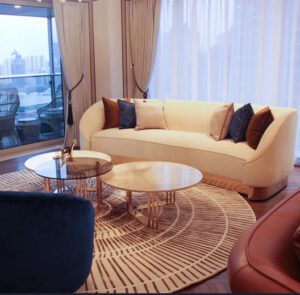
How to Vet a China Furniture Sourcing Agent Before Signing A single curved sofa like this goes through dozens of approvals, including frame, foam, fabric

China Furniture Sourcing Agent vs Direct Factory Buying: A Strategic Guide for High-Value Buyers When one project includes 400 hotel rooms, a 20-seat marble dining
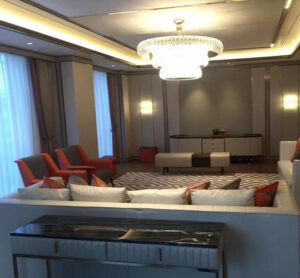
Advanced Tips to Get More from Your China Furniture Sourcing Agent Powerful Strategies for High-Performance Sourcing – Tailored for Elite Buyers, Designers & Operators Your
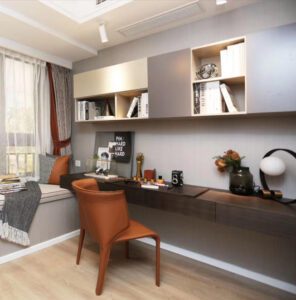
What Wholesale Furniture Suppliers in China Can Offer High-Value Buyers A statement luxury living room — the kind of space that begins with the right

How to Work Better With Your China Furniture Supplier After Ordering A Practical Playbook for High-End Furniture Importers, Interior Designers, FF&E Buyers, Villa Owners, Private