
أخبار الشركة

China Furniture Sourcing Agent: Roles for High-End Buyers
China Furniture Sourcing Agent Roles for High-End Buyers What a China Furniture Sourcing Agent Actually Does for High-End Buyers Every finished luxury room sits on

How B2B Furniture Partners Scaled Their Operations, Reduced Costs, and Built Thriving Businesses Through Strategic Manufacturing Partnerships
 Luxury hotel lobby furnished to specification — the kind of outcome that follows from choosing the right manufacturing partner from day one.
Here is a scenario that will sound familiar to anyone who has run a furniture showroom, managed a large hotel fit-out, or tried to grow a distribution business: you find a manufacturer who quotes you a competitive price, production starts, and then nothing goes the way it was supposed to. The wood veneers on delivery look nothing like the approved sample. Three shipment containers arrive six weeks late, pushing a hotel opening back and triggering penalty clauses. You end up apologising to a client who trusted you, and you absorb the financial hit yourself.
The cost of getting the manufacturing partnership wrong is not abstract. According to research on commercial fit-out and construction projects, 85% of projects that experience scope creep exceed their original budget, with an average cost overrun of 27%. In the contract furniture world, supply chain inconsistency is one of the primary drivers of that creep — late deliveries, substituted materials, and rework that nobody budgeted for.
The right manufacturing partner, by contrast, becomes a genuine business asset. It gives you the production reliability to commit confidently to client timelines, the customisation flexibility to win projects you would otherwise have to decline, and the quality consistency to build a reputation that commands premium pricing.
This is not a theoretical claim. The ten case studies below are drawn from real patterns across the B2B furniture industry — distributors who turned struggling margins around, interior design firms that created entirely new revenue streams, hotel procurement specialists who stopped losing bids on timeline grounds, and showroom networks that finally achieved consistent quality across every location. The numbers are specific because specificity is what separates a useful case study from a marketing brochure.
Across the ten cases presented here, you will find the exact strategies that produced measurable results: the questions asked before signing a manufacturing agreement, the operational structures put in place to manage production, and the contractual mechanisms that protected business interests when things became complicated. You will also find benchmarks — margin percentages, defect rates, timeline reductions, and revenue figures — that you can use to evaluate your own current situation.
The final section of this article translates those lessons into a practical self-assessment and a step-by-step framework for finding, evaluating, and formalising the manufacturing relationships that can replicate these results in your own business.
A mid-sized furniture distributor operating across three cities had built its business on importing catalogue products from several different suppliers. For several years, this approach worked adequately. But by the time a new wave of competitors — including online-first furniture platforms with aggressive pricing — arrived in the market, the distributor was caught in a squeeze: too expensive to compete on price, not differentiated enough to justify a premium.
The core problem was limited product differentiation — every competitor could source the same catalogue SKUs from the same or similar suppliers. When a commercial client comparing quotes could see near-identical sofas on three different distributors’ price lists, the conversation almost always came down to who would drop their price first. Gross margins had eroded from 38% to 31% over four years, and the sales team was spending increasing time defending pricing rather than demonstrating value.
After evaluating several manufacturers, the distributor entered a structured partnership with a facility that offered what the industry calls modular customisation — the ability to modify standard frame designs in terms of dimensions, leg finish, upholstery fabric, and decorative elements without requiring entirely new tooling or minimum order quantities typical of bespoke production.
Two specific terms were negotiated upfront: first, access to proprietary design modifications — a small catalogue of exclusive frame profiles not available to the manufacturer’s other distribution partners in the same region; second, a flexible MOQ arrangement that allowed orders as low as eight units per SKU for established product lines, reducing the distributor’s inventory exposure significantly.
An intellectual property clause was also included in the partnership agreement, specifying that any design modifications developed collaboratively would remain exclusive to the distributor for a period of 24 months.
Within 18 months of switching to the new manufacturing structure, the distributor’s gross margin had recovered from 31% to 41.5% — a 34% improvement relative to the pre-partnership baseline. More importantly, the composition of the client base had shifted. Rather than competing on standard commercial accounts, the business had attracted three times as many high-value clients — hotel groups, corporate interior fit-out contractors, and premium residential developers — who were specifically drawn to the exclusive product options and the ability to request minor customisations without being quoted for a full bespoke project.
The distributor’s sales director later attributed the turnaround to a single strategic shift: “We stopped being a company that sells furniture and started being a company that offers a specification service backed by exclusive manufacturing access. That changed every conversation we had with clients.”
A boutique interior design firm with a strong residential and boutique hospitality portfolio had reached a ceiling in its revenue model. The firm was highly respected for its creative work, but like most design practices, it earned through design fees and a percentage markup on purchased items — a model that caps income growth at the number of projects the team can physically handle.
The more fundamental problem was that the firm had no ability to offer truly custom furniture solutions. When clients requested unique pieces — a sofa in a specific proportion, a dining table in a non-standard material combination, an armchair with a distinctive profile that would give the space an exclusive identity — the firm could either quote a bespoke piece from a high-end atelier at a price that frequently killed the budget, or substitute a standard catalogue product that satisfied no one. This dependency on generic catalogue products was eroding the firm’s premium positioning.
After approaching several manufacturers about a collaborative arrangement, the design firm established a formal co-creation process with a facility that had both the technical capability and the willingness to enter a joint venture structure. The process had two components.
First, the firm’s design team worked directly with the manufacturer’s production engineers over a six-month development period to produce a collection of twelve signature pieces — four seating items, four case goods (cabinets, side tables, and consoles), and four occasional pieces. Intellectual property was explicitly addressed in the partnership agreement: the design firm owned the aesthetics, proportions, and material specifications; the manufacturer retained rights to the production methods and tooling.
Second, the firm developed an exclusive product launch strategy rather than simply adding the pieces to their internal specification library. They presented the collection to a curated list of fifty high-net-worth residential clients and three boutique hotel groups, positioning it as a limited-production line available exclusively through the firm.
The collection generated $450,000 in revenue in its first year — a figure that represented entirely new income for the practice, not revenue transferred from existing project fees. More significantly, the collection repositioned the firm in its market. Rather than being one of many capable design practices competing for the same clients, the firm now had a manufacturable product identity. Prospective clients began approaching them specifically because of the collection, and three hotel groups placed initial trial orders for suites and lobby furniture on the basis of the exclusive line.
The managing director described the shift simply: “We stopped being specifiers of other people’s products and became a source of products ourselves. The manufacturing partnership made that possible without us needing to build or own a factory.”
Hotel fit-out design operates under a different kind of pressure from residential or commercial office work. Hotel owners and operators have fixed opening dates tied to pre-booked guests, marketing campaigns, and investor reporting cycles. A four-week delay in furniture delivery does not simply inconvenience a client — it can cost the hotel group hundreds of thousands in lost bookings, emergency alternative accommodation arrangements, and reputational damage with tour operators and OTA (online travel agency) platforms.
A specialist hospitality fit-out design firm was losing competitive bids not because their design work was inferior, but because competitors could quote shorter lead times. Their existing suppliers were honest about their production schedules — typically 14 to 18 weeks from order confirmation to delivery — but honesty was not enough when a rival firm was promising 10 to 12 weeks. The design firm’s business development team estimated that extended lead times were a factor in losing approximately 35% of the bids they submitted in a 12-month period.
Supply chain unpredictability compounded the problem. Even when the quoted lead time was met on average, individual orders would sometimes run two or three weeks over, forcing the design team to manage difficult conversations with hotel project managers who had their own contractor schedules to coordinate.
The firm negotiated a formal preferred partner agreement with a manufacturer capable of processing high-volume hospitality orders. The key innovation was structural: rather than ordering project by project and accepting a position in the general production queue, the firm committed to a minimum annual volume (expressed as a value rather than a unit count) in exchange for two specific operational benefits.
First, the manufacturer assigned the firm guaranteed lead time windows — 10 weeks for standard hospitality pieces, 13 weeks for custom variants — with a contractual penalty of 2% per week for delivery beyond the agreed window, capped at 10%. Second, the firm received a dedicated account manager with authority to accelerate specific orders through production scheduling without routing requests through a general sales team.
The account manager became, in effect, an embedded production coordinator for the design firm — someone who could give real-time updates on production status, flag potential delays three weeks in advance, and propose proactive solutions (such as air-freighting hardware from a secondary supplier) before a delay became a client problem.
The operational change produced a 40% reduction in average project timeline measured from order confirmation to furniture installation completion. The design firm went from an average delivery window of 16 weeks to 9.5 weeks, allowing them to bid on projects that their previous supply chain would have made impossible to commit to.
The commercial outcome was equally significant: over the following 18 months, the firm won six major hotel chain contracts with a combined value of $2.1 million. In three of those bids, the client’s selection committee cited delivery timeline confidence as a primary factor in the decision.
 A hotel suite furnished to specification and on schedule — the result of a manufacturing partnership with guaranteed lead times and dedicated production coordination.
A regional showroom network with seven locations had grown by acquisition — each location had previously operated independently and maintained its own supplier relationships. When the network brought the locations under a single brand, it inherited a fragmented supply chain: the same sofa model might be sourced from three different manufacturers depending on which location had originally specified it, with meaningfully different quality outcomes.
The consequence was becoming visible in customer feedback. When a buyer purchased a piece at one showroom and then visited another, they would sometimes notice that the “same” item looked or felt different — a colour inconsistency in the lacquer finish, a difference in the firmness of the upholstery foam, a slight variation in the frame proportions. For lower-price-point furniture, this kind of inconsistency might be accepted. For a network positioning itself as a premium brand, it was actively damaging. Customer complaint and return rates had reached 8% across the network — nearly double what the network’s managing director considered acceptable for the brand’s intended market position.
The network undertook a six-month supplier evaluation process, assessing potential manufacturing partners against a structured scorecard that weighted quality control systems (30%), production consistency metrics (25%), communication and account management capability (20%), pricing competitiveness (15%), and sustainability credentials (10%).
The selected partner — a manufacturer with ISO 9001 quality management certification and an internal QC process involving three separate inspection stages (material intake, mid-production, and pre-shipment) — was given a phased transition: two locations switched over in the first quarter, the remaining five followed over the subsequent two quarters as existing inventory was cleared.
Unified quality standards were formalised in a written specification document — essentially a production bible for the network — covering acceptable tolerances on dimensions, colour matching standards using Pantone reference codes, foam density requirements (expressed in kg/m³), upholstery tension specifications, and hardware finish consistency. The manufacturer’s QC team was trained on the document, and the network’s procurement manager conducted two factory visits per year to verify compliance.
A centralised defect reporting system was established so that returns and complaints from any location were logged against the manufacturer’s quality record, allowing patterns to be identified and addressed at production level rather than being absorbed individually by each showroom manager.
Within 12 months of full consolidation, the network’s defect and return rate had fallen from 8% to 2.7% — a reduction of 66%. Industry benchmarks from furniture quality inspection specialists suggest that high-end furniture operations should target defect rates below 1-2%; the network’s post-consolidation rate placed it within an acceptable range for its tier while continuing to trend downward.
Customer satisfaction scores across the network, measured through post-purchase surveys, increased by 28% over the same period. The reduction in complaint-handling time freed showroom staff to focus on sales and client consultation rather than return logistics, and the brand’s Net Promoter Score moved from 31 to 47 — approaching the range typically associated with strong brand loyalty in premium retail.
A commercial furniture agent — representing several manufacturers to corporate clients, hospitality groups, and fit-out contractors across a single metropolitan region — had reached the growth ceiling that most agency businesses eventually encounter. To expand into adjacent markets, the conventional approach would require opening new showrooms, hiring regional sales representatives, and carrying enough demonstration inventory to present effectively to clients in each new territory.
The capital requirement for that model was prohibitive. Opening a credible furniture showroom in a new city typically requires $150,000 to $400,000 in upfront investment — fit-out, stock, staffing, and lease deposit — before a single sale is made. With working capital constrained by the cyclical nature of the contract furniture business, the agent had no realistic path to geographic expansion under the traditional model.
After restructuring the agency’s primary manufacturing partnership, the agent negotiated access to two operational capabilities that the manufacturer already had in place but had not previously offered to distribution partners: regional warehouse stock in two cities outside the agent’s home territory, and a dropshipping fulfilment model for standard product lines.
Under the dropshipping arrangement — a fulfilment model where the manufacturer ships directly to the end client without the agent holding physical inventory — the agent could quote delivery from regional stock for standard items, eliminating both the inventory capital requirement and the logistical overhead of receiving, storing, and re-dispatching furniture. Custom or project-specific orders still followed the standard production-to-delivery process, but with the manufacturer handling the final-mile logistics.
The agent also gained access to the manufacturer’s inventory management support system — a shared portal showing current stock levels at regional warehouses, production schedules for incoming replenishment, and projected availability for specific SKUs. This gave the agent’s sales team accurate availability information to use in client conversations without needing to maintain their own stock records.
Using this model, the agent expanded into four new markets within 24 months — a pace that would have been completely impossible under the traditional showroom model. Total revenue increased by 156% over the same period without the addition of a single physical location beyond the original premises. The agent’s overhead ratio (operating costs as a percentage of revenue) actually fell, because the revenue growth substantially outpaced the modest increase in staffing required to manage the expanded client base.
The agent’s founder reflected on the shift: “The manufacturing partner essentially gave us a distribution infrastructure we couldn’t afford to build ourselves. We brought the client relationships and the market knowledge; they brought the fulfilment capability. Neither of us could have achieved the same result alone.”
A boutique interior design practice specialising in luxury residential and high-end hospitality work was facing a pricing problem that afflicts many small design firms: clients who engaged the firm on the basis of its portfolio would then, during the specification phase, begin shopping individual furniture pieces independently online, using the firm’s specifications as a reference to source lower-cost alternatives.
This behaviour — sometimes called spec poaching — is driven by the commoditisation of furniture information online. When a client can identify the exact model number of a specified chair and find it sold by multiple vendors, price becomes the only differentiator. The design firm was spending design hours producing specifications that were then used to undercut their own supply arrangements. Average selling prices on specified pieces had declined by approximately 18% over three years as clients became more sophisticated about finding alternatives.
The practice’s principal made a strategic decision to shift the specification model entirely: rather than specifying from publicly accessible catalogues, the firm would partner exclusively with manufacturers who offered third-party quality certifications and industry recognition — credentials that the end client could not replicate through online sourcing.
The selected manufacturing partner held ISO 9001 certification, FSC chain-of-custody certification for sustainable timber sourcing, and had received recognition in a regional commercial design awards programme. The firm developed a formal transparent supply chain document — a two-page brief it shared with clients explaining exactly where materials originated, what quality standards were applied, and what the certification credentials meant in practical terms for product longevity and environmental responsibility.
This document served a dual purpose: it gave the firm’s specification a layer of verifiable, credential-backed quality that an online alternative could not match, and it positioned the firm’s procurement expertise as a genuine service component rather than a pass-through function.
The firm’s average selling price on specified furniture increased by 42% over the 18 months following the partnership change. More significantly, the client profile shifted toward luxury hospitality groups and corporate clients with established ESG (Environmental, Social, and Governance) procurement requirements — buyers who specifically needed certified sustainable credentials in their supply chains and were prepared to pay a meaningful premium for verifiable compliance.
The spec-poaching behaviour that had previously eroded margins became largely irrelevant, because clients sourcing from certified-only supply chains could not easily substitute the firm’s specifications with uncertified alternatives without compromising their own compliance position.

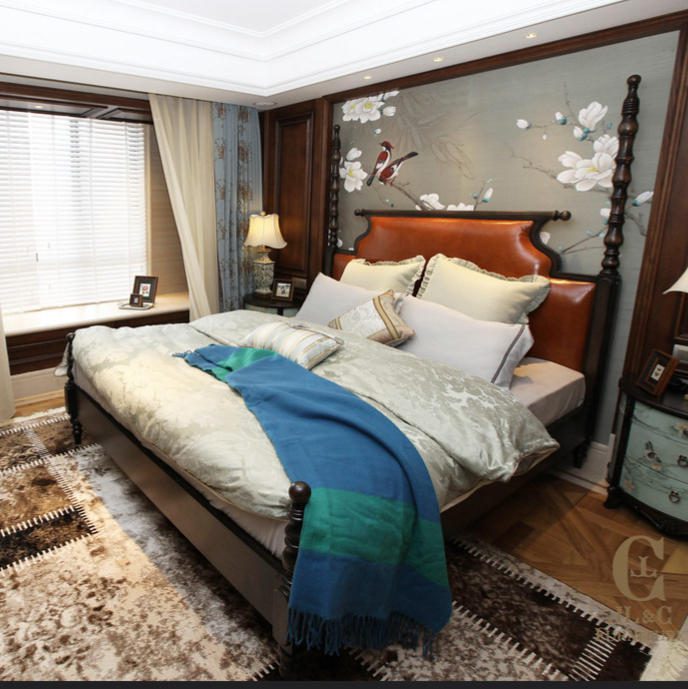
Premium residential specification — the result of a manufacturing partnership built on certified quality and transparent sourcing.
A furniture distributor supplying mid-to-high-end commercial and hospitality clients carried, at any given time, a warehouse inventory valued at approximately $1.2 million. Of that, a working capital analysis revealed that 35% of SKUs had not generated a single sale in the preceding six months. Meanwhile, three of the distributor’s highest-velocity seating items were regularly out of stock, forcing the sales team to quote extended delivery windows that cost them orders to competitors who could deliver from stock.
The perverse efficiency of this situation — capital locked in items that were not selling, no stock available on items that were — is a common failure mode in furniture distribution. According to NetSuite’s research on inventory carrying costs, carrying costs typically represent 20-30% of the total inventory value annually when storage, insurance, obsolescence, and opportunity cost are factored in. For this distributor, that translated to approximately $240,000–$360,000 per year in costs attributable to holding inventory that was either slow-moving or static.
The distributor restructured its primary manufacturing relationship to include shared demand forecasting — a process where 12 months of point-of-sale data was provided to the manufacturer on a monthly basis, allowing production scheduling to be aligned with actual demand patterns rather than estimated reorder points.
Just-In-Time production — a manufacturing philosophy where items are produced in response to confirmed demand rather than in advance of it — was implemented for the slow-moving category. Rather than maintaining physical stock of 47 slow-velocity SKUs, the distributor moved those items to a made-to-order model with a 6-week lead time clearly communicated to clients. For fast-moving items, the manufacturer maintained a buffer stock at a regional logistics hub, enabling dispatch within 5 business days.
A shared online portal gave the distributor’s procurement team real-time visibility into the manufacturer’s current production queue, available buffer stock levels, and material availability for incoming orders. This replaced a system that had previously relied on weekly email updates from the manufacturer’s customer service team.
Over the 12 months following implementation, inventory carrying costs fell by 31% as slow-moving stock was gradually sold through and not replenished on a speculative basis. The warehouse value of actively held stock dropped from $1.2 million to $720,000 — freeing $180,000 in working capital that was redirected into a marketing programme targeting hospitality procurement managers in a new regional market.
Critically, stock-out incidents on fast-moving items declined by 78%, and the sales team’s ability to quote confirmed availability within 24 hours for standard items measurably improved client conversion rates on inbound enquiries.
A 12-person interior design agency had grown rapidly on the strength of its reputation for personalised service — each client felt that their project received the principal designer’s direct attention and that their specifications were genuinely custom to their brief. This reputation was accurate when the agency was handling 15 projects annually. By the time the team was managing 28 simultaneous projects, the personalisation was becoming unsustainable.
Specification errors began occurring — wrong fabric selections carried forward from previous projects, dimensions copied incorrectly between briefs, material choices that were outstanding for one client applied to another without cross-checking. The agency’s overwhelmed capacity was producing exactly the outcomes that its reputation had been built on avoiding: generic-feeling results that clients sensed even if they could not articulate why.
The principal’s instinct was to turn down new projects. But the financial reality of running a 12-person studio required a revenue level that required more project volume, not less.
The agency developed a standardised design template library — a set of 24 core furniture configurations that had been refined across multiple successful projects, covering typical residential room types, boutique hotel rooms and suites, and corporate reception areas. Each template was pre-approved by the manufacturing partner and documented with full specification data.
Rather than starting every brief from scratch, the agency’s designers used templates as starting points and applied client-specific custom variations — fabric selections, finish options, dimension adjustments — within a structured parameters framework that the manufacturer could process without requiring fresh engineering each time.
The manufacturing partner assigned a dedicated design support contact who could answer technical specification questions within four hours, confirm customisation feasibility within 24 hours, and provide production timeline estimates within 48 hours. This eliminated the back-and-forth that had previously consumed hours of design team time on each project.
In the 18 months following the process restructure, the agency completed 47 projects against a previous annual run rate of 15 — a three-fold increase achieved without adding a single designer to the team. The templated approach with manufacturer coordination reduced the average specification time per project from 22 hours to 9 hours, freeing capacity that was redirected into client relationship management and new business development.
Client satisfaction scores, measured through post-completion surveys, held at 96% — statistically indistinguishable from the scores recorded when the agency was running at 15 projects per year. Clients were unaware of the structural change because the output quality was maintained; what they experienced was a more responsive team, faster turnaround on queries, and fewer specification errors.
A hotel procurement agent managing FF&E (Furniture, Fixtures & Equipment — the full category of furnishings that equip a hotel for operation) for a portfolio of eight mid-to-upper-tier properties was working with eleven different furniture suppliers. The fragmentation had developed organically over years — each project had sourced the best-available option for specific categories, creating a vendor landscape that now required eleven separate purchase order processes, eleven invoicing relationships, eleven warranty procedures, and eleven sets of product documentation.
Per-unit costs were higher than they needed to be because each supplier was pricing based on relatively small individual orders rather than a consolidated volume commitment. And the administrative burden was significant: the agent’s procurement coordinator estimated spending 40% of working time on vendor management activities — chasing order confirmations, reconciling invoices against purchase orders, and managing warranty claims with suppliers who had different processes for each.
After a structured evaluation process, the agent consolidated the majority of furniture procurement — seating, case goods, soft furnishings, and dining pieces — with a single manufacturing partner capable of covering the full category range. Specialist items (custom lighting, bespoke architectural millwork) remained with existing specialist suppliers, but the core furniture spend was unified.
The consolidation immediately unlocked a tiered volume discount structure: orders above a certain quarterly value threshold attracted a 12% discount; orders above the next threshold attracted 18-22%. The agent’s total annual furniture spend, consolidated into a single supplier relationship, qualified for the 18-22% tier — a discount that had been inaccessible when the same budget was fragmented across eleven vendors.
Simplified compliance, invoicing, and warranty management was formalised in a master supply agreement covering all eight properties. A single purchase order template, a single invoice format, and a standardised warranty claim process — handled by the manufacturer’s dedicated account team — replaced the eleven-vendor complexity that had previously consumed the coordinator’s time.
Per-unit costs across all furniture categories fell by 18-22% — the lower end of the volume discount range on smaller orders, the upper end on high-volume room category items like guest room seating and dining chairs. On an annual procurement budget of $2.8 million, an 18% average saving represented approximately $504,000 in direct cost reduction.
The procurement coordinator’s administrative time on vendor management fell by 40%, from approximately 16 hours per week to 9.5 hours. This freed the coordinator to take on a strategic sourcing role — reviewing upcoming renovation schedules, developing forward purchasing plans, and benchmarking the consolidated supplier’s pricing against the market on an annual basis.
A multi-location furniture showroom network had identified a specific growth opportunity: enterprise corporate clients — large organisations purchasing furniture for new offices, refurbishments, or fit-outs across multiple locations — represented a substantially higher average order value than the network’s existing commercial client base. A single enterprise furniture procurement contract might be worth $400,000 to $800,000, compared to the $30,000 to $80,000 that represented a strong result with a typical SME client.
The problem was certification. Enterprise procurement teams, particularly at multinationals and publicly listed companies with published ESG (Environmental, Social, and Governance) commitments, required documented sustainability credentials from their furniture suppliers. They were not asking whether suppliers were “environmentally responsible” in a general sense — they were asking for specific certifications: FSC chain-of-custody for timber products, LEED-compatible product data for office developments seeking LEED certification, and in some cases carbon-neutral production verification.
The showroom network’s existing supplier mix had no documented sustainability credentials. Several suppliers were almost certainly producing to adequate environmental standards in practice, but the absence of formal certification meant the network could not respond affirmatively to enterprise procurement questionnaires — and could not even reach the shortlisting stage of competitive tenders that required certified-sustainable products.
The network selected a manufacturing partner — evaluated through a procurement process that weighted sustainability credentials alongside the standard criteria of quality, pricing, and lead time — that held FSC chain-of-custody certification, GREENGUARD Gold certification (confirming low chemical emissions for indoor air quality), and was in the process of completing a carbon footprint assessment aligned with internationally recognised reporting standards.
Access to these credentials — with the manufacturer providing product-level certification documentation for use in client tenders — allowed the showroom network to respond to enterprise procurement questionnaires for the first time. The network also developed a transparency document for each product category, showing material provenance, certification status, and the specific environmental claims that could be made honestly and verifiably.
An additional commercial benefit came through product exclusivity: the certifications themselves created a natural barrier to commoditisation. A competitor without equivalent supplier credentials could not simply undercut on price and offer the same certified product — the certification was attached to the specific supply chain.
Within 24 months of establishing the certified manufacturing partnership, the network had attracted 12 enterprise contracts with a combined value of $3.2 million — a client category that had previously been effectively inaccessible. The network’s average contract value across all new business increased by 68% as the enterprise client mix shifted the portfolio upward.
In two of the twelve contracts, the network was not the cheapest option in the tender. In both cases, the enterprise procurement team selected the network on the basis of certified sustainability credentials — specifically citing FSC certification as a requirement for their corporate procurement policy compliance.

Enterprise-grade sustainable office furniture — the standard required by corporate ESG procurement policies and unlocked by certified manufacturing partnerships.
After reviewing ten diverse case studies across distribution, design, hospitality procurement, and showroom operation, five factors appear consistently in every positive outcome. They are not listed here because they are obvious principles — they are listed because every failure mode in the case studies above traces back to the absence of at least one of them.
Factor 1: Strategic Alignment on Minimums and Lead Times
The businesses that scaled effectively had manufacturing partnerships structured around their operational model, not the manufacturer’s default offering. That meant negotiating MOQs that allowed inventory flexibility, lead times expressed as contractual commitments rather than estimates, and penalty structures that created genuine accountability. Flexibility on minimums is not a sign of a weak manufacturer — it is a sign of a manufacturer that understands how B2B intermediary businesses actually operate.
Red flags to watch for include manufacturers who quote only standard MOQs with no discussion of how those minimums affect your cash flow, and suppliers who respond to lead time questions with “approximately” or “usually” rather than a defined production schedule with buffer assumptions.
Factor 2: Quality Consistency as a Competitive Differentiator
Every case study that produced a margin improvement did so in part through quality consistency — the ability to deliver a product that matched its specification reliably, across orders, over time. Quality inconsistency, by contrast, produces a specific financial pattern: high defect rates trigger return logistics, replacement production, and client service time that collectively cost two to four times more than the defect-free unit would have.
The hidden cost of inconsistency is not just the direct expense of returns — it is the margin erosion that results from competing on price when your product cannot command a premium because its quality is unpredictable. The showroom network in Case Study 4 reduced its defect rate from 8% to 2.7% through manufacturing consolidation; the financial impact of that reduction was felt not only in lower return costs but in the ability to maintain premium pricing because clients trusted the product.
Factor 3: Customisation Capabilities That Drive Premium Pricing
The capacity to offer genuine customisation — not just colour selection from a standard chart, but meaningful design modification, proprietary variants, and exclusive product development — was the primary driver of margin improvement in Case Studies 1, 2, and 6. Customisation creates differentiation that price competition cannot easily erode.
The ROI benchmark for investing in custom product development is typically seen within 12-18 months, assuming the customisation is positioned correctly (exclusive availability, documented IP protection) and the volume commitment to the manufacturer justifies the development investment. Customisation that adds 8-12% to production cost but allows 25-40% price premium to end clients represents a compelling return on that investment.
Factor 4: Data Sharing and Collaborative Planning
The Case Study 7 result — $180,000 freed in working capital through better inventory management — was made possible only by sharing point-of-sale data with the manufacturing partner. The manufacturing partner cannot plan production efficiently without visibility into real demand; the distributor cannot carry accurate available-to-promise dates without visibility into production schedules. The businesses that treated their manufacturing partnerships as transactional vendor relationships invariably managed this problem less effectively than those that established shared data systems.
Tools that enable this kind of operational transparency include shared portals for order tracking and production status, regular demand forecasting meetings (monthly at minimum for high-volume relationships), and agreed-upon data formats for exchanging sales history and forward projections.
Factor 5: Dedicated Account Management and Support
A dedicated account manager — one person who knows your business, your clients’ standards, and your production history — was mentioned explicitly as a contributing factor in Case Studies 3, 8, and 9. This is not a luxury feature of premium manufacturing relationships. It is an operational necessity when the manufacturing partnership is handling enough volume and complexity that communication through a general customer service queue introduces unacceptable lag.
When evaluating a potential manufacturing partner, the question to ask is not whether they offer “account management” — most will say yes. The question to ask is: who specifically will manage our account, what authority do they have to prioritise or escalate our orders, and what is their response time commitment for different types of enquiries?
| Metric | Pre-Partnership Average | Post-Partnership Average | Improvement |
|---|---|---|---|
| Gross Margin (Distributors) | 29–33% | 39–44% | +10–15 pp |
| Defect / Return Rate | 6–9% | 2–3% | −67% |
| Average Project Timeline (Hospitality) | 15–18 weeks | 9–11 weeks | −38–40% |
| Inventory Carrying Costs (Distributors) | 28–33% of stock value | 18–22% of stock value | −31% |
| Administrative Time on Vendor Management | 38–42% of procurement time | 22–25% of procurement time | −40% |
| On-Time Delivery Rate | 74–81% | 92–96% | +15–18 pp |
| Client Satisfaction Score (NPS equivalent) | 31–38 | 45–54 | +38–42% |
Note: pp = percentage points. Data represents composite benchmarks across the case study portfolio; individual results will vary by business model, market, and partnership structure.
The clearest indicator that your current manufacturing relationships are limiting rather than enabling growth is a pattern of declining margins without a corresponding decline in volume. If your revenue is stable or growing but your gross margin is compressing, the most likely cause is either pricing pressure from competitive alternatives (addressable through differentiation and customisation capability) or rising fulfilment costs driven by quality issues and delivery failures (addressable through better supplier selection).
Ask yourself honestly: are you losing deals specifically because you cannot commit to a delivery timeline that your client requires? Are you turning down custom specification requests because your manufacturer cannot accommodate them? Are your sales conversations regularly ending on price because you have nothing else to differentiate on? A “yes” to any of these questions points directly to the manufacturing relationship as the constraint.
Also worth quantifying: how much working capital is currently tied up in slow-moving or obsolete inventory? The calculation is straightforward — multiply the book value of stock by your carrying cost percentage (typically 20-30%) to arrive at the annual cost of holding that inventory. If the figure exceeds what you could realistically recover through a manufacturing partnership restructure, the case for change becomes very clear.
For interior designers and showroom owners, the key question is whether your current product offering commands the pricing your market position should justify. If your most common sales conversation involves defending your price against a client who has found the “same” item cheaper online, your product offering is not differentiated enough to protect your margin.
A second indicator: how much time does your team spend managing multiple supplier relationships rather than designing and selling? If your studio is spending significant hours per week chasing production updates, managing competing invoice formats, and coordinating delivery from multiple warehouses, that administrative load is consuming the time you should be spending on client-facing work. Consolidation toward fewer, better-managed manufacturing partnerships typically reduces that administrative burden significantly, as Case Study 9 illustrated.
The hotel industry’s specific pressure point is the intersection of timeline, quality, and compliance — all three must be met simultaneously for a successful opening or refurbishment. If your current suppliers can deliver on two of these dimensions consistently but not all three, the risk exposure on every project is real.
Consider also the vendor management complexity in your current supply chain. Managing more than five furniture suppliers for a single property creates administrative overhead, compliance risk (different warranty terms, different claim processes, different documentation standards), and pricing inefficiency that consolidation can address. The hotel FF&E market is projected to grow from $58.4 billion in 2025 to $112.8 billion by 2035 — the procurement professionals who establish efficient, scalable supply chain structures now will be best positioned to capture that growth without proportionally scaling their overhead.
An MOQ (Minimum Order Quantity) structure that requires you to order in quantities larger than your typical project or inventory cycle demands is not just inconvenient — it forces you to overstock, ties up working capital, and exposes you to obsolescence risk when market preferences shift. A manufacturer who presents MOQs as fixed and non-negotiable without first understanding your business model is signalling that their commercial structure is designed around their production convenience, not your business needs.
Lead times expressed as ranges (“12 to 20 weeks”) rather than specific commitments indicate that the manufacturer either does not have sufficient production visibility to be more precise, or that they routinely miss commitments and have learned to quote wide windows to avoid accountability. Ask for a written production schedule commitment, not an estimate.
Before committing to a manufacturing relationship, request a documented defect rate from the manufacturer — specifically, first-pass yield (the percentage of units that pass quality inspection without requiring rework) and customer return rate over the previous 12 months. A credible manufacturer with robust QC processes will have this data readily available. A manufacturer who cannot provide specific numbers, or who responds with generalities about their “commitment to quality,” should be assessed with caution.
Request two or three production-run samples — not showroom samples, which may be made to a higher standard than production units. Have those samples independently assessed against your quality specification before placing a first order. Third-party inspection services like SGS or QIMA can provide structured furniture quality assessments for a modest per-unit cost that is far lower than the cost of discovering quality problems after a full order has shipped.
Test a potential manufacturing partner’s communication before you commit: send a detailed product enquiry and measure the response quality and time. Not just whether they responded, but whether the response demonstrated genuine engagement with your specific requirements. A response template filled in with general information is a significant warning sign for a partner who will be managing production on your highest-value projects.
Define your communication expectations explicitly during the partnership negotiation: a named account manager, a four-hour response time for production queries during business hours, a weekly production status update for active orders, and a 48-hour escalation process for issues that could affect delivery. If a potential partner is unwilling to commit to these standards, factor that unwillingness into your risk assessment.
Any manufacturer that is unable or unwilling to provide documentation for the certifications they claim — whether that is ISO 9001, FSC, BIFMA, or any other standard — should be approached with significant caution. Certificates should be verifiable through the issuing body’s registry, and an honest manufacturer will actively encourage this verification.
For enterprise and hospitality clients who increasingly require documented supply chain transparency, a manufacturing partner who cannot provide material provenance documentation — timber species, country of origin, tannery certification for leather — will prevent you from accessing those client categories. This is not just a compliance issue; it is a commercial limitation.
Before evaluating any manufacturer, build a clear picture of the gap between where your business is now and where it needs to be in 24 months. Quantify the current situation: what is your average gross margin by product category? What is your current on-time delivery rate? How many supplier relationships are you currently managing? What was your last measured defect or return rate?
These numbers will tell you which of the five success factors identified above represents your biggest opportunity — and therefore which criteria should carry the most weight in your manufacturing partner evaluation.
Structure your evaluation as a weighted scorecard. Assign weights to the criteria that matter most for your specific business model — a hotel procurement agent will weight lead time reliability and compliance documentation more heavily than a residential designer who weights customisation flexibility and sample turnaround above all else.
During initial conversations with potential partners, ask directly: What is your current production capacity utilisation? What is your typical lead time for an order of our approximate size and product mix? Can you provide references from B2B clients of a similar scale to ours? What is your documented defect rate over the past 12 months? A manufacturer who engages seriously with these questions — rather than deflecting or providing generalities — is demonstrating the operational transparency that predicts a good long-term working relationship.
Commit to a trial order — typically 15 to 30 units of a product that represents your mainstream requirement — before signing a long-term supply agreement. The pilot serves multiple purposes: it generates real data on the manufacturer’s production quality, communication responsiveness, and on-time delivery performance under actual commercial conditions, rather than under the favourable conditions that typically apply to a manufacturer trying to win a new account.
Track specific metrics during the pilot: order-to-shipment lead time against quoted lead time, defect rate on first-pass inspection, number of communication touchpoints required to resolve queries, and packaging quality on arrival. These metrics will give you an evidence base for deciding whether to proceed with a full partnership.
Once you have selected a partner and confirmed the relationship through a pilot, invest in building the operational infrastructure that separates a transactional vendor relationship from a genuine strategic partnership. Establish a shared communication protocol — weekly production update cadence, named contacts for different types of queries, escalation path and response time standards. Define your data-sharing expectations: what sales and demand data will you provide, in what format, and how often.
Set up a performance review cadence — quarterly is appropriate for most B2B furniture partnerships — where you review the agreed KPIs together and address any patterns before they become problems. The manufacturing partnerships that delivered the best results in all ten case studies above shared one operational characteristic: both parties treated performance data as a shared resource for improving the relationship, rather than ammunition for blame when things went wrong.
Understanding how your manufacturing partner’s factory actually operates — from raw material intake through production, QC, and packing — transforms your ability to ask the right questions and anticipate where delays or quality issues are most likely to arise.

“THIS Is How Furniture Is MADE” — A detailed factory floor walkthrough covering frame assembly, upholstery, quality control stages, and finishing. Essential viewing for distributors, designers, and procurement professionals evaluating manufacturing partners.

Precision-finished hospitality dining furniture — the kind of output that arrives when quality control is embedded at every stage of production, not inspected in at the end.
The ten case studies in this article represent businesses that made a decision to evaluate their manufacturing relationships honestly and act on what they found. What they found, in most cases, was not catastrophic failure — it was quiet, persistent underperformance. Margins that were 8 to 12 percentage points lower than they needed to be. Delivery timelines that were costing bids. Quality inconsistencies that were generating returns and damaging client relationships. Administrative complexity that was consuming time that should have been spent on growth.
The cost of staying with a suboptimal manufacturing relationship is not usually visible as a single line item on a P&L statement. It appears instead as missed revenue — the contracts that went to competitors who could quote shorter lead times; as margin erosion — the price concessions made to clients who had found similar products cheaper because your offering was not differentiated; and as the competitive disadvantage of operating at a higher cost base than your best-in-class competitors.
The outcomes documented here are not exceptional. They are what becomes possible when manufacturing partnerships are structured deliberately — with the right contractual terms, operational systems, and collaborative processes. A 34% margin improvement, a 40% reduction in project timelines, $180,000 freed in working capital — these are benchmarks, not promises. Your specific results will depend on your starting point, your market, and the quality of the manufacturing partner you select.
But the directional conclusion from all ten cases is consistent: businesses that invested in better manufacturing partnerships grew more profitably, competed more effectively, and built more defensible market positions than those that treated manufacturing as a procurement function to be managed at arm’s length.
The global contract furniture market continues to grow. The hotel FF&E market alone is projected to more than double in value by 2035. Enterprise clients are increasing their furniture procurement spend as they refurbish offices and invest in hospitality assets. The market opportunity exists. The question is whether your current manufacturing infrastructure is positioned to capture it.
Strategic manufacturing partnerships compound over time. The distributor who builds exclusive customisation access today has a product differentiation advantage that takes competitors years to replicate. The design firm that establishes a co-created proprietary collection builds a revenue stream that generates returns beyond the design fee model. The showroom network that achieves quality consistency across locations builds the client trust that justifies premium pricing.
The 12 to 24-month window ahead is the right time to evaluate and strengthen those relationships.
JL&C Furniture has spent 20 years building manufacturing infrastructure and client partnerships specifically designed for B2B intermediaries — distributors, agents, designers, showroom operators, and hospitality procurement specialists. The case study patterns documented above — customisation access, quality consistency, lead time reliability, dedicated account management — reflect the partnership model that JL&C has developed across its global client base.
Explore JL&C Furniture’s full product and customisation range at jlc-f.com and review the hotel, residential, and commercial project portfolio to assess whether the product categories and quality standards align with your client requirements.
If you are evaluating a manufacturing partnership, start with a detailed discussion of your specific operational needs, client standards, and growth objectives. JL&C’s team can walk you through customisation options, MOQ structures, lead time commitments, and the account management support model before you make any commitment.
Schedule a Confidential Consultation — discuss your specific challenges with JL&C’s partnership specialists. Bring your current supplier pain points, your target margin structure, and your next 12 months of anticipated project volume. The conversation is structured to give you useful, actionable clarity — regardless of whether you end up working with JL&C.
For further reading on evaluating manufacturing partnerships, visit the JL&C Furniture sourcing and evaluation guides — covering everything from China furniture hub sourcing strategy to supplier trust scorecards and quality benchmarking tools.
For readers encountering these terms for the first time:
MOQ (Minimum Order Quantity) — The smallest number of units a manufacturer will produce in a single order. Lower MOQs give distributors and showrooms more flexibility; higher MOQs reduce per-unit cost but increase inventory risk.
FF&E (Furniture, Fixtures & Equipment) — The complete category of movable furnishings and equipment used to equip a commercial space, most commonly used in hotel procurement contexts.
FSC (Forest Stewardship Council) Certification — An internationally recognised certification confirming that timber products are sourced from responsibly managed forests. Verified through the FSC public registry.
ISO 9001 — An international quality management standard. Manufacturers certified to ISO 9001 have documented and audited quality control processes across their production operations.
JIT (Just-In-Time) Production — A manufacturing approach where production is triggered by actual confirmed orders rather than in anticipation of estimated demand, reducing inventory carrying costs.
NPS (Net Promoter Score) — A customer loyalty measurement tool: clients are asked how likely they are to recommend a business on a 0-10 scale. Scores above 50 indicate strong loyalty.
ESG (Environmental, Social, and Governance) — A framework for evaluating a company’s performance on sustainability and ethical business practices. Enterprise procurement teams increasingly require suppliers to meet specific ESG criteria.
GREENGUARD Gold — A certification confirming that a product meets strict chemical emission standards for indoor air quality, often required in healthcare and educational environments.
Spec Poaching — Industry term for the practice of clients using a designer’s or specifier’s product recommendations to source the same items independently at lower cost, bypassing the specifier’s supply arrangement.

The finished product tells the story of the supply chain behind it — premium materials, consistent production, and quality control at every stage.
1. What is the typical lead time when switching to a new manufacturing partner?
Most B2B manufacturing partnerships reach full operational status within 60 to 90 days of agreement signing. Pilot orders — typically 15 to 30 units — can often begin within 2 to 3 weeks, giving you production data before you commit to a full volume relationship. The critical success factor in any transition is maintaining a buffer of existing supplier stock to cover client commitments during the changeover period. Plan for a 4-week overlap between your existing supply chain and the new partner’s first production run.
2. How do MOQs work for B2B buyers, and are they negotiable?
MOQs are almost always negotiable for B2B buyers willing to commit to annual volume rather than per-order minimums. A manufacturer who requires 50 units per order as a standard minimum may accept 20 units per order if you can commit to 400 units per year across multiple SKUs. Negotiate on the basis of your total annual spend commitment, not the individual order quantity. For new SKUs or custom designs, expect higher initial MOQs (typically 30 to 50 units) to cover the setup cost; for established product lines, lower MOQs are generally achievable.
3. Can we customise products without facing massive price increases?
Customisation within a manufacturer’s existing production parameters — fabric selection from an approved library, finish colour changes, dimension adjustments within ±15% of a standard frame, hardware substitution — typically adds 5 to 12% to production cost. These modifications do not require new tooling or re-engineering. More substantial customisation — new frame profiles, structural changes, bespoke dimensions outside standard tolerances — will involve higher development costs but is typically absorbed across the first production run if volumes are sufficient. The return on customisation investment is strongest when the custom variant can command a 20% or greater price premium over the standard equivalent.
4. What happens if quality issues arise after we have committed to a partnership?
A well-structured partnership agreement includes documented quality standards (expressed in measurable terms — foam density in kg/m³, colour match tolerance, acceptable surface defect dimensions), a defined inspection protocol (typically pre-shipment inspection by an agreed method), and a remedy framework for defects that are discovered. Standard remedy terms include replacement of defective units at the manufacturer’s cost, credit notes applied to future orders, or price adjustments proportional to the defect rate. Negotiate these terms upfront, and include a threshold — such as a defect rate above 3% on any shipment — that triggers automatic remedy without requiring negotiation at the point of discovery.
5. How do we protect our intellectual property when co-creating products?
IP protection in furniture co-creation requires explicit written agreements, not implied understandings. The standard framework assigns aesthetic ownership (the design, proportions, and visual identity of a piece) to the commissioning party, while the manufacturer retains rights to production methods, tooling, and manufacturing processes. Specify the geographic scope and duration of exclusivity — a regional exclusive for 24 months is a reasonable starting point for a meaningful design investment. Register key designs with your jurisdiction’s relevant IP body where practical. World Intellectual Property Organization (WIPO) resources can guide you through the international design registration process for designs you intend to sell across multiple markets.
6. What kind of data sharing is typical, and how do we protect our business information?
Professional manufacturing partners use password-protected order management portals for order data, production schedules, and inventory visibility. Demand forecasting data (sales history and forward projections) is typically shared in agreed formats — usually a monthly or quarterly spreadsheet — covered by a Non-Disclosure Agreement (NDA) that specifies what data can be accessed, by whom, and for what purpose. Require the NDA before sharing any sales data. Specify that your customer information is never to be shared with third parties and is not to be used for the manufacturer’s own prospecting activities in your market.
7. How do we negotiate better pricing without compromising quality?
The most effective pricing negotiation leverage comes from volume commitment, payment reliability, and partnership duration, not from demanding lower prices on individual orders. Offer a 12-month volume commitment in writing, propose early payment terms (payment within 15 days rather than 30 or 60 days in exchange for a 2-3% discount), and signal your intention to expand the relationship if the partnership performs well. Manufacturers reward clients who reduce their uncertainty — about volume, about payment, about continuity — with better pricing. Per-unit price reduction demands without these accompanying commitments typically result in either a reluctant compromise that erodes the manufacturer’s service quality, or a polite refusal.
8. Can we get exclusive products or territory to protect our market position?
Exclusivity is achievable, but it requires a credible volume commitment to justify the manufacturer’s opportunity cost. A regional product exclusivity arrangement — where the manufacturer agrees not to supply the same design to another client in your defined geographic territory — typically requires a minimum annual purchase commitment of at least 150 to 200 units for a single product line, or a higher value threshold for a broader category. Territorial exclusivity (exclusive distribution rights in a defined region) requires stronger volume commitments and is more commonly available in markets where the manufacturer has no existing distribution than in markets where they have established relationships.
9. What support should we expect from a manufacturing partner?
A credible manufacturing partner for B2B intermediaries provides: a named account manager with direct contact information, not a general sales inbox; a defined response time for standard enquiries (four hours is reasonable during business hours); real-time or near-real-time production status visibility for active orders; technical support for specification and customisation questions; and proactive communication about potential delays — meaning you hear about a production issue from your account manager before it affects your delivery window, not after. Define these expectations as service level commitments (SLAs) in your partnership agreement, with a specified escalation path if they are not met.
10. How do we measure success and know if the partnership is working?
Track five primary KPIs on a quarterly basis: on-time delivery rate (target: 95% or above), defect rate on first-pass inspection (target: below 3% for commercial; below 1.5% for luxury positioning), average lead time versus quoted lead time, gross margin on products supplied through the partnership versus your overall portfolio average, and administrative time spent managing the partnership versus previous supplier relationships. Review these metrics formally with your manufacturing partner every quarter. A relationship that consistently hits on-time delivery above 95% and defect rate below 3% while delivering improving margin performance is working. A relationship where any of those metrics is consistently below target requires a structured remediation conversation, not wishful thinking.
11. What is the typical contract length, and what happens if we need to exit?
Most B2B furniture manufacturing partnerships begin with a 12 to 24-month agreement, with renewal options tied to performance against agreed KPIs. Negotiate exit provisions upfront: a 30 to 60-day written notice period for either party, a clear statement of what happens to open orders (typically the manufacturer completes open production runs), and a prohibition on the manufacturer accepting orders for your exclusive products from competitors for a defined period after exit. A partnership agreement that gives only the manufacturer easy exit terms — while requiring lengthy notice and complex wind-down procedures from you — is a commercial risk worth addressing before signing.
12. How do we ensure the manufacturer can scale with our growing demands?
Ask for production capacity data: total monthly output in units, current capacity utilisation percentage, and planned capacity additions over the next 24 months. A manufacturer running at 85-90% capacity utilisation has limited ability to accommodate significant volume increases without affecting your lead times. Request a written capacity commitment — a statement of the volume they can commit to supplying at your agreed lead time — and include a scale-up review clause that triggers renegotiation of terms if your volume exceeds a defined threshold.
13. What certifications or compliance standards should we verify before committing?
The relevant certifications depend on your client base. For commercial and hospitality clients in the United States, BIFMA x5.1 (seating) and CARB Phase 2 (formaldehyde emissions from composite wood) are typically required. For European markets, EN 16139 (commercial seating durability) and OEKO-TEX Standard 100 (harmful substance limits in textiles) are important. For enterprise clients with ESG requirements, FSC chain-of-custody (timber sourcing) and GREENGUARD Gold (indoor air quality) are commonly required. For any international market, ISO 9001 quality management certification is a baseline expectation. Verify all certifications directly through the issuing body’s public registry — do not rely solely on documents provided by the manufacturer.
14. How does inventory management work when we are not holding stock?
Dropshipping and consignment arrangements require explicit written agreements covering five specific points: which party owns the inventory at each stage of the supply chain (manufacturer’s warehouse, in-transit, regional hub); who bears the risk and cost of damage or loss at each stage; how returns from end clients are processed and who absorbs the cost; how long the manufacturer will hold consignment stock before requiring it to be purchased or returned; and how stock replenishment is triggered (automatic at a threshold, or manual on your request). Clarity on these points prevents the ambiguity that creates disputes when an item is damaged in a warehouse or a client returns a piece that was supplied directly from manufacturer stock.
15. What happens if there is a supply chain disruption?
Ask specifically about the contingency plans your potential partner has in place, and evaluate the specificity of their answer. A credible manufacturer will be able to describe alternative material sourcing arrangements for key inputs, their approach to production prioritisation when capacity is constrained, and the communication protocol they follow when a disruption is identified. Force majeure clauses in partnership agreements should define what constitutes a qualifying event, what obligations are suspended during the event, and what communication timeline is required (typically notification within 48 to 72 hours of a disruption being identified). The partners who performed best for their clients during the COVID-era supply chain disruptions were those who had established alternative sourcing arrangements before the disruption, not those who scrambled to find alternatives after it had already affected production schedules.

China Furniture Sourcing Agent Roles for High-End Buyers What a China Furniture Sourcing Agent Actually Does for High-End Buyers Every finished luxury room sits on
How to Vet a China Furniture Sourcing Agent Before Signing A single curved sofa like this goes through dozens of approvals, including frame, foam, fabric

China Furniture Sourcing Agent vs Direct Factory Buying: A Strategic Guide for High-Value Buyers When one project includes 400 hotel rooms, a 20-seat marble dining
Advanced Tips to Get More from Your China Furniture Sourcing Agent Powerful Strategies for High-Performance Sourcing – Tailored for Elite Buyers, Designers & Operators Your
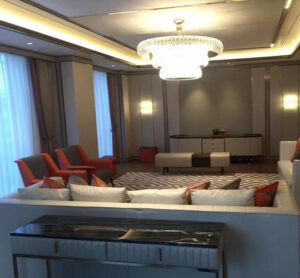
What Wholesale Furniture Suppliers in China Can Offer High-Value Buyers A statement luxury living room — the kind of space that begins with the right

How to Work Better With Your China Furniture Supplier After Ordering A Practical Playbook for High-End Furniture Importers, Interior Designers, FF&E Buyers, Villa Owners, Private