
أخبار الشركة

China Furniture Sourcing Agent: Roles for High-End Buyers
China Furniture Sourcing Agent Roles for High-End Buyers What a China Furniture Sourcing Agent Actually Does for High-End Buyers Every finished luxury room sits on

Partner with the right furniture manufacturer to reduce lead times, cut costs, and deliver quality products to your clients faster — a strategic guide for distributors, designers, and showroom operators.

A hotel fit-out designer in Singapore recently described losing a $340,000 project renewal to a competitor. Not because of pricing. Not because of design quality. Because her furniture arrived 11 days late for the property’s soft opening — and the hotel operator had already moved on.
That loss didn’t originate in her design studio. It originated in her supply chain.
For furniture distributors, showroom operators, interior designers, and hospitality fit-out teams, supply chain performance is not a back-office concern. It is a front-line business outcome that directly determines client retention, margin, and reputation.
The global furniture market is projected to reach $629 billion by 2026, growing steadily as hospitality, commercial, and high-end residential demand expands. The buyers who capture disproportionate share of that opportunity are not necessarily the ones with the best products. They are the ones whose supply chains are fast, reliable, and built on manufacturing partnerships that perform consistently under pressure.
This guide covers exactly how to build that kind of supply chain — from auditing your current gaps, to negotiating contracts that protect your margins, to scaling operations without losing the quality your clients expect.
Most supply chain problems in furniture B2B operations don’t announce themselves. They accumulate quietly — a week here, a quality rejection there — until a missed deadline or a client complaint forces a reckoning.
Before you can fix the gaps, you need to find them. That requires an honest audit of your current operations.
The most frequently reported supply chain pain points across furniture B2B operations include:
| Pain Point | Business Impact | Frequency |
|---|---|---|
| Inconsistent lead times from manufacturers | Client commitments missed, reputation risk | Very High |
| Poor communication during production | Surprises at delivery, no time to react | عالية |
| Quality variations between sample and bulk | Defect claims, rework costs, relationship damage | عالية |
| Inflexible MOQ requirements | Cash flow pressure, overstock risk | Medium-High |
| No real-time production visibility | Inability to proactively manage client timelines | Medium-High |
| Inadequate damage replacement processes | Delayed installations, client disputes | Medium |
A distributor managing 8 active supplier relationships across three product categories will typically find that 2–3 of those relationships account for 70–80% of their supply chain problems. The goal of the audit is to identify which ones — and why.
Run a structured supplier audit using the following data points — all of which should be available from your order history:
If you cannot retrieve this data cleanly from your current records, that itself is a finding — and suggests that a structured order management system (covered in Section 5) should be a near-term priority.
Delayed delivery has a cost structure that extends far beyond the immediate inconvenience of rescheduling an installation. The full financial impact of a single significant delay includes:
For hotel and hospitality fit-out specialists, according to RW Purchasing’s procurement guide, planning for FF&E (Furniture, Fixtures & Equipment) should begin 12–18 months before a property opening. A manufacturer that delivers 3 weeks late on that timeline doesn’t just create an inconvenience — it can delay a hotel’s operational launch by weeks.
A meaningful benchmark for furniture B2B operations:
| Metric | Strong Performance | Acceptable | Needs Attention |
|---|---|---|---|
| On-time delivery rate | >92% | 85–92% | <85% |
| Lead time variance (quoted vs. actual) | ≤5 days | 5–10 days | >10 days |
| Defect rate at receiving | <3% | 3–6% | >6% |
| Communication response time | <12 hours | 12–24 hours | >24 hours |
| Order accuracy rate | >98% | 95–98% | <95% |
Source: Furniture World Magazine KPI benchmarks and OTIF (On Time In Full) industry standards for furniture manufacturing.
If two or more of your current suppliers fall into the “Needs Attention” column on multiple metrics, you are operating with structural supply chain risk — and it is compounding with every new client commitment you make.

The most common sourcing mistake is shopping for the best available manufacturer rather than the right manufacturer for your specific operational model. These are different things — and confusing them leads to relationships that work in principle but fail in practice.
Before approaching any manufacturer, document your actual production requirements:
A showroom operator with steady monthly volume and predictable seasonal peaks has entirely different capacity requirements from a hospitality designer who places two or three large project orders per year with minimal activity in between. Each requires a different kind of manufacturing partner — and a different contract structure.
For distributors and designers serving commercial, hospitality, and high-end residential clients, manufacturing certifications are not optional extras. They are often client contract requirements. Key certifications to confirm with any prospective manufacturer:
| Certification | What It Covers | Relevant For |
|---|---|---|
| ISO 9001 | Quality management systems | All B2B furniture buyers |
| FSC (Forest Stewardship Council) | Responsible timber sourcing | LEED projects, EU/UK markets, eco-conscious clients |
| OEKO-TEX Standard 100 | Textile safety and chemical compliance | Upholstered furniture for residential and hospitality |
| CARB Phase 2 | Formaldehyde emissions from composite wood | US market — California requirements, best practice nationwide |
| EN 12520 / EN 16139 | Seating strength and durability for domestic/non-domestic use | European hospitality and commercial contracts |
| ANSI/BIFMA | Office and commercial furniture performance standards | Corporate fit-out and commercial projects |
Lead time is the total duration from confirmed order to goods ready for shipment at the factory. For custom furniture from Chinese and Southeast Asian manufacturers, realistic production lead times run:
When negotiating lead times, distinguish between the manufacturer’s quoted lead time and their guaranteed lead time. The quoted figure is their estimate under current conditions. The guaranteed figure — supported by a penalty clause in your contract — is what actually protects your client commitments.
Interior designers and hospitality buyers frequently need to adjust specifications after initial order confirmation. Fabric changes, finish substitutions, and dimensional tweaks mid-production are common. Establish a formal change order protocol with your manufacturer:
This prevents the ambiguity that turns a simple fabric swap into a 3-week delay and a relationship-damaging dispute.
Price is the easiest variable to compare across manufacturer quotes. It is also the least predictive of supply chain performance. The variables that actually determine whether a manufacturing partnership succeeds or fails are almost never visible in the initial quote.
Request a capability profile from every manufacturer under evaluation. This should include:
A factory that subcontracts upholstery work to an external workshop — common in some manufacturing regions — requires a different quality management approach than one with in-house upholstery capability.
Ask specifically: what quality control processes run during production, not just at the end? A manufacturer with in-process quality checkpoints — verifying material dimensions before cutting, checking foam density before upholstering, and reviewing finish consistency before final assembly — will catch defects at the stage where they cost $2 to fix, not at the shipment stage where they cost $200.
For detailed quality audit frameworks, ProQC’s furniture inspection methodology provides a useful reference checklist covering the six key inspection domains for furniture production.
A manufacturer’s reference list tells you who they serve. What you learn when you call those references tells you how well they serve them. When speaking with a manufacturer’s existing B2B clients, ask:
The answer to question 3 is often more revealing than the answer to question 1. Every manufacturer makes mistakes. The ones worth partnering with take ownership, communicate proactively, and resolve issues without requiring a legal escalation.
A manufacturer without a system for sharing production status updates is a manufacturer who will surprise you — and not in positive ways. Evaluate prospective partners on their communication infrastructure:
For distributors managing multiple active orders simultaneously, a manufacturer without real-time visibility capability is a structural risk — regardless of how good their products are.
A manufacturing agreement is not a formality. It is the legal and operational framework that determines how your supply chain performs under normal conditions — and how it behaves when something goes wrong.
The tension in most B2B furniture contracts sits between the manufacturer’s need for production predictability and the buyer’s need for flexibility. There is a structure that serves both:
This structure gives the manufacturer enough certainty to offer you preferential pricing and production priority — while preserving the flexibility your client-facing business model requires.
Negotiate pricing in tiers based on annual volume thresholds, not just on individual order size. A tiered pricing model might look like:
| Annual Volume | Unit Price Adjustment | Additional Benefits |
|---|---|---|
| $0–$60,000 | Base rate | Standard terms |
| $60,001–$120,000 | -4% on base rate | Priority production queue |
| $120,001–$200,000 | -8% on base rate | Net-30 payment terms |
| Above $200,000 | -12% on base rate | Dedicated production supervisor, customised MOQ |
Build this structure into your initial contract — even if your current volume sits in Tier 1. The framework establishes the relationship dynamic as one of mutual growth rather than annual price renegotiation.
Every manufacturing contract should specify:
Negotiate a replacement production clause that specifies: (1) confirmed defect rate threshold that triggers replacement production, (2) expedited production timeline for replacement units (typically 50–60% of standard lead time), and (3) cost allocation for replacement freight. A manufacturer who agrees to a 20-business-day replacement production timeline for confirmed defective units is a materially different supply chain partner than one whose terms simply say “replacements subject to standard lead times.”

A high-level overview of the furniture industry supply chain — from raw material sourcing and manufacturing to distribution and delivery. Essential context for understanding where your supply chain integrations create the most value.
The gap between what most furniture buyers know about their orders in production and what they need to know to manage client timelines confidently is enormous. Technology closes that gap — when it is correctly integrated between buyer and manufacturer.
Order management systems (OMS) — platforms that centralise purchase order creation, production milestone tracking, and delivery coordination — eliminate the email thread chaos that is the primary source of specification errors and timeline miscommunication in furniture B2B relationships.
At a minimum, your order management setup should provide:
Systems like SYSPRO’s furniture manufacturing ERP و STORIS’s furniture order management platform offer varying levels of functionality depending on your operational scale — from straightforward order tracking to full inventory integration with manufacturer production data.
For showroom operators and distributors maintaining floor stock, real-time inventory visibility is a cash flow tool as much as an operational one. A SKU that hits zero stock and takes 45 days to replenish loses sales during that window. A SKU that carries 90 days of excess stock due to a forecasting error ties up capital that should be funding new orders.
Inventory management integrated with your manufacturing pipeline — showing in-production quantities alongside on-hand stock — allows you to make replenishment decisions based on total available inventory rather than just current warehouse count.
A manufacturing partnership that runs without regular performance data exchange is a relationship flying blind. Establish a quarterly performance review structure from the beginning of any new manufacturing relationship:
| KPI | Measurement Method | Target | Review Frequency |
|---|---|---|---|
| On-time delivery rate (OTIF) | % orders delivered within committed window | >92% | Monthly |
| Defect rate at receiving | % units with quality issues on arrival | <3% | Per order + quarterly |
| Lead time accuracy | Actual vs. quoted lead time, days variance | ≤5 days average | Quarterly |
| Communication response time | Hours from query to substantive response | <12 hours | Quarterly |
| Order accuracy | % orders fulfiled to exact specification | >98% | Per order + quarterly |
| Replacement order resolution | Days from defect claim to replacement dispatch | <20 business days | As required |
Share this data with your manufacturer openly. The goal is not accountability as a threat — it is shared visibility into where the relationship is performing and where it needs to improve.
The test of a manufacturing partnership is not whether problems occur. It is how both parties respond when they do. Establish a formal issue escalation protocol:
A manufacturer who can follow this protocol when a problem surfaces is demonstrably better than one with no defined escalation structure — even if their day-to-day quality is comparable.

Distributors placing regular, high-volume orders have the most leverage in manufacturing partnerships — but often don’t use it strategically. Three specific cash flow optimisation strategies for distributors:
1. Scheduled order cadence: Commit to a fixed quarterly order schedule (e.g., orders placed on the 1st of every third month). This allows the manufacturer to pre-purchase materials in bulk and pass the cost saving to you — typically 3–7% below spot order pricing.
2. Split delivery scheduling: Place one production order but schedule delivery in two or three tranches. This reduces your up-front capital commitment while maintaining factory production efficiency.
3. Inventory-based replenishment triggers: Set reorder points for your top-selling SKUs based on average sell-through rate and lead time. Automate the order trigger through your inventory system so replenishment begins before you run out rather than after.
According to the HFA’s smart inventory management guidance, a furniture brand placing a seasonal buy can tie up $150,000 or more in a single purchase order and not see that capital returned for four to six months. Strategic order scheduling compresses that cycle and reduces peak capital exposure.
For distributors managing their own warehouse operations, production timing coordination with your manufacturer directly affects warehouse throughput. A manufacturer shipping 200 units across three separate containers over 8 days creates significantly more receiving complexity than one shipping all 200 units in a single container on a fixed date. Specify consolidated shipment requirements in your contract terms.
Interior designers and hospitality procurement teams live at the intersection of creative customisation and operational urgency. The supply chain requirement is: high flexibility on specifications, combined with reliable short lead times.
This combination requires a manufacturing partner with specific capabilities:
For hotel FF&E procurement, where according to Volant Fit-Out’s procurement guide planning should begin 12–18 months before opening, the manufacturing partnership must support a multi-phase delivery schedule aligned to construction milestones — not a single bulk delivery date.
Small-batch orders — common for design projects, hospitality fit-outs, or showroom sample refreshes — carry inherently higher per-unit costs due to fixed setup charges and reduced material purchasing scale. Three approaches that improve unit economics on small-batch orders:
Showroom floor samples have a lifespan — typically 18–36 months of active display before they require replacement or rotation. Without a planned replacement schedule, showrooms end up with tired, worn display pieces at the moment they most need to impress prospective clients.
Work with your manufacturing partner to establish a floor sample replacement calendar:
Floor samples represent tied capital. The business model logic is straightforward: display investment drives sales volume that justifies the capital commitment. But overstocking display pieces — or holding samples of discontinued or slow-moving lines — is a profitability drain.
Conduct a semi-annual floor sample review: which displayed SKUs have generated client enquiries in the past six months? Which have sat without generating a single qualified lead? The latter should be retired, liquidated (often at attractive prices to hospitality designers who can use them in projects), or returned to a manufacturer buyback arrangement — which some manufacturers, including JL&C Furniture, offer for established showroom partners.
Lead time reduction is not about pressuring manufacturers to work faster. Factories operating at above-comfortable production pace generate higher defect rates — which increases your total delivery timeline when rework is required. Strategic lead time reduction works with the manufacturing process, not against it.
The majority of production lead time overruns originate before production begins — in specification ambiguities, material sourcing delays, and order confirmation back-and-forth. Eliminating these pre-production delays is the fastest and most reliable way to reduce total lead times:
A buyer who completes all pre-production requirements cleanly before the deposit is placed routinely achieves lead times 8–12 days shorter than the same manufacturer’s quoted average — because their orders never enter the pre-production queue multiple times.
Every furniture factory has production bottlenecks — typically in spray finishing or upholstery, which are the most skilled-labour-intensive stages and the hardest to scale rapidly. Understanding your manufacturer’s specific bottleneck allows you to plan around it:
Faster is only better when quality is maintained. A production process with in-built quality checkpoints at each stage is both faster and more reliable than one that runs to completion and then inspects the finished lot:
| Production Stage | Quality Checkpoint | What It Checks |
|---|---|---|
| Material receipt | Pre-production verification | Timber moisture content, fabric grade, hardware specification |
| Frame construction | In-process inspection | Dimensional accuracy, joint strength, structural integrity |
| Upholstery | Mid-production check | Foam density verification, stitching quality, cover tension |
| Finishing | Finish quality review | Colour consistency, gloss level, surface defects |
| Final assembly | Pre-packing inspection | Full specification check, hardware function, cosmetic standard |
| Packing | Container loading supervision | Packaging integrity, unit count verification |
Manufacturers who run quality checks at each stage catch defects at a point where they cost minutes to correct. Those who only inspect at the end catch defects that cost days — or shipments — to resolve.
When production is on schedule but a client deadline has shortened, expedited shipping is sometimes the right decision. The cost-benefit calculation:
| Shipping Method | China–US Cost (40 units of dining chairs) | Transit Time | When It Makes Sense |
|---|---|---|---|
| LCL Ocean freight | $800–$1,200 | 28–35 days | Standard lead time planning |
| FCL (20ft) Ocean | $4,600–$5,600 | 22–28 days | Larger volumes, still within timeline |
| Air freight | $3,200–$5,800 | 5–8 days | Client deadline under 14 days; very high margin orders |
| Express courier | Not practical for furniture volume | 3–5 days | Small parts and hardware only |
The decision to expedite should be made before the client deadline becomes critical — not when the goods are already at the port. Build an expedite protocol into your client project management process: if production completion slips beyond a defined trigger date, the expedite decision is automatic, not deliberated.

The economics of B2B furniture manufacturing partnerships are clear: buyers who maintain consistent long-term relationships with vetted manufacturers pay materially less, receive better lead times, and experience lower defect rates than those who constantly shop for new suppliers. The learning curve — and the cost of climbing it — runs in both directions.
A quarterly business review (QBR) with your key manufacturing partners should cover:
These conversations — when conducted as genuine partnership discussions rather than complaint sessions — build the trust and operational alignment that makes the relationship resilient when disruptions occur.
Share your sales forecast with your primary manufacturing partners 60–90 days in advance. This does not require detailed client data — it requires aggregate product-level estimates by month. A manufacturer who knows you will need approximately 180 chairs in Q4 can pre-purchase materials, plan production crew allocation, and hold production capacity — all of which translates into shorter confirmed lead times and more stable pricing for your orders.
Manufacturers genuinely appreciate this level of visibility. It allows them to run more efficient operations, which reduces their costs — and gives them the margin to offer you better pricing when you need it most.
Price renegotiation conversations are most productive when they are framed as a function of mutual growth rather than buyer pressure. A productive approach:
“Our annual volume with you has grown from $80,000 to $145,000 over the past two years. That growth trajectory is continuing, and we’re projecting $190,000 for next year. We’d like to discuss how we can structure our pricing to reflect this volume level — and what commitments from our side would make that feasible for you.”
This framing gives the manufacturer a clear commercial rationale for improving your pricing, a committed volume basis to plan against, and an invitation to shape the terms rather than simply respond to a demand.
Manufacturing partners with whom you have an established relationship are often willing to invest in new product development for a committed buyer — particularly when the buyer brings market insight that the factory doesn’t have direct access to. This can take the form of:
The JL&C Furniture product development team regularly engages in exactly this kind of collaborative development with distribution and design partners — creating custom product lines that aren’t available through general market sourcing and that give those partners a genuine competitive differentiation in their own markets.
OTIF (On Time In Full) is the single most important KPI for a furniture supply chain — measuring whether customers (your clients) received the right quantity at the right time. For furniture B2B operations, best-in-class OTIF sits at 92–95%, with anything below 85% representing a systemic problem that requires immediate supplier-level action.
Track OTIF by:
Beyond unit price, track total cost of supply chain ownership per unit — a metric that includes manufacturing price, freight, inspection, quality-related costs (defect rework, replacements), and administrative overhead. This gives you an accurate picture of which supplier relationships are genuinely profitable and which are consuming margin through indirect costs.
A distributor who tracks this metric consistently often finds that their most expensive FOB supplier is their most profitable once total supply chain cost is calculated — because lower defect rates, shorter lead times, and better communication eliminate the hidden cost layers that cheaper suppliers generate.
Structure your quarterly reviews around three questions:
After each quarterly review, agree on one to three specific process improvements with a defined implementation owner and a confirmation date. Too many simultaneous process changes create implementation confusion. One well-implemented change per quarter compounds meaningfully over a two-year partnership.
Before committing to significant client volume increases — new distribution contracts, hospitality portfolio expansions, or showroom additions — have an explicit capacity conversation with your manufacturing partners:
These conversations, conducted 3–4 months before anticipated volume growth, allow manufacturers to make production investment decisions and give you the confidence to make client commitments you can deliver on.
No single manufacturing partner should represent more than 40–50% of your total production volume. This threshold limits your exposure to any single factory’s operational risks — fire, ownership change, financial stress, geopolitical disruption — while maintaining enough concentration to be strategically significant to each partner.
When adding a new supplier to reduce concentration, apply the full evaluation framework from Section 3. The risk of a new, unvetted supplier is highest in the first two orders — bring them in at a controlled volume level and validate quality and reliability before increasing their share of your production.
As your order volumes grow, the informal communication patterns that work for a $60,000 annual relationship can break down at $200,000. Formalise your communication structure before you hit that inflection point:
For your highest-volume SKUs and most client-critical product categories, maintain a secondary qualified supplier capable of fulfilling emergency production runs. The cost of qualifying and maintaining that secondary relationship — one or two qualifying orders per year — is substantially less than the cost of a supply chain failure with no backup option.
Document your backup supplier qualification alongside your primary supplier relationship so that any team member can activate the contingency without needing institutional knowledge held by a single person.
A supply chain that works is invisible to your clients. They simply receive what they ordered, when they expected it, to the quality they specified. That invisibility is the goal — and it is the product of everything this guide has covered.
The distributors, showroom operators, and design professionals who operate at the top of their market — winning the largest projects, retaining the best clients, and growing their margins while competitors fight price wars — are almost universally distinguished by one common factor: their supply chain is a strategic asset, not a source of constant firefighting.
That asset is built systematically. It starts with an honest audit of where your current supply chain is costing you money and credibility. It develops through the careful evaluation and selection of manufacturing partners who can actually perform to your operational requirements. It matures through contract structures, technology integrations, and regular performance reviews that compound the relationship’s value over time.
The global furniture market is growing. The demand for quality, reliability, and professional supply chain management is growing faster. The question is not whether the opportunity exists — it is whether your supply chain is built to capture it.
Schedule a consultation with the JL&C Furniture supply chain team to evaluate your current manufacturing partnerships and identify where optimisation opportunities exist. The conversation is free. The margin improvement is not.
| Term | Definition | Example |
|---|---|---|
| OTIF (On Time In Full) | A KPI measuring whether orders are delivered on time and in the correct quantity and specification. | An OTIF of 92% means 92 of every 100 orders arrived on time, complete, and to specification. |
| MOQ (Minimum Order Quantity) | The smallest production run a manufacturer will accept for a given product. | A factory may require a minimum of 20 units per SKU for standard dining chairs. |
| AQL (Acceptable Quality Level) | A statistical sampling standard defining the maximum acceptable defect rate. AQL 2.5 means no more than 2.5% of sampled units may be defective. | An AQL 2.5 inspection of 200 units samples 32 and accepts the lot if fewer than 2 are defective. |
| FF&E | Furniture, Fixtures & Equipment — the complete furnishing specification for a commercial or hospitality project. | A hotel FF&E package might include 180 bed frames, 360 nightstands, 180 desk chairs, and 90 lobby lounge sets. |
| Lead Time | Total time from confirmed order to goods ready for shipment. | A manufacturer quoting a 45-day lead time means production completion is 45 calendar days after deposit confirmation. |
| OTIF | On Time In Full — see above | — |
| QBR (Quarterly Business Review) | A structured meeting between buyer and supplier reviewing performance data and planning the next quarter’s activity. | A QBR covers OTIF rate, defect rate, upcoming volume forecasts, and any product development discussions. |
| ERP (Enterprise Resource Planning) | Software that integrates core business processes including inventory, order management, purchasing, and finance into a single system. | A furniture distributor using ERP can see both warehouse stock and in-production quantities from the same dashboard. |
| Change Order | A formal document modifying an existing production order’s specification, quantity, or timeline after initial confirmation. | A change order issued at 25% of production completion to swap upholstery fabric from option A to option B. |
| Expedited Shipping | A faster, typically more expensive shipping method used when standard freight cannot meet a client deadline. | Shipping 40 dining chairs by air freight at $4,500 vs. $900 by ocean, to meet a hotel opening deadline. |
1. How long does it typically take to transition to a new manufacturing partner without disrupting my clients?
Most distributors and showroom operators can complete a manufacturing transition within 4–8 weeks with structured planning. The key is running parallel orders: maintain your existing supplier relationship for active client commitments while placing smaller qualifying orders with the new manufacturer. Validate quality, lead time, and communication with 2–3 test orders before shifting primary volume. Attempting to transition cold — cutting the existing supplier immediately — is the most common cause of supply disruptions during manufacturer changes.
2. What’s the minimum order quantity I should expect from furniture manufacturers?
MOQs vary significantly by product complexity and manufacturer scale. Simple seating typically starts at 10–20 units; complex upholstered pieces or custom designs may have minimums of 5–10 units for initial sampling and 20–50 for production runs. For interior designers and fit-out specialists managing smaller projects, many manufacturers offer reduced MOQs with a small-batch premium of $8–$20 per unit. The most effective negotiating approach: frame your request against annual volume potential, not individual order size.
3. How can I ensure consistent quality across multiple orders from the same manufacturer?
Establish a formal quality agreement specifying: AQL threshold, material standards by product category, mandatory inspection checkpoints, photographic documentation requirements, and the defect claim process and window. Request a pre-production material verification on every order — confirming that the foam, fabric, and timber grades match your specification before cutting begins. Many manufacturers actively welcome partners who operate with this level of quality discipline — it reduces their rework load and improves their own production consistency.
4. What should I do if my manufacturer can’t meet a client’s urgent deadline?
This is precisely why your supply chain should never run without a contingency plan. Maintain safety stock on your 5–8 highest-demand SKUs. Negotiate an expedited production option with your manufacturer in advance — typically available at a 10–20% premium and capable of compressing lead times by 25–35%. Identify a secondary qualified supplier for emergency production on critical categories. Communicate proactively with your client: most clients will manage around an honest timeline adjustment. Very few will forgive a deadline they were never warned about missing.
5. How do I negotiate better pricing without damaging my relationship with the manufacturer?
Frame pricing conversations as partnership development discussions, not adversarial negotiations. Bring your volume data: year-over-year order growth, forecast for the next 12 months, and any market expansion that the relationship enables for the manufacturer. Explore non-price concessions that have real value for the manufacturer — committed order scheduling, faster payment terms, seasonal production planning visibility — before asking for price reductions. Manufacturers consistently report that buyers who understand their cost structure and margin constraints are significantly more effective negotiators than those who simply demand lower prices.
6. Can I work with multiple furniture manufacturers simultaneously?
Yes — and for most distributors and showroom operators with diverse product ranges, working with 3–5 manufacturers across different product categories is operationally appropriate. This diversification reduces supply dependency and gives you negotiating leverage. The management discipline required: ensure each manufacturer has sufficient annual volume from you to remain meaningfully engaged. A manufacturer receiving $8,000 per year from you has no particular incentive to prioritise your orders. One receiving $80,000 does.
7. What technology should I implement to streamline communication with my manufacturer?
Start with a shared order management system that provides real-time production milestone tracking. Many manufacturers now offer client portals showing production status by order. For multi-supplier operations, integrate your order management with an inventory system that updates automatically on shipment confirmation. ERP systems like Infor’s furniture manufacturing platform or STORIS provide more comprehensive integration for larger operations. Begin with the simplest tool that solves your most pressing communication problem — complexity scales better than it downgrades.
8. How do I handle customisation requests from my design clients without increasing lead times?
The key is pre-defining your customisation library with each manufacturer: a documented set of fabric options, finish selections, hardware specifications, and dimensional tolerances that can be applied without requiring new tooling or extended production setup. For requests that fall within this pre-defined library, lead times should increase by no more than 3–5 days. For genuinely bespoke requests outside the library, establish a separate pricing and timeline structure with your design client at the brief stage — not after the order is placed.
9. What should my contract with a furniture manufacturer include?
Essential contract elements: unit pricing and payment terms (including deposit and balance schedule), lead times with a guaranteed delivery date and penalty structure for overrun, quality standards with AQL threshold and defect rate definition, warranty period and coverage scope, defect claim process and resolution timeline, IP ownership for custom designs, exclusivity clauses if applicable, minimum order commitments and volume flexibility provisions, and dispute resolution jurisdiction. Have the contract reviewed by a commercial lawyer with international trade experience before signature — particularly for manufacturing relationships involving significant annual volume.
10. How often should I review performance metrics with my manufacturing partner?
Quarterly is the standard cadence for established relationships. Monthly reviews during peak production seasons, new product launches, or periods of elevated order volume provide more timely course correction when it’s most needed. Structure every performance review around data — OTIF rate, defect rate, lead time variance, and communication responsiveness — rather than anecdotal impressions. A data-driven review conversation is productive. An impressions-based one is often unproductive and occasionally relationship-damaging.
11. What’s the best way to forecast demand so my manufacturer can plan production efficiently?
Share aggregate product-level forecasts 60–90 days in advance, broken down by SKU category and delivery month. These do not need to be exact — an estimate within 20% of actual demand provides genuine planning value to the manufacturer. Update forecasts monthly as actual orders materialise. The manufacturers who consistently offer their best partners better pricing and shorter lead times are almost always the ones receiving forward-looking demand visibility rather than only reactive purchase orders.
12. How do I know if it’s time to switch manufacturers or renegotiate my current agreement?
Triggering conditions for a renegotiation conversation: OTIF rate declining below 85% over two consecutive quarters, defect rate persistently above 5%, unresponsive communication on quality issues (more than 48 hours without substantive response), pricing that has become materially uncompetitive against comparable sourcing options, or inability to support volume growth you have already committed to clients. Before switching, conduct a direct conversation with the manufacturer’s management — most will respond to a clear, data-backed statement of the stakes. Only transition to a new manufacturer if documented improvement attempts have not produced measurable change within one quarter.

China Furniture Sourcing Agent Roles for High-End Buyers What a China Furniture Sourcing Agent Actually Does for High-End Buyers Every finished luxury room sits on
How to Vet a China Furniture Sourcing Agent Before Signing A single curved sofa like this goes through dozens of approvals, including frame, foam, fabric

China Furniture Sourcing Agent vs Direct Factory Buying: A Strategic Guide for High-Value Buyers When one project includes 400 hotel rooms, a 20-seat marble dining
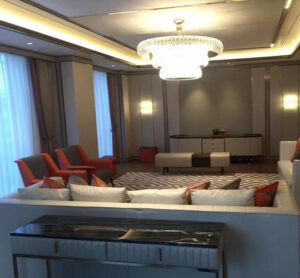
Advanced Tips to Get More from Your China Furniture Sourcing Agent Powerful Strategies for High-Performance Sourcing – Tailored for Elite Buyers, Designers & Operators Your
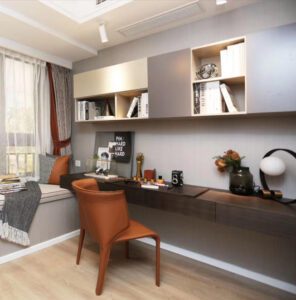
What Wholesale Furniture Suppliers in China Can Offer High-Value Buyers A statement luxury living room — the kind of space that begins with the right

How to Work Better With Your China Furniture Supplier After Ordering A Practical Playbook for High-End Furniture Importers, Interior Designers, FF&E Buyers, Villa Owners, Private