


новости компании

China Furniture Sourcing Agent: Roles for High-End Buyers
China Furniture Sourcing Agent Roles for High-End Buyers What a China Furniture Sourcing Agent Actually Does for High-End Buyers Every finished luxury room sits on


Furniture distributors, showroom operators, and interior designers face unprecedented challenges in today’s market. From inventory management chaos to bridging the gap between digital and physical experiences, these pain points are directly impacting your bottom line. This comprehensive guide reveals the eight critical issues crushing furniture businesses — and provides actionable solutions you can implement immediately to reclaim profitability and strengthen client relationships.

You already know something is wrong. Maybe it shows up as a designer who switched to a competitor because your lead time was unclear. Maybe it’s a slow month where your showroom floor is full of product that isn’t moving while you’re out of the three SKUs everyone is asking for. Maybe it’s a hotel fit-out project that slipped three weeks because a supplier missed a window and nobody flagged it until the client called you.
These aren’t isolated problems. They are symptoms of the same underlying operational dysfunction that is quietly compressing margins across the premium furniture industry right now.
According to research from Staphaus, companies operating across marketing, distribution, and showroom sales in 2025 are simultaneously absorbing the impact of geopolitical supply chain disruption, intensifying competition from agile dropshippers and multi-brand platforms, and a design community that has shifted primary product research entirely online — while physical experience still drives final purchase decisions.
The good news: every one of these pain points is solvable. Not with a single piece of technology or a management consultant’s framework — but with specific, practical systems changes that your team can begin implementing this week.
This guide addresses the eight pain points that appear most consistently across the conversations our team at JL&C Furniture has with distributors, agents, showroom operators, interior designers, and hotel fit-out professionals. Each section names the exact problem, identifies why standard approaches fail, and provides a concrete solution pathway.
Here is a scenario that plays out more often than any distributor wants to admit: a designer calls your showroom requesting 12 units of a specific dining chair for a luxury apartment project. Your sales rep checks the internal spreadsheet, sees 14 units, and promises delivery in three weeks. Two days later, your warehouse team confirms that 8 of those 14 are already allocated to another order that wasn’t updated in the system. You now have to call the designer back and revise the timeline. That designer has three active projects and six waiting. You just gave them a reason to look elsewhere.
This is the cost of disconnected inventory tracking — and in premium furniture distribution, where lead times for custom or imported pieces can stretch 10–20 weeks, a single stock visibility failure can cascade through a client relationship for months.
The core problem is structural. Most furniture distributors and showroom operators run inventory across a fragmented mix of systems: a POS (Point of Sale — the software that processes retail transactions and tracks stock movements) system for walk-in showroom sales, a separate spreadsheet for agent orders, an email thread managing project-based orders, and occasionally a supplier portal that updates on a 24–48 hour delay. None of these systems talk to each other in real time.
According to research from Bizowie, furniture distributors routinely work with 20-week lead times on custom or imported pieces, meaning that stock decisions made today determine availability five months from now. When your demand signal is built on fragmented data, every forecast is guesswork — and the errors compound.
The direct financial consequences are predictable: you overstock slow-moving pieces (tying up working capital at $1,500–$4,000 per unit) while running out of your fastest-moving SKUs (SKU = Stock Keeping Unit, a unique identifier for a specific product variant). A 2025 analysis of mid-tier furniture distributors found stockout rates averaging 8–12% on core category items — meaning roughly 1 in 10 client inquiries for popular pieces results in a “not in stock” response that pushes the buyer toward a competitor.
The solution is not necessarily an expensive ERP (Enterprise Resource Planning — integrated software that manages business processes including inventory, orders, and financials) system. For many distributors and showroom operators, the most immediate improvement comes from unifying existing data sources into a single real-time view, before investing in new software.
The three-layer approach that works at most scales:
Layer 1 — Centralized stock visibility. Whether you use a dedicated furniture retail POS like STORIS or a simpler inventory management tool like Lightspeed, the non-negotiable requirement is that every order — showroom, agent, designer, project — updates the same stock record in real time. No more parallel spreadsheets.
Layer 2 — Forward inventory reservation. For project-based orders (the hotel fit-out, the multi-unit residential build), implement a reservation system that locks stock against a project order as soon as the commitment is confirmed, even before the purchase order is fully executed. This eliminates the “double-promise” scenario described above.
Layer 3 — Supplier lead time integration. Build your supplier’s confirmed production and shipping lead times into your inventory system so that “expected availability” is visible alongside current stock. When a client asks whether a piece can be delivered in 6 weeks, your team should be able to answer from real data, not a guess.
Practical momentum comes from simple, immediate actions — not system overhauls that take six months to implement:
You sell through a showroom at retail. You sell to interior designers at a trade discount. You have agents selling to project clients with negotiated rates. And occasionally, a direct project inquiry comes in and someone on your team quotes a number from memory that doesn’t align with any of the above.
Three different prices for the same sofa, in the same city, being quoted to clients who talk to each other. One of them tells the designer what she paid. The designer compares it to her trade price. Neither number matches what the agent quoted last month.
This is channel conflict — and according to research by Netguru, price inconsistencies across channels affect 56% of businesses operating multi-channel distribution. In the premium furniture sector, where your brand authority depends on a perception of consistent, deserved value, price inconsistency is particularly destructive. It signals to your most sophisticated clients — the interior designers and hospitality procurement leads whose project volumes you most need — that your pricing is arbitrary and therefore negotiable at any level.
The hidden cost isn’t just the individual margin lost on a mis-quoted deal. It’s the compounding brand erosion that follows. Consider: a luxury interior design firm in your city hears from two different sources that your pricing varies by 18–25% depending on who asks. They don’t call you to clarify — they make a mental note that your pricing structure is opaque and your brand doesn’t hold its value. They begin specifying competing brands with cleaner, more transparent pricing architectures.
You never knew you lost them. They never told you why they stopped calling.
The secondary cost is internal: sales teams that operate without clear pricing rules spend significant time on custom quoting, margin approval requests, and post-sale price reconciliation. This overhead is measurable — estimates for B2B furniture businesses suggest that unstructured pricing management consumes 3–5 hours per sales representative per week in avoidable administrative work.
A clean pricing architecture for a multi-channel premium furniture distributor has four clearly defined tiers with published rules:
| Pricing Tier | Channel | Typical Discount from MSRP | Eligibility Criteria |
|---|---|---|---|
| MSRP (Retail) | Showroom walk-in, general public | 0% | Any buyer |
| Trade Pricing | Interior designers, architects | 25–30% | Verified professional with trade account |
| Volume Project | Confirmed projects, 10+ units or $20K+ | 32–38% | Project PO within 30 days |
| Agent/Distributor | Regional agents, wholesale partners | 38–45% | Signed distribution agreement |
The critical discipline: every quotation your team produces must reference this framework explicitly. No verbal quotes. No “I’ll check and call you back” that results in a number typed into a text message. Every client receives a formal quote document that shows their applicable pricing tier, the discount structure that applies to them, and the expiry date of the quoted price.
This transparency actually strengthens client relationships rather than limiting flexibility. When a designer understands why she receives trade pricing and what it represents, she values the structure. When a hotel project client understands that volume discount pricing applies above $20,000, they have a transparent reason to consolidate their specification.
Week 1–2: Audit every active price list your team is currently using. Identify all versions, all discount levels, and all clients receiving off-framework pricing. Document the current state before changing anything.
Week 3–4: Build the four-tier framework in a single master document. Get sign-off from every person with pricing authority. Archive all previous price lists.
Month 2: Migrate existing clients to the new framework with a personal communication that explains the structure and confirms their assigned tier. For any client currently receiving pricing below their applicable tier, grandfather them for 90 days before transitioning.
Month 3+: Every new quotation uses the framework. Monthly spot checks confirm compliance. Track average achieved margin by tier quarterly.
The average B2B lead-to-customer conversion rate across industries sits at 8–12%, with top performers reaching 15–20% on high-intent inbound inquiries, according to Numriq’s 2026 B2B benchmark data. For premium furniture businesses targeting interior designers, hotel developers, and project-based buyers, unqualified leads carry a particularly high cost — because your sales conversations require physical product interaction, custom configuration discussions, and relationship investment that cannot be scaled efficiently across low-probability inquiries.
The typical lead landscape for a showroom or distributor looks like this: 70% of inbound inquiries are retail consumers browsing without a project, 15% are design professionals with a project in early stages, 10% are design professionals with an active specification need, and 5% are project-based buyers (hotel developers, commercial fit-out clients) with confirmed budget and timeline. Your highest-value 5% receives proportionally less of your team’s time because they’re buried under 70% of inquiries that will never convert.
The interior design community specifically has shifted primary brand research online — the Staphaus 2025 industry research confirms that online discovery is now the primary pathway for designers and architects to find new furniture brands. This means that by the time a high-value client walks into your showroom or sends an inquiry, they have already done significant research. They have visited your website, reviewed your product range, potentially compared you to three competitors, and arrived with specific questions.
If your first response to that inquiry is a generic “thank you for your interest” email with a PDF brochure, you have already lost ground to a competitor who responded in under 2 hours with a specific answer to their specific question.
The opportunity cost is concrete: a mid-size furniture showroom operator generating 80 inbound inquiries per month, spending an average of 45 minutes per inquiry across initial response, follow-up, and quote preparation, is investing 60 hours of sales time monthly. If only 8–10 of those inquiries represent genuine high-value B2B prospects, 50+ hours are being applied to low-probability leads.
Effective lead qualification for premium B2B furniture requires five specific data points — each of which changes how your team should respond:
None of these questions require a lengthy form or an uncomfortable interrogation. A brief, professional response to every inquiry that asks two or three of these questions — framed as “so we can get you the most relevant information” — gathers 80% of the qualification data you need within the first exchange.
A practical pre-qualification system for a showroom or distribution business with 40–100 monthly inquiries has four components:
Component 1 — Website inquiry form redesign. Replace the generic “name, email, message” form with a structured form that includes: project type (dropdown), estimated budget range (dropdown with ranges), and desired delivery timeframe. These three fields alone sort your inquiries into response tiers without requiring any manual effort.
Component 2 — Three-tier response protocol. Tier A (hospitality or project, budget $20K+, timeline under 16 weeks) receives a personal phone call within 2 business hours. Tier B (design professional, budget $5K–$20K) receives a personalized email with specific product recommendations within 4 hours. Tier C (general retail inquiry, budget under $5K) receives a templated email with showroom visit invitation within 24 hours.
Component 3 — 72-hour qualification window. Any lead that hasn’t provided the five qualification data points within 72 hours of initial contact is moved to a nurture sequence (monthly newsletter, event invitations) rather than active sales pursuit. This is the boundary that protects your team’s time.
Component 4 — Monthly lead quality review. Track the ratio of Tier A, B, and C leads monthly. If Tier A leads represent less than 8% of your monthly inquiry volume, your acquisition channels are targeting the wrong audience. Adjust accordingly.
Your showroom is exceptional. The lighting is calibrated to show upholstery at its best. The pieces are arranged to demonstrate scale and proportion. The fabric samples tell a material story that no image can replicate. A designer who walks through your space for 20 minutes leaves knowing exactly why your product justifies the price.
Your website shows 8 product images per item, no scale reference, inconsistent lighting across the catalog, and zero indication of whether any piece is actually in stock.
This gap — between the immersive physical experience you’ve built and the flat, information-poor digital experience clients encounter first — is costing you inquiries before they ever reach your door. PwC research indicates that more than 80% of consumers expect a seamless experience between online and physical channels. For premium furniture specifically, the iEnhance 2025 omnichannel analysis found that omnichannel shoppers spend 4% more in-store and 10% more online when the two experiences are integrated.
The calculation flows the other direction too: 59% of mid-size retailers fail to deliver unified omnichannel experiences, according to Priority Software’s 2025 Retail Experience Gap report. In a competitive premium furniture market, that 59% majority represents your competitive opportunity — if you close the gap before they do.
The specific disconnects that matter most to your target audience — interior designers and hospitality procurement professionals — are not aesthetic. They are functional:
Specification data. A designer specifying furniture for a project needs dimensional drawings, material specifications, fire-rating documentation, and lead time data. If your website shows only lifestyle photography and a brief description, she cannot spec your product without calling you first. She may simply spec a competitor whose website provides this data instantly.
Configuration options. Premium furniture is rarely purchased in the standard showroom configuration. Designers and project buyers need to see available fabric options, leg finishes, custom sizing, and COM (Customer’s Own Material — where the client supplies fabric for the manufacturer to use in upholstering) capability. If these options aren’t visible online, buyers assume they don’t exist.
Stock and lead time visibility. A hospitality buyer managing a 14-week fit-out timeline needs to know whether a piece is in stock or requires a 12-week production lead time before she can include it in a specification. If your website shows no stock information, she defaults to a supplier who does.
The bridge between digital and physical doesn’t require a complete website rebuild. It requires adding the specific information layers that your highest-value clients need:
At JL&C Furniture, the B2B product pages are specifically structured to give design professionals and distributors the specification data they need without a phone call — because every unnecessary call is a barrier between a designer and a specification commitment.
Beyond content improvements, several technology solutions are proven to close the digital-to-physical gap for premium furniture businesses:
AR (Augmented Reality) room visualization tools — platforms like Cylindo or Roomvo allow clients to place furniture in a photo of their actual space before visiting the showroom. Showrooms deploying AR visualization consistently report 25–40% higher showroom visit conversion rates, because clients arrive with pre-formed product intent rather than open-ended browsing.
Virtual showroom walkthroughs — a 360° photography or video tour of your showroom, embedded on your website, gives designers who cannot visit in person a genuine spatial reference for your product display. This is particularly relevant for hospitality buyers and international design firms who discover you digitally.
Trade portal access — a password-protected section of your website where verified trade clients can access real-time pricing, current stock levels, lead times, and specification documents transforms your digital presence from a brochure into a functional business tool.
Technology solves only half the problem. The other half is ensuring that every conversation your team has — whether a first phone response to an online inquiry, a showroom floor interaction, or a project follow-up email — delivers the same brand experience and the same quality of product information.
The minimum standard: every team member who responds to client inquiries must be able to answer 10 core questions accurately without consulting anyone else. These include current lead times for your top 20 SKUs, available configuration options for your hero products, trade discount structure and eligibility, and the process for requesting a custom quote. If your team can’t consistently answer these questions, your digital content improvements are undermined at the first human touchpoint.

The furniture supply chain in 2025 is not the same chain it was five years ago. According to Retail Dive’s supply chain analysis, “supply chain chaos has become normalized” in the furniture sector — with ocean freight unpredictability, port congestion, and fluctuating raw material availability creating a baseline of operational uncertainty that shows up as missed delivery commitments on your clients’ projects.
But the problem isn’t only external. Most of the preventable delivery failures that distributors and showroom operators experience trace back to internal communication failures between them and their suppliers: orders placed without confirmed production windows, lead time assumptions based on outdated information, and no proactive notification system when a production delay occurs.
A hotel fit-out designer managing a 200-room property with a handover date has no tolerance for the phone call that comes in week 10 of a 12-week lead time informing her that a supplier’s production line ran over and delivery is now 6 weeks late. That call ends a relationship, not just a project.
Hotel FF&E (Furniture, Fixtures, and Equipment — the procurement category covering all moveable items in a hospitality project) procurement guides consistently recommend beginning the procurement process 6–8 months before the target opening date, with custom furniture requiring 10–14 weeks of manufacturing lead time plus 4–6 weeks for shipping and clearance, according to Radiant Furniture’s procurement guide.
That math leaves almost no margin for supplier delays. A 2-week production slip on a hotel project becomes a 2-week delay in the opening timeline, which in hospitality translates directly into lost room revenue — typically $150–$400 per night per room in the premium segment. A 200-room hotel opening 2 weeks late loses $420,000–$1,120,000 in room revenue. That number puts your supplier communication problem in context.
The same dynamic applies to high-end residential projects, where a designer has committed to a client handover date and your furniture is on the critical path. One missed delivery is a missed handover is a damaged designer relationship.
The foundation of supply chain reliability is not finding perfect suppliers — it’s building communication systems with the suppliers you have that surface problems early enough to solve them.
Key structural changes that reduce surprise:
A formal supplier performance review — even a 30-minute monthly call — asking three specific questions: What is the current confirmed production schedule for our outstanding orders? Are there any material or capacity constraints in the next 60 days that could affect lead times? What is your current vessel booking status for confirmed orders? This 30-minute investment per supplier per month eliminates 60–70% of surprise delay notifications.
Dual-source strategy for your top 5 SKUs. Identify your highest-volume pieces and establish a secondary supplier relationship for each — a manufacturer who can produce to equivalent quality on 15–20 days’ shorter notice than your primary. You don’t need to split regular volume between them. You need to know they exist and have confirmed your product can be produced, before you need them in an emergency.
Contractual lead time guarantees with penalty clauses. For project-based orders above $30,000, your supplier agreement should include a confirmed delivery window with a financial penalty (typically 1–2% of order value per week of delay beyond the confirmed date) for unexcused late delivery. Most quality manufacturers accept these terms for established partners. Suppliers who resist them are giving you important information about their confidence in their own delivery capability.
Blanket order agreements — where you pre-authorize a fixed quantity of your top-moving pieces to be produced on a rolling basis, even without a specific client order — can reduce effective lead times from 10–12 weeks to 2–3 weeks for those SKUs. The inventory carrying cost of blanket orders is partially offset by the margin preservation of never losing a time-sensitive project to a competitor with shorter lead times.
JL&C Furniture’s production infrastructure is built around rolling production schedules for core category pieces, giving partner distributors confirmed availability dates rather than estimated ranges — a structural reliability that becomes a competitive differentiator when your client’s project is on a deadline.
Interior designers and architects are professional specifiers. They do not buy furniture — they specify it, which means they match product capabilities to project requirements and document those specifications in formal packages that drive procurement decisions worth hundreds of thousands of dollars.
When a designer calls your showroom to ask about a specific lounge chair for a hotel lobby and your team cannot immediately provide the dimensional drawing, the weight bearing capacity rating, the fire test certifications (BS EN 1021 Parts 1 & 2 for upholstery — the UK/EU standard for cigarette and match resistance), the lead time on custom fabric options, and the minimum order quantity for a non-standard finish — that designer’s time is being wasted. She will not call back twice.
According to SpecSources, product specification in interior design covers FF&E extensively, and spec writers need: exact dimensions, material descriptions, finish availability, lead times, warranty terms, installation requirements, and sustainability certifications. This is not premium-tier expectation — it is industry standard for any designer working on a commercial or hospitality project.
The most expensive version of the product information problem is the post-delivery discovery: 12 custom dining chairs arrive at a restaurant project and the seat height is 2cm higher than the table clearance allows because the dimensional specification on your quote document referenced an outdated product version. The chairs have to be returned or modified at a cost that typically falls on the supplier-distributor relationship.
Beyond the direct financial cost, these events permanently damage the professional credibility of the person who specified the product. An interior designer whose specification error delays a restaurant opening will not recommend your brand to a colleague. The relationship doesn’t just pause — it ends, with a negative review in a professional network you cannot see or respond to.
A complete product information package for every item in your premium range should include, at minimum:
| Document Type | What It Contains | Who Needs It |
|---|---|---|
| Technical Specification Sheet | Dimensions (HxWxD in mm/inches), weight, materials, finishes available | Designers, architects, specifiers |
| CAD Drawing Package | Plan, elevation, isometric views for floor plan integration | Architects, space planners |
| Fire & Safety Certifications | Test reports for applicable standards (BIFMA, EN 1021, CAL TB 117) | Contract/hospitality specifiers |
| Sustainability Documentation | FSC certification, REACH compliance, recycled content % | ESG-focused clients, hotel brands |
| Lead Time Matrix | Production and delivery times by configuration and destination | Project managers, procurement teams |
| COM/COL Availability | Whether customer’s own material/leather is accepted and requirements | Custom project buyers |
| Warranty Terms | Duration and scope by product type and use category | All commercial buyers |
BIFMA refers to the Business and Institutional Furniture Manufacturers Association — the industry body that sets the performance and safety testing standards for commercial and contract furniture in the North American market.
The best product information in the world creates zero value if it lives in a folder on one person’s laptop. Distribution of product data is as important as its creation.
The practical infrastructure: a shared digital asset library — cloud-based, searchable by product name, category, and certification type — that every team member can access from a phone during a client meeting, and from which clients and designers can download directly from your website’s trade portal. Tools like Google Drive, Dropbox Business, or dedicated PIM (Product Information Management) platforms like Akeneo all provide this capability. The investment is primarily in the organization and population of the library, not the platform itself.

A mid-size hotel fit-out project involves, on average: the hotel developer, the interior designer, the procurement manager, the general contractor, the site supervisor, the furniture distributor’s project manager, the manufacturer’s export coordinator, the freight forwarder, and the installation crew. That’s nine parties, each with a legitimate need for project status updates, each using their preferred communication channel — phone, email, WhatsApp, WeChat, a project management platform, or some combination of all five.
Every one of those nine parties has a different understanding of what was agreed, when it was agreed, and what the current status is. Someone tells the hotel developer that delivery is confirmed for week 14. The freight forwarder is working on week 15. The interior designer has booked the installation crew for week 14. Nobody told the installation crew that the delivery schedule slipped. The crew shows up on site to an empty room and charges a day-rate for the wasted visit.
This is not a theoretical scenario. It happens on projects across the premium furniture industry every week.
Interior designers working on complex projects — particularly in hospitality — are simultaneously managing aesthetic decision-making, client relationship management, specification documentation, procurement coordination, contractor supervision, and timeline management. Communication overhead is their primary time drain and their primary source of professional risk.
A designer who has to chase your team for a delivery update on a Friday afternoon, then forward that update to her client, who forwards it to the site manager, who updates the installation schedule — has just done four communication steps that should have been one automated notification. That overhead, multiplied across 8–12 active projects, is consuming hours she could be using to specify and purchase furniture for the next project in her pipeline.
Designers who find suppliers that proactively manage project communication — sending status updates before being asked, flagging potential delays 3–4 weeks before they materialize, and maintaining a single shared project record — consistently increase their order frequency with those suppliers. The communication quality is as commercially important as the product quality.
The infrastructure that works for multi-stakeholder project communication is not a new communication channel — it’s a single source of truth that all channels feed into.
For projects above $30,000 in value, implement a dedicated project communication protocol:
Step 1 — Project kick-off document. A one-page document shared with all stakeholders at project commencement that confirms: confirmed product list and quantities, production lead time (start date and confirmed completion date), shipping schedule (vessel booking confirmation), expected delivery window, delivery address and access requirements, and primary contact names for each party.
Step 2 — Weekly status update. A standardized weekly update email (3–5 bullet points, no narrative) sent by your project manager every Monday morning to all stakeholders. Status: Production complete / In transit / Customs clearance / Delivery confirmed. No ambiguity, no interpretation required.
Step 3 — Exception alerts. Any deviation from the confirmed schedule — production delay, vessel change, customs hold — triggers an immediate alert to all stakeholders with a revised timeline and explanation. The alert arrives before anyone needs to ask.
For teams managing 5+ concurrent projects, a dedicated project management tool transforms communication from reactive to proactive. Asana, Trello, or Monday.com all provide the capability to manage project timelines, assign communication tasks, and share status visibility with external clients — at price points accessible to showroom operators and distributors of any size.
For enterprise-scale hotel fit-out operations, more robust platforms like Procore (construction project management) integrate directly with procurement workflows and allow all stakeholders to access a single project record rather than maintaining parallel email threads.
The choice of tool matters less than the discipline of use. A consistently updated shared spreadsheet outperforms an abandoned project management platform every time.
Most furniture distributors and showroom operators track the metrics that are easy to measure, not the metrics that matter. Revenue is easy to measure. Gross margin by product category is harder. Net contribution margin by distribution channel is hardest — and most revealing.
If your business is generating $2.4 million in annual revenue with a reported 35% gross margin, you might feel reasonably confident in your performance. But if your agent channel (which accounts for 40% of revenue) is generating only 22% net contribution margin after commissions, travel, and sample costs, while your direct designer program (accounting for 20% of revenue) is generating 38% net contribution margin — your highest-margin channel is half the size of your lowest-margin channel. You’re under-investing in the most profitable part of your business because your headline metrics don’t surface that insight.
Based on analysis of KPI frameworks from STORIS and the Home Furnishings Association, the essential tracking metrics for premium furniture businesses break down into four categories:
Sales Performance Metrics:
| KPI | Formula | Target Benchmark (Premium Tier) |
|---|---|---|
| Sales Conversion Rate | (Number of sales ÷ Number of qualified inquiries) × 100 | 18–25% |
| Average Order Value (AOV) | Total Revenue ÷ Number of Orders | >$4,500 per transaction |
| Lead-to-Proposal Conversion | Proposals sent ÷ Total qualified leads | >60% |
| Project Win Rate | Projects won ÷ Projects quoted | 25–35% |
Inventory Performance Metrics:
| KPI | Formula | Target Benchmark |
|---|---|---|
| GMROI (Gross Margin Return on Inventory Investment) | Gross Profit ÷ Average Inventory Cost | >2.5 |
| Stock Turn Rate | Annual COGS ÷ Average Inventory Value | 3–5x per year |
| Stockout Rate | Stockout incidents ÷ Total order inquiries | <5% |
| Dead Stock % | Value of unsold stock >180 days ÷ Total inventory value | <8% |
GMROI (Gross Margin Return on Inventory Investment) measures how much gross profit you generate for every dollar invested in stock. A GMROI of 2.5 means every $1 of inventory generates $2.50 in gross profit — the minimum healthy threshold for premium furniture distribution.
Supplier Performance Metrics:
| KPI | What It Measures | Target |
|---|---|---|
| On-Time Delivery Rate | % of orders delivered within confirmed window | >92% |
| Lead Time Accuracy | % of quoted lead times matched by actual delivery | >88% |
| Quality Defect Rate | % of deliveries with specification or quality issues | <2% |
Client Relationship Metrics:
| KPI | What It Measures | Target |
|---|---|---|
| Repeat Order Rate | % of clients placing a second order within 12 months | >40% |
| Designer Program Retention | % of trade clients active in current year vs. prior year | >75% |
| Net Promoter Score (NPS) | Likelihood of client referral (0–10 scale) | >45 |
NPS — Net Promoter Score — is the industry-standard measure of client loyalty, calculated by subtracting the percentage of detractors (scoring 0–6) from promoters (scoring 9–10). A score above 45 is considered strong for B2B premium goods.
A functional performance dashboard for a furniture distributor or showroom operator doesn’t require enterprise software. The minimum viable version — a shared Google Sheet updated weekly by two designated team members — covers 80% of the insight value of a $50,000 BI platform:
Dashboard structure:
Weekly Snapshot (updated every Monday)
├── Sales: Revenue MTD | AOV | Conversion Rate | Open Quotes
├── Inventory: Current Stock Value | Stockouts (week) | GMROI
├── Suppliers: Orders In-Flight | Confirmed Deliveries (4 weeks) | Delays Flagged
├── Clients: New Designer Registrations | Repeat Order Rate | Projects Active
└── Pipeline: Projects Quoted (total value) | Expected Close (30/60/90 days)
For businesses ready to invest in dedicated tooling, NetSuite’s retail analytics module and STORIS both offer furniture-specific dashboard functionality that integrates inventory, sales, and financial data in a single interface.
Data without action is just overhead. The discipline that converts your dashboard into business improvement is a monthly 90-minute business review — attended by every person with commercial responsibility — structured around four questions:
The answers to these four questions, acted upon consistently every month, will generate more measurable business improvement than any single technology or operational change.
Q1: How can I manage inventory across multiple showroom locations without overstocking or running out of popular items?
The solution starts with a single real-time inventory record that every location updates simultaneously — not separate systems reconciled weekly. Implement a forward reservation protocol: as soon as a project order is confirmed (even before the PO is signed), those units are locked against that project in the inventory system. For fast-moving SKUs, maintain a minimum stock threshold (the level that triggers a replenishment order, typically 2–3 weeks of average demand) and make replenishment automatic when the threshold is hit. Review GMROI by SKU quarterly and reallocate floor space from underperforming pieces to your highest-return categories. Most distributors find that 20–30% of their SKUs generate 70–80% of their gross margin — those are the pieces worth maintaining deep stock on.
Q2: What’s the best way to maintain consistent pricing when selling through different channels — direct to designers, through agents, and via showroom foot traffic?
Build a four-tier pricing architecture (MSRP, trade, volume project, wholesale/agent) with documented eligibility criteria for each tier and a strict no-exceptions policy for off-framework quoting. Require all quotations to be issued from a template that references the applicable tier explicitly. This transparency removes the ambiguity that creates channel conflict — each party understands their pricing structure and why it exists. Review achieved margins by channel quarterly to confirm the architecture is holding.
Q3: How do I qualify B2B leads to focus on high-value interior design projects instead of wasting time on low-margin inquiries?
Redesign your inquiry capture process to collect five data points upfront: project type, estimated budget range, delivery timeline, decision authority level, and current supplier situation. Route Tier A leads (hospitality or project, $20K+ budget, sub-16-week timeline) to immediate personal response within 2 hours. Route all other inquiries through a structured response sequence calibrated to their tier. Set a 72-hour qualification window — any lead that doesn’t provide qualification data within 72 hours moves to a nurture sequence. This single change saves most showroom sales teams 15+ hours per week.
Q4: What technology should I invest in to bridge my online catalog with my physical showroom experience?
Prioritize in this order: First, add specification data to your product pages — dimensional drawings, lead times, configuration options, fire certifications. This costs almost nothing and delivers immediate value to professional specifiers. Second, implement a trade portal (password-protected pricing, stock visibility, document downloads) for verified design professionals. Third, when budget allows, add AR room visualization — tools like Cylindo or Roomvo consistently improve showroom visit conversion by 25–40%. Avoid investing in complex website rebuilds before the foundational content improvements are made.
Q5: How can I improve supplier reliability when I’m working on tight hotel fit-out timelines?
Three changes produce the most immediate improvement: implement monthly supplier calls with three specific agenda items (production schedule, capacity constraints, vessel booking status); add penalty clauses to project-based orders above $30,000 for late delivery beyond confirmed windows; and establish a secondary production source for your top 5 SKUs that can deliver on shorter notice. Hotel projects specifically benefit from blanket order agreements for standard room furniture — pre-authorized production runs that eliminate the lead time for your highest-volume pieces.
Q6: What product information do interior designers and architects actually need to make purchasing decisions?
Seven document types are non-negotiable for commercial and hospitality specification: technical specification sheets with exact dimensions in both metric and imperial, CAD drawing packages for floor plan integration, fire and safety test certifications (BIFMA in North America, EN 1021 in Europe), sustainability documentation (FSC, REACH compliance), a lead time matrix by configuration and destination, COM/COL availability details, and warranty terms by use category. Designers who cannot access these documents without calling your team will specify a competitor who provides them instantly.
Q7: How do I keep all stakeholders — clients, designers, contractors, and my team — informed throughout a complex project?
Implement a three-step project communication protocol for all orders above $30,000: a project kick-off document shared with all parties at order confirmation (confirming the product list, production dates, shipping schedule, and primary contacts); weekly status updates every Monday (three to five bullet points, no narrative); and immediate exception alerts whenever any element of the confirmed schedule changes. This protocol, executed consistently, eliminates 80% of the reactive status-chasing that consumes your project team’s time and frustrates design clients.
Q8: What KPIs should I be tracking to understand my business performance as a furniture distributor?
The metrics that actually drive decisions are: GMROI (target >2.5) to assess inventory efficiency, on-time delivery rate (target >92%) to measure supplier reliability, sales conversion rate (target 18–25% for qualified leads), repeat order rate (target >40%) to assess client loyalty, and net contribution margin by channel (not just gross margin) to understand which distribution channels are genuinely profitable. Track these weekly and review them formally every month with a structured agenda focused on causes of movement rather than just acknowledging the numbers.
Q9: How do I compete with larger retailers when I have limited resources as a showroom operator?
Your competitive advantage is precision — in product curation, client relationships, and specification support. A large retailer cannot give a hotel fit-out designer a dedicated project manager who knows her project intimately and calls her before she needs to ask. You can. Focus on the three capabilities that large retailers systematically underdeliver: rapid, expert response to complex product inquiries; deep product knowledge that supports professional specification; and reliable project management from order to installation. Win on these dimensions consistently and scale does not matter.
Q10: What’s the most cost-effective way to implement these solutions without a massive technology overhaul?
Start with process changes that cost nothing: a unified stock record policy, a formal pricing framework, a lead qualification protocol, a supplier communication rhythm. These generate 60–70% of the operational improvement available to most furniture businesses at zero technology cost. Once process changes are embedded and working, identify the single highest-impact technology investment — typically a trade portal for your designer network or a cloud-based shared inventory system — and implement it as a defined 60-day project. Avoid attempting to solve all eight pain points simultaneously.
Q11: How can I use data to identify which product categories are most profitable for my business model?
Calculate GMROI (gross profit ÷ average inventory cost) separately for each product category you carry. Sort categories by GMROI and identify the top quartile — these are the categories generating the highest return on your inventory investment. Then audit your showroom floor space and marketing budget allocations: are they proportional to GMROI performance, or are you giving premium floor space to lower-return categories out of historical habit? Reallocating 20–30% of floor space and marketing effort toward your highest-GMROI categories typically increases overall profitability without any increase in total inventory investment.
Q12: What systems help interior designers and agents work more efficiently with my showroom?
Three systems generate the most impact for professional client efficiency: a trade portal with real-time pricing, stock visibility, and document downloads; a project registration system where designers can formally register a project to protect their commission on a specific end-client (preventing parallel quoting conflicts); and a dedicated designer contact — a single person on your team who manages all trade relationships and knows each designer’s active project pipeline. Designers who have a trusted contact at your showroom order 3–4x more frequently than those navigating a general sales team. The relational infrastructure is the system.
The competitive pressure on premium furniture distribution is not easing. Multi-brand online platforms are capturing the top-of-funnel discovery moment that showrooms used to own. Agile dropshippers are entering markets with lower overhead and competitive pricing. Design professionals are consolidating their supplier relationships around partners who make their professional lives easier — and they are abandoning suppliers who create friction, regardless of product quality.
The eight pain points in this guide are not academic concerns. They are the specific operational failures that are deciding which furniture businesses grow and which ones decline in the current environment. Businesses that address them build durable competitive advantages — in client loyalty, margin quality, and supplier reliability — that compound over time. Businesses that ignore them find themselves in an accelerating race to the bottom on price and service that no product quality advantage can offset indefinitely.
The encouraging reality is that most of your competitors are experiencing the same pain points and not addressing them systematically. Inventory chaos, pricing inconsistency, supplier communication failures — these are universal challenges in the furniture distribution sector. The distributor or showroom operator who builds clean systems around these eight areas doesn’t need to be dramatically better than the competition. They need to be reliably better — consistently delivering what they promise, responding faster, and making the professional lives of their design and hospitality clients measurably easier.
That reliability compounds into market share. It becomes word-of-mouth in design communities. It becomes exclusivity agreements with quality manufacturers who want partners they can trust. It becomes the kind of business that a client like a hotel developer brings back to for the next project — and the one after that.
JL&C Furniture has built its B2B infrastructure specifically around these operational realities — from production scheduling that gives partners confirmed delivery dates, to trade program structures that protect designer margins, to specification documentation that enables professional specification without unnecessary back-and-forth. The framework in this guide reflects the same operational principles we apply to our own partner relationships. Explore the JL&C Furniture B2B trade program for more on how we support distributors and design professionals operationally.
Momentum matters more than perfection at the start. A 30-day plan focused on quick wins across the eight pain points:
Week 1 — Diagnose before you act. Measure your current stock discrepancy rate, calculate GMROI for your top 5 product categories, audit your current price lists for inconsistencies, and document your current lead qualification process. You cannot improve what you haven’t measured.
Week 2 — Fix the immediate bleeding. Designate a single stock record owner and implement daily updates. Archive all non-framework price lists and brief your team on the new pricing structure. Redesign your inquiry form to capture the five qualification data points.
Week 3 — Strengthen supplier and client systems. Schedule your first monthly supplier performance call with your top two manufacturers. Build the project kick-off document template. Create the shared specification document library starting with your top 10 SKUs.
Week 4 — Build the measurement infrastructure. Create your weekly performance dashboard. Identify your designer program’s top 10 relationships and ensure each one has a named contact on your team. Schedule your first monthly business review for the end of next month.
Thirty days from now, none of these eight pain points will be fully solved. But each one will be measurably better — and the compounding improvement that follows consistent monthly attention to each metric is what builds a furniture business capable of growing profitably through any market condition.


A practical walkthrough of the operational systems that separate high-growth furniture distribution businesses from those stuck in the cycle of reactive firefighting.
| Metric | Category | Industry Average | Target Benchmark |
|---|---|---|---|
| Sales Conversion Rate | Sales | 10–14% | 18–25% |
| Average Order Value | Sales | $2,800 | >$4,500 |
| GMROI | Inventory | 1.8–2.2 | >2.5 |
| On-Time Delivery Rate | Supplier | 82–87% | >92% |
| Repeat Order Rate | Client | 28–35% | >40% |
| Designer Program Retention | Client | 60–68% | >75% |
| Stockout Rate | Inventory | 8–12% | <5% |
| Lead-to-Proposal Rate | Sales | 35–45% | >60% |
| Quality Defect Rate | Supplier | 3–5% | <2% |
| Net Promoter Score | Client | 28–35 | >45 |
Source: Home Furnishings Association KPI benchmarks, STORIS furniture retail metrics analysis, B2B conversion rate research — compiled by JL&C Furniture research team
Margin Loss by Source (Typical Mid-Tier Distributor)

Inventory Obsolescence & Dead Stock     ████████████  22%
Pricing Inconsistency & Discounting     ████████████████  28%
Supply Chain Delays (Rush/Expedite)     ████████  14%
Unqualified Lead Time (Sales Overhead)  ██████  11%
Poor Communication (Rework/Returns)     ████████  15%
Under-tracked Channel Costs             █████  10%

Total recoverable margin (estimated): 18–24 percentage points
Source: Distributor operational analysis, GoAvanto commercial furniture research
Ready to eliminate these pain points and reclaim profitability?
The systems described in this guide are the same operational principles built into JL&C Furniture’s B2B partner program — designed specifically for distributors, showroom operators, and interior design professionals who need a manufacturer partner that operates with the same precision they demand of themselves.
📋 Request our Furniture Business Operations Optimization Checklist — the exact audit framework, performance benchmarks, and 30-day implementation roadmap used by our distribution partners to identify and eliminate operational margin loss.
🌐 Explore JL&C Furniture’s full B2B collection — specification-ready product data, confirmed lead times, and trade pricing structures built for professionals who need reliability, not guesswork.
Sources and further reading: Home Furnishings Association — KPIs for Furniture Retailers | STORIS — Furniture Retail Metrics | Staphaus — Furniture Industry Challenges 2025 | Bizowie — ERP for Furniture Distributors | SpecSources — FF&E Specification Guide | Priority Software — Retail Experience Gap 2025 | JL&C Furniture B2B Programs

China Furniture Sourcing Agent Roles for High-End Buyers What a China Furniture Sourcing Agent Actually Does for High-End Buyers Every finished luxury room sits on
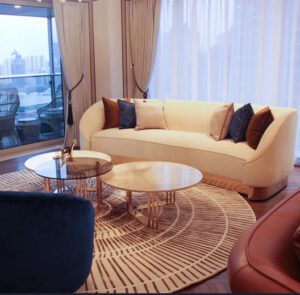
How to Vet a China Furniture Sourcing Agent Before Signing A single curved sofa like this goes through dozens of approvals, including frame, foam, fabric

China Furniture Sourcing Agent vs Direct Factory Buying: A Strategic Guide for High-Value Buyers When one project includes 400 hotel rooms, a 20-seat marble dining
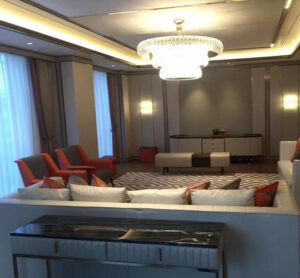
Advanced Tips to Get More from Your China Furniture Sourcing Agent Powerful Strategies for High-Performance Sourcing – Tailored for Elite Buyers, Designers & Operators Your
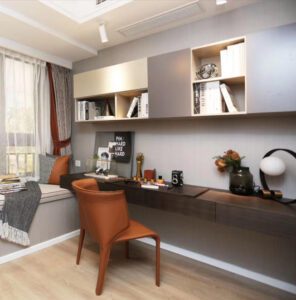
What Wholesale Furniture Suppliers in China Can Offer High-Value Buyers A statement luxury living room — the kind of space that begins with the right

How to Work Better With Your China Furniture Supplier After Ordering A Practical Playbook for High-End Furniture Importers, Interior Designers, FF&E Buyers, Villa Owners, Private