




новости компании

China Furniture Sourcing Agent: Roles for High-End Buyers
China Furniture Sourcing Agent Roles for High-End Buyers What a China Furniture Sourcing Agent Actually Does for High-End Buyers Every finished luxury room sits on

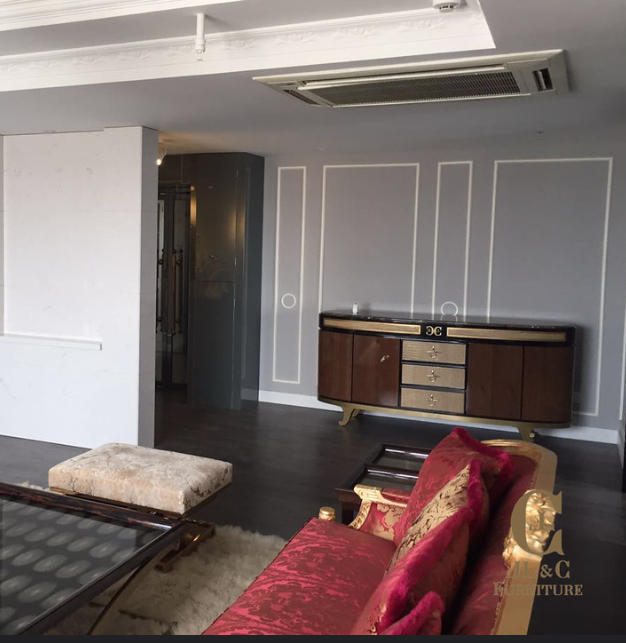
Partnering with unreliable furniture suppliers can derail projects, damage client relationships, and drain your budget. This guide helps interior designers, architects, and showroom managers identify trustworthy high-end dealers before committing to partnerships.
 A refined interior is only as strong as the dealer behind it. Understanding how to evaluate high-end furniture suppliers is the difference between a project that elevates your reputation — and one that quietly destroys it.
In high-end furniture, price is rarely the decisive variable. Lead time rarely is, either. What separates professionals who build thriving design businesses from those who constantly firefight is one thing: the quality of their dealer relationships.
Consider a scenario that plays out more often than most professionals admit. A hospitality designer in Dubai specifies a custom lounge collection for a 140-room boutique hotel. The dealer quoted the best price on the shortlist. Six weeks before the hotel’s soft opening, 40% of the chairs arrive in the wrong finish — and the dealer’s account manager stops responding after the third email. The designer absorbs the cost of re-upholstery, negotiates a delayed handover with the hotel client, and loses the referral they were counting on.
That scenario is not a freak event. According to research published in B2B procurement literature, supply chain disruptions — including quality failures and late deliveries — cause a 3–5% increase in operational expenses for the buyer. For a $400,000 hotel furniture FF&E budget, that’s up to $20,000 in unplanned costs that come directly off your margin.
What makes the luxury furniture sector particularly unforgiving is the visibility of every failure. A residential client who receives a scratched sideboard tells their architect. That architect tells their trade network. In a sector where reputation is compounded over years and destroyed in weeks, the ability to choose the right dealer before any contract is signed is not a procurement skill — it is a core business competency.
This guide is written for interior designers, architects, hotel fit-out specialists, showroom managers, and furniture distributors who are done learning from expensive mistakes. You will find practical red flags to watch for, quality indicators to measure, a structured vetting process, industry-specific strategies, real-world case studies, and a Dealer Evaluation Scorecard you can implement immediately.
A dealer’s financial health is a direct proxy for their ability to fulfill your orders consistently. A factory under financial stress will prioritize cash flow over quality, delay production when suppliers put them on credit hold, and substitute materials without disclosure to protect margins.
The warning signs are rarely obvious at first. You may notice payment terms that seem unusually generous — a dealer offering Net 90 to every client, for instance, may be subsidizing their own cash flow problems by delaying supplier payments. Conversely, a dealer who demands 70–100% upfront payment from a new buyer without offering any production milestone transparency is protecting themselves, not you.
Ask the dealer directly for two or three trade references from businesses of a similar size and order volume to yours. The key is not just whether references exist — it’s whether those references can speak to consistent performance over at least 18–24 months. A dealer who has only been trading under their current entity for 14 months may be a restructured version of a previously failed operation.
For dealers managing orders above $50,000 in value, it is reasonable to request a credit check through a service such as Dun & Bradstreet or to ask for recent bank statements showing operational liquidity. This is standard practice in contract furniture procurement and a confident, established dealer will not object.
Ask the dealer how they handle production when a client misses a milestone payment. Ask what their policy is when their own timber or fabric suppliers increase prices mid-production. Ask whether they carry trade credit insurance. These questions do not need to be confrontational — frame them as due diligence, which is exactly what they are.
A dealer who answers these questions with specifics and without defensiveness has built systems to manage financial risk. A dealer who deflects with vague reassurances has not.
Quality inconsistency in furniture manufacturing is almost always a process failure, not an isolated accident. A dealer who ships one perfect sample and then delivers a production run at a lower standard has either changed materials, changed sub-contractors, or allowed quality control checkpoints to be bypassed under production pressure.
The furniture industry has a well-documented pattern of “sample-to-production drift.” Industry professionals who source from Chinese manufacturers, for instance, have reported cases where timber grades specified in the sample were substituted in full production without disclosure. This is not exclusively a China-based problem — it happens across manufacturing geographies when the buyer has not established clear verification protocols.
A factory visit reveals more in two hours than six months of email correspondence. The specific indicators to observe are: the cleanliness and organization of the production floor (a disorganized floor signals inconsistent process management), whether material storage is labeled and segregated by grade, whether there is a dedicated quality control station with written checklists rather than informal visual checks, and whether the finishing area is separated from the sanding and cutting areas (cross-contamination is a common cause of surface defects in high-end lacquerwork).
Ask to see the raw material receiving log. A manufacturer who checks incoming timber moisture content, grades leather hides against a reference standard, and maintains batch records has built the infrastructure for consistent output.
Request three production samples from three different production runs — not three samples from the same run. Evaluate them side by side for finish consistency, hardware alignment, joinery quality, and upholstery tension. If the dealer cannot supply samples from previous runs or claims they do not retain them, that is itself informative.
In high-end furniture, the communication standard is not a courtesy — it is a delivery mechanism. Every project involves multiple decision points: fabric approval, finish sign-off, production commencement, quality hold, dispatch notification. Each of these requires a timely, accurate response. A dealer who takes three days to acknowledge an email during the sales stage will take three days — or more — to respond when a production issue needs to be escalated during a tight hotel handover window.
Before placing any significant order, run a deliberate communication test. Send a detailed technical inquiry with three or four specific questions about production standards, lead time scenarios, and customization options. Measure not just the response time but the quality of the response. Did they answer every question? Did they demonstrate knowledge of their own production process? Did they volunteer relevant information you had not asked for?
A dealer who responds within four business hours with comprehensive answers and proactively raises a consideration you had not thought of is demonstrating the communication standard that will protect your project.
Be alert to dealers who change key details between conversations — a lead time that was “10 to 12 weeks” in the initial call becoming “12 to 16 weeks” in the written quote. Watch for responses that use extensive qualifications and conditionals without committing to specifics. Notice whether account managers use email addresses from a shared generic mailbox (info@, sales@) without a named individual taking ownership of your account. Accountability requires named individuals.
Material substitution is one of the most financially damaging issues in high-end furniture procurement precisely because it is difficult to detect after delivery. A dealer who substitutes FSC-certified hardwood with uncertified timber, or genuine top-grain leather with bonded leather (bonded leather = a material made from leather scraps bonded with polyurethane, which mimics the appearance of genuine leather but degrades significantly faster), has delivered a product that will not meet your client’s longevity expectations — regardless of how good it looks on installation day.
For any material that is central to the specification — hardwood species, leather grade, lacquer VOC content, fabric performance rating — require batch-level certification documentation rather than just a general product specification sheet. For timber, FSC chain-of-custody certificates (FSC = Forest Stewardship Council, the globally recognized standard for responsibly sourced wood products) include a chain-of-custody number that can be verified at info.fsc.org. For leather, request tannery origin documentation and a cross-section sample showing consistent grain depth.
Build a clause into your purchase orders that requires written notification at least 14 business days before any material substitution, with your written approval required before the substitution proceeds. This is standard in contract furniture procurement and protects both parties. Include a pre-shipment inspection right, conducted either by your team or by an independent third party such as SGS or QIMA.
Late delivery in furniture is rarely a one-time event. Research from industry logistics data shows that manufacturers with on-time delivery rates below 90% lose an average of 15% of their customer base annually — and those customers do not leave quietly. They leave with a project failure story that travels through the professional network.
For hotel fit-out projects specifically, a furniture delay is not a minor inconvenience. A 200-room hotel whose soft opening is delayed by four weeks faces an average revenue loss of $800,000 to $1.2 million in pre-sold bookings, and the interior designer or procurement manager who specified the delayed furniture becomes associated with that loss.
Ask directly for the dealer’s on-time delivery rate for the previous 12 months. Request two or three references from completed projects and ask each reference specifically: “Did every delivery arrive within the originally quoted lead time? If not, how did the dealer communicate the delay, and how did they resolve it?” The quality of a delay response reveals more about a dealer’s character than their track record of on-time deliveries alone.
Lead time is the dealer’s stated production and shipping window. Realistic timeline includes production lead time, pre-shipment inspection time, port handling, ocean freight, customs clearance, and last-mile delivery. For a Shanghai-based manufacturer shipping to a European destination, a stated production lead time of 10 weeks routinely becomes 16 to 18 weeks end-to-end. A dealer who quotes production lead time only, without accounting for the full logistics chain, is either poorly organized or deliberately understating the timeline to win the order.
 A five-star hotel lobby does not forgive material substitutions or late deliveries. Every piece of furniture in this environment was specified, vetted, and verified before a single production order was placed.
Certifications in the furniture industry exist on a spectrum from genuinely rigorous to essentially decorative. The task is knowing which certifications correspond to meaningful quality controls and which are issued by bodies with no active audit program.
The following certifications carry substantive verification requirements and are worth requesting for relevant project types:
| Certification | What It Covers | Verification Method |
|---|---|---|
| BIFMA e3 / LEVEL® | Sustainability: environmental, health & social impacts for commercial furniture | Verify at bifma.org/page/level |
| FSC Chain-of-Custody | Responsibly sourced timber and wood products | Verify at info.fsc.org |
| ISO 9001:2015 | Quality management systems across production | Verify via issuing certification body (e.g., Bureau Veritas, TÜV) |
| CARB Phase II | Formaldehyde emissions in wood composite products (US market) | Request lab test reports from CARB-accredited labs |
| EN 16139 | Durability and strength standards for non-domestic seating (EU market) | Request test reports from accredited European lab |
| GREENGUARD Gold | Indoor air quality — low VOC emissions | Verify at ul.com/resources/greenguard-certification |
For hospitality projects in markets like the UAE, UK, or Australia, fire rating compliance (measured by standards such as BS 5852, CAL 117, or AS 1530) is non-negotiable and must be documented with independent laboratory test reports, not dealer-issued declarations.
Never accept a certificate image or PDF as final verification. Every legitimate certification body maintains a public registry. Cross-check the certificate number directly through the issuing body’s website. For ISO 9001, the certification body’s own website will list currently certified companies. For FSC, the public database allows anyone to search by certificate code. A dealer who provides a certificate that cannot be verified through the issuing body’s own records has submitted a fraudulent document.
A dealer’s showroom is the most honest physical expression of their standards. Not because the furniture is necessarily representative of their average production quality — showrooms typically display their best work — but because the way a showroom is maintained reveals organizational discipline.
A showroom where fabrics are consistently pressed and tagged with material references, where hardware is aligned and surfaces are free of handling marks, where the lighting is designed to show pieces accurately rather than flatteringly, signals a team that cares about detail as an operational discipline. A showroom where some pieces are dusty, where sample books are missing pages, or where the account manager cannot immediately identify the specification of a displayed piece, tells you what the production floor probably looks like on a Tuesday afternoon.
Request a sample of a specific piece — not the showroom display model, but a production-run sample. This distinction matters. Compare it directly against the showroom display model in the same light. Note any differences in finish quality, hardware alignment, upholstery tightness, or joinery precision. These differences, if present, represent the gap between what the dealer promises and what they actually deliver.
A high-end furniture dealer who cannot provide comprehensive product documentation is one who either does not control their own production process or does not want you to know the specifics of their materials.
A complete product specification sheet for a contract furniture piece should include: exact dimensions with tolerances, timber species and grade, finish code and application method, upholstery material with performance rating, frame construction method, hardware specification with country of origin, weight capacity rating where applicable, and relevant compliance certifications with certificate numbers. For hospitality clients, fire rating documentation should be standard, not optional.
Dealers like JL&C Furniture, who operate as Shanghai-based manufacturers with 20 years of production experience across residential, hotel, and commercial categories, maintain factory-level QC documentation from material sourcing through to pre-shipment inspection — the kind of audit trail that makes downstream verification possible rather than aspirational.
The dealers who survive in the high-end sector for decades are not those who manage client expectations by withholding information. They are those who proactively communicate production milestones, flag potential delays before they become confirmed delays, and share quality hold notifications before the client has to ask. This over-communication habit is the single strongest predictor of a long-term dealer relationship that actually improves over time.
In residential and hospitality design, the need for customization is not exceptional — it is the norm. A high-end dealer who can only supply catalog items is not a full-service partner; they are a catalog retailer. The measure of a dealer’s genuine customization capability is not what they claim in a sales presentation but how they perform when your first small custom request arrives.
Before committing to a major project with a new dealer, give them a small customization challenge: a specific finish that is not in their standard range, a dimension that requires engineering adjustment, or a material substitution that needs sourcing. How they handle this test reveals their actual capability. A dealer with genuine custom production infrastructure will provide a sample within an agreed timeframe. A dealer without it will quote an unusually long lead time, add a high tooling surcharge, or quietly deliver the nearest standard item and hope you do not measure it.
Ask to see photographs of the most complex recent custom project they completed. Ask about the process: who managed the design changes, how were approvals documented, what happened when the client changed the specification mid-production? The depth and specificity of the answer — whether the account manager can speak to actual production details or only generalities — tells you how directly connected they are to the manufacturing process.
References are only valuable if they are structured to surface real information rather than rehearsed endorsements. A dealer who provides three glowing references from their three most loyal long-term clients has selected advocates, not evidence.
Ask for references from projects completed in the last 12 months. Ask specifically for one reference from a project that encountered a significant challenge — a production delay, a quality issue, a change-order dispute. The reference that describes how the dealer managed a problem is more informative than the reference that describes a perfect execution. Every business encounters problems; the distinguishing factor is how they resolve them.
The questions that actually reveal useful information are not “Would you recommend this dealer?” The questions are: “Did every delivery arrive within the originally quoted lead time?” “Were there any material substitutions you were not informed about in advance?” “How did the dealer communicate when something went wrong?” “Would you use them again for a project with a non-negotiable deadline?” The answers to these four questions provide a more accurate picture than any formal reference letter.
A structured scorecard removes subjectivity from the vetting process and enables consistent comparison across multiple dealers. Without a scorecard, evaluations tend to be driven by whoever gave the most compelling sales presentation — which is exactly the wrong decision criterion.
The criteria that matter most vary by project type. For a hotel fit-out project, delivery reliability and compliance documentation outweigh design range. For a luxury residential project, customization depth and design originality carry more weight. For a showroom buying decision, design exclusivity and sample consistency are central. Build your scorecard around the three to five criteria that will determine success or failure for your specific context.
Assign percentage weights to each criterion so that the scorecard produces a weighted total score rather than a simple average. The following table provides a starting framework that can be adjusted to your priorities:
| Evaluation Criterion | Weight (Hotel Fit-Out) | Weight (Residential) | Weight (Showroom) |
|---|---|---|---|
| Delivery reliability (on-time record) | 25% | 15% | 15% |
| Quality consistency (production vs. sample) | 20% | 25% | 25% |
| Compliance & certification documentation | 20% | 10% | 10% |
| Communication responsiveness | 15% | 15% | 15% |
| Customization capability | 10% | 25% | 20% |
| Financial stability indicators | 10% | 10% | 15% |
| Total | 100% | 100% | 100% |
Score each criterion from 1 to 5, multiply by the weight, and sum the total. Any dealer scoring below 3.5 on the weighted average should trigger a second-level investigation before any commitment is made.
A site visit is an investment — in travel time, in preparation, and in the professional relationship. It should be structured to maximize the information gathered, not treated as a courtesy call.
The production floor reveals more than the showroom. Specifically: the ratio of skilled craftspeople to machinery (high-end furniture requires significant hand-finishing that cannot be fully automated), the storage conditions for upholstery materials (fabric stored in humid, uncontrolled conditions will have color and texture consistency problems), the presence and condition of quality control documentation at each production station, and the existence of a dedicated finishing room with controlled temperature and humidity.
Ask to see a current production order at each stage of completion — not a finished sample, but a piece in process. Ask the production manager (not the sales representative) to describe the quality control steps for that specific piece. Ask what happens when a piece fails a final quality check: is it reworked, downgraded, or scrapped? The answer to the last question is particularly revealing. A manufacturer who downgrades failed pieces to a lower product tier and sells them through secondary channels has a financial incentive to produce marginal quality consistently.
A formal proposal from a high-end furniture dealer is a document that should be as detailed and specific as a design brief. A proposal that fills two pages with generalities about “premium materials” and “competitive pricing” has been written by a sales team with no operational backing.
Every high-end furniture proposal should include: line-item pricing with material specifications for each component, production lead time broken down by production and logistics phases, payment schedule tied to production milestones (not arbitrary calendar dates), explicit compliance documentation to be provided, pre-shipment inspection terms, named account manager and escalation contacts, and warranty terms with specific coverage and exclusions.
Be alert to proposals that include line items such as “handling fee,” “documentation fee,” or “quality control surcharge” without specifying what these cover. Be alert to warranty language that excludes “normal wear” without defining what normal wear means. Be alert to lead time statements that are expressed as ranges with no explanation of what drives the variance — a range of “8 to 20 weeks” is not a lead time, it is an admission that the dealer does not control their production schedule.
Negotiation in high-end furniture is not a zero-sum exercise. The goal is not to extract the maximum discount but to establish terms that protect the project while maintaining a relationship that the dealer is motivated to prioritize.
Structure payments in stages directly tied to production milestones. A standard approach that protects both parties: 30% deposit upon order confirmation (enables the dealer to commit materials), 40% upon production completion and approved pre-shipment inspection (ensures quality is verified before final payment is at risk), and 30% upon delivery and acceptance at destination. Never pay 100% upfront unless the dealer has a multi-year track record with your business specifically.
Include a late delivery penalty clause expressed as a percentage of the affected order value per week of delay, with a cap at 10–15% of total order value. This is not punitive — it is a motivational alignment mechanism that ensures your order is prioritized when the production schedule encounters pressure. Reliable dealers accept penalty clauses without extended negotiation because they are confident in their delivery performance.
The most efficient vetting tool is a small, real order with specific parameters that stress-test the dealer’s claimed capabilities. A test order reveals delivery reliability, production quality, communication standards, and problem-resolution capability simultaneously and definitively.
Choose a pilot order that includes at least one customization element. This might be a non-standard finish, a specific fabric from your own specification, or an adjusted dimension. Include a delivery date that is genuinely firm but not unrealistically tight. Conduct a pre-delivery inspection, either in person or through a third party. Evaluate the experience against your scorecard criteria, not against your general impression.
Track: quoted lead time versus actual lead time, sample quality versus production quality, number of unilateral changes initiated by the dealer without prior notification, communication response time average, and how the dealer handled any problem that arose. This data forms the baseline for your ongoing performance evaluation.
The most effective dealer relationships operate on explicit, pre-agreed communication protocols rather than informal expectations. “We’ll keep you updated” is not a protocol. “We will send a production status update every Friday by 17:00 local time, including a photo of current production stage” is a protocol.
Agree on specific response time standards at the start of the relationship. A reasonable standard for a high-end dealer is: acknowledgment of all inquiries within four business hours, substantive response to technical questions within one business day, written update on any production change or delay within 24 hours of the dealer becoming aware of the issue. Document these standards in your supplier agreement.
Every significant decision — specification change, finish approval, delivery date confirmation — should be confirmed in writing within 24 hours of the conversation in which it was agreed. A simple practice that prevents the majority of disputes: end every call or meeting with a written summary of decisions made and next steps, sent via email, with a request for written confirmation from the dealer. This creates an audit trail that protects both parties.
Long-term dealer relationships deteriorate most often not because of a single catastrophic failure but because of accumulated friction from unresolved small issues, unclear expectations, and a gradual erosion of professional respect in both directions.
When a dispute arises — and in any high-value relationship, disputes will arise — address it through the named escalation contact rather than through the account manager who is also managing the production pressure. Separate the operational issue from the relationship. State the specific factual problem and the specific remedy you require. Avoid language that characterizes the dealer’s integrity rather than the specific conduct in question. A conversation that begins “Your team failed to disclose the material substitution and we need resolution” is productive. A conversation that begins “Your company is dishonest” is not.
Dealers prioritize the clients who are predictable, professional, and reliable themselves. Paying invoices on time, providing clear and complete specifications at order placement, and responding to dealer queries within the same timeframe you expect from them builds the kind of mutual respect that results in your orders being flagged as priority when the production schedule is under pressure.
The dealers who deliver consistently over years are almost always those whose clients have maintained structured accountability through regular performance reviews — not because the reviews are punitive, but because they create the expectation of consistent standards and a forum for addressing small issues before they become project failures.
For any dealer managing a significant share of your business, conduct a formal quarterly review using your scorecard criteria. Present the data rather than your impressions. Ask the dealer to respond to any area where their score has declined. A well-run dealer will welcome this conversation; it gives them actionable information and signals that you are a serious long-term partner.
The single most valuable relationship-management practice is raising a concern the moment it becomes a concern, not after it becomes a problem. If a lead time commitment starts showing signs of slipping — an unusually long gap between production updates, a vague response to a direct timeline question — raise it immediately. A concern addressed at week two of a ten-week production run is manageable. The same concern raised at week eight, when there is no recovery time, is a crisis.
The distinction between constructive feedback and a complaint that damages the relationship is almost entirely in the framing. “The finish on the last delivery showed inconsistency across the batch — specifically, units 12 through 18 of the chair order showed a visible color variance under natural light. We need a root cause explanation and a plan to prevent recurrence” is constructive. It is specific, factual, and forward-looking. A dealer who receives this kind of feedback can act on it. A dealer who receives “Your quality is getting worse” cannot.
When a dealer performs exceptionally — delivers ahead of schedule, proactively resolves a customs issue, provides documentation that enables you to close a specification query with your end client quickly — acknowledge it specifically and explicitly. A written note that says “The early delivery on the Meridian Hotel project saved us two weeks of installation buffer — thank you” takes three minutes to write and creates significant motivation for the dealer to repeat that level of service.
Most high-end dealers operate with tiered pricing structures based on annual volume commitments, though few publish these structures explicitly. A professional conversation about a volume-based pricing tier — “If we commit to $200,000 in annual purchases, what would the pricing structure look like?” — is not aggressive negotiation. It is the basis for a partnership that is commercially beneficial to both parties. Dealers who know they have a reliable annual revenue anchor from your business will allocate production capacity, prioritize your delivery windows, and dedicate their best account management resource to your account.
For distributors and agents, exclusive territory agreements with a dealer provide competitive differentiation and give the dealer confidence to invest in co-marketing, showroom support, and dedicated inventory. Structure these agreements with clear minimum purchase commitments, marketing support obligations on both sides, and a 12-month review clause so both parties can assess whether the exclusivity arrangement is delivering the expected commercial outcome before committing to a longer term.
 The precision in a room like this — from the headboard tufting to the mirror alignment — begins not on the production floor but in the vetting conversation between designer and dealer.
Interior designers operate at the intersection of client expectation and supply chain reality. Your professional reputation is directly connected to the reliability of the dealers behind every specification. A dealer who fails your client is a dealer who has failed your business.
The time to discover a dealer cannot meet a six-week lead time is not two weeks before a client’s housewarming event. Build into your process a dealer lead time audit at the beginning of every project — not based on the dealer’s standard catalog lead time but on their current production load. A dealer operating at 95% capacity in peak season may have an effective lead time that is 40% longer than their published standard.
For complex residential projects, maintain a shortlist of two to three qualified dealers for each major product category — seating, case goods, lighting — so that if one encounters a production issue, you have a pre-qualified alternative who already understands your specification standards.
One of the most common sources of project conflict is the gap between what a designer specifies and what a dealer can actually produce at the required quality level. This gap is discovered either during the vetting process — the ideal outcome — or during production, when the cost of a design revision is measured in weeks rather than hours.
When evaluating a new dealer for a complex custom specification, ask to see a completed project of comparable complexity. The photographs should be accompanied by a production file — material specifications, construction drawings, finish approvals — so that you can assess whether the dealer actually managed the process or merely assembled a product.
Hospitality fit-out projects operate on timelines where a three-week furniture delay can cost the hotel client millions in lost pre-opening revenue. The tolerance for supply chain uncertainty is, in practice, near zero.
A dealer qualified for hospitality fit-out work should be able to demonstrate: experience with FF&E (furniture, fixtures, and equipment) project coordination (FF&E is the industry term for all moveable equipment in a hospitality project that is not permanently affixed to the building structure), familiarity with fire rating compliance for the destination market, capacity to manage phased deliveries aligned to room block handover schedules, and the organizational infrastructure to manage simultaneous production orders for multiple room categories without cross-contamination of specifications.
Ask specifically whether the dealer has worked with a project management platform for multi-site hotel fit-outs. Dealers who manage hospitality projects on email alone introduce unnecessary coordination risk.
Hotel fit-out projects typically involve five to fifteen furniture dealers supplying different categories simultaneously. The failure mode is almost never a single dealer failing completely; it is multiple dealers each running two weeks late in ways that compound into a critical path delay. Establish a weekly coordination call with all primary suppliers from the point of production commencement. This single practice, which costs three hours per week, prevents the majority of multi-supplier coordination failures.
A showroom’s reputation is built on the consistency of the experience it delivers, which depends entirely on the consistency of the inventory its dealers supply.
Evaluate potential dealers on their ability to maintain inventory depth for your best-selling lines. Ask specifically: what is the reorder lead time for your top five SKUs? What happens to that lead time in Q4, when most manufacturers are at peak production capacity? What is the dealer’s policy when a SKU is discontinued — do they notify you with sufficient lead time to manage your display floor and outstanding client orders?
A showroom that recommends a specific sofa to a client and then discovers it has been quietly discontinued faces a trust-damaging conversation that the dealer has outsourced to you without warning.
Your showroom floor is real estate. Every square meter occupied by a dealer’s product represents a commercial commitment — not just of space but of staff training time, marketing investment, and client recommendation. Evaluate dealer relationships annually against the commercial return per square meter of floor space and the volume of design specification business each dealer enables. Dealers who provide strong sales support, dedicated trade incentives, and regular new product introductions earn and retain floor real estate. Dealers who do not should be replaced, regardless of historical relationship sentiment.
Distributors and agents require a fundamentally different assessment framework than project-based designers because the commercial relationship is ongoing and the financial stakes compound across every order.
Evaluate dealer wholesale terms across four dimensions: the margin structure (expressed as a percentage of RRP or a multiplier of FOB), the exclusivity provisions for your territory, the minimum order value requirements per SKU and per season, and the payment terms available. A dealer who offers 40% margin, exclusive territory, no minimum per SKU, and Net 45 payment is commercially viable. A dealer who offers 28% margin, no exclusivity, high per-SKU minimums, and requires full payment before production is not.
The most commercially effective dealer partnerships include co-operative marketing programs (co-op marketing = a program in which the dealer and distributor share the cost of marketing activities that promote the dealer’s products in the distributor’s territory). Ask potential dealers specifically what co-op marketing budget they allocate per distributor per year, what activities qualify, and what the claim process looks like. Dealers who have a structured co-op program have built a distribution partnership model; dealers who offer vague “marketing support” have not.
Architects specifying furniture for large commercial, institutional, or hospitality projects require a level of technical documentation and compliance verification that exceeds what most residential-focused dealers can provide.
Architectural specifications require dimensionally accurate product data, structural performance data, compliance documentation for the applicable building code and fire rating standard, and often BIM (Building Information Modelling — a digital representation of a building’s physical and functional characteristics, used in architectural project management) object files for integration into the project model. A dealer who cannot provide IFC-compatible BIM objects and certified test reports for structural performance is not equipped for an architectural specification project, regardless of the quality of their furniture.
When evaluating dealers for architectural specification work, ask for their technical library — the documentation package they provide for specification projects. Compare the depth of this documentation against the project’s submission requirements before you specify. A beautiful chair that cannot be specified because the dealer cannot provide the required compliance documentation is not a viable specification. It is a problem you will discover at the worst possible time.
Price-led selection in high-end furniture procurement is the most common and most expensive mistake in the industry. A dealer who undercuts the market by 20% has found a 20% saving somewhere. That saving is almost always in materials, production time, quality control, or logistics — the exact areas that determine whether your project succeeds.
Consider a concrete scenario: a showroom manager selects a new dealer for their lounge seating collection because the dealer offers 35% margin versus the incumbent’s 28%. Twelve months later, the showroom is managing 15 warranty claims from clients reporting foam degradation and fabric pilling within the first year of use. The cost of managing those claims — replacement pieces, freight, staff time, and client relationship repair — absorbs the entire margin advantage and creates a reputational liability that follows the showroom for years.
The relevant comparison is not the purchase price of the furniture but the total cost of ownership over its expected lifespan in the specified application. High-traffic commercial seating that costs $400 FOB but requires replacement every 18 months is more expensive over a five-year period than $650 FOB seating with a five-year performance warranty and a documented track record of 10,000 cycles of BIFMA durability testing (BIFMA = Business and Institutional Furniture Manufacturers Association — the US industry body that sets performance and safety standards for commercial furniture).
Reference checks feel like an administrative formality until the moment you are standing in a partially furnished hotel lobby at 11 PM the night before a media preview, waiting for a dealer who cannot explain why 30 chairs are stuck in customs, and you realize that every one of the dealer’s previous clients had warned you this was their pattern.
The business literature on B2B procurement is consistent: the investment of three to four hours in thorough reference checks prevents the majority of supplier relationship failures. The designers and procurement managers who skip this step almost universally report, after a supplier failure, that the warning signs were visible in retrospect and that reference checks would have surfaced them.
Reference verification does not need to be time-consuming if it is structured. Prepare five targeted questions (delivery reliability, quality consistency, communication standard, problem-resolution behavior, and whether they would use the dealer again under deadline pressure). Request references via a templated email that asks for a 15-minute call. Conduct all calls within a two-day window. Total time investment: approximately three hours. Minimum information gained: invaluable.
In high-end furniture, a verbal agreement is an opportunity for a future dispute. Every significant decision — including decisions that seem obvious, decisions made over coffee, and decisions that both parties believe are clear — must be documented in writing.
The most common version of this problem: a dealer verbally confirms a 12-week production lead time. The designer builds their project schedule around it. At week 14, the dealer explains that the 12-week estimate was a “guideline” and that the actual lead time was always 16 to 18 weeks. The designer has no written evidence of the verbal commitment. The client suffers a delay. The designer absorbs the relationship cost.
Every order with a new dealer — regardless of value — should be supported by a written purchase order or supply agreement that includes: confirmed specifications with material details, firm delivery date (not a range), payment schedule tied to milestones, late delivery penalty terms, pre-shipment inspection rights, warranty coverage and exclusions, and a dispute resolution mechanism. For international orders, include governing law and jurisdiction.
Remote evaluation has improved significantly with video conferencing and digital documentation, but it has not replaced the information gathered from being physically present in a dealer’s environment.
The tactile assessment of sample quality — the weight of a hardware fitting, the resistance of a drawer runner, the hand-feel of a fabric under tension — cannot be fully replicated through photography or video. The organizational culture of a production facility — whether staff seem engaged and purpose-driven or harried and unclear on their responsibilities — is only visible in person. The smell of a finishing room (which reveals whether solvent-based lacquers are used in a controlled ventilated environment or in conditions that suggest safety and consistency shortcuts) is exclusively in-person information.
When a physical visit is genuinely not feasible for a smaller initial order, commission a third-party inspection through SGS, Bureau Veritas, or QIMA. These organizations provide factory audits, production inspection reports, and pre-shipment quality verification for fees that typically range from $300 to $800 per engagement. For any order above $15,000 in value, this investment is commercially straightforward.
The professional instinct to preserve a new dealer relationship by not raising concerns too early is one of the most expensive instincts in the industry. Early warning signs — a delayed response to a technical query, a vague answer to a direct timeline question, a small but unexplained change in the sample specification — are almost always predictive of larger problems.
A production issue identified at week two of an eight-week production run has six weeks of recovery time. The same issue identified at week seven has one week. The cost of addressing a supplier concern early is a brief, potentially slightly uncomfortable conversation. The cost of ignoring it and discovering the problem at delivery is a project failure.
Every time you raise a concern with a dealer — even informally — follow it with an email that records the concern, the dealer’s response, and any agreed action. This documentation protects you in a dispute and, perhaps more importantly, creates a record that demonstrates to the dealer that you are tracking issues systematically. Dealers who know their clients maintain thorough records are more likely to resolve small issues cleanly and quickly.
 A hospitality suite like this represents hundreds of individual procurement decisions. Each one required a dealer who could be trusted to deliver exactly what was specified — not an approximation of it.
A CRM (Customer Relationship Management system — a software platform that centralizes all communications, transaction history, and performance data for a business relationship) is not just for managing client relationships. It is equally valuable for managing supplier and dealer relationships with the same level of rigor.
The most informative data points to track in a dealer CRM record are: quoted lead time versus actual lead time on every order, quality issue frequency and resolution time, communication response time average (easily measured from email timestamps), and the ratio of proactive updates to reactive responses. These metrics, tracked over 12 months, reveal patterns that are invisible when each order is evaluated in isolation.
Most CRM platforms allow the creation of custom dashboards that display key dealer metrics at a glance. A simple dealer comparison dashboard showing on-time delivery rate, average quality issue rate, and average response time across your three to five primary dealers enables quarterly review conversations that are data-driven rather than impression-driven. HubSpot CRM offers this capability in its free tier; Salesforce provides more advanced reporting for larger operations.
The manual management of furniture specifications across multiple projects, multiple dealers, and multiple revision cycles is a significant source of error and dispute. Digital documentation systems eliminate the ambiguity that comes from version control failures.
Platforms such as Spec by Aspire or dedicated project management tools like Monday.com and Buildertrend allow specifications, material approvals, finish confirmations, and order documentation to be shared in a controlled environment where every party has access to the current version and every version is archived. The elimination of “I thought we agreed on the oak finish” disputes alone justifies the investment.
Establish a naming convention for specification documents that includes a date and version number (e.g., “MeridianHotel_GuestRoom_Seating_v4_20250615”). When a version is superseded, archive the previous version rather than deleting it. This creates an irrefutable record of what was approved, when, and by whom.
Email remains the default communication medium for dealer management, but it creates accountability problems when a thread branches across multiple people, projects, and timeframes. For projects involving multiple dealers and stakeholders, a project management tool such as Monday.com or Asana creates a single environment where tasks are assigned, deadlines are tracked, and all related communication is threaded to the specific task rather than scattered across individual inboxes.
The most valuable feature of project management tools in the context of dealer management is the immutable audit trail they create. Every task update, every file upload, every comment is timestamped and attributed to a named user. In the event of a dispute over whether a specification was communicated, a delivery date was confirmed, or a quality hold was acknowledged, this audit trail is definitive evidence.
A structured virtual factory visit, conducted via video conferencing with a dealer representative walking through the production facility, can surface a significant proportion of the information gathered during a physical visit. Prepare a detailed walk-through protocol in advance: request access to the raw material storage area, the production floor at a stage of active production, the quality control station, and the finishing room. Ask the dealer to hold samples in front of the camera for close examination.
After the virtual visit, request a video recording of the full walk-through for your records. Ask for photographs of the specific production stage for your order, taken from multiple angles, and delivered weekly throughout the production cycle. These video records, combined with the walk-through, create a documentary record that supports both quality verification and dispute resolution.
Beyond credit checks and reference calls, third-party verification services provide an additional layer of due diligence. For furniture manufacturers and dealers in China, the China Chamber of Commerce for Import and Export of Light Industrial Products & Arts-Crafts (CCCLA) maintains a directory of verified member companies. For global verification of ISO and quality management certifications, the IAF CertSearch database allows verification of certificates issued by IAF-accredited certification bodies.
Membership in industry trade associations is not definitive evidence of quality, but it is a meaningful indicator of a dealer’s commitment to professional standards and accountability. For commercial furniture, BIFMA membership in the US and FIRA International in Europe represent recognized professional organizations. For sustainable sourcing, the FSC network provides verified chain-of-custody certification. Ask your dealer which trade associations they are members of and verify current membership directly with the relevant organization.
A Singapore-based interior designer was specifying a 14-room luxury villa project for a private client with a strict 20-week completion deadline. She shortlisted three dealers for the bedroom and living room furniture, all sourced through trade directory research.
During the initial RFQ process, one dealer responded to her detailed specification with a proposal that quoted a generic “solid wood” construction without specifying species, grade, or moisture content. When she asked for clarification, the response was: “We use the best quality timber available.” She requested a reference from a comparable completed project. The dealer provided one reference — from a project the dealer described as completed 18 months ago — but when she called the reference, the contact had moved companies and had no record of the project.
She removed the dealer from her shortlist at week two and allocated an additional week to vetting her second choice. Total additional time invested: six hours. Total project risk avoided: a production and delivery failure that would have delayed her client’s villa completion by an estimated eight to twelve weeks.
By identifying and acting on the red flags at the RFQ stage, the designer retained full control of her project timeline. The dealer she selected instead — a Shanghai-based manufacturer with a documented production history and three verifiable references from comparable villa projects — delivered on schedule with a complete pre-shipment inspection report and full material certification documentation.
A London-based showroom manager inherited a dealer network of eight suppliers when she joined a luxury furniture retailer. Within six months, she recognized that three dealers were responsible for the majority of warranty claims and 80% of client complaints about delivery delays.
She implemented a dealer scorecard system and conducted formal quarterly reviews with all eight suppliers. Within two review cycles, she had clear data showing that two dealers were consistently scoring below 3.0 on her weighted scorecard — primarily on delivery reliability and communication responsiveness. She gave each dealer a structured improvement plan with specific metrics to achieve within 90 days. One improved; one did not. She replaced the underperforming dealer with a new supplier she had identified and vetted over a four-week evaluation process.
Eighteen months into the scorecard system, her top three dealers — all scoring consistently above 4.2 — proactively offered improved wholesale terms in recognition of her consistent volume and professional management approach. Her average margin across the network improved from 32% to 38%, without a single dealer relationship being damaged in the process.
A regional furniture distributor in the Middle East expanded his brand portfolio to include a new European dealer offering a contemporary upholstered seating line at unusually attractive wholesale terms.
He skipped the factory visit and conducted no reference checks, rationalizing that the dealer’s product photography and design credentials were strong evidence of quality. His first container order — 240 chairs for distribution to three hotel clients — arrived with visible inconsistencies: 40 chairs showed upholstery tension failures, 15 had fabric color deviations beyond acceptable tolerance, and the hardware across the batch showed two different finishes despite being specified as identical.
The cost of the quality failure: replacement of 55 chairs at the distributor’s expense ($18,700), damage to relationships with all three hotel clients, and the loss of one client’s follow-on order valued at $65,000.
Following this experience, the distributor implemented a mandatory three-stage vetting protocol: a factory visit or commissioned third-party audit before any new dealer is approved, a pilot order of no more than 20 pieces with a pre-shipment inspection, and a 90-day evaluation period before any dealer is added to the active distribution portfolio. No exceptions.
A Dubai-based architecture firm was specifying furniture for a mixed-use development including a 180-room hotel, six residential towers, and a retail podium. The scale of the project required sourcing from multiple manufacturers across three continents.
The firm’s project architect discovered early that lead time expectations varied significantly across suppliers: a UK-based dealer quoted 10 weeks production, while an equivalent Chinese manufacturer quoted 8 weeks production for a more complex custom specification. The actual end-to-end timelines, including freight and customs clearance, were 18 weeks for the UK dealer and 22 weeks for the Chinese manufacturer. Failing to account for the full logistics chain would have created a 4-week critical path discrepancy in the hotel delivery schedule.
The firm established a standardized international supplier brief that included not just product specifications but explicit logistics requirements: pre-shipment inspection requirements, minimum documentation standards for customs clearance (including material certificates, country of origin declarations, and packing lists in English and Arabic), and mandatory weekly production updates during the final four weeks of production. Every supplier was required to acknowledge and sign the brief before an order was confirmed. This single document eliminated the majority of the cross-border misunderstandings that had affected earlier projects.
A Bangkok-based hotel fit-out designer was managing the furniture procurement for a 320-room five-star resort opening. The project involved eleven furniture suppliers across six product categories, with a 14-week window between first delivery and soft opening.
The designer established a weekly coordination call with all eleven suppliers from week one of production. She assigned a named production milestone timeline to each supplier, cross-referenced against the installation schedule for each room block. When one supplier — providing the lobby seating collection — reported a four-week production delay at week three, she had seven weeks to source alternative pieces from a pre-qualified backup supplier. The lobby delivery was delayed by two weeks rather than four, and the critical path to the soft opening was preserved.
Every supplier had signed a project coordination brief that included: their specific delivery window, the penalty for late delivery (2% of order value per week), the pre-shipment inspection requirement, and the escalation contact for production issues. When the delay occurred, the supplier invoked the force majeure clause in their contract (citing a fabric supplier disruption). The designer was able to dispute the force majeure claim because her documentation showed that the supplier had not flagged any fabric sourcing risk during the weekly calls for the previous three weeks. She recovered 50% of the applicable penalty, which funded the premium freight cost for the accelerated partial delivery.
The dealer scorecard below is designed for immediate use. Score each criterion on a 1–5 scale (1 = unacceptable, 3 = meets minimum standard, 5 = best practice), apply the weighting for your project type, and calculate a weighted total.
Assess: verifiable business registration, minimum two years trading under current entity, positive credit check result from D&B or equivalent, willingness to provide trade references and bank references for orders above $30,000.
Assess: documented QC process with written checkpoints, third-party certifiable credentials relevant to your project (ISO, FSC, BIFMA, fire rating), consistency between showroom sample and production run samples, willingness to accept pre-shipment inspection.
Assess: named account manager with defined escalation route, average response time to technical queries (target: same business day), proactive communication of production milestones, structured update frequency during active production.
Assess: verifiable on-time delivery rate from references (target: 90%+ for high-end contract work), production lead time transparency (production only vs. full logistics chain), penalty clause acceptance, contingency plan for production delays.
Assess: documented custom project portfolio with production files, process for managing specification changes mid-production, sample turnaround time for non-standard specifications, tooling ownership terms for bespoke pieces.
Assess: minimum three verifiable references from comparable project types, at least one reference from a project that encountered a challenge, trade association membership, online professional reputation (LinkedIn, industry directory profiles).
The table below summarizes the recommended scorecard weighting matrix across four key project types. Use this as a starting framework and adjust the weights based on your specific business context.
| Criterion | Hotel Fit-Out | Residential Design | Showroom Buying | Distribution |
|---|---|---|---|---|
| Financial stability | 10% | 10% | 15% | 15% |
| Quality & production standards | 20% | 25% | 25% | 25% |
| Communication & responsiveness | 15% | 15% | 10% | 15% |
| Delivery & timeline performance | 25% | 15% | 15% | 20% |
| Customization capability | 10% | 25% | 20% | 10% |
| Reference quality & reputation | 20% | 10% | 15% | 15% |
| Total | 100% | 100% | 100% | 100% |
Scoring interpretation:
The scorecard is only valuable if it is used consistently across every person in your team who evaluates dealers. A one-hour training session covering the scoring criteria, the weighting rationale, and two or three worked examples (one high-scoring dealer, one borderline case, one clear disqualification) is sufficient to align a team of four to six people. The goal is that two different team members evaluating the same dealer produce scores within 0.3 points of each other. Perfect consistency is not achievable; that level of alignment is.
The scorecard is not a one-time evaluation. Update the score for every active dealer after each significant order cycle — ideally quarterly for high-volume dealers. Track the score trend over time: a dealer whose score is improving quarter-on-quarter is a dealer investing in the relationship. A dealer whose score is declining despite being made aware of the specific concerns is a dealer who has signaled that your business is not a priority.
 The quality of a finished room like this is the sum of hundreds of supply chain decisions made correctly. Every piece arrived on time, in specification, and to the standard the designer’s client was promised.
Your choice of furniture dealers directly impacts your professional reputation, project success, and bottom line. By implementing a systematic vetting process, you will build partnerships that deliver excellence consistently — and avoid the costly mistakes that damage client relationships and drain resources.
The dealers you choose today define the quality of your work tomorrow. Not because your personal craft or design vision is diminished by a poor supplier, but because in a sector where the final product is a physical object that a client touches, sleeps on, and lives with daily, the supply chain is the design. There is no separation between the quality of a finished interior and the quality of the dealer who delivered the furniture within it.
The framework in this guide — the red flags, the quality indicators, the vetting process, the scorecard, the industry-specific strategies, and the relationship management discipline — is not a bureaucratic overhead. It is the professional infrastructure that allows you to scale your business, protect your reputation, and build the kind of supply chain relationships that become a genuine competitive advantage.
Firms like JL&C Furniture — which manufactures high-end residential, hotel, and commercial furniture from their Shanghai facility with 20 years of design experience, documented QC processes across every production stage, and a catalog that spans from custom neo-classical suites to contemporary commercial collections — represent the type of manufacturer-level partner that a structured vetting process is designed to identify and protect. Their approach to production transparency, from material sourcing through to pre-shipment inspection, is precisely the standard this guide defines as the baseline for a trusted high-end supplier.
Start with the highest-risk element of your current dealer portfolio. Apply the scorecard. Have the conversations the data requires. The investment of three to five hours of systematic evaluation will protect thousands of dollars, dozens of client relationships, and years of professional reputation.
Ready to transform your dealer selection process? Download our free Dealer Evaluation Scorecard and start vetting suppliers with confidence. Plus, get access to our exclusive checklist for factory visits and reference verification questions.
Visit JL&C Furniture’s B2B contact page to speak with a team that understands what it means to be a reliable supply chain partner — for distributors, designers, showroom managers, and hotel fit-out specialists who need more than a furniture catalog. They need a partner who delivers exactly what they specified, when they said it would arrive, every time.
Download the Dealer Evaluation Scorecard →
The video below provides a practical introduction to furniture procurement vetting, from initial supplier research through to order placement — directly applicable to the framework outlined in this guide.

Watch: How to Find a Good and Reliable Manufacturer or Supplier — a practical framework for B2B procurement professionals evaluating new supply chain partners.
Understanding the technical language used in high-end furniture procurement helps you navigate dealer conversations with greater precision and authority. The following definitions cover the terms used throughout this guide:
BIFMA — Business and Institutional Furniture Manufacturers Association. The US industry body that publishes performance and safety standards for commercial furniture. BIFMA e3 is their sustainability standard; BIFMA x5.1 governs seating performance. Products certified to BIFMA standards have been independently tested for durability, stability, and structural performance. Verify current certifications at bifma.org.
Chain-of-Custody (CoC) — In the context of FSC certification, a chain-of-custody certificate tracks certified material from the forest through every stage of processing and manufacturing to the final product. A dealer with valid FSC CoC certification can provide documentation proving that specified wood components came from responsibly managed forests.
FF&E — Furniture, Fixtures, and Equipment. The industry term for all moveable items in a hospitality or commercial project that are not permanently attached to the building structure. FF&E procurement is a distinct discipline within hospitality project management, requiring coordination of multiple suppliers, phased deliveries, and compliance documentation.
FOB (Free On Board) — A pricing term indicating that the seller’s responsibility ends when the goods are loaded onto the vessel at the port of origin. All freight, insurance, customs, and destination charges from that point are the buyer’s responsibility. FOB pricing is the standard for international furniture procurement from Chinese manufacturers.
FSC — Forest Stewardship Council. The internationally recognized certification system for responsibly sourced timber and wood products. FSC-certified furniture uses wood from forests managed to environmental and social standards. Certificate verification: info.fsc.org.
ISO 9001:2015 — The international standard for quality management systems. A manufacturer certified to ISO 9001 has implemented documented processes for quality control across production, inspection, and improvement. Certification must be actively maintained through third-party audits; always verify current status with the issuing certification body.
MOQ (Minimum Order Quantity) — The minimum number of units a dealer or manufacturer will produce or supply in a single order. Understanding a dealer’s MOQ is essential for distributors and showroom managers assessing whether a new dealer’s commercial terms are compatible with their order volumes.
Pre-Shipment Inspection (PSI) — A quality control inspection conducted at the manufacturer’s facility before goods are loaded for shipment. PSI can be conducted by the buyer’s team or commissioned from a third-party inspection firm such as SGS or QIMA. A PSI report provides documented evidence of product conformity before final payment is released.
Value Engineering — The process of identifying alternative materials, construction methods, or design adjustments that maintain the intended quality and aesthetic standard while reducing cost or production complexity. In high-end furniture, value engineering is a collaborative process between designer and manufacturer — not a euphemism for cost-cutting.
VOC (Volatile Organic Compounds) — Chemical compounds emitted as gases from certain solids or liquids, including lacquers, paints, and adhesives used in furniture manufacturing. High VOC content in furniture finishes can affect indoor air quality. CARB Phase II (California Air Resources Board) and GREENGUARD Gold certification address VOC limits in wood composite components and finishes respectively.
1. How long should I spend vetting a new furniture dealer before placing my first order?
Plan for four to six weeks minimum. This includes initial research (one to two days), reference checks (three to four calls across one week), review of submitted proposal and documentation (two to three days), a physical or virtual facility inspection if the order value justifies it, and sample evaluation. For partnerships where the dealer will manage a significant share of your product categories or handle hotel fit-out volumes, invest more time upfront — the compounding benefit of a well-chosen long-term partner far exceeds the cost of the evaluation process.
2. What’s the difference between a dealer’s certifications and actual quality? Can’t they fake credentials?
Certifications and quality are correlated but not identical. A current, actively audited ISO 9001 certificate from an accredited certification body (Bureau Veritas, TÜV, SGS) indicates that quality management systems exist and have been independently verified — but does not guarantee that every production run meets the system’s intended standard. Fake credentials are possible but detectable: every legitimate certification is verifiable through the issuing body’s public registry. Always cross-check the certificate number and expiry date directly with the certifying organization, not just the dealer’s documentation. The combination of verified certification and direct reference checks from comparable clients provides stronger evidence than either alone.
3. Should I always visit a dealer’s showroom or factory in person, or can I evaluate them remotely?
In-person visits are ideal for any partnership where the dealer will manage a significant share of your business. For initial orders below $15,000, a structured virtual visit combined with a commissioned third-party audit ($300–$800 via SGS or QIMA) provides a practical alternative. For dealers managing hotel fit-out volumes or exclusive distribution territory, budget for at least one physical visit within the first six months of the relationship. The tactile, organizational, and cultural information gathered from a physical visit cannot be fully replicated through video, regardless of how well the virtual inspection is structured.
4. How many references should I check before trusting a dealer?
Three references is the working minimum — ideally from designers, showroom managers, or distributors whose business model resembles yours. Ask for references from both recent projects (within 12 months) and projects completed two to three years ago: recent references reveal current performance, older references reveal how the dealer manages relationships over time. If a dealer refuses to provide references or provides only one, treat that as a disqualifying red flag. The time investment for three 15-minute reference calls is approximately two hours. The information returned is irreplaceable.
5. What payment terms protect me if a dealer fails to deliver?
Structure payments against production milestones rather than calendar dates: 30% deposit upon order confirmation, 40% upon pre-shipment inspection approval, 30% upon delivery and acceptance. Include a late delivery penalty clause (typically 1–2% of order value per week of delay, capped at 10–15%) and a right to cancel and recover deposits if delay exceeds a defined threshold (commonly four to six weeks beyond the confirmed delivery date). For international orders, ensure the payment terms are documented in a signed purchase order that specifies governing law and jurisdiction for dispute resolution.
6. How do I know if a dealer is substituting materials without my knowledge?
Request batch-specific material certification with every production order — not a general specification sheet, but documentation that identifies the specific materials used in your order. Build a clause into your purchase order requiring 14-day written notification before any material substitution, with your written approval required. Commission a pre-shipment inspection for any order above $15,000 in value, with specific instructions to verify material compliance against the specification. A dealer who understands you verify systematically is significantly less likely to attempt undisclosed substitutions.
7. Is it worth negotiating with dealers, or should I accept their standard terms?
Always negotiate, but negotiate intelligently. The goal is not to extract maximum margin but to establish terms that reflect a commercially equitable partnership. Negotiate most aggressively on payment milestone structure (protecting your cash flow), delivery penalty terms (aligning incentives), and material specification documentation requirements. Negotiate price based on volume commitment, not on squeezing individual order margins. A dealer who feels that the pricing is equitable and that you are a reliable, professional partner will prioritize your orders. A dealer who feels their margin has been compressed below sustainability will find ways to recover that margin in production — often in ways that are difficult to detect.
8. How do I evaluate a dealer’s ability to handle customization without delaying my projects?
Test it with a small, real custom request before committing to a major project. Ask the dealer to produce a sample in a non-standard finish or with an adjusted dimension. Evaluate: how clearly do they document the customization brief, how quickly do they confirm feasibility and pricing, what is the sample lead time, and how closely does the delivered sample match the specification. Ask specifically about their process for managing design changes that arrive mid-production — a dealer with a clear, documented change-order process has built the infrastructure for customization. A dealer who responds to this question with “we are very flexible” without any procedural detail has not.
9. What should I do if a dealer misses a deadline but blames logistics or suppliers?
Document everything first. Determine specifically whether the cause of the delay was within the dealer’s operational control. A customs clearance delay caused by documentation that the dealer provided late is a dealer failure. A customs delay caused by an unexpected regulatory change is genuinely beyond the dealer’s control. For the first delayed delivery in an otherwise strong relationship, work collaboratively toward a recovery plan with a revised delivery date in writing and a credit or partial penalty waiver as acknowledgment. For repeated delays — even if each is individually explained — the pattern indicates operational problems that individual explanations do not address. Begin identifying and qualifying backup suppliers.
10. How often should I re-evaluate dealers I’ve already partnered with?
Conduct formal performance reviews quarterly for dealers managing more than 20% of your annual furniture volume or any dealer managing a product category critical to your client relationships. Conduct semi-annual reviews for other active dealers. Use your scorecard consistently so that you are comparing performance data rather than impressions. The purpose is not to find reasons to end relationships — it is to identify improvement opportunities early and reinforce the standards that define your supply chain.
11. What’s the best way to handle a situation where a dealer’s quality suddenly declines?
Address it within five business days of identifying the decline — not after the second order shows the same problem. Schedule a call with a senior contact (not just the account manager) and present specific, documented evidence: the quality issue, the specification it fails to meet, the order reference, and the date. Ask for a root cause analysis within seven business days and a written remediation plan with a defined timeline. Give the dealer a genuine opportunity to recover — quality declines often reflect temporary production pressures. If the same quality category shows problems across two consecutive production runs after the initial remediation plan, begin transitioning critical orders to backup suppliers.
12. How do I balance loyalty to a long-term dealer with exploring new options?
Maintain two to three qualified dealers for every critical product category, regardless of your satisfaction with your primary dealer. This is not disloyalty — it is professional supply chain management, and every established dealer in the high-end furniture sector understands this. Healthy, transparent competition between two or three qualified suppliers keeps pricing competitive, prevents over-dependency on a single supply chain, and ensures you always have a vetted backup when a production issue arises. Communicate this policy openly with your primary dealers. A dealer who responds with defensiveness to the knowledge that you have qualified backup suppliers is a dealer who does not have confidence in their own performance.
This guide was developed for furniture professionals who understand that the quality of their client relationships is only as strong as the supply chain behind them. For sourcing, specification support, and partnership inquiries, visit JL&C Furniture — a Shanghai-based manufacturer of high-end residential, hotel, and commercial furniture, serving distributors, designers, and hospitality specialists worldwide.

China Furniture Sourcing Agent Roles for High-End Buyers What a China Furniture Sourcing Agent Actually Does for High-End Buyers Every finished luxury room sits on

How to Vet a China Furniture Sourcing Agent Before Signing A single curved sofa like this goes through dozens of approvals, including frame, foam, fabric

China Furniture Sourcing Agent vs Direct Factory Buying: A Strategic Guide for High-Value Buyers When one project includes 400 hotel rooms, a 20-seat marble dining

Advanced Tips to Get More from Your China Furniture Sourcing Agent Powerful Strategies for High-Performance Sourcing – Tailored for Elite Buyers, Designers & Operators Your

What Wholesale Furniture Suppliers in China Can Offer High-Value Buyers A statement luxury living room — the kind of space that begins with the right

How to Work Better With Your China Furniture Supplier After Ordering A Practical Playbook for High-End Furniture Importers, Interior Designers, FF&E Buyers, Villa Owners, Private