notícias da empresa

What It Really Means to Order Furniture from China
What It Really Means to Order Furniture from China: A Professional’s Complete Guide A bespoke luxury living room — the kind of space made possible
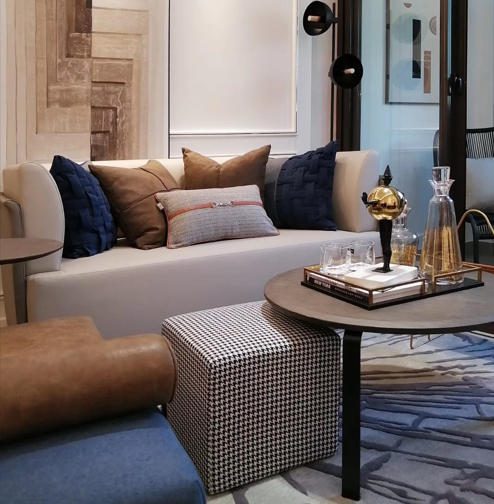
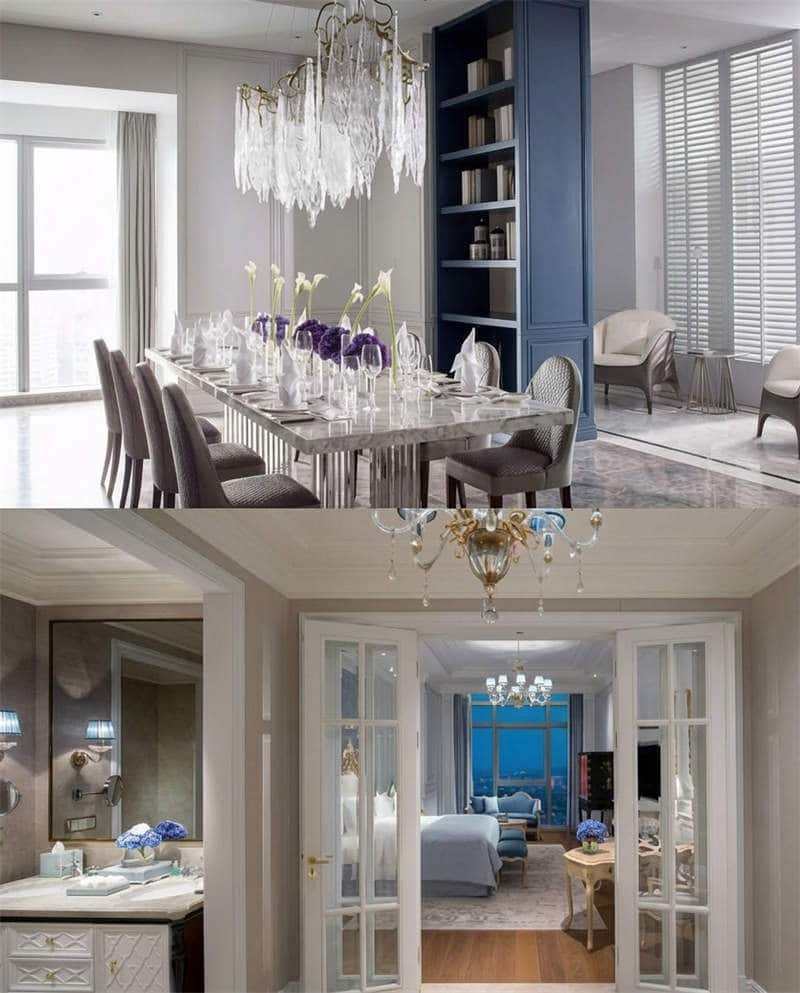
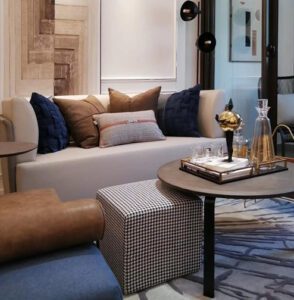
 A bespoke luxury living room — the kind of space made possible by strategic, informed sourcing from China’s premier furniture manufacturers.
If you’ve ever compared a factory price from Foshan to your current wholesale supplier and felt like you were looking at a 40% margin sitting untouched, you’ve felt the pull. But here’s what the most successful high-end importers, FF&E buyers, and interior designers have learned — sometimes at significant cost — that factory price is one number in a much longer equation.
China is the world’s largest furniture exporter, shipping over $53 billion worth of furniture globally in 2024 (Source: Statista Global Furniture Trade Data). The opportunity is real. The savings can be real. But the gap between a factory quote and what you actually pay when the shipment clears customs — or doesn’t — is where fortunes are made or quietly lost.
This guide is not for beginners browsing Alibaba for the first time. It is written for professionals who manage real projects: importers and distributors stocking high-margin catalogs, villa owners and developers furnishing multi-million-dollar properties, interior designers with exacting clients who notice every detail, FF&E buyers whose hotel opening dates are non-negotiable, and private-label brand owners who need exclusivity, consistency, and speed.
The pain points addressed here are the ones that cost real money: inconsistent quality across batches, lead times that quietly stretch by three weeks, customs holds that arrive as a surprise invoice, communication gaps that produce the wrong lacquer color on 200 chairs, and compliance failures that shut down a shipment at the border.
What this guide solves:
JL&C Furniture, a Shanghai-based high-end manufacturer with over 20 years of design and production experience, works with clients across all of these categories. The insights in this guide reflect what professional buyers at that level actually need to know.
Most buyers think of sourcing as a linear path: find a factory, order the furniture, wait for it to arrive. In reality, the process is a series of decision gates — and each one is a moment where an informed buyer either protects their project or exposes it to risk.
Here is what the professional workflow actually looks like, mapped with precision.

A luxury hotel suite FF&E package — delivered on time when every stage of the sourcing journey is managed with precision.
Step 1 — RFQ (Request for Quotation): Your initial inquiry sets the tone for everything that follows. A vague RFQ — “I need 50 sofas, modern style, fabric” — produces vague quotes that cannot be compared apples-to-apples. A professional RFQ includes exact dimensions, material specifications, finish codes, hardware details, target FOB port, desired lead time, and quantity range. Factories respond to specificity with seriousness. NewBuyingAgent’s RFQ-to-delivery guide documents this as the single most impactful step buyers skip.
Step 2 — Factory Vetting: A quote from a legitimate manufacturer and a quote from a trading company posing as one can look identical on paper. The difference shows up in production. Vetting involves requesting business registration documents (营业执照, Yíngyè Zhízhào — the Chinese business license), export license numbers, in-house production line verification, and client references from buyers in your target market. Third-party audit reports from firms like SGS or Bureau Veritas remove any remaining ambiguity.
Step 3 — Sample Approval: This is the most underestimated step in luxury sourcing. A physical sample is not a formality — it is the legal and commercial baseline for your entire production order. Approve it in writing. Retain it. Photograph every surface, every joint, every hardware detail. The sample you approve should travel with the QC team to the factory for the final inspection, so they can compare the production run against it piece by piece.
Step 4 — Production: Once sample approval is signed off, the factory schedules your order into their production calendar. For high-end furniture with complex upholstery or custom finishes, production typically spans 30–60 days for standard items and 45–90 days for bespoke or large-volume orders. During this window, in-line inspections protect you from discovering problems at the end rather than fixing them in the middle.
Step 5 — Quality Control (QC): Pre-shipment inspection by an independent third party is the last line of defense before goods leave China. For luxury goods, AQL 1.0 (Acceptable Quality Limit — explained fully in Section 4) is the professional standard: it means a stricter sampling threshold than the AQL 2.5 commonly used for mass-market goods. We cover QC in full in Section 6.
Step 6 — Shipping: The shipment leaves port under your chosen Incoterm — the international rule (FOB, CIF, or DDP, among others) that defines exactly where your financial risk begins. Choosing the wrong term for your situation is one of the most common and most expensive errors in furniture importing. Section 7 covers this in detail.
Step 7 — Customs Clearance: Every piece of furniture entering the U.S., EU, Australia, or the Middle East must pass through a customs and compliance filter. The documentation must be precise, the HS code (the international product classification number that determines your duty rate) must be correct, and any applicable compliance certifications must be in hand before the container arrives. Section 7 covers the documentation checklist and what happens when any item is missing.
Critical Timeline for Decision-Makers:
| Stage | Typical Duration | Key Decision Gate |
|---|---|---|
| RFQ & Factory Vetting | 1–3 weeks | Shortlist to 2–3 qualified suppliers |
| Sample Production & Approval | 3–6 weeks | Written sign-off before production begins |
| Production Run | 30–90 days | In-line inspection at 30–50% completion |
| Pre-Shipment QC | 3–5 days | Pass/fail against approved sample |
| Export Clearance & Loading | 3–7 days | All documents in hand before vessel departure |
| Ocean Freight (to U.S.) | 20–35 days | Freight forwarder booking confirmed |
| Customs Clearance | 3–7 business days | Complete documentation package submitted |
| Inland Delivery | 2–7 days | White-glove coordination confirmed |
| Total (representative) | ~90–150 days | — |
Top-tier importers who manage this timeline without sacrificing craftsmanship share one habit: they build buffer time into every stage — and they communicate that buffer to clients before the project begins, not after a delay occurs.
Not all furniture categories carry the same risk profile, customization potential, or margin opportunity. Here is a professional breakdown of the seven categories where high-end buyers most frequently source from China — along with the specific quality and compliance considerations within each.

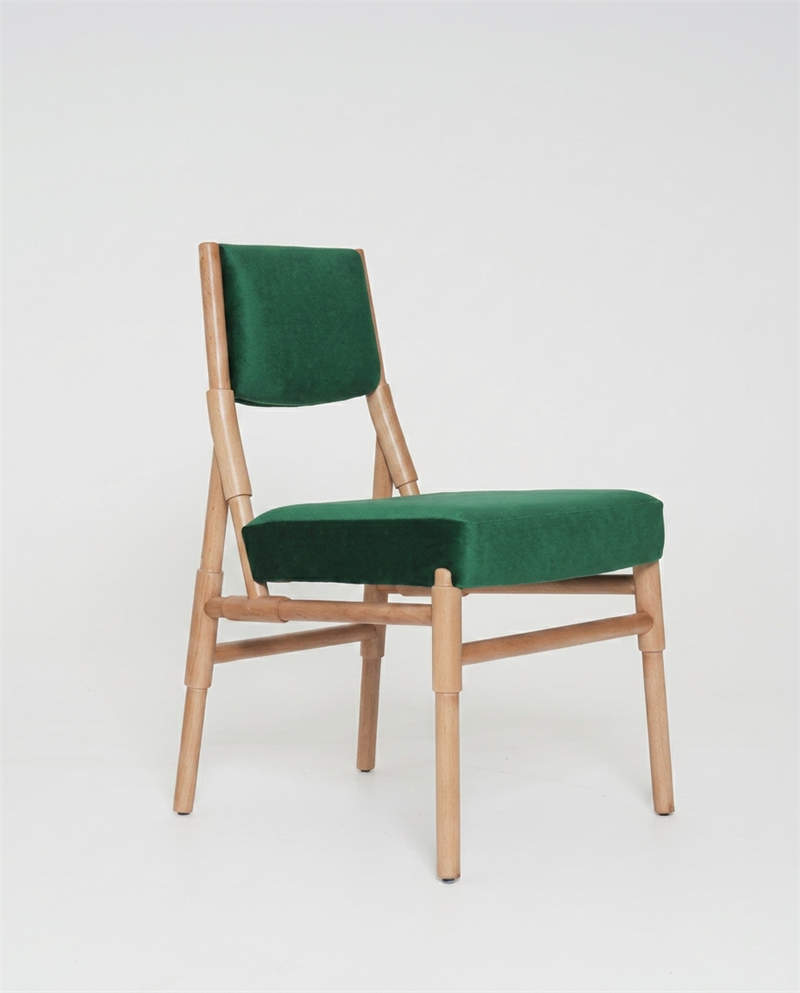
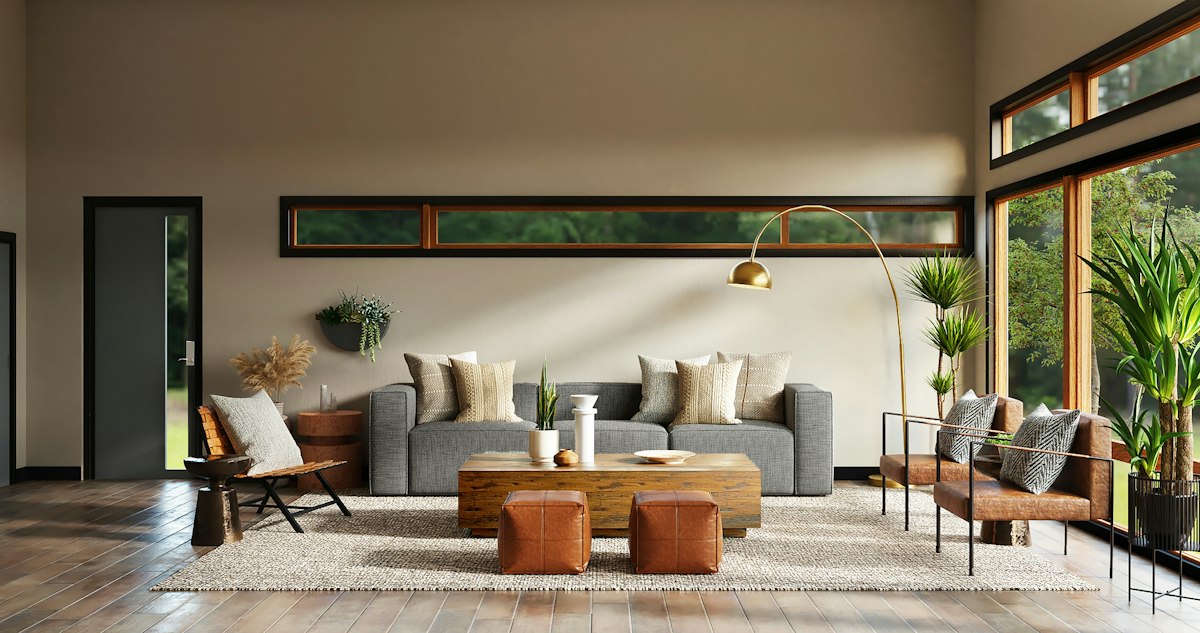
A custom solid-wood dining collection — one of China’s strongest furniture export categories, particularly for high-end residential and hospitality projects.
1. Custom Upholstery (Sofas, Sectionals, Lounge Chairs) China’s upholstery manufacturing is sophisticated enough that many European luxury brands quietly produce there. What to watch for: fabric color consistency across the production batch (always specify Pantone codes, not “warm gray”), foam density (luxury residential requires minimum 40 kg/m³ high-resilience foam, commercial hospitality minimum 45 kg/m³), and stitching tension on decorative seams. MOQs for custom upholstery with proprietary fabric typically start at 20–50 units per configuration. JL&C Furniture’s upholstery range, including custom luxury sofas, spans both residential and commercial-grade specifications.
2. Solid Wood Dining & Bedroom Collections Solid hardwood furniture (oak, walnut, ash, rubberwood) is a major Chinese export strength. The primary risk is moisture content: wood that leaves the factory at acceptable humidity can acclimate poorly in destinations with different climates — expanding, cracking, or warping. Require kiln-drying certification with moisture content below 8–12% for temperate destinations. Also verify joint construction: mortise-and-tenon joinery (a traditional method where a protruding peg fits precisely into a corresponding slot) lasts decades; staple-and-glue does not. FSC certification for wood sourcing is increasingly required by U.S. and EU buyers.
3. Outdoor & Patio Furniture (Marine-Grade Materials) Outdoor furniture demands materials that can withstand UV exposure, moisture, and temperature cycling. Teak, marine-grade aluminum (6061 alloy or better), and Grade 316 stainless steel are the professional standards for high-end outdoor pieces. Watch for: powder-coating adhesion on aluminum (conduct a cross-hatch adhesion test), weld quality on metal frames (smooth beads, no porosity), and UV-resistance ratings on synthetic weave and fabric (minimum 1,000 hours on a Xenon arc weatherometer for outdoor-rated materials).
4. Hospitality FF&E Packages (Modular, Compliant, Scalable) FF&E stands for Furniture, Fixtures & Equipment — the complete furnishing package for a hospitality project. China’s advantage here is scale: a single manufacturer can produce 300 matching guest-room packages with the consistency that would require coordination across six European factories. The key challenge is fire compliance: every country has different upholstery flammability standards (U.S.: California TB 117-2013; UK: BS 5852; EU: EN 1021-1/2; UAE: Civil Defence standards). Specify the destination country’s standard in writing before production begins. The hotel FF&E procurement guide from OrnItureStudio provides country-by-country compliance breakdowns.
5. Luxury Case Goods (Media Units, Consoles, Storage) Case goods — cabinets, consoles, wardrobes, and media units — are where composite wood content becomes a compliance issue. Any furniture containing MDF, particleboard, or hardwood plywood must meet CARB Phase 2 formaldehyde emission limits (U.S.) or EU No 605/2014 limits (Europe). Request third-party test reports from accredited labs, not factory-issued declarations. High-end buyers also specify lacquer type: water-based polyurethane lacquer is the professional standard for both aesthetics and low-VOC compliance; nitrocellulose lacquers are cheaper and more toxic.
6. Bespoke Lighting Fixtures (Crystal, Metal, Smart Integration) China’s lighting manufacturing sector produces pieces that appear in five-star hotel lobbies globally. Custom crystal and metal chandeliers, wall sconces, and table lamps can be produced to precise design drawings at a fraction of European atelier pricing. Critical considerations: CE marking (EU), UL listing (U.S.), or ETL certification for electrical safety; IP rating (Ingress Protection — the number indicating dust and water resistance) for bathrooms and outdoor spaces; and driver compatibility for smart lighting integration.
7. Custom Millwork & Built-ins (For Villas and High-End Developments) Bespoke millwork — built-in wardrobes, kitchen cabinetry, wall paneling, and architectural joinery — is increasingly sourced from China for high-end villa and apartment development projects. The logistical challenge is that millwork is dimensional: it must be measured after the construction phase reaches the correct completion stage, manufactured to those exact measurements, and installed in a controlled sequence. Require shop drawings (detailed production drawings reviewed and approved before any material is cut) and a physical mock-up of complex joinery before full production begins.
Sourcing furniture from China has its own language. Misunderstanding even one of these terms in a purchase order or freight contract can cost thousands of dollars or weeks of delay.
| # | Term | Full Name | What It Means in Practice |
|---|---|---|---|
| 1 | MOQ | Minimum Order Quantity | The smallest number of units a factory will accept per style per order. For custom luxury furniture, expect 20–50 units minimum. Negotiate long-term commitments for better terms. |
| 2 | FOB | Free on Board | The factory’s price includes delivery to the export vessel and loading. All costs after the ship leaves port (freight, insurance, duties, delivery) are the buyer’s responsibility. |
| 3 | EXW | Ex Works | Factory-gate price only. The buyer pays for everything from that point forward — including inland transport to port, export clearance, and all shipping. |
| 4 | CIF | Cost, Insurance & Freight | The seller pays freight and insurance to the destination port. The buyer still pays import duties, customs clearance, and inland delivery. |
| 5 | Lead Time | Production + Shipping Time | The complete time from order confirmation to goods arriving at your destination. Always clarify whether the factory’s stated lead time includes shipping or ends at the factory gate. |
| 6 | BOM | Bill of Materials | A complete itemized list of every material, component, and hardware piece that goes into each furniture unit. Use it to verify substitutions haven’t been made mid-production. |
| 7 | QC | Quality Control | The systematic process of checking that finished goods meet agreed specifications. In furniture, QC covers dimensions, construction, finish quality, material accuracy, and packaging. |
| 8 | AQL | Acceptable Quality Limit | A statistical sampling standard that defines how many defects are acceptable in a batch before the entire shipment is rejected. AQL 1.0 = strict (luxury standard); AQL 2.5 = standard (mass market). |
| 9 | LCL | Less than Container Load | Consolidating your shipment with other buyers’ cargo in a shared container. Lower cost per unit but higher handling risk for fragile pieces — damage rates are higher in LCL than FCL. |
| 10 | FCL | Full Container Load | You fill and seal an entire container yourself. More expensive at low volumes but essential for fragile, high-value furniture — fewer handling touchpoints mean lower damage risk. |
| 11 | OEM | Original Equipment Manufacturing | You provide the design; the factory produces it to your specification. Your brand owns the design, and the factory is contractually prohibited from selling it to anyone else. |
| 12 | ODM | Original Design Manufacturing | The factory designs the product; you brand and sell it. Faster to market and lower development cost, but your design is not exclusive — the same piece may appear in competitors’ catalogs. |
Industry Insight: The AQL standard is more consequential than most buyers realize. AQL 2.5 allows approximately 2.5% of inspected units to have major defects before triggering rejection. For a 200-piece hotel order, that means 5 defective chairs could pass inspection. AQL 1.0 tightens that threshold to roughly 1%, meaning 1–2 defective units would trigger a hold for rework. For luxury residential or branded hospitality projects, AQL 1.0 — or stricter, full 100% inspection — is the correct standard to specify in writing.
The furniture import process has predictable failure modes. The importers who never experience them are not lucky — they’ve built systematic defenses. Here are the four most damaging risks and exactly how professional buyers neutralize each one.
Risk 1: Factory Misrepresentation — Fake Certifications, Wrong Production Line
A trading company (a middleman that sells products it doesn’t manufacture) can present a showroom, a catalog, and even a factory visit — because they sub-contract production to whichever factory currently offers the lowest price. The furniture you approved in the sample room is not necessarily the furniture that gets made for your order.
Mitigation: Request the factory’s official business license (营业执照), their export license, and a list of in-house machinery with capacity specifications. Cross-reference the business registration number against China’s National Enterprise Credit Information Publicity System at gsxt.gov.cn. For large orders, commission a factory audit from a firm like SGS, Bureau Veritas, or QIMA before placing any deposit — audits typically cost $400–$900 and are the most cost-effective insurance in the sourcing process.
Risk 2: Design IP Theft — Your Custom Concepts Appear in a Competitor’s Catalog
When you share CAD drawings, finish specifications, and proprietary design files with a factory, that information can legally — under Chinese law — be shared with third parties unless you have the right agreement in place. A standard Western NDA (Non-Disclosure Agreement) is largely unenforceable in Chinese courts because it was designed for different legal contexts.
Mitigation: Use an NNN Agreement — Non-Disclosure, Non-Use, Non-Circumvention — drafted specifically for Chinese manufacturing relationships and enforceable in Chinese courts. IPWatchdog’s guide to NNN agreements in China is required reading before sharing any proprietary design file. Additionally, register your designs through CNIPA (China National Intellectual Property Administration) before factory discussions begin. For private-label buyers, this is not optional — it is the foundation of everything that follows.
Risk 3: Inconsistent Finish Quality Across Batches
You approve a beautiful walnut-stained sample. The production run arrives with three subtly different stain depths across 80 units — noticeable when the chairs are placed around a dining table. This is not fraud. It is what happens without proper color management protocols in place.
Mitigation: Specify every finish parameter in writing: Pantone or RAL color code, sheen level (matte, satin, semi-gloss), application method (spray, hand-applied), and acceptable variance range. Require a wet sample (a small panel finished to exact specification) to be submitted for written approval before full production begins. During the final inspection, your QC agent should carry the approved wet sample and physically compare it against production units under consistent lighting conditions.
Risk 4: Shipping Delays Due to Documentation Errors
A commercial invoice that lists the unit count as 198 when the packing list says 200. A bill of lading that describes goods as “wooden furniture” when the HS code on the invoice is for upholstered seating. These micro-discrepancies trigger customs examinations that can hold a container for two to four weeks at $150–$350 per day in demurrage fees.
Mitigation: Create a documentation checklist (see Section 7) and have your freight forwarder review all export documents against each other before the vessel departs. Never rely on the factory to prepare complete export documentation without independent verification. A single inconsistency check, taking 30 minutes, is worth weeks of timeline protection.
Quality control is not a single event at the end of production. For luxury furniture, it is a three-stage process — and the earlier a problem is caught, the cheaper it is to fix.
Before the factory cuts a single piece of material, verify the inputs. This includes reviewing mill certificates for solid wood (confirming species, grade, and moisture content), checking upholstery fabric against the approved swatch for color, texture, and weight per linear meter, verifying hardware (hinges, drawer slides, legs) against specified load ratings, and confirming foam density with a physical sample weighed on a certified scale.
A hotel procurement manager who skips this step and discovers their 300 chair-frames were built with rubberwood sold as beech has no practical recourse once production is complete. The material verification stage costs a few hundred dollars in agent time and saves that exact scenario.
When production is approximately 30–50% complete, an in-line inspection catches construction defects while there is still time to correct them within the original timeline. This is when frame joinery issues, upholstery pattern alignment problems, and finish inconsistencies are easiest and cheapest to address — before the remaining 50–70% of the batch is built the same way.
For high-end furniture quality inspections, professional standards require checking frame stability (no wobble on a flat surface), joint integrity (no visible gaps in mortise-and-tenon connections), and finish consistency against the approved wet sample.
The FRI is conducted when production is 100% complete but before goods are packed for shipping. At AQL 1.0 (the professional standard for luxury goods), the inspector uses a statistically validated sample size table to determine how many units to examine from the total batch. Each examined unit is evaluated against a detailed checklist covering: general appearance and finish quality, dimensional accuracy (within ±3mm for luxury-grade), structural stability (no movement on a flat surface), upholstery quality (stitching tension, pattern alignment, piping straightness), hardware function (drawer slides, hinges, locks), and packaging condition.
A digital QC report — with timestamped photographs of pass and fail items, measurements, and inspector notes — is the standard deliverable from a professional inspection. Paper reports without photographic documentation are not acceptable for luxury-grade projects.
QC Benchmark Table:
| QC Stage | Timing | Cost Range | Key Check |
|---|---|---|---|
| Pre-Production Material Check | Before cutting begins | $150–$400 | Material certs, fabric swatches, hardware specs |
| In-Line Inspection | 30–50% production complete | $280–$600 | Structural integrity, finish consistency |
| Final Random Inspection (FRI) | 100% complete, before packing | $300–$600/day | AQL sampling, dimensions, appearance, function |
| Loading Supervision | During container loading | $200–$400 | Damage during loading, correct quantities |
YouTube Resource — Behind-the-Scenes China Furniture Sourcing:
Watch: China Furniture Sourcing Explained — From Showrooms to Factories. A real-world walkthrough of what sourcing visits, factory vetting, and quality checks actually look like on the ground.
For buyers who cannot afford port delays or duty miscalculations, this section is the most financially consequential in the entire guide.
FOB (Free on Board): The factory loads your goods onto the vessel at the origin port. You take over from that point — booking freight, insuring the cargo, paying import duties, and managing last-mile delivery. FOB gives you maximum control over your freight costs and forwarder choice, but requires you to manage each element actively.
CIF (Cost, Insurance & Freight): The factory pays freight and marine insurance to your destination port. You handle customs and inland delivery. CIF simplifies the shipping leg but reduces your visibility into actual freight costs — the factory’s freight margin is embedded in the CIF price.
DDP (Delivered Duty Paid): The factory or sourcing partner covers every cost — freight, insurance, import duties, and delivery to your facility. Your landed cost is fully visible from the outset. DDP from a trustworthy partner is the most cost-efficient model for buyers who don’t have dedicated import logistics teams.
Professional guidance: AEB Logistics’ breakdown of FOB vs CIF vs DDP is a concise reference for understanding the precise risk-transfer points under each term.
The HS Code (Harmonized System Code) is the 10-digit product classification number that determines your import duty rate. For furniture importing into the U.S., the primary codes are under Chapter 94. Misclassification — even by one sub-category — can mean overpaying duties or, worse, triggering a customs examination and retroactive duty assessment. Work with a licensed customs broker who specializes in furniture to classify every item in your order before the shipment is booked. The U.S. International Trade Commission Harmonized Tariff Schedule, accessible at hts.usitc.gov, is the authoritative reference.
Every furniture import shipment requires these documents to clear customs without delay:
One discrepancy between any two of these documents — a single-unit count variance, a description mismatch — is enough to trigger a Customs Intensive Examination (CIE), which costs $1,500–$3,500 in exam fees plus demurrage accumulating at $75–$350 per container per day for the duration of the hold.
Always use your own vetted freight forwarder — not the factory’s nominated forwarder. A factory-appointed forwarder’s primary loyalty is to the factory, not to you. Your own forwarder gives you direct access to booking confirmations, container seal numbers, vessel tracking, and destination handling coordination. For high-value shipments, FCL (Full Container Load) is strongly preferred over LCL (Less than Container Load): your furniture is not handled or touched between the factory and your warehouse, which dramatically reduces the risk of transit damage to finished surfaces.
The most competitive buyers in the luxury furniture space don’t rely on platform discovery alone. They have built relationships — with specific factories, specific production managers, and in some cases specific craftspeople — that give them access to priority scheduling, early R&D collaboration, and the kind of honest communication that prevents problems rather than reporting them.
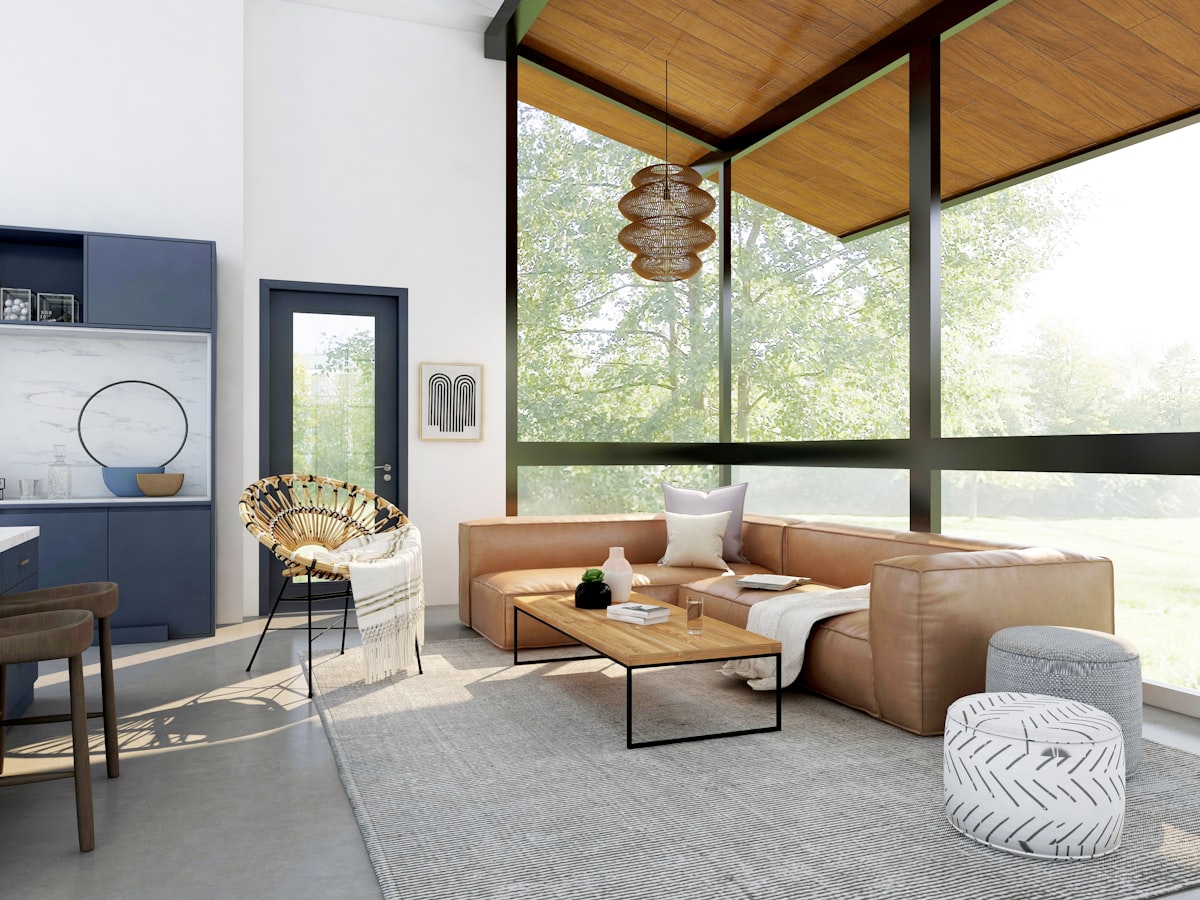 Custom outdoor furniture for a high-end resort terrace — marine-grade materials sourced from specialized Chinese factories with demonstrated export track records.
The criteria that matter most are not the ones most prominently displayed on factory websites. Export experience to your target market — with demonstrable track records and client references from buyers in the U.S., EU, or GCC — is more valuable than any award or trade show prize. English-language design collaboration ability — specifically whether the factory’s technical team can read and respond to CAD drawings, finish specifications, and tolerance sheets in English — is a functional requirement, not a preference. And a dedicated sample room with physical examples of the factory’s actual production quality (not showroom pieces sourced externally) is the most reliable pre-qualification signal available.
A site visit allows you to walk the production floor, observe workflows, meet the management team, and touch actual production samples. It is the gold standard for evaluating a new supplier — particularly for any order above $50,000 or any project where delivery timing is contractually committed. For buyers who cannot visit in person, a third-party factory audit from a firm like SGS or AsiaQualityFocus delivers a structured report covering production capacity, quality management systems, worker practices, and compliance documentation. The combination of both — a remote audit followed by a personal visit for shortlisted suppliers — is the approach used by the most sophisticated buyers.
Red Flags That Should Stop Any Conversation:
A supplier relationship that has run across three or more successful orders yields tangible, measurable advantages: priority placement in the production schedule (particularly important around Chinese New Year shutdowns and Golden Week), collaborative product development where the factory’s technical team contributes manufacturing insights that improve your designs, and honest lead-time communication — the difference between a factory that tells you on day 45 of a 60-day lead time that there’s a problem, versus one that tells you on day 58. The former is a partner. The latter is a vendor.
JL&C Furniture has maintained long-term production relationships built on exactly this model — working with clients on private-label villa projects, boutique hotel packages, and distributor catalog programs where the relationship, not the transaction, is the operating framework. Connect directly through the JL&C Furniture contact page to discuss your project’s requirements.
Custom furniture from China — genuine customization, not just color selection from a dropdown — is one of the most powerful competitive tools available to private-label brands, villa developers, and hotel groups. But it requires a specific kind of communication discipline that most buyers don’t practice naturally.
The factory cannot execute what it cannot understand. A professional technical specification package for a custom furniture piece includes: dimensioned CAD drawings (plan, elevation, section, and isometric views), a finish specification with Pantone or RAL codes and a physical reference sample, a Bill of Materials listing every component by material, thickness, grade, and supplier standard, hardware specifications with load ratings and finish, and upholstery specifications with fabric code, thread color, stitch type, stitch count per inch, and pattern alignment instructions.
Interior design firms working with JL&C Furniture on high-end residential projects typically submit specifications at this level of detail and receive a 3D rendering confirmation — a computer-generated preview of exactly how the piece will look when built — before production begins. This eliminates the ambiguity that produces incorrect production runs.
NRE stands for Non-Recurring Engineering fees — the one-time cost to design and produce any custom mold, die, or tool required to manufacture a unique component that doesn’t exist in the factory’s standard range. Custom brass legs with a proprietary profile, a unique handle casting, or a specific upholstery piping mold are examples of components that require NRE investment. NRE fees typically range from $200–$3,000 per component and are a legitimate cost that serious buyers plan for. They are amortized across the production run — the higher the quantity, the lower the NRE cost per unit.
A 150-room boutique resort in Southeast Asia required a complete guest-room FF&E package: custom upholstered bed frames with integrated bedside storage, floating nightstands in hand-brushed American walnut, a writing desk with leather-inset surface, and a lounge chair with an ottoman in project-exclusive fabric. The full package was 900 pieces across six SKUs.
The design brief was submitted with full CAD drawings and material specifications. Sample production took six weeks. After sample approval, production ran 55 days. Pre-shipment inspection was conducted at AQL 1.0 over two days. The shipment cleared customs in six business days with complete documentation. Installed on-site, the package matched the approved samples precisely — no rework, no replacement orders, no missed installation window.
Total timeline from first RFQ to on-site installation: 148 days. For a comparable European sourcing route, the procurement team’s prior experience suggested 220–240 days for equivalent quality and volume. The cost difference on a 900-piece project was substantial. The delivery certainty was what sealed the relationship for the next property in the same hotel group’s pipeline.
Not every design concept is manufacturable at the quality level it was designed for. Compound curves in solid wood, ultra-thin metal profiles under structural load, and certain upholstery pattern alignments all require manufacturing feasibility review before they become production commitments. The best Chinese manufacturers — including JL&C Furniture — will flag these issues in the early design discussion and propose alternatives that preserve the visual intent while remaining achievable at quality. Buyers who treat this feedback as a limitation are working with the wrong manufacturer. Buyers who treat it as engineering collaboration are getting exactly what the relationship is designed to deliver.
The landscape for furniture sourcing from China is not static. The buyers who will be most competitive in 2027 are building the infrastructure for it now.
 A custom luxury home office — increasingly common in high-end villa projects, with millwork and furniture sourced as an integrated package from China.
The eco-friendly furniture market was valued at $53.7 billion in 2025 and is projected to reach $113.9 billion by 2033 (Grand View Research). High-end buyers are no longer simply asking for FSC-certified wood — they’re requesting full environmental product declarations, low-VOC water-based finishes (VOC stands for Volatile Organic Compounds — chemicals that off-gas from conventional paints and lacquers), and OEKO-TEX Standard 100 certified fabrics (a certification confirming no harmful chemicals are present in the textile). China’s leading manufacturers have responded: FSC-certified hardwood sourcing, GREENGUARD Gold certified adhesives and finishes, and recyclable packaging are now available at production scale from premium factories.
Buyers targeting the U.S. market should note that CARB Phase 2 formaldehyde limits for composite wood products remain the most stringent in the world and are enforced at the federal level under TSCA Title VI. The CIFF (China International Furniture Fair) certification guide provides a comprehensive current overview of certifications from the industry’s primary trade body.
The global disruptions of recent years — pandemic-era port closures, Suez Canal shipping incidents, geopolitical tariff escalations — have pushed sophisticated buyers toward dual-sourcing: maintaining primary production in China while qualifying a secondary factory in Vietnam, Malaysia, or Portugal for specific product categories. This is not about abandoning China — it is about reducing single-point-of-failure risk in your supply chain. For most high-end buyers, Vietnam offers the strongest quality-to-cost alternative for solid wood products; Portugal and Turkey offer EU-compliant sourcing for European market buyers who need to manage import duty exposure.
3D digital sampling — using photorealistic computer rendering to visualize and approve furniture designs before physical samples are made — is now standard practice among the most sophisticated manufacturers. It reduces the sample production cycle by 2–3 weeks, allows design iteration without physical material cost, and produces approval-quality visuals that can be shared with end clients before any commitment is made. JL&C Furniture’s design team works with 3D modeling as a standard part of the customization process.
Blockchain for material traceability is emerging as the next layer of supply-chain verification. Rather than trusting a paper FSC certificate, blockchain-verified supply chains allow buyers to trace a specific piece of walnut timber from a certified forest, through the mill, into the furniture factory, and to the finished piece — with every transaction timestamped and tamper-proof. For buyers serving institutional clients or ESG-driven hospitality brands, this level of documentation is becoming a procurement requirement, not a differentiator.
The buyers who navigate sourcing disruptions best share a common characteristic: they have done the relationship work in advance. They have visited factories before they needed them urgently. They have approved samples for backup SKUs they haven’t ordered yet. They have freight forwarder relationships across multiple carriers. And they have legal agreements — NNN, exclusivity clauses, IP registrations — that are already in place when they need protection.
For high-margin businesses — private-label brands, boutique hotel groups, luxury design firms — supply chain resilience is not an operational function. It is a strategic asset. Building it is exactly what separates the brands that grow confidently through market disruptions from the ones that scramble.
| Certification | What It Covers | Who Requires It | Issuing Body |
|---|---|---|---|
| FSC | Wood sourced from certified, responsibly managed forests | U.S., EU, AU luxury buyers; ESG projects | Forest Stewardship Council |
| CARB Phase 2 / TSCA Title VI | Formaldehyde emissions in composite wood panels | All U.S. market furniture with MDF/particleboard | California ARB / U.S. EPA |
| OEKO-TEX Standard 100 | No harmful chemicals in textiles and upholstery | EU and U.S. high-end residential and hospitality | OEKO-TEX Association |
| REACH | No restricted chemicals in any component | EU market (mandatory) | European Chemicals Agency |
| BIFMA | Structural and durability standards for commercial furniture | U.S. commercial, office, and hospitality buyers | Business & Institutional Furniture Mfrs. Assn. |
| ISO 9001:2015 | Quality management system across manufacturing | International buyers requiring process rigor | ISO / third-party auditors |
| GREENGUARD Gold | Low chemical emissions for indoor air quality | Schools, hospitals, premium residential projects | UL Environment |
| California TB 117-2013 | Upholstery flammability (smolder resistance) | U.S. hospitality and California residential | California Bureau of Home Furnishings |
| BS 5852 / EN 1021 | Upholstery flammability (UK and EU) | UK and EU hospitality projects | British Standards / CEN |
| CE Marking | Electrical safety for lighting fixtures | All EU market lighting products | European conformity bodies |
1. How do I verify a Chinese furniture factory is legitimate and not a trading company?
Request the factory’s business license and cross-reference the registration number on China’s National Enterprise Credit Information Publicity System. Ask for photos and video of the active production floor showing the specific furniture category you’re sourcing — not a generic factory tour. Commission a third-party audit from SGS, Bureau Veritas, or QIMA. A legitimate manufacturer will welcome this. A trading company will usually deflect or add fees that make it impractical. Client references from buyers in your target market, verifiable through a direct call, are the final confirmation step.
2. What is the typical lead time for custom high-end furniture from China?
For custom luxury furniture, plan for 90–150 days from signed sample approval to destination warehouse arrival. This breaks down as: sample production 3–6 weeks, sample approval and revision 1–2 weeks, production run 30–60 days, pre-shipment inspection 3–5 days, export clearance and loading 5–7 days, ocean freight 20–35 days, and customs clearance 3–7 days. Buyers who plan against a 90-day total lead time consistently run short. Buyers who plan against 120–150 days and communicate this to clients upfront consistently deliver on time.
3. Can I protect my furniture design from being copied by the manufacturer?
Yes — with the right legal framework. A standard Western NDA is not enforceable in Chinese courts. Use an NNN Agreement (Non-Disclosure, Non-Use, Non-Circumvention) drafted for Chinese jurisdiction by a lawyer experienced in Chinese IP law. Register your design with CNIPA (China National Intellectual Property Administration) before sharing any files. For unique components requiring custom tooling, ensure the tooling is registered in your name and retained at the factory under documented custody terms. The combination of NNN agreement, CNIPA registration, and contractual tooling ownership provides a multi-layer defense that the most design-forward private-label brands rely on.
4. What is the difference between OEM and ODM, and which is better for my brand?
OEM (Original Equipment Manufacturing): You provide the design — CAD drawings, material specifications, finish details — and the factory produces it exclusively to your specification. Your brand owns the design. The factory cannot sell it to any other buyer. OEM provides maximum exclusivity and brand differentiation. ODM (Original Design Manufacturing): The factory designs the product and you brand and sell it under your label. Time-to-market is faster and development cost is lower, but the same design is almost certainly available to your competitors. For brands where design is the competitive advantage — private-label luxury lines, designer-branded collections, hospitality signature pieces — OEM is the correct choice. For buyers who need to fill catalog gaps quickly at lower development cost, ODM is a practical tool.
5. How do I ensure color and finish consistency across a large order?
Three practices eliminate this problem. First, specify every finish parameter with an objective reference: Pantone or RAL color code, sheen level percentage (e.g., 20° gloss for semi-matte), and the approved application method. Second, require a physical wet sample — a small panel finished to the exact approved specification — to be produced and approved in writing before full production begins. Your QC inspector carries this physical sample to the factory and compares every unit against it under standardized lighting. Third, for production runs across multiple batches, require the factory to retain a portion of the original approved lacquer lot and document the batch number for reference throughout production.
6. What are the biggest hidden costs when importing furniture from China?
The factory price typically represents only 55–70% of your true landed cost. The costs that new importers most frequently underestimate or miss entirely include: U.S. Section 301 tariffs (25%+ on most Chinese furniture, on top of base MFN duties of 0–6%), ocean freight (including origin handling, fuel surcharges, and destination terminal handling fees), third-party inspection fees, compliance testing for CARB/TSCA, flammability, and Lacey Act requirements, customs examination fees and demurrage if documentation is imperfect, inland delivery and white-glove installation, and product liability insurance. A buyer who budgets only the factory price and freight will typically underestimate their landed cost by 30–65% depending on product type and destination market.
7. Is it better to ship LCL or FCL for a high-value, small-volume order?
For luxury furniture, FCL is almost always the correct choice — even if you cannot fill the container completely. LCL (consolidated shipping) means your furniture shares a container with other buyers’ goods and is handled multiple times by port workers who have no special interest in its condition. Every handling event is an opportunity for surface scratches, corner damage, and upholstery compression. FCL means your furniture is loaded at the factory, sealed, and not opened again until it reaches your destination — dramatically fewer damage touchpoints. The cost premium for shipping a partially-filled 20-foot container versus an LCL consolidation is typically $400–$1,200 — an excellent investment on a $30,000 luxury furniture shipment.
8. How strict are Chinese factories on MOQs for custom designs?
MOQs for custom luxury furniture typically start at 20–50 units per configuration for factories that work at the high end of the market. However, MOQs are more negotiable than most buyers realize — particularly when you can demonstrate the potential for a long-term relationship, show a strong brand or project pipeline, or offer to pay a higher per-unit price in exchange for a lower quantity. Factories that are honest about their capabilities will tell you when a custom design requires specific tooling that makes a lower MOQ economically impractical. That honesty is a sign of a factory worth working with.
9. What certifications should I require for furniture entering the U.S. or EU?
For the U.S. market: CARB Phase 2 / TSCA Title VI (formaldehyde in composite wood), California TB 117-2013 (upholstery flammability), BIFMA (commercial furniture structural standards), FSC (wood sourcing, for ESG-driven buyers), Lacey Act declarations (wood species origin). For the EU market: REACH (no restricted chemical substances), EN 1021-1/2 (upholstery flammability), CE marking (for lighting fixtures), FSC or PEFC (wood sourcing), and the new EUDR (EU Deforestation Regulation) for wood products. Require third-party test reports from accredited laboratories — factory-issued compliance declarations are not accepted by most commercial buyers or their legal teams.
10. How often should QC inspections be conducted during production?
The professional minimum for luxury furniture is three inspection events: pre-production (before material cutting begins), in-line (at 30–50% completion, when structural and finish issues are cheapest to correct), and final random inspection (at 100% completion, before packing). For large-scale hospitality or development projects — 200+ rooms, multi-property rollouts — loading supervision (an inspector present during container stuffing to verify quantities and monitor packing quality) is an additional worthwhile investment. Think of inspection as a risk management function: each stage catches a different category of potential problem at the point where it costs the least to fix.
11. Can I use my own freight forwarder, or should I use the factory’s?
Always use your own vetted freight forwarder. A factory-nominated forwarder works for the factory’s interests — their first call when a problem arises is to the factory, not to you. Your own forwarder gives you direct access to booking confirmations, container tracking numbers, vessel ETAs, and documentation review — before it becomes a customs problem at the destination port. For recurring import programs, build a relationship with a forwarder who specializes in furniture and understands the documentation requirements for CARB, Lacey Act, and fire compliance certifications.
12. What happens if a shipment fails QC at the destination?
Without a pre-shipment inspection, this is the scenario that costs the most money. Your options are: return the goods to China for rework (additional ocean freight both ways, 6–12 weeks, and the factory negotiates from a position of strength because they already have your payment), local rework using destination-country labor (expensive, rarely restores pieces to original specification), or accept at a discount (damages margins and, in commercial settings, may violate your agreement with the end client). The best answer is to prevent this entirely through third-party pre-shipment inspection. The inspection fee — typically $500–$1,500 — is a tiny fraction of the cost of a failed shipment.
13. How do I handle communication with factories across time zones and language barriers?
The most effective solution is a bilingual project manager — either in-house or through a sourcing partner — who has technical furniture knowledge in both English and Mandarin Chinese. Without this, every technical specification is interpreted through the factory’s assumptions, not your intent. For buyers who source independently, establish a communication protocol: all specifications in writing (never verbal), all approvals documented with a timestamped reply, and all open questions assigned a response deadline. WeChat and email are both standard communication channels for Chinese factories; WeChat is faster for daily coordination, email creates a more defensible paper trail for specification sign-offs.
14. Are there sustainable or eco-certified furniture factories in China?
Yes — and the number is growing rapidly. China’s leading premium manufacturers now offer FSC-certified hardwood sourcing, OEKO-TEX Standard 100 certified upholstery fabrics, GREENGUARD Gold certified adhesives and finishes, low-VOC water-based lacquers that comply with EU and California air quality standards, and recyclable export packaging. The eco-friendly furniture market’s projected growth to $113.9 billion by 2033 reflects genuine production-side investment, not just marketing. When evaluating a factory’s sustainability claims, require third-party certificates from the issuing body — FSC certificates are verifiable through the FSC certificate search tool — not self-declared compliance statements.
15. How can I scale from a one-off villa project to a full brand line?
The transition from project-based sourcing to brand-line production requires three foundational elements. First, modular design architecture — furniture pieces designed with shared components (legs, bases, hardware profiles) that allow SKU variety without equivalent production complexity. Second, complete specification documentation — every approved piece should have a full technical package that a factory can reproduce exactly 18 months later without relying on institutional memory. Third, locked factory partnerships — a long-term supply agreement with your core manufacturer, with pricing frameworks, priority scheduling commitments, and IP protection in place before you begin marketing the brand. JL&C Furniture works with clients at exactly this transition point — from single-project sourcing to ongoing brand production — across residential, hospitality, and retail distribution categories. Explore the full product range and manufacturing capabilities at www.jlc-f.com.
This guide was developed with input from sourcing professionals, FF&E procurement specialists, and luxury manufacturing experts. It reflects current industry practice as of 2025–2026. For project-specific sourcing consultation, contact the JL&C Furniture team directly through the project inquiry form.
Glossary of Key Terms
AQL (Acceptable Quality Limit): A statistical sampling method that defines the maximum number of defective items allowed in a batch before the shipment is rejected. AQL 1.0 is the luxury standard; AQL 2.5 is used for mass-market goods.
BOM (Bill of Materials): A complete, itemized list of every material, component, and hardware piece used in each furniture unit. Used to verify material specifications are not substituted during production.
CARB Phase 2: California Air Resources Board regulation governing maximum formaldehyde emissions from composite wood panels (MDF, particleboard, hardwood plywood). Federally mandated across the U.S. under TSCA Title VI.
CIF (Cost, Insurance & Freight): The seller pays shipping and insurance to the destination port. The buyer pays import duties and inland delivery.
DDP (Delivered Duty Paid): The seller covers every cost — freight, insurance, import duties, and delivery to the buyer’s facility. Provides complete cost certainty.
EXW (Ex Works): Factory-gate price only. Every subsequent cost is the buyer’s responsibility.
FCL (Full Container Load): The buyer fills and seals an entire shipping container. Fewer handling events and lower damage risk compared to LCL.
FOB (Free on Board): Seller loads goods onto the export vessel. Buyer pays all subsequent costs.
FSC (Forest Stewardship Council): International certification confirming timber was sourced from responsibly managed forests. Verifiable through fsc.org.
HS Code: Harmonized System Code — the 10-digit international product classification number that determines import duty rates.
LCL (Less than Container Load): The buyer’s shipment is consolidated with other buyers’ cargo in a shared container. Higher handling risk for fragile items.
MOQ (Minimum Order Quantity): The minimum number of units a factory will accept per style per order.
NNN Agreement: Non-Disclosure, Non-Use, Non-Circumvention — the legal agreement designed for Chinese manufacturing relationships to protect foreign buyers’ design IP.
NRE (Non-Recurring Engineering fees): One-time costs for designing and producing custom molds, dies, or tooling required for unique components.
OEKO-TEX Standard 100: Certification confirming that a textile product contains no harmful substances at concentrations that pose a risk to human health.
ODM (Original Design Manufacturing): The factory designs the product; the buyer brands and sells it.
OEM (Original Equipment Manufacturing): The buyer provides the design; the factory produces it exclusively to that specification.
REACH: EU regulation requiring that no restricted chemical substances are present in any product component above defined concentration limits.
VOC (Volatile Organic Compounds): Chemicals that off-gas from conventional paints, lacquers, and adhesives. Low-VOC formulations are required by EU and California regulations and are a standard specification for luxury interior furniture.

What It Really Means to Order Furniture from China: A Professional’s Complete Guide A bespoke luxury living room — the kind of space made possible
Best Ways to Order Furniture from China: Factory, Agent, or Marketplace A decision guide for high-end furniture importers, FF&E buyers, hotel developers, villa owners, interior
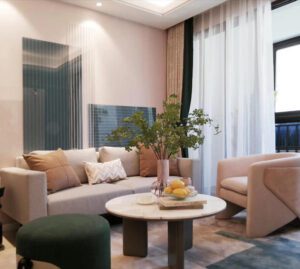
How to Order Furniture from China Without Costly Mistakes A Strategic 8-Step Roadmap for High-End Furniture Importers, Interior Designers, FF&E Buyers, Developers & Private Label

Advanced Tips to Streamline Repeat Furniture Orders from China: A Strategic Guide for High-Value Buyers Alt: Luxury bespoke furniture showroom with custom upholstered seating, solid
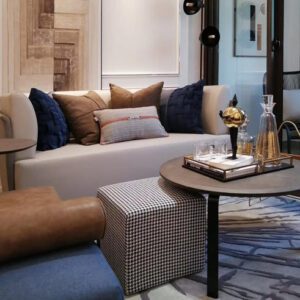
Custom furniture sourcing done right starts here — before a single factory conversation, before a single sample request. The Ultimate Guide to Custom Furniture Sourcing
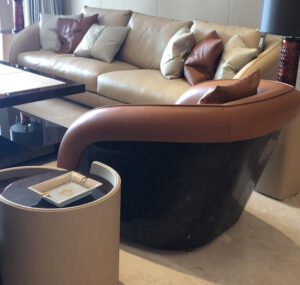
Top Trends in Custom Furniture for Villa Owners and Private Label Brands A strategic guide for the designers, developers, importers, and brand owners who need