
ニュース

Order Furniture from China: Factory, Agent, or Market?
Best Ways to Order Furniture from China: Factory, Agent, or Marketplace A decision guide for high-end furniture importers, FF&E buyers, hotel developers, villa owners, interior

European furniture markets are growing at 5.26% CAGR while US growth stalls. This strategic analysis reveals critical market differences, emerging consumer behaviors, and actionable insights to help distributors, showroom operators, and design professionals capture new revenue streams and adapt their sourcing, inventory, and client offerings internationally.
Introduction: Why the Transatlantic Furniture Market Divide Matters to Your Business
If your entire revenue base sits in one market right now — whether that’s the US or a single EU country — you are carrying a structural risk that the most competitive furniture businesses in your segment are actively eliminating.
Here’s the divide in concrete terms. The European furniture market is valued at $277.21 billion in 2026 and growing at a 5.26% CAGR toward $358.26 billion by 2031, according to Mordor Intelligence. The US market, at approximately $249.51 billion in 2026, is growing more slowly — US home furniture is forecast at a 2.9% CAGR through 2029 according to Technavio. In practical terms: a furniture distributor or showroom operator capturing even a modest slice of EU growth is accessing a market expanding nearly twice as fast as the US residential sector.
The stakes are not abstract. Distributors who built EU distribution networks three years ago are now competing in a market that has grown $40+ billion since 2023. Those waiting for “more information” have watched that window narrow. This guide exists to ensure you have everything you need to act with clarity — not urgency for its own sake, but urgency grounded in data.
This isn’t a generic market overview. It’s a strategic decision framework built specifically for distributors, agents, showroom operators, interior designers, and hotel fit-out specialists who need to understand exactly where the money is flowing, why consumer behavior is diverging transatlantically, and what to do about it in your business starting now.
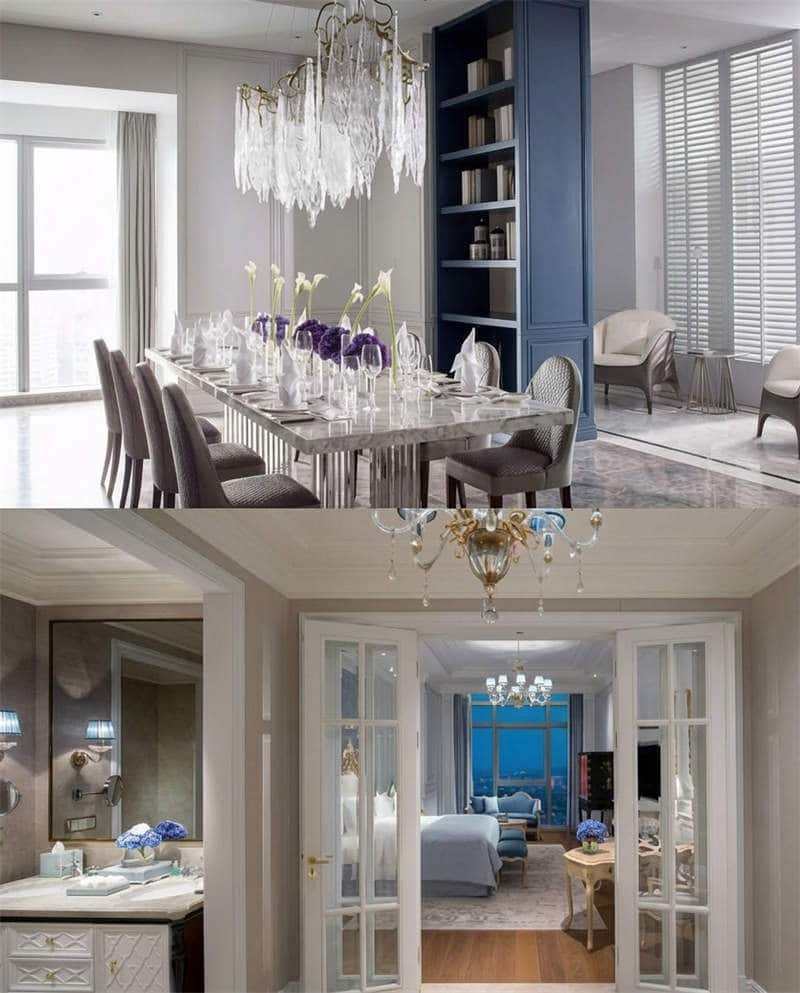
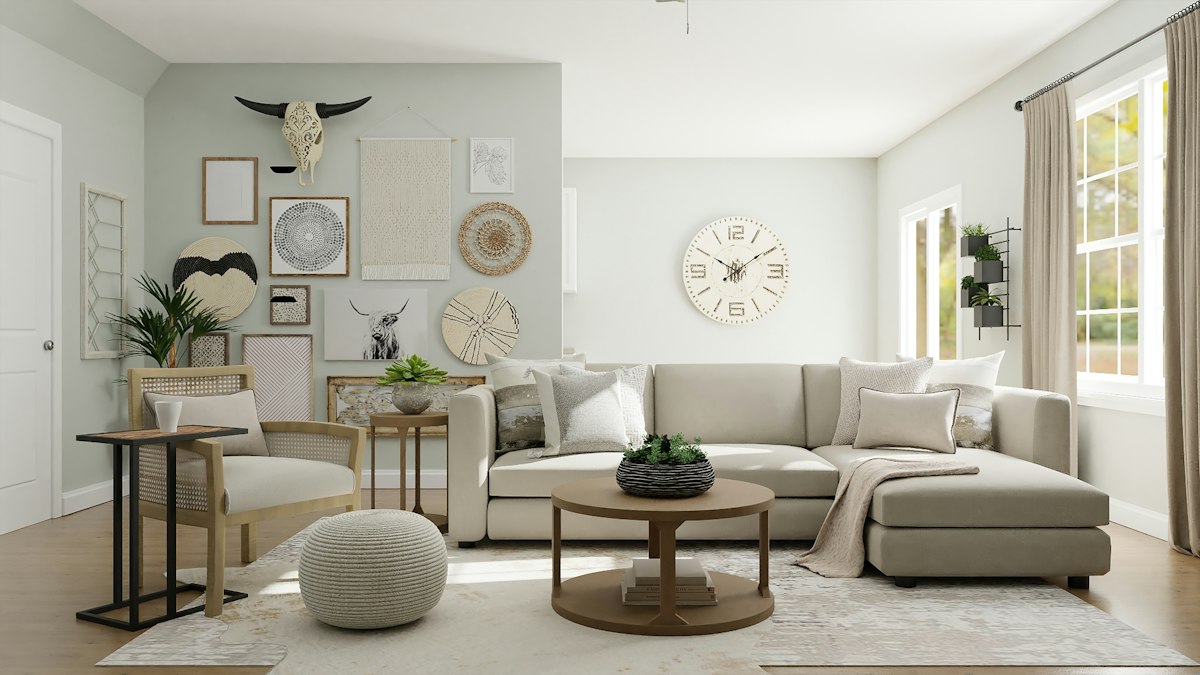
 The neutral-material, warm-minimalist aesthetic that dominates Europe’s premium furniture showrooms — a starkly different commercial environment from the eclectic, statement-piece approach that still drives US retail volume.
The Numbers That Should Change Your Strategy
Current Market Valuations and Growth Rates
EU Market Size and the 5.26% CAGR Advantage
The EU furniture market’s 5.26% CAGR is not a forecast rounding error — it reflects structural drivers that are not cyclical. Rising urban housing development across Central and Eastern Europe, a post-pandemic renovation supercycle that ran longer in Europe than in the US, sustained hospitality investment across Southern Europe and the Mediterranean, and demographic tailwinds from EU enlargement are all contributing to growth that is broad-based rather than concentrated in a single category.
Germany remains Europe’s largest single furniture market, generating approximately 25 million units annually. The UK, despite Brexit complications, contributes around 20 million units. France is the third major market. But the growth story is in the second-tier markets: Poland, Czech Republic, and Romania are growing at 7–9% annually as rising middle-class incomes and housing construction accelerate domestic furniture consumption.
For distributors and agents building EU distribution strategies, the practical implication is that Germany, France, and the UK offer volume and stability — they’re the right markets for established players. Poland, Czech Republic, and Portugal offer disproportionate growth relative to competitive density — they’re the right markets for distributors who want first-mover positioning.
US Market Performance and Growth Plateaus
The US furniture market is not declining — it is consolidating after the 2020–2022 renovation boom that temporarily inflated demand. Total US furniture revenue sits at approximately $249.51 billion in 2026, with residential home furniture growing at a more modest 2.9% CAGR. The contract and hospitality furniture segment is performing better, driven by continued hotel renovation and commercial interior spending — a point relevant to the hotel designers and commercial specifiers reading this.
The strategic reality for US-focused distributors is this: maintaining US market share in a low-growth environment requires either taking share from competitors (expensive and slow) or diversifying into faster-growing channels and geographies. EU expansion, for distributors with the financial and operational infrastructure to execute it, represents the faster path to revenue growth.
Regional Variance Within the EU (Nordic Markets vs. Southern Europe)
The EU is not a monolithic market. Nordic countries — Sweden, Denmark, Norway, Finland — operate at premium price points, prioritize sustainability credentials above almost any other purchase criterion, and maintain a design culture where furniture investment is treated as a multi-generational financial decision. A dining table in Denmark is not bought for five years — it is bought for life. This creates a buyer who pays more, complains less about price, and demands more from quality assurance.
Southern European markets — Italy, Spain, Greece — operate with more price sensitivity, stronger emphasis on aesthetics and design lineage, and longer B2B payment cycles (90+ day terms are standard in Italy and Spain). The Mediterranean buyer’s relationship with furniture is more expressive and emotional — less minimalist, more sculptural and decorative. These are not the same market with a single strategy.
Why US Growth Has Stalled and What’s Replacing It
US residential furniture demand was temporarily pulled forward by the 2020–2022 pandemic renovation cycle — Americans who worked from home bought home offices, expanded living spaces, and upgraded bedroom furniture at unprecedented rates. That demand is now normalized. The replacement cycle for furniture is long (5–15 years for most categories), meaning that customers who bought in 2021 are not re-entering the market until 2026–2031 at the earliest.
What is replacing residential volume growth in the US market is contract and commercial furniture — hotel renovation, office redesign for hybrid work environments, senior living facility investment, and restaurant/hospitality FF&E. Distributors and designers serving these segments are experiencing better demand conditions than those in pure residential retail.
Projected Growth Through 2030
The projection framework that matters most for sourcing and inventory decisions isn’t global aggregate growth — it’s where capital will concentrate within each market over the next five years.
In the EU, the two highest-growth segments through 2030 are sustainable furniture (projected CAGR of 11% according to Verified Market Research, growing from $18.5 billion in 2024 to $42.6 billion by 2032) and modular/multifunctional furniture for compact urban living spaces. Both are driven by structural demographic and regulatory forces, not cyclical consumer sentiment.
In the US, the hospitality and contract furniture segment is outpacing residential. The B2B furniture rental market — primarily serving corporate relocation and hospitality — is projected at $26.8 billion by 2034, growing at 8.9% CAGR from $12.4 billion in 2025. For hotel designers and commercial interior specialists reading this, the rental and leasing segment represents a revenue stream that many traditional distributors are not yet structured to serve.
| Market | 2026 Estimated Value | Growth Rate | Primary Driver |
|---|---|---|---|
| EU Furniture (total) | $277.21 billion | 5.26% CAGR to 2031 | Urbanization, sustainability demand, hospitality |
| US Furniture (total) | $249.51 billion | 2.9–4% CAGR | Contract/hospitality; residential normalization |
| EU Sustainable Furniture | $18.5 billion (2024) | 11% CAGR to 2032 | Regulation + consumer demand convergence |
| Global B2B Furniture Rental | $12.4 billion (2025) | 8.9% CAGR to 2034 | Circular economy, corporate mobility |
| EU Compact/Modular Furniture | Growing sub-segment | 6–8% CAGR | Urban living space constraints |
Currency Fluctuations and Their Impact on Your Margins
For US-based distributors entering EU markets, the EUR/USD exchange rate is not background noise — it directly determines your landed cost in both directions. A 10% USD strengthening against the euro reduces your EUR-denominated revenue in USD terms by 10%, and simultaneously makes US-origin products more expensive for EU buyers. In 2024–2025, EUR/USD volatility has ranged approximately 8–12%, which can eliminate or create entire margin tiers on imported product.
The practical tools for managing this exposure are forward currency contracts (locking exchange rates 90–180 days forward for confirmed order volumes), USD-denominated supplier contracts where possible, and dynamic pricing mechanisms that allow rate adjustments without triggering renegotiation. Any distributor committing to EU market entry without a currency management plan is running an unhedged position on every transaction.
The Behavioral Gap Between American and European Buyers
Sustainability as a Non-Negotiable Demand
EU Consumers: Environmental Consciousness Is Purchasing Criteria #1
The gap between US and EU consumer sustainability prioritization is not a perception gap — it is a structural market difference reflected in legislation, purchasing behavior, and business procurement requirements simultaneously.
A Boston Consulting Group survey from April 2025 found that 52% of European consumers take sustainability into account when making purchasing decisions. The European sustainable furniture market hit $18.5 billion in 2024 and is growing at 11% CAGR. Germany, the Nordics, and the UK are the dominant markets within this segment. EU regulations — REACH chemical safety standards, EPD (Environmental Product Declaration) requirements for construction and furnishing products, the EU Ecodesign for Sustainable Products Regulation, and the incoming EU Corporate Sustainability Due Diligence Directive — create a compliance environment where sustainability isn’t optional; it’s legally mandated for market access.
An EPD (Environmental Product Declaration) is a standardized document — verified by an independent third party — that quantifies the environmental impact of a product across its full lifecycle, from raw material extraction through end-of-life disposal. For furniture sold into European commercial projects, EPDs are transitioning from differentiators to entry requirements, particularly for projects seeking BREEAM or EU Green Building certification.
US Consumers: Still Treating Sustainability as a Premium Feature
In the US market, sustainability remains a premium positioning tool rather than a baseline expectation. Approximately 35–40% of US consumers consider environmental impact in furniture purchasing decisions — meaningful, but not yet the market-defining force it is in Europe. The US buyers who do prioritize sustainability are concentrated in specific demographics (urban, higher income, under 45) and geographic markets (Pacific Coast, Northeast) — not distributed uniformly across the consumer base.
For distributors serving both markets, this creates a product segmentation opportunity: sustainability-certified product lines can be positioned as premium in the US (supporting higher price points) while functioning as baseline compliance in the EU (supporting market access). The same certification documentation serves both strategic purposes.
How to Position Sustainable Options Without Losing Margin
The margin risk in sustainability positioning is the assumption that sustainable products must cost more. In practice, FSC-certified timber products do not carry significant price premiums over non-certified equivalents from quality manufacturers — the certification cost is typically $0.50–$2.00 per unit at volume. GREENGUARD Gold certification for low-VOC finishes adds $0.20–$0.80 per unit in testing costs.
The positioning that protects margin is value-based, not cost-plus: “This collection is FSC certified, GREENGUARD Gold certified, and carries an EPD — which means it qualifies for BREEAM and LEED credits on your project.” For a hotel developer or commercial property owner, the ability to use your furniture to contribute to a green building certification is not a sustainability feel-good — it is a financial instrument that reduces their certification costs and increases their asset value.
The Experience Economy vs. Ownership Economy
European Buyers Increasingly Rent/Lease Furniture
The B2B furniture rental market — driven by European corporate relocation, temporary hospitality installations, and circular economy business models — is growing at 8.9% CAGR globally, with Europe as the leading geography. Subscription and lease models for commercial furniture are gaining traction among European hotel groups, co-working spaces, and corporate real estate operators who increasingly prefer not to carry furniture as a fixed capital asset.
For distributors and showroom operators, the rental/leasing model represents a revenue stream that generates recurring income rather than transactional revenue — but it requires different financial structuring (capital tied up in owned inventory) and different client relationships (ongoing service rather than one-time sale).
The US market has not adopted circular furniture models at European scale, but the corporate relocation segment — driven by companies managing hybrid workforce mobility — is beginning to create demand for short-term commercial furniture programs that parallel the European rental model.
Implications for Your Showroom Layout and Sales Approach
A showroom designed for transactional ownership sales — where the goal is close a single purchase decision — serves a different function than a showroom designed for rental or subscription clients, who are evaluating durability, service responsiveness, and logistics competence as much as aesthetics. If you are entering or serving the rental market, your showroom should emphasize material durability (fabric rub counts displayed, frame construction visible), logistical capability (imagery or video of installation, collection, and re-installation processes), and service infrastructure (dedicated account management, replacement protocols).
Digital-First Shopping Behaviors
EU Adoption of Virtual Room Planning and AR Tools
European furniture buyers — both B2C and B2B — have adopted AR (Augmented Reality — technology that overlays digital 3D models onto a real-world camera view through a phone or tablet) and 3D visualization tools at higher rates than their US counterparts. Studies of EU furniture e-commerce behavior show that buyers who use AR visualization tools convert at 2–3 times the rate of those who don’t, and return furniture at significantly lower rates. For B2B buyers — interior designers specifying for hotel projects, showroom operators presenting to developer clients — 3D visualization tools are becoming a professional expectation, not a technical novelty.
US Market Lag in Digital Integration
The US furniture market’s digital transformation has been led by direct-to-consumer brands (Wayfair, Article, Burrow) rather than by traditional B2B distribution infrastructure. Traditional US distributors and showroom operators have been slower to invest in AR visualization, 3D catalogs, and virtual showroom capabilities — creating a gap between what US-based B2B clients increasingly expect (having been conditioned by their consumer experiences) and what most traditional distributors offer.
What Your Showrooms Need to Offer to Remain Relevant
The competitive threshold for digital capability in 2025–2026 is: a 3D product catalog with downloadable assets for designers (CAD files, BIM components), AR visualization capability for key collections (tools like Cylindo or Vividworks enable this without custom development), a mobile-responsive digital catalog with real-time availability data, and a client portal that tracks order status, production milestones, and delivery scheduling. This is not the future state — it is the current competitive standard in the EU market and the emerging standard in the US B2B segment.
 The statement-piece, bold-color aesthetic that continues to define US premium residential furniture — a meaningfully different design language from the neutral, material-focused European showroom environment.
Why Scandinavian Minimalism Dominates EU While American Eclecticism Persists
Color Palettes and Material Preferences
Walk through a premium furniture showroom in Stockholm, Copenhagen, or Amsterdam and the dominant palette is immediate: warm whites, beiges, muted terracottas, forest greens, natural linen, solid oak, and raw concrete. The 2025 Scandinavian design trend cycle has evolved from pure minimalism toward “warm minimalism” — richer earthy tones layered over clean forms — but the underlying commitment to natural materials and restrained color remains structurally consistent.
Walk through a premium furniture showroom in Dallas, Miami, or Los Angeles and the vocabulary is entirely different: mixed materials (marble, brass, leather, velvet in the same piece), dramatic color contrasts, oversized statement upholstery, and decorative maximalism. American eclecticism — the deliberate mixing of styles, periods, and materials — is the design philosophy that dominates US premium residential sales.
For distributors operating across both markets, stocking a single collection that resonates equally in both environments is not achievable. Your product strategy needs to address both languages — which means either two distinct product lines, or a modular collection that is configurable across the aesthetic spectrum.
Regional Preferences Within Europe
The internal design diversity of the EU market deserves its own strategic attention. The Mediterranean aesthetic — Italy, Spain, Portugal, Greece — values sculptural form, dramatic material contrasts, and decorative richness that has more in common with US eclecticism than with Nordic minimalism. A distributor who assumes “EU = Scandinavian” and stocks exclusively in neutral, natural material palettes will underperform in Southern European markets.
Practically, this means segmenting your EU market approach by sub-region: Nordic and Northern European markets prioritize neutral palettes, natural materials, and sustainability certifications as essential. Southern European markets are more receptive to mixed materials, bolder forms, and heritage manufacturing narratives. Central and Eastern European markets — Poland, Czech Republic, Hungary — are growing rapidly and tend to follow Northern European aesthetic trends with a 3–5 year lag, making now the right time to establish presence while the aesthetic preference is forming.
Space Optimization vs. Statement Pieces
Compact, Multi-Functional Furniture Leading in EU
The average European apartment in major urban centers — Paris, Amsterdam, Berlin, Stockholm — is 45–65 square meters. Furniture that cannot perform multiple functions, cannot be reconfigured as needs change, or cannot be navigated through a narrow stairwell does not sell in these markets. This is not a preference — it is a physical constraint that defines the product specification.
Compact, multi-functional, and modular furniture is not a niche in Europe. It is the mainstream. Wall-mounted storage systems, extendable dining tables that collapse to half their size, sofa beds engineered for daily use rather than occasional guest accommodation, and nested coffee table sets that occupy the footprint of one table but serve three — these are the practical category leaders in EU residential sales.
For sourcing strategy, this means Chinese manufacturers producing modular and multifunctional furniture to European scale and aesthetic standards represent a significant opportunity. The production capability exists; the connector role that distributors play in bringing these capabilities to market is where the margin lives.
Larger, Statement Furniture Still Preferred in US
The median US home is approximately 232 square meters — roughly four times the footprint of a typical European urban apartment. The physical space exists for oversized sectionals, large-scale dining room sets, and architectural statement pieces that would be physically impossible to use in most European urban homes. This spatial reality drives the US premium furniture market’s continued orientation toward scale and statement.
The strategic insight for distributors: the US client who moves to Europe — a corporate relocation client, an expatriate professional — requires a completely different furniture set than they owned domestically. This transition moment is an underserved commercial opportunity for distributors with competency in both markets.
Customization and Modularity
EU Demand for Bespoke, Modular Solutions
European B2B buyers — particularly hotel designers, contract specifiers, and high-end residential interior designers — have been working with bespoke and modular production systems for longer than their US counterparts. The expectation in an EU commercial project is that furniture will be specified to the project’s exact requirements: dimensions adjusted for the space, materials aligned with the building’s certification requirements, and lead times integrated into the project schedule.
US Market Moving Toward Customization but Slower Adoption
The US market is in earlier-stage adoption of true customization culture, partly because US residential consumers have had access to mass-market customization (Pottery Barn’s fabric selector, Restoration Hardware’s configuration tools) for long enough that customization feels like a consumer expectation — but the B2B infrastructure to deliver genuine specification-level customization at commercial scale has lagged.
For distributors and design professionals, this creates a market gap: the US B2B client who wants genuine customization capability — the hotel designer, the commercial interior firm, the high-end residential practice — is underserved by the domestic market’s customization infrastructure. A distributor who can deliver genuine bespoke production capability (through Chinese manufacturing partners with the tooling and flexibility to execute it) can command premium pricing in the US market precisely because the capability is genuinely scarce domestically.
At JL&C Furniture, the product range and manufacturing partnerships are built specifically for this gap — the distributor, agent, or designer who needs custom-specification furniture at commercial scale, with quality documentation for both US and EU markets.
The Sourcing Advantage: EU vs. US Production Capabilities
Manufacturing Hubs and Quality Standards
Eastern European Production Advantages
Poland is now Europe’s largest furniture exporter — the “Poland furniture industry” generates approximately €12 billion in annual exports, making it the third-largest furniture exporter globally behind China and Germany. Polish manufacturers combine EU-standard quality compliance, labor costs significantly below German or Italian equivalents, and logistical proximity to Western European markets that Chinese manufacturers cannot match for lead time.
For distributors supplying EU markets where “made in Europe” carries commercial value or regulatory preference, Eastern European production — Poland, Czech Republic, Romania — offers a genuine quality-cost balance. The compliance infrastructure (EN standards, REACH, FSC) is native to these manufacturers, reducing the documentation burden that sourcing from outside Europe creates.
Italian and Scandinavian Premium Positioning
Italian manufacturing remains the benchmark for luxury furniture in global premium markets, supported by centuries of accumulated craftsmanship knowledge and a design culture that produces globally recognized aesthetic authority. The “made in Italy” label commands a retail price premium of 20–35% over equivalent quality products in most premium markets — a premium that is real and sustained, driven by genuine craft quality and brand narrative.
Scandinavian manufacturers — primarily in Sweden and Denmark — offer a different premium: design authority in the minimalist/functional space, combined with sustainability credentials that are deeply embedded in Nordic manufacturing culture. A Swedish-designed, Danish-manufactured piece comes with a sustainability story that requires no certification documentation to be credible — the provenance carries it.
US Domestic Manufacturing Resurgence and Its Limitations
US domestic furniture manufacturing has experienced a partial resurgence driven by “reshoring” sentiment and tariff-driven cost rebalancing. However, the cost structure of US domestic production remains significantly higher than both Eastern European and Asian alternatives, limiting domestic manufacturing’s competitiveness to specific categories: high-end custom solid wood pieces where premium “made in USA” positioning supports the price, large-scale commercial upholstery where lead time advantages overcome cost differentials, and specialized technical categories (adaptive/accessible furniture, fire-code compliant hospitality upholstery) where domestic regulatory knowledge is a genuine capability advantage.
Import/Export Logistics and Tariff Implications
The tariff environment affecting US-EU furniture trade in 2025–2026 is materially different from 2023 and requires active management rather than passive assumption.
In March 2025, the US imposed 25% tariffs on EU steel, with EU countermeasures following. Subsequently, the US announced intentions to apply a 15% tariff on furniture and wood products from the EU (with a 10% rate for UK products) under expanded Section 232 mechanisms. In parallel, furniture imported from China into the US faces tariffs of up to 25% under Section 301, with additional potential increases under ongoing trade investigations.
For distributors sourcing from China for US distribution: current tariff costs on upholstered seating from China run 6.7% base rate plus 25% Section 301, totaling approximately 31.7% ad valorem — a cost that must be built into landed cost calculations, not absorbed from margin. The landed cost model in your pricing must explicitly account for this.
For distributors sourcing from European manufacturers for US market: the announced 15% tariff on EU furniture products, if implemented, adds a landed cost layer that partially erodes the quality positioning advantage of European-origin products. Monitor the current tariff status at the US Trade Representative’s official website before finalizing sourcing contracts.
| Origin | Furniture Tariff (US Import) | Notes |
|---|---|---|
| China | ~31.7% (6.7% base + 25% Section 301) | Varies by HS code and product category |
| EU | 15% (announced) | Status subject to ongoing US-EU trade negotiations — verify current rate |
| UK | 10% | Post-Brexit separate rate from EU |
| EU countries with specific FTAs | Varies | Confirm with customs broker by HS code |
| Domestic US manufacturing | 0% | Reshoring premium still applies |
Brexit’s Ongoing Impact on UK-EU-US Supply Chains
For distributors operating across the UK and EU simultaneously — a common position for UK-headquartered design practices with EU clients — Brexit has created a persistent administrative burden: separate customs declarations, VAT registration requirements in EU member states for UK businesses selling directly to EU B2B clients, and rules-of-origin complications for products assembled in the UK from non-UK materials. The practical effect is that UK-EU supply chains have become meaningfully more expensive and slower than they were pre-2021. Distributors who have not restructured their UK-EU logistics to account for post-Brexit customs requirements are absorbing costs that a restructured supply chain would eliminate.
 Five-star European hospitality FF&E specification — where bespoke customization, material traceability, and EPD documentation are expected as baseline procurement requirements.
Why Your Margins Look Different Across Markets
Cost Structure Differences
Understanding your true landed cost — the fully-loaded cost of getting a product to your customer’s location — is the foundation of any defensible pricing strategy. The components differ by sourcing origin and destination market in ways that make simplistic cost-plus calculations unreliable.
| Cost Component | EU Sourcing → EU Delivery | China Sourcing → US Delivery | China Sourcing → EU Delivery |
|---|---|---|---|
| Factory cost | Base | Base | Base |
| Export documentation | Low (intra-EU minimal) | Moderate | Moderate |
| Ocean/road freight | Low-moderate | $3,500–$5,500/container | $4,000–$6,000/container |
| Import duty | 0% (intra-EU) | ~31.7% on Chinese upholstered seating | 3.7–5.7% EU MFN rate on most furniture |
| VAT (EU B2B sales) | 0% B2B with valid VAT number | N/A at import | 0% B2B with reverse charge |
| Customs clearance | N/A (intra-EU) | $150–$300 | €150–€350 |
| Third-party inspection | $300–$500 PSI | $300–$500 PSI | $300–$500 PSI |
| Inland delivery | Moderate | Moderate-high | Moderate |
Pricing Psychology by Market
EU B2B buyers — interior designers, hotel procurement teams, commercial specifiers — are more sophisticated price negotiators than their US counterparts in one specific dimension: they understand total cost of ownership rather than focusing primarily on unit price. A hotel procurement director in Germany will evaluate price per unit of useful life, maintenance cost implications, and end-of-life disposal cost alongside the purchase price. A warranty that covers components for five years is worth more to this buyer than a 10% unit price reduction.
US B2B buyers in the luxury and contract segment are more responsive to service and convenience premiums. The ability to deliver from US-based inventory without 90-day ocean transit lead times commands a pricing premium in US contract markets that has no direct European equivalent — because EU buyers accept longer lead times as a structural market reality more readily.
Value-Added Services That Justify Premium Positioning
The most durable margin protection in furniture distribution is not cost leadership — it is service infrastructure that competitors cannot easily replicate. In the EU market, services that support premium positioning include: EPD documentation management (preparing and maintaining the environmental certification documentation that EU commercial projects require), multilingual specification support (providing product specifications in the local market language), installation coordination (managing logistics to site and installation supervision), and warranty claims handling without requiring the client to deal directly with manufacturers.
In the US contract market, the comparable premium services are: project management for multi-phase installations, domestic inventory buffer stock that reduces lead times for urgent project needs, design consultation support for specifiers, and dedicated account management with consistent contact.
🎬 Industry Intelligence: Understanding the EU-US Furniture Market Divide
The following video provides direct insight into European furniture design trends, specifically the Scandinavian-inspired design movements that are reshaping EU consumer expectations — essential context for any distributor or designer targeting the European premium market.

Scandinavian Interior Design 2025: Cozy Meets Minimalist — Understanding the EU Design Landscape — YouTube
The Channel Landscape Has Fundamentally Changed
Direct-to-Designer vs. Retail vs. Online
Why EU Designers Work Differently With Distributors
In European markets — particularly in Germany, France, and the Nordics — the interior designer and architect relationship with furniture distributors is structurally different from the US model. European design professionals expect to be treated as professional procurement partners, not as high-volume retail clients. This means: trade pricing programs that are genuinely differentiated from retail, exclusive access to new collections before retail availability, technical specification support (CAD files, material samples, production consultation), and consistent account management with a single point of contact.
The EU designer channel is also more relationship-dependent than the US equivalent. Cold outreach to EU design practices rarely converts to commercial relationships. Trade show presence (Salone del Mobile in Milan, IMM Cologne in January), referrals from existing clients, and partnerships with established showroom networks are the reliable routes to EU designer relationships.
American Designer Expectations and Relationship Models
US designers working in the commercial and hospitality space operate more transactionally than their European counterparts, with a higher tolerance for changing supplier relationships when a better option emerges. The US designer is more likely to respond to new supplier outreach if the pitch is product-specific and project-relevant (“we have this collection that solves your current boutique hotel project specification”). Building US designer relationships through product launches, lunch-and-learn presentations, and project completion case studies generates more efficient results than relationship-first approaches.
The Rise of Direct-to-Consumer and What It Means for You
D2C (Direct-to-Consumer) furniture brands — Article, BenchMade Modern, Interior Define in the US; Made.com and similar in Europe before consolidation — have permanently conditioned B2B buyers to expect faster response times, cleaner digital experiences, and more transparent pricing than traditional wholesale distribution provided. Even if D2C brands have exited specific markets (Made.com went into administration in 2022), the expectation they created persists.
For traditional B2B distributors, the lesson is not to become a D2C brand — it is to match the service expectations D2C brands established (real-time order tracking, clean digital catalogs, transparent pricing, responsive customer service) while maintaining the deep product knowledge, specification capability, and relationship depth that D2C brands could not replicate at the professional procurement level.
B2B Relationships and Contract Negotiations
Payment Terms That Work Internationally
EU B2B payment cycles are longer than US equivalents — this is a structural market reality, not a negotiating position. Net-30 is common in Northern Europe. Net-45 to Net-60 is standard in Germany and France. Net-60 to Net-90 is routine in Southern Europe, with Italian and Spanish B2B payment terms sometimes extending to Net-120 in practice. The EU Late Payment Directive (2011/7/EU) sets a maximum of 60 days for B2B transactions, but enforcement is inconsistent and contractual terms frequently exceed this.
For a US-based distributor entering EU markets, or any distributor extending credit to EU clients for the first time, the working capital implications are significant. If your current US business operates on Net-30 payment cycles and you begin servicing EU clients on Net-60 terms, your working capital requirement increases proportionally to your EU revenue exposure. Factor this into your financial model before committing to EU market entry at scale.
How to Build Long-Term Partnerships With Hotel Fit-Out Designers
Hotel fit-out designers and FF&E (Furniture, Fixtures, and Equipment) procurement specialists represent one of the most valuable B2B customer segments in both US and EU markets — high volume, project-driven, quality-focused, and willing to pay for supply chain reliability. Building relationships with this segment requires: understanding their project cycle (concept, specification, procurement, delivery, installation), positioning yourself as a procurement partner from the concept stage rather than a vendor responding to completed specifications, demonstrating supply chain capability for large-volume, tight-timeline delivery, and maintaining dedicated account management with expertise in hospitality standards and compliance.
Digital Marketplaces and Emerging Platforms
For B2B furniture distribution, the relevant platforms operate very differently from consumer-facing marketplaces. Wayfair Professional — Wayfair’s dedicated B2B channel — provides access to US-based interior designers and commercial buyers at scale, with B2B pricing tools and project management features that support professional procurement. Participation in Wayfair Professional provides distribution reach without requiring proportional sales infrastructure investment.
For EU market visibility, participation in the Salone del Mobile (Milan, April annually) and imm cologne (Cologne, January annually) creates the trade relationship visibility that EU designer channels require. These are not product launch events — they are the annual relationship re-confirmation rituals of the EU furniture trade. Absence from these events communicates a lack of market commitment that EU buyers register.
Building SEO-optimized digital content for both markets — product specification pages in both English and the target market’s local language, indexed by the certification and specification terms that B2B buyers search — drives inbound B2B discovery that trade shows cannot replace. Every technical specification document, every test report summary, and every project case study published on your website is searchable by the procurement professional who is evaluating your product against competitors they found online.
The Legal Minefield: Operating Across Borders
EU Regulations Affecting Product Selection
REACH Regulations and Chemical Safety Requirements
REACH (Registration, Evaluation, Authorisation, and Restriction of Chemicals) — the EU’s comprehensive chemicals regulation — creates direct product compliance requirements for furniture sold in EU markets. Furniture finishes, adhesives, foams, and fabrics may contain substances that REACH restricts or prohibits. Specifically relevant for furniture distributors: formaldehyde emissions from wood-based panels are regulated under REACH Annex XVII; certain azo dyes in textile upholstery are prohibited; phthalates in PVC or synthetic leather components are restricted; and heavy metals in surface coatings face concentration limits.
Your suppliers — whether Chinese, Eastern European, or otherwise — must provide REACH compliance documentation for the specific chemical components in your products. This documentation is not a formality — customs authorities in EU member states conduct product testing and documentation audits. Non-compliant products can be seized, resulting in financial loss and reputational damage that exceeds the cost of proper compliance management by orders of magnitude.
Flammability Standards: Stricter in EU Markets
EU furniture flammability standards vary by member state but converge on EN 1021 as the baseline for upholstered furniture. EN 1021-1 tests cigarette ignition resistance; EN 1021-2 tests match flame ignition. The UK additionally applies BS 5852 and the older BS 7176 requirements for contract/hospitality upholstery. For hotel designers and hospitality furniture distributors, understanding the flammability standard applicable to each target market is mandatory — a piece that passes EN 1021 for residential use may not meet the higher ignition resistance requirements specified for contract/hotel use under national fire safety regulations.
Sustainability Labeling and EPD Requirements
An EPD (Environmental Product Declaration) is a standardized, third-party-verified document that quantifies the environmental impact of a product across its full lifecycle — from raw material extraction through production, use, and end-of-life. EPDs are created using LCA (Life Cycle Assessment) methodology and verified against ISO 14025 standards.
As of 2025, EPDs are increasingly required — not just preferred — for furniture specified in EU commercial construction projects seeking BREEAM, LEED, or national green building certifications. EU Regulation 2024/3110, which entered into force January 7, 2025, strengthens sustainability documentation requirements for construction products, with furniture for commercial spaces increasingly falling within scope. Distributors who can provide EPDs for their product lines are qualifying for EU commercial project specifications that competitors without this documentation cannot access.
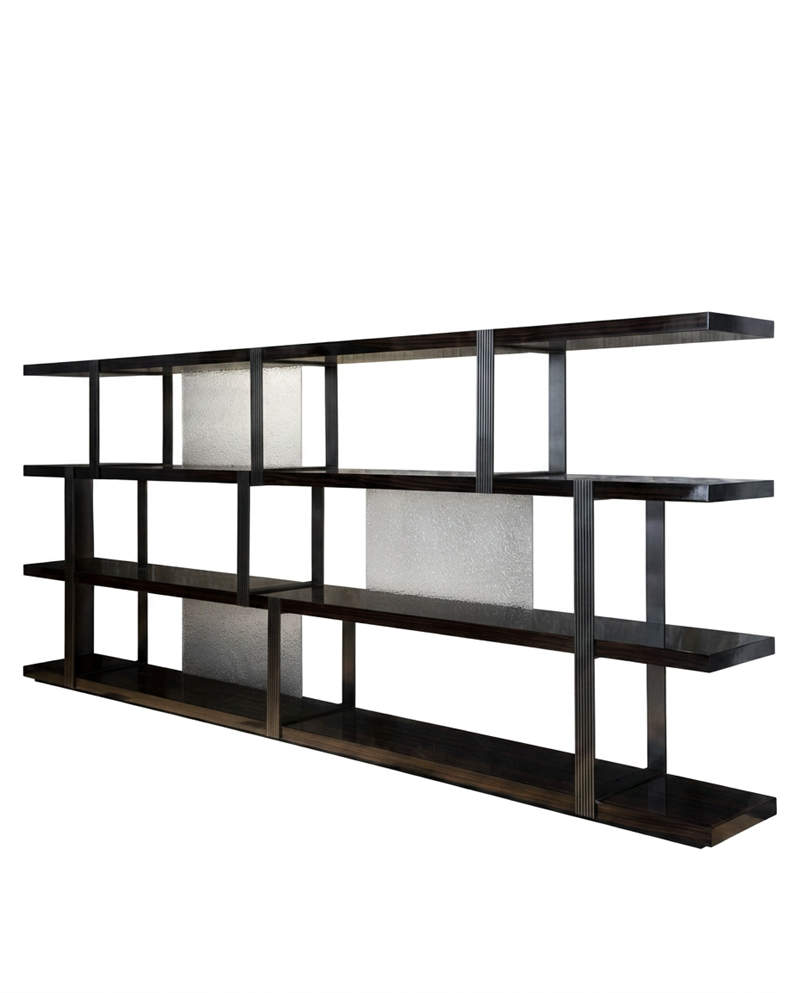
 Modular shelving and storage systems — among the fastest-growing categories in European urban furniture markets, where compact living space constraints drive demand for adaptable, multi-functional solutions.
Import/Export Compliance
Understanding the country-of-origin labeling requirements for furniture sold into EU and US markets prevents the costly discovery of compliance gaps during customs clearance. EU rules require that furniture imported from outside the EU carries accurate country-of-origin documentation — “made in China,” “made in Poland,” or the specific origin applicable. Mislabeling — whether accidental or intentional — triggers customs penalties and product holds that create both financial loss and supply chain disruption.
For US market imports, CPSC (Consumer Product Safety Commission) regulations apply to furniture that is accessible to children, with specific structural stability requirements for storage furniture (ASTM F2057 for clothing storage furniture). These are not optional — CPSC enforcement actions against non-compliant furniture imports have resulted in product recalls with financial consequences in the millions of dollars.
GDPR (General Data Protection Regulation) — the EU’s data protection framework — applies to any business that holds or processes personal data of EU residents, including client contact information in your CRM. If you are building EU client relationships and maintaining contact records, you need GDPR-compliant data handling practices. For most B2B furniture distributors, this primarily means: clear consent documentation for marketing communications, data retention policies, and the ability to respond to subject access requests within 30 days. This is not technically complex, but it requires intentional implementation.
The Tech Gap: EU Is Ahead, and It’s Affecting Your Sales
Virtual Showrooms and 3D Visualization Tools
The commercial ROI of 3D visualization investment in furniture is documented and significant. Buyers who use AR visualization tools convert at rates 2–3 times higher than those who don’t, and return rates on products selected with AR assistance are meaningfully lower than catalog-selected purchases. For B2B buyers — designers specifying furniture for projects they won’t personally occupy — the ability to visualize how a piece looks in the actual space reduces the specification risk that is one of the primary barriers to committing to larger or more unusual pieces.
The software infrastructure for B2B 3D visualization and digital catalog management has become significantly more accessible in 2024–2025. Platforms like Cylindo (3D visualization for furniture) and Configura (space planning and configuration for B2B furniture distribution) integrate with existing inventory and CRM systems. The investment threshold that previously limited these tools to large brands has declined substantially — making them viable for mid-sized distributors and showroom operators who serve professional B2B clients.
CRM Systems for International Relationship Management
Managing relationships with international clients — multiple languages, multiple currencies, different time zones, different sales cycle lengths — on a spreadsheet is not sustainable beyond the earliest stage of international market development. A CRM (Customer Relationship Management) system with multi-currency capability, multi-language client records, and integration with inventory and accounting systems is the minimum infrastructure for a B2B furniture business serving both US and EU markets simultaneously.
The practical features that matter most for international furniture B2B are: multi-currency quoting (showing price in EUR, USD, GBP simultaneously), pipeline management by geography (separate forecasting for each market), activity logging across time zones, and integration with freight and logistics provider tracking. HubSpot, Salesforce, and Zoho all support these requirements at different price points, with Zoho CRM Plus representing the most cost-efficient option for mid-sized distributors new to CRM investment.
How to Actually Expand Without Overextending
Assessing Your Readiness for International Markets
Before committing capital to EU market entry, a structured self-assessment prevents the common failure mode of under-resourced expansion: moving too fast, too broadly, with insufficient local expertise and working capital.
The readiness indicators that matter most are: a minimum of $500,000–$750,000 in accessible working capital dedicated to market entry (covering inventory, trade show presence, local partnership development, and 12–18 months of operational overhead before cash flow becomes positive); at least one team member with fluency in the target market’s primary language and understanding of local business culture; an existing product line with at minimum FSC certification and EN standard compliance documentation (the minimum threshold for EU commercial market access); and an identified local partner — agent, distributor, or showroom — who brings the client relationships and market knowledge that a new entrant cannot quickly develop organically.
The cost of insufficient preparation is not just financial — it is reputational. A first EU market entry that fails due to under-resourcing creates market perception damage that makes a second attempt more expensive.
Finding Reliable Local Partners in Target EU Markets
The most reliable methods for identifying EU distribution and agency partners — in order of effectiveness:
Trade show introductions at Salone del Mobile (April, Milan) and imm cologne (January, Cologne) provide access to the full spectrum of EU furniture trade professionals in concentrated two-to-five day windows. These are the single most efficient relationship development events for entering the EU furniture trade.
Industry association referrals — the European Furniture Manufacturers Federation (UEA), national industry associations in target markets, and interior design professional associations (AID in the UK, BDIA, VdDP in Germany) maintain member directories and facilitate introductions.
Existing supplier recommendations — if you already source from EU manufacturers, they typically know the distribution network for their home market and can provide introductions with existing relationship context.
Soft Launch Strategies
The professional approach to EU market entry minimizes capital commitment until market feedback validates the product-market fit. A staged entry: first, participation in a major trade show without inventory commitment (1–2 key products displayed, order-taking model only); second, a limited inventory commitment to a single market with a single local partner (typically 30–40% of domestic inventory levels, as noted in the FAQ below); third, scaling based on documented sell-through data rather than optimistic projections.
This approach delays revenue, but it also prevents the worst-case outcome: a full inventory commitment to a market that doesn’t respond to your product offering, leaving you with capital tied up in slow-moving stock in a market you don’t fully understand yet.
Who You’re Really Competing Against
Major Players in Each Market
The EU furniture distribution landscape is dominated by several large players whose scale and relationship depth create genuine competitive challenges for new entrants. IKEA’s contract/B2B division (IKEA for Business) has expanded aggressively, bringing its supply chain scale to the commercial furniture segment. Herman Miller (now MillerKnoll after its 2021 merger) operates across both US and EU commercial markets with significant brand equity in the contract office and hospitality segments. Natuzzi operates premium distribution networks across Europe with particular strength in upholstered residential furniture. RH (Restoration Hardware) has expanded its European physical presence, targeting the premium residential and hospitality market directly.
The insight for mid-sized distributors competing against these players is not to compete on their terms — scale, brand recognition, and distribution density are structural advantages that cannot be matched. It is to identify the specific customer segments they underserve: bespoke specification capability for distinctive projects, specialized sustainable product lines, specific geographic markets too small for large players to prioritize, and service intensity (dedicated project management, customization consultation, rapid sample delivery) that large-scale organizations cannot economically provide.
Niche Opportunities and Underserved Segments
The highest-growth underserved segments in both US and EU furniture markets for professional B2B distributors include:
Sustainable furniture specialists — the EU sustainable furniture market is growing at 11% CAGR with supply inadequate relative to demand in certified products. Distributors who build FSC, EPD, and GREENGUARD Gold documentation infrastructure for their entire product range are positioned ahead of competitors who are still treating sustainability as an optional feature.
Luxury hospitality customization — hotel brands increasingly demand proprietary furniture collections as brand differentiation tools. Distributors with bespoke production capability and the project management infrastructure to deliver 200-room custom programs on time are accessing a premium segment that commodity distributors cannot serve.
Senior living and accessibility-focused furniture — an aging population across both EU and US markets creates growing demand for furniture that combines premium aesthetics with accessibility features (appropriate seat heights, sturdy armrests, easy-clean surfaces). This segment is chronically underserved by premium distributors who associate accessibility with institutional aesthetics.
Central and Eastern European growth markets — Poland, Czech Republic, Hungary, and Romania are growing at 7–9% annually, with competitive density significantly lower than Western European markets. First-mover positioning in these markets while they are growing but before they reach saturation represents the most asymmetric opportunity in the EU furniture trade today.
Monitoring Trends and Staying Ahead
The professional intelligence infrastructure that keeps distributors and design professionals ahead of market shifts includes a combination of structured and continuous inputs.
For structured intelligence: Salone del Mobile (Milan, April), imm cologne (January), and NeoCon (Chicago, June — the leading commercial/contract furniture trade show in North America) together provide comprehensive global trend visibility across three major trade events per year. Annual attendance at all three is the baseline competitive intelligence investment for any distributor operating internationally.
For continuous monitoring: Furniture Today (US market data and news), Dezeen (design trends and product launches), Wallpaper* (luxury and design positioning), and the CSIL Centre for Industrial Studies furniture market reports (the most rigorous quantitative market research available in the EU furniture sector) provide the ongoing context that enables trend identification before it becomes consensus.
Your own client data is the most actionable early-warning system available. If three interior designers in your client base independently ask about the same product category or aesthetic direction within a 90-day window, that pattern is more predictive of near-term sales opportunity than any analyst report.
Conclusion: Your Next Steps in a Changing Market
The Window of Opportunity Is Open — But It Won’t Stay That Way
The EU furniture market is growing at 5.26% CAGR. The sustainable furniture segment within it is growing at 11%. The B2B furniture rental market is growing at 8.9%. The custom and bespoke specification segment is expanding as hotel brands and commercial developers increasingly use proprietary furniture as brand differentiation.
Each of these growth curves represents revenue that is flowing to distributors, agents, and design professionals who are positioned to capture it — through EU distribution networks, sustainability documentation infrastructure, and bespoke production capability. The gap between those who have built this infrastructure and those who haven’t is not closing on its own.
The cost of inaction is not zero. In a market growing at 5.26% annually, each year of delayed entry is a year of competitor relationship development, brand establishment, and client base building that you are forfeiting. The market consolidation that will eventually make entry more expensive and difficult is already underway — the largest players are actively building the distribution relationships that will become the high-barrier, established channels of 2030.
The businesses that will lead the international furniture market over the next decade are making sourcing decisions, building supplier relationships, and establishing EU market presence now — not because perfect information is available, but because the data that exists is already compelling enough to act on.
JL&C Furniture works with furniture distributors, agents, showroom operators, and design professionals who are ready to build the sourcing and distribution infrastructure that makes international market capture possible. The product range, manufacturer relationships, and quality documentation infrastructure are in place. The question is whether your business is ready to use them.
Contact JL&C Furniture to Start Your International Growth Strategy
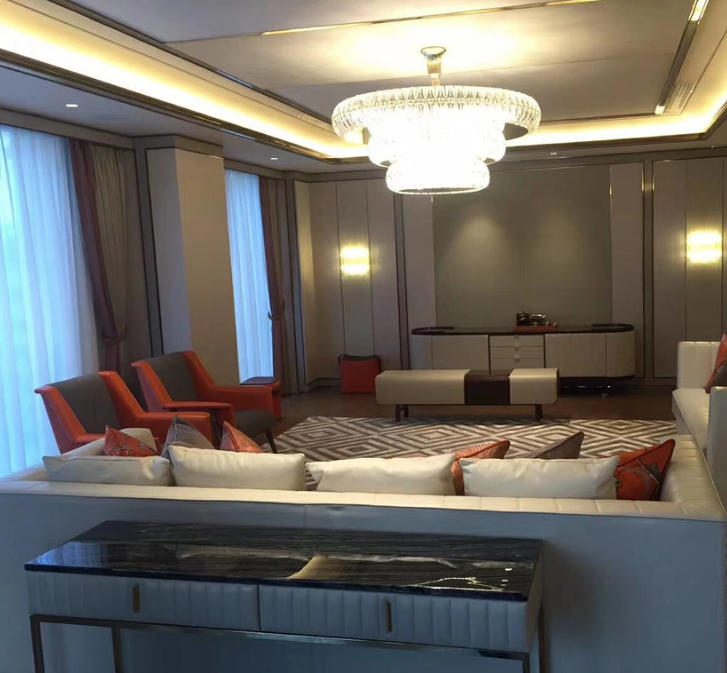
 The curated, investment-grade showroom environment that defines premium EU furniture retail — a fundamentally different commercial context from the volume-driven US showroom floor.
Glossary of Key Terms
| Term | Definition |
|---|---|
| AR (Augmented Reality) | Technology that overlays digital 3D models onto a real-world camera view via phone or tablet, allowing buyers to visualize furniture in their actual spaces |
| BIFMA | Business and Institutional Furniture Manufacturers Association — the governing body for commercial furniture performance standards in the US |
| CAGR | Compound Annual Growth Rate — the annual growth rate of a market over a specific period, assuming compounding |
| CARB Phase 2 | California Air Resources Board Phase 2 — US federal formaldehyde emission standard for composite wood products |
| D2C | Direct-to-Consumer — a sales model where manufacturers or brands sell directly to end consumers, bypassing traditional distribution |
| EPD | Environmental Product Declaration — a standardized, third-party-verified document quantifying the full lifecycle environmental impact of a product |
| FF&E | Furniture, Fixtures, and Equipment — the movable furnishings specified for hospitality and commercial interior projects |
| FOB | Free on Board — the seller’s responsibility ends when goods are loaded onto the vessel at the named port of origin |
| FSC | Forest Stewardship Council — certification confirming timber is sourced from responsibly managed forests with documented chain of custody |
| GDPR | General Data Protection Regulation — EU law governing the collection and processing of personal data of EU residents |
| LCA | Life Cycle Assessment — the methodology for evaluating the total environmental impact of a product from raw material extraction through end-of-life |
| MAP | Minimum Advertised Price — the contractual floor below which authorized dealers may not advertise a product |
| MOQ | Minimum Order Quantity — the minimum number of units a manufacturer will produce per specification |
| PSI | Pre-Shipment Inspection — independent third-party quality inspection conducted when production is 80–100% complete |
| REACH | Registration, Evaluation, Authorisation, and Restriction of Chemicals — the EU’s comprehensive chemicals regulation affecting furniture materials and finishes |
| UEA | European Furniture Manufacturers Federation — the principal trade association representing EU furniture producers |
| VAT | Value Added Tax — consumption tax applied in EU member states; for B2B transactions between EU-registered businesses, the reverse charge mechanism typically applies |
Frequently Asked Questions: Answering Your Real Concerns
1. What’s the realistic timeline for breaking even on EU market entry?
Most furniture distributors with adequate preparation — local partnerships established, product line EU-compliant, and minimum $500K–$750K working capital dedicated — see positive cash flow within 18–24 months of active EU market engagement. The key variable is “active engagement”: distributors who participate in trade shows, maintain consistent local partner relationships, and build their product documentation infrastructure from day one reach positive cash flow faster than those who enter passively and wait for inbound demand. The 18–24 month window assumes you are working with a local agent or distributor who brings existing client relationships — going direct without local partnership extends this timeline by 12–18 months.
2. How much inventory should I hold for international markets versus domestic?
Start at 30–40% of your domestic inventory levels when entering a new EU market — enough to demonstrate genuine product availability and test demand across 3–5 key SKUs, without overcommitting capital to uncertain demand. Modular furniture performs better at this stage than large statement pieces because multiple configurations from a limited component inventory reduce the capital requirement for meaningful market presence. Scale inventory based on documented sell-through velocity over the first 12 months, not on optimistic sales projections.
3. Are EU customers really that much more sustainability-focused, or is it marketing hype?
It’s a structural market reality, not hype. A Boston Consulting Group survey from April 2025 found 52% of European consumers factor sustainability into purchasing decisions — compared to 35–40% in the US. More significantly, EU commercial buyers face regulatory requirements that make sustainability documentation a procurement compliance issue, not just a preference: EPDs for green building projects, REACH compliance for all chemical components, FSC certification for timber products in public procurement contracts. EU sustainability demand is driven by both consumer preference and regulatory mandate simultaneously — which is why it doesn’t fluctuate with consumer sentiment cycles the way US sustainability interest does.
4. Should I source from EU manufacturers or import from Asia like my competitors?
The most successful EU-market distributors use a hybrid model that serves different purposes: Eastern European sourcing (Poland, Czech Republic, Romania) for products where “made in Europe” compliance and shorter lead times are commercial requirements; Chinese manufacturing for volume pieces, custom collections, and categories where the cost advantage justifies the longer lead time. The strategic logic is not origin preference — it is capability matching. Use EU sourcing where EU compliance, proximity, and provenance create commercial value. Use Chinese manufacturing where production capability, customization flexibility, and cost structure are the dominant variables.
5. How do payment terms differ between US and EU markets?
US B2B furniture transactions typically operate on Net-30 terms. Northern European markets (Germany, Nordics, Netherlands) typically operate on Net-45 to Net-60. Southern European markets (Italy, Spain, Portugal) routinely operate on Net-60 to Net-90, with actual payment often arriving later. The EU Late Payment Directive (2011/7/EU) specifies a maximum of 60 days for B2B transactions, but contractual and practical exceptions are widespread. Factor in the working capital requirement for extended EU payment cycles before committing to EU volume: if you’re turning over $500K per month in EU sales on Net-60 terms, you are carrying $1M in outstanding receivables at any given time — which requires either working capital reserves or a receivables financing arrangement.
6. What’s the biggest mistake distributors make when entering the EU market?
Underestimating the centrality of local relationships. EU furniture trade is relationship-driven at every level — designer relationships, showroom partnerships, manufacturer introductions, even trade credit terms. Cold outreach from a US-based distributor without local introduction context converts poorly. The most efficient market entry path is through an existing relationship that provides introduction capital: a mutual contact at a trade show, a referral from an existing supplier, or a partnership with an established local agent who already holds the relationships you need. Investing in relationship development at trade shows before you have products to sell is not premature — it is the entry cost of the EU market.
7. How do I handle the complexity of multiple languages and currencies?
Infrastructure investment eliminates the manual overhead that makes multi-currency, multi-language operations unmanageable at scale. The required infrastructure: a CRM system with native multi-currency and multi-language support (Zoho CRM, HubSpot, or Salesforce all support this); a multilingual website with EU-market-language product pages (at minimum German, French, Italian, and Spanish for comprehensive EU coverage); a logistics partner experienced in EU cross-border shipping and customs; and bank accounts or payment processing in EUR to eliminate conversion friction on both inbound and outbound transactions. Don’t attempt to manage these requirements manually — the error rate and time cost will erode the margins the EU market expansion is supposed to generate.
8. Is the 5.26% EU CAGR enough to justify the complexity and cost of expansion?
Yes, when evaluated in context. A 5.26% CAGR in a market worth $277 billion in 2026 represents $14.6 billion in new market value annually — every year, compounding. Even a 0.01% market share of that annual increment represents $1.46 million in new revenue. More importantly, EU expansion reduces your concentration risk: a distributor whose entire revenue base is in the US faces the full impact of US market cyclicality with no geographic hedge. EU revenue growth at 5.26% provides both diversification and absolute revenue upside. The real justification for complexity tolerance is the combination of growth rate and risk reduction — not growth rate alone.
9. How do tariffs and trade agreements affect my pricing strategy?
Tariffs are a landed cost component, not a margin item — they belong in your cost structure calculation, not your margin. The current tariff environment for furniture is volatile: Chinese-origin furniture entering the US faces approximately 31.7% combined tariff. EU-origin furniture entering the US faces an announced 15% (verify current status at USTR.gov before finalizing contracts). For EU-bound imports from China, EU MFN (Most Favored Nation) tariffs on furniture are generally 2.7–5.7% — significantly lower than US-China rates, which explains why Chinese furniture is more cost-competitive in EU markets than in the US under current tariff structures.
10. What’s the best way to find reliable suppliers and partners in Europe?
The four most reliable methods, in practical order of effectiveness: first, Salone del Mobile in Milan (April) — the single most concentrated gathering of EU furniture industry decision-makers globally; second, imm cologne in January — particularly strong for the German-speaking and Northern European markets; third, national industry association referrals — UEA, VdDP (Germany), AFidamp equivalent associations by country; fourth, existing supplier introductions — if you source from EU manufacturers already, they typically know the distribution network and can introduce you with existing relationship context. For any potential partner identified through any method: require references, visit their showroom operation if possible, and structure the first engagement as a limited pilot before committing to exclusive or volume arrangements.
11. How do I protect my brand and pricing across multiple distribution channels?
Three mechanisms working in combination: MAP (Minimum Advertised Price) policies in all dealer agreements with documented enforcement procedures; geographic exclusivity clauses that prevent cross-territory sales without written consent; and serialized product identification that allows unauthorized pricing instances to be traced to the originating dealer. Monitor pricing actively — both online and through mystery shopping in physical markets. The moment a MAP violation is left unaddressed, the policy loses credibility with all dealers. Consistent enforcement from the first violation is the only mechanism that maintains MAP as a functional pricing floor.
12. What certifications and compliance documents do I actually need for EU sales?
The minimum compliance documentation for furniture sold into EU commercial markets includes: REACH compliance certificates from your supplier for all chemical components (finishes, adhesives, foams, fabrics); EN 1021-1 and EN 1021-2 flammability test reports for upholstered furniture; country-of-origin documentation for customs purposes; and CE marking documentation if your products fall within scope of applicable EU product safety directives. For premium commercial and hospitality specifications: FSC Chain of Custody certification (verifiable at info.fsc.org), EPD documentation (increasingly required for green building certified projects), and ISO 14001 environmental management certification from your manufacturers. These are not optional enhancements — they are the entry requirements for the commercial specification market in the EU.
13. How do I price custom/modular furniture when every order is different?
Build a component-based pricing architecture: each module has a base cost (material + production + overhead allocation), and customization surcharges are structured as additions to the base — dimensional modification (+X%), COM (Customer’s Own Material) upholstery (+Y%), finish specification (+Z%), custom hardware (+W%). This architecture makes every custom order priceable in minutes rather than hours, creates pricing consistency across orders, and enables transparent client communication. Software tools like Configura (B2B furniture space planning and configuration) or a well-structured ERP cost model enable this pricing discipline at scale. EU clients, particularly in Germany and the Nordics, explicitly expect and respect pricing transparency — a clear, documented pricing model strengthens rather than weakens your commercial position.
14. Should I open a physical showroom in Europe or operate digitally?
For the B2B client segments that represent your primary business — interior designers, hotel fit-out professionals, commercial specifiers, and distribution agents — a physical presence matters. These clients are evaluating material quality, finish consistency, and scale reference before committing to specification decisions on projects worth hundreds of thousands of dollars. Digital catalogs and AR visualization tools supplement the physical evaluation; they don’t replace it. Start with a minimal physical presence: a shared showroom space or concession within an established local partner’s showroom is far less capital-intensive than an independent showroom, and provides the client relationship infrastructure that cold digital presence cannot replicate. Scale to a dedicated showroom once you have the client base to justify the fixed overhead.
15. How do I compete against established European distributors who have relationships and scale advantages?
The generic answer — “focus on niches they underserve” — is correct but only actionable with specificity. The niches that are most systematically underserved by large EU distributors in 2025–2026 are: sustainability-certified product lines with EPD documentation (large distributors move slowly on compliance infrastructure); hospitality bespoke specification programs (large distributors’ production partners often lack the flexibility for genuine custom work); Central and Eastern European growth markets (large players are focused on established Western European volume); and senior living / accessible design at premium aesthetics (systematically underserved by both volume and luxury distributors). Your US market expertise can also be a genuine EU market asset: American design trends — the materials and aesthetics currently leading US premium residential — often appear in European markets 18–24 months later. Distributors who bring forward visibility into US market directions can position themselves as trend intelligence partners for EU clients who value American design influence.
This analysis was prepared by the research and content team at JL&C Furniture for furniture distributors, agents, showroom operators, interior designers, and hotel fit-out specialists navigating international market strategy. For sourcing consultations, product inquiries, and market entry support, visit www.jlc-f.com.

Best Ways to Order Furniture from China: Factory, Agent, or Marketplace A decision guide for high-end furniture importers, FF&E buyers, hotel developers, villa owners, interior

How to Order Furniture from China Without Costly Mistakes A Strategic 8-Step Roadmap for High-End Furniture Importers, Interior Designers, FF&E Buyers, Developers & Private Label

Advanced Tips to Streamline Repeat Furniture Orders from China: A Strategic Guide for High-Value Buyers Alt: Luxury bespoke furniture showroom with custom upholstered seating, solid

Custom furniture sourcing done right starts here — before a single factory conversation, before a single sample request. The Ultimate Guide to Custom Furniture Sourcing

Top Trends in Custom Furniture for Villa Owners and Private Label Brands A strategic guide for the designers, developers, importers, and brand owners who need

Maximizing Value: How Interior Designers Can Add Custom Furniture to Their Projects When every piece in a room is made for that room — not