

ニュース

China Furniture Sourcing Agent: Roles for High-End Buyers
China Furniture Sourcing Agent Roles for High-End Buyers What a China Furniture Sourcing Agent Actually Does for High-End Buyers Every finished luxury room sits on

How Leading Distributors, Designers, and Showrooms Navigate Complex Sourcing Challenges — Real Cases, Real Solutions, Real Results

The global contract furniture market reached $78.2 billion in 2025, according to Grand View Research — and every dollar of that market was earned by professionals managing projects that almost went wrong. The client who said “modern” and meant “Italian neo-classical.” The hotel that needed 200 rooms furnished with 90 days on the calendar and zero tolerance for excuses. The retail chain whose interior designer was specifying pieces that no distributor in the region could actually source.
These are not unusual scenarios. They are Tuesday.
What separates the professionals who consistently deliver from those who are constantly firefighting is not luck, not budget, and not the quality of their supplier list. It is the quality of their framework — the discovery questions they ask before committing, the communication systems they run during execution, and the supplier relationships they build during the quiet months that save them during the crisis ones.
Three specific gaps create most of the chaos in commercial furniture projects:
The first is the expectation gap — the distance between what a client says in a briefing and what they actually need once execution begins. A hotel GM who says “contemporary design” and a 5-star-trained interior designer who hears “contemporary design” are often describing two completely different rooms. Nobody catches this until week six.
The second is the communication gap — the space between what a supplier commits to in a sales conversation and what gets documented in a purchase order. Oral lead time commitments that become 40% longer in production. Material specifications that were agreed “in principle” but never written down. Delivery windows that were realistic in March and catastrophic in October.
The third is the planning gap — the difference between a project schedule built backwards from a hard delivery date and one built forward from a wishful start date. According to industry data, projects with scope creep exceed their budget 85% of the time, with an average cost overrun of 27%. For a $400,000 hotel fit-out, that is $108,000 in preventable losses.
It is almost never a single catastrophic decision. Successful commercial furniture projects are distinguished from problematic ones by the accumulation of small, early, correct decisions: the discovery question that surfaces the hidden budget constraint before sourcing begins; the change-order clause that protects the project when the client redesigns the lobby at week seven; the backup supplier relationship that gets activated calmly rather than desperately when the primary manufacturer reports a production delay.
This playbook documents those decisions — through five real project scenarios that represent the situations your team faces regularly. Read each case study for the specific tactical lesson, then apply the principles at the end to your own process.
Each case study follows a complete sourcing journey: the real problem hidden behind the stated brief, the sourcing strategy that solved it, the execution challenges, and the lessons that can be applied to the next project. After the five cases, the playbook extracts five principles that run across all of them — and a practical framework for building your own problem-solving process.
This is not theoretical. The scenarios, the decisions, and the outcomes are representative of real B2B commercial furniture projects across hotel, retail, corporate, and showroom contexts. Use the frameworks as they are, or adapt them to your market and client type. The goal is that your next project is better managed than your last one — by design, not by luck.
A regional boutique hotel operator with four properties across Southeast Asia contacted a distributor with an urgent brief: furnish 200 guest rooms across two properties, with a hard opening date 90 days out. The brief was two pages. The budget was a range. The specification was “modern luxury, warm tones.”
The distributor’s first instinct was to say yes. Their second instinct — which is what saved the project — was to ask questions before saying yes.
What the client said: “modern furniture, warm tones, 90 days.”
What the client actually needed, surfaced through a structured 90-minute discovery session:
None of these requirements appeared in the original brief. Each one would have caused a project failure if discovered at week six rather than week one.
The hidden budget constraint alone would have derailed the project: at $2,500 per room, the distributor would have sourced to a specification the client could not actually pay for — discovering the gap only when the final invoice arrived.
The discovery session used five specific questions that every commercial furniture professional should ask before committing to any hotel project:
“When you say [design descriptor], can you show me two or three reference images that represent the direction?” — This replaces subjective language with visual evidence, eliminating the interpretation gap between what the client imagines and what the distributor sources.
“What is the hard budget ceiling per room — the number above which you would descope rather than exceed?” — Most clients give a range. The ceiling is the number that matters.
“What compliance documentation will your building authority or franchisor require before the rooms can be signed off for occupancy?” — This surfaces the fire rating, accessibility, and material certification requirements that frequently blindside distributors at the delivery stage.
“Is this a single delivery date or a phased handover schedule — and if phased, which rooms or floors take priority?” — Phased delivery fundamentally changes the logistics strategy and the pressure points in the production schedule.
“If the timeline proves unachievable at the required quality standard, which is your priority: the opening date, the budget, or the specification?” — This establishes the hierarchy that guides every trade-off decision that arises during execution.
The documentation of this session — a two-page discovery brief signed by the client’s project manager before sourcing began — became the reference document that prevented three separate scope-creep disputes during execution.
Red flags that signal unrealistic expectations, and how to handle them: A client who cannot answer the budget ceiling question directly, who refuses to sign off on the discovery brief, or who describes the timeline as “flexible” when it clearly is not — these are signals to recalibrate the commitment rather than proceed on optimistic assumptions.
200 rooms across two properties in 90 days is not a single sourcing problem. It is seven or eight smaller problems that happen to share a deadline. The distributor broke the order into five segments based on critical path priority:
| Segment | Items | Lead Time Sensitivity | Action Taken |
|---|---|---|---|
| Critical path | Beds, headboards, nightstands | Longest production lead time — 9–11 weeks | Ordered first, within 48 hours of brief confirmation |
| Compliance-sensitive | Upholstered seating (fire-rated fabric) | Required fabric certification procurement before production | Parallel-tracked with critical path segment |
| Standard production | Desks, TV consoles, luggage racks | 6–8 week lead time; manageable | Ordered in week two |
| Sourced locally | Decorative mirrors, accessories | Available domestically within 2–3 weeks | Held until week six, sourced locally to reduce risk |
| Property B exclusive | Second property variant pieces | 2-week offset from Property A production | Scheduled 2 weeks after Property A order confirmation |
This segmentation approach had two specific benefits. First, it correctly identified that ordering the standard-production items simultaneously with the critical-path items would not accelerate the overall timeline — the project would still be constrained by the longest-lead-time category. Second, it isolated the compliance-sensitive upholstery sourcing as a parallel workstream, so the fire-rating fabric certification process was running while bed production was already underway rather than creating a sequential bottleneck.
Building in buffer time without inflating the timeline: The distributor built six days of buffer into the delivery schedule for Property A and nine days for Property B. These buffers were not disclosed as “padding” — they were presented to the client as the standard delivery window between container arrival and room-ready completion. When Property A encountered a four-day customs clearance delay, the buffer absorbed it cleanly.
The 200-room order was sourced from three manufacturers: a primary supplier for upholstered pieces and case goods, a secondary supplier for the bed frames and headboards, and a local accessories supplier. Maintaining consistent quality across three separate production environments on a 90-day timeline required three specific protocols.
Standardizing specifications across manufacturers: Every supplier received an identical specification pack — the same material references, the same finish color codes, the same hardware specification, the same dimensional tolerances. The temptation to allow each supplier to interpret the brief individually was deliberately resisted. The cost of a misalignment discovered at delivery — across 200 rooms — would have been catastrophic.
Pre-shipment inspections that catch problems early: A third-party inspector from QIMA conducted pre-shipment inspections at both primary supplier facilities before any container was loaded. The bed frame supplier inspection caught a hardware finish inconsistency across 15% of the batch — brushed gold hardware that varied between warm and cool tone across the run. This was corrected in the factory within four days. Discovered at the hotel, it would have required re-procurement and a two-week delay.
Communication protocols: A daily 15-minute status call between the distributor’s project manager and each supplier’s production liaison was maintained from week two through the shipping milestone. This sounds excessive. It prevented three separate situations from escalating from alerts to crises.
The two properties received furniture across four separate shipping containers, with two deliveries per property on different dates to match the phased room-block handover schedule. Managing this required a master logistics timeline that mapped each container’s contents against the room numbers scheduled for installation during that delivery window.
When the Property A customs clearance delay occurred, the hotel’s rooms manager already had the contingency plan: start installation on the ground floor and work upward, prioritizing the room blocks furthest from the affected container. By the time the delayed container cleared customs, the first two floors were complete and the installation team had a clear schedule for the remaining pieces.
Warehouse staging: All furniture was received at a third-party warehouse facility near each property and staged by room category before hotel delivery. This added 48 hours to the timeline but reduced installation time by 30%, because every piece arrived at the hotel in room-sequence order rather than requiring sortation on the property loading dock.
Last-minute problem-solving: At Property B, four dining armchairs arrived with upholstery tension failure across the right arm — a defect that had passed the pre-shipment inspection by appearing only after packaging compression during transit. The distributor had retained 10 units of the same model at the staging warehouse as a standard damage allowance. Four units were replaced within six hours. The client never saw the defect.
The handoff documentation included: a photographic inventory of every room, confirming specification compliance; a care and maintenance guide for each upholstery material and surface finish; warranty certificates for every significant piece, organized by room number; and a contact card for the distributor’s account manager. The hotel’s housekeeping team received a 45-minute briefing on the specific cleaning products and methods approved for each surface type.
Three months after opening, the hotel GM called to discuss furniture for their fifth property. The relationship built on 90 days of disciplined project execution was the foundation for a multi-year sourcing partnership.

A regional retail chain with 12 locations was expanding to four new cities simultaneously. Their interior designer had developed a specification that was visually compelling, technically detailed — and apparently unsourceable. Three distributors had reviewed the specification and told the client the same thing: “We can’t source that.”
The fourth distributor — who took the time to ask different questions — discovered that two of the three “unsourceable” items were not actually unsourceable. They simply required a manufacturer capable of custom modifications to standard production pieces, and the other distributors were not willing to develop that capability for an unknown client relationship.
The designer’s specification called for a dining chair with a specific curved back profile in solid white oak, upholstered seat in a Grade 5 performance fabric, with hairpin legs in a matte-black powder-coat finish. Three standard catalogue items checked two of these three boxes. None checked all three.
The translation problem is one of the most common — and most expensive — sources of delay in commercial furniture projects. Interior designers speak the language of aesthetic outcome. Manufacturers speak the language of production specifications. Distributors are the translators, and the quality of that translation determines whether a project runs smoothly or runs aground.
Converting the designer’s specification into manufacturer language required:
Handling requests for custom modifications without exploding your timeline: The key is determining whether the modification requires a new tooling investment (expensive, long lead time) or a process adjustment to an existing capability (inexpensive, shorter lead time). The curved back profile required steam-bending equipment — a process capability, not a new tool. Identifying manufacturers with existing steam-bending capability reduced the custom modification lead time from 8–10 weeks (new tooling) to 4–5 weeks (process application to existing equipment).
The retail chain’s designer had specified to a Grade 5 performance fabric budget. The client’s procurement manager was buying to a Grade 3 fabric budget. The gap was 22% per chair — across 480 chairs, that was $12,000 in unbudgeted cost.
The resolution was not a compromise that disappointed both parties. It was a structured trade-off conversation:
“You need Grade 5 fabric durability for high-traffic retail use because Grade 3 will show wear within 18 months and require replacement. The choice is not between Grade 5 and Grade 3 fabric — it is between Grade 5 fabric now and replacing all 480 chairs in 18 months. Here are the total cost of ownership numbers for both options.”
The procurement manager approved the Grade 5 fabric budget within 24 hours. The conversation had reframed the decision from “spend more now” to “spend less over five years” — and that frame was accurate.
The distributor who solved this project did not find a new supplier randomly. They found one through a specific search: manufacturers within their qualified network who listed steam-bending as a production capability. Two manufacturers qualified. One had current capacity. The order was placed within a week of the initial “we can’t source that” conversation.
The lesson: your supplier network is only as useful as its capability documentation. A list of approved suppliers organized by product category is less useful than a database of approved suppliers organized by production capabilities — because capability gaps drive most “unsourceable” requests, and capability databases resolve them.
Building a secondary supplier network for backup purposes is equally important — and is most practically done during slow periods, not during the projects when you need them. For every critical product category, identify and qualify at least one secondary supplier who can absorb the volume if the primary supplier encounters a production issue. The qualification cost (a factory visit, a sample order, a reference check) is typically $500–$2,000 in time and expense. The insurance value of that qualification is measured in the six-figure project salvage it enables.
The curved-back chair required one prototype cycle before full production. The designer approved the prototype after requesting one adjustment — the seat cushion profile was reduced by 8mm to create a cleaner visual line when viewed from the front. The revised prototype was produced in six days.
Reducing back-and-forth iterations through smart sampling: Provide the designer and the client’s procurement manager with a single document before the sample is made: a rendered image of the exact production specification with every element called out by material reference, dimension, and finish code. Ask both parties to mark any element they want to change before production begins, not after they see the sample. This single process change typically reduces prototype iterations from three to one.
Four new retail locations opening simultaneously, with a fifth location in planning — the chair that worked at Location 1 needed to arrive in the same specification at Location 5. This sounds straightforward. It is not, without a master specification document that travels with the order.
The master specification document is not the designer’s drawing. It is a production-ready document that includes: the exact material grade codes (not descriptions — the specific Grade 5 fabric reference number), the exact finish codes (not “matte black” — the specific powder-coat RAL reference), the exact dimensional measurements with tolerances, and the approved prototype photograph as the visual reference. This document is attached to every purchase order across all four locations, and every pre-shipment inspection is conducted against it.
What “consistency” actually means for production teams: Consistency across multiple orders from the same manufacturer is not automatic — it requires explicit documentation. Between the initial production run and a subsequent order six months later, a manufacturer may have changed their powder-coat supplier, discontinued a fabric grade, or adjusted the standard curve radius on a steam-bent component. Without a documented approved standard to check against, these changes arrive in the client’s location without warning.
The four-location simultaneous order created a consolidated volume that qualified for a manufacturer pricing tier 15% below the single-location rate. But the saving required consolidating the purchase orders — which created a logistics complexity: all four locations were in different cities, with different delivery dates and different building access requirements.
The solution was a staged production approach: produce all 480 chairs in a single run (qualifying for the volume pricing), ship to a central distribution warehouse, and dispatch to each location on its specific installation date. The warehousing cost was $1,800 for six weeks of storage. The volume pricing saving was $18,600. Net benefit: $16,800 — in addition to the consistency benefit of a single production run.
A 650-person technology company was renovating five floors of their headquarters. The project brief had been through three internal committees and arrived at the furniture procurement team in the form of a 47-page document that contained three contradictory furniture specifications, two incompatible ergonomics standards, and a budget range so wide it could accommodate almost any decision.
The procurement manager described the situation accurately: “Nobody knows what they want, but everyone knows what they don’t want.”
The stakeholder group included HR (focused on ergonomics and employee satisfaction), Facilities (focused on durability and maintenance cost), Finance (focused on total project cost and depreciable asset value), and the executive team (focused on brand expression and visitor impression). Each group had legitimate authority over their specific concerns. None had been given a framework for reconciling their priorities.
The distributor’s project lead introduced a decision matrix at the first stakeholder meeting: a structured tool that rated furniture options against each stakeholder group’s priority criteria, with agreed weightings assigned by the group collectively. This converted a circular debate about preferences into a structured comparison of options against criteria that everyone had agreed to in advance.
The matrix had five criteria — ergonomic certification, surface durability rating, maintenance cost per unit, aesthetic alignment with brand guidelines, and unit price. Each criterion was weighted by a percentage agreed by the committee (ergonomics 25%, durability 20%, maintenance 20%, aesthetics 20%, price 15%). Every proposed furniture option was scored against each criterion. The committee then evaluated options by weighted score, not by the loudest voice in the room.
Documentation that prevents scope creep and blame-shifting: The signed decision matrix became the reference document for every subsequent specification dispute. When the executive team later requested a change to the visitor lounge specification, the project lead was able to show that the approved option had scored highest on both aesthetics and durability criteria — the two that the executive team had weighted most heavily. The change request was withdrawn.
The one specification failure that almost happened: the initial shortlist included an upholstered panel system that looked exceptional in the showroom but had a fabric maintenance requirement incompatible with the company’s cleaning contract. The cleaning contractor used a specific commercial disinfectant wipe that would have degraded the fabric surface within six months.
This was identified not through the decision matrix — it was identified by the distributor’s project lead specifically asking the facilities manager: “What cleaning products does your maintenance team use on upholstered surfaces?” The answer — a product with a pH above 9 — disqualified two of the three shortlisted upholstery options. The compliant option was substituted before any sample order was placed.
Sustainability requirements also emerged during this discovery: the company had an internal ESG commitment requiring all new furniture purchases to carry FSC (Forest Stewardship Council — international certification for responsibly sourced timber) chain-of-custody documentation for any wood components, and GREENGUARD Gold certification (a certification confirming low chemical emissions for furniture used in occupied commercial spaces) for all pieces installed in areas with continuous human occupation. These requirements were not in the original 47-page brief. They were identified through a specific sustainability checklist distributed to each stakeholder group at the second meeting.
Rather than furnishing all five floors simultaneously, the distributor proposed and the client accepted a phased rollout: Floor 3 first, as a pilot; Floors 1 and 2 six weeks later; Floors 4 and 5 eight weeks after that. The phased approach served three purposes simultaneously.
First, it allowed the client to experience the furniture in actual use before committing to five-floor volume — identifying any ergonomic, aesthetic, or maintenance issues at the pilot stage rather than after full deployment. Second, it distributed the capital expenditure across three tranches rather than requiring a single large payment, which the Finance stakeholder identified as a significant working capital benefit. Third, it allowed the distributor to place production orders with the manufacturer in a volume sequence that secured better pricing on the second and third tranches based on demonstrated commitment.
The pilot floor generated one change request — the desk chair seat height range was inadequate for the 95th-percentile height profile of the company’s engineering team. This was adjusted before the second tranche order was placed. The cost of one floor’s worth of specification adjustment was $4,200. The cost of adjusting five floors after full deployment would have been $21,000 plus client relationship damage.
Five floors of furniture from three manufacturers, coordinated across an 18-week production and delivery schedule, required a single shared project management platform accessible to the distributor’s team, the client’s procurement manager, and the primary manufacturers. The platform (Monday.com) showed every production order’s current status, every delivery milestone, and every outstanding approval item in a single dashboard view.
Handling change orders without chaos: A change order protocol was established at project initiation: any change to the agreed specification required a written change order documenting the item changed, the reason, the cost impact, the timeline impact, and the client’s signature of approval. No production change was made without a signed change order. This protocol was invoked six times during the project — once for the desk chair seat height, twice for finish adjustments on the executive lounge, and three times for quantity changes as headcount projections changed.
650 employees continued working during a five-floor renovation. The installation schedule was built around operational reality: no deliveries between 8:00 AM and 10:00 AM (peak arrival), no installation noise above 65 dB during core working hours (8:00 AM to 6:00 PM), and no access to any floor that had not been cleared by the building manager by 7:00 AM on the installation day.
The installation team leader held a daily 7:00 AM briefing with the facilities manager to confirm access permissions, flag any floor where employee activity had extended into the planned installation window, and adjust the day’s sequence accordingly. When Floor 4 had an extended all-hands meeting that ran 90 minutes beyond schedule, the installation team moved to Floor 5 for the afternoon and returned to Floor 4 the following morning. The overall installation timeline absorbed this without impact.
The client’s HR team asked the distributor to provide a two-page employee guide — describing the ergonomic adjustment features of the new desk chairs and how to configure the sit-stand desks — for distribution on the day each floor was handed over. This was a 90-minute investment by the distributor’s project lead. The employee satisfaction scores on the company’s internal post-renovation survey cited “clear guidance on how to use the new furniture” as one of the three most appreciated aspects of the project.
Small details like this are what convert a project delivery into a client relationship.
A design firm managing the fit-out of a 180-room five-star urban hotel had an original production start date of week one. By week five — due to a structural construction delay that pushed the building handover back three weeks, followed by a brand standard revision that required a specification redesign — the effective production start date was week five. The delivery date did not move.
The project had lost five weeks of production time before a single purchase order had been placed.
Before the structural delay, the project had already been approved with a timeline that a senior procurement consultant reviewed as “achievable, with no margin for error.” That phrase — “no margin for error” — is the most expensive phrase in commercial furniture project management. It means any single event that deviates from the optimal scenario creates a cascade.
The distributor managing this project had said yes to the original timeline based on the primary manufacturer’s production estimate. That estimate assumed: design approvals completed in week one, purchase order placed in week two, production completed in week 11, shipping completed in week 14, delivery and installation completed in week 16. It was a schedule with no contingency, no buffer, and no acknowledgment that design approvals in complex hotel projects routinely take two to three weeks longer than planned.
Early warning signs that a deadline is unrealistic: Any timeline that requires every phase to execute at its best-case duration without a single real-world interruption is not a timeline — it is an optimistic scenario. When reviewing a project schedule, identify the phase most likely to experience delay (typically design approvals or custom production) and ask: “If this phase takes 30% longer than estimated, what happens to the delivery date?” If the answer is “we miss the opening,” the schedule needs a contingency before it is approved.
The five-week compression created a specific cascade: the delay in production start pushed the shipping window from the optimal June slot (pre-peak season, lower freight rates, priority container availability) to August (peak season, higher freight rates, reduced container availability). The freight cost for the same volume of furniture increased by 18% from June pricing. The logistics timeline extended by four days due to port congestion at the peak-season destination. Neither of these costs appeared in the original budget.
Supply chain dependencies that weren’t anticipated: The hotel specification included a custom fabric from a European textile house. The fabric’s lead time was eight weeks from purchase order. In the original timeline, the fabric order could have been placed simultaneously with the production order — the fabric would arrive at the factory in week eight just as production was ready for upholstery. In the compressed timeline, the fabric needed to be pre-ordered before the brand standard revision was finalized, because the standard revision took four weeks of review and the fabric had to be en route during that review to avoid a further delay. The fabric was ordered against the most likely specification, with explicit written acknowledgment from the client that the order was conditional on the brand standard revision not changing the fabric reference.
The brand standard revision did not change the fabric. The gamble paid off. It was still a gamble — and it should have been a documented, client-approved decision, which it was, rather than a unilateral assumption, which it almost became.
From week five forward, the project ran on a daily stand-up call: the distributor’s project manager, the design firm’s procurement lead, the primary manufacturer’s production liaison, and the logistics coordinator. Each call took 20 minutes. The agenda never changed: production stage for each item category, any issue identified in the previous 24 hours, action taken or planned, and any item requiring a decision before the next call.
Creating transparency about progress and obstacles: The distributor’s project manager sent a one-paragraph daily summary email to the design firm’s project director after each call. The email documented what was confirmed, what was at risk, and what decision was needed within the next 24 hours. There were no surprises at the weekly client status meeting — every issue that appeared in the weekly meeting had already been raised and was already being managed.
This communication discipline is, in practice, the most effective risk management tool available during a compressed timeline. A problem that the client learns about from the project manager — with a proposed solution — is a managed problem. A problem that the client discovers independently is a crisis.
At week nine, the primary manufacturer reported that a component supplier had delivered a batch of brass hardware with a plating thickness below specification — a quality failure that affected approximately 40% of the case goods in production. The manufacturer’s proposed solution was rework at the factory, extending their timeline by 11 days.
The distributor’s response was to activate a parallel path: source the compliant hardware from an alternative supplier (identified and qualified 72 hours after the issue was reported), airfreight the hardware to the factory (cost: $1,400), and maintain the original delivery timeline. The rework was completed using the airsfreighted hardware without any timeline impact.
Negotiating with suppliers when they’re also under pressure: The hardware supplier who had failed the specification was asked to credit the airfreight cost against the purchase order. They agreed — because their error had created the cost. The conversation was not adversarial; it was a straightforward claim against the supplier’s quality failure, documented with the inspection report that identified the plating deficiency. The documentation made the conversation factual rather than emotional.
The pressure of a compressed timeline creates a specific temptation: to defer quality checkpoints that feel like they are slowing progress. This is the error that converts a tight project into a failed one. Quality issues not caught during production arrive at the hotel and create a crisis on a timeline where there is no recovery time.
The pre-shipment inspection was maintained in full — not abbreviated because of time pressure. The inspection identified three issues that required factory correction: two pieces with finish inconsistency, and one upholstered bed frame where the corner seaming had been rushed and showed a visible tension differential. All three were corrected within 48 hours and the container was loaded on schedule.
Inspection protocols that don’t slow you down: Pre-shipment inspection by a professional third-party agency such as SGS takes one to two days and produces a written inspection report with photographic documentation. For a project of this scale, it costs approximately $800–$1,200. The three issues it caught — if they had arrived at the hotel and required remedy — would have cost an estimated $6,800 in express replacement pieces, premium freight, and installation crew overtime. The ROI on that inspection was approximately 5.7:1.
The hotel opened on its soft-opening date. The fit-out was completed two days early. The design firm’s project director described the outcome as “the most stressful project I’ve managed in five years, executed by the most organized team I’ve worked with.” That contradiction is the accurate summary of what a compressed timeline, managed correctly, looks like from the client’s perspective.
The distributor conducted a structured retrospective immediately after project completion, documenting: which contingency decisions were correct, which risks were not identified early enough, and which protocol changes would improve the next compressed-timeline project. Three process changes resulted: a revised timeline review checklist that now includes a “no-contingency scenario test” for every schedule presented to a client; a standing pre-qualification for an airfreight hardware supplier to reduce the activation time for future emergency hardware sourcing; and a revised change order process that reduces the approval timeline from 48 hours to 24 hours for changes flagged as critical-path items.
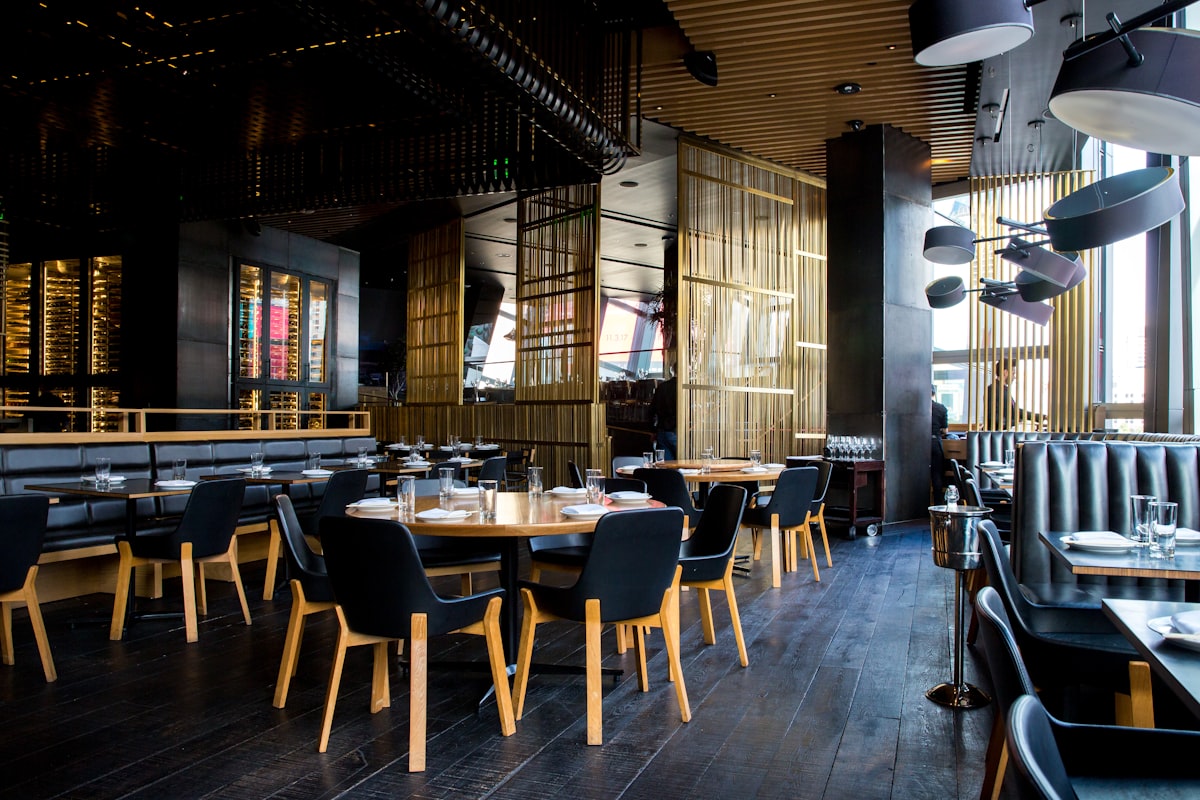
A luxury furniture showroom in a Gulf market had invested $180,000 in a new collection for their 450 sqm floor. Six months later, 30% of the inventory — approximately $54,000 at cost — had not moved. Meanwhile, three interior designers had come in looking for contract-grade upholstered dining chairs in a specific configuration and left without purchasing because the showroom didn’t carry them.
The showroom was simultaneously over-stocked in the wrong pieces and under-stocked in a category that was generating active demand.
The root cause was straightforward: the inventory selection had been made by the showroom owner based on aesthetic preference and supplier relationships, not based on documented buyer behavior. When the owner was asked “which pieces are your interior designer clients actually specifying for projects?”, she could answer from memory — but that information had never been systematically captured.
The inventory audit revealed three distinct categories with dramatically different commercial performance:
| Inventory Category | % of Floor Space | % of Sales Revenue | Days to First Sale (avg) |
|---|---|---|---|
| Statement decorative pieces (accent chairs, coffee tables) | 35% | 18% | 87 days |
| Contract-grade seating (sofas, dining chairs, lounge chairs) | 25% | 52% | 22 days |
| Case goods (sideboards, media units, display cabinets) | 30% | 24% | 41 days |
| Outdoor / terrace furniture | 10% | 6% | 110 days |
The contract-grade seating category occupied 25% of the floor and generated 52% of revenue. The statement decorative pieces occupied 35% of the floor and generated 18% of revenue. The showroom was over-invested in the lowest-velocity, highest-floor-space category and under-invested in the highest-velocity category that its primary clients — interior designers specifying for hospitality and residential projects — were actively purchasing.
How designer preferences shift and what that means for your stock: The shift toward contract-grade specifications in luxury residential projects — driven by clients who want commercial-durability performance in high-use residential spaces like family rooms and home offices — had been accelerating for two to three years in the Gulf market. The showroom had not registered this shift as an inventory implication because the conversations with designers happened on the floor, not in a structured format that captured specification requirements.
The $54,000 in slow-moving inventory was not a loss — it was capital committed to pieces that might eventually sell. But that $54,000 represented six months of working capital that could not be used to stock the contract-grade seating pieces that three designers had walked in looking for and left without finding.
The three missed designer visits represented an estimated $42,000 in potential contract specification business — multiple-unit project orders that went to competitor showrooms. The actual cost of wrong inventory decisions was not the $54,000 in slow-moving stock. It was the $42,000 in missed revenue — and the three damaged designer relationships that represent significantly more in future specification business.
The showroom’s owner conducted a 12-month sales analysis — the first systematic review she had undertaken in three years. The output confirmed the audit data and added two insights: first, that 67% of revenue in the contract-grade seating category came from designers specifying for hospitality projects (hotels, restaurants, serviced apartments), not residential projects. Second, that the average project specification for a hospitality client was 40–80 units per visit — compared to 2–6 units per visit for residential clients.
These two insights fundamentally changed the inventory strategy. The showroom was not primarily serving residential buyers who needed one or two pieces. It was serving hospitality designers who needed to evaluate pieces against commercial-grade durability specifications before placing 40–80-unit project orders. Those designers did not need to see 12 different accent chair designs. They needed to see pieces with documented BIFMA or EN 16139 certification, available in the fabric grades and fire-rated upholstery options required for hospitality specifications.
Building a core collection that works across project types: The revised inventory strategy consolidated the floor around three anchors: a sofa and armchair collection available in three performance fabric grades and two contract-grade leather grades (covering both hospitality and high-end residential specifications); a modular dining and lounge chair range in four base configurations with full customization documentation; and a premium case goods collection that covered the specification range from luxury residential to commercial office. Specialist decorative pieces were reduced from 35% of the floor to 15% — maintained for visual storytelling and to serve residential clients, but not at the expense of the contract-grade categories generating most of the revenue.
The revised strategy required the showroom to secure priority access to the two manufacturers producing the core contract-grade seating collection — because the hospitality designers who were the primary clients needed to know that when they specified a piece from the floor, it would be available in their required volume within their project timeline.
The showroom approached the primary manufacturer — JL&C Furniture — with a structured partnership proposal: a committed annual volume, an agreed floor allocation, and a co-marketing arrangement in exchange for priority production scheduling, early notification of new product introductions, and a 72-hour response commitment on hospitality specification inquiries.
The manufacturer agreed. The result: when a designer came into the showroom with a 60-unit dining chair requirement for a hotel project, the showroom could provide a confirmed production lead time within 24 hours — not a “we’ll check and get back to you” response that sent the designer to a competitor who could answer immediately.
The physical reconfiguration of the showroom followed a specific principle: stage environments that match the client’s project context, not environments that showcase individual pieces. Interior designers visiting to specify hospitality projects do not need to see a sofa displayed in isolation. They need to see a lounge area that looks like a hotel lobby, with the sofa in the context of the complementary seating, side tables, and lighting that would surround it in a real project.
The showroom was reorganized into four staged environments: a boutique hotel lobby vignette, a luxury dining setting, a corporate executive lounge, and a residential living room. Each environment was accompanied by a specification card showing the commercial certifications, available customization options, and current production lead time for every piece in the space.
Training your team to guide clients from inspiration to specification: A designer who walks into the hotel lobby vignette and says “this is exactly the direction I’m working with” needs to leave the showroom with three pieces of information: the exact specification of every piece in that environment, the current production availability and lead time for their required quantity, and the contact name and direct number of the person who will manage their project order. A sales team that can deliver those three things in 45 minutes has converted a browser into a client. A sales team that can only discuss the aesthetic is conducting a tour, not a sale.
Watch: How to Plan a Professional FF&E Project — From Brief to Delivery
This video covers the end-to-end FF&E procurement process — exactly the discipline applied across all five case studies in this playbook. Recommended for your whole team.
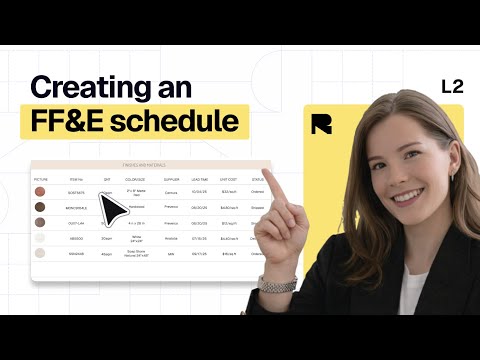
Watch: How to Create the Perfect FF&E Schedule — a practical guide for interior designers and procurement professionals managing commercial furniture projects.
The revised showroom strategy produced measurable results within six months: the average days-to-first-sale for contract-grade seating dropped from 22 days to 14 days, as the expanded range captured the hospitality specification demand that had previously been leaving the showroom. The slow-moving decorative pieces — reduced from 35% to 15% of the floor — were cleared at a 25% promotional discount over eight weeks, releasing $38,000 in working capital. That capital was reinvested in the contract-grade seating range, increasing the available configuration options and available sample stock.
Promotional tactics that move inventory without destroying margins: The promotional clearance was framed as an “exclusive designer preview” event rather than a sale — invited designers had first access to the discounted pieces, with the framing that the discount reflected the showroom’s transition to a more commercially focused range. Five designers attended the event. Three of them made project purchases from the new contract-grade range that same day, generating more revenue than the clearance event itself.

Every project failure documented in these five case studies had a preventable origin: an assumption that was not tested before it became expensive. The hotel that needed fire-rated fabric the distributor didn’t know about. The retail chain’s budget ceiling that was never asked. The corporate client’s cleaning product that disqualified two specification options.
The questions you must ask before saying yes:
Documentation that becomes your protection and your roadmap: The discovery brief — two to three pages, signed by the client’s project representative before sourcing begins — is the most valuable document in any commercial furniture project. It defines the project’s parameters in terms that are specific enough to be enforceable and flexible enough to accommodate the inevitable small adjustments that every real project requires.
Across all five case studies, the decisive factor between a project that delivered successfully and one that almost failed was not the quality of the sourcing decision — it was the quality of the communication during execution.
Establishing communication cadences that work for your stakeholders: Different stakeholders need different communication frequencies. A hotel GM managing a property opening needs a weekly written status update and same-day notification of any event that affects the opening date. An interior designer collaborating on a specification needs rapid response on samples and approvals. A procurement manager managing cash flow needs milestone-triggered payment notifications. Structure your communication to match the stakeholder’s specific information need, not a one-size-fits-all update format.
The language that builds trust even when problems emerge: When a problem occurs, the communication that preserves trust has three components: here is what happened (factual, specific), here is how it affects your project (impact assessment, honest), and here is our plan to resolve it (action, timeline, responsible person). That structure — delivered immediately when the problem is identified, not after it has been resolved — is what separates professional project management from crisis avoidance.
The most effective project frameworks are those that guide decisions without replacing judgment. Every project will encounter something the framework did not anticipate — a construction delay, a brand standard revision, a manufacturer quality failure. The framework’s value is not that it prevents these events but that it provides the decision-making structure to manage them efficiently when they occur.
Building contingency into every plan: In a professional project budget, a 10–15% contingency is not pessimism — it is evidence-based planning. In a professional project timeline, buffer time is not padding — it is the acknowledgment that real-world conditions differ from optimal conditions. The project professional who builds in contingency and doesn’t need it has delivered under budget and ahead of schedule. The project professional who builds no contingency and encounters one real-world delay has created a crisis.
The distributor who furnished 200 hotel rooms in 90 days did it because they had a pre-qualified secondary supplier who could absorb the staging warehouse requirement at short notice. The distributor who solved the “unsourceable” specification did it because their supplier database was organized by production capability, not just by product category. The showroom that converted hospitality designers did it because they had negotiated priority production scheduling with their primary manufacturer.
Building loyalty that translates into priority and flexibility: Supplier loyalty is built through consistent, professional behavior: paying invoices on time, providing complete specifications at order placement, communicating promptly when issues arise, and acknowledging strong performance when it is delivered. Suppliers prioritize clients who make their operational life easier — predictable, professional, and reliable. The distributor who sends 600 units per year on clean purchase orders with no last-minute changes receives production priority that the distributor who places 100-unit orders with three change orders per cycle does not.
For professionals working with JL&C Furniture, the partnership approach built into their B2B model — manufacturer-level production transparency, dedicated account management, and documentation support — is designed specifically to support the kind of supplier relationship that becomes a competitive advantage over time.
The hotel that needed 200 rooms furnished in 90 days needed quality that met fire-rating compliance and commercial cleaning durability — not the highest aesthetic finish achievable at any cost. The retail chain needed quality that could sustain contract-level daily use across multiple locations — not the most exclusive material available. The showroom needed quality that could be documented and verified to hospitality designers who were asking for certification evidence.
Defining quality for each specific project: Before every project, establish explicitly: what are the non-negotiable quality standards (often compliance-driven), what are the quality standards that represent the design target, and where is there flexibility to make quality trade-offs if timeline or budget requires it? This hierarchy guides every substitution decision and every quality hold evaluation that arises during execution.
The balance between perfection and pragmatism: A pre-shipment inspection that identifies three correctible defects is not a failure — it is the system working as designed. A decision to accept a minor finish inconsistency on pieces that will be installed in a back-of-house service corridor is a professional trade-off. A decision to accept structural non-compliance in pieces that will carry daily use loads is not. Knowing the difference is professional judgment. Building the inspection and documentation systems that surface the decision is professional infrastructure.
Before building anything new, assess where your current process actually breaks down. Not where you think it breaks down — where the evidence shows it breaks down.
Where are projects typically going wrong? Pull the last six to eight projects and identify the pattern: late delivery, quality failures, scope creep, budget overruns, client dissatisfaction at handover? Each failure category has a different root cause and a different process remedy.
What decisions are you making without enough information? The most expensive decisions in commercial furniture are those made under time pressure with incomplete information — typically because the discovery phase was abbreviated. Map the decisions in your last three projects that you later wished you had made differently, and identify what information you would have needed to make them correctly.
Where is communication breaking down? In most commercial furniture projects, communication breakdowns have a specific anatomy: a commitment was made verbally and not documented, a status update was sent to one person and not the decision-maker who needed it, or an issue was identified by one party and held rather than communicated immediately. Identify your specific pattern and design a process that addresses it.
A project playbook is a set of standardized tools — discovery question templates, decision-making frameworks, communication templates, change order forms, and quality checklists — that any member of your team can use to run a project to a consistent standard.
Standardized discovery questions for your industry: The five discovery questions listed in Principle 1 are a starting point. Extend them with the three to five questions specific to your market segment and client type. A distributor serving hotel procurement managers needs different discovery questions than a designer serving residential clients. Build the question set that surfaces the hidden requirements specific to your work.
Decision-making frameworks that work for your team: The decision matrix used in Case Study 3 is one framework. A simpler version — a one-page evaluation template with criteria weightings — works for most sourcing decisions. The key is that the framework is used consistently, so that decisions made under time pressure are still structured rather than instinctive.
Documentation templates that protect you and guide projects: At minimum: a discovery brief template (one to two pages, signed by client), a change order form (one page, linked to the original specification), a pre-shipment inspection brief (specification checklist, signed by manufacturer before inspection begins), and a project handoff document (photographic inventory, warranty certificates, care guide).
Empowering team members to make good decisions: The playbook is only as effective as the team members using it. Train your team on the why behind each tool — why the discovery brief matters, why the change order process protects both the client and the project, why pre-shipment inspection is not optional overhead. Team members who understand the reasoning behind a process will apply it with judgment in situations the process does not explicitly anticipate.
Creating a culture where problems surface early: The most important cultural element in commercial furniture project management is the norm that problems are communicated immediately to the relevant decision-maker — not held by the person who discovered them until they have a solution ready, or until the problem is unavoidable. This norm does not develop spontaneously. It is created by leadership that responds to early problem communication with support and problem-solving, not with blame.
The metrics that indicate project health — on-time delivery rate (target: 90%+), budget variance (target: within 5%), client satisfaction score (target: 8/10 or higher), and quality defect rate (target: below 2% of units) — are only useful if they are tracked consistently and reviewed regularly. Track them per project and review the portfolio monthly. The metric that consistently falls below target identifies the process priority for improvement.
Regular retrospectives to learn from every project: A 60-minute retrospective meeting within two weeks of every project completion — what worked, what didn’t, what would be done differently — is the highest-ROI investment in continuous improvement available to a commercial furniture team. The insights from five retrospectives are worth more than one day of external training, because they are specific to your clients, your suppliers, and your market.
The five case studies in this playbook are not exceptional situations. They are the normal complexity of commercial furniture projects — experienced by professionals who solved them through better questions, better documentation, better communication, and better supplier relationships.
The boutique hotel that needed 200 rooms in 90 days opened on schedule because the distributor asked five specific discovery questions before committing. The retail chain’s “unsourceable” specification was sourced because one distributor organized their supplier network by capability rather than category. The corporate overhaul stayed on scope because a decision matrix converted a stakeholder dispute into a structured evaluation. The hotel fit-out that lost five weeks stayed on timeline because a daily communication cadence surfaced the hardware failure in time to correct it. The showroom that was over-stocked and under-performing turned around because sales data replaced aesthetic preference as the basis for inventory decisions.
None of these outcomes required exceptional talent. All of them required a better process, applied consistently.
The difference between a struggling project and a smooth one is, most often, better planning that precedes it by three to eight weeks. The professional who builds that planning infrastructure — and uses it on every project, not just the high-stakes ones — builds a business that compounds in value every year, because the reputation for reliable delivery is the most durable competitive advantage in the commercial furniture industry.
Download our free Commercial Furniture Project Playbook Template — the exact discovery questions, communication frameworks, and quality checklists used across the five case studies above, formatted for immediate use by your team.
Visit JL&C Furniture’s B2B Project Support page to request the template and discuss how our Shanghai-based manufacturing team supports distributors, designers, and hospitality professionals with production transparency, documentation packages, and account management built for complex commercial projects.
Download Your Free Project Playbook →
Or schedule a brief consultation to discuss your next major project — and get input on timeline, specification, and supplier selection before you commit.

Change Order — A formal written document that records any modification to the agreed project specification after the initial purchase order has been placed. A change order records the item changed, the reason, the cost impact, the timeline impact, and requires the client’s written approval before any production change is made.
Critical Path — The sequence of tasks in a project schedule that determines the minimum total duration of the project. The critical path item is the task whose delay directly delays the project completion date. In commercial furniture projects, the critical path is typically the product category with the longest combined production and shipping lead time.
FF&E — Furniture, Fixtures, and Equipment. The industry term for all moveable items in a hospitality or commercial project that are not permanently affixed to the building structure. FF&E procurement is a distinct discipline within hospitality and commercial project management, requiring coordination of multiple suppliers, phased deliveries, and compliance documentation.
FOB (Free On Board) — A shipping term indicating that the seller’s responsibility ends when goods are loaded onto the vessel at the port of origin. All freight, insurance, customs clearance, and destination costs from that point are the buyer’s responsibility. FOB is the standard pricing basis for international furniture procurement from Asian manufacturers.
PSI (Pre-Shipment Inspection) — A quality audit of completed, packed goods conducted at the manufacturer’s facility before loading, either by the buyer’s team or by a commissioned third-party inspection agency such as SGS or QIMA. A PSI produces a written inspection report with photographic documentation of product conformance against specification.
Scope Creep — The uncontrolled expansion of a project’s requirements beyond the originally agreed specification, typically occurring incrementally through small, undocumented changes. Research cited in this article shows that 85% of projects with scope creep exceed their budget, with an average cost overrun of 27%.
TCO (Total Cost of Ownership) — The complete financial cost of a furniture piece over its useful life, including purchase price, maintenance, replacement parts, and logistics. TCO is the correct comparison framework for durability conversations with commercial clients, because it accounts for the full economic impact of specification decisions over time rather than at the point of purchase.
FAQ 1: How do we know if a timeline is actually realistic before we commit?
Most timelines fail because of hidden dependencies and optimistic assumptions — specifically, manufacturer lead times quoted at best-case capacity (which rarely reflects actual conditions), shipping windows that assume peak-season availability, and approval cycles that assume first-time sign-off without revisions. Build your timeline backwards from the delivery date using maximum realistic durations for each phase: design approval 2–4 weeks, sampling 3–6 weeks if required, production 8–14 weeks for standard custom upholstered pieces, ocean freight 4–6 weeks, customs clearance 1–2 weeks, inland delivery 1–2 weeks. Then add a minimum 10–15% buffer. If the resulting start date is in the past, the timeline is not achievable at the current scope. Adjust the scope, adjust the budget (to accommodate air freight on critical items), or adjust the timeline — but do not adjust your assessment of what is achievable. For complex hotel FF&E projects, the VOLANT hotel FF&E procurement guide recommends starting planning 12–18 months before opening for new builds. That figure is not conservative — it is evidence-based.
FAQ 2: What do we do when a manufacturer suddenly can’t deliver what they promised?
Execute your contingency plan immediately. This requires having a contingency plan — which means having pre-qualified secondary suppliers for your most critical product categories before the crisis, not after. A Tier 2 supplier that has been factory-audited, sampled, and technically qualified can absorb a volume transfer in 48–72 hours. A supplier you call in desperation during a crisis takes three to four weeks to qualify. The investment in qualifying backup suppliers during slow periods is the insurance policy that converts production failures from crises into managed transitions. Simultaneously, communicate with your client proactively: “Our primary supplier has encountered a production issue. We have activated our backup supplier and the revised delivery timeline is [specific date]. We will provide a daily update until the situation is resolved.” That communication, delivered within 24 hours of identifying the issue, maintains trust even in a difficult situation.
FAQ 3: How do we prevent scope creep from destroying our margins?
Scope creep is almost entirely prevented by a single document: a detailed specification brief signed by the client before sourcing begins. The brief must include exact dimensions, material specifications with grade references, finishes with color codes, quantities, delivery location, installation requirements, and timeline. When the client requests a change after the brief is signed, the change order process is invoked: the change is documented in writing, the cost impact and timeline impact are assessed and presented to the client, and the client signs the change order before any production change is made. According to industry data referenced in this article, 85% of projects with undocumented scope changes exceed their budget by an average of 27%. The change order process converts “can we just adjust this?” into a formal decision with visible consequences — which makes clients significantly more thoughtful about requesting changes, and significantly more accepting of the costs when they genuinely need them.
FAQ 4: What’s the best way to handle clients who want luxury quality on a budget price?
Stop trying to satisfy both simultaneously — the attempt to deliver luxury quality at a budget price either damages your margin or damages the specification, and usually both. Instead, make the trade-offs visible and explicit. Present three options: Option A at the full specification and the correct price, Option B at a modified specification (typically maintaining the most visible quality elements while adjusting the less visible ones) at the budget price, and Option C at a reduced specification across the board at below-budget price. The client now has a decision to make based on visible trade-offs rather than an expectation for you to bridge an impossible gap. In practice, most clients choose Option B — they discover they care deeply about specific elements and are willing to compromise on others. Your job is making those trade-offs visible before production begins, not discovering them after delivery when the gap between expectation and outcome creates a dispute.
FAQ 5: How do we coordinate between interior designers, our team, and manufacturers without constant miscommunication?
Establish a single point of contact from each party and create a master specification document that every party references. Run a weekly 20-minute alignment call with all parties — not to discuss every detail, but to confirm current status on the three or four items most likely to create miscommunication if not explicitly checked. Use a shared project management platform where specifications, sample approvals, production updates, and timeline milestones are visible to all parties simultaneously. The most common source of “I didn’t know about that” in multi-party furniture projects is not that the information didn’t exist — it’s that it existed in one party’s email thread and was not shared to the central project record. Platforms like Monday.com or Asana solve this by making project information inherently shared rather than requiring deliberate forwarding.
FAQ 6: What’s the right way to handle quality issues that surface during delivery?
The correct answer is: prevent them from surfacing during delivery by catching them at the pre-shipment inspection stage. A third-party pre-shipment inspection at the manufacturer’s facility, conducted before loading, surfaces quality issues when there is still time to correct them — at the factory, at the manufacturer’s cost, without impacting your client’s timeline. If quality issues do arrive at delivery despite inspection, the protocol is: photograph every issue within 24 hours of discovery, communicate to the client immediately with photographic documentation, present a resolution plan (replacement timeline, cost allocation, logistics), and execute the plan at the pace required. Speed and transparency matter more than blame assignment in the client’s experience of how the issue was handled.
FAQ 7: How do we manage multiple projects simultaneously without dropping critical items?
Assign named project ownership for every active project. Use a central project management system where every project’s current phase, next milestone, and any at-risk item is visible in a portfolio dashboard. Conduct a weekly portfolio review that looks at the next four weeks across all active projects — identifying scheduling conflicts, production milestone risks, and decision requirements before they become crises. The most common cause of dropped items in multi-project management is not capacity — it is the absence of a structured review process that creates visibility across projects simultaneously. Without that visibility, each project is managed reactively in response to whoever is loudest that week, and the quiet projects with approaching milestones receive attention only when the milestone is already missed.
FAQ 8: What’s the best approach to negotiating with suppliers when we need better pricing or faster delivery?
Your leverage comes from two sources: demonstrated volume history and credible competitive alternatives. A supplier who receives consistent, professional orders from you and knows you have qualified their competitor will negotiate seriously on both pricing and timeline. Be specific and honest about what you need and why: “We need delivery by [date] because our client has a non-negotiable opening date, and if we miss it we lose the relationship. What can you do?” Most suppliers will prioritize clients who explain the stakes and ask directly — rather than assuming the supplier will figure it out. For pricing, present your volume commitment over 12 months rather than negotiating on a single order — volume commitments justify pricing adjustments that single orders do not. Document every negotiated term in writing within 24 hours of the conversation.
FAQ 9: How do we handle the situation where the client changes their mind mid-project?
The change order process makes this manageable rather than chaotic. When a client requests a mid-project change, the first step is assessing the production stage: has the material been ordered? Has production begun? Has the piece been upholstered? The earlier the change is caught in the production sequence, the lower the cost impact. Present the change impact clearly: “This change requires [specific action], which costs [specific amount] and extends the timeline by [specific days]. Here is the updated project schedule and invoice. Please sign the change order to authorize.” A client who understands that changes have documented consequences makes more deliberate decisions about requesting them. The change order process does not prevent change — it ensures change is managed transparently rather than absorbed silently into your margin.
FAQ 10: What metrics should we be tracking to know if our projects are actually running well?
Track four metrics consistently: on-time delivery rate (orders delivered by committed date ÷ total orders — target 90%+, per industry benchmarks from usersolutions.com); budget variance (actual cost vs. quoted cost — target within 5%); client satisfaction score (post-delivery rating on a 10-point scale — target 8.0 or higher); and quality defect rate (units requiring rework or replacement ÷ total units received — target below 2%). Review these metrics monthly at the project level, and quarterly for each active supplier relationship. If your on-time rate is below 85%, you have a planning problem. If budget variance consistently exceeds 7%, you have a cost estimation problem. If satisfaction scores are below 7.5, you have a communication or quality problem. The metrics tell you where to invest your process improvement effort.
FAQ 11: How do we build a showroom inventory strategy that actually generates sales?
Start with 12 months of actual sales data — which pieces sold, in what quantities, at what margins, and to which client types. This data almost always reveals a pattern that is different from the inventory strategy the showroom is currently running. Identify the 20% of SKUs generating 60–70% of revenue and ensure those are always in stock at sufficient depth to support project orders (not just display pieces). For the remaining 80% of the range, negotiate consignment arrangements or drop-ship capabilities with manufacturers so you can offer the full range without carrying the inventory risk. Stage your floor in project-context environments — hotel lobby vignettes, corporate lounge settings, residential living rooms — rather than displaying individual pieces in isolation. Train your team to convert an “inspired by this environment” conversation into a project specification conversation within 45 minutes.
FAQ 12: What’s the best way to communicate with clients when a problem emerges during a project?
Communicate immediately — not when you have a solution, not when the situation has stabilized, not when you can’t avoid it any longer. Communicate as soon as you become aware of the problem. The format: here is what has happened (factual, specific), here is how it affects your project (impact on timeline, budget, or specification), and here is our plan to address it (action, responsible person, expected resolution date). If you do not yet have a plan, say so explicitly: “We are aware of [issue]. We do not yet have a complete resolution, but we are [specific action underway] and will have a full update within [specific timeframe].” Clients can tolerate problems — every experienced client has managed problems. What damages relationships permanently is the discovery that a problem was known and not communicated. Transparency in difficulty is the foundation of the long-term client relationships that sustain a commercial furniture business.
This playbook was developed for furniture professionals who are ready to solve client problems before they become crises — and build the process infrastructure that makes excellent project delivery a repeatable outcome, not an occasional achievement. For B2B partnership inquiries, specification support, and project consultation, visit JL&C Furniture — Shanghai-based high-end furniture manufacturer serving distributors, designers, and hospitality professionals worldwide for over 20 years.

China Furniture Sourcing Agent Roles for High-End Buyers What a China Furniture Sourcing Agent Actually Does for High-End Buyers Every finished luxury room sits on
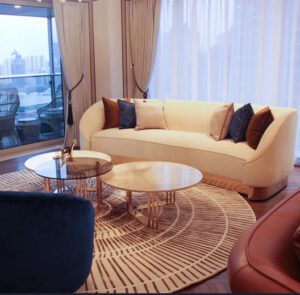
How to Vet a China Furniture Sourcing Agent Before Signing A single curved sofa like this goes through dozens of approvals, including frame, foam, fabric

China Furniture Sourcing Agent vs Direct Factory Buying: A Strategic Guide for High-Value Buyers When one project includes 400 hotel rooms, a 20-seat marble dining
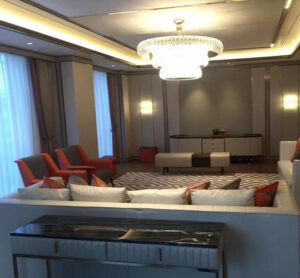
Advanced Tips to Get More from Your China Furniture Sourcing Agent Powerful Strategies for High-Performance Sourcing – Tailored for Elite Buyers, Designers & Operators Your
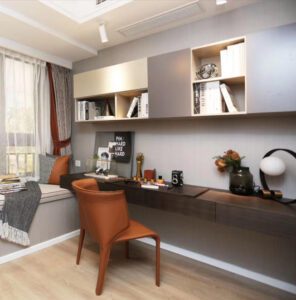
What Wholesale Furniture Suppliers in China Can Offer High-Value Buyers A statement luxury living room — the kind of space that begins with the right

How to Work Better With Your China Furniture Supplier After Ordering A Practical Playbook for High-End Furniture Importers, Interior Designers, FF&E Buyers, Villa Owners, Private