
ニュース

China Furniture Sourcing Agent: Roles for High-End Buyers
China Furniture Sourcing Agent Roles for High-End Buyers What a China Furniture Sourcing Agent Actually Does for High-End Buyers Every finished luxury room sits on

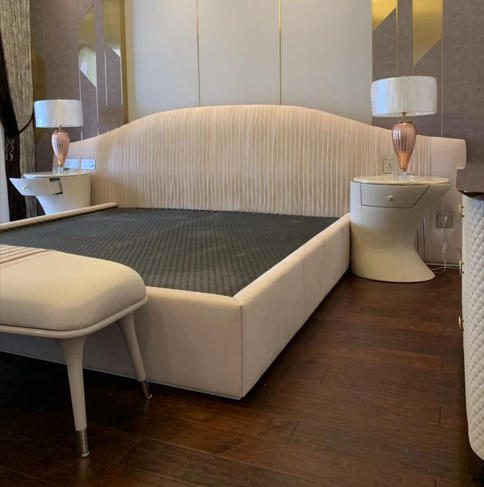
A real-world case study for high-end furniture importers, villa owners, interior designers, private label brands, FF&E buyers, and hotel developers who cannot afford to learn these lessons the expensive way

The first significant furniture import I coordinated for a high-end residential villa project cost the client more than expected, arrived later than planned, and included pieces that did not match the approved specification in three distinct ways. Total recoverable losses exceeded $47,000. The project relationship survived, barely, but it required months of remediation, emergency replacement sourcing, and the kind of difficult client conversations that no design professional wants to have.
None of those problems were unforeseeable. Every one of them traced back to a decision made during supplier selection or procurement planning that, in retrospect, was based on an assumption rather than a verified fact.
China remains the world’s dominant source of high-end custom furniture at scale. Its furniture exports reached $36.44 billion in 2024, representing approximately 31% of global furniture exports, according to industry data. The manufacturing capability — in terms of material quality, design flexibility, production precision, and finishing standards — available from China’s leading manufacturers is genuinely world-class. The problem is not China’s furniture manufacturing capacity. The problem is the gap between what the best manufacturers can deliver and what buyers without rigorous procurement processes actually receive.
This case study exists to close that gap. It documents eight specific mistakes made by real professionals — importers, villa designers, FF&E buyers, private label brands — and provides the exact operational fixes that prevent each one. Every scenario is drawn from documented sourcing experiences across the high-end furniture import community.
If you are an importer building a premium furniture line, an interior designer sourcing for a luxury villa project, an FF&E buyer equipping a hotel, or a developer furnishing a high-end residential development — this guide is written for you, not for search engines.
A furniture distributor sourcing a custom dining collection for a high-end residential client shortlisted suppliers entirely on the basis of FOB price per unit and Alibaba Gold Supplier status — a paid membership tier that indicates a company has maintained an active Alibaba account and passed basic identity verification, but does not evaluate production quality in any meaningful way.
The winning quote was 34% below the next competitor. The supplier’s product images were excellent. Their response times were fast. The sample arrived promptly and looked acceptable.
When the production order arrived, the story changed. The solid walnut specified in the purchase order had been substituted with walnut veneer over MDF particleboard — a material that looks similar at a glance but has fundamentally different durability characteristics, weight, and longevity in service. The lacquer finish was a different sheen level than the approved sample. Two chair models had frame joints that showed visible gaps at the corners where the mitres had not been precisely cut or adequately glued.
The total replacement cost, including emergency sourcing, air freight for critical pieces, and client remediation, came to approximately $28,000 on an original order value of $62,000.
Alibaba Gold Supplier status and low pricing are not quality indicators — they are marketing indicators. Suppliers who compete primarily on price have a structural incentive to find ways to reduce cost after a purchase order is placed: substituting specified materials for cheaper alternatives, reducing QC checkpoint frequency, and using lower-grade joinery compounds. The sample, which represents the supplier at their best effort to win business, does not reflect these cost-reduction decisions — those decisions happen during production.
According to QIMA’s supplier quality research, a 20% defect rate on a shipment could expose an importer to $86,000 in losses — compared to approximately $1,000 for a pre-shipment inspection that would have caught the problems before the container was loaded.
Stop using price and platform ranking as primary evaluation criteria. The only meaningful way to evaluate a supplier’s production capability is through verifiable evidence: a factory audit (in person or via structured video), independently verified certifications from their issuing bodies, production-run samples (not showroom samples), references from clients whose projects are comparable to yours, and third-party pre-shipment inspection for all initial orders.
Price belongs at the end of the evaluation process, not the beginning. The question is never “who is cheapest?” — it is “among the suppliers whose quality I have verified, who offers the best value?”
An interior designer sourcing fabric upholstery for a luxury villa project approved the fabric selection based on a digital photograph sent by the supplier, supplemented by a small swatch of approximately 5cm × 5cm that did not show how the fabric draped or performed at scale.
The production order delivered 40 custom armchairs upholstered in fabric that was visibly cooler in tone than it appeared in the photograph — a common outcome when fabric colour is represented by digital image rather than physical sample under controlled lighting. Additionally, the fabric had a lower thread density than specified, resulting in pilling at the seat and armrest contact points after approximately three months of use. The small swatch had not been large enough to reveal either problem.
Replacement at the project site — stripping and reupholstering 40 armchairs — cost $180 per chair, plus the labour and logistics involved in coordinating the remediation around the villa’s occupancy schedule.
Digital representation of fabric colour, texture, and hand-feel is inherently limited. Screens display colours with varying calibration. Small swatches do not reveal how a fabric performs at tension over an upholstered form, how its colour reads under different light sources (daylight versus artificial, warm versus cool), or how its surface texture wears at contact points. Designers who approve on the basis of digital representations are making a production decision with insufficient information.
Implement a non-negotiable physical sample approval protocol for every high-end project. The protocol has three components.
First, request a full-size production sample — a completed piece made on the production line, not a dedicated showroom prototype — before approving mass production. Evaluate it under the actual lighting conditions of the installation environment if possible, or under standardised D65 daylight-simulated lighting if not.
Second, for upholstered pieces, request fabric samples of at least 30cm × 30cm — large enough to assess drape, sheen, and colour read under multiple light sources. Assess the sample against a minimum Martindale rub count of 50,000 cycles for residential projects, 100,000 for commercial and hospitality applications.
Third, document the approved sample in writing — photograph it under controlled lighting, record the date of approval, and attach it to the purchase order as the binding production reference. Include a clause stating that mass production units will be compared against this specific approved sample during pre-shipment inspection.

A private label brand commissioning a bespoke bedroom furniture collection — twelve distinct SKUs with unique frame profiles, hand-applied finishes, and proprietary hardware — approached three manufacturers who described themselves as “full customization” facilities. The reality encountered during quotation was that all three required a minimum order quantity (MOQ) of 50 units per SKU for anything involving new tooling or non-standard dimensions.
At 12 SKUs × 50 units minimum, the initial production commitment would require 600 units before the brand had validated a single design with its target market. The brand could not absorb that financial exposure, and was forced to revert to near-standard designs with minor modifications — exactly the aesthetic compromise that had been central to the brand’s differentiation strategy.
Large-scale Chinese furniture factories optimise for volume and repeatability. Their equipment, workflow, and cost structure are calibrated for high-volume production runs. Genuine customisation — new frame profiles, bespoke dimensions, original hardware — requires tooling investment, setup time, and skilled technical labour that is only financially viable when spread across a sufficient number of units. These manufacturers are not the right partners for small-batch bespoke production, regardless of what their sales materials claim.
The solution is supplier segmentation: identifying the category of manufacturer — not just the individual supplier — whose production model aligns with your project requirements.
For bespoke, small-batch luxury production, look specifically for manufacturers in what the industry terms the “atelier” or “custom workshop” segment — typically medium-sized facilities with 80-250 employees, dedicated prototyping capabilities, in-house skilled woodworking and upholstery teams, and a business model built around custom design execution rather than high-volume catalogue production. These facilities typically accept MOQs of 5-20 units per SKU for established designs and 10-30 units for new custom development.
The trade-off is unit price — small-batch production costs more per piece than high-volume production — but for private label brands and design-led projects where uniqueness is the commercial proposition, this premium is the cost of genuine differentiation.
For upholstered pieces, a typical MOQ from a custom-focused Chinese factory runs 10-50 units per SKU. For case goods with new frame profiles, MOQ is typically 20-50 units. Negotiate MOQs on the basis of your total project value rather than per-SKU minimums — a manufacturer who sees $150,000 in total order value across 12 SKUs has more commercial incentive to accommodate lower per-SKU minimums than one evaluating a single SKU in isolation.
A hotel FF&E buyer procuring 320 guestroom furniture sets for a boutique hotel project communicated specifications entirely through a combination of WhatsApp messages, PDF catalog screenshots with handwritten annotations, and verbal discussions conducted through a bilingual sales contact who was available intermittently.
The technical drawing for the custom headboard — a piece central to the guestroom’s design identity — included a dimension notation that was ambiguous in its reference point. The manufacturer’s production team interpreted the dimension from the outside of the frame; the buyer intended it from the inside. The resulting headboard was 80mm wider than designed, which created a visual imbalance against the specified bedframe and required complete replacement production for all 320 units.
The timeline impact was six weeks. The hotel opening was delayed by four weeks. The penalty clause in the FF&E contract applied at $8,500 per week.
Technical drawing conventions, dimension reference standards, and specification terminology are not universally shared. What is obvious to a designer trained in Western technical drawing conventions may not be how a Chinese production team reads the same document. Additionally, communication conducted through sales contacts — who are focused on winning business and maintaining a positive client relationship — often filters out technical ambiguities rather than escalating them, because raising concerns risks disrupting the sale.
Cultural communication patterns also play a role. In many business contexts in China, acknowledging that a specification is unclear can feel like an admission of incompetence. A production team that is uncertain about a dimension may proceed with their best interpretation rather than asking the buyer for clarification — a behaviour that is professionally rational within its cultural context but catastrophic for project outcomes.
Four structural changes prevent this category of failure.
First, use annotated CAD files with explicit reference points for all critical dimensions, not PDF screenshots or hand-drawn sketches. Every dimension should state its reference points — “measured face-to-face, not outside-to-outside.”
Second, require a bilingual project manager assigned to your account — not a sales contact who happens to speak English, but a technical account manager who has both English proficiency and the authority to escalate specification ambiguities to the engineering team and receive a substantive answer.
Third, implement a drawing confirmation procedure: before production begins on any new piece, the manufacturer’s technical team submits a dimensioned confirmation drawing for your approval. You are approving their interpretation of your specification, not just your original specification. Any discrepancy is caught before a single piece of material is cut.
Fourth, for complex custom pieces, commission a physical mock-up before production sign-off — a rough prototype in inexpensive material that confirms three-dimensional form and dimensional accuracy before the full material investment is committed.
A furniture importer building a premium residential brand planned their margin structure on the basis of the FOB (Free On Board) price quoted by their Chinese manufacturer — the price at which goods are considered delivered when loaded onto the vessel at the origin port. They had not accounted, with any precision, for the costs between the Chinese port and their customer’s warehouse.
When the first container arrived, the total additional costs included: ocean freight ($4,200 per 40-foot container), destination port handling and terminal fees ($850), customs brokerage ($420), import duty (25% on upholstered seating under US tariff schedule), a Section 301 tariff surcharge applying to the specific HS codes of their product category, and domestic drayage ($650 from the port to the warehouse). The total landed cost was 47% above the FOB price — 17 percentage points higher than the importer had estimated.
On a container order with a total FOB value of $68,000, the unplanned additional cost was approximately $11,500. That absorbed the entire planned profit margin on the shipment.
According to QIMA’s 2024 Global Quality Report, 67% of first-time China importers underestimate their total landed cost by more than 20%. The FOB price — the number prominently displayed in supplier quotations — is typically 25-65% below the total landed cost, depending on the product category, destination market, and applicable tariff regime.
The complexity is real: furniture HS codes carry different duty rates depending on material composition (wood furniture, upholstered furniture, metal furniture), and tariff schedules for Chinese-origin goods have been subject to significant change under US Section 301 tariffs, making pre-calculation essential rather than optional.
Calculate total landed cost before committing to any supplier or building any margin structure. The landed cost formula is:
| Cost Component | Typical Range | Notes |
|---|---|---|
| FOB Price (supplier quote) | Base figure | Starting point — all other costs are added to this |
| Ocean Freight (40′ container) | $2,800 – $5,500 | Varies by origin port, destination, and market conditions |
| Destination Port / Terminal Fees | $500 – $1,200 | Varies by port; includes THC and documentation fees |
| Customs Brokerage | $300 – $600 | Per shipment, regardless of container count |
| Import Duty (US upholstered furniture) | 6% + 25% Section 301 | HS 9401.61: base 3.7-6%; +25% Section 301 surcharge on most Chinese furniture |
| Domestic Drayage (port to warehouse) | $450 – $900 | Depends on distance from port |
| Cargo Insurance | 0.5% – 1.2% of cargo value | Recommended for all shipments; mandatory for DDP terms |
| Total Landed Cost Multiplier | FOB × 1.35 to 1.65 | US market; lower for markets without Section 301 surcharges |
Use the US Customs and Border Protection HTS database to verify the exact duty rate for your specific product HS codes before placing any order. Partner with a licensed customs broker who specialises in furniture imports — not a general freight forwarder who handles furniture occasionally.

A villa developer sourcing custom outdoor and indoor furniture from a new Chinese supplier for a luxury property development trusted the manufacturer’s internal QC process and did not commission an independent pre-shipment inspection. The supplier had ISO 9001 certification, provided factory photographs showing organized production areas, and had delivered an acceptable first sample.
When the container arrived and was unpacked, 40% of the pieces in the shipment showed finish defects: inconsistent lacquer sheen levels, surface contamination embedded in the clear coat on dining tables, and visible grain raising on timber panels that had not been adequately sanded before finishing. Additionally, 15% of the upholstered seating pieces had visible tension inconsistencies in the fabric — one side of the cushion was tighter than the other, creating an asymmetric appearance.
The manufacturer accepted responsibility for manufacturing defects — but the only practical remedy available at that point was on-site rework by a local finishing specialist, which cost $22,000 for the affected pieces, or returning the goods for replacement at a timeline cost of 12 weeks.
Factory QC is conducted by the manufacturer’s own employees, who report to the same management that is under pressure to meet shipping deadlines and production targets. Even in facilities with genuine quality management systems, internal QC can be subject to timeline pressure that reduces thoroughness. The structural conflict of interest — between the factory’s interest in shipping on time and the buyer’s interest in receiving defect-free goods — is not resolved by the supplier’s ISO certification. It is resolved by independent oversight.
QIMA data shows that 60% of defects that would have failed a rigorous pre-shipment inspection slip past factory QC checks. A 20% defect rate on a shipment, which is far from unusual without independent inspection, could translate into $86,000 in losses — against a typical pre-shipment inspection cost of $200-$450 per man-day.
Make third-party pre-shipment inspection a non-negotiable component of every order above $10,000 in value, and include the inspection right explicitly in your purchase contract.
The inspection should be conducted by an accredited body — SGS, Bureau Veritas, Intertek, or QIMA — according to the AQL (Acceptable Quality Limit) statistical sampling standard appropriate for your order size. For luxury furniture, AQL 1.0 (stricter than the commercial standard of AQL 2.5) is appropriate — it means that if more than 1% of inspected units fail, the batch does not pass.
The inspection report becomes the trigger for your final payment. Your 30/70 payment structure — or whatever milestone payment structure your contract specifies — should make the 70% balance payment conditional on a satisfactory pre-shipment inspection report, not on the manufacturer’s own declaration that goods are ready.
A private label furniture brand commissioned a Chinese manufacturer to produce an exclusive dining chair collection — six original designs with proprietary silhouettes, distinctive tapered legs, and a specific hand-applied finish that was central to the brand’s visual identity. No NDA or IP protection agreement was signed. The brief to the manufacturer included full CAD files, finish specifications, and detailed technical drawings.
Four months after the collection launched, a competing retailer brought identical pieces — same silhouettes, same leg profile, same finish — to market under a different brand name, sourced from the same manufacturer at a lower price point. The manufacturer had sold the designs to a second client with no restriction.
The brand had no contractual recourse. The designs were not registered in China. The financial impact included a 30% price drop needed to respond to the identical competition, a brand perception problem that took two years to repair, and the cost of developing an entirely new collection to reestablish exclusivity.
Design replication is a structural risk, not an isolated incident of bad faith. A Chinese manufacturer who holds your full technical documentation, tooling, and production processes has the capability to produce your design for anyone else unless they are contractually and legally prevented from doing so. Without a China-enforceable IP agreement, the default position is that they can.
As IP protection specialists note, the solution is not to avoid sharing design information — you cannot manufacture without sharing it — but to structure the relationship so that IP protection is in place before the first CAD file is shared.
Three layers of protection, applied together, provide meaningful security.
Layer 1 — NNN Agreement before any design disclosure. An NNN Agreement (Non-Use, Non-Disclosure, Non-Circumvention) — specifically structured for Chinese legal enforcement, not a standard Western NDA — prohibits the manufacturer from using your design information for any purpose beyond your agreed production scope, disclosing it to any third party, or competing with you using your designs. This agreement should be executed and dated before any CAD file, mood board, or technical drawing is shared.
Layer 2 — Chinese design patent registration. The National Intellectual Property Administration (CNIPA) of China allows foreign businesses to register design patents that are domestically enforceable and can be used to intercept unauthorized exports at Chinese customs. Registration takes approximately 3-6 months, and a Chinese IP attorney can file on your behalf.
Layer 3 — Production controls. For particularly sensitive designs, split production across components — have the frame produced by one manufacturer and the hardware or finish work completed by another, so no single supplier has the full picture. Include an explicit clause in your purchase contract stating that all designs, technical drawings, tooling, and specifications developed for your account remain your property and cannot be used, shared, or sold to any other party.
A hotel FF&E buyer consolidating all furniture procurement for a 180-room hotel opening onto a single Chinese manufacturer — a decision motivated by simplicity and the volume discount available on a large consolidated order — discovered the limits of single-source dependency at the worst possible moment.
The manufacturer closed its production facility for four weeks around Chinese New Year — a standard closure period across most Chinese manufacturing businesses, typically running from late January through mid-February. The buyer had factored in a two-week holiday closure. The actual closure was four weeks due to a combination of the formal holiday and staff return delays from rural provinces that are common in the immediate post-holiday period.
The hotel opening was delayed by three weeks. Penalty clauses in the hotel management agreement applied at $12,000 per week. Emergency sourcing of replacement items for the most critical pieces — lobby seating and restaurant dining chairs — required air freight at a cost of $14,000. Total financial impact from the single-source failure: approximately $50,000.
Chinese manufacturing operates on a calendar that Western project planners frequently underestimate. Chinese New Year produces the longest and most disruptive annual shutdown — typically 2-4 weeks of factory closure plus 1-2 weeks of reduced productivity as workforce returns. The Golden Week holiday in October produces a second annual disruption. Labour market dynamics — particularly workers returning to rural hometowns for the Spring Festival and not returning to factory work — mean that post-holiday production restarts are often slower than pre-holiday schedules suggest.
Single-source dependency amplifies every production risk: a factory closure, a production capacity constraint from a large concurrent order, a quality problem that stops a production line, or a logistics disruption becomes a total project failure rather than a problem that can be mitigated through an alternative source.
For projects above $100,000 in total furniture value, pre-qualify a minimum of two manufacturers per furniture category (seating, case goods, upholstered items) before production begins. The second supplier does not need to receive production orders on every project — they need to have been evaluated, have received and approved a production sample, and have the capacity and willingness to accept an expedited order if your primary supplier encounters a problem.
Build the Chinese manufacturing calendar explicitly into your project timeline. Add four weeks of buffer around Chinese New Year periods regardless of your primary supplier’s stated holiday duration. For hotel opening projects, deliver your purchase order to the manufacturer a minimum of 16-20 weeks before the hard opening date — not the soft opening.
For particularly time-sensitive categories (lobby seating, restaurant furniture that must be in place for photography and soft opening events), consider placing with two suppliers simultaneously for the initial order — accepting the MOQ cost of the second order as insurance against a single-source failure.
These ten checks, applied systematically before every significant furniture sourcing relationship, address the root cause of every mistake documented in this case study.
| # | Due Diligence Action | Why It Matters | When to Do It |
|---|---|---|---|
| 1 | Verify business registration via NECIPS (China’s national business registry) | Confirms legal existence, operating history, and absence of penalties | Before any conversation about pricing or production |
| 2 | Conduct factory audit — in-person or structured video | Reveals actual production capability vs. claimed capability | Before shortlisting |
| 3 | Verify all certifications via issuing body registries | Prevents accepting fabricated or lapsed certification documents | During supplier evaluation |
| 4 | Request production-run samples (not showroom samples) | Shows what production output actually looks like under normal conditions | Before purchase order |
| 5 | Execute NNN Agreement before sharing any design documentation | Protects IP from unauthorised use, disclosure, and competition | Before first CAD file is shared |
| 6 | Pre-calculate full landed cost including all duties and surcharges | Prevents budget overruns from underestimated import costs | Before pricing or margin planning |
| 7 | Commission independent pre-shipment inspection | Prevents non-conforming goods from leaving China undetected | Before final payment is released |
| 8 | Document specifications in annotated CAD files with bilingual technical confirmation | Eliminates dimension and material misinterpretation | Before and during production |
| 9 | Pre-qualify a secondary supplier per furniture category | Provides contingency if primary supplier fails to deliver | Before production commitment |
| 10 | Build Chinese holiday calendar into project timeline | Prevents scheduling failures around annual manufacturing shutdowns | At project planning stage |
The following video breaks down, from an experienced China sourcing perspective, the most costly decision errors that importers and designers make when buying furniture from Chinese manufacturers — including misleading showroom samples, hidden costs between FOB price and landed cost, and the communication failures that derail custom projects.

A direct, unfiltered breakdown of where professional China furniture sourcing goes wrong — and the specific process changes that experienced importers use to prevent these outcomes. Essential viewing before placing your first significant order with a Chinese manufacturer.
The difference between the procurement experiences documented in this case study and the outcomes that professional importers, villa designers, and hotel FF&E teams consistently achieve is not luck or market knowledge. It is process.
The professionals who source from China successfully — who receive the quality they specified, on the timeline they planned, at a landed cost they had accurately forecast — do so because they have built the due diligence, communication, inspection, and contractual structures that make those outcomes predictable rather than hopeful.
They also invest in relationships rather than transactions. A manufacturer who understands your quality standards, has seen your design language across multiple projects, and values your account enough to assign senior technical resources and priority scheduling is a fundamentally different commercial relationship from a manufacturer you found through a search query and contacted for a first order.
For high-end importers and design professionals looking to build those relationships with verified, experienced Chinese manufacturers who serve the luxury residential, hospitality, and commercial interior markets, JL&C Furniture’s B2B sourcing resources provide a starting point — including the supplier verification frameworks, quality benchmarks, and partnership structures that support professional, high-value sourcing rather than catalog purchasing.
The JL&C Furniture custom villa and hotel project portfolio documents completed bespoke projects — full villa packages, hotel guest room collections, and commercial interior installations — with the specification detail and production documentation that allow serious buyers to assess manufacturing capability against their specific project requirements.

Every mistake in this case study was expensive. Most were also completely preventable — not by luck or by finding better suppliers by chance, but by applying the specific due diligence steps that experienced professionals use as standard procedure.
The China furniture sourcing market rewards buyers who approach it with the same rigour they would apply to any other high-stakes procurement decision: verify before trusting, document before proceeding, inspect before paying, and protect before sharing. Buyers who apply that rigour consistently build the supplier relationships and procurement systems that make high-end custom furniture from China a genuinely competitive advantage — in quality, in pricing, and in design flexibility — rather than a source of project risk.
The eight mistakes in this article are not uncommon. But none of them are inevitable.
Start Building Your Verified Supplier Network Today — JL&C Furniture’s team works directly with importers, interior designers, hotel FF&E buyers, and private label brands to identify the right manufacturing partners for their specific project requirements, quality standards, and market positioning.
FOB (Free On Board): A shipping term meaning the supplier’s price and responsibility ends when goods are loaded onto the vessel at the origin port. All costs from that point — ocean freight, insurance, customs duty, and inland delivery — are the buyer’s responsibility.
Landed Cost: The total cost of a product delivered to your warehouse or project site, including FOB price, ocean freight, port fees, customs duty, customs brokerage, and domestic freight. Always calculate this before building any margin or budget structure.
MOQ (Minimum Order Quantity): The minimum number of units a manufacturer will produce per SKU in a single production run. Lower MOQs are available from smaller, custom-focused manufacturers; higher MOQs are typical of high-volume facilities.
AQL (Acceptable Quality Limit): A statistical sampling standard that defines the maximum acceptable defect rate in a production inspection. AQL 1.0 means a batch fails if more than 1% of inspected units are defective — appropriate for luxury furniture. AQL 2.5 is the commercial standard.
NNN Agreement: A contract instrument designed for Chinese legal enforcement, prohibiting Non-Use, Non-Disclosure, and Non-Circumvention of proprietary design and business information shared with a Chinese manufacturer.
HS Code (Harmonized System Code): An internationally standardised product classification code used by customs authorities worldwide to determine applicable import duty rates. Different furniture categories have different HS codes and different duty rates.
Section 301 Tariffs: Additional US tariffs applied to a broad range of Chinese-origin goods under US trade law. Many furniture categories are subject to tariff surcharges of 25% in addition to standard import duty rates — a major factor in US market landed cost calculations.
DDP (Delivered Duty Paid): An Incoterm under which the supplier assumes responsibility for the full logistics chain — freight, insurance, customs clearance, and import duties — to your named delivery location. The highest level of logistics responsibility a supplier can assume.
Pre-Shipment Inspection (PSI): An independent quality check conducted by a third-party inspection body at the manufacturer’s facility before goods are loaded for shipment. Pass/fail is determined by comparison against the buyer’s approved specification and AQL standards.
CNIPA: China National Intellectual Property Administration — the Chinese government body responsible for design patent registration, trademark registration, and other IP protection mechanisms applicable to products manufactured in China.
1. How do I verify if a Chinese furniture manufacturer is legitimate and capable of handling high-end projects?
Begin with China’s National Enterprise Credit Information Publicity System (NECIPS) — search the manufacturer’s legal name or Unified Social Credit Code (USCC) to confirm registration status, operating history, and absence of administrative penalties. Then verify all claimed certifications directly via the relevant issuing body’s online registry — ISO certificates via the IAF CertSearch database, FSC certificates via info.fsc.org. Request a factory visit (in person or via a structured recorded video) that covers raw material storage, the production floor during active production, the QC inspection station, and the pre-shipment packing area. Ask specifically for references from completed projects in your market segment — luxury residential, hospitality, or commercial — and contact those references directly with specific performance questions about delivery reliability and quality matching.
2. What’s the best way to request and evaluate physical samples before placing a bulk order?
Request production-run samples — pieces made on the normal production line under standard conditions — not showroom samples that may be made to a higher-than-standard specification. Evaluate upholstery fabric samples at minimum 30cm × 30cm under D65 daylight-simulated lighting or, ideally, under the lighting conditions of the installation environment. Request material test reports confirming Martindale rub count (minimum 50,000 cycles for residential, 100,000 for commercial). Photograph the approved sample under controlled lighting, date the approval, and attach it to the purchase order as the binding production reference against which pre-shipment inspection will compare bulk production.
3. Are MOQs negotiable for custom luxury furniture, and how can I reduce them?
MOQs are negotiable, particularly when you present your total project value rather than per-SKU requirements. A manufacturer who sees $120,000 across 10 SKUs has more commercial incentive to accommodate lower per-SKU minimums than one evaluating a single SKU. Seek manufacturers in the custom-atelier segment — typically medium-sized facilities of 80-250 employees with dedicated prototyping teams — rather than high-volume mass-production factories. These facilities typically accept MOQs of 5-20 units per SKU for established designs. Offering a longer-term volume commitment — promising a follow-on order within 12 months if the first is successful — also provides meaningful leverage for MOQ negotiation.
4. How can I protect my original designs when working with Chinese suppliers?
Execute an NNN Agreement (Non-Use, Non-Disclosure, Non-Circumvention) — specifically drafted for Chinese legal enforcement, not a standard Western NDA — before sharing any CAD files, design drawings, or proprietary specifications. Register key designs with China’s National Intellectual Property Administration (CNIPA) — a Chinese design patent provides domestic enforceable protection and allows customs interception of unauthorized exports. Include a clear IP ownership clause in your purchase contract specifying that all designs, specifications, and tooling developed for your account remain your property. For particularly sensitive designs, split production across components so no single manufacturer has the complete picture.
5. What should I include in a contract with a Chinese furniture factory to ensure quality and delivery?
Minimum contractual requirements for high-end furniture sourcing: full technical specifications with measurable standards (foam density in kg/m³, finish colour with Pantone or RAL reference, fabric Martindale count, dimensional tolerances in ±mm), a confirmed delivery date with weekly penalty clauses for late delivery (typically 1-2% per week, capped at 10-15%), an inspection window after delivery (5-10 business days) during which defects can be documented and rejection triggered, milestone payment structure (30% deposit before production, 40% at mid-production milestone, 30% against satisfactory pre-shipment inspection report), a change order procedure requiring written sign-off for any specification modification, and warranty terms covering structural integrity (3 years) and cosmetic defects (1 year minimum).
6. How do I calculate the total landed cost when importing furniture from China?
The formula: FOB Price + Ocean Freight + Destination Port/Terminal Fees + Customs Duty + Additional Tariff Surcharges (Section 301 for US market) + Customs Brokerage + Domestic Freight from port to warehouse. For the US market, most Chinese-origin upholstered furniture is subject to a base import duty of 3.7-6% plus a 25% Section 301 surcharge, making the total duty burden approximately 28-31% of customs value. Total landed cost for US buyers typically runs 40-65% above the FOB price when all components are included. Use the US Customs HTS database to verify exact duty rates for your specific HS codes before planning any margin structure.
7. Which third-party inspection services do you recommend for luxury furniture?
For furniture-specific pre-shipment inspection in China, four accredited bodies cover the major manufacturing regions: SGS (internationally accredited, strong furniture testing capability), Bureau Veritas (global accreditation, extensive China inspection network), Intertek (strong in compliance testing and certification), and QIMA (technology-integrated inspection with rapid reporting). Cost is typically $200-$450 per man-day, with most standard furniture container inspections completed in one man-day. For luxury furniture, specify AQL 1.0 (stricter than the commercial standard AQL 2.5) and include finish quality, dimensional accuracy, material verification against specification, and packaging integrity in the inspection scope.
8. What are the most common quality issues in Chinese-made high-end furniture?
The five most frequently reported quality failures in high-end Chinese furniture procurement: finish inconsistency (sheen level variation, surface contamination in lacquer, colour deviation from approved sample), material substitution (specified timber replaced with veneer-over-board, specified leather grade replaced with lower grade or split leather), dimensional inaccuracy (dimensions outside agreed tolerances, most commonly on height and width of upholstered pieces), upholstery tension inconsistency (non-uniform tension across cushion surfaces creating asymmetric appearance), and joinery failure (visible gaps at mitre joints, inadequate adhesive penetration causing joint opening under load). All five are detectable through pre-shipment inspection and production-run sample evaluation before bulk delivery.
9. How can I ensure color, fabric, and finish consistency across large orders?
Document every colour and finish with a physical reference standard — Pantone chip, RAL colour card, or physical fabric swatch — that becomes part of the production order documentation. Specify that pre-shipment inspection will include colour comparison against this physical reference under D65 daylight-simulated lighting. For multi-container orders shipped across different production batches, request that the manufacturer produces all pieces in the same production run where possible, or maintains a QC standard sample visible in the production area throughout the run. For ongoing projects (hotel chains, residential developments with phased delivery), ensure the manufacturer retains the original approved reference samples indefinitely, not just for the current order.
10. What are the lead times for custom furniture from China, and how can I plan around them?
Production lead times: 60-90 days for designs with material and finish modifications; 90-120 days for complex custom development involving new frame profiles or significant prototyping. Add ocean transit time (14-18 days to US West Coast, 25-32 days to US East Coast, 18-25 days to Middle East and Australia), customs clearance (5-10 business days), and domestic delivery. Total door-to-door from purchase order to site: 90-150 days under normal conditions. Critical planning rules: add 4 weeks of buffer around Chinese New Year periods (late January through mid-February); confirm production capacity is not committed to competing large orders before placing your order; build 10-15% timeline contingency into every project schedule.
11. How do I handle communication barriers with Chinese suppliers without compromising precision?
Three structural solutions work consistently. First, require that all technical communication is in writing — no verbal specification approvals, no WhatsApp voice notes for dimension confirmations. Second, require the manufacturer to assign a named bilingual technical account manager (not a sales contact) who has authority to escalate specification ambiguities to the engineering team. Third, implement a drawing confirmation procedure where the manufacturer’s team submits a dimensioned confirmation drawing for your written approval before production begins on any new or modified piece — this confirms their interpretation of your specification, not just their receipt of it.
12. What are the risks of using trading companies vs. direct factory sourcing?
Trading companies (intermediaries who hold no production capacity of their own) can provide genuine value for buyers who lack the volume or sourcing infrastructure for direct factory relationships — they offer consolidated access, logistical support, and account management across multiple product categories. The trade-offs are higher per-unit cost (the trading company’s margin on top of the factory price), less transparency about actual production origin, and reduced ability to manage quality issues directly with the production team. Direct factory relationships offer better pricing, direct QC access, and more flexible customisation, but require the buyer to manage supplier evaluation, production oversight, and logistics coordination independently. For luxury, custom-intensive projects where design precision is critical, direct factory relationships are almost always preferable — the customisation and quality control advantages outweigh the added procurement management burden.
13. How can I avoid customs delays and ensure smooth import clearance in my country?
Work with a licensed customs broker who specialises in furniture imports for your destination market — not a general-purpose freight forwarder who handles furniture occasionally. Ensure the manufacturer provides complete and accurate export documentation: commercial invoice with HS codes and declared values that match the actual transaction, packing list with exact dimensions and weights per carton, certificate of origin, and any required material compliance documentation (CARB certificate for composite wood entering the US, FSC certificate for timber products where required). For first-time imports from a new supplier, request a pre-classification review from your customs broker before the shipment departs China — this confirms that the HS codes on the commercial invoice are correct and prevents customs holds for tariff reclassification.
14. What certifications should I look for in a Chinese furniture supplier?
Universal baseline: ISO 9001:2015 for quality management, verified via IAF CertSearch. Market-specific requirements: CARB Phase 2 compliance for all composite wood products entering the US; BIFMA X5.1/X5.5 test reports from an ANSI-accredited lab for US commercial applications; EN 12520 or EN 1335 for European residential or office furniture; BS 7176 and BS 5852 for upholstered furniture in UK hospitality settings. Environmental and sustainability: FSC chain-of-custody for timber products (verified via info.fsc.org), GREENGUARD Gold for indoor air quality where specified by clients or project requirements, OEKO-TEX Standard 100 for textiles and upholstery fabrics. Verify every certificate directly through the issuing body’s public registry — a PDF is not verification.
15. How do I build a reliable, long-term supplier network in China for recurring projects?
Start with a structured pilot order — 20-30 units per specification — that generates documented performance data (actual lead time vs. quoted, defect rate on delivery, communication responsiveness throughout) before committing full project volume. Use that data to make a deliberate go/no-go decision on scaling the relationship. Formalise successful relationships in written agreements covering minimum annual volume commitment, the pricing structure reflecting that commitment, priority scheduling provisions, and the communication protocol. Pre-qualify a secondary supplier per furniture category to maintain contingency. Review performance quarterly with your actual KPI data — on-time delivery rate, defect rate, specification accuracy — and address gaps formally before they become patterns. The relationships that deliver the best commercial outcomes over time are invariably those where both parties have invested in understanding each other’s operational model, standards, and growth trajectory.

China Furniture Sourcing Agent Roles for High-End Buyers What a China Furniture Sourcing Agent Actually Does for High-End Buyers Every finished luxury room sits on
How to Vet a China Furniture Sourcing Agent Before Signing A single curved sofa like this goes through dozens of approvals, including frame, foam, fabric

China Furniture Sourcing Agent vs Direct Factory Buying: A Strategic Guide for High-Value Buyers When one project includes 400 hotel rooms, a 20-seat marble dining
Advanced Tips to Get More from Your China Furniture Sourcing Agent Powerful Strategies for High-Performance Sourcing – Tailored for Elite Buyers, Designers & Operators Your
What Wholesale Furniture Suppliers in China Can Offer High-Value Buyers A statement luxury living room — the kind of space that begins with the right

How to Work Better With Your China Furniture Supplier After Ordering A Practical Playbook for High-End Furniture Importers, Interior Designers, FF&E Buyers, Villa Owners, Private