ニュース

China Furniture Sourcing Agent: Roles for High-End Buyers
China Furniture Sourcing Agent Roles for High-End Buyers What a China Furniture Sourcing Agent Actually Does for High-End Buyers Every finished luxury room sits on

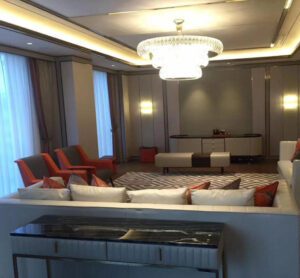
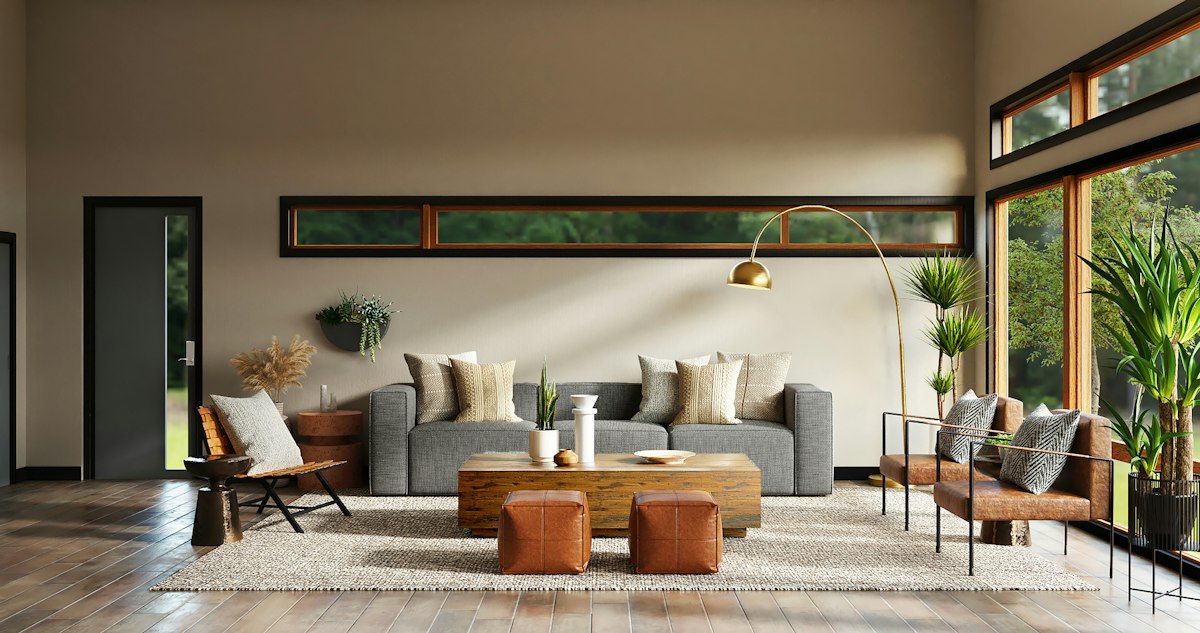 A statement luxury living room — the kind of space that begins with the right wholesale sourcing partner, not just a factory catalog.
Here is a scenario that plays out constantly across the luxury interiors industry. A high-end importer in Miami, a hotel developer in Dubai, or an interior designer in London gets a quotation from a European furniture manufacturer. The quality is good, the brand name is reassuring, and the lead time is tolerable. The price, however, is not — not at the scale a serious project demands.
So they start looking at China. And then confusion sets in. Which factories are real manufacturers versus middlemen? Which ones can actually execute custom luxury work? What does “high-end” even mean in Foshan? And how do you control quality from 9,000 kilometers away?
This guide exists to answer those questions precisely, with data and real scenarios — not vague assurances. China is not the right choice for every buyer. But for the buyers who approach it correctly, it is one of the most powerful strategic advantages available in the global furniture industry today.
In 2024, China exported $36.44 billion in furniture, accounting for approximately 34% of total global furniture exports — more than four times the value of second-place Germany, according to Business Research Insights. The factories behind those numbers are not all the same. The upper tier — the manufacturers that serve international luxury brands, five-star hotel groups, and design-forward private-label companies — operates at a level of material quality, design sophistication, and production consistency that most buyers have never seen firsthand.
This guide covers exactly what that tier offers, how to access it, and how to build the kind of sourcing relationship that gives you a durable competitive advantage. Whether you are a first-time importer, a seasoned FF&E buyer, or a designer ready to launch your own private-label collection, the answers to your real questions are here.
 A fully custom hotel suite FF&E package — possible at scale when you understand the direct B2B wholesale model.
The phrase “wholesale furniture supplier in China” covers an enormous range. At the low end, it describes a trading company — a middleman that buys from factories and resells with markup. At the high end, it describes a vertically integrated manufacturer with in-house design studios, CNC production lines, artisan finishing workshops, and dedicated export teams who have shipped to hotels in five continents. The difference between these two categories is the difference between a gamble and a strategy.
What the Direct B2B Wholesale Model Actually Is
The wholesale model that matters to serious buyers is the direct, factory-to-client relationship. No import agent taking 15–25% margin. No trading company inserting itself as a buffer that reduces your quality control and information access. You connect directly with the manufacturing entity that designs, builds, and ships the furniture.
This model works because China’s furniture manufacturing clusters — particularly Foshan, Dongguan, and Shunde in Guangdong Province — have developed a degree of supply chain integration that no other country has replicated. A manufacturer in Foshan can source FSC-certified hardwood, premium upholstery fabric, Italian-grade leather, custom hardware, and high-resilience foam all within a two-hour radius. That density eliminates the component fragmentation costs that inflate manufacturing prices in Vietnam, Poland, or Turkey.
OEM vs. ODM — Understanding the Two Models
Two terms define how buyers access Chinese manufacturing capability. Understanding the difference determines which model fits your business.
OEM (Original Equipment Manufacturing) means you bring the design. You supply CAD drawings, material specifications, finish references, and hardware details. The factory manufactures to your exact parameters and to no one else’s. Every piece produced under OEM is your intellectual property. This model is ideal for designers launching proprietary collections, hotel developers specifying custom FF&E, and private-label brands where design exclusivity is the core commercial asset.
ODM (Original Design Manufacturing) means the factory contributes or fully develops the design, which you then market under your own label. ODM reduces upfront development cost and compresses time-to-market. The trade-off is that the underlying design is not exclusive — the same or similar pieces may appear in other buyers’ catalogs. The professional solution is to use ODM for volume catalog SKUs and OEM for hero pieces where exclusivity matters most.
For buyers who want to understand the full spectrum of these models before choosing, BMS Casa’s breakdown of OEM vs. ODM vs. Private Label is a clear and practical reference.
Why There Is No Middleman Markup
The elimination of an intermediary layer is not just a cost benefit — it is a quality control benefit. When you work directly with the manufacturer, every question about material substitution, production timeline, or finish inconsistency gets answered by the people who actually know the answer. There is no telephone game. There is no agent interpreting your specifications through their own assumptions. And when something goes wrong — which it occasionally does in any supply chain — you speak directly to the production team that can fix it, not to a middleman who relays your complaint and reports back.
JL&C Furniture operates exactly this way — as a direct factory-to-client manufacturing partner for residential, hospitality, and commercial projects worldwide. The company’s 20-year track record across these segments reflects what the direct model delivers when it is executed at the high end.
Not every category in China’s furniture market represents an equal opportunity for premium buyers. Here is where the genuine advantage concentrates — and what to know about each segment before you source it.
Luxury Residential Furniture — Bespoke Villa and Penthouse Collections
This is China’s strongest export category for high-value customization. Solid hardwood dining and bedroom collections, sculptural upholstered seating, hand-lacquered case goods, and custom millwork for private villas and penthouse residences are all producible to an exacting standard from manufacturers in the Foshan and Dongguan clusters. The critical requirement: provide dimensioned drawings and material specifications at the outset, not approximate descriptions. The factories that serve this market work to precision — but only when the brief gives them something precise to work to.
FF&E for Hospitality — Boutique Hotels and Luxury Resorts
FF&E stands for Furniture, Fixtures & Equipment — the complete furnishing package for a hospitality property. China’s FF&E manufacturing capability at the high end is sophisticated enough that properties operated by international luxury hotel groups source from Guangdong factories without disclosing it. Custom upholstered headboards, solid-wood case goods, lounge seating, lobby statement pieces, and restaurant dining collections are all available from manufacturers with demonstrable five-star project portfolios. A 5-star hotel FF&E package for a single guestroom — bed frame, headboard, nightstands, desk and chair, wardrobe surround, minibar cabinet — can be sourced FOB China for $1,200–$1,800 per room, versus $3,500–$5,000 from European contract manufacturers for equivalent specification. That is not a small difference in a 200-room property.
Contract-Grade Commercial Furniture — For Developers and Architecture Firms
Commercial furniture — specified by architecture firms, interior designers, and developers for offices, lobbies, co-working environments, and public spaces — must meet performance standards that residential pieces are not designed for. The relevant standard in the U.S. market is BIFMA (Business and Institutional Furniture Manufacturers Association), which covers structural integrity, load capacity, durability cycling, and stability under commercial-use conditions. China’s leading contract furniture manufacturers hold BIFMA certification and produce to these standards as a standard deliverable, not a premium upgrade.
Private-Label Ready Designs — For Brands and Distributors
For importers who want to own their supply chain and capture full brand margin, private-label manufacturing through a Chinese OEM partner is the operating model used by many of the furniture brands you see in design-focused retail and hospitality supply. The economics are compelling: buyers who operate at this model consistently achieve gross margins of 60–75% at scale. The infrastructure required — NNN agreements, CNIPA design registration, technical specification packages — is covered in detail in Section 6 of this guide.
Outdoor & Lifestyle Collections — For Luxury Estates and Resorts
Marine-grade teak, Grade 316 stainless steel, powder-coated aluminum, and UV-stabilized synthetic weave are the material standards for furniture that will live outdoors in a high-end residential or resort environment. China’s outdoor furniture manufacturing sector has invested significantly in premium material sourcing and finish technology. The key technical requirement: specify UV resistance ratings (minimum 1,000 hours on a Xenon arc weatherometer for outdoor-rated fabrics) and marine-grade hardware specifications in your technical brief, or you risk receiving outdoor-looking pieces rather than outdoor-performing ones.
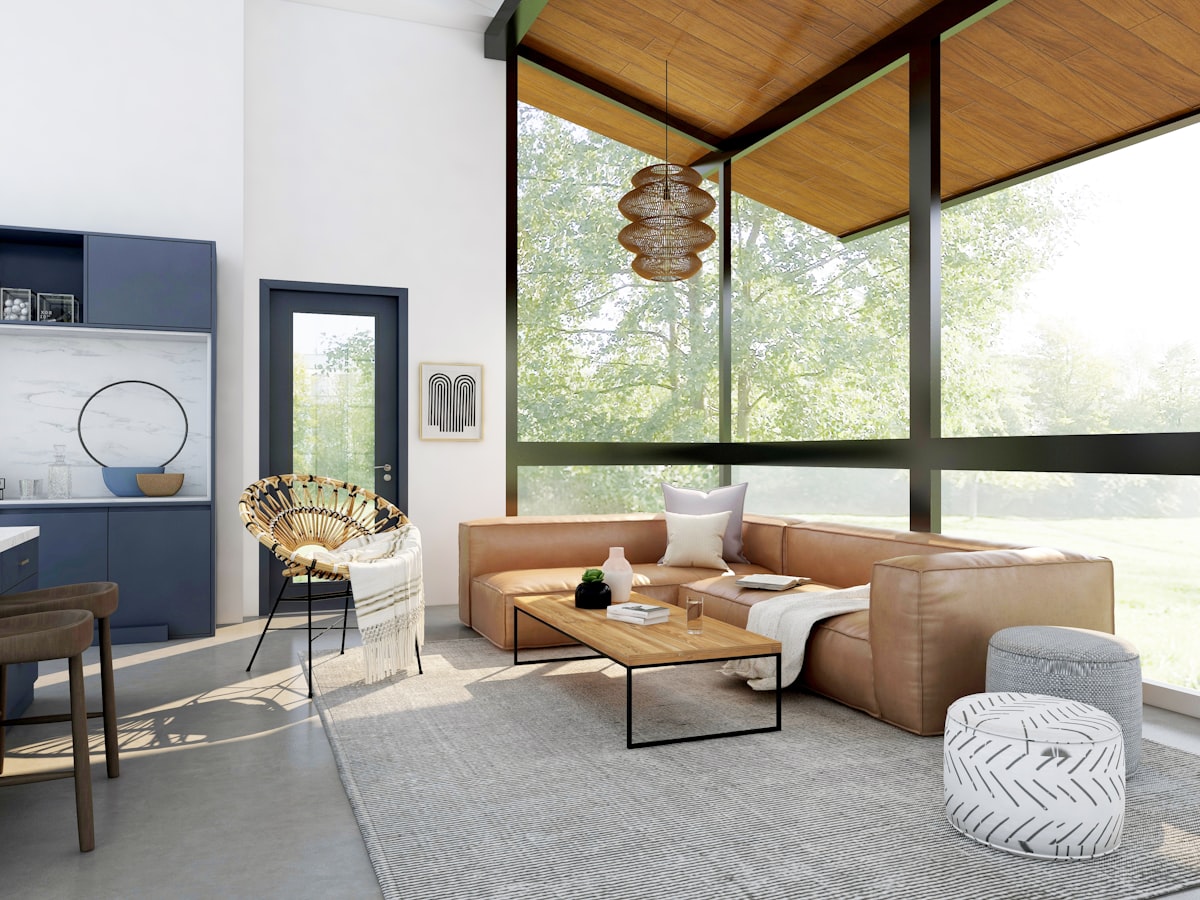 Resort-quality outdoor furniture — another category where China’s manufacturing depth delivers both performance and design sophistication.
Manufacturing Precision That Rivals Any Market
The perception that Chinese furniture manufacturing trades precision for volume has not reflected the upper tier of the market for at least a decade. In Foshan’s premium production facilities, CNC machining produces dimensional accuracy to within ±1mm across solid-wood components. Multi-axis routers execute compound curves and carved detail that would require hours of hand-tool time in a traditional workshop. And those same facilities pair CNC precision with hand-applied finishing — artisan lacquering, hand-rubbed wax, and manual upholstery detailing — that no fully automated line can replicate.
This combination of machine precision and human craft is what produces luxury-grade output at commercial scale. It is not common across all Chinese factories. But it is consistently present in the manufacturing tier that serves international premium buyers.
The Cost-to-Quality Ratio — With Actual Numbers
The structural cost advantage of Chinese manufacturing versus European or North American production is real, documented, and significant. Buyers consistently report landed-cost savings of 30–50% compared to equivalent products from European manufacturers, even after accounting for current U.S. tariff rates and ocean freight.
To make this concrete: a custom dining chair specified with solid American white oak, Italian full-grain leather upholstery, and a hand-rubbed natural oil finish costs $280–$380 FOB from a high-end Foshan manufacturer. An equivalent chair from an Italian or German contract manufacturer runs $900–$1,400 EXW — before freight, duties, or customs clearance. The design and material specification is identical. The production address is different.
| Specification | China (FOB Foshan) | Europe (EXW Milan/Hamburg) |
|---|---|---|
| Custom dining chair (solid oak, Italian leather) | $280–$380 | $900–$1,400 |
| Hotel guestroom package (per room, full FF&E) | $1,200–$1,800 | $3,500–$5,000 |
| Custom upholstered sofa (3-seat, premium fabric) | $600–$950 | $1,800–$3,200 |
| Custom wardrobe (solid wood, 2.4m, 3-door) | $480–$720 | $1,500–$2,400 |
| Typical landed-cost advantage after duties & freight | ベースライン | +30–50% above China cost |
| Standard custom lead time | 60–90 days production | 90–180 days production |
Data sources: Jade Ant Furniture industry benchmarks; HSY Sourcing procurement data; direct buyer interviews.
Scalability That Other Markets Cannot Match
A boutique hotel project needs 60 matching guest-room packages. A villa compound development needs 240 custom pieces across 12 residence types. A private-label brand needs 25 sets of each of 18 SKUs. These scales — not large enough for a European factory’s standard production planning, not small enough for a local manufacturer to handle economically — fall exactly in the wheelhouse of China’s high-end export manufacturers. Their production infrastructure, supply chain networks, and workforce scale are optimized for precisely this range.
Direct Access to R&D and Design Innovation
China’s leading furniture manufacturers have invested heavily in in-house design capability over the past decade. Many now employ design teams of 20–50 professionals — industrial designers, material researchers, and technical engineers — who collaborate directly with international buyers on co-development projects. This means a hotel developer can bring a concept mood board to a factory in Foshan and leave with a production-ready prototype in four weeks, rather than spending six months in email negotiation with a European manufacturer’s design consultancy.
Every serious buyer sourcing from China faces a version of the same core challenges. Here is how the best Chinese wholesale suppliers address each one — not in marketing language, but in operational reality.
Pain Point 1: The Price from Your Current Supplier Is Eating Your Margin
A London-based furniture importer was sourcing upholstered seating from a Portuguese manufacturer. Quality was consistent, communication was easy, and the relationship was comfortable. The problem: at the retail prices the market would support, the gross margin on upholstered seating was sitting at 38%. Industry-standard margins for branded luxury furniture distribution run 55–65%.
After qualifying a Foshan manufacturer with equivalent material specifications and a verified quality management system, the same importer achieved a factory-direct savings of 41% on production cost. After tariffs and freight, the net landed-cost saving was 28%. Gross margin on the category moved to 58%. That is not a marginal improvement — it is a business model transformation.
Pain Point 2: Your Current Supplier Can’t Customize
Standard European catalog suppliers operate on fixed product ranges with limited modification options — perhaps three finish colors, two fabric grades, and a standard dimension set. For designers specifying for specific architectural contexts, villa developers needing non-standard dimensions, or hotel developers building a signature design aesthetic, that inflexibility is a project blocker.
High-end Chinese manufacturers — particularly those operating in the luxury export segment — offer full dimensional adjustment (to within ±5mm of any specified measurement), unlimited finish color options via Pantone or RAL reference, custom fabric selection including customer-provided material (COM programs, explained in the FAQ section), custom hardware in any specified finish, and from-scratch design development for buyers who need pieces that exist nowhere in any catalog. This is not a premium service offered to special clients. It is the standard operating model.
Pain Point 3: Your Lead Times Are Killing Your Project Timelines
A hotel opening with a fixed operational start date cannot absorb a manufacturer’s “12 weeks, maybe 14” production estimate. The consequence of late furniture delivery on a hotel opening is measured in lost revenue from a delayed opening date — typically $50,000–$150,000 per week for a 100-150 room property, depending on ADR (Average Daily Rate).
China’s top-tier wholesale manufacturers operate streamlined production cycles. For standard luxury catalog pieces, production runs 6–8 weeks. For fully custom pieces requiring new tooling or complex upholstery, 8–12 weeks is realistic. These timelines are achievable because the supply chain depth in Guangdong means material procurement happens in days, not weeks — everything is already within a two-hour radius. Professional buyers lock these timelines into purchase contracts with milestone deliverables and inspection gates tied to payment terms, not the calendar.
Pain Point 4: Quality Is Inconsistent Batch to Batch
A distributor supplying upholstered furniture to a boutique hotel chain received its first container from a new Chinese manufacturer: flawless. Second container: three chairs with inconsistent lacquer depth on back panels. Third container: two sofas with fabric pattern misalignment at seat seams. The problem was not the factory — it was the absence of a documented quality control protocol that applied equally to every production run regardless of timing or volume pressure.
The solution is a three-phase QC system: pre-production material verification, mid-production in-line inspection, and final pre-shipment inspection (PSI) at AQL 1.0 standard (explained fully in the Glossary). Each phase is documented with timestamped photographs and a written report from an independent third party. This system, applied consistently, is what produces batch-to-batch consistency — not trust in the factory’s self-reporting.
Pain Point 5: You Have No Way to Differentiate Your Offering
Every importer and designer operating without proprietary product is competing in a market where the factory catalog is the product. Price pressure is structural because buyers can source the same pieces from multiple suppliers. The move to OEM private-label manufacturing eliminates this entirely: your designs, manufactured exclusively for your business, available to no competitor.
A Sydney-based interior designer launched a 12-piece OEM collection through a Foshan manufacturer and achieved a 68% gross margin at retail in the first year. She owns the design. The factory produces it for her and no one else. The collection was featured in two design publications within its first year. That trajectory does not happen with catalog reselling.
This is the most consequential section of this guide. A bad supplier relationship costs more in quality failures, delays, and management time than any price advantage can offset. Here is the structured framework that experienced buyers use.
What to Look For — The Professional Checklist
The certifications that matter most for serious buyers, and how to verify each one, are as follows. Do not accept PDF copies alone — every major certification body has a public database for independent verification.
| Certification | What It Means | How to Verify |
|---|---|---|
| ISO 9001:2015 | Documented, systematic quality management across the production process | Cross-check certificate number with the issuing registrar (SGS, Bureau Veritas, TÜV Rheinland) |
| FSC Chain-of-Custody | Timber sourced from certified, responsibly managed forests | Enter license code at info.fsc.org |
| CARB Phase 2 / TSCA Title VI | Formaldehyde emissions in composite wood panels within U.S. legal limits | Request test reports from an EPA-accredited Third-Party Certifier; verify TPC accreditation with EPA |
| BIFMA | Commercial-grade structural performance and durability | Check product listing at bifma.org/page/bifma-compliant |
| GREENGUARD Gold | Low chemical emissions for indoor air quality — required for LEED/WELL projects | Search product at UL’s SPOT public database |
| OEKO-TEX Standard 100 | No harmful substances in upholstery textiles above health-risk thresholds | Verify certificate at oeko-tex.com label check tool |
Beyond certifications, look specifically for: a portfolio of documented luxury or five-star hotel projects (with client references you can actually contact), in-house design and engineering teams who can read and respond to CAD files, English-speaking project managers with dedicated account ownership (not a rotating sales contact), and a structured sample policy that produces physical samples before production commitment.
A comprehensive overview of the full certification landscape used by Chinese furniture manufacturers — including market-specific compliance standards for the U.S., EU, and Asia-Pacific — is maintained by the CIFF Guangzhou certification guide, which is updated annually.
Red Flags That Should End Any Conversation Immediately
These are not minor concerns — each one is a signal of structural problems that will cost you money:
The JadeAnt Chinese furniture manufacturer red flags guide provides a detailed supplier red-flag checklist that experienced importers use as a first-pass screening tool.
The best wholesale furniture partnerships in China today are not just manufacturing relationships — they are digitally integrated operations where buyers have visibility into their orders from design approval through container loading.
3D CAD Previews and Virtual Factory Tours
Before a single piece of timber is cut, the world’s leading furniture manufacturers now produce photorealistic 3D renderings of every custom piece. This is not a visualization courtesy — it is a functional approval step that eliminates the ambiguity that produces incorrect production runs. A hotel developer can view their custom headboard collection in a rendered room environment at the correct scale and lighting before approving the design for production. An interior designer can present a client with photorealistic previews of bespoke furniture in the actual space before committing to manufacturing. JL&C Furniture’s design team includes this as a standard step in the custom manufacturing process, producing CAD and rendering files in SketchUp, Revit, and AutoCAD formats compatible with architects’ and designers’ existing workflows.
Real-Time Production Tracking
Production timelines are only reliable when they are visible. The most professionally managed Chinese manufacturers provide buyers with cloud-based production dashboards — updated weekly or at each milestone — showing material procurement status, production stage completion percentage, QC inspection results, and shipping booking confirmation. This is not universal in the market. Its presence at a manufacturer is a strong signal of organizational maturity.
Blockchain-Enabled Material Traceability
This is an emerging capability at the leading edge of the industry, not yet universal. Blockchain traceability in furniture manufacturing uses tamper-proof digital records to document every step of a material’s journey from certified forest, through the sawmill, into the factory, and into the finished piece. For hotel groups or design brands whose clients are pursuing LEED, WELL, or ESG reporting requirements, this level of documentation is moving from a differentiator to an expectation. Research published by CIFF on automation and digitalization in furniture manufacturing tracks the adoption curve of these technologies across China’s major production clusters.
Digital Catalogs with Customizable SKU Filters
For designers and developers managing complex multi-room projects, digital catalogs that allow filtering by material, finish, dimension, certification, and MOQ are a significant workflow advantage. The best Chinese wholesale suppliers maintain digitally current product libraries with full technical specifications attached — not scanned PDFs from a 2019 trade show, but live documents that reflect current production capability and material sourcing.
This is a real-world scenario that illustrates what the professional wholesale sourcing model delivers when every step is executed correctly.
The Challenge
A Dubai-based interior design firm was appointed to furnish a luxury villa compound — 8 villas, each approximately 900 sqm, with six bedrooms, formal entertaining spaces, and outdoor terraces. The brief specified hand-crafted solid wood furniture with geometric inlay work on dining furniture and sideboards, contemporary upholstered seating in client-selected premium fabric, and a coordinated outdoor collection in marine-grade teak. The total unit count: 120 custom pieces across 14 SKUs. The delivery window: 14 weeks from order confirmation.
No European manufacturer could execute the inlay specification at the required quality within the project budget. Several Italian firms quoted for the upholstered seating alone — at pricing that consumed the entire furniture allocation across all eight villas.
The Solution
The firm partnered with a Foshan-based manufacturer with a documented portfolio of luxury residential projects and a demonstrated hand-carving capability. The design team submitted full CAD drawings, material specifications (solid American white oak, client-supplied Loro Piana fabric samples, marine-grade teak for outdoor pieces), and finish references. The factory produced a full prototype suite — representative pieces across all 14 SKUs — in five weeks. After two rounds of refinement on the inlay finish depth, the prototype was approved.
Production began immediately after written prototype approval. An independent QC agent conducted an in-line inspection at 40% completion and a final pre-shipment inspection at 100%, using an approved physical sample as the comparison baseline for each piece.
The Outcome
All 120 pieces were delivered to the Dubai site on time, within the 14-week window. Total procurement cost came in at 35% below the nearest comparable European quote for equivalent material and design specification. The design firm reinvested the budget saving into custom-commissioned metalwork for the entrance lobbies and a lighting installation from a Venetian glass studio — features that became the most photographed design elements of the project. The hotel group that manages the villa compound subsequently appointed the same design firm to three additional properties, citing the quality and design uniqueness of the villa project as the deciding factor.
Shipping Terms Explained — FOB, EXW, and DDP
Three terms govern how financial risk is transferred between you and your supplier in an international furniture shipment. Choosing the wrong one for your situation is one of the most common and most expensive errors in furniture importing.
EXW (Ex Works): The factory price covers the furniture at the factory gate only. Every cost after that point — inland trucking to port, export clearance, ocean freight, insurance, import duties, customs clearance, and inland delivery to your site — is your responsibility. EXW is the most common quote format from small factories and the least appropriate term for buyers without dedicated logistics infrastructure.
FOB (Free on Board): The factory is responsible for loading goods onto the vessel at the export port. From that moment, all subsequent costs transfer to you. FOB gives you control over freight carrier selection and cost negotiation, but requires you to actively manage every subsequent logistics step.
DDP (Delivered Duty Paid): The factory or sourcing partner covers every cost from factory to your warehouse door — including import duties, customs clearance, and last-mile delivery. Your landed cost is fully visible from the outset. For buyers without dedicated import teams, DDP frequently produces the lowest total cost even at a higher quoted factory price, because every hidden variable is already included. A clear comparison of these terms for furniture importing is provided by Sorse Furniture’s Incoterms guide.
LCL vs. FCL — Which Shipping Mode for Luxury Goods
LCL (Less than Container Load) consolidates your shipment with other buyers’ cargo in a shared container. Cost per CBM is lower at small volumes. Risk is higher — your furniture is handled multiple times by port workers with no special care for finished surfaces.
FCL (Full Container Load) means your container is loaded at the factory and sealed until it reaches your destination. For luxury furniture, FCL is almost always the correct choice — fewer handling events mean fewer opportunities for surface damage to lacquered finishes, upholstered surfaces, and polished hardware. The premium over LCL for a partially filled 20-foot container is typically $400–$1,200 — a small price relative to a $25,000–$50,000 shipment of luxury pieces.
Customs Compliance — The Documentation Checklist
Missing or inconsistent customs documentation is the single most common trigger for port holds. A hold that generates $150–$350 per container per day in demurrage charges is entirely preventable with correct documentation prepared in advance.
| Document | Purpose | Most Common Error |
|---|---|---|
| Commercial Invoice | Declares value, description, parties | Product description must match HS code classification exactly |
| Packing List | Details units, dimensions, weights | Unit count must match invoice without exception |
| Bill of Lading | Title document issued by carrier | Named consignee must match importer of record |
| Certificate of Origin | Determines applicable tariff rate | Must be issued by an authorized chamber of commerce |
| CARB/TSCA Test Reports | Required for all composite wood products entering the U.S. | Must be from an EPA-accredited Third-Party Certifier |
| Lacey Act Declaration | Required for all wood products entering the U.S. | Must specify wood species and country of harvest |
| Phytosanitary Certificate | Required for solid wood and some wood packaging | Obtain from Chinese quarantine authority (GACC) |
After-Sales Support — What a Real Supplier Relationship Includes
After-sales is where the gap between professional wholesale partners and transactional vendors becomes starkest. A professional partner relationship includes: a named account manager who remains your point of contact for reorders, replacement parts, and warranty claims; a documented warranty period (typically 2–5 years for structural components, 1–2 years for upholstery and finish); a parts supply commitment for discontinued items (hardware, fabric lots held in reserve for 12–24 months); and a structured reorder process that reinstates your approved specifications without requiring you to re-brief from scratch each time.
For hotel operators with multiple properties, this last point is critical. A distributor or hotel group that adds a property every 18 months needs a manufacturer who can reproduce a coordinated furniture collection two years after the original production run — same timber grade, same finish tone, same fabric performance — without quality drift.
 Watch: Inside a luxury Italian minimalist furniture showroom in China — a behind-the-scenes look at the manufacturing quality, material depth, and design capability available from China’s premium wholesale suppliers.
The buyers who get the most from Chinese wholesale furniture partnerships share one characteristic: they approach the relationship as a strategic investment, not a one-time transaction. Here is what that looks like in practice.
Step 1 — Request a Curated Portfolio Based on Your Design Aesthetic
Do not ask for a general catalog. Describe your project context: the design direction (contemporary, neo-classical, biophilic, maximalist), the material palette you work with most often, and the scale of projects you typically deliver. A manufacturer worth your time will respond with a curated selection of portfolio projects and product examples that are relevant to your brief — not a 200-page PDF of everything they have ever made.
Step 2 — Submit a Custom Design for Quoting and Prototyping
The fastest way to evaluate a manufacturer’s actual capability — not their marketing — is to submit a real design brief and observe how they respond. Provide a CAD drawing, a finish reference, a material specification, and a target unit count. Evaluate the response on three dimensions: the technical accuracy of their questions (do they understand the spec?), the realism of their lead-time and cost estimate (does it align with market benchmarks?), and the quality of the prototype when it arrives.
Step 3 — Schedule a Virtual Consultation with a Dedicated Account Manager
For buyers who want to establish a direct manufacturing relationship without a sourcing trip to China as the first step, a structured virtual consultation is the professional alternative. Prepare: your current sourcing pain points, your typical project scale and frequency, and two or three example designs or reference images that represent your quality and aesthetic standard. The consultation should produce a clear picture of whether the manufacturer’s capability, operational model, and communication style are a genuine fit for your business.
The JL&C Furniture contact page is the starting point for a direct project consultation — for residential villa projects, boutique hotel FF&E packages, and private-label brand development across all furniture categories.
| Metric | Industry Benchmark |
|---|---|
| China global furniture export share | ~34% ($36.44B in 2024) |
| China domestic furniture market (2025) | $160.53 billion |
| Typical landed-cost saving vs. EU manufacturing | 30–50% |
| Hotel guestroom FF&E package (FOB, per room) | $1,200–$1,800 |
| Custom luxury dining chair (FOB Foshan) | $280–$380 |
| Standard custom production lead time | 60–90 days |
| MOQ for fully custom luxury pieces | 10–20 units (top-tier factories) |
| Private-label gross margin at scale | 60–75% |
| FSC adoption (top-tier Chinese exporters) | ~55% |
| CARB/TSCA compliance (top-tier exporters) | ~72% |
| Pre-shipment inspection cost (per order) | $280–$500/inspector-day |
| U.S. Section 301 tariff on upholstered furniture | 25% (as of 2026) |
AQL (Acceptable Quality Limit): A statistical sampling standard defining the maximum defect rate allowable in a production batch before the shipment is rejected. AQL 1.0 is the luxury professional standard — approximately 1% defect threshold. AQL 2.5 (roughly 2.5% threshold) is used for mass-market goods.
BIFMA: Business and Institutional Furniture Manufacturers Association. Sets structural performance, load capacity, and durability standards for commercial-grade furniture in the U.S.
CARB Phase 2 / TSCA Title VI: California Air Resources Board standard (federally adopted under the Toxic Substances Control Act) governing maximum formaldehyde emissions from composite wood panels — MDF, particleboard, and hardwood plywood — used in furniture construction. Mandatory for all furniture entering the U.S. market that contains these materials.
COM/COL: Customer’s Own Material / Customer’s Own Leather. A program where the buyer provides their own specified fabric or leather to the manufacturer for upholstery, rather than selecting from the factory’s available materials.
DDP (Delivered Duty Paid): The seller covers every cost from factory gate to your warehouse door, including import duties, customs clearance, and last-mile delivery. The buyer’s landed cost is fully visible from the outset.
EXW (Ex Works): Factory-gate price only. Every subsequent cost — inland transport, export clearance, ocean freight, duties, and customs clearance — is the buyer’s responsibility.
FCL (Full Container Load): The buyer fills and seals an entire shipping container. Fewer handling events mean lower damage risk for luxury furniture compared to LCL.
FF&E: Furniture, Fixtures & Equipment. The complete furnishing package for a hospitality property, including all movable items that are not permanently fixed to the building structure.
FOB (Free on Board): The seller is responsible for goods until they are loaded onto the vessel at the export port. All subsequent costs transfer to the buyer.
FSC: Forest Stewardship Council. Certifies that timber was sourced from responsibly managed forests. Verifiable at info.fsc.org using the manufacturer’s license code.
GREENGUARD Gold: Certification from UL Solutions confirming that a finished product’s chemical emissions into occupied spaces meet standards appropriate for sensitive environments, including hotels and hospitals.
LCL (Less than Container Load): The buyer’s shipment is consolidated with other buyers’ goods in a shared container. Lower cost but higher handling risk than FCL for delicate pieces.
MOQ (Minimum Order Quantity): The minimum number of units a factory will accept per style per order. For luxury custom pieces, top-tier factories typically accept 10–20 units.
NNN Agreement: Non-Disclosure, Non-Use, Non-Circumvention agreement — the legally appropriate IP protection instrument for Chinese manufacturing relationships. Must be drafted in Chinese and governed by Chinese law to be enforceable.
OEM: Original Equipment Manufacturing. You provide the design; the factory manufactures to your specification exclusively.
ODM: Original Design Manufacturing. The factory develops the design; you market it under your brand.
OEKO-TEX Standard 100: Certification confirming that a textile product contains no harmful substances at concentrations that pose a health risk. Standard for upholstery fabrics in premium furniture.
PSI (Pre-Shipment Inspection): An independent quality inspection conducted when production is 100% complete and goods are staged for container loading, before the shipment leaves China.
VOC (Volatile Organic Compounds): Chemicals that off-gas from conventional paints, lacquers, and adhesives. Low-VOC and water-based formulations are the professional standard for luxury interior furniture and are required by EU and California regulations.
1. Can I get truly custom furniture — not just modified catalog pieces?
Yes, and this distinction matters. Top-tier Chinese wholesale suppliers offer full OEM and ODM services, including from-scratch design development. This means you can submit a hand-drawn sketch, a mood board reference, or a set of CAD drawings and receive a production-ready prototype built exactly to your specification. The factories that serve the international luxury market have in-house design and engineering teams specifically to enable this — they are not adapting catalog pieces, they are manufacturing custom designs from your brief. The technical requirement on your side is a complete specification package: dimensioned drawings, finish references, material callouts, and hardware specs. The more precise your brief, the more precisely the result matches your intent.
2. How do I ensure the quality matches European standards?
Verification requires three actions, not one. First, order physical samples and have them independently tested — structural load testing, formaldehyde emissions (CARB/TSCA compliance), and fabric abrasion resistance (minimum 100,000 Martindale cycles for commercial use). Second, commission a third-party factory audit from QIMA, SGS, or Bureau Veritas before production begins. Third, conduct a pre-shipment inspection at AQL 1.0 standard before any goods leave China. Any manufacturer who resists any of these three steps should be removed from your shortlist. European standard quality is achievable from China’s top-tier manufacturers — but only when you build the verification infrastructure to confirm it, not when you assume it.
3. What is the typical MOQ for high-end private-label lines?
Among manufacturers who serve the international luxury market, MOQs for fully custom pieces typically start at 10–20 units per configuration. For catalog items with custom finish modifications, MOQs are often as low as 5–10 pieces. For complex custom pieces requiring proprietary tooling or molds, the manufacturer’s NRE (Non-Recurring Engineering) cost is amortized across the first production run — meaning the per-unit cost is higher at 15 units than at 50, but the pieces are producible. The most professional approach is to frame your initial inquiry with a total project brief rather than a per-SKU MOQ negotiation — factories that see a serious project scope have far more flexibility on individual SKU minimums.
4. Can I use my own fabrics and hardware?
Yes — and specifying your own materials is one of the most effective ways to guarantee material quality and design exclusivity. Most high-end Chinese manufacturers operate COM (Customer’s Own Material) and COL (Customer’s Own Leather) programs: you source and ship the specified fabric or leather to the factory, and it is incorporated into your production. This eliminates the risk of material substitution mid-production and gives you complete control over the material’s origin and certification. For hardware — hinges, drawer slides, handles, legs — the same principle applies: specify the exact manufacturer and model number in your technical brief, and a serious factory will source it exactly as specified.
5. How long does production and shipping take for a 50-unit hotel order?
For a 50-unit order of custom hotel furniture at luxury specification, plan the following timeline: prototype production and approval, 4–6 weeks; production run, 8–10 weeks; pre-shipment inspection, 3–5 days; export clearance and loading, 5–7 days; ocean freight to the U.S. West Coast, 18–22 days (East Coast, 28–35 days); and customs clearance, 5–10 business days. Total from first sample approval to warehouse delivery: approximately 16–22 weeks. Professional buyers build a 3-week buffer on top of this for customs variability and last-mile coordination. For hotel projects with non-negotiable opening dates, place your order 5–6 months before the target installation date.
6. Do suppliers help with 3D renderings and technical drawings?
Yes — the manufacturers who serve international designers, architects, and FF&E buyers provide CAD, SketchUp, and Revit-compatible files as a standard deliverable, not a premium service. This matters practically because most design and architecture firms work within BIM-compatible environments — furniture that arrives as a correctly dimensioned and attributed Revit family object integrates directly into the project’s construction documentation, eliminating hours of manual redrafting. For design approval, photorealistic 3D renderings allow clients to visualize custom pieces in the actual space before production commences, reducing revision cycles and approval time.
7. Are sustainable and eco-friendly options available?
Yes — with documentation to verify the claims, not just marketing language. FSC-certified timber, CARB Phase 2 compliant panels, GREENGUARD Gold certified finishes, ISO 14001-certified production facilities, OEKO-TEX Standard 100 fabrics, and water-based low-VOC lacquers are all available from China’s leading export manufacturers. Approximately 55% of China’s top furniture exporters now hold FSC chain-of-custody certification. For buyers supplying hotel groups pursuing LEED or WELL building certification, manufacturers can provide Environmental Product Declarations (EPDs) for specific furniture pieces — documentation that contributes directly to indoor air quality and material transparency credits. Always verify sustainability certificates through the issuing body’s public database, not a factory-provided PDF.
8. Can I visit the factory before committing to an order?
Absolutely — and for any order above $50,000, a factory visit is strongly recommended. China’s leading furniture manufacturers welcome buyer visits and can arrange structured itineraries: showroom tours, production floor walkthroughs (including raw material storage, CNC production, hand-finishing, and QC stations), sample reviews, and meetings with design team and factory management. For maximum efficiency, combine factory visits with attendance at CIFF Guangzhou (the world’s largest furniture fair, held annually in March) — a single sourcing trip to Guangdong can cover three or four factory visits and the trade fair within five days. Fly into Guangzhou Baiyun International Airport; Foshan is a 45-minute drive.
9. What payment terms are typical for large projects?
The standard payment structure for high-end custom furniture is 30% deposit at order confirmation (after sample approval), with the 70% balance payable before shipment — confirmed after a passed pre-shipment inspection. For new buyer relationships, some factories request a 40% deposit. Buyers with established track records at significant volume often negotiate 30/30/40 terms — deposit, mid-production payment, and balance before shipment. For large institutional orders from hotel groups or developers, Letter of Credit (LC) terms provide additional security for both parties. For first-time buyers, Trade Assurance on Alibaba’s platform provides transaction protection up to the insured order value.
10. How is design IP and brand exclusivity protected?
Two instruments are required — not one. The first is an NNN Agreement (Non-Disclosure, Non-Use, Non-Circumvention) drafted in Chinese, governed by Chinese law, and specifying financial penalties in RMB. Standard Western NDAs are not reliably enforceable in Chinese courts. The NNN agreement must be in place — signed and stamped — before any design file, CAD drawing, or material specification is shared with a factory. The second instrument is design registration with CNIPA (China National Intellectual Property Administration) before factory discussions begin. Registration gives you formal legal standing in Chinese courts and acts as a deterrent. Work with a China-specialized IP attorney for both instruments — this is not an area where standard legal advice applies.
11. Do you support drop-shipping for villa or residential clients?
Some high-end Chinese manufacturers and sourcing partners offer white-glove delivery coordination — the manufacturer arranges final-mile delivery in crating appropriate for luxury goods, with installation coordination to a specific residential address. This model is most commonly available for international buyers operating in key markets (UAE, UK, Australia, U.S.) where the manufacturer has established freight and white-glove delivery partnerships. Discuss this requirement explicitly during the initial briefing — not every factory offers it, and those that do have specific geographic capabilities and minimum order requirements.
12. Can a supplier replicate a design I have seen elsewhere?
Yes — ethically and legally, within clear parameters. Chinese manufacturers can reverse-engineer and improve upon a reference design, subject to two conditions: the reference design must not be subject to a valid, registered design patent in China; and the buyer takes responsibility for confirming that no registered IP is being infringed. Most professional manufacturers will conduct a basic IP status check on significant reference designs before agreeing to produce. The more typical scenario is a buyer who has seen a piece they admire and wants something inspired by it but adjusted — different dimensions, a different material, a specific finish modification. This design development process is entirely standard and is exactly what in-house factory design teams are equipped to execute.
13. What happens if a shipment arrives damaged?
If a pre-shipment inspection was conducted and goods passed, damage sustained in transit is a freight insurance claim — not a manufacturer dispute. This is why marine cargo insurance is not optional for luxury furniture shipments. For damage attributable to inadequate factory packaging (confirmed by inspection photos showing packaging condition at the time of inspection), the manufacturer is commercially responsible for replacement. A well-structured purchase contract specifies: a clear defect classification system (cosmetic vs. structural vs. dimensional), a remediation timeline (typically 30–45 days for replacement production), and financial accountability for any defects exceeding the contracted AQL threshold. Professional buyers document condition at delivery with photographs before any unpacking begins.
14. How do I scale from a sample to full production with confidence?
Through a structured four-gate process. Gate 1: Sample approval — physical sample reviewed, tested, and approved in writing. This document becomes the legal and commercial reference for all subsequent production. Gate 2: Pre-production meeting — before material cutting begins, confirm material specifications, production schedule milestones, and QC protocol with the factory in writing. Gate 3: In-line QC inspection — at 30–50% production completion, an independent inspector compares production pieces against the approved sample and reviews joinery, finish, and dimensional accuracy. Gate 4: Final audit (PSI) — at 100% completion, a formal pre-shipment inspection at AQL 1.0 standard. Goods ship only after a written pass from an independent inspector. This process cannot be shortcut at any gate without introducing risk. Every gate is there because a specific category of problem is cheapest to catch at that moment.
15. Is after-sales support available for reorders and spare parts?
Yes — and the quality of this support is one of the most reliable indicators of a factory’s long-term reliability as a partner. Professional wholesale manufacturers assign a dedicated account manager to ongoing client relationships. This person maintains your approved specifications on file, can reinstate production of any previously approved piece without a full re-briefing, holds fabric and hardware lots in reserve for the duration of your warranty period, and manages replacement production for any warranty claim. For hotel groups and developers adding properties over time, this long-term continuity is not a convenience — it is a procurement requirement. A furniture collection installed in 2025 that cannot be reproduced in 2027 for the next property in the same brand creates a design inconsistency problem that is expensive and professionally embarrassing to solve.
This guide reflects current industry practice as of 2025–2026. For project-specific sourcing consultation — whether for a residential villa, boutique hotel FF&E package, or private-label brand development — the JL&C Furniture team is available for direct project discussions. With over 20 years of design and manufacturing experience from their Shanghai facility, JL&C Furniture works with importers, designers, hotel groups, and private-label brands across the full spectrum of high-end residential and commercial furniture.

China Furniture Sourcing Agent Roles for High-End Buyers What a China Furniture Sourcing Agent Actually Does for High-End Buyers Every finished luxury room sits on
How to Vet a China Furniture Sourcing Agent Before Signing A single curved sofa like this goes through dozens of approvals, including frame, foam, fabric
China Furniture Sourcing Agent vs Direct Factory Buying: A Strategic Guide for High-Value Buyers When one project includes 400 hotel rooms, a 20-seat marble dining
Advanced Tips to Get More from Your China Furniture Sourcing Agent Powerful Strategies for High-Performance Sourcing – Tailored for Elite Buyers, Designers & Operators Your
What Wholesale Furniture Suppliers in China Can Offer High-Value Buyers A statement luxury living room — the kind of space that begins with the right

How to Work Better With Your China Furniture Supplier After Ordering A Practical Playbook for High-End Furniture Importers, Interior Designers, FF&E Buyers, Villa Owners, Private