ニュース

Order Furniture from China: Factory, Agent, or Market?
Best Ways to Order Furniture from China: Factory, Agent, or Marketplace A decision guide for high-end furniture importers, FF&E buyers, hotel developers, villa owners, interior

Strategic sourcing from Chinese manufacturers isn’t just about finding cheaper prices — it’s about building sustainable supply chains that deliver consistent margins, faster turnaround times, and reliable quality. This playbook reveals exactly how furniture distributors, showroom operators, interior designers, and hospitality procurement teams are cutting costs by up to 70% while maintaining the quality standards their clients demand.
 The level of presentation your showroom clients expect — sourced at the margins your business requires. Image: Unsplash
If you are running a furniture distribution business, operating a design showroom, managing an interior design firm, or overseeing procurement for a hotel group, you are operating in a market where margins are under permanent pressure from three directions simultaneously: rising domestic wholesale prices, increasingly price-sensitive clients, and competitors who have already discovered what you are about to read.
China’s furniture manufacturing sector reported revenues of approximately USD $95 billion in 2024, with the country accounting for roughly 30% of global furniture exports by value. The Guangdong province alone — the cluster anchored by Guangzhou and Foshan — supplies over 150 countries. Those numbers exist because buyers who understand the market consistently find a gap between what Chinese manufacturers charge and what comparable goods cost through domestic or European wholesale channels — a gap that, when managed correctly, ranges from 30% to 70% on landed cost, depending on product category, order volume, and sourcing model.
This playbook is not a beginner’s introduction to importing. It is a working professional’s guide to building a sourcing operation that protects margins, delivers consistent quality, and scales with your business. Whether you are a distributor looking to renegotiate supplier relationships, a design firm trying to make high-spec projects financially viable, or a hotel procurement team managing FF&E (Furniture, Fixtures & Equipment — the complete furnishings specification for a hospitality property) across multiple properties, every section of this guide is written for your specific situation.
Most furniture buyers who have not optimized their sourcing strategy share a common cost structure: they are paying domestic wholesale prices, accepting the margins their suppliers set, and building their business model around whatever is left. On paper, that seems like a stable arrangement. In practice, it means your cost of goods is determined by your suppliers’ decisions, not yours.
The hidden costs pile up in ways that rarely appear on a single invoice. Consider a standard restocking cycle for a mid-volume distributor: the unit price from a domestic wholesale catalog, plus shipping from the supplier’s warehouse, plus financing costs on 30-day payment terms, plus the cost of managing returns and quality complaints — that total landed cost is frequently 25% to 40% above the headline price. And because those costs are spread across invoices, freight bills, and credit card statements, they are rarely calculated as a single number.
The supplier relationship trap compounds this. Many distributors and showroom operators have stayed with the same suppliers for years — not because those suppliers offer the best commercial terms, but because the switching cost feels high, the relationships feel personal, and the uncertainty of change feels riskier than the certainty of diminishing margins. That calculation becomes increasingly costly as your competitors eliminate it.
The clearest distinction between a furniture business with healthy margins and one that struggles is whether sourcing is treated as a strategic function or a transactional one. Transactional sourcing asks: “What do I need to buy, and who can sell it to me?” Strategic sourcing asks: “What is my total cost of goods, who can deliver the best value across quality, price, lead time, and reliability, and how do I build relationships that improve over time?”
Businesses operating at the strategic level are already sourcing — often exclusively — from Chinese manufacturers. They have absorbed the learning curve, built the supplier relationships, established quality protocols, and are now generating margins that allow them to compete on value rather than price. If your competitors in your specific market are not yet doing this, the window to establish first-mover advantage in your supplier relationships is narrowing. If they already are, the cost of delay is being paid in margin points every quarter.
Direct sourcing means establishing a commercial relationship directly with a factory — no intermediary trading company, no sourcing agent taking a commission cut. You negotiate price, quality specifications, and delivery terms directly with the manufacturer’s sales team, and the cost difference goes directly to your margin.
When this model works best: Direct sourcing delivers its maximum value when you have clearly defined product specifications, order volumes above $15,000–$20,000 per run (sufficient to be a meaningful account for the factory), and the operational bandwidth to manage supplier communication, quality inspections, and shipping logistics. It works particularly well for distributors with repeating SKU orders — the same sofa, the same bedroom set, the same dining collection — where the specification work is front-loaded and subsequent orders are largely execution.
When it creates problems: For first-time buyers, for low-volume orders, or for projects requiring rapid iteration on custom designs, the absence of a knowledgeable intermediary creates friction that costs time and money. Communication misalignments across time zones, specification ambiguities, and unfamiliarity with Chinese business customs can absorb more cost than the commission you would have paid an agent.
Real cost savings for direct distributors: Based on industry data and buyer testimonials across the Guangdong market, direct sourcing from tier-one Foshan and Guangzhou manufacturers produces 30–50% landed cost savings versus equivalent-specification products sourced through domestic wholesale channels — before accounting for the additional leverage that comes from volume consolidation and relationship maturity.
📺 Watch: Luxury Furniture Sourcing in China — Inside Premium Showrooms & Factory Floors

An inside look at China’s premium furniture showrooms — the scale, quality tier, and customization capabilities that serious B2B buyers are working with. (Source: YouTube)
A sourcing agency is a company — typically China-based, with English-speaking staff — that manages supplier identification, factory vetting, quality inspection, and logistics coordination on your behalf, in exchange for a commission (typically 5–15% of order value) or a fixed management fee.
The premium you are paying for convenience: Agency commissions on a $30,000 furniture order cost $1,500–$4,500. That is not trivial — but it is appropriate when the agency’s market knowledge, factory access, and quality oversight genuinely exceeds what you could deliver independently. The question is whether the service layer you are purchasing is worth more than the margin you are surrendering. For buyers placing their first orders, navigating complex customization requirements, or operating in multiple product categories simultaneously, the answer is often yes.
How to evaluate if an agency relationship makes financial sense: Compare the agency’s total fee against your realistic cost of managing the same function internally — your time, the cost of mistakes from inexperience, and the probability of quality issues that a well-connected agency would have caught. If the agency fee is less than your expected error cost, the economics are clear. Audit the relationship annually: as your direct knowledge grows, the value of the intermediary layer may decrease.
The most commercially effective sourcing model for established B2B buyers is a hybrid: direct relationships with two or three core factory partners for high-volume, repeating product lines, combined with agency support for new product categories, complex customization projects, or geographical expansion into supplier bases you have not yet qualified.
Case study — mid-sized showroom operator: A showroom operator in the Middle East running a 3,000 sqm luxury residential furniture showroom manages direct relationships with four Foshan factories for their core sofa, dining, and bedroom lines — these account for 75% of their order volume. For bespoke one-off pieces, custom upholstery projects, and new product categories they are testing, they engage a Guangzhou-based sourcing agency on a per-project basis. The result: direct-sourcing economics on their core volume, agency expertise on the edge cases, and no single sourcing relationship failure that could disrupt the business.
Supplier pricing in the Chinese furniture market is not a fixed tariff — it is a function of perceived relationship value. The same factory that quotes a first-time buyer $380 per unit on a standard sofa may quote an established partner $310 for the same piece, because the established partner represents predictable revenue, lower administrative burden, and a track record of smooth transactions.
The levers that create real negotiating leverage are specific and quantifiable.
Volume commitments are the most powerful. A forward purchase agreement — committing to 4 orders of a minimum value over 12 months — gives the factory visibility into future revenue. Even if individual order sizes are modest, the commitment value changes how they price. A distributor in Germany committed to USD $80,000 per year spread across quarterly orders — compared to their previous pattern of ad-hoc orders averaging $25,000 — and achieved a 12% reduction in unit pricing within the first contract cycle, worth approximately $9,600 per year before accounting for reduced sampling and specification costs.
Payment terms signal financial reliability. Moving from a 30/70 split (30% deposit, 70% before shipment) to net-30 terms (full payment 30 days after bill of lading) requires a track record of on-time payment, but the working capital improvement for your business is significant: on a $40,000 order, net-30 terms effectively provide a $28,000 credit for 30+ days.
MOQ flexibility — the factory’s stated Minimum Order Quantity (MOQ), meaning the smallest production run they will accept — is frequently more negotiable than the initial quote suggests. Offering to consolidate orders across multiple SKUs to hit a total value threshold, rather than hitting MOQ on each individual item, often unlocks smaller per-SKU minimums while maintaining the factory’s production economics.
Custom specification — furniture built to dimensions, materials, or aesthetic details that differ from a factory’s standard catalog — is one of the most commercially underutilized capabilities available to B2B buyers sourcing from China.
When a distributor specifies a sofa in a custom fabric colorway, a non-standard depth, or with a proprietary leg design, that product does not exist in any competitor’s catalog. It cannot be price-shopped online. It cannot be sourced through a domestic wholesaler. The margin protection that exclusivity creates is worth more, over time, than any negotiated unit price reduction.
Real example — an 18-month sourcing journey: A furniture distributor supplying the Australian residential design market began their China sourcing relationship with three catalog products from a Foshan factory. Over 18 months, they progressively customized each line: modified frame dimensions to suit Australian room proportions, selected a curated fabric palette from the factory’s library, and added a proprietary metal leg finish. By month 18, their entire core range was exclusive to their distribution. Margins on the custom range averaged 45% higher than their previous domestic-sourced equivalent — not because unit costs decreased (they did, by approximately 28%), but because the absence of competitive alternatives removed the downward price pressure entirely.
Running supplier relationships with three to five Chinese manufacturers simultaneously is operationally manageable when the right systems are in place, but genuinely chaotic when they are not.
Portfolio diversification across suppliers protects against single-point failure: if one factory experiences a production shutdown, a labor dispute, or a quality crisis, your business is not wholly exposed. As a practical rule, no single supplier should account for more than 50% of your total order volume — ideally 30–35% for your largest relationship, declining from there.
Quality control systems that function across multiple suppliers require standardized documentation: a Master Quality Specification (MQS) for each product line that travels with every order regardless of which factory produces it, a consistent inspection protocol applied at every factory, and a shared defect classification system so quality discussions are grounded in objective criteria rather than subjective impressions.
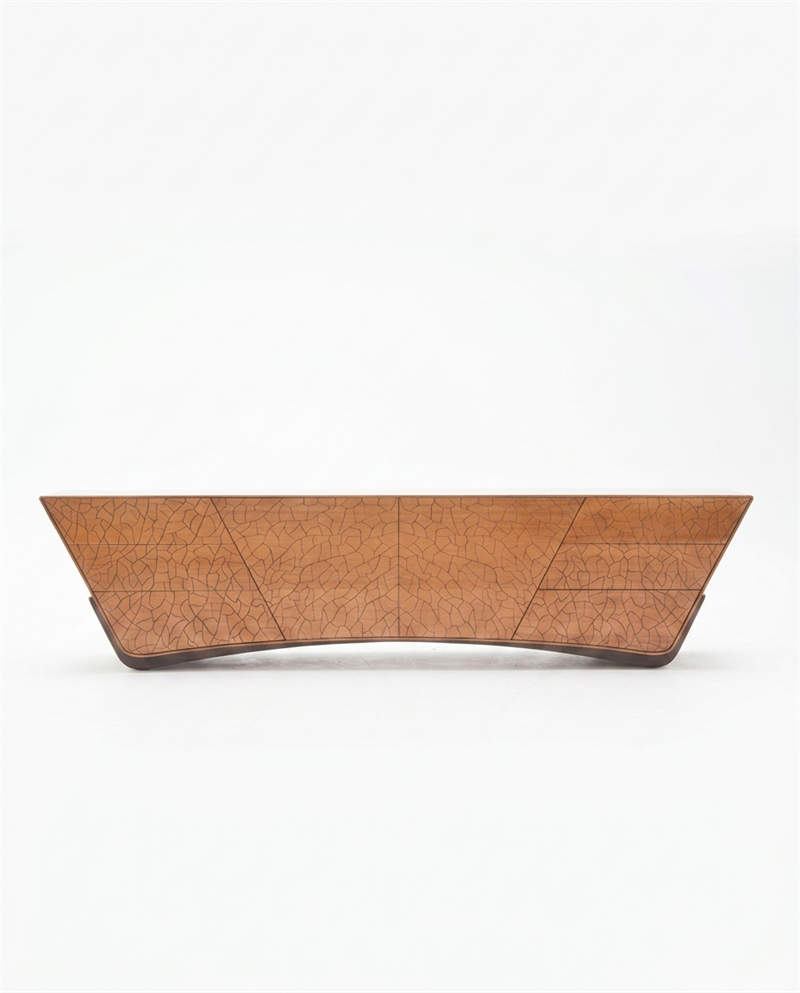
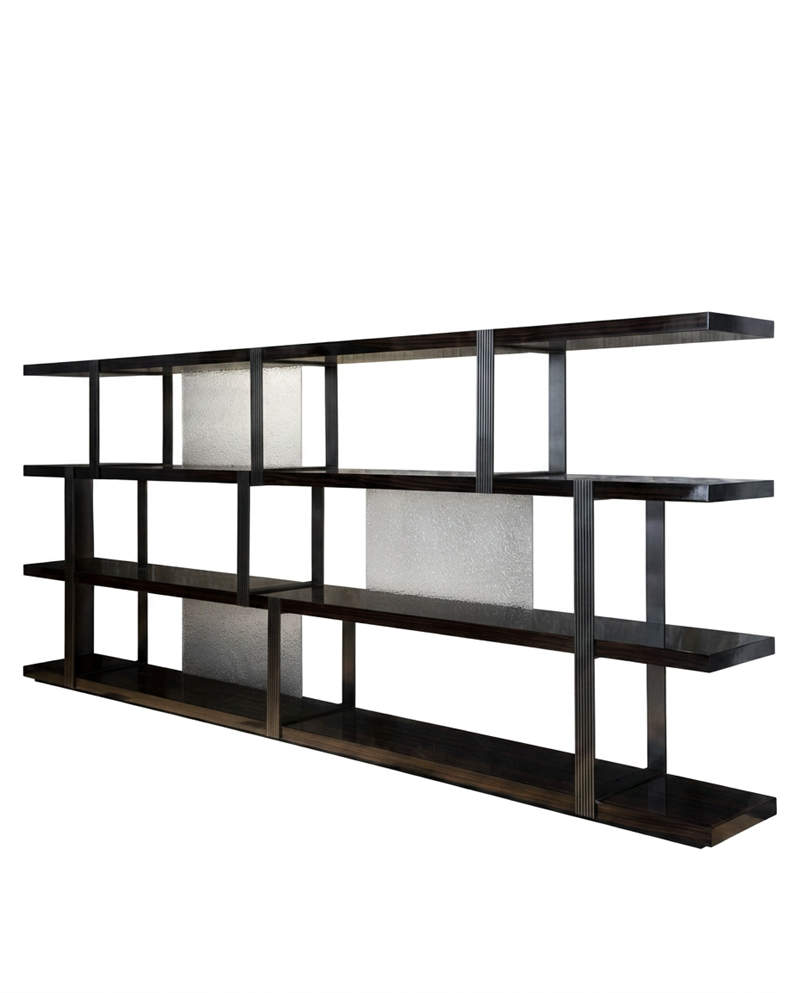
 Solid wood and metal statement furniture of this specification — regularly produced in Foshan’s premium manufacturing district — requires precise quality documentation to ensure consistency across repeat orders. Image: Unsplash
Interior designers face a sourcing challenge that distributors do not: every project is essentially a new product brief, with unique spatial requirements, client aesthetic preferences, and budget ceilings that do not expand simply because the design vision does. The tension between creative ambition and project economics is permanent — and the designers who resolve it most effectively are those who have built flexible, responsive sourcing relationships with Chinese manufacturers.
Sourcing statement pieces — a custom sectional for a residential great room, a bespoke dining table for a hospitality project — without breaking project budgets is a practical skill, not a creative compromise. A 3-meter marble-topped dining table that would cost $12,000 through a European luxury wholesale channel can frequently be produced to equivalent specification by a Foshan stone-and-furniture manufacturer for $3,500 to $4,800 at a small volume — a difference that either preserves your project margin or allows you to upgrade other specification elements for the same total budget.
Building curated collections from multiple Chinese suppliers gives design firms the breadth that a single-supplier relationship cannot. A residential project might draw living room seating from a Foshan upholstery specialist, bedroom case goods from a Guangzhou solid-wood manufacturer, and decorative occasional pieces from a ceramics and accessories supplier in Jingdezhen — all coordinated through a single logistics consolidation in Guangzhou.
Negotiating designer-friendly terms with Chinese factories is a real and underutilized capability. Design firms that establish ongoing relationships — even at lower volumes than distributors — frequently secure sample fees credited against first orders, smaller per-project MOQs (as low as 5–10 units per custom SKU), and priority sampling timelines of 10–15 days versus the standard 20–25. The factories value the referral network and brand association that comes with a design firm relationship; leverage that value in your negotiations.
The design firms with the strongest market positions in competitive cities are not differentiating on their access to the same wholesale catalogs their competitors also access. They are differentiating on product exclusivity — collections that exist because the firm specified them, not because they appeared in a supplier catalog.
Custom upholstery and finishes that clients cannot find elsewhere are the most accessible form of this differentiation. A custom fabric palette — selected from a Foshan upholstery factory’s extensive library and reserved exclusively for your projects — costs nothing beyond the relationship management. A custom stain on solid wood that you specify and approve on a reference sample costs approximately $300–$500 in development time and delivers a finish no competitor can replicate without going back to the same manufacturer.
Case study — 12-person design firm, 35% project cost reduction: A London-based residential interior design firm specializing in high-end private homes established direct sourcing relationships with three Chinese manufacturers over a 14-month period. They built a library of custom specifications — fabrics, finishes, hardware — that became their house style. Project material costs (furniture and soft furnishings) fell by an average of 35% compared to their prior domestic sourcing baseline, measured across six comparable projects. More significantly, the margin they were previously surrendering to domestic wholesale markup was now captured either as additional firm profit or reinvested as project budget for features that differentiated the end result for their clients.
Realistic lead time communication is one of the most important practices a design firm can establish — because it is the primary source of client disappointment when it goes wrong.
Standard lead times from a Chinese manufacturer to a European or North American delivery address: 20–30 days for minor modifications of existing designs, 30–60 days for standard custom orders, and 60–90 days for complex custom pieces or large volume runs, plus 25–35 days sea freight transit to Europe or North America. Total timeline from order to delivery: 8 to 16 weeks depending on product complexity and destination.
Build this into your project planning with a buffer: tell your client 12 weeks when your calculation says 10. The one time out of five when customs processing or port congestion adds 10 days, you look like you managed their project well. The one time out of five that happens without a buffer, you are explaining a delay that damages the relationship.
Feasible customizations from Chinese factories: dimension changes, fabric substitution from standard library, finish selection from approved palette, hardware specification, upholstery detail modifications. Customizations that create problems: structural design changes requiring new tooling (budget 6–10 extra weeks and $500–$3,000 tooling fees), fabric outside the factory’s supply network (add 2–3 weeks for material procurement), and surface finishes requiring laboratory development (add 2–4 weeks and $300–$600 development cost).
Hospitality FF&E procurement operates under conditions that amplify every sourcing challenge: volume is large enough that quality variation is catastrophic, brand consistency requirements are non-negotiable, and delivery timelines are set by construction schedules that do not accommodate supply chain surprises.
Standardization strategies for multi-property groups begin with specification architecture: a core product matrix that defines approved SKUs for each furniture category across properties of a given tier. Every approved SKU has a complete technical specification — dimensions, materials, construction details, finish references — that is supplied to the factory before production and used as the inspection baseline. When a factory is producing the same 120 headboards for a new property opening, there is no room for interpretation; the specification document eliminates it.
Volume pricing at scale is a substantial lever. A hotel group committing to furnish 3 properties per year — 150 rooms each, 8–10 furniture pieces per room — is placing an annual order value above $1 million with their primary furniture supplier. At that scale, direct negotiation with a Guangzhou or Foshan tier-one manufacturer produces pricing that is categorically different from what a single-property buyer receives. Unit prices 25–40% below the factory’s standard quote are routinely achievable for hotel groups willing to commit order volume on an annual basis rather than property-by-property.
Hotel furniture occupies a different durability category from residential. A dining chair in a hotel restaurant may complete 20,000+ sit cycles per year across its service life. A hotel room sofa will be sat on by guests of every body weight, subjected to luggage impact, and cleaned with chemical products. The specification baseline for hospitality-grade furniture must reflect this operational reality.
Durability standards worth embedding in your factory specifications: seating strength testing per EN 1728 (European standard) or ANSI/BIFMA X5.1 (US standard), minimum Martindale abrasion ratings of 50,000+ for upholstery fabric in high-traffic areas, drawer and door hardware rated for 50,000+ open/close cycles, and lacquer or veneer finishes tested for chemical resistance.
Fire safety certifications for hotel furniture are a regulatory requirement, not a negotiation point. The applicable standards depend on your jurisdiction: California TB 117-2013 for US properties, Crib 5 (BS 7177) for UK-registered hotels, EN 1021 for European Union properties. Specify these requirements in your factory purchase order and request laboratory test reports from accredited testing bodies — not factory self-declarations.
Staggered sourcing — placing orders for different properties at different points in the production schedule — prevents the bottleneck of simultaneous production runs competing for factory capacity. For a group opening three properties in a 12-month calendar, stagger your factory orders by 60–90 days rather than placing all three simultaneously. Your lead time is the same; your factory relationship is less strained.
Real example — hotel group sourcing for 8 properties: A Southeast Asian hotel group managing 8 mid-market business hotels, all scheduled for renovation within 18 months, worked with a Foshan contract furniture manufacturer to structure a rolling production schedule: 2 properties per quarter, with a master specification document shared across all 8 properties ensuring identical product quality. They pre-negotiated a total-volume price commitment for all 8 properties (approximately 1,200 rooms, approximately $2.4 million in furniture value) and received a per-unit price 32% below the factory’s standard quote. Cash flow was managed through staggered deposits aligned to each property’s production start date rather than a single large advance payment.
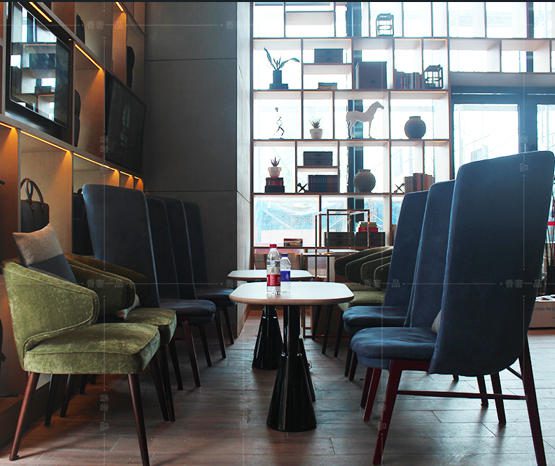
 Hospitality FF&E at this specification level — where brand consistency, durability standards, and procurement scale intersect — is where Chinese contract manufacturers deliver their clearest competitive advantage. Image: Unsplash
The cost gap between Chinese manufacturing and domestic or European alternatives has multiple drivers, and understanding each one helps you explain value to your clients and protect your sourcing strategy from uninformed criticism.
Labor cost differences are real and significant: manufacturing labor costs in Guangdong, while rising (average monthly manufacturing wages in Foshan approximately RMB 5,500–7,500 in 2024, or roughly $760–$1,040), remain substantially below European equivalents. This is not an ethical issue at established factories operating under SA8000 or SEDEX certification — it is a reflection of different cost-of-living economies. The wage gap, combined with China’s investment in manufacturing automation and efficiency, produces a sustainable cost structure rather than a temporary one.
Material sourcing efficiency in Guangdong operates at a scale that is impossible to replicate in most other manufacturing regions. Timber supply chains from Southeast Asia and domestic production, foam and chemical suppliers, fabric manufacturers, hardware producers — all operate within the same 60-kilometer industrial cluster. A factory in Foshan building an upholstered sofa is sourcing frame timber, foam, fabric, and hardware from suppliers within 40 minutes’ drive. The logistics cost embedded in that piece of furniture is a fraction of what it would be in a factory in Poland or Mexico assembling the same item from globally distributed components.
Economies of scale that individual B2B buyers can actually access: the per-unit cost of an upholstered sofa in a production run of 200 pieces is typically 18–25% lower than the same piece in a run of 50 pieces, because setup costs, material waste, and machine time are amortized across more units. This scale efficiency is accessible to distributors and hotel groups who consolidate orders and commit to volumes — it does not require the buying power of a global retail chain.
Total landed cost — the true cost of a product at your warehouse door, including all fees from factory to delivery — is consistently underestimated by first-time China buyers. A 2024 industry analysis found that buyers who budget only for factory price systematically underestimate landed cost by 25–65% depending on their market and tariff environment. Understanding this upfront is the difference between a successful sourcing strategy and a margin surprise.
FCL vs. LCL shipping — the fundamental choice:
| Shipping Mode | Best For | Indicative Cost (China to US, 2025) | Lead Time |
|---|---|---|---|
| FCL 20ft container | Orders filling 25–28 CBM | $2,000–$3,500 per container | 25–30 days |
| FCL 40ft container | Orders filling 55–58 CBM | $3,500–$6,000 per container | 25–30 days |
| LCL (Less than Container Load) | Smaller orders, samples | $150–$280 per CBM | 30–40 days + |
| Air freight | Urgent / small orders under 500kg | 6–10× sea freight per kg | 3–7 days |
FCL (Full Container Load — you book an entire shipping container) delivers the lowest per-unit freight cost but requires sufficient order volume to fill the container efficiently. LCL (Less than Container Load — your goods share container space with other shippers) is accessible for smaller orders but carries higher per-CBM cost and longer, less predictable transit times.
Tariffs, duties, and compliance fees vary significantly by destination market and product type. For the US market, furniture from China currently attracts a base MFN duty (Most Favored Nation — the standard rate applied to all WTO trading partners) of approximately 5–7%, plus Section 301 tariffs that can add 25% depending on HTS classification. Total US import duty exposure for upholstered seating from China has reached 30%+ for some categories in 2025–2026. This substantially affects the net savings calculation for US buyers specifically — factor your actual duty liability into every cost comparison, not just the factory price.
Third-party pre-shipment inspection — commissioning an independent inspector to physically verify your goods at the factory before the container is sealed — is one of the highest-ROI expenses in furniture sourcing.
QIMA (formerly AsiaInspection) charges from approximately $309 per man-day, all-inclusive. Bureau Veritas そして SGS operate at similar price points, typically $280–$400 per man-day depending on location and scope. A standard furniture inspection covering a batch of 50–100 pieces takes one man-day.
The economics are straightforward: on a $30,000 order, a $350 inspection that catches a defect rate above your threshold — allowing you to require factory rework before shipment — saves you the cost of receiving and processing defective goods, the shipping cost of returns, client relationship damage, and the timeline of a replacement order. One prevented defect event pays for roughly 10–15 inspections. Inspection is not optional; it is insurance with a better premium-to-payout ratio than most insurance products you buy.
Sample fees at Foshan and Guangzhou tier-one factories range from $200 to $500 per piece for modifications of existing designs, rising to $800–$2,000 for complex original pieces requiring significant engineering input. Most factories credit the sample fee against your first production order — negotiate this explicitly at the outset.
Tooling fees (the cost of creating the physical templates, jigs, or molds required to produce a custom design) arise when your specification requires production infrastructure that does not already exist at the factory. Standard upholstery modifications rarely incur tooling fees. Custom wooden leg profiles, bespoke metal components, or original foam profile shapes may incur fees of $500–$3,000. Verify upfront whether your customization triggers tooling investment, and confirm in writing whether the tooling is owned by you (giving you the right to move production to another factory) or by the factory.
The true cost of goods — a realistic landed cost example for a $400 factory-price sofa shipped to a US buyer:
| Cost Component | Amount (USD) | % of Total |
|---|---|---|
| Factory unit price | $400 | 47% |
| Sea freight (LCL, per unit) | $65 | 8% |
| US import duty (≈32% of factory price) | $128 | 15% |
| Port handling & customs broker | $35 | 4% |
| Inland freight (port to warehouse) | $45 | 5% |
| Pre-shipment inspection (amortized) | $7 | 1% |
| Payment processing / wire fees | $8 | 1% |
| Quality issues buffer (2–3%) | $16 | 2% |
| Total Landed Cost | $704 | 100% |
Note: The equivalent domestic wholesale price for comparable specification is typically $1,100–$1,400, representing a 36–50% landed cost saving even after US tariff exposure.
Unrealistic pricing is the single most reliable early warning signal. A quotation that is 25–35% below the prevailing market rate for a comparable specification is not a bargain — it is a declaration that something in the quality, material, or production process has been compromised to hit that number. Suppliers who lead with dramatically low pricing and resist providing cost breakdowns are almost always substituting cheaper materials, cutting quality control steps, or planning to add costs through revision charges once you are committed to the relationship.
Communication gaps in the early stages of a relationship predict operational problems at scale. If a potential supplier takes 3–5 days to respond to a detailed inquiry, sends responses that do not address specific questions, or struggles to provide basic documentation (company registration, factory photos, product certifications) within a reasonable timeframe, their operational responsiveness under production pressure will not improve.
Lack of certifications and documentation beyond self-declarations is a structural risk. Any established manufacturer operating at a professional level has ISO 9001 quality management certification, relevant product testing reports, and export documentation as standard. A supplier who “does not have” these certifications is either genuinely operating below the tier that can meet your requirements, or is untruthful about their operational status.
Established production capacity with demonstrable financial stability — a factory that has been operating for 8+ years, has invested in modern machinery, employs a professional sales and quality management team, and can provide audited financial documentation — represents a meaningfully lower operational risk than a newer or smaller operation, even if the unit price is slightly higher.
References from other B2B buyers — not just retailers or individual consumers — are the most direct evidence of operational performance. Ask specifically for references from buyers in your geographic market or buyer profile (distributors, design firms, hotel groups) who have worked with the factory for at least 2 years. A factory that has maintained relationships with serious commercial buyers for multiple years has demonstrated the consistency that makes a supplier relationship commercially valuable.
Factory visits — in-person or via video tour — cover five critical areas: production capacity relative to your order volume (is your order meaningful to them, or will it be deprioritized?), quality management infrastructure (dedicated QC team with documented processes?), machinery investment and maintenance condition, workforce stability (high turnover is a quality consistency risk), and warehouse and storage conditions for raw materials and finished goods.
Sample orders as risk management: before placing any production order above $10,000, place a sample order for 2–5 units. Treat it as a paid evaluation, not a courtesy. Measure every dimension, test every functional component, examine every finish under natural and artificial light, and stress-test hardware. The sample order reveals the factory’s true quality ceiling when they know they are being evaluated — if the sample disappoints, the production run will not improve it.
Real example — a showroom operator’s supplier vetting that saved $50,000: A Dubai-based luxury showroom operator was evaluating a new sofa supplier who offered pricing 22% below their current factory. Samples were ordered; the upholstery tension and fabric pattern-matching were acceptable, but stress testing of the frame joints revealed inadequate corner block construction that would result in structural failure within 18–24 months of normal use. The $420 sample order and 2 days of evaluation time prevented an order that would have produced 80 defective sofas, requiring replacement at a cost exceeding $50,000 when factoring in return shipping, client reordering delays, and reputation damage.
 Button tufting and high-specification upholstery work — the kind of craftsman-level detail that distinguishes tier-one Guangdong manufacturers from commodity producers, and that sample evaluation reveals before production commitment. Image: Unsplash
The most common cause of quality disputes between buyers and Chinese factories is not factory dishonesty — it is specification ambiguity. A factory that was never told the acceptable tolerance on a dimension, the required Martindale rating for a fabric, or the acceptable color variation on a lacquer finish cannot be held accountable for getting those things wrong. The buyer who did not specify them cannot hold the factory to a standard that was never set.
Detailed specifications should be provided in writing for every order, covering: finished dimensions (in millimeters, not inches — Chinese production operates metrically) with stated tolerances (±5mm is standard, ±2mm for precision-fitted pieces), material specifications with minimum performance benchmarks, finish descriptions with physical reference samples, hardware specifications with supplier or grade reference, and assembly and structural requirements.
Written agreements about acceptable tolerances — the range of variation from specification that you will accept without rejection — protect both parties. A factory that agrees in writing to ±5mm on frame dimensions and ±3 Martindale points on fabric can be held objectively accountable. One that was told verbally “make it look like the photo” cannot.
Pre-production review (catching issues before they scale): Before production begins, verify that the factory has received and signed off on your specification document, that material samples have been approved against your reference, and that tooling or templates for any custom components have been produced and reviewed. This checkpoint costs nothing beyond a factory communication and prevents the most expensive category of error: discovering mid-production that materials or tooling are wrong.
In-progress inspections (mid-production problem-solving): For orders above $20,000 or 50+ units, commission a third-party mid-production inspection when approximately 30–40% of units are complete. At this stage, defects are identifiable before they are replicated across the full run, and corrections are still operationally feasible. QIMA and similar agencies offer mid-production inspection services at the same per-man-day rate as pre-shipment inspections.
Final inspections before shipment (your last line of defense): The pre-shipment inspection using AQL sampling (Acceptable Quality Level — a statistical sampling methodology that determines how many units to inspect from a batch to achieve a given confidence level about the entire batch’s quality) is your most important checkpoint. AQL 2.5 for general defects and AQL 1.0 for critical structural defects are the standard thresholds used by professional importers.
When defects are identified — at inspection or on receipt — the process is: document with timestamped photographs before any goods are moved or processed, notify your factory contact in writing within the claim window specified in your agreement (typically 10–15 days from delivery for visible defects), and present a clear categorized defect report distinguishing critical defects (structural, safety-related), major defects (significant aesthetic or functional failure), and minor defects (cosmetic issues within partial tolerance).
Resolution options from a professional factory: rework and re-inspection at factory expense, replacement unit production with priority timeline, credit against your next order, or partial refund proportionate to defect severity. The resolution option and its timeline should be specified in your supplier agreement in advance — having this conversation in the middle of a defect dispute, rather than as a pre-agreed contractual term, weakens your position significantly.
A furniture distributor based in Australia, supplying 35 independent furniture retailers and 8 interior design studios, had sourced exclusively from European wholesale channels for 11 years. Their gross margin on furniture had compressed from 42% to 31% over that period as European wholesale prices rose and their retail clients’ price sensitivity increased.
Starting position: Annual furniture purchase value of approximately AUD $620,000. Average gross margin 31%. Three product families: upholstered seating, solid wood dining, and bedroom case goods.
Sourcing transition: Over 6 months, they identified and qualified three Foshan factories — one for each product family — using sample orders, factory visits during a 5-day Guangzhou sourcing trip (total trip cost approximately AUD $4,500), and reference checks from two other Australian distributors. First production orders were placed with each factory at modest volumes to verify consistency.
The specific changes that drove savings: Direct factory pricing at 44% below previous European wholesale per unit, elimination of the European wholesaler’s logistics handling fee (8% of order value), and consolidated sea freight in 40ft containers (reducing per-unit freight cost by 35% versus LCL shipments). Offset by new costs: pre-shipment inspection ($350 per order), customs brokerage, and an additional 12 days of lead time versus domestic restocking.
Results: By month 14, gross margin on the China-sourced range averaged 52% — a 48% improvement over their previous baseline. The distributor reinvested a portion of this improvement in lower retail pricing on select lines, improving their competitive position in the Australian market while still delivering better net margins than their previous supplier relationships.
A Singapore-based residential interior design firm, 12 designers, working primarily on high-end condominium projects in the $300,000–$800,000 total project budget range, faced a recurring challenge: furniture specification that matched their design vision routinely exceeded client budget allocations by 20–35%.
How custom sourcing changed the project economics: The firm’s principal established relationships with two Guangzhou manufacturers over 18 months — one upholstery specialist, one solid-wood case goods producer. They developed a custom specification library: 6 sofa silhouettes in 4 approved fabrics, 3 dining table configurations in 2 wood species, and 4 bedroom collections. These specifications existed nowhere else in the Singapore market.
Managing client expectations: The firm adopted a project communication template that sets lead time expectations at the outset (12 weeks for standard custom pieces, 16 weeks for complex specifications), offers a visual tracking update at week 4 (sampling confirmation) and week 8 (production milestone), and includes a written lead time buffer of 2 weeks beyond their actual factory estimate.
Year-one results: Average furniture component cost across 9 projects fell by 35% versus the previous domestic sourcing baseline. Three clients specifically commented that their budget remained intact despite receiving what they described as “better product than the comparable local options.” The firm’s project profit margin (before principal time) improved from 22% to 31%.
A regional hotel group operating 8 mid-market business hotels across Southeast Asia, targeting a renovation cycle for all 8 properties over 22 months, engaged a Foshan contract furniture manufacturer to supply the complete FF&E furniture package for all properties.
Sourcing for multi-property consistency: The group’s procurement team developed a Brand Furniture Standard document — a 47-page specification covering every furniture item across all property types, with dimensioned drawings, material specifications, and finish references. This document became the contractual quality baseline for all 8 orders.
Volume negotiations: Total furniture value across 8 properties (approximately 1,400 rooms, 11 furniture pieces per room at an average specification value of $180 per piece) was approximately $2.77 million. The factory’s standard quote was negotiated to a volume-committed price that represented a 31% reduction, secured through a 12-month forward order commitment with quarterly production start dates.
Cost savings across 200+ rooms of furniture: The first 3 properties to complete renovation came in at an average per-room furniture cost of $1,240 against a comparable domestic sourcing budget of $1,890 per room — a 34% saving. Across the full 1,400-room renovation program, the projected total saving versus domestic sourcing was approximately $920,000.
Before approaching any supplier, spend 3–4 weeks conducting a rigorous audit of your current sourcing. Map every furniture product category you buy, the annual spend per category, your current cost per unit, and your current gross margin. This baseline is the foundation against which every sourcing improvement will be measured.
Identify your highest-margin opportunity categories: typically the product families with the highest annual spend, the largest gap between your current cost and the Chinese market price for equivalent specification, and the lowest operational risk in terms of quality complexity. Start your China sourcing transition with these categories — not your most complex or highest-specification products.
Define your sourcing criteria in writing before any supplier conversations begin: maximum acceptable lead time, minimum acceptable quality certifications, MOQ range that works for your order cadence, and payment terms your cash flow can support. These criteria prevent the single most common sourcing mistake — accepting a supplier who meets your price target but fails on every other dimension.
Identify 5–8 potential suppliers for your priority product categories using Alibaba, Made-in-China.com, Canton Fair exhibitor lists (the biannual trade fair in Guangzhou is the world’s largest), and referrals from other non-competing buyers in your network. Narrow to 3–5 based on initial qualification criteria: verified factory (not trading company), relevant product category experience, certifications matching your requirements, and responsive initial communication.
Request a formal quote from each shortlisted supplier using a standardized RFQ (Request for Quotation — a formal document specifying exactly what you want to buy, in what quantity, to what specification, enabling direct comparison across suppliers) that specifies the same product, dimensions, materials, and certifications for every supplier. Comparisons made from standardized RFQs are meaningful; comparisons made from informal conversations are not.
JL&C Furniture offers an established framework for connecting serious B2B buyers with verified Guangdong manufacturers — their supplier network spans upholstered seating, solid wood, case goods, and hospitality contract furniture, with factory verification and documentation support included in the relationship.
Place your first order at a volume that is commercially meaningful but not existentially exposed: $8,000–$15,000 is a typical range for a structured pilot order. Apply every quality control protocol — written specification document, pre-shipment inspection, structured receipt inspection — even if the order is small. The pilot order is not just about the product; it is about evaluating the operational relationship under controlled conditions.
Commission your pre-shipment inspection, document the results, and conduct a structured debrief with your factory contact: what went well, what requires clarification in the specification for next time, and what you will adjust in your communication protocol. A factory that responds constructively to this debrief is a factory you can grow with. One that becomes defensive or dismissive is telling you something important about the relationship’s long-term trajectory.
The cheapest factory quote is almost never the cheapest landed product. When a supplier offers pricing that is 25%+ below the market median for equivalent specification, the cost difference is being absorbed somewhere in the product: lower-grade materials, reduced quality control, inexperienced labor, or compromised construction techniques. Each of those trade-offs has a downstream cost — in client complaints, warranty claims, replacement orders, and reputation damage — that exceeds the original saving by a significant multiple.
True cost of goods (TCOG) calculation incorporates every cost from factory gate to your end client: unit price + tooling/sampling (amortized) + shipping + tariffs + inspection + customs brokerage + inland freight + quality issue buffer + financing cost of payment terms. Calculate TCOG, not unit price, when comparing suppliers.
Furniture businesses that attempt to run on the same inventory management philosophy for Chinese-sourced goods as for domestic goods consistently create cash flow problems. A domestic restocking cycle of 2–3 weeks becomes a 10–14 week cycle when sourcing from China. Inventory that runs out cannot be replaced in days — it requires a production cycle, a shipping window, and a customs clearance period.
Buffer planning for customs and inspections: Add 10 business days to your calculated transit time for US-bound shipments and 7 business days for most other markets. Customs processing, container unpacking at destination, and inland delivery scheduling all add time that is outside your or your factory’s control.
Inventory management strategies: Maintain a minimum 12-week safety stock for your highest-velocity SKUs. Trigger reorder at the point when your on-hand quantity reaches 12 weeks of average sales — not when you run out. This single change eliminates most of the stockout-driven margin erosion that affects distributors who underestimate lead times.
The economics of skipping pre-shipment inspection are asymmetric in the wrong direction. A $300–$400 inspection on a $20,000 order (1.5–2% of order value) either confirms that the goods meet specification — in which case you have spent $300 on confidence — or identifies defects that, if allowed to ship, would cost significantly more to resolve at destination. The industry consensus among experienced importers is that quality inspection should be treated as a fixed cost of sourcing from China, not an optional line item.
Concentration risk — the vulnerability created when a single supplier accounts for the majority of your order volume — is a structural weakness in any sourcing strategy. Factory closures, production disruptions, quality failures, and commercial disputes happen. When they happen to your only supplier, your business faces an interruption that cannot be quickly resolved.
The practical mitigation is supplier portfolio discipline: cap your largest supplier at 40–50% of total order volume, maintain at least two qualified and active suppliers per major product category, and place at least one small order with each secondary supplier per year to maintain the relationship and verify their ongoing capability. Secondary suppliers who receive no orders for 18+ months will redirect capacity to their active accounts.
Multi-year supply agreements with Chinese manufacturers — typically 2–3 year terms covering annual volume commitments, pricing structures, and quality specifications — benefit both parties. You receive price stability and production priority; the factory receives revenue predictability and a reduced cost of customer acquisition and retention. The negotiation leverage for these agreements comes from your demonstrated payment history, order consistency, and the administrative value your organized sourcing practices deliver to the factory’s production planning.
Price escalation clauses that tie any annual increases to documented index movements — Chinese manufacturing wage indices, timber commodity prices, foam polymer prices — protect you from arbitrary price increases while acknowledging that the factory’s input costs are subject to real-world fluctuation. A clause limiting annual price increases to the actual percentage change in the relevant input cost index is commercially fair and more likely to be agreed than a fixed-price guarantee across a 3-year term.
Custom design protection in China does not require extensive legal infrastructure — it requires the right commercial arrangements. The most effective protection is a written exclusivity agreement specifying that the designs, specifications, and tooling you have developed are exclusive to your brand and will not be produced for any other buyer without your consent. This agreement should include: a description of the protected designs, the exclusivity territory, the minimum order commitment that maintains exclusivity, and the penalty terms for breach.
Tooling ownership is the most practically important element: ensure your supplier agreement specifies that any tooling created to produce your custom designs is your property, held by the factory on your behalf. This gives you the practical ability to transfer production to another factory if the relationship fails, without losing your design investment.
Geographic diversification of sourcing — spreading orders across factories in different districts of Guangdong, or including suppliers from other Chinese manufacturing regions for specific product categories — reduces the exposure of your supply chain to regional disruptions. For hospitality buyers and distributors with critical delivery commitments, maintaining pre-qualified secondary suppliers for every major product category is a risk management investment that pays for itself when it is needed.
WeChat remains the dominant platform for day-to-day working communication with Chinese suppliers — use it for rapid questions, photo approvals, and timeline confirmations. 電子メール should be used for all formal communications, specifications, agreements, and quality documentation — it creates a written record that WeChat does not. WhatsApp is accepted by many factories for international buyers who prefer it, with the same caveat about formal documentation.
For order tracking across multiple suppliers, a shared Google Sheet or Airtable order tracker — updated weekly by each factory account manager with production milestone status — is a low-cost, high-value tool. It eliminates the information asymmetry that drives panic reordering, and it gives you a single view of your full order pipeline regardless of how many factories you work with.
QIMA offers a digital inspection platform that allows you to create inspection checklists, book inspections, track progress in real time, and receive structured inspection reports — all within a single interface. For buyers managing inspections across multiple suppliers simultaneously, the administrative efficiency improvement is significant.
Photo documentation protocols: require your factory contact to send milestone photographs — material arrival verification, first-piece-off-production confirmation, and pre-packing photographs — as a standard part of your production update cycle. This costs nothing beyond a WhatsApp message and catches the majority of specification deviations before they become shipment-level problems.
A landed cost calculator — a spreadsheet model that inputs factory price, shipping mode, tariff rate, inspection fee, brokerage, and inland freight to output true TCOG — should be a standard tool in every sourcing operation. Build this once, update tariff rates quarterly, and use it consistently for every supplier comparison and every pricing decision. The Customs Info Database provides up-to-date HTS tariff rates that should be input directly into your cost model rather than estimated.
Tracking margin by product line and by supplier — not just in aggregate — reveals the hidden variation that aggregate margin reporting conceals. A supplier whose unit pricing is marginally higher but whose defect rate is 1% lower than a cheaper alternative may be delivering better net margin when quality costs are included. You cannot see this without product-level margin tracking.
The buyers who will dominate the premium furniture distribution, design, and hospitality procurement markets in the next 5 years are the ones building systematic sourcing operations today. The investment required is real but bounded: 3–6 months of focused relationship building, $5,000–$15,000 in sampling, inspection, and potential sourcing trip costs, and the operational discipline to implement quality systems and documentation standards consistently.
The return on that investment, in basis points of gross margin, is measurable within the first 12–18 months of a well-executed sourcing transition. Distributors who have completed this transition are generating margins that allow them to invest in market development, showroom experience, and service quality that further differentiates their business. Design firms with strong Chinese sourcing relationships are winning projects that their competitors cannot profitably execute. Hotel procurement teams with established Chinese factory partnerships are delivering renovation programs at cost structures their competitors cannot match.
The alternative — staying with current sourcing arrangements while competitors gradually absorb the margin advantage that direct Chinese sourcing creates — is a slower but equally definitive competitive outcome.
Explore JL&C Furniture’s B2B sourcing framework — built specifically for distributors, agents, design firms, and hospitality procurement teams who are ready to move from transactional buying to strategic sourcing.
Ready to Transform Your Sourcing Operation?
The gap between reading this and implementing it is bridged by one practical tool. Download our exclusive Supplier Vetting Checklist — designed specifically for furniture distributors, design firms, and hospitality procurement teams. It covers every qualification question, every certification to verify, and every red flag that experienced buyers use to distinguish reliable manufacturing partners from costly mistakes.
Download the Free Supplier Vetting Checklist and take control of your supply chain with the confidence that comes from knowing exactly what to look for.
 Solid walnut craftsmanship at this level — the kind of detail that distinguishes tier-one Guangdong manufacturers from commodity producers — is only verifiable through factory visits and structured sample evaluation. Image: Unsplash
1. How much should I budget for my first sourcing trip to China?
A realistic budget for a 5–7 day sourcing trip to Guangzhou and Foshan, covering flights, accommodation, ground transport, interpreter support, and incidentals, ranges from approximately $3,500 to $6,500 from most Western markets. Some buyers manage the trip for less by using shared sourcing tour services that provide guide and interpreter support at approximately RMB 300–800 per day. The ROI calculation is straightforward: if the trip enables you to establish even one direct factory relationship that improves your margin by 10% on $80,000 of annual purchases, the trip pays for itself in year one alone. If you cannot travel, video factory tours and digital sample review make a meaningful remote qualification possible — but an in-person visit within the first 2 years of a significant supplier relationship is a best practice, not a luxury.
2. What’s a realistic minimum order quantity (MOQ) for furniture from Chinese suppliers?
MOQs vary substantially by product type and factory scale. Upholstered seating: commonly 20–50 pieces per design for standard catalog modifications, 50–100 for fully custom designs. Solid wood case goods: 20–50 pieces per design. Fully custom pieces with unique tooling requirements: 50–200 pieces. These are starting positions, not fixed rules. Consolidating orders — combining multiple designs in a single production run to hit a total value threshold rather than hitting MOQ on each individual item — is the most effective strategy for buyers whose per-SKU volumes are below factory minimums. Offering a higher deposit (50% rather than 30%) also frequently unlocks lower MOQ accommodation on the factory side.
3. How long does it really take to get furniture from China?
Total timeline from confirmed order to delivery at your warehouse: 8–16 weeks for most scenarios. This breaks down as production time (4–8 weeks depending on complexity), sea freight transit (3.5–5 weeks depending on destination), customs clearance and inland delivery (1–2 weeks). Air freight compresses this to 2–4 weeks total but at a freight cost 6–10 times higher per kilogram. When building your inventory management and client commitment calendar, use 12 weeks as your planning baseline for standard orders and 16 weeks for complex custom pieces. Always communicate 14–16 weeks to clients on new orders, and only revise to a shorter estimate once you have production and booking confirmation from your factory.
4. Should I use a sourcing agent, go direct, or use both?
The answer depends on where you are in your sourcing experience. For buyers placing their first 1–3 China orders, a sourcing agent provides market navigation, factory introductions, language support, and quality oversight that substantially reduces the cost of inexperience. Agency commissions of 5–10% are typically recovered through avoided mistakes alone. For buyers with 12–18 months of direct experience, with qualified factory relationships and internal quality protocols, direct sourcing delivers the full cost advantage without the intermediary margin. The hybrid model — direct for core product lines, agency for new categories or complex custom projects — is what most professional sourcing operations settle into over time. There is no single right answer; evaluate the cost-benefit of each model against your specific order volume, product complexity, and internal capability.
5. What quality certifications actually matter for furniture?
The certifications that matter are the ones required by your specific market and client base. For all markets: ISO 9001 (quality management system — the baseline for operational credibility). For structural/durability claims: EN 12520/EN 12521 (European), ANSI/BIFMA X5.1 (US commercial). For wood sourcing sustainability: FSC Chain of Custody. For chemical safety in textiles: OEKO-TEX Standard 100. For US market composite wood: CARB Phase 2. For hospitality/fire safety: California TB 117-2013 (US), Crib 5/BS 7177 (UK), EN 1021 (EU). For social responsibility: SA8000 or SEDEX. A supplier who holds ISO 9001, FSC, OEKO-TEX, and the relevant market-specific structural and fire safety certifications is operating at a professional level. A supplier who cannot provide any of these on request is below the threshold for serious commercial consideration.
6. How do I know if a supplier is reliable before placing a large order?
The vetting process has three essential components that together provide meaningful predictive confidence. First, documentation verification: company registration, factory certification, and at least one audited financial statement or bank reference, verified against the issuing body’s records. Second, reference checks: direct contact with 2–3 other B2B buyers who have placed production orders with the factory in the past 24 months — not testimonials on the factory’s website. Third, sample order: a paid order of 2–5 units produced to your specification and evaluated against a structured checklist. No amount of research substitutes for physical product evaluation. A factory that passes all three of these steps has demonstrated capability and credibility; one that resists any of them has told you something useful before you have committed to a production order.
7. What happens if my shipment arrives damaged or doesn’t meet specifications?
The resolution process: document everything with timestamped photographs before moving or processing any goods, preserving original packaging for carrier damage claims. Notify your supplier in writing within your contractual claim window (negotiate 15 business days from delivery confirmation as a minimum). Submit a structured defect report categorizing findings as critical (structural, safety), major (significant functional or aesthetic failure), or minor (cosmetic within tolerance), with quantified defect rates per AQL classification. Reputable suppliers will offer rework and reship, replacement production, or credit proportionate to the defect severity. Your ability to enforce resolution terms depends almost entirely on whether those terms are written into your supplier agreement — which is why defect resolution procedures, claim windows, and resolution timelines should be negotiated and documented before your first order, not during a dispute.
8. How do I handle customization requests with Chinese suppliers?
Provide the most complete brief possible at the outset: dimensioned technical drawings (metric), physical material samples where available, annotated reference photographs, functional requirements (weight capacity, cycle durability requirements), and written finish specifications. Separate your customizations into two categories: modifications of existing designs (lower cost, shorter lead time, rarely requires new tooling) and original designs requiring new tooling (higher cost, longer lead time, requires explicit tooling ownership agreement). Confirm in writing whether tooling fees apply, what their amount is, who owns the tooling, and what the timeline implication is before issuing a production order. Budget for one revision cycle on the sample and build it into your project timeline.
9. What are the real landed costs when sourcing from China?
The full landed cost includes factory unit price, sea freight (FCL $2,000–$6,000 per container, or LCL $150–$280 per CBM), import tariffs and duties (which for US buyers currently range from 5–33%+ depending on product type and applicable Section 301 status), customs brokerage ($150–$400 per shipment), inland freight from port to your warehouse, pre-shipment inspection ($300–$400 amortized per order), payment processing fees (typically 1–2% on international wire transfers), and a quality issue buffer of 2–3% for contingency. A buyer who calculates only factory price plus freight is routinely surprised by 30–60% additional cost at customs and delivery. Build a complete landed cost model before comparing Chinese factory prices against domestic wholesale alternatives.
10. How do I manage multiple suppliers without creating operational chaos?
The operational infrastructure that makes multi-supplier management workable: a standardized order tracking spreadsheet updated weekly by each supplier, a master specification document for each SKU that travels with every order to every factory, a consistent inspection protocol applied regardless of supplier, and a named internal owner for each supplier relationship who is accountable for order outcomes. Limit your active supplier relationships to a number you can manage with your current team — 5–8 is typically the maximum for a 3–5 person sourcing operation — and resist the temptation to add new supplier relationships before you have built the management infrastructure to support them.
11. Can I negotiate better terms with Chinese suppliers if I’m a smaller buyer?
Yes, with the right approach. Smaller buyers who cannot offer volume leverage can offer other forms of value: reliable payment (many factories have payment problems with buyers of all sizes — a buyer with a perfect payment record is commercially valuable), organized communication and documentation (reducing the factory’s administrative burden), advance purchase commitments for future orders (even without contractual obligation, a stated intention to reorder creates relationship value), and referral potential. An order of $10,000 from a buyer who pays on time, communicates clearly, and has reordered twice is more valuable to many factories than an order of $25,000 from a buyer who is difficult to communicate with and disputes invoices.
12. How do I protect my custom designs from being copied?
The practical framework: include a written exclusivity clause in your supplier agreement specifying that your custom designs and specifications will not be produced for any other buyer without your written consent. Ensure tooling ownership is explicitly assigned to you. Avoid sharing your full design brief with multiple factories simultaneously — provide enough detail for quotation purposes, but not full production specifications, until you have selected your supplier and signed an agreement. Register your designs as intellectual property in your home jurisdiction where this is commercially viable. Maintain physical reference samples and complete documentation of your design development in case a dispute requires evidence of your prior creation.
13. What’s the difference between FOB and CIF pricing, and which should I negotiate?
FOB (Free On Board) means the factory’s price obligation ends when your goods are loaded on the vessel at the origin port. You are responsible for booking the shipping, paying freight, and obtaining marine insurance from that point. CIF (Cost, Insurance, and Freight) means the supplier includes freight cost and insurance in the price, with their obligation ending when the goods arrive at your destination port. FOB pricing gives you more control — you can select your own freight forwarder, negotiate freight rates, and manage logistics timing. Most experienced importers prefer FOB because they can typically negotiate better freight rates independently than the factory includes in a CIF quote. CIF is more convenient for first-time importers who have not yet established freight forwarder relationships. As your sourcing volume grows, the savings from managing your own freight under FOB terms become material.
14. How often should I audit my suppliers and sourcing costs?
Annual benchmarking is the minimum responsible practice. Once per year, request updated quotes from 1–2 alternative suppliers for your highest-volume product lines, even if you have no intention of switching. This gives you current market pricing data, maintains your negotiating leverage, and occasionally reveals that a competitor has brought on a materially better capability. Review your total landed cost model quarterly and update input assumptions — freight rates, tariff changes, currency movements — so your margin calculations remain accurate. Conduct a formal supplier relationship review annually: assess communication quality, quality performance trends, on-time delivery rate, and responsiveness to issues. Suppliers who are declining on any of these dimensions should be flagged for active management before the decline becomes a supply chain event.
15. What’s the realistic savings percentage I should expect from Chinese sourcing?
Honest expectations by scenario: for standard catalog furniture purchased by a first-time buyer in the US market at current tariff rates, a realistic net landed cost saving versus domestic wholesale is 20–35% after factoring in Section 301 tariffs, freight, inspection, and brokerage. For buyers in Europe, the Middle East, or Southeast Asia — with lower tariff exposure and similar freight costs — 35–55% landed cost savings on equivalent specification are consistently achievable. For buyers who combine direct sourcing with volume consolidation, annual commitment pricing, and FCL container optimization, 50–70% savings on specific product lines are documented. The variance is wide because the drivers — tariff regime, order volume, product complexity, and buyer sophistication — all matter. Start with realistic 30–40% net savings as your business case, measure your actual TCOG on your first 3 orders, and refine your expectations from real data rather than marketing claims.

Best Ways to Order Furniture from China: Factory, Agent, or Marketplace A decision guide for high-end furniture importers, FF&E buyers, hotel developers, villa owners, interior

How to Order Furniture from China Without Costly Mistakes A Strategic 8-Step Roadmap for High-End Furniture Importers, Interior Designers, FF&E Buyers, Developers & Private Label

Advanced Tips to Streamline Repeat Furniture Orders from China: A Strategic Guide for High-Value Buyers Alt: Luxury bespoke furniture showroom with custom upholstered seating, solid

Custom furniture sourcing done right starts here — before a single factory conversation, before a single sample request. The Ultimate Guide to Custom Furniture Sourcing

Top Trends in Custom Furniture for Villa Owners and Private Label Brands A strategic guide for the designers, developers, importers, and brand owners who need

Maximizing Value: How Interior Designers Can Add Custom Furniture to Their Projects When every piece in a room is made for that room — not