company news

China Furniture Sourcing Agent: Roles for High-End Buyers
China Furniture Sourcing Agent Roles for High-End Buyers What a China Furniture Sourcing Agent Actually Does for High-End Buyers Every finished luxury room sits on

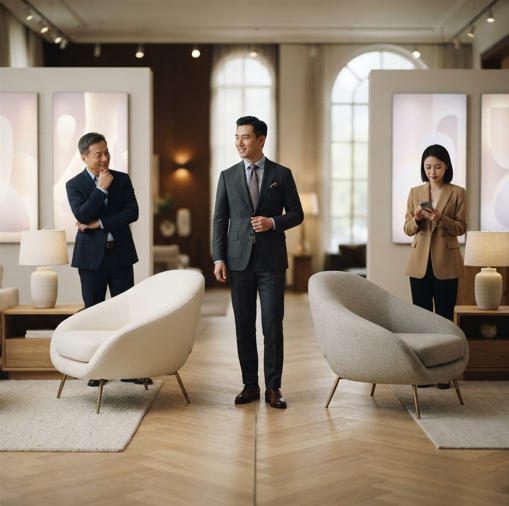
Discover emerging furniture styles, niche categories, and innovative designs from Foshan that go beyond mainstream offerings — a strategic discovery guide for B2B furniture professionals seeking competitive differentiation and exclusive product lines.

Quick glossary for this article: Biophilic design refers to furniture and interiors that intentionally connect people to nature through organic shapes, natural materials, and living elements. Neo-artisanal describes small-batch furniture that blends hand-craftsmanship with modern industrial production methods. MOQ stands for Minimum Order Quantity — the smallest volume a factory will accept per order. Wabi-sabi is a Japanese aesthetic principle that finds beauty in imperfection and simplicity. Keep these in mind as you move through the sections below.
Most buyers who visit Foshan walk the same three or four exhibition halls, photograph the same booths, and come home with the same catalog everyone else already has. That’s not a criticism — it’s simply what happens when a sourcing trip is treated as a shopping errand instead of a research mission. The mainstream collections exist because they sell reliably, but reliability and differentiation rarely live in the same aisle.
Beyond the halls that dominate trade show floor plans, there’s a second layer of Foshan’s furniture ecosystem: smaller workshops, design studios, and mid-size factories experimenting with fusion aesthetics, unconventional materials, and small-batch production runs that never make it into the big catalogs distributed at the Canton Fair. These producers aren’t hiding on purpose — they’re simply harder to find, and most buyers don’t have the time or local relationships to look for them.
For furniture distributors, agents, showroom owners, interior designers, and hotel fit-out professionals, this second layer is where competitive advantage actually lives. A showroom stocked with the same sofas as the store across town competes only on price. A showroom that can say “we’re the only ones in this region carrying this collection” competes on value — and value protects margin.
The demand side of the equation is shifting too. Interior designers working on boutique hotels and hospitality groups are actively asking for pieces their competitors don’t have. Corporate office fit-out specialists want furniture that signals brand identity, not generic comfort. Residential design clients with disposable income are increasingly design-literate and can spot a mass-produced piece from across the room. Meeting that demand requires sourcing partners who know where the interesting work is actually happening.
There’s also a straightforward ROI argument. Niche and emerging categories in Foshan are frequently produced by smaller manufacturers with lower overhead and less brand markup than the large export-focused factories. That combination — lower base cost, higher perceived value, limited availability — is exactly the profile that supports healthy margins in a B2B furniture business.
Foshan’s transformation from a manufacturing town into what industry publications now call a design innovation hub didn’t happen overnight. For roughly three decades, the region built its reputation on volume — the Shunde district alone reportedly produces around 75% of China’s furniture output at some point in the supply chain. That scale advantage still exists, but the ambitions of the newer generation of factory owners and designers have shifted noticeably toward value-based production: fewer units, better margins, stronger design identity.
This shift shows up most clearly in how artisanal craftsmanship is being reintroduced into industrial settings. Factories that once ran purely on automated cutting and assembly lines are now setting aside smaller production cells staffed by trained woodworkers and upholsterers who hand-finish joints, edges, and detailing that machines can’t replicate consistently. It’s not a rejection of industrial manufacturing — it’s a hybrid model, and it’s the foundation for most of the “hidden gem” categories covered in this guide.

The conventional styles that dominate export catalogs — transitional upholstery, standard case goods, familiar dining sets — have become saturated across nearly every price tier. When ten distributors in the same city are all showing the same three sofa silhouettes with different fabric options, the only lever left is price, and that’s a race nobody wins long-term.
Emerging niche categories tend to carry a different cost structure entirely. Because they’re produced in smaller runs by workshops with less overhead than the mega-factories, the entry cost per unit for a distributor is often comparable to — or only marginally higher than — mainstream product, even though the retail positioning can command a real premium. That gap is where exclusive distribution partnerships become genuinely profitable rather than just a marketing talking point.
Not everything unusual is worth stocking. The practical filter that experienced buyers use has three parts: does the design have a coherent point of view that would still look intentional in five years, does the factory have the production discipline to repeat quality across batches, and is the underlying material or technique actually durable enough for commercial or hospitality use rather than just photogenic for a single season. A piece that fails any of these three tests is probably a trend, not a gem.
One of the more interesting movements coming out of Foshan’s independent design studios is what some designers informally call “controlled chaos” — furniture that pairs a restrained, minimal silhouette with one deliberately bold, expressive element: an oversized brass hardware detail, a hand-carved leg on an otherwise clean-lined table, or a sculptural chair back paired with a simple upholstered seat. It’s a deliberate tension rather than an accident, and it reads very differently from generic eclectic decorating.
This aesthetic has found particularly strong traction in boutique hotel projects, where designers need statement pieces for lobbies and suites but can’t afford visual clutter in smaller guest rooms. A single fusion armchair placed against an otherwise minimal room does more design work than five matched pieces ever could.
Finding manufacturers who specialize in this category usually means looking past the standard export sales offices and toward smaller design-forward workshops that exhibit at satellite fairs rather than the main halls. Once identified, the negotiation that matters most isn’t unit price — it’s regional exclusivity, since the entire value of a fusion collection depends on your client not seeing the same chair at a competitor’s showroom two weeks later.
A growing number of these fusion pieces incorporate reclaimed wood paired with powder-coated metal frameworks, or upcycled textile scraps pieced into statement upholstery. Beyond the sustainability story, this combination of materials is genuinely what creates the visual contrast that makes the style work.
Small-batch production has moved from a niche curiosity to a genuine business segment within Foshan’s furniture cluster. What distinguishes neo-artisanal work from standard “handmade” marketing claims is that it genuinely integrates traditional joinery, hand-carving, or natural finishing techniques into pieces that are still engineered for consistent commercial production — just at a fraction of the volume.
Design-literate clients — particularly in hospitality and high-end residential — increasingly want to know the story behind a piece, not just its dimensions and finish options. A chair with a documented production process and a named workshop justifies a higher price point far more convincingly than a chair described only by its SKU number.
The practical challenge with micro-manufacturers is that MOQs and lead times behave very differently than they do with large factories. The table below summarizes typical differences buyers should plan around when budgeting timelines and cash flow.
| Category | Typical MOQ | Typical Lead Time | Price Premium vs. Mainstream |
|---|---|---|---|
| Mainstream mass-produced furniture | 100+ units | 4–6 weeks | Baseline |
| Minimalist-maximalist fusion pieces | 30–60 units | 6–8 weeks | +15–25% |
| Neo-artisanal / small-batch craftsmanship | 5–20 units | 8–16 weeks | +25–50% |
| Biophilic / natural-material collections | 20–50 units | 6–10 weeks | +10–20% |
| Experimental materials & finishes | 20–40 units | 6–12 weeks | +10–30% |
Because unit economics in this category are driven by labor hours rather than machine throughput, pricing tends to be far less negotiable on a per-piece basis than volume-based furniture. What is negotiable is the exclusivity term — many workshops will lock in a lower effective margin for the security of a guaranteed repeat order relationship rather than chase one-off buyers.
Biophilic design — furniture built around organic, irregular forms and natural materials rather than perfectly uniform geometry — has moved from a wellness-industry buzzword into a legitimate commercial category. Live-edge wood slabs, asymmetrical shelving units, and furniture that visibly retains the natural grain and imperfections of the source material are now being produced at a scale that makes them viable for hospitality contracts, not just one-off custom commissions.

Wellness-focused hotels and spa environments have been the earliest and most enthusiastic adopters, using biophilic furniture to reinforce a calming, nature-connected guest experience. Corporate offices prioritizing employee wellbeing are following closely behind, and residential projects with a nature-centric theme round out the third major demand segment.
Any buyer moving into this category should insist on FSC certification documentation for wood sourcing and should request the factory’s environmental compliance records upfront rather than after the first order is placed. Reputable Foshan manufacturers working in this space are generally accustomed to these requests and can provide documentation without delay — hesitation on this point is itself a useful screening signal.
A meaningful portion of Foshan’s more interesting design output right now involves reinterpreting classical Chinese furniture forms — rounded yoke-back chair silhouettes, latticework panel details, lacquer finishing techniques — through a contemporary, pared-down lens. Done well, this produces pieces that read as globally sophisticated rather than regionally specific, which is exactly what makes them appealing to both Asian and Western hospitality clients simultaneously.
A related and increasingly visible sub-trend blends wabi-sabi principles — an appreciation for asymmetry, natural imperfection, and understated simplicity — with the more ornamental detailing traditions of Chinese craftsmanship. The result sits comfortably in luxury market segments where clients want warmth and texture without visual excess.
Buyers sourcing in this category should look for manufacturers who work directly with cultural consultants or designers connected to the traditions being referenced, and should be able to speak clearly about production narratives rather than relying on vague heritage marketing language. This isn’t just an ethical consideration — it’s also what gives the eventual retail story credibility with design-conscious end clients.
Modular systems designed for flexible space use have moved well beyond the co-working office furniture boom of the late 2010s. Foshan manufacturers are now producing genuinely elegant modular seating, sectional systems, and multi-functional case goods that don’t sacrifice design quality for flexibility — an important shift, since early modular furniture often looked distinctly utilitarian.
Hidden storage compartments, integrated charging stations, and IoT-ready connectivity points are increasingly built into otherwise traditional-looking case goods, making them attractive for hospitality and corporate environments that need functional discretion rather than visibly “techy” furniture.
For distributors, the practical appeal is logistical as much as aesthetic. Flat-pack modular designs reduce shipping volume and cost significantly compared to fully assembled case goods, and faster on-site assembly shortens installation timelines for hotel and office fit-out projects — a genuine advantage when a client is working against a room-opening deadline.
Composite materials, recycled plastics repurposed from industrial byproducts, and hybrid textile blends are showing up in serious design collections rather than just novelty pieces. This matters for B2B buyers because these materials often solve real performance problems — better moisture resistance, lower weight for shipping, easier maintenance — while also delivering a distinct visual texture that mainstream materials can’t replicate.
Before committing to any experimental material category, buyers should request longevity testing data and clear warranty terms, and should specifically ask how the finish performs under high-traffic hospitality conditions — spills, foot traffic, repeated cleaning with commercial-grade products. A beautiful finish that degrades within a year of hotel use is not a hidden gem; it’s a liability.
Cork and sustainable leather alternatives are gaining ground in upholstery, recycled ocean plastics are appearing in outdoor and hospitality furniture lines, and concrete or terrazzo accents are showing up on tabletops and console bases as a counterpoint to softer upholstered pieces. Metallic finishes with intentional patina effects round out the current experimental finish landscape.

Warm, earthy palettes have dominated Foshan’s export collections through 2024 and into 2025, but the more interesting movement is how jewel tones are being deployed selectively — a single deep emerald or terracotta accent chair against an otherwise muted room, rather than an entire color-saturated scheme. Monochromatic collections with subtle tonal variation within the same hue are also gaining traction, particularly in higher-end hospitality projects.
The chart below gives a simplified visual breakdown of where color demand is currently concentrated across the categories covered in this guide, based on current sourcing patterns among B2B buyers.
Color Demand Distribution by Category (illustrative)
Earthy / warm-toned neutrals   ████████████████████ 42%
Jewel-tone accents             ████████████ 24%
Monochromatic tonal palettes   █████████ 18%
Bold statement colors          ████ 9%
Other / regional-specific      ███ 7%
Hospitality projects tend to use color deliberately to shape guest psychology — warmer tones in social spaces to encourage lingering, cooler and more muted tones in guest rooms to support rest. Corporate environments are generally balancing professionalism with enough personality to support brand identity, while residential-influenced trends continue to filter into commercial spaces roughly six to twelve months after they first appear in home design media.
Batch matching becomes a real operational issue once a project scales beyond a handful of units, since dye lots and finish batches can vary subtly between production runs. Buyers managing larger installations should request sign-off samples from the actual production batch, not just the factory’s standard showroom sample.
Ergonomic furniture designed specifically for wellness-oriented hospitality — think meditation nooks, spa reception seating, recovery lounges — represents a genuinely underserved category. Certification matters heavily here: hypoallergenic material specifications and compliance with hospitality industry safety standards are non-negotiable for most hotel groups’ procurement teams.
Furniture built for hybrid and collaborative work environments continues to evolve past the first generation of co-working aesthetics, with more attention now paid to acoustic performance within modular systems — a detail that matters enormously in open-plan environments but is frequently overlooked in sourcing decisions.
Display and merchandising furniture designed for immersive retail experiences, along with limited-edition pieces built for pop-up installations, represent a smaller but genuinely profitable niche for distributors serving retail design clients who need something visually distinct for a short-term activation.
Identifying emerging designers and smaller production facilities generally requires more legwork than sourcing from established exporters — factory visits, introductions through trusted local contacts, and attendance at satellite design events rather than only the main exhibition halls. The investment in relationship-building pays off directly in the quality of exclusivity terms a distributor can eventually negotiate.
Before committing to any new manufacturer partnership, a proper due diligence process should include a factory audit, a realistic assessment of production capacity against your projected order volumes, and a basic check of the company’s financial stability and business continuity — smaller workshops are more vulnerable to disruption than large exporters, and that risk needs to be priced into any exclusivity agreement.
Volume-based pricing negotiations still apply in niche categories, but the more important lever is balancing exclusivity commitments against profitability — a longer exclusivity term in exchange for a guaranteed minimum order volume is often the most sustainable structure for both sides.
Staying ahead of trend cycles is less about predicting the next big thing and more about maintaining ongoing relationships with a handful of emerging designers so that new work reaches you before it reaches a wider market. Continuous, low-effort market research — trade publications, design fair coverage, direct factory relationships — tends to outperform occasional intensive sourcing trips.
At JL&C Furniture, this kind of ongoing discovery work is built into how we support our B2B partners: rather than treating sourcing as a one-time catalog review, we maintain direct relationships with a network of vetted manufacturers across Foshan’s emerging design segments, so distributors, designers, and hospitality buyers can access exclusive product lines before they become widely available.
For a closer look at how this works in practice, this video walk-through of Foshan’s furniture manufacturing landscape is a useful visual reference for anyone unfamiliar with the scale and diversity of the region’s production ecosystem:
https://www.youtube.com/watch?v=dfHx-KKJjdQ
The competitive advantage in furniture distribution increasingly belongs to buyers who find emerging styles early rather than those who simply carry the largest catalog. Building an exclusive product line — even a modest one — gives a showroom, agency, or design firm a genuine talking point that price competition alone can never provide.
Getting there requires a systematic sourcing strategy rather than sporadic trade show visits, real relationships within Foshan’s emerging design community, and a discovery framework that can be communicated clearly to clients — whether that’s a hotel group’s design team or a residential client furnishing a single project. Sustainability and technology integration will likely remain the two strongest differentiators over the next several years, and buyers who build fluency in both now will be better positioned as those categories mature.
For teams exploring this space through www.jlc-f.com, the goal is straightforward: fewer generic SKUs, more pieces worth talking about.
Ready to Discover Foshan’s Hidden Gems for Your Business?
Connect with our B2B furniture sourcing specialists at www.jlc-f.com to explore exclusive emerging styles, access pre-vetted manufacturers, and develop a customized product discovery strategy tailored to your distribution network, design portfolio, or hospitality project requirements. Schedule a consultation today to stay ahead of market trends and build competitive differentiation.
1. What defines a “hidden gem” in Foshan furniture, and how is it different from mainstream production? Hidden gems are emerging styles, innovative designs, and niche categories produced by smaller Foshan manufacturers that go beyond mass-market catalogs. Rather than focusing on volume and standardization, they emphasize distinctive aesthetics, specialized craftsmanship, and limited-edition production runs that appeal to B2B clients seeking genuine differentiation.
2. How can distributors identify authentic emerging designers in Foshan rather than trend-chasing factories? Look for design-forward portfolios, participation in independent design showcases rather than only mainstream trade fairs, and clear documentation of production methods. Factory visits and cross-checking design philosophy against long-term market demand — rather than a single viral product — remain the most reliable filters.
3. What are typical minimum order quantities for niche and artisanal furniture pieces from Foshan? Niche categories generally run 20 to 60 units per design, compared to 100-plus for mainstream furniture. Neo-artisanal, hand-finished pieces can run as low as 5 to 20 units but typically involve longer lead times of 8 to 16 weeks.
4. How do I ensure quality consistency when sourcing experimental materials and unconventional finishes? Insist on detailed specifications and sample approvals before full production, request batch-level durability testing, and consider third-party quality audits for larger orders. Get warranty terms and finish-care instructions in writing before committing to a purchase order.
5. What certifications typically apply to niche furniture categories like wellness or hospitality furniture? Requirements vary by application, but commonly include ergonomic or quality management certifications such as ISO 9001, sustainable sourcing verification through FSC certification, and fire-safety compliance for hospitality-grade furniture. Always confirm requirements against your destination market’s specific regulations.
6. How can interior designers use Foshan’s hidden gems to differentiate their project portfolios? By sourcing exclusive pieces for signature projects, developing a recognizable style built around emerging designs paired with established aesthetics, and documenting case studies that show how niche furniture choices improved a project’s outcome or client satisfaction.
7. What lead times should I expect for custom or limited-edition pieces from Foshan? Standard niche pieces generally take 6 to 10 weeks, with custom modifications adding another 2 to 4 weeks. Fully artisanal, hand-crafted items can take 10 to 16 weeks. Build buffer time into any project schedule that depends on these categories.
8. How do I evaluate sustainability claims from emerging Foshan manufacturers? Request third-party certifications where relevant, ask direct questions about material sourcing and waste management practices, and where possible arrange a facility visit to verify claims firsthand rather than relying solely on marketing materials.
9. What pricing premium should distributors expect for niche and emerging furniture categories? Hidden gem categories typically command a 15 to 50 percent premium over mainstream furniture, depending on the level of craftsmanship and exclusivity involved. Margin ultimately depends on volume commitments and how tightly exclusivity terms are negotiated.
10. What’s the best first step for a B2B professional entering Foshan’s hidden gem market? Start with a focused fact-finding visit — attend both major trade fairs and smaller satellite design events, connect with local sourcing consultants who have existing manufacturer relationships, and begin with modest trial orders before committing to larger exclusivity agreements.

China Furniture Sourcing Agent Roles for High-End Buyers What a China Furniture Sourcing Agent Actually Does for High-End Buyers Every finished luxury room sits on
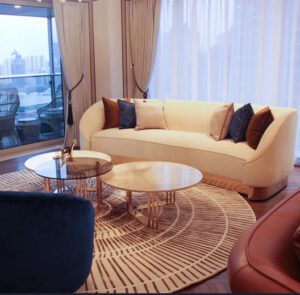
How to Vet a China Furniture Sourcing Agent Before Signing A single curved sofa like this goes through dozens of approvals, including frame, foam, fabric
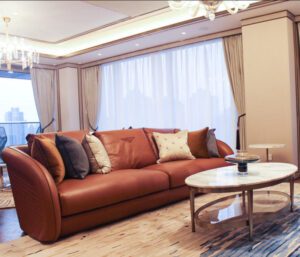
China Furniture Sourcing Agent vs Direct Factory Buying: A Strategic Guide for High-Value Buyers When one project includes 400 hotel rooms, a 20-seat marble dining
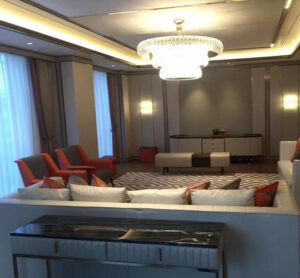
Advanced Tips to Get More from Your China Furniture Sourcing Agent Powerful Strategies for High-Performance Sourcing – Tailored for Elite Buyers, Designers & Operators Your
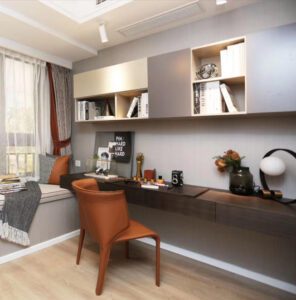
What Wholesale Furniture Suppliers in China Can Offer High-Value Buyers A statement luxury living room — the kind of space that begins with the right
How to Work Better With Your China Furniture Supplier After Ordering A Practical Playbook for High-End Furniture Importers, Interior Designers, FF&E Buyers, Villa Owners, Private