How to Vet Wholesale Furniture Suppliers in China: A Step-by-Step…
How to Vet Wholesale Furniture Suppliers in China: A Step-by-Step Evaluation Framework for High-End Buyers
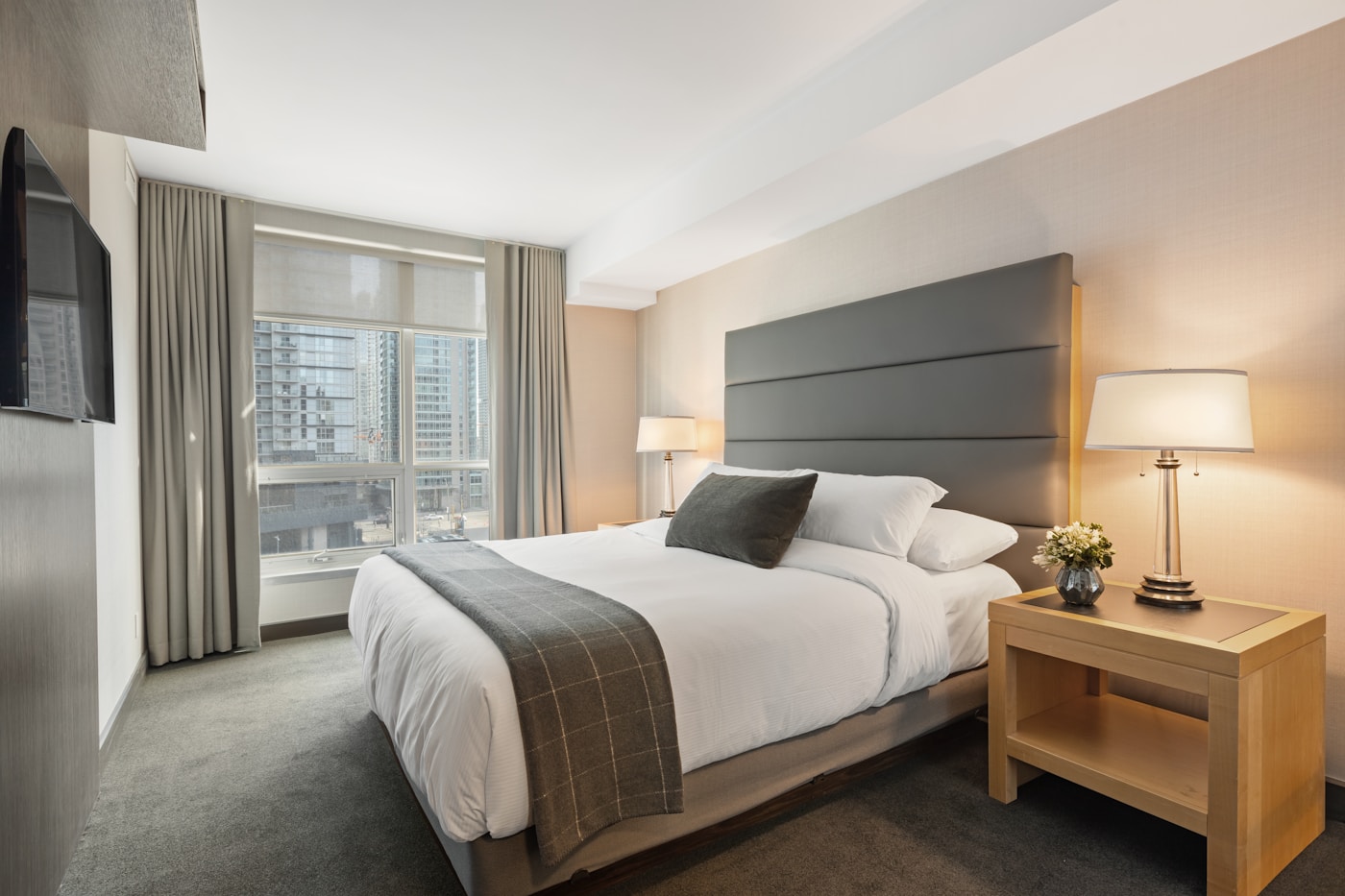
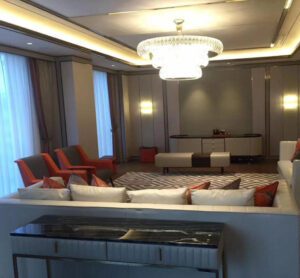
A premium Chinese furniture showroom — what you see here is the starting point, not the finish line. Vetting goes far deeper than the display floor.
China’s furniture manufacturing sector exported approximately $48.7 billion in furniture and parts in 2025 — a 2.3% increase over 2024, according to industry data from Evergocasa. Behind that headline number is a vast and fragmented supplier landscape: some factories produce museum-calibre pieces for Ritz-Carlton openings and private villa commissions; others cut corners in ways that only become visible after the shipment clears customs and the client walks in.
For high-end furniture importers, interior designers, FF&E (Furniture, Fixtures & Equipment) buyers, villa developers, and private label brands, choosing the wrong supplier is not just a procurement mistake. It is a reputational event. A developer who handed over 80 luxury apartments with warped headboards and off-colour lacquer panels did not make a purchasing error — they trusted the wrong factory.
This guide gives you a professional, structured framework to make sure that does not happen to you.
Why Supplier Vetting Is Non-Negotiable at the Premium Level
Standard buyers can absorb a quality miss. High-end buyers cannot. When a 400-room hotel launches with furniture that misses the design spec, the cost is not just replacement pieces — it is brand perception, design award eligibility, and the designer’s next referral. When a private label brand ships product that fails UK fire safety testing, the result is a product recall, not just a supplier dispute.
The premium furniture buyer faces a specific set of pressures that generic sourcing guides do not address:
The design complexity is higher. Bespoke joinery, book-matched veneers, natural lacquer finishes, and hand-embroidered upholstery require genuinely skilled production teams — not just a factory floor.
The compliance stakes are higher. Markets in the US, EU, UK, and GCC require documented test reports for fire resistance, formaldehyde emissions, chemical compliance, and structural stability. A supplier who cannot produce these documents is not just inconvenient — they are a legal liability.
The relationship duration is longer. A villa project may span 18 months. A hospitality rollout across three properties may run three years. The supplier you choose today becomes a long-term operational partner.
The framework below is built around these realities.
The 10-Step Supplier Evaluation Framework
Step 1: Verify Legal and Business Credentials
Before you discuss samples, pricing, or lead times, confirm the supplier legally exists as a registered manufacturing entity in China.
Use Tianyancha or its English-language equivalent ChineseCheck to search a supplier’s formal business registration. You are looking for: a valid business licence , the registered business scope (which should include furniture manufacturing), the year of establishment, and any recorded legal disputes or enforcement actions.
Request their export licence and ask for examples of past shipments to markets similar to yours. A factory that has successfully exported to Germany, the UAE, or the US has already navigated Western compliance requirements. A factory that has only sold domestically has not — and that gap matters for your project.
A practical check: Ask the supplier to provide their unified social credit code (统一社会信用代码 — China’s equivalent of a business registration number) and cross-reference it on the official National Enterprise Credit Information Publicity System at gsxt.gov.cn. This takes five minutes and confirms you are speaking with a real company.
Why this matters: Furniture fraud in China’s B2B space is not rare. The most common scenario is a trading company presenting itself as a manufacturer, taking a 30-50% deposit, subcontracting to an unknown factory, and having minimal quality control over the result.
Step 2: Assess Manufacturing Capabilities and Facility Scale
A supplier’s showroom tells you what they aspire to produce. Their factory floor tells you what they actually can.
Request a factory audit report from a recognised third party — SGS, QIMA, or Bureau Veritas. These audits assess the physical facility, machinery, quality control systems, workforce size, and compliance with ISO 9001 (an international quality management standard that certifies a supplier has documented, consistent production processes).
Key indicators of a capable luxury furniture manufacturer:
CNC (Computer Numerical Control) machining equipment for precision cutting and carving
A dedicated finishing room with humidity and temperature control — critical for lacquer and veneer work
In-house design and R&D capability, including CAD/CAM software and a prototyping workshop
A minimum workforce of 80–150 for mid-scale custom operations; 300+ for large hospitality programs
Separate quality control inspection area with full-spectrum lighting (for accurate colour matching)
A real-world benchmark: One FF&E director sourcing 600 rooms of case goods for a branded resort discovered during a factory audit that the quoted supplier had no in-house finishing department — all lacquer work was outsourced to a neighbouring factory with zero quality oversight. The discovery saved approximately $280,000 in rework costs.
Factory capability goes beyond headcount. Precision machinery, controlled finishing environments, and in-house QC stations are what separate a premium manufacturer from a standard workshop.
Step 3: Evaluate Product Quality and Craftsmanship
Request physical samples — not digital renders, not catalogue images, and not samples shipped within 48 hours of your request (speed here is a red flag, not a green one; genuine craftsmanship takes time).
When the sample arrives, evaluate it systematically:
Wood and structure: Open the drawers. Check joinery type — dovetail and mortise-and-tenon joinery indicate skilled hand or precision machine work; staple-and-glue assembly does not belong in a luxury piece. Test the structural rigidity by applying lateral pressure to the frame. Confirm the wood species matches the specification (a credible supplier will provide a timber species certificate or FSC documentation).
Upholstery: Check foam density — commercial seating should use foam rated at minimum 1.8 lb/ft³ (28.8 kg/m³). Sit in the piece and assess seat depth, back angle, and cushion recovery. Inspect the fabric: does the pattern align at seams? Are welts consistent? Is the pull-tension uniform across the seat?
Finish: Hold the piece under directional lighting and look for brush marks, orange peel texture, or inconsistent sheen. A quality lacquer finish on a luxury piece should have a minimum of 8–12 coats with sanding between layers. Natural oil finishes should be evenly penetrated with no blotchy areas.
Dimensional accuracy: Measure the piece against the specification. Structural tolerance should be ±2mm; visible surface tolerance should be ±1mm.
Industry insight: According to procurement data from Jade Ant’s 2026 buyer guide, the most common quality failures in high-end furniture orders from China are finish inconsistency (32%), dimensional variance (24%), and substandard material substitution (21%). All three are identifiable at the sample stage — if you know what to look for.
Step 4: Audit Material Sourcing and Sustainability Practices
High-end buyers, particularly those working on LEED-certified developments, luxury hospitality projects, or European markets, cannot treat sustainability documentation as optional. It is now a procurement requirement.
Request the following documentation before placing any order:
FSC Chain-of-Custody Certificate: The Forest Stewardship Council (FSC) certifies that wood has been sourced from responsibly managed forests. Verify the certificate number on the FSC public database — do not accept a certificate image alone, as these are commonly falsified.
REACH Compliance Letter: REACH (Registration, Evaluation, Authorisation and Restriction of Chemicals — the EU’s chemical safety regulation) applies to substances used in finishes, adhesives, and textiles. A supplier serving the European market should have a REACH compliance declaration for all chemical inputs.
OEKO-TEX Standard 100 Certification: For upholstered pieces, OEKO-TEX certification confirms that all fabric components have been tested for harmful substances. This is increasingly specified by luxury hospitality procurement teams.
CARB Phase 2 Test Reports: The California Air Resources Board’s standard for formaldehyde emissions in composite wood (MDF, plywood, particleboard) is required for all furniture sold in the US market. Acceptable formaldehyde emission limits: ≤0.05 ppm for hardwood plywood, ≤0.09 ppm for MDF.
Additionally, ask whether the supplier participates in a SMETA social audit (Sedex Members Ethical Trade Audit — a widely used framework assessing labour standards, health and safety, and environmental management). This is increasingly required by multinational hotel groups and international design firms. More on SMETA from the Sedex organisation.
Step 5: Test Communication Clarity and Responsiveness
A supplier can have the best factory in Guangdong and still be the wrong partner if they cannot communicate clearly, consistently, and in technical detail.
Run a structured communication stress test before committing to an order:
Send a technical query requiring a detailed written response — for example, request clarification on the specific wood species used in a sample, the exact composition of their lacquer system, or the lead time impact of increasing an order by 30%. Evaluate: How long does it take to respond? Is the answer technically accurate and specific? Is it written by the account manager or a translator? Does it address your actual question or deflect to a sales pitch?
Then assign a prototyping task: send a CAD drawing and ask for a marked-up revision with annotated changes. This reveals both their technical competency and their willingness to engage as a co-creation partner rather than a catalogue supplier.
Key communication benchmarks for a reliable partner:
Communication Standard
Minimum Acceptable
Target (Strategic Partner)
Initial enquiry response time
Within 48 hours
Within 12 hours
Technical query response time
Within 3 business days
Within 24 hours
CAD revision turnaround
Within 5 business days
Within 48 hours
Language of communication
Clear written English
Dedicated English-speaking project manager
After-hours responsiveness
WeChat/WhatsApp available
Named contact with timezone awareness
Practical note: Many Chinese furniture factories operate with a single English-speaking account manager who handles dozens of overseas buyers simultaneously. Ask specifically who will manage your account day-to-day — and whether they have the technical authority to approve spec changes without a three-layer internal approval chain.
Every piece in a luxury villa installation is a visible commitment — to your client, to the design, and to the supplier who produced it.
Step 6: Review Lead Time Accuracy and Production Planning
“60 days” means different things to different factories. For some, it means 60 calendar days from deposit receipt to cargo ready at port. For others, it means 60 working days, excluding holidays, not including finishing time, and subject to revision if their existing orders overrun.
Verify lead time claims against actual delivery records. Ask for three references from buyers who placed custom orders in the past 12 months and ask each reference specifically: What was the quoted lead time? What was the actual delivery date? Were there delays, and how were they communicated?
Be particularly alert to Chinese New Year production planning. Factories typically shut down for 2–4 weeks from late January to mid-February. Orders placed in November for Q1 delivery must account for this — and should include a buffer of at least 3 additional weeks on top of the standard production timeline. Any supplier who quotes a January order for early March delivery without mentioning the New Year shutdown is either inexperienced in export planning or not being straightforward with you.
For hospitality and development projects where furniture delivery must coordinate with an opening date, include a formal delivery milestone schedule in your purchase order — not just a single delivery date, but a sequence: material purchasing confirmation (Week 2), production commencement (Week 4), 50% completion inspection (Week 8), pre-shipment inspection (Week 12), cargo ready date (Week 14), and estimated arrival (Week 18–20). Any deviation from the milestone sequence triggers a formal written notification requirement.
Step 7: Check Customisation and Design Collaboration Ability
This is where the genuine premium manufacturers separate from factories that happen to make expensive-looking pieces.
A true co-creation partner can do more than execute a specification. They can help you refine it. When you share a mood board and a rough brief, they should be able to propose material alternatives, flag structural constraints, suggest joinery details that achieve the aesthetic without adding unnecessary cost, and provide 3D renders or digital mockups before committing to a prototype.
Evaluate their prototyping capability:
How long does a first prototype take? (6–10 weeks is normal for complex pieces; anything under 3 weeks for custom work is a red flag)
Do they maintain a physical prototype library of past projects? Can you review examples relevant to your design direction?
Can they produce CAD-accurate production drawings, not just sales illustrations?
What is their MOQ (Minimum Order Quantity) for fully custom pieces? For high-end manufacturers, MOQs for bespoke orders typically range from 1–5 units for sampling and 20–50 units for production runs.
For private label furniture owners, also ask specifically: Have they produced branded collections for other buyers? How do they handle design confidentiality between different clients? Do they use separate tooling for each brand’s exclusive designs?
At JL&C Furniture, design collaboration begins with a formal tech pack review, followed by a 3D rendering approval stage before a single piece of wood is cut — a process that significantly reduces revision cycles for international interior design firms and hospitality buyers.
Step 8: Conduct On-Site or Third-Party Factory Audits
There is no substitute for an on-site audit. The factory floor tells you things that no PDF, no WeChat conversation, and no Zoom call can — the pace of the production line, the discipline of the quality control checkpoints, the condition of the machinery, and the skill level of the craftsmen.
If you cannot travel to China, commission a professional third-party inspection:
QIMA offers furniture-specific factory audit protocols and pre-shipment inspection services with live-streamed walkthroughs available for remote buyers. Their auditors are experienced in identifying common issues in Chinese furniture production, including veneer misrepresentation, finish process shortcuts, and subcontracted assembly.
SGS Furniture Certification provides both factory audits and product testing services covering structural integrity, chemical compliance, and flammability standards.
For social compliance — increasingly required by multinational hotel brands and internationally listed developers — a SMETA 4-Pillar Audit assesses labour standards, health and safety practices, environmental management, and business ethics. Learn more from the Intouch Quality SMETA guide.
What to look for during an audit:
Are quality control checkpoints documented at each production stage, or is QC purely visual at the end of the line?
Is there a dedicated finishing environment with climate control (critical for lacquer and veneer adhesion)?
Are workers using proper safety equipment and following documented procedures?
Is the factory transparent about which parts of production are in-house versus subcontracted?
Does the facility match the factory photos and videos previously shared with you?
A note on unannounced audits: Pre-announced audits are useful but limited. The most revealing results come from combining a pre-announced comprehensive audit with an unannounced follow-up visit six weeks later, during active production of your order.
Hotel-grade furniture demands hotel-grade production discipline. An on-site audit is the only way to verify what is actually happening on the factory floor.
Step 9: Validate References and Client Portfolio
Ask every shortlisted supplier for 3–5 verifiable references from buyers in luxury residential, hospitality, or premium commercial sectors. Then actually call them.
The questions that reveal the most:
“Did the furniture match the approved samples when it arrived?” (This reveals finish and material consistency)
“Were there any delays? How were they communicated?” (This reveals production discipline and account management quality)
“Did any defects appear within the first 12 months of use?” (This reveals material quality and finish durability)
“If a problem arose, how did the supplier respond?” (This reveals their after-sales character, which matters far more than their pre-sales promises)
“Would you use them again for a project of equal or greater value?” (This is the summary question — and the answer is almost always unambiguous)
Request the supplier’s project portfolio in detail: not just photos, but the client name (or category), the project location, the product types, the order volume, and the delivery timeline. A strong luxury furniture manufacturer will have documented case studies, not just an Instagram gallery.
Pay close attention to whether their portfolio reflects projects similar to yours — a factory that excels at commercial office furniture may not have the artisan capability for a bespoke villa commission. The two sectors demand fundamentally different skills.
Step 10: Negotiate Terms with Risk Mitigation Clauses
A well-structured contract is not a sign of distrust — it is the professional foundation of a serious business relationship. Any supplier who resists contractual clarity is telling you something important about how they operate.
Payment structure for high-value orders:
The safest milestone payment structure for custom furniture orders is:
30% deposit upon PO confirmation+40% upon production completion & QC approval+30% upon pre-shipment inspection & bill of lading
For orders exceeding $100,000, consider using a Letter of Credit (LC) — a bank-issued payment instrument that releases funds only when specific, documented conditions (production milestones, inspection reports) are met. This provides an institutional layer of protection beyond contractual clauses alone. Reference guidance from Jade Ant on FOB vs CIF vs EXW payment structures for import cost planning.
Essential contract clauses for luxury furniture buyers:
IP protection clause: Use a China-enforceable NNN Agreement (Non-Disclosure, Non-Use, Non-Circumvention — a contract specifically designed for China’s legal system, unlike a standard Western NDA which has limited enforceability in Chinese courts). Full guidance from China IP Gateway’s NDA vs NNN comparison.
Penalty clause for late delivery: A daily penalty of 0.1–0.5% of the order value for each working day beyond the agreed delivery date is industry-standard for commercial contracts.
Sample approval clause: Clearly stating that production cannot commence until the buyer provides written sign-off on physical samples.
Material substitution clause: Requiring written buyer approval before any substitution of approved materials, components, or subcontractors.
Quality reference clause: Specifying the golden sample (the buyer-approved physical prototype) as the binding quality benchmark for all production units.
Defect resolution clause: Defining the buyer’s right to a replacement, credit note, or refund for units failing the agreed AQL (Acceptable Quality Level) threshold.
Supplier Evaluation Scorecard
Use the table below during your vetting process to score each shortlisted supplier objectively. Rate each criterion on a scale of 1–5, then multiply by the weight to get a weighted score. Suppliers scoring below 65 out of 100 should be disqualified from premium order consideration.
Evaluation Criterion
Weight
Your Score (1–5)
Weighted Score
Legal credentials & registration verified
10%
—
—
Factory audit result (third-party)
15%
—
—
Sample quality vs. specification
20%
—
—
Material documentation & compliance certs
10%
—
—
Communication clarity & responsiveness
10%
—
—
Lead time accuracy (verified by references)
10%
—
—
Customisation & prototyping capability
10%
—
—
Reference feedback (3+ verified contacts)
10%
—
—
Contract terms & IP protection willingness
5%
—
—
Sustainability & ethical compliance
5%
—
—
TOTAL
100%
/100
Scoring guide: 1 = Does not meet requirement | 3 = Partially meets | 5 = Fully meets or exceeds
Top Red Flags to Avoid When Sourcing from China
Even experienced buyers occasionally encounter suppliers who present well on the surface. The following red flags are the patterns that experienced importers have learned — sometimes through costly mistakes — to treat as immediate disqualifiers.
Pricing that seems too competitive to be real. A genuine luxury furniture manufacturer has real costs: skilled labour, quality materials, proper finishing environments, compliance testing. If a quote is 40–60% below the market rate for equivalent quality, the gap is somewhere — in the materials, the subcontracting, or the finish process. It will show up in your delivery.
Refusal to allow factory visits or third-party audits. A legitimate manufacturing partner has nothing to hide. Hesitation here is a direct signal of either substandard conditions or the absence of a real factory entirely. Walk away.
Sample quality inconsistent with their pricing tier. A supplier quoting high-end prices but delivering samples with visible finish defects, misaligned seams, or structural wobble is demonstrating exactly what your production order will look like.
Slow, vague, or delegated communication. If every technical question takes a week to answer and arrives as a forwarded message from “our engineer,” your project will face the same delay pattern every time a decision is needed during production.
No experience with Western design standards or market certifications. A supplier who does not know what BIFMA, REACH, or CA TB 117 means has never successfully served the markets you are serving. They will not learn on your order.
Vague or constantly shifting lead times. “About 45–60 days, maybe more during busy season” is not a lead time — it is an abdication of production planning responsibility.
Reluctance to sign an NNN agreement or IP protection contract. For private label brands and designers, this is an absolute non-negotiable. A factory that resists IP protection has either used other buyers’ designs before or intends to.
Reliance on trading companies without direct factory access. Trading companies add a margin layer, reduce your visibility into production, and cannot make factory-floor decisions on your behalf. For luxury and custom orders, a direct factory relationship is worth the additional sourcing effort.
No documented inspection history or third-party QC reports. A factory that has never submitted to external quality verification is a factory that has never been held to an independent standard.
Negative reviews or unresolved disputes from commercial or luxury clients. Check Canton Fair directories, Alibaba review histories, and ask directly for references you can contact independently — not those pre-selected and coached by the supplier.
Watch: How High-Quality Furniture Is Actually Sourced from China
An inside look at the furniture sourcing process in China — from identifying the right factories to understanding how quality is actually built into a piece, not inspected into it.
Certification Quick-Reference Guide
Certification
What It Covers
Who Needs It
How to Verify
ISO 9001
Quality management system — documented, auditable processes
Private label furniture programs require suppliers who can protect your designs, replicate your standards across batches, and communicate as partners — not just producers.
Key Industry Data
China’s furniture and parts exports reached $48.7 billion in 2025, with continued growth driven by hospitality and residential luxury demand (Evergocasa, 2026)
The China furniture market is valued at $160.53 billion domestically in 2025, growing to a projected $169.23 billion in 2026 (Mordor Intelligence)
The three most common quality failures in luxury furniture imports from China: finish inconsistency (32%), dimensional variance (24%), material substitution (21%) (Jade Ant buyer research)
Custom furniture lead times from Chinese premium manufacturers typically run 60–90 days, with complex lacquer or embroidery programs adding 2–4 additional weeks
Third-party pre-shipment inspections cost $400–$800 per visit — a fraction of the cost of a single rejection or rework event
Buyers using milestone payment structures (30/40/30) report significantly lower dispute rates than those using simple deposit-and-balance arrangements
Build Confidence, Not Just Contracts
For high-end furniture buyers, vetting a supplier is not a bureaucratic process — it is the foundation on which every client relationship, project timeline, and brand reputation rests.
The ten steps in this framework are not theoretical. They are drawn from the realities that interior designers, FF&E buyers, villa developers, and private label brands encounter in the field. Each step exists because someone, somewhere, learned its importance the expensive way.
Use this framework to do three things: eliminate suppliers who cannot meet your standard before they waste your time, build genuine partnerships with manufacturers who earn your confidence, and protect your brand with the legal and operational structures that make the relationship sustainable at scale.
When you work with a manufacturer who welcomes audits, provides documentation proactively, communicates with technical clarity, and has a track record verified by clients in your sector, sourcing from China stops being a risk management exercise and becomes a genuine competitive advantage.
AQL (Acceptable Quality Level): A statistical quality standard defining the maximum number of defective units tolerated in a sample batch. AQL 1.0 for major defects is the typical threshold for luxury furniture.
BIFMA: Business and Institutional Furniture Manufacturers Association. Sets North American standards for furniture durability, safety, and sustainability in commercial applications.
CARB Phase 2: A California Air Resources Board regulation limiting formaldehyde emissions from composite wood products used in furniture. Now effectively the US national standard.
EN 15372: European standard specifying strength, durability, and safety requirements for non-domestic tables.
FOB (Free on Board): An international shipping term where the seller is responsible for delivering goods onto the vessel at the origin port. Risk transfers to the buyer at the point of loading.
FSC (Forest Stewardship Council): An international body that certifies responsible forest management. FSC chain-of-custody certification traces wood through every stage from forest to finished product.
Golden Sample: A buyer-approved physical prototype used as the binding quality reference for all subsequent production units.
MOQ (Minimum Order Quantity): The minimum number of units a supplier will accept in a single production run. For bespoke luxury pieces, MOQs typically range from 1–5 units (samples) to 20–50 units (production).
NNN Agreement: A China-specific legal agreement covering Non-Disclosure, Non-Use, and Non-Circumvention — more enforceable under Chinese law than a standard Western NDA.
OEKO-TEX Standard 100: An independent certification testing all textile components of a product for harmful substances.
REACH: EU regulation on the Registration, Evaluation, Authorisation and Restriction of Chemicals — applies to chemical inputs in furniture finishes, adhesives, and fabrics.
SMETA: Sedex Members Ethical Trade Audit — a widely used framework assessing labour standards, health and safety, environmental management, and business ethics at manufacturing facilities.
Tech Pack: A comprehensive document containing all technical specifications required for a manufacturer to produce a product to exact buyer standards, including CAD drawings, material specs, finish codes, and dimensional tolerances.
Questions fréquemment posées
1. How do I verify if a Chinese furniture supplier is legitimate before sending any payment?
Use Tianyancha or the ChineseCheck platform to search the supplier’s business registration using their company name or unified social credit code. Cross-reference on China’s official National Enterprise Credit Information system. Request export licences, past client references with verifiable contact details, and third-party audit reports. Legitimate manufacturers expect and welcome this level of scrutiny.
2. What certifications should I require from a premium Chinese furniture supplier?
The essential set for international luxury buyers is: ISO 9001 (quality management system), FSC Chain-of-Custody (sustainable wood sourcing), CARB Phase 2 test reports (for US-bound furniture), REACH compliance declaration (for EU-bound furniture), and OEKO-TEX Standard 100 (for upholstered pieces). For hospitality projects, add BIFMA (commercial durability) and a SMETA social audit report.
3. How long should lead times realistically be for custom high-end furniture from China?
For custom furniture — including prototype approval, production, finishing, and QC — expect 60–90 days from deposit payment to cargo-ready status. Complex programmes involving hand-embroidery, natural lacquer (requiring 12+ coats with sanding between layers), or book-matched veneer work can add 2–6 additional weeks. Any supplier quoting significantly shorter timeframes for genuinely custom work should be questioned closely.
4. Should I visit the factory in China before placing a large order?
Yes — strongly recommended for orders over $50,000 or any project where design complexity, customisation, or compliance documentation is critical. If travel is not feasible, commission a third-party factory audit from SGS, QIMA, or Bureau Veritas. A factory visit (including flights and accommodation) typically costs $3,000–$6,000. This investment routinely prevents issues worth 10–30 times that amount.
5. How do I protect my furniture design IP when working with Chinese suppliers?
Register your designs with China’s CNIPA (China National Intellectual Property Administration) before sharing detailed specifications. Require the factory to sign a China-law NNN Agreement — not a standard Western-style NDA, which has limited enforceability in Chinese courts. Include contractual penalties for IP violations and limit detailed CAD access to named, authorised production staff only.
6. What should I specifically examine when evaluating a furniture sample?
Evaluate: joinery type and structural rigidity, wood species accuracy (cross-reference against FSC documentation), foam density and seat recovery, fabric abrasion rating and seam alignment, finish consistency under directional lighting, dimensional accuracy (measure against spec with a ±1–2mm tolerance target), and hardware quality and alignment. Document everything photographically under standardised lighting for reference during production QC.
7. Are suppliers on Alibaba reliable for luxury furniture procurement?
Some are — but platform listing alone carries no quality guarantee. For luxury procurement, prioritise Alibaba Gold Suppliers with verified transaction history, third-party factory audits on file, and documented experience with Western compliance requirements. Always conduct independent due diligence beyond the platform’s verification badges, including direct reference calls and physical sample evaluation.
8. How should I handle quality defects discovered after delivery?
Pre-empt this scenario contractually: include a pre-shipment inspection clause, specify AQL thresholds in your purchase order, and retain a percentage of payment until QC sign-off. If defects arrive post-delivery, document all defects with photographs, batch numbers, and references to the approved spec. Engage your QC inspector’s report as supporting evidence and present a formal Non-Conformance Report to the supplier with a defined resolution timeline.
9. What payment terms best protect a high-value furniture order?
The standard structure for orders over $20,000: 30% deposit on PO confirmation, 40% upon completion of production and your QC inspector’s approval, 30% after pre-shipment inspection and receipt of the bill of lading. For orders exceeding $100,000, consider a Letter of Credit issued by your bank — this releases payment only upon presentation of specific, verified documentation, adding an institutional protection layer.
10. Can Chinese furniture manufacturers handle complex custom designs for villas and hotels?
The top tier of Chinese furniture manufacturers absolutely can — and regularly do. The key is finding them through rigorous vetting rather than price comparison. Indicators of genuine custom capability: an in-house design team with CAD/CAM software, a physical prototyping workshop, a portfolio with documented luxury hospitality or residential projects, and willingness to engage in a structured design collaboration process before any production commitment.
11. How do I ensure furniture meets Western fire safety and structural standards?
Specify the required standards in your purchase order and require the supplier to provide third-party test reports before shipment. For upholstered furniture destined for the US market, require CA TB 117-2013 compliance. For EU commercial projects, require EN 15372 or EN 12520 as applicable. For commercial seating, require BIFMA test results. Do not accept the supplier’s self-declaration — insist on reports from accredited testing laboratories (SGS, Intertek, TÜV, or Bureau Veritas).
12. What is the practical difference between a manufacturer and a trading company, and why does it matter?
A manufacturer controls their own production floor, quality processes, machinery, and workforce. A trading company acts as an intermediary, sourcing from multiple factories and adding a margin. For luxury custom furniture, working directly with a manufacturer gives you direct access to quality control decisions, design communication, and production scheduling. Trading companies cannot make factory-floor decisions and typically have limited accountability when quality issues arise. Always ask to visit the physical production facility — not just a showroom.
13. How can I reduce lead times without compromising craftsmanship quality?
The most effective approaches: finalise your tech pack and obtain sample approval before releasing the production PO (the sample approval stage is the most common source of delay); build a relationship with your supplier so your orders receive scheduling priority; share your 12-month project pipeline so the factory can plan raw material procurement in advance; and maintain a small buffer stock of long-lead-time components (exotic veneers, custom hardware) at the factory level. Speed comes from planning, not from shortcuts.
14. Do Chinese furniture suppliers typically offer FOB or EXW pricing, and which is better for luxury buyers?
Most Chinese furniture manufacturers offer both. FOB (Free on Board) is generally preferable for luxury buyers — the supplier handles export documentation, customs clearance, and loading onto the vessel, after which you control the shipping arrangement with your chosen freight forwarder. EXW (Ex Works) places all logistics responsibility on the buyer from the factory gate, which creates complexity if you do not have established freight relationships in China. Full comparison at Jade Ant’s Incoterms guide for furniture imports.
15. How do I scale from a sample order to full production without a quality drop?
Require a pre-production golden sample — a production-method sample made by the actual team and machinery that will produce your order, using confirmed materials. This is distinct from the initial design sample. Conduct in-line inspections at 30% and 70% production completion. Maintain consistent communication with your account manager throughout the production run. For multi-batch programs, archive the golden sample and reference it at every subsequent QC inspection to ensure batch-to-batch consistency.
This guide is reviewed and updated regularly to reflect current supplier verification methods, compliance requirements, and market conditions. For direct support with supplier vetting or a custom furniture sourcing consultation, the JL&C Furniture team works with interior designers, FF&E buyers, hospitality developers, and private label brands across international markets.
Want to cooperate with a Leading Luxury Furniture Manufacturer and Supplier? Or do you want to get custom furniture?
Shanghai JL&C Furniture Co., Ltd. is a leading manufacturer and solution provider of luxury furniture and customized furniture in China.
China Furniture Sourcing Agent Roles for High-End Buyers What a China Furniture Sourcing Agent Actually Does for High-End Buyers Every finished luxury room sits on
How to Vet a China Furniture Sourcing Agent Before Signing A single curved sofa like this goes through dozens of approvals, including frame, foam, fabric
China Furniture Sourcing Agent vs Direct Factory Buying: A Strategic Guide for High-Value Buyers When one project includes 400 hotel rooms, a 20-seat marble dining
Advanced Tips to Get More from Your China Furniture Sourcing Agent Powerful Strategies for High-Performance Sourcing – Tailored for Elite Buyers, Designers & Operators Your
How to Work Better With Your China Furniture Supplier After Ordering A Practical Playbook for High-End Furniture Importers, Interior Designers, FF&E Buyers, Villa Owners, Private