Transform Your Villa with Modern Chinese Furniture: 5 Must-Have Pieces...
Transform Your Villa with Modern Chinese Furniture: 5 Must-Have Pieces
For interior designers, villa developers, and luxury hospitality buyers who want spaces that are genuinely different — not just expensive.
The global luxury furniture market reached $31.1 billion in 2024, according to Grand View Research, and is projected to grow to $39.8 billion by 2030. Within that growth, one of the most significant shifts is the rising demand for modern Chinese furniture in luxury residential and hospitality projects — from Bali villas to Monaco penthouses to boutique resorts in the Maldives.
This isn’t a trend driven by novelty. It’s driven by substance.
Modern Chinese furniture offers something that very few design traditions can match: a 600-year lineage of material mastery and structural ingenuity, now expressed through contemporary proportions and globally competitive production. When a hotel developer in Dubai or a villa owner in Portugal starts specifying pieces with Ming-inspired joinery and hand-applied lacquer finishes, they’re not decorating. They’re investing in a design narrative that guests and residents actually remember.
This guide is written for the professionals who are building those spaces — and need a clear, practical framework for doing it right.
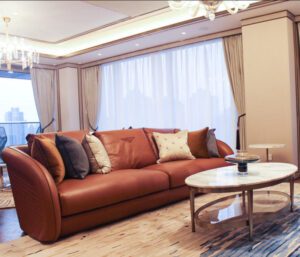
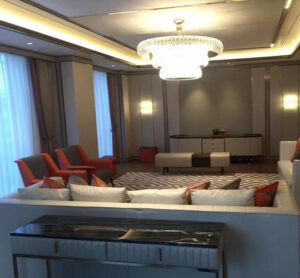
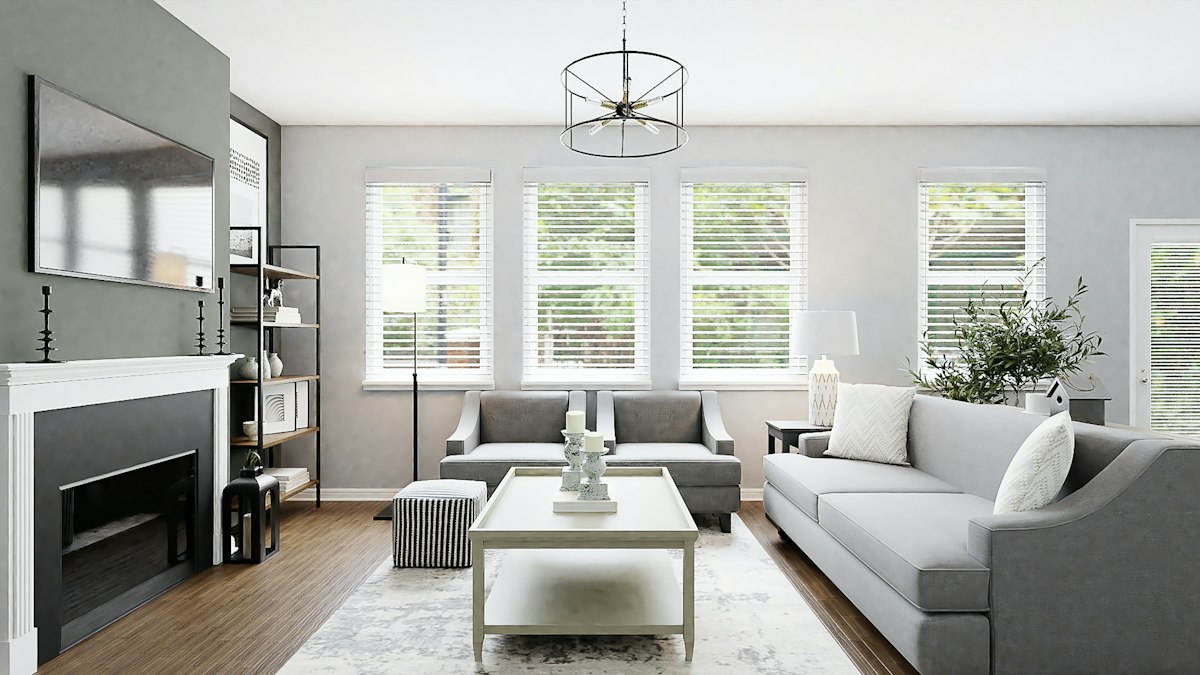
Modern Chinese design in a villa-scale living room — where cultural heritage meets structural precision and contemporary proportion.
Why Modern Chinese Furniture Is Ideal for Villas and Luxury Projects
The first thing serious designers notice about modern Chinese furniture is the scale confidence. These pieces were originally designed for imperial residences with 4-meter ceilings, grand ceremonial halls, and sweeping entrance galleries — which means they translate naturally into the kind of large-format spaces that trip up European and Scandinavian furniture, which was scaled for domestic rooms.
A solid walnut dining table with hand-carved apron detailing doesn’t get lost in a 12-seat villa dining room. A low-profile Ming-inspired sofa set with extended chaise doesn’t look undersized against a floor-to-ceiling window facing a private pool. The proportional vocabulary of Chinese classical furniture was built for exactly this kind of spatial gravity.
Beyond scale, the material story is unmatched. Huanghuali — the prized rosewoods of Hainan Island, now rare and commanding auction prices above $50,000 per kilo for antique pieces — established a tradition of hardwood reverence that continues in today’s modern interpretations using sustainably sourced Black Walnut, American White Oak, and FSC-certified solid woods. These aren’t materials that age poorly. Properly maintained, they develop patina over decades in a way that mass-produced furniture simply cannot replicate.
The third pillar is customization depth. Unlike European luxury furniture brands with fixed catalogs and 18-month lead times, Chinese manufacturers at the high end of the market offer genuine co-development capability — from initial sketch to 3D rendering to prototype to production — at timelines that actually work for hotel opening schedules and villa handover dates.
For importers and distributors building a differentiated product line, this combination of cultural distinctiveness, material quality, and production flexibility creates a margin story that commodity furniture cannot approach.
Must-Have #1: The Contemporary Ming-Inspired Sofa Set
The Ming dynasty (1368–1644) produced some of the most imitated furniture silhouettes in design history — clean horizontal lines, gently curved backrests, tapered legs with no ornamentation below the apron, and a structural integrity achieved entirely through interlocking joinery with no nails or adhesives.
The contemporary interpretation of this tradition takes those principles and applies them to a form that modern villa clients actually want to live in: lower seat heights (typically 380–420mm, aligned with contemporary living room proportions), deeper seat cushions using high-resilience HR40 foam — a commercial-grade density that maintains its shape after 50,000+ compression cycles — and upholstery options ranging from hand-woven silk blends to top-grain Italian leather.
What makes a Ming-inspired sofa set a genuine focal point in a large villa living room is the visual restraint. There is no excess. Every element — the carved spandrels at the leg junctions, the slight outward flare of the armrests, the exposed hardwood frame — is intentional. When you place this against a marble floor and double-height glazing, it doesn’t compete with the view. It anchors the room.
For private label clients and design firms specifying for large villa projects, the key customization levers are: frame wood species (Black Walnut vs. American Oak vs. sustainably sourced alternatives), fabric performance rating (standard residential vs. commercial Crypton or Sunbrella grades for high-traffic applications), and modular configuration for non-standard room layouts.
A well-executed Ming-inspired sofa set sourced from a quality Chinese manufacturer — like those in JL&C Furniture’s bespoke collection — typically runs 8–12 weeks from confirmed specification to production-ready samples, with full production at 10–16 weeks for larger villa projects.
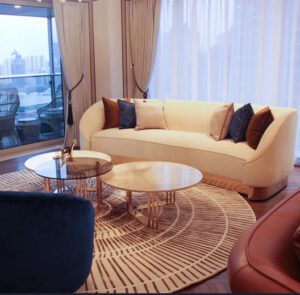
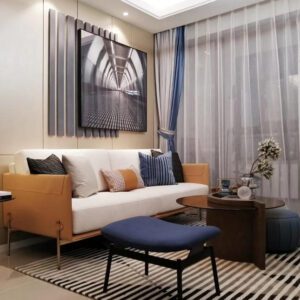
A contemporary Ming-inspired sofa set: the restrained silhouette and exposed hardwood frame create a focal point that doesn’t compete with panoramic villa views.
Must-Have #2: The Hand-Carved Solid Wood Dining Table
There is a specific moment that happens in luxury villa dining — when guests run their hands across the surface of a solid wood table and feel the warmth and grain of material that took 80 years to grow and months to finish. That moment doesn’t happen with veneer. It doesn’t happen with engineered wood. It only happens with the real thing.
A hand-carved solid wood dining table made from Black Walnut or FSC-certified Huanghuali-alternative rosewood is the centerpiece of this category. The material isn’t just aesthetic — it’s structural. Solid hardwood, kiln-dried to a moisture content of 6–8%, dimensionally stable, and finished with multiple coats of hand-rubbed oil or catalyzed lacquer, will withstand decades of daily use without the warping, delamination, or edge-chipping that affects lesser constructions.
The hand-carved elements — typically floral or geometric motifs along the apron, sometimes extending to cloud-scroll corner details or inlaid brass accents — are what separate a functional dining table from a statement piece. In a boutique hotel private dining room or a villa that hosts serious entertaining, this is the piece guests photograph and ask about.
For FF&E buyers and hotel developers, scalability matters. A quality manufacturer can produce a 10-seat configuration (typically 2,800–3,200mm L × 1,000–1,100mm W) and a 12-seat configuration (3,400–3,800mm) from the same design language, ensuring visual consistency across multiple suites or dining venues within a single property.
The table below illustrates typical specifications for villa and hospitality applications:
Configuration
Table Length
Seat Width
Wood Option
Lead Time (Custom)
8-seater
2,200–2,400mm
500–550mm per seat
Black Walnut / Oak
10–14 weeks
10-seater
2,800–3,000mm
500–550mm per seat
Huanghuali-alt Rosewood
12–16 weeks
12-seater
3,400–3,800mm
500–550mm per seat
Black Walnut / Walnut Veneer Core
14–18 weeks
Banquet (16+)
Custom
Custom
Any species
16–20 weeks
For more background on the material heritage behind these choices, the Shanghai Museum’s Ming Furniture resource offers a compelling scholarly foundation on how Chinese craftsmen treated hardwood as a living material to be celebrated, not concealed.
Must-Have #3: The Modular Feng Shui-Optimized Media Unit
Feng shui — literally “wind and water” in Chinese — is the ancient practice of arranging space to support the flow of positive energy, or qi (气). In contemporary luxury interior design, it has become a serious design framework, not just a cultural reference. High-end residential developers in Hong Kong, Singapore, and the UAE now routinely retain feng shui consultants as part of their design team, and research from Sansa Interiors’ feng shui design analysis confirms that the five core principles — balance, commanding position, natural materials, decluttering, and light — align almost perfectly with the principles of luxury interior design.
A modular media unit designed with these principles in mind solves a problem that is unique to modern luxury living: how do you integrate screens, speakers, network equipment, streaming devices, and cable management into a space that is supposed to feel calm, intentional, and free of visual noise?
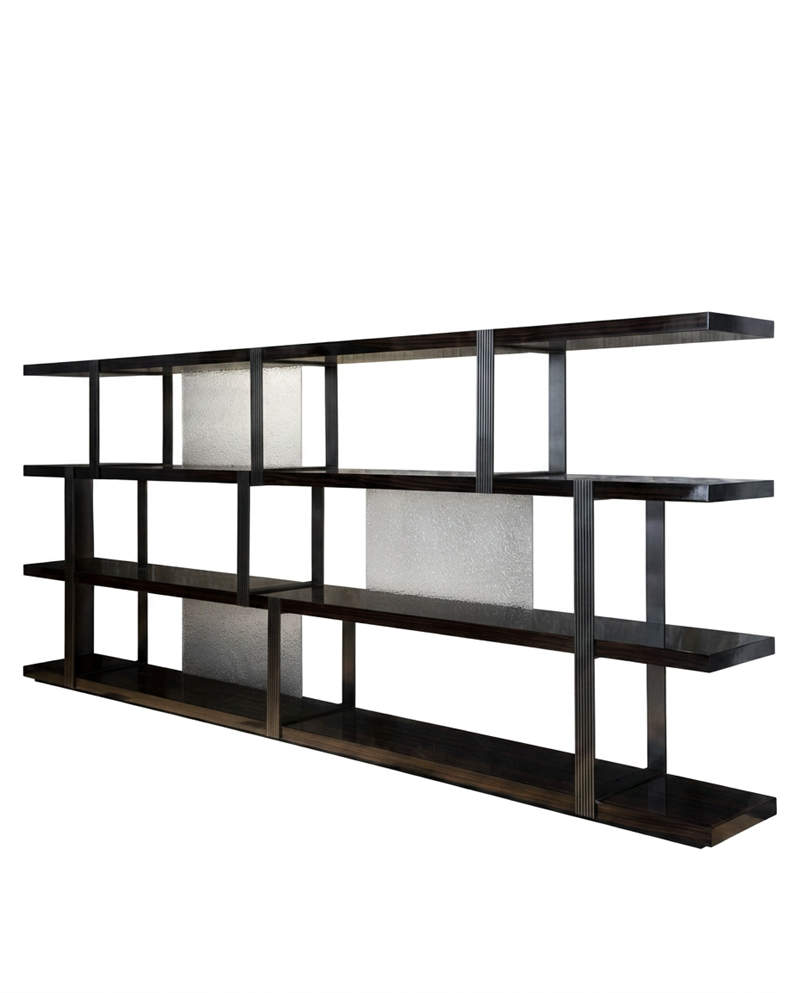
The answer is modular cabinetry with concealed technology integration — compartments sized for standard AV equipment, cable routing channels concealed within the structure, and exterior surfaces finished in lacquer, hand-brushed metal, or natural stone veneer that look like sculpture when the screens are off.
The feng shui optimization shows in the structural choices: asymmetrical module heights that prevent visual stagnation, open lower shelving that allows air and light to flow beneath, natural materials like bamboo-infused lacquer or cerused oak that reference the wood element, and a layout that positions the primary screen in the commanding position relative to the main seating axis — facing the room’s primary entrance or window line.
For interior designers integrating wellness principles into luxury residential or boutique hotel suites, this category offers a genuine design differentiator that clients will request by name on repeat projects.
A Feng Shui-optimized modular media unit: technology fully integrated, visual noise eliminated, natural materials at the fore.
Must-Have #4: The Statement Accent Chair with Silk Embroidery
If there is one piece in modern Chinese furniture that does more design work per square foot than anything else, it is the statement accent chair with hand-embroidered silk upholstery.
The structure is typically a carved hardwood frame — often in a horseshoe-back or drum-back configuration drawn from Qing dynasty (1644–1912) court seating — with a seat cushion and back panel upholstered in hand-embroidered Suzhou silk. Suzhou embroidery, recognized on UNESCO’s list of Intangible Cultural Heritage, involves trained artisans placing up to 40 silk threads per millimeter to create motifs — cranes, peonies, mountain landscapes, abstract geometric patterns — with a resolution and depth that photographic printing cannot replicate.
A single embroidered accent chair, positioned correctly, can anchor an entire room’s design story. In a boutique hotel lobby, it signals cultural intelligence and investment in craftsmanship. In a villa master suite, it creates the kind of textural focal point that guests describe to friends who have never visited. In a private study or reception room, it is the piece that gets photographed for design media.
For private label brands and importers building a differentiated product catalog, silk-embroidered accent chairs represent one of the highest gross margin opportunities in luxury Chinese furniture. The material cost is significant — genuine hand-embroidered Suzhou silk is priced by the complexity of the motif and the number of color gradients — but the perceived value in Western and Middle Eastern luxury markets consistently supports retail prices that deliver strong commercial returns.
The critical sourcing criterion: verify that the embroidery is genuinely hand-applied, not machine-embroidered and marketed as handmade. Request a close-up video of the production process before confirming any order.
Must-Have #5: The Floating Console with Jade or Lacquer Inlay
The entry sequence of a villa or luxury hotel suite sets every subsequent impression. It is the 8 seconds that determine whether a guest feels they have arrived somewhere exceptional or somewhere merely expensive.
A floating console — wall-mounted, with no visible support structure below — with jade stone or hand-applied lacquer inlay detailing is one of the most effective investments a designer or developer can make in that entry moment. The piece communicates several things simultaneously: technical craftsmanship (the wall-mounting system must be engineered to carry the weight of solid wood or stone, typically 80–120kg for a full console, without visible hardware), material sophistication (jade, a stone with 7,000 years of cultural significance in China, or multiple-layer lacquer with a depth that takes 3–6 months of application and curing to achieve), and spatial intelligence (a floating piece makes the floor read larger, which is particularly effective in corridor-style villa entrances).
Natural Chinese lacquer — qi (漆), distinct from the synthetic polyurethane finishes that dominate mass-market furniture — is applied in up to 30 successive coats, each hand-sanded before the next is applied, over a period of months. The result is a surface with visual depth that catches and holds light differently at every angle. Run your finger across it and it feels like cool stone, not plastic. This is a finish that will outlast the building it sits in.
For high-traffic applications in luxury hotels and resort lobbies, the engineering behind the floating console matters as much as the aesthetics. Consult with your supplier on load-bearing specifications, wall substrate requirements (concrete backing vs. timber stud framing), and the mounting hardware that will be concealed within the piece.
At JL&C Furniture, our floating console program includes full engineering drawings for installation, load calculation certificates, and bespoke jade and lacquer finish development for clients specifying landmark hotel and villa projects.
A floating lacquer console with jade inlay in a villa entrance — the piece that turns an arrival into an experience.
Watch: Luxury Chinese Furniture Design Inspiration
The following video offers a behind-the-scenes look at how luxury Chinese furniture is designed and produced for high-end villa and hotel projects — including the material selection process and production workflow that serious sourcing buyers need to understand:
A practical sourcing tour through luxury Chinese furniture production — materials, craftsmanship, and what to look for as a professional buyer.
Sourcing and Customization: A Guide for Importers, Distributors, and Design Firms
Getting the right piece designed and delivered is a multi-step process, and the professionals who do it best treat it as a project management exercise with clearly defined milestones — not a purchase order sent into the void.
MOQs (Minimum Order Quantities) in high-end Chinese furniture vary by category. For standard catalog pieces with available finishes, MOQs as low as 1–3 units are often possible, particularly for first-time evaluation orders. For custom color development, proprietary fabric, or bespoke carving motifs, most quality manufacturers require a minimum run of 10–20 pieces to justify the setup cost of jigs, color-matching formulas, and artisan time allocation. For full FF&E hotel programs — where the same dining chair might be specified across 200 rooms — production runs of 500–2,000 units are standard, and pricing reflects the economies of scale accordingly.
Lead times for genuine custom work are longer than buyers accustomed to European catalog furniture typically expect. Allow 60–90 days from approved sample to production-ready shipment for custom orders, and 90–120 days for pieces involving hand-embroidery, natural lacquer finishing, or jade inlay work. Build this timeline into your project schedule from the day of contract signing, not from the day you start sample review.
Quality control in Chinese manufacturing has evolved substantially. The most professional factories operate three-stage QC: incoming material inspection (wood moisture content, fabric dye lot matching, hardware grade verification), in-process inspection (joinery fit, foam density sampling, surface finish consistency), and pre-shipment final inspection. Request QC reports for all three stages before authorizing shipment, and consider appointing a third-party inspection agency such as SGS or Intertek for large orders.
On compliance: for the US market, verify CARB Phase 2 compliance on any composite wood components. For the EU, request current REACH test reports and confirm they reflect the updated 2026 formaldehyde limits. For wood components, request the FSC chain-of-custody certificate number and verify it in the FSC public certificate database — not just accept a photocopied document. Chinese furniture manufacturers who invest in FSC certification are demonstrating a level of documentation discipline that typically extends across their entire quality management system.
The table below provides a practical framework for importers and design firms managing first-time sourcing projects:
Sourcing Stage
Typical Timeline
Key Actions
Risk Checkpoint
Supplier shortlisting
Week 1–2
Review portfolios, certifications, export history
Verify FSC/CARB2 certificates
Sample request
Week 2–4
Request production samples with full spec sheet
Check foam density, finish depth, joinery
Sample approval
Week 4–6
Inspect against spec — finish, dimensions, hardware
Design Integration: How Architects and Interior Designers Can Maximize Impact
The most common mistake designers make when introducing modern Chinese furniture into villa or luxury hospitality projects is treating it as an accent — one or two Chinese pieces floating in an otherwise neutral Western interior. This rarely works well. The pieces look like decorative objects rather than design decisions.
The approach that works is structural integration: designating specific zones within the overall interior program where the Chinese design language is dominant, and allowing the rest of the interior to provide the neutral canvas that makes those zones land with impact.
In a large villa, this might mean: the entrance console and its flanking cabinets are all in the Chinese design language, establishing a cultural intention at arrival; the dining room centers on the hand-carved table with complementary Chinese chairs; and the main living room features the Ming-inspired sofa as the primary seating anchor, with Western occasional tables and accessories providing textural variety without visual competition.
Spatial proportion tips for integrating Chinese pieces into Western or minimalist interiors:
Chinese classical furniture works best on natural stone or wide-plank hardwood flooring — avoid pairing with patterned carpet, which breaks the visual connection between the piece and the ground plane.
Lighting for Chinese lacquer and jade pieces should use warm white LEDs (2700–3000K) positioned at a 30–45° angle to the surface — this is how the depth and reflection of lacquer is properly activated. Overhead downlights hit the surface flat and kill the material story.
When mixing Chinese pieces with contemporary Western furniture, use material continuity as the connector: if the dining table is Black Walnut, the light fixture above should reference warm metal (brass, bronze, aged copper) rather than cold chrome, and the upholstery on adjacent chairs should reference one of the wood’s undertones.
Negative space is not empty space in a Chinese interior — it is intentional breath. Don’t fill every surface. A floating lacquer console works because of the floor visible beneath it, not despite it.
For boutique hospitality applications, the most effective implementation JL&C Furniture has supported involves signature pieces in public areas — a grand carved sideboard in a lobby, a hand-embroidered screen in a restaurant — combined with more restrained Chinese design language in guest rooms, where the emphasis shifts to material quality and proportion rather than ornamental complexity.
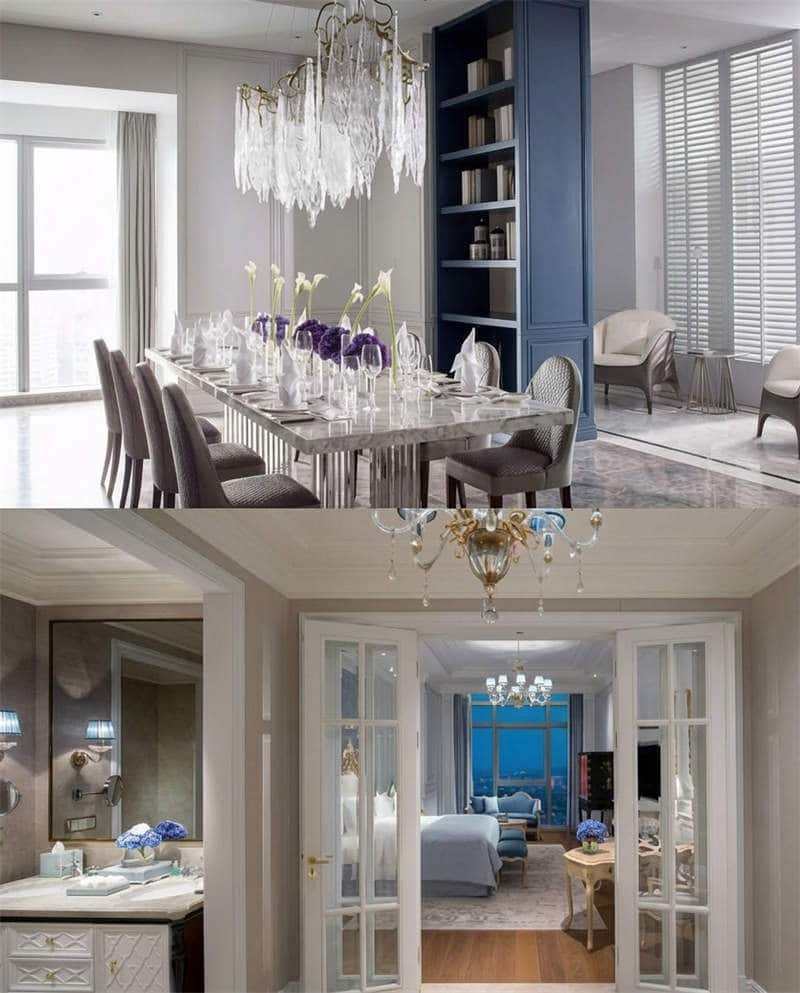
Strategic design integration: the hand-carved walnut dining table anchors the room while warm lighting activates the wood’s natural grain depth.
Industry Insight: What the Market Is Actually Telling You
The numbers support what design professionals are already feeling on the ground. The China luxury furniture market was valued at $2.89 billion in 2024 and is projected to reach $3.92 billion by 2032, according to Credence Research — with export-oriented premium manufacturers driving a disproportionate share of that growth as global demand for differentiated, culturally rooted luxury design increases.
More telling is the demand signal from the project side. According to dormakaba’s analysis of Chinese interior design trends, the “New Chinese” design movement — which blends imperial heritage silhouettes with contemporary material applications and minimalist spatial philosophy — is now influencing luxury residential and hospitality projects across Southeast Asia, the Middle East, and increasingly Europe and North America.
For importers and distributors, this represents a genuine first-mover window. The luxury buyers who build expertise, supply chain relationships, and portfolio depth in modern Chinese furniture now will have a structural advantage over competitors who treat it as a passing trend and come to it two years late.
The design argument and the commercial argument are pointing in the same direction. That doesn’t happen often.
Glossary of Key Terms
Huanghuali: A prized Chinese rosewood (Dalbergia odorifera) historically sourced from Hainan Island, characterized by honey-amber color tones and exceptional grain patterns. Now extremely rare in antique form; modern equivalents use FSC-certified rosewoods and hardwoods.
Ming Dynasty Furniture: Chinese furniture produced during the Ming dynasty (1368–1644), defined by clean horizontal lines, mortise-and-tenon joinery without nails or adhesives, and material restraint that allows the wood’s natural beauty to speak.
Feng Shui (风水): The Chinese practice of arranging space to optimize the flow of qi (positive energy). In luxury interior design, its principles — commanding position, natural materials, balanced proportion, and decluttered sightlines — align closely with contemporary high-end design philosophy.
Natural Chinese Lacquer (漆): A finish derived from the sap of the lacquer tree (Toxicodendron vernicifluum), applied in up to 30 successive coats over months. Distinguished from synthetic polyurethane by its depth, warmth, and the way it interacts with light.
Suzhou Embroidery: One of China’s four major embroidery traditions, originating in Suzhou, Jiangsu Province. Recognized as UNESCO Intangible Cultural Heritage. Characterized by ultra-fine thread work (up to 40 threads per mm) producing motifs with photographic depth and color complexity.
HR40 Foam: High-resilience polyurethane foam with a density of 40 kg/m³, standard in contract-grade seating. Maintains shape after 50,000+ compression cycles — the commercial benchmark for hotel and high-traffic residential applications.
CARB Phase 2 (CARB2): California Air Resources Board regulation limiting formaldehyde emissions from composite wood products. The de facto standard for all furniture sold in the US market regardless of destination state.
FF&E: Furniture, Fixtures, and Equipment — the category of movable assets specified in hotel, resort, and commercial development projects. FF&E procurement timelines typically run 6–18 months before a project’s opening date.
Frequently Asked Questions (FAQs)
What defines modern Chinese furniture compared to traditional or Western styles?
Modern Chinese furniture is a fusion of two distinct traditions: the structural philosophy of Ming and Qing dynasty cabinetmaking — interlocking mortise-and-tenon joinery, restrained ornamentation, and a deep reverence for the natural beauty of premium hardwoods — combined with contemporary proportions, functional layouts, and material innovations suited to today’s luxury living. Unlike Western furniture traditions, which often prioritize comfort volume (thick upholstery, large frames), Chinese classical furniture optimizes for visual precision and structural purity. A well-made modern Chinese sofa has the same clean line resolution as a luxury Japanese object, but with an ornamental vocabulary — carved aprons, cloud-scroll spandrels, brass inlay — that is unmistakably Chinese.
Are modern Chinese furniture pieces suitable for large villa layouts?
They are arguably better suited to large villa layouts than most European furniture traditions. Chinese classical furniture was designed for imperial residences with double-height ceilings, grand courtyard views, and ceremonial receiving rooms — which means the proportional logic of these pieces scales naturally to villa dining rooms, entrance galleries, and salon-style living rooms. A Ming-inspired dining table at 3,200mm reads correctly in a 12-seat villa dining room in a way that most European oval tables, designed for domestic apartments, do not.
Can I customize dimensions, finishes, and fabrics for bulk orders?
Yes — and this is one of the core structural advantages of sourcing from Chinese manufacturers at the high end of the market. Full dimension modification (height, depth, seat width), finish customization (lacquer color, wood stain, metal hardware grade), upholstery selection (performance fabrics, custom silk, top-grain leather), and carving motif adaptation are all standard capabilities at a serious Chinese furniture manufacturer. For private label programs, custom branding on packaging, hardware stamps, and documentation is also available. Lead times for custom development typically add 2–4 weeks to standard production timelines.
What materials are commonly used in high-end modern Chinese furniture?
The primary structural materials are solid hardwoods — FSC-certified Black Walnut, American White Oak, and sustainably sourced Rosewood alternatives to historically used Huanghuali. Surface and decorative materials include hand-applied natural lacquer (30+ coat applications), jade stone inlay (typically nephrite or serpentine jade), mother-of-pearl marquetry, and hand-embroidered Suzhou silk for upholstery. Hardware is typically solid brass, aged bronze, or black iron, hand-forged for signature pieces and precision-cast for production runs. Every one of these materials requires skilled handling — the difference between a mediocre execution and an exceptional one is visible to any trained eye.
How do I verify the authenticity and quality of craftsmanship?
Request a factory audit — either in person or via a documented video walkthrough with time-stamped production footage. The key checkpoints are: joinery inspection (does the mortise-and-tenon fit without gaps under magnification?), lacquer depth (10+ layers minimum for commercial-grade natural lacquer; request a cross-section sample), embroidery verification (hand-embroidered pieces will show slight thread tension variations and depth that machine embroidery cannot replicate), and material certificates (FSC chain-of-custody number, CARB2 test report from an accredited lab). A manufacturer who resists detailed documentation requests is communicating something important about their quality confidence.
Is modern Chinese furniture durable enough for daily use in villas or hotels?
When properly specified for its application, yes. The key is matching the specification to the use case. For hotel dining chairs that will be moved 20–30 times per day, the joinery must be reinforced with structural corner blocks or metal dowel inserts in addition to the traditional mortise-and-tenon. Seat foam should be HR40 commercial grade minimum. Fabric should be a performance weave with minimum 30,000 Martindale abrasion cycles for commercial seating. For lacquered surfaces in high-traffic areas, specify a catalyzed lacquer topcoat over the natural lacquer base — this provides the aesthetic depth of natural lacquer with the chemical resistance of a modern finish. Discuss these specifications explicitly with your supplier before placing any commercial order.
Can modern Chinese pieces be integrated into contemporary or minimalist interiors?
Yes — and done well, this is one of the most commercially distinctive interior positions available today. The key is using Chinese pieces as structural anchors rather than decorative accessories. Choose pieces from the more restrained end of the modern Chinese vocabulary — a clean-lined walnut console with minimal surface carving, a silk-upholstered accent chair with a simple drum-back form, or a floating lacquer sideboard with geometric brass hardware — and allow the rest of the interior to recede into natural stone, neutral plaster, and textural fabric. The Chinese piece becomes the room’s design thesis, not a cultural footnote.
What is the average lead time for custom or bulk orders from China?
For standard catalog pieces with available finishes: 4–8 weeks from order confirmation to production-ready. For custom finish development or non-standard dimensions: 8–12 weeks. For pieces involving hand-embroidery, multiple-coat natural lacquer, jade inlay, or full bespoke carving development: 12–20 weeks. For large FF&E hotel programs (200+ rooms): plan for a 6–9 month total procurement timeline from first supplier contact to final installation, factoring in sample approval, production, quality inspection, shipping, and on-site installation sequencing. Build these timelines into your project master program from day one.
Are there sustainability and ethical sourcing practices in modern Chinese furniture production?
Leading Chinese furniture manufacturers have significantly advanced their sustainability credentials in response to European and North American import market requirements. FSC chain-of-custody certification for wood components, low-VOC water-based lacquers, waste reduction programs, and ISO 14001 environmental management certification are now standard among export-oriented premium manufacturers. According to CIFF’s quality certification guide, the EU’s 2026 stricter timber traceability regulations are further accelerating FSC adoption across the industry. When evaluating suppliers, request the FSC certificate number and verify it at the FSC public database — this takes 60 seconds and eliminates the risk of documentation fraud.
How do I maintain and care for lacquered or silk-upholstered pieces?
For natural or catalyzed lacquer surfaces: use only soft, dry, or lightly dampened microfiber cloths. Avoid all ammonia-based or abrasive cleaners, which will permanently dull the finish. Keep pieces out of direct sunlight — UV exposure causes color shift in natural lacquer over time. For significant surface damage, professional re-lacquering by a specialist is advisable rather than DIY repair products. For silk-upholstered pieces: vacuum on the lowest suction setting using a soft brush attachment monthly. For localized staining, use a dry-cleaning specialist familiar with silk — water can cause tide marks. Rotate cushions where possible to even out light exposure and compression patterns. Schedule a professional upholstery maintenance service annually for pieces in high-use locations.
Can I use modern Chinese furniture in boutique hotel or resort projects?
Boutique hotels and resorts are arguably the strongest commercial context for modern Chinese furniture. Guest experience in luxury hospitality is increasingly driven by cultural specificity and design memorability — the ability of a property to offer something that a Marriott or Hilton loyalty program cannot. A boutique resort lobby anchored by a hand-carved Chinese screen, hand-embroidered silk accent chairs, and a floating lacquer console creates an arrival experience that guests photograph, share, and return for. For FF&E buyers and hotel developers, the commercial case is straightforward: pieces with this level of craftsmanship command guest attention and differentiate the property in a saturated luxury market without requiring the brand investment of a signature Western designer collaboration.
What sets modern Chinese furniture apart from other luxury Asian styles like Japanese or Korean?
Japanese luxury furniture, at its most refined (think Tansu cabinetry, Shoji-influenced screens), prioritizes absolute material minimalism — wood celebrated in near-raw form, joinery as the only ornament, space as the primary material. Korean furniture (Joseon dynasty tradition) similarly emphasizes restraint, with elegant proportion and subtle natural lacquer. Modern Chinese furniture, by contrast, embraces a more layered material language: imperial symbolism encoded in motifs (cranes for longevity, peonies for prosperity, dragons for power), multi-material combinations (jade alongside lacquer alongside embroidered silk alongside carved walnut), and an ornamental confidence that reads as authority rather than excess in the right context. For designers working on projects where the client wants a space that communicates cultural depth and historical weight — a luxury hotel in Asia, a diplomat’s residence, a heritage villa — modern Chinese furniture delivers that narrative in a way that no other Asian tradition quite matches.
China Furniture Sourcing Agent Roles for High-End Buyers What a China Furniture Sourcing Agent Actually Does for High-End Buyers Every finished luxury room sits on
How to Vet a China Furniture Sourcing Agent Before Signing A single curved sofa like this goes through dozens of approvals, including frame, foam, fabric
China Furniture Sourcing Agent vs Direct Factory Buying: A Strategic Guide for High-Value Buyers When one project includes 400 hotel rooms, a 20-seat marble dining
Advanced Tips to Get More from Your China Furniture Sourcing Agent Powerful Strategies for High-Performance Sourcing – Tailored for Elite Buyers, Designers & Operators Your
How to Work Better With Your China Furniture Supplier After Ordering A Practical Playbook for High-End Furniture Importers, Interior Designers, FF&E Buyers, Villa Owners, Private

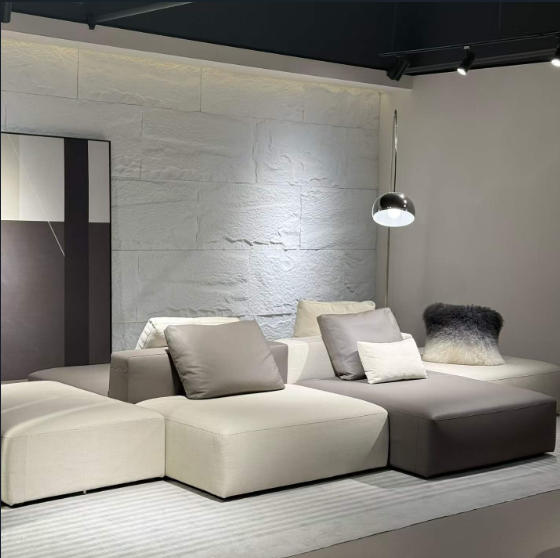

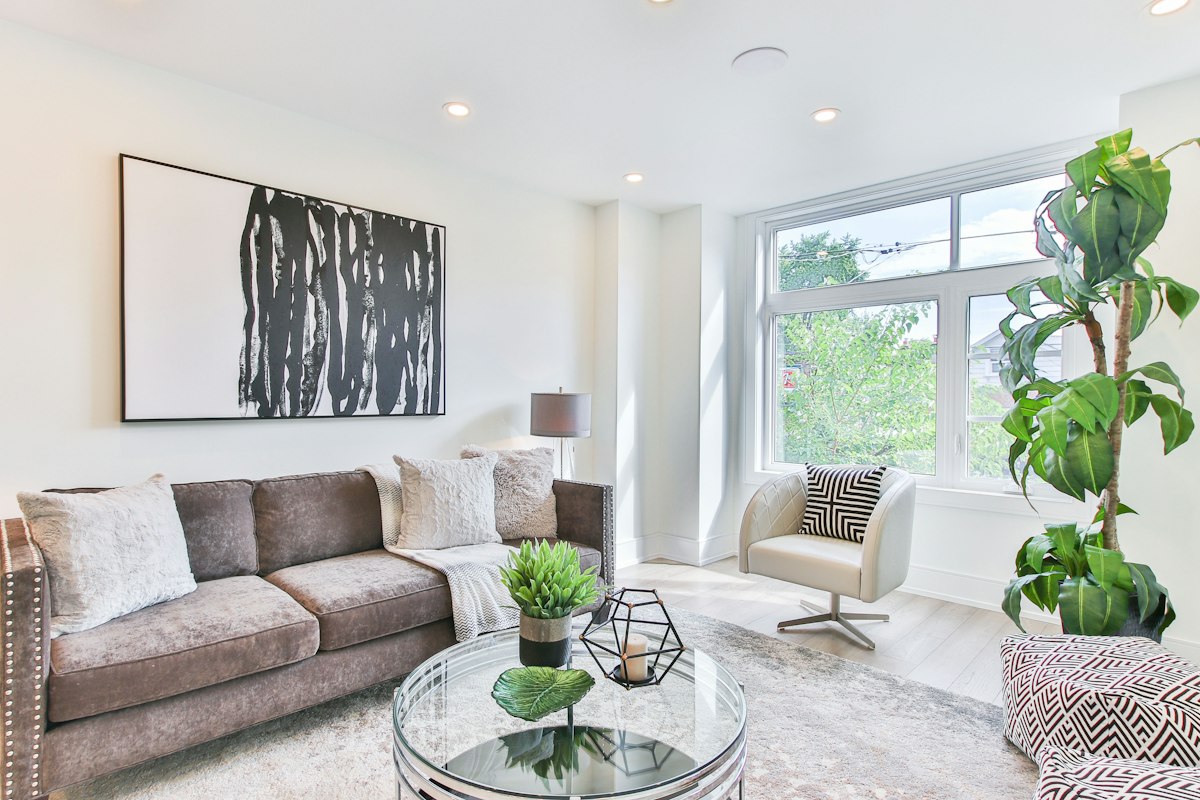 A contemporary Ming-inspired sofa set: the restrained silhouette and exposed hardwood frame create a focal point that doesn’t compete with panoramic villa views.
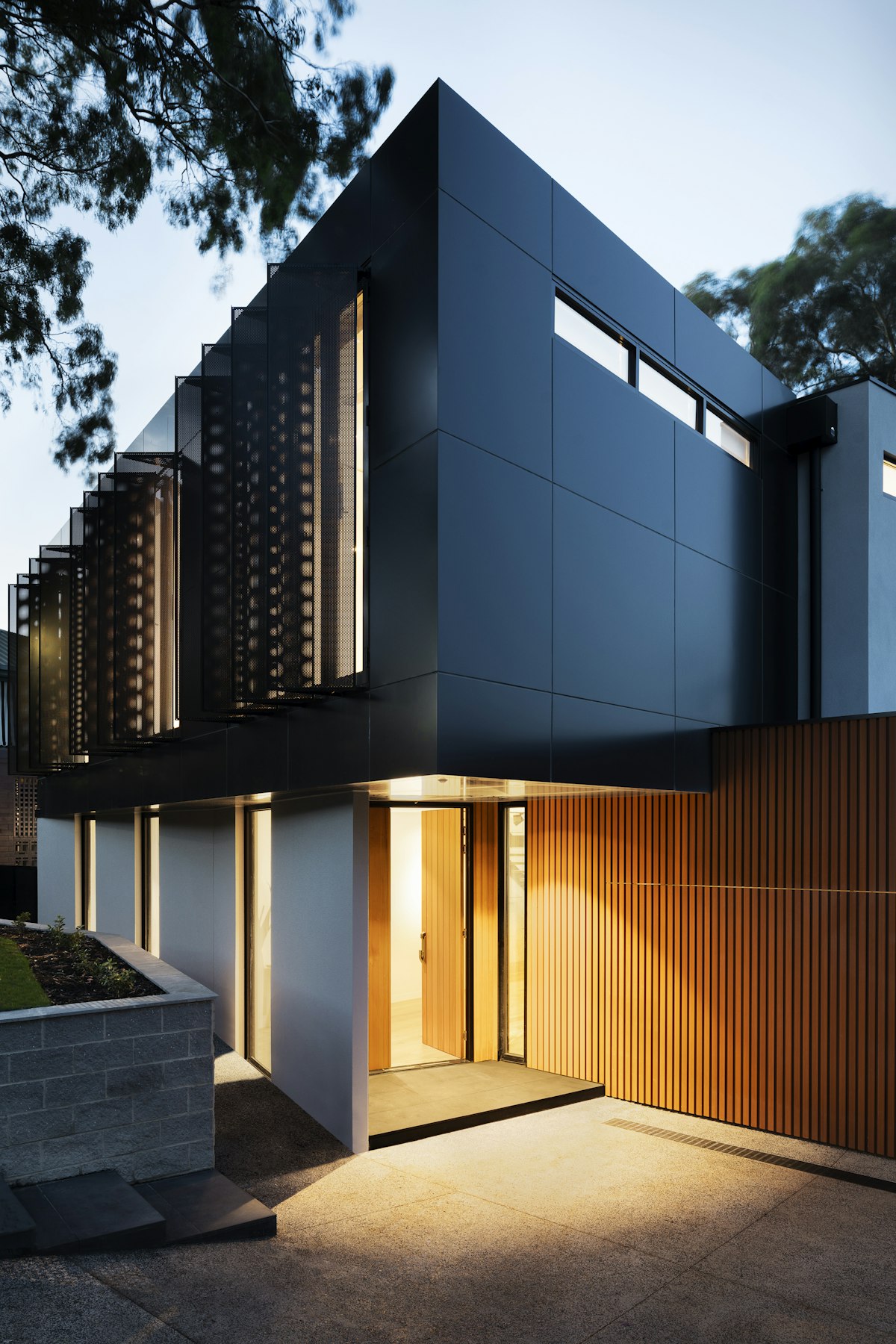 A Feng Shui-optimized modular media unit: technology fully integrated, visual noise eliminated, natural materials at the fore.
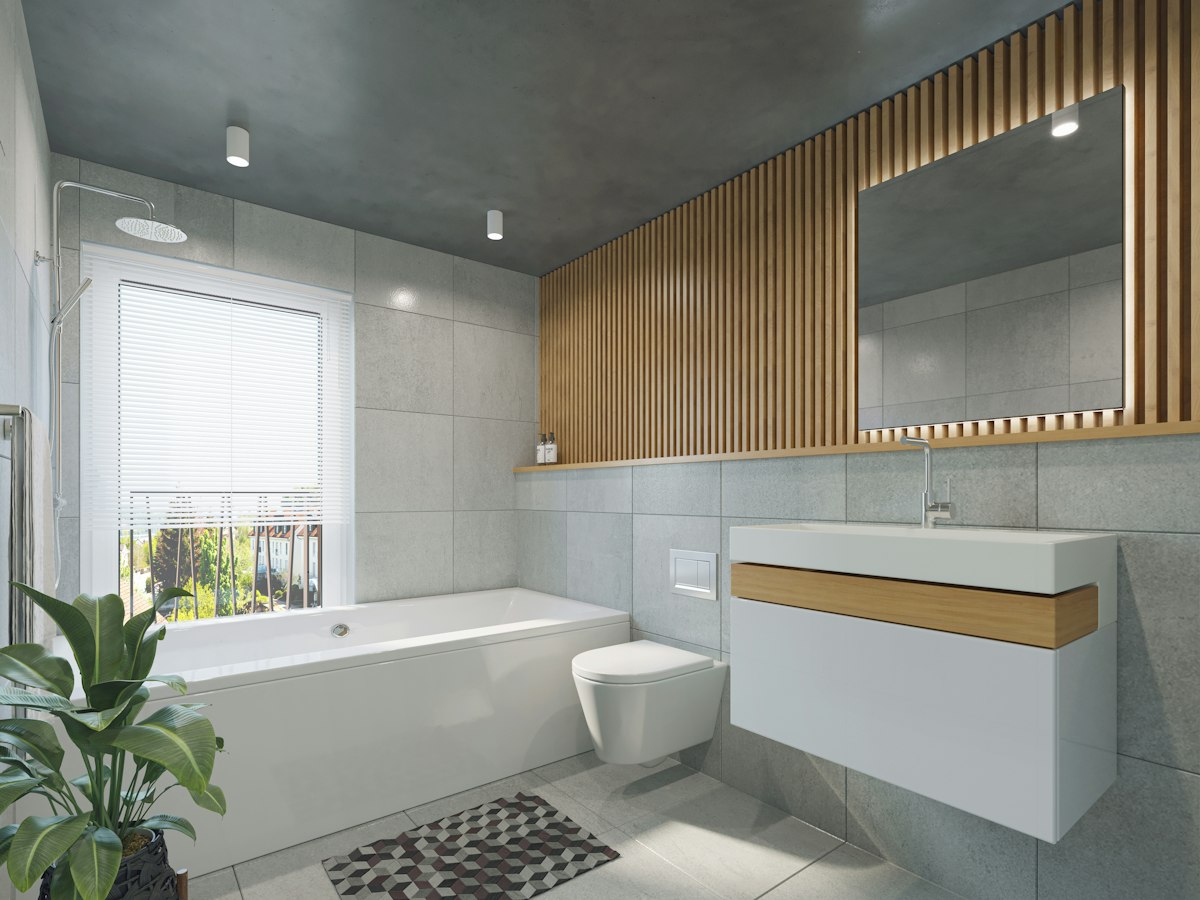 A floating lacquer console with jade inlay in a villa entrance — the piece that turns an arrival into an experience.
 Strategic design integration: the hand-carved walnut dining table anchors the room while warm lighting activates the wood’s natural grain depth.