company news

China Furniture Sourcing Agent: Roles for High-End Buyers
China Furniture Sourcing Agent Roles for High-End Buyers What a China Furniture Sourcing Agent Actually Does for High-End Buyers Every finished luxury room sits on

Stay competitive in the global furniture market with our quarterly trend reports that showcase the latest designs, materials, and styles from top Chinese manufacturers. Equip your business with actionable insights to meet client demands and maximize your product portfolio.
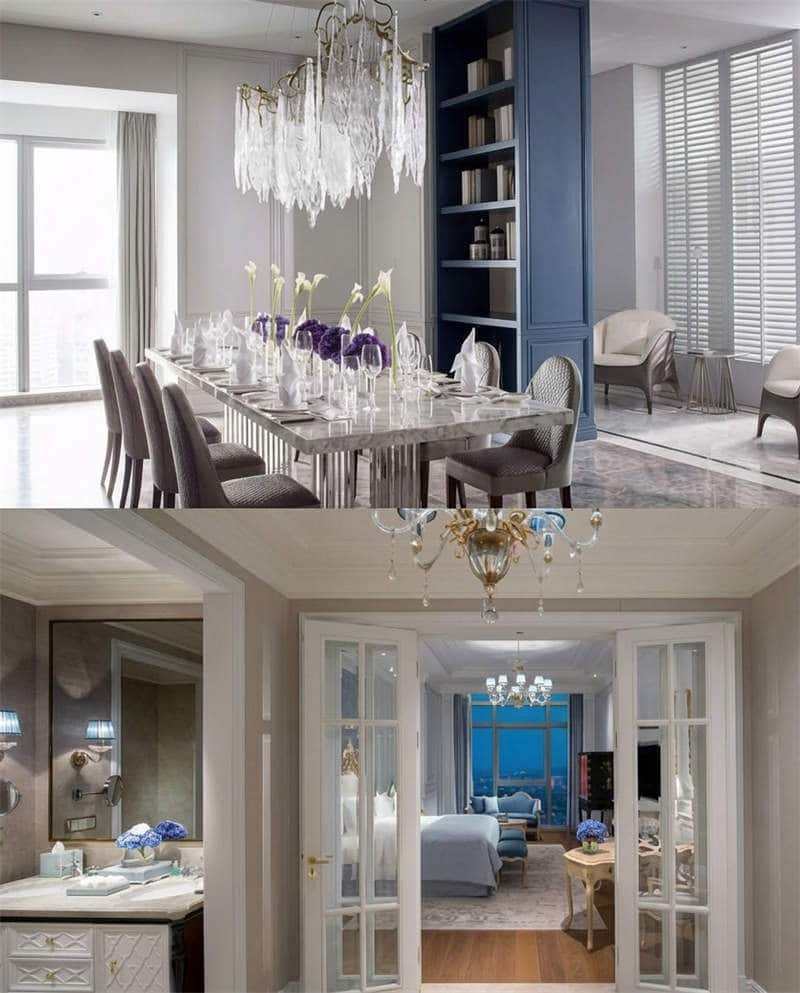
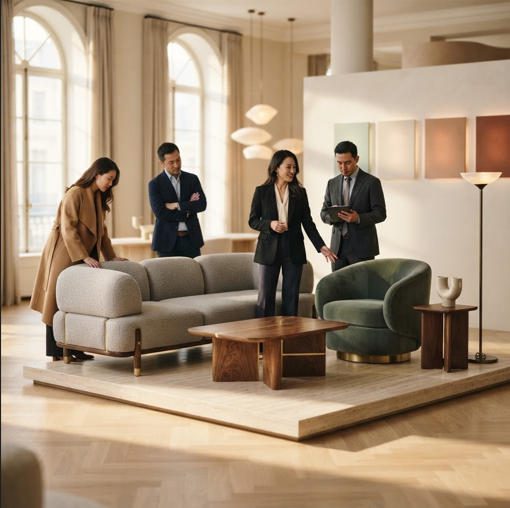
 Luxury neo-classical living room collection — the kind of design language dominating global B2B furniture sourcing in 2025.
Why Seasonal Trend Intelligence Matters for B2B Furniture Businesses
For furniture distributors, showroom buyers, interior designers, and hospitality procurement teams, the cost of missing a trend cycle isn’t just a missed sale — it’s dead stock, misaligned client proposals, and lost positioning against competitors who read the market early. In a sector where lead times from Chinese manufacturers regularly run 30 to 60 days, you cannot afford to wait until a trend has fully emerged before placing orders. By the time a jewel-tone velvet sofa appears in a mainstream retail campaign, the factories producing it have already filled their production slots for the next quarter.
This is the fundamental asymmetry that separates profitable furniture businesses from reactive ones: the businesses winning in this market are those who treat trend intelligence not as aesthetic inspiration but as operational infrastructure.
How This Guide Helps You Stay Ahead of Market Shifts
This guide provides B2B furniture professionals — distributors, agents, showroom directors, interior designers, and hotel FF&E (furniture, fixtures, and equipment) procurement specialists — with a comprehensive seasonal trend update drawn from data across Chinese manufacturing hubs, international trade shows, and hospitality sector specifications. We cover Spring/Summer and Fall/Winter design directions, material innovations, commercial sector demand signals, supply chain realities, pricing dynamics, and actionable strategies you can implement within your current business structure.
Current Market Position and Global Influence
China’s furniture industry is not simply large — it is structurally indispensable to the global supply chain. The market was valued at USD 160.53 billion in 2025 and is projected to reach USD 169.23 billion in 2026, with a compound annual growth rate (CAGR) of 5.42% forecast to push the total to USD 220.17 billion by 2031. On the export side, China generated USD 34.92 billion in furniture exports in the first half of 2025 alone, and despite a 6.7% year-on-year dip driven by global demand adjustment, June 2025 exports rebounded sharply with 9% month-on-month growth — a clear signal that the structural demand for Chinese-manufactured furniture remains robust.
For B2B buyers, these numbers translate into one practical reality: China is not an alternative sourcing option. For most of the world’s furniture distributors, it is the baseline.
Key Manufacturing Hubs and Leading Producers
Understanding where in China product originates is as important as knowing what is available. The country’s six major manufacturing hubs each specialize in distinct categories:
| Manufacturing Hub | 2025 Est. Output | Core Specialization | Key Export Markets |
|---|---|---|---|
| Foshan, Guangdong | $31.8 billion | Upholstered, panel, hotel furniture | USA (31%), UK (9%), UAE (7%) |
| Dongguan, Guangdong | $11.4 billion | High-end solid wood, metal, office | North America & Europe (78%+ export) |
| Suzhou, Jiangsu | $9.7 billion | Sofas, mattresses, whole-home custom | Europe, Southeast Asia |
| Hangzhou, Zhejiang | $7.6 billion | Smart furniture, office, metal | Global e-commerce |
| Chengdu, Sichuan | $5.9 billion | Panel, custom, solid wood | Domestic + Europe rail |
| Nankang, Jiangxi | $4.8 billion | Solid wood beds, dining, children’s | Price-sensitive global markets |
Foshan alone controls approximately 39% of the global furniture supply chain. Its Longjiang Town hosts more than 10,000 factories — many of which produce for IKEA, Ashley, and premium hospitality chains simultaneously. Dongguan, meanwhile, is the preferred hub for buyers sourcing luxury-grade solid wood pieces, with full CARB-P2 and TSCA Title VI certification compliance as standard.
Market Growth Drivers and Consumer Behavior Shifts
Two forces are reshaping how Chinese manufacturers approach product development and how B2B buyers should position their purchasing: sustainability and digitalization.
On the sustainability front, the demand is no longer driven by end consumers alone. Hotel chains with ESG (Environmental, Social, and Governance) commitments are actively requiring FSC-certified wood and GREENGUARD-certified finishes as procurement prerequisites — not preferences. In one survey of North American hospitality procurement managers, 67% reported that environmental certification had become a formal supplier evaluation criterion in 2024, up from 41% in 2022. For distributors, this means a manufacturer’s certification portfolio is now a competitive differentiator in client pitches.
On the digital side, manufacturers are deploying 3D visualization tools, virtual showrooms, and digital twin production systems that allow buyers to review and approve customizations remotely — reducing revision cycles from weeks to days and making it meaningfully easier for international buyers to specify bespoke orders without factory visits.
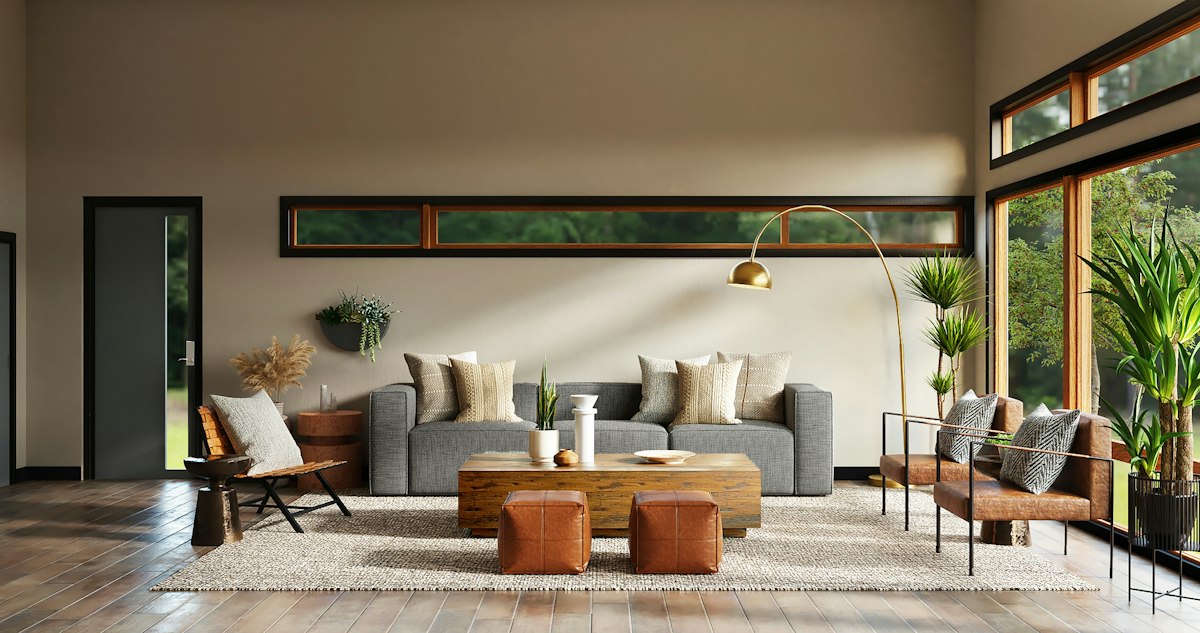
 Spring/Summer 2025 direction: warm neutrals, organic textures, and clean silhouettes define the season’s leading collections.
Trending Color Palettes and Finishes
The Spring/Summer season has solidified what was emerging at the 2025 China International Furniture Fair (CIFF) in Guangzhou: earthy neutrals are the dominant commercial baseline. Warm off-whites, sandy beiges, sage greens, and terracotta tones are being specified across residential, hospitality, and commercial fit-out projects simultaneously — which means manufacturers are producing these colorways at scale, improving both availability and unit pricing for distributors.
Warm metallics — brushed brass, aged bronze, and champagne gold — are appearing as accent hardware across sofa frames, dining chair legs, and cabinet pulls. These finishes translate exceptionally well for hotel lobby and resort furniture specifications, where they signal premium positioning without requiring full precious-metal execution costs. For commercial and hospitality buyers, pairing neutral upholstery with warm metallic frames has become the “safe luxury” formula that satisfies both brand aesthetic requirements and budget approval processes.
Bold accent colors — deep olive, rust, and dusty rose — are gaining traction specifically in hospitality and restaurant applications, where designers are using statement seating to create branded visual anchors within otherwise neutral environments.
Material Innovations and Sustainable Options
The most significant material shift this season is the mainstream arrival of performance eco-fabrics. Bio-based upholstery materials — fabrics derived from recycled PET bottles, plant-based fibers, and low-VOC (Volatile Organic Compounds: chemical emissions from finishes that affect indoor air quality) leather alternatives — have moved from niche specification to standard offering at Foshan’s mid-to-upper tier manufacturers.
VOC-compliant finishes are now available across most Chinese furniture manufacturers’ standard lacquer ranges, driven by increasing export compliance requirements from the EU and California markets. For buyers sourcing for hotel chains or commercial real estate developers with LEED certification (Leadership in Energy and Environmental Design) requirements, confirming low-VOC finishes at the specification stage is now a non-negotiable procurement checkpoint.
Recycled aluminum and reclaimed teak are gaining ground in outdoor and semi-outdoor hospitality furniture — particularly for resort terraces and hotel pool areas — as procurement teams seek materials that satisfy both aesthetic and durability requirements in high-UV, high-humidity environments.
Design Aesthetics Dominating the Season
Two aesthetics are running simultaneously this season, targeting different buyer segments:
The first is minimalist Scandinavian-influenced design — clean lines, functional forms, solid wood joinery, and restrained ornamentation. This direction is performing strongly with corporate office buyers, boutique hotel fit-outs, and residential interior designers working on high-end apartment projects. Chinese manufacturers, particularly in Dongguan and Suzhou, have become highly competitive in producing this aesthetic at export grade, often delivering pieces indistinguishable from European-produced equivalents at 30–45% lower landed cost.
The second is maximalist eclectic fusion — layered textures, mixed materials within single pieces (marble top + rattan base + brass inlay, for example), and overt cultural reference points drawn from Art Deco, neoclassical, and Oriental influences interpreted through contemporary silhouettes. This direction is strongest in luxury residential and high-end hospitality applications, and it is precisely where manufacturers like JL&C Furniture have built their competitive advantage — combining 20 years of neoclassical design experience with modern material execution.
 Fall/Winter 2025 luxury hospitality direction: jewel tones, plush textures, and warm wood elements create spaces guests return to.
Luxurious Textures and Premium Materials
Fall/Winter collections are where Chinese manufacturers’ upholstery expertise becomes most commercially visible. Velvet — particularly in contract-grade construction with Martindale rub counts exceeding 30,000 cycles — is the headline fabric of the season across luxury hospitality and residential applications. What makes this specification noteworthy is that “residential-looking” fabrics like bouclé, loose-weave linen, and performance velvet are now being engineered to meet hospitality durability standards — a technical challenge that manufacturers in Foshan and Suzhou have resolved by developing hybrid yarn constructions that maintain the tactile softness of residential textiles while meeting commercial wear benchmarks.
Marble, brass, and solid wood combination pieces — dining tables with Carrara or Calacatta marble tops on hand-carved solid walnut bases, side tables combining travertine with brushed brass frames — are among the highest-performing SKUs in the Fall/Winter preview collections. For distributors serving interior designers, these combination-material pieces consistently generate the strongest response in lookbook presentations because they convey a level of craftsmanship that justifies premium retail positioning.
Natural fiber upholstery — linen blends, seagrass-accent fabrics, raw cotton weaves — is performing strongly in coastal hospitality applications and wellness resort environments, where the tactile authenticity of natural materials reinforces brand messaging around sustainability and experiential comfort.
Color Trends for Cooler Months
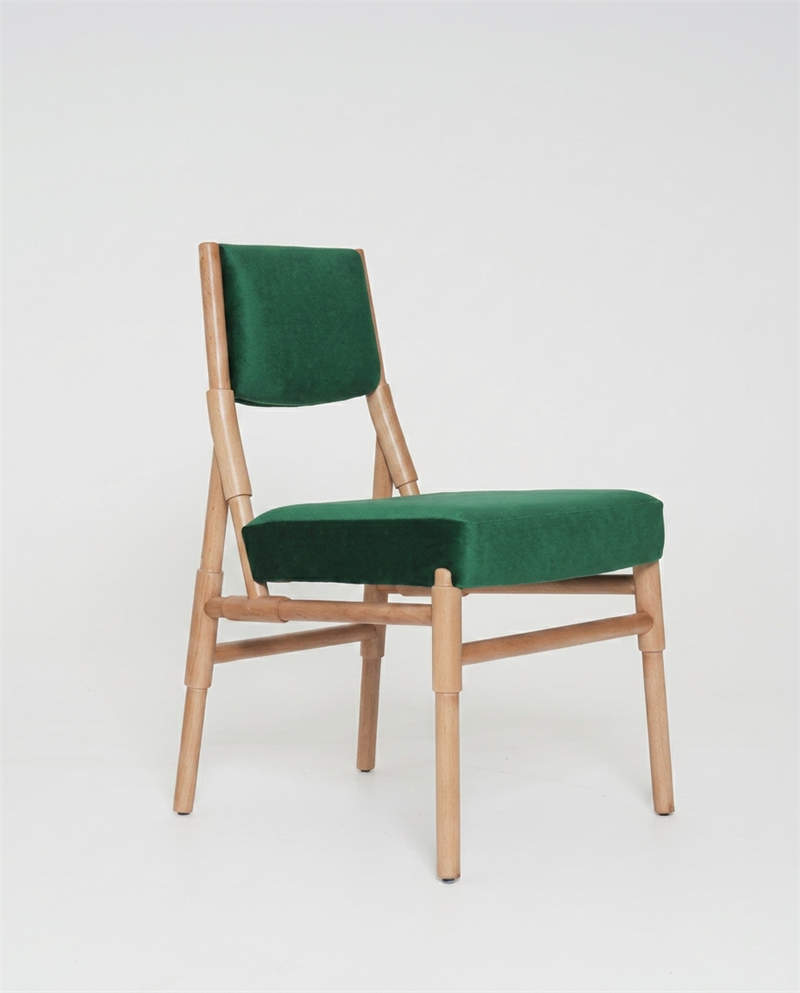
The color direction for Fall/Winter 2025 is best described as “confident restraint.” Deep jewel tones — emerald green, sapphire blue, burgundy, and amethyst — are the accent palette, deployed in statement seating pieces against predominantly neutral room environments. These colors are not new to the design vocabulary, but what is new is their availability in contract-grade performance fabrics from Chinese manufacturers, which means hospitality buyers can now specify them with confidence in high-traffic applications.
Sophisticated monochromes — charcoal, slate, deep taupe, and warm ivory — form the foundational palette for corporate and commercial environments, where the aesthetic brief typically requires visual calm alongside functional durability.
Warm wood tones — walnut, smoked oak, and amber-stained ash — are returning as dominant finish directions, partly as a reaction to the cool grey/white palette that dominated commercial interiors through the early 2020s. Antique finishes (deliberate age-patina treatments on wood and metal) are being specified in boutique hotel and luxury residential applications as a marker of authenticity and artisanal provenance.
Comfort-Focused Designs for Hospitality Applications
The post-pandemic hospitality design brief has fundamentally shifted toward what the industry now calls “resimercial” design — commercial furniture with residential sensibility. Hotel guests who spent years working from home have recalibrated their expectations for seating comfort, and procurement teams are responding. Ergonomic lounge chairs with lumbar support that would previously have been specified only in corporate environments are now appearing in hotel guest rooms. Deep-seat sofas with layered cushioning — previously associated with residential living rooms — are being engineered to commercial durability standards for hotel lobbies.
For distributors, this convergence of residential comfort and commercial durability represents a significant opportunity: clients in both sectors are looking for the same product archetype, which means a well-chosen line of ergonomic lounge seating can serve hotel, corporate, and residential designer clients simultaneously.
Hotel and Resort Furniture Specifications
The luxury and upper-upscale hotel segments (4-star and above) are currently the most demanding and most rewarding commercial category for furniture distributors sourcing from China. Specification requirements have become highly standardized: upholstered seating must meet minimum 30,000 Martindale rub counts, frame construction must be kiln-dried hardwood or welded steel, and all finishes must comply with applicable fire-retardancy codes for the destination market (Cal TB 117 in California, Crib 5 in the UK, for example).
Modular seating configurations — sectional sofas with configurable components, stackable side chairs, nesting tables — are gaining strong traction in full-service hotel properties because they allow housekeeping teams to reconfigure public spaces for events without requiring facilities staff or proprietary tools.
Budget hotel segments are driving demand for a different product profile: visually attractive pieces at cost-optimized price points. Manufacturers in Nankang and Jiangmen have developed strong capabilities in producing hotel-grade furniture at lower price points by using engineered wood cores with solid wood veneer faces — a construction approach that delivers the visual appearance of solid wood at significantly reduced material cost.
Corporate Office Furniture Evolution
The office furniture market has undergone more fundamental redesign in the past five years than in the preceding two decades. The hybrid work model — where employees split time between remote and in-office work — has eliminated the traditional desk-per-person specification model and replaced it with a portfolio of activity-based settings: focus rooms, collaboration zones, social spaces, and wellness areas. Chinese manufacturers have responded with modular office furniture systems that allow facilities managers to reconfigure space layouts seasonally without capital reinvestment.
Biophilic design — the practice of incorporating natural elements (natural materials, organic forms, living plants, natural light maximization) into built environments — has become a performance specification rather than an aesthetic preference. Research cited by the World Green Building Council links biophilic office design to measurable improvements in employee wellbeing and productivity, which gives procurement managers a ROI argument for specifying natural wood, stone, and living wall integration in commercial interiors.
Restaurant and Retail Environment Designs
For restaurant and retail fit-outs, the operational brief has become the dominant design driver. Space efficiency — expressed through stackable chairs, nesting side tables, wall-mounted fold-down surfaces, and lightweight aluminum seating that staff can quickly rearrange for service configurations — is as important as visual impact. Chinese manufacturers, particularly in Hangzhou and Foshan, have become globally competitive in producing stackable hospitality chairs and tables that meet both visual premium standards and operational efficiency requirements.
Custom brand-aligned upholstery — a specific Pantone color, a branded embossed fabric pattern, a signature piping detail — is increasingly being requested by restaurant groups and retail operators who want their furniture to function as a branded experience element. Most upper-tier Foshan manufacturers can accommodate custom colorways and upholstery specifications at MOQs (Minimum Order Quantities — the smallest order volume a manufacturer will accept) starting at 100 units per item, and some will negotiate lower minimums for established distributor relationships.
 Quality control in Chinese furniture manufacturing: what happens in the factory directly determines what arrives in your client’s showroom.
Premium Material Availability and Lead Times
The current supply chain environment for premium materials is more stable than it was in 2021–2022, but it is not without friction. Solid walnut and white oak — the two most in-demand woods for luxury furniture production — are subject to ongoing availability variation driven by North American and European harvest cycles. Buyers placing large orders with solid wood content should build 10–15% buffer time into project timelines beyond manufacturer-stated lead times.
Marble and stone tops — increasingly popular in dining and accent table specifications — face their own lead time dynamics. Italian marble varieties (Carrara, Calacatta) are typically sourced and processed in China but with imported stone blocks, and any disruption in European stone supply can add 2–3 weeks to production timelines. Domestic Chinese marble (Sichuan white, Guangxi grey) offers excellent quality at lower cost and typically shorter lead times — a trade worth considering for buyers under schedule pressure.
Sustainable Material Certifications
Understanding which certifications matter to which markets is a practical necessity for distributors:
FSC (Forest Stewardship Council): The global standard for responsibly sourced wood. Required by most European furniture buyers and increasingly by North American hotel chains with sustainability commitments. Cross-reference claimed certifications at info.fsc.org using the manufacturer’s certificate code — never accept a certificate without independent verification.
GREENGUARD Gold: The most rigorous standard for chemical emissions from furniture finishes, required for products specified in healthcare and educational environments in the US. Increasingly requested by hospitality chains with indoor air quality commitments.
CARB-P2 / TSCA Title VI: Formaldehyde emission standards required for all composite wood products sold in the US and California. All reputable Dongguan manufacturers maintain these certifications as standard.
OEKO-TEX Standard 100: The leading certification for textile materials, certifying that fabrics are free from harmful substances. Relevant for upholstered furniture buyers in European markets.
Cost Optimization Strategies for Distributors
Seasonal pricing patterns are real and navigable for buyers who plan ahead. Chinese manufacturers typically offer their most competitive pricing on Fall/Winter collections in August–September, when production capacity is being filled ahead of the holiday shipping season. Spring/Summer collection pricing is typically most competitive in February–March. Buyers who can commit volume during these windows regularly achieve 8–15% better unit pricing than spot buyers purchasing at peak demand periods.
The decision between direct manufacturer relationships and agent-based purchasing involves a genuine tradeoff:
| Sourcing Model | Typical Pricing Advantage | MOQ Requirements | Flexibility | Support |
|---|---|---|---|---|
| Direct Manufacturer | 5–15% lower cost | Higher (50–500+ units) | Lower | Less localized |
| Agent/Distributor | Higher cost (+10–20%) | Lower (20–50 units) | Higher | Localized, flexible |
The right model depends entirely on your order volume, cash flow structure, and ability to manage cross-timezone communication. Many successful distributors use a hybrid approach: direct relationships for their top 3–5 SKUs by volume, agent relationships for tail-end variety and smaller-run custom work.
Current Production Timelines and Turnaround Times
Understanding lead times as a structural planning input — not a variable to be negotiated at project kick-off — is what separates experienced B2B furniture buyers from reactive ones. Standard lead times from Chinese manufacturers in 2025 are as follows:
| Order Type | Standard Lead Time | Expedited Option | Expedite Premium |
|---|---|---|---|
| Standard catalogue items, bulk | 30–45 days | 15–20 days | 15–20% surcharge |
| Custom fabric/finish, bulk | 45–60 days | 25–35 days | 20–25% surcharge |
| Fully bespoke/new design | 60–90 days | Not typically available | — |
| Samples/prototypes | 15–25 days | 7–10 days | 30–40% surcharge |
These timelines begin from deposit payment confirmation, not from initial inquiry. The most common project timeline error among B2B buyers is counting lead time from the date of the first factory conversation rather than from the date funds clear — a distinction that can create 1–2 week gaps between expected and actual production start.
Customization Capabilities Offered by Top Manufacturers
The customization landscape among Chinese manufacturers has advanced dramatically. Upper-tier Foshan and Dongguan factories now routinely offer fabric customization (customer-supplied fabric or selection from a library of 500+ options), finish customization (RAL color matching for lacquer, custom wood stain formulation, fabric embossing), dimensional customization (scaled up or down from standard dimensions with structural reengineering), and brand labeling (custom tags, embroidered logos, branded packaging).
JL&C Furniture exemplifies this capability profile — offering fully bespoke design services for high-volume hotel and residential projects, including material consultation, design development, and 3D visualization before production confirmation. For distributors managing hotel FF&E projects or interior designer clients with exacting specifications, this level of manufacturer flexibility eliminates the need to compromise between design intent and production practicality.
Quality Control Standards and Compliance
Quality control (QC) in Chinese furniture manufacturing operates at multiple levels, and understanding this hierarchy helps buyers set appropriate expectations and inspection protocols:
The most robust QC programs include material inspection at receiving, in-process checks during cutting, joinery, and assembly, pre-finishing inspection, post-finishing inspection, upholstery quality check, and final pre-shipment inspection. Reputable manufacturers provide photographic documentation of each stage. Buyers placing significant orders without independent third-party inspection (conducted by firms like SGS, Bureau Veritas, or QIMA) are accepting unnecessary risk — the cost of a third-party inspection is typically USD 200–400 per factory visit, which is trivial relative to the cost of receiving a non-conforming container.
Hospitality Sector Demand and Preferences
The hospitality sector’s furniture demand bifurcates sharply by property tier, and distributors must understand both segments to serve the full market.
Luxury and upper-upscale hotels (5-star and premium 4-star) are specifying furniture with a design philosophy that could be described as “considered permanence” — pieces that communicate quality through material selection and craft execution, are designed to remain in place for 7–10 year FF&E cycles, and maintain visual relevance across that cycle without requiring redesign. Marble-top coffee tables, solid walnut platform beds, custom-upholstered lounge chairs with brass frame details — these are the specification categories driving order volume in this segment. Price is not the primary decision variable; design differentiation, manufacturer certification credentials, and production reliability are.
Mid-scale hotels (economy and limited-service segments) have a fundamentally different brief: visual attractiveness within strict cost-per-room furniture budgets. These buyers are typically working with budgets of $800–$2,500 per room for complete FF&E, which requires manufacturers to deliver acceptable aesthetic results using engineered wood construction, contract-grade polyester fabrics, and standardized silhouettes. Nankang and Jiangmen manufacturers have built strong capabilities in this segment.
Interior Design and Fit-Out Industry Needs
Interior designers represent one of the highest-value client relationships a furniture distributor can cultivate, because they function as specification influencers across multiple projects simultaneously. A single senior interior designer in a mid-sized practice might influence furniture selection across 15–25 residential or commercial projects per year, making their specification preference worth far more than any single order.
What designers need from distributor relationships is different from what retailers need: early access to new collections before they’re widely available, sample availability for client presentations, technical specification data (dimensions, construction details, weight, packaging specifications), and a partner who understands design language well enough to discuss pieces intelligently rather than simply quoting catalog numbers.
JL&C Furniture’s product catalog is structured specifically for this audience — with detailed dimensional specifications, material descriptions, and customization options that allow designers to incorporate pieces into AutoCAD or BIM presentations with confidence.
Retail and Commercial Real Estate Trends
For retail environment furniture (flagship stores, showrooms, pop-up retail), the brief has shifted toward furniture that communicates brand values as effectively as visual merchandising. Retailers are specifying furniture that is visually distinctive, brand-consistent, and operationally flexible — pieces that can be quickly reconfigured for different seasonal campaigns without significant labor cost.
Quick-turnaround capability — the ability to reorder popular SKUs in 15–30 days — has become a competitive requirement for distributors serving retail clients, which means maintaining domestic inventory of core items or holding manufacturer production slots.
Comparative Pricing Analysis Across Manufacturers
The price spectrum within Chinese furniture manufacturing is wider than most buyers initially expect. For a mid-size upholstered dining chair, factory pricing can range from USD $45 (entry-level, panel core construction, polyester blend fabric) to USD $380 (solid hardwood frame, hand-finished, performance contract fabric) — both produced in Foshan, within kilometers of each other.
The key variable is not geography but specification: frame construction (solid wood vs. engineered wood), upholstery material grade (performance contract fabric vs. commodity polyester), finishing method (hand-applied vs. spray-line lacquer), and QC intensity. Distributors who present undifferentiated price comparisons to clients — showing three chair options at different prices without explaining the specification differences — are commoditizing their own product selection rather than demonstrating expertise.
| Product Category | Entry-Level Factory Price | Mid-Range Factory Price | Premium Factory Price |
|---|---|---|---|
| Upholstered dining chair | $45–$85 | $120–$200 | $250–$450 |
| Upholstered sofa (3-seat) | $280–$480 | $650–$1,200 | $1,500–$3,500 |
| Solid wood dining table | $180–$320 | $450–$900 | $1,200–$3,000 |
| Hotel platform bed (queen) | $220–$380 | $500–$900 | $1,100–$2,500 |
| Lounge/accent chair | $95–$180 | $280–$550 | $700–$1,800 |
Note: Prices are FOB (Free on Board — meaning the price covers manufacturer production and loading, with shipping cost additional) Foshan/Shanghai, and reflect 2025 market conditions.
Margin Optimization for Your Business
The most consistent margin improvement strategy among profitable furniture distributors is not price negotiation — it’s service differentiation. Distributors who offer value-added services command 15–25% higher selling prices for equivalent product because clients are paying for expertise and convenience, not just goods. Value-added services that consistently justify price premiums include trend curation (seasonal lookbooks and trend reports tailored to the client’s market segment), design consultation (advising on furniture selection relative to space and brand brief), sample service (physical material and finish samples available for client presentations), and project management (coordinating multiple manufacturer orders for single-delivery project completion).
Online Platforms for Accessing Trend Reports
The information infrastructure for furniture trend tracking has matured significantly. Key platforms worth incorporating into your regular research routine include the CIFF (China International Furniture Fair) website at ciff-gz.com, which publishes trend reports and exhibitor highlights quarterly; the Mordor Intelligence China Furniture Market report for market-level data; and manufacturer digital showrooms (the better Foshan manufacturers now maintain virtual 3D showrooms accessible without factory visit appointments).
Industry databases like CSIL (Centre for Industrial Studies) and CSIL Furniture Market Research publish sector-level demand forecasts by product category and geography that provide the quantitative foundation for purchasing decisions.
Trade Shows and Industry Events to Attend
The Canton Fair (China Import and Export Fair) remains the single most important trade event in the global furniture sourcing calendar. Phase 3 of the Canton Fair — which covers home furnishings, gifts, and décor — is held twice yearly in Guangzhou and attracts buyers from 215+ countries. Walking the fair with a structured brief (specific product categories, material specifications, price points) is a fundamentally more productive experience than browsing without a purchasing agenda.
CIFF Guangzhou (March) and CIFF Shanghai (September) are the most important manufacturer-facing events, where new seasonal collections are formally launched. For distributors who cannot attend in person, virtual attendance options have improved considerably since 2020 — though physical attendance still provides access to tactile material evaluation that no digital format replicates.
🎥 Watch: Canton Fair 2025 Phase 3 — Modern Furniture Trends from China

A front-row walkthrough of the Canton Fair Phase 3 furniture exhibition — space-saving innovations, contemporary Chinese design, and the collections shaping global B2B orders.
Building Relationships with Manufacturers and Agents
The business currency of Chinese furniture manufacturing is relationship depth, and it compounds over time. Manufacturers allocate their most competitive pricing, their priority production slots, and their earliest access to new collections to buyers who demonstrate consistent volume, professional communication, and long-term intent. A distributor who visits a factory annually — even for a single day — builds a relationship quality that three years of email exchange cannot replicate.
For buyers who cannot travel, video factory tours (live, not pre-recorded) have become a widely accepted substitute for initial relationship assessment. Request a live tour with production areas visible, not just the showroom. Watching a production team handle materials and assemble joints tells you more about quality culture than any certification document.
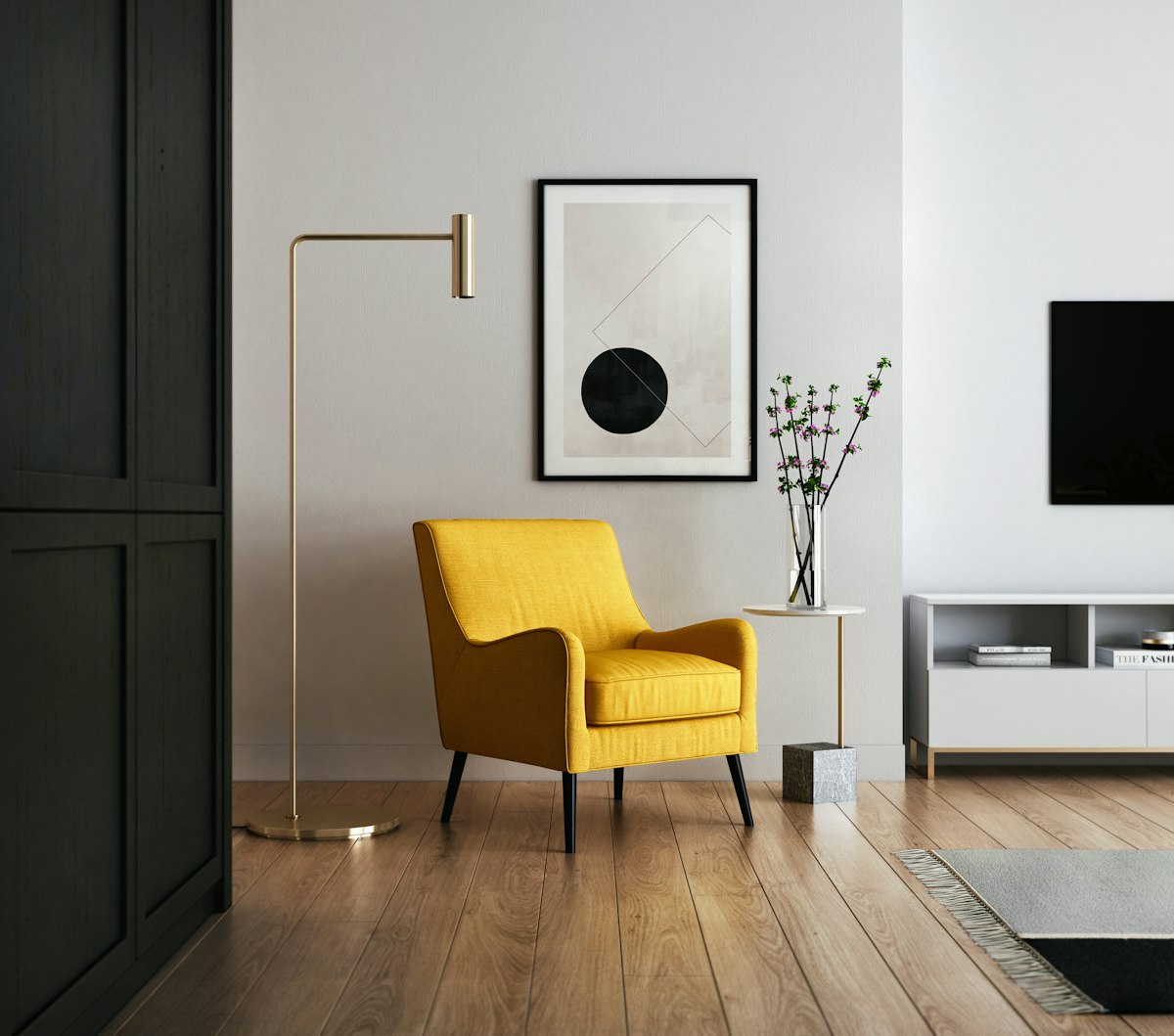 A well-curated showroom display converts trend intelligence into client engagement — the physical expression of your market positioning.
Creating a Trend-Responsive Inventory Strategy
The 70/20/10 inventory allocation model is the most widely used framework among sophisticated furniture distributors:
70% Evergreen core: Bestselling silhouettes and finishes that move consistently regardless of seasonal trend direction — neutral-upholstered dining chairs, solid wood dining tables in natural or walnut finish, modular sofas in performance fabric.
20% Seasonal trend: Current season’s leading color and material directions — this season’s jewel-tone velvet chairs, the warm metallic accent pieces, the marble-top coffee tables in new dimensions.
10% Experimental/niche: Early-stage trends or category extensions you’re testing with select clients — bio-based material pieces, smart furniture integrations, highly bespoke custom items.
Track sales velocity monthly on trend items. If a seasonal piece moves faster than your evergreen equivalents, it may be ready for promotion to your core range. If it stalls after 90 days, reduce the position and clear at margin before it becomes a seasonal write-off.
Communicating Trends to Your Clients
The format of trend communication matters as much as the content. Interior designers respond to curated visual content — high-quality photography, material swatches, and narrative about the design direction — more than they respond to price lists. Hotel procurement managers respond to specification documents — Martindale counts, fire ratings, dimensional drawings — more than to mood boards. Matching your communication format to your client’s decision-making process is a form of professional competency that builds trust faster than any sales technique.
Quarterly trend briefings — either in-person at your showroom or as structured online presentations — are among the highest-ROI activities a furniture distributor can invest in. They position you as a market intelligence resource rather than a product supplier, which fundamentally changes the pricing conversation.
Maximizing ROI on Trend-Aligned Product Selections
The furniture businesses generating the strongest margins on trend-aligned products are not those who carry the most options — they’re the ones who carry the right options for their specific client base and can speak about those options with genuine expertise. A distributor serving primarily luxury hotel clients in the Middle East needs a completely different trend selection than one serving corporate office fit-out contractors in Northern Europe.
JL&C Furniture’s bespoke consultation service provides exactly this kind of market-calibrated guidance — helping distributor clients select from trend directions that are validated for their specific end-market rather than simply mirroring what’s popular at the broad China market level.
Key Takeaways for B2B Furniture Professionals
The furniture market’s current moment rewards businesses that treat trend intelligence as operational infrastructure rather than aesthetic inspiration. Spring/Summer 2025 is defined by warm neutrals, performance eco-materials, and the convergence of minimalist Scandinavian design with maximalist neoclassical fusion. Fall/Winter 2025 brings jewel tones in contract-grade velvet, warm wood finishes, marble and brass combination pieces, and the resimercial comfort-hospitality design brief that is reshaping hotel and corporate furniture specifications simultaneously.
China’s manufacturing infrastructure — led by Foshan’s 39% global supply share, Dongguan’s luxury export grade, and Suzhou’s upholstery expertise — provides the production capability to deliver on all of these directions at scale and at price points that remain structurally competitive against any alternative sourcing geography.
The Long-Term Value of Market Awareness
Distributors and agents who build their business identity around trend expertise — who become the resource their clients turn to when they need to understand what’s coming next — build a client retention advantage that price alone cannot undercut. When an interior design firm trusts your seasonal recommendations, they stop shopping your selections against competitors because they’re not buying a product, they’re buying your judgment.
That judgment compounds over time, and it begins with committing to systematic, quarterly market intelligence gathering.
Subscribe to Our Quarterly Trend Reports
Stay ahead of every seasonal shift with trend reports developed directly from manufacturer collections, trade show intelligence, and sector demand data. Your quarterly report covers color and material direction, commercial sector demand signals, pricing movement, and product recommendations calibrated to your market segment.
Access Exclusive Manufacturer Partnerships and Pricing
Through JL&C Furniture, qualified distributors, showrooms, and interior design firms gain access to manufacturer pricing tiers, priority production slots, and early-preview access to seasonal collections before public release. Explore the full product catalog and request a partnership consultation.
Schedule a Consultation with Our Market Experts
Whether you’re building a seasonal inventory strategy, preparing a hotel FF&E specification, or evaluating new manufacturer relationships, our team provides market intelligence and sourcing guidance built on two decades of Chinese furniture industry experience. Contact JL&C Furniture to schedule your consultation.
1. How often should I update my inventory based on seasonal trends?
A quarterly review aligned with Spring/Summer and Fall/Winter collection cycles is the recommended baseline. However, bestselling SKUs should be monitored monthly — high-velocity items can deplete faster than quarterly reorder cycles accommodate, leaving gaps that competitors can fill. The goal is not to chase every trend but to ensure your core range is refreshed seasonally while your evergreen inventory is always available. A structured demand planning process — even a simple Excel-based one tracking monthly sales velocity by SKU — makes this manageable at any business scale.
2. What’s the typical lead time for custom orders from Chinese manufacturers?
Standard bulk orders run 30–60 days from production start (which begins upon deposit clearance, not inquiry). Expedited production (15–30 days) is available at a 15–25% cost premium. Fully bespoke orders involving new design development typically require 60–90 days minimum. Always confirm lead times directly with your specific factory and build buffer time — especially for orders containing solid wood or imported stone, where material procurement timelines can extend beyond manufacturer production schedules.
3. Which Chinese furniture hubs offer the best quality-to-price ratio?
Foshan is the most consistently reliable for quality across a broad range of categories — upholstered furniture, panel furniture, hotel grade — with export infrastructure and supply chain depth that no other hub matches. Dongguan is the premium choice for luxury solid wood and export-grade compliance certifications. Nankang and Jiangmen offer genuinely competitive quality at lower price points for buyers whose clients are price-sensitive without being quality-blind. Your optimal hub depends on your target market segment — there is no single correct answer.
4. How can I verify sustainability certifications on Chinese furniture?
Request the actual certificate document — not a logo on a brochure — and cross-reference the certificate number on the issuing body’s public database. FSC certificates can be verified at info.fsc.org. GREENGUARD certificates are searchable on the UL Product iQ database at productiq.ulprospector.com. CARB compliance certificates should include the third-party certifier’s contact information for independent confirmation. Verbal assurance of certification, without document verification, is not a credible basis for a specification commitment to your client.
5. What’s the minimum order quantity (MOQ) for most Chinese furniture manufacturers?
Standard MOQs range from 50 to 500 units per item depending on product complexity and customization requirements. Distributors with established order history regularly negotiate MOQs of 20–30 units for core items. Building a track record with a manufacturer — even through a series of modest initial orders — creates the relationship context for MOQ flexibility that cold buyers cannot access. Some manufacturers offer sample-level minimum orders (1–5 units) at premium pricing for new buyer qualification, which is a legitimate way to evaluate quality before committing to volume.
6. How do I stay informed about upcoming trend shifts before they become mainstream?
The most effective early-warning system is a combination of trade show attendance (Canton Fair, CIFF Guangzhou), direct manufacturer communication (sales representatives are often willing to preview upcoming collection directions), industry publication subscriptions (Dezeen, Wallpaper*, Interior Design magazine), and systematic monitoring of hospitality design press (Sleeper magazine for hotel design, Contract magazine for commercial interiors). Trends appearing in luxury hospitality specifications typically reach the mid-market commercial sector 12–18 months later — giving distributors who track hospitality design a significant lead time advantage.
7. Are there significant price differences between direct manufacturer orders and agent-based purchasing?
Direct manufacturer orders typically offer 5–15% lower unit pricing but require larger MOQs, longer payment terms, and the operational capacity to manage cross-timezone communication, quality oversight, and logistics coordination. Agents add 10–20% to costs but provide smaller order minimums, localized support, consolidated multi-manufacturer orders, and quality oversight services that reduce buyer operational burden. For distributors managing high-volume repeat orders of a defined SKU range, direct relationships are almost always more cost-effective. For buyers managing diverse, variable, smaller-volume requirements, agent relationships frequently deliver better overall economics.
8. What materials are currently most in-demand for hospitality furniture?
Performance textiles with durability ratings exceeding 30,000 Martindale rub cycles are the primary fabric specification in the hospitality sector — and the current market is delivering these in residential-quality aesthetics including velvet, bouclé, and linen weaves. Natural walnut and white oak remain the dominant wood finish preferences in luxury hospitality. Marble tops (both natural stone and sintered stone alternatives) are specified in dining, lounge, and coffee table applications. Recycled and bio-based materials are increasingly required by hotel chains with published sustainability commitments — this is no longer an optional category for distributors serving the premium hospitality segment.
9. How can I differentiate my product offerings from competitors?
The most durable competitive differentiation in furniture distribution is expertise depth, not product exclusivity. Product exclusivity — unique designs or colors not available through competitors — is achievable through manufacturer relationships, but it requires volume commitment to justify exclusivity arrangements. Expertise depth — the ability to provide clients with trend analysis, specification guidance, project coordination, and after-sales support that they cannot access elsewhere — is available to any distributor willing to invest in developing it. Combining both is the model that generates the highest client retention rates.
10. What’s the best way to present seasonal trends to interior designers and retailers?
Curated digital lookbooks — organized by design direction rather than product category, with high-quality photography, material descriptions, and clear specification data — are the most effective format for interior designer presentations. Physical sample kits (swatches of key fabrics and finish chips for the season’s leading directions) significantly increase the conversion rate of lookbook presentations because they allow designers to evaluate materials tactilely at client meetings. For retail buyers, the equivalent of the lookbook is the planogram — showing how the seasonal pieces work together as a display environment rather than as individual items.
11. How do I manage inventory for both trendy and timeless pieces?
The 70/20/10 allocation model described earlier is the practical framework: 70% evergreen core, 20% current seasonal trend, 10% experimental. The critical discipline is the monthly sales velocity review — tracking how quickly each SKU moves relative to its planned turn rate. Slow-moving trend items should be identified at 60 days and cleared at margin before they reach 120 days, at which point clearance typically requires deeper discounting. Evergreen core items should be managed to avoid stockouts, since lost sales on core SKUs are among the most costly revenue leakages in furniture distribution.
12. What are the payment terms typically offered by Chinese manufacturers?
The standard payment structure is 30% deposit upon order confirmation, 70% balance before shipment (after pre-shipment inspection confirmation). Established distributors with multi-year relationships can negotiate 30/70 with the balance due within 30 days of shipment (effectively extending credit by 2–4 weeks depending on transit time). Letter of Credit (L/C) payment is accepted by most manufacturers for larger orders and provides buyers with documentary protection. Wire transfer (T/T) remains the most common method for smaller orders. Digital payment platforms are increasingly available but adoption varies significantly by manufacturer.
13. How can I assess the reliability of a new Chinese furniture manufacturer?
A structured new-supplier assessment should include: verification of business license and export license through official Chinese business registration databases; review of existing certification documents with independent verification as described above; reference contacts from existing clients (request at least two, and actually call them); a live video factory tour with production areas visible; and a sample order before any volume commitment. The sample order is non-negotiable — it is the only reliable way to assess actual production quality, packaging quality, and communication responsiveness simultaneously.
14. What role does sustainability play in current market trends?
Sustainability has transitioned from a marketing differentiator to a procurement prerequisite in the mid-to-upper market segments. Hotel chains with published ESG commitments are formally requiring certification documentation as part of FF&E supplier qualification. Interior designers serving LEED-certified commercial projects require low-VOC and FSC-certified material specifications. For distributors, this means that a manufacturer’s sustainability credential portfolio is now a client-facing sales asset, not just a compliance document. Distributors who cannot provide certification documentation on request are increasingly disqualified from hotel and commercial project shortlists before product evaluation even begins.
15. How do I forecast demand for specific furniture categories?
Demand forecasting in furniture distribution relies on four data sources: historical sales data by SKU (minimum 24 months to capture seasonal patterns), client project pipeline intelligence (what your key clients have confirmed or in-progress that will generate orders), industry trend reports (CIFF trend releases, hospitality design press, trade show intelligence), and manufacturer sell-through data (what’s moving fastest from their production line is often a leading indicator of broader market demand). CRM systems that capture client inquiry patterns — what people ask about, not just what they buy — are among the most underutilized forecasting tools in the industry.
16. What’s the impact of currency fluctuations on pricing from Chinese manufacturers?
The RMB/USD relationship directly affects the cost structure of Chinese furniture exports. A strengthening Yuan increases export prices; a weakening Yuan reduces them. Most Chinese manufacturers quote in USD to provide pricing stability for international buyers, but their internal cost calculation is in RMB — which means significant currency movements eventually flow through to quoted prices, typically at the next seasonal price revision. Buyers placing large forward orders during periods of favorable exchange rates — and locking in pricing through confirmed purchase orders — can meaningfully reduce the currency exposure on planned inventory purchases.
17. How can I build exclusive relationships with top Chinese manufacturers?
Exclusivity arrangements — regional distribution rights, exclusive color or design options — are earned through demonstrated value to the manufacturer, not purchased outright. Manufacturers award exclusivity to buyers who provide consistent volume (reducing their sales overhead), honest market feedback (helping them improve products), long-term commitment (reducing their customer acquisition risk), and professional communication (reducing their operational friction). Factory visits — even annual — are disproportionately valuable in building the personal relationship context within which exclusivity discussions become possible. Attending manufacturer events and trade show presentations sends a similar signal of commitment and engagement.
This article is produced by the content team at JL&C Furniture, a Shanghai-based manufacturer of premium neo-classical and modern furniture serving distributors, interior designers, hotel developers, and commercial fit-out professionals worldwide. Additional resources: FSC Certification Verification | UL GREENGUARD Database | Canton Fair Official Site | CIFF Guangzhou

China Furniture Sourcing Agent Roles for High-End Buyers What a China Furniture Sourcing Agent Actually Does for High-End Buyers Every finished luxury room sits on
How to Vet a China Furniture Sourcing Agent Before Signing A single curved sofa like this goes through dozens of approvals, including frame, foam, fabric
China Furniture Sourcing Agent vs Direct Factory Buying: A Strategic Guide for High-Value Buyers When one project includes 400 hotel rooms, a 20-seat marble dining
Advanced Tips to Get More from Your China Furniture Sourcing Agent Powerful Strategies for High-Performance Sourcing – Tailored for Elite Buyers, Designers & Operators Your
What Wholesale Furniture Suppliers in China Can Offer High-Value Buyers A statement luxury living room — the kind of space that begins with the right
How to Work Better With Your China Furniture Supplier After Ordering A Practical Playbook for High-End Furniture Importers, Interior Designers, FF&E Buyers, Villa Owners, Private