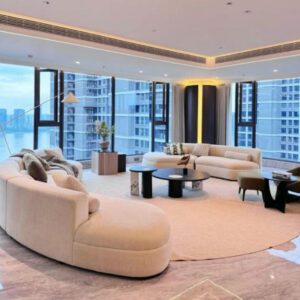
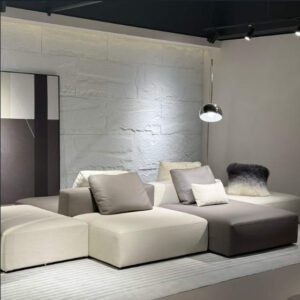
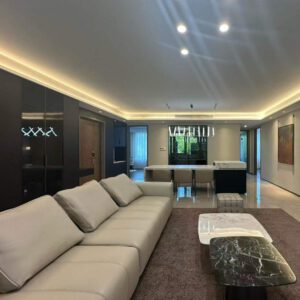
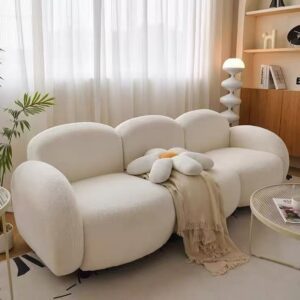
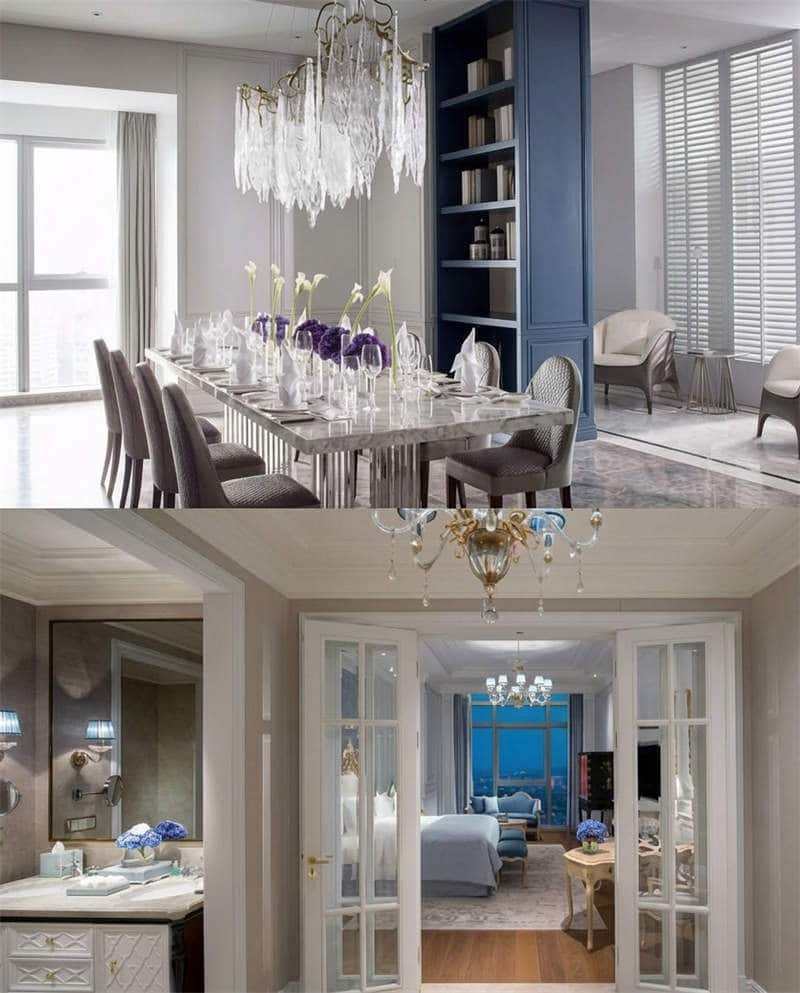
Where Chinese precision manufacturing meets global luxury design standards —...
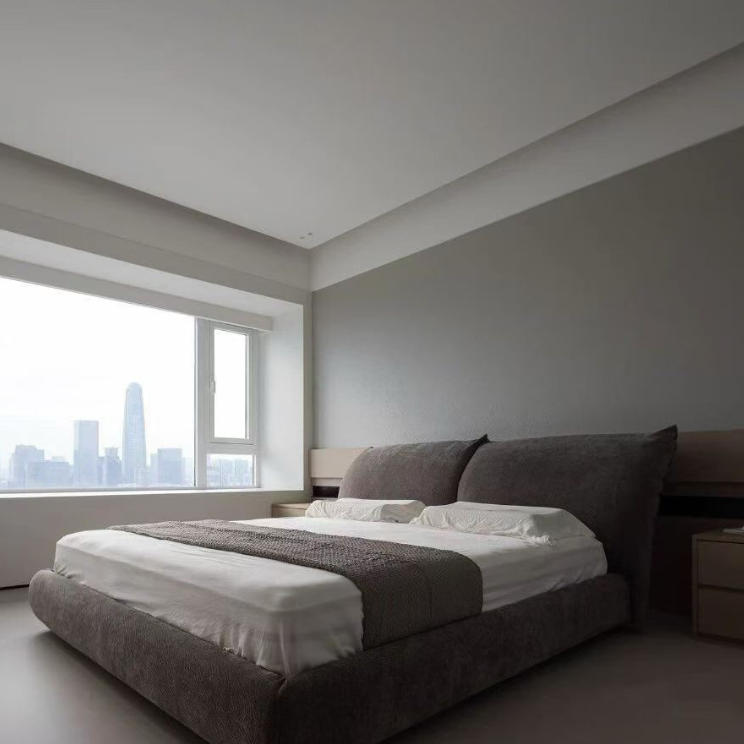
Where Chinese precision manufacturing meets global luxury design standards — the new benchmark for high-end interiors.
Maximizing Luxury Interior Design with High-End Furniture Brands in China
There is a conversation happening in the offices of the world’s most respected interior designers, hotel development teams, and luxury furniture importers. It doesn’t make it into press releases or trade show keynotes. But it shapes procurement decisions, project timelines, and brand strategies for the most demanding projects in the world.
The conversation is this: China’s luxury furniture manufacturing sector has fundamentally changed — and the buyers who recognized that shift five years ago are now operating with a structural competitive advantage over those who haven’t.
This is not about low-cost production or mass-market volume. This is about a tier of Chinese manufacturing capability that serves Ritz-Carlton, Four Seasons, and private villa commissions across the Middle East, Europe, and Southeast Asia — with in-house design teams, FSC-certified material sourcing, full OEM/ODM private label capability, and quality management systems that pass the audits of the most exacting international buyers.
This guide is written for the professionals who need to understand that sector precisely: importers building branded collections, interior designers speccing luxury residential and hospitality projects, FF&E buyers managing multi-property portfolios, developers commissioning large-scale turnkey solutions, and private label brand owners who want exclusivity without European production timelines and pricing.
Understanding the Evolving Landscape of Luxury Interior Design in China
The new Chinese luxury interior: where global design intelligence meets native craftsmanship heritage.
The Chinese luxury furniture market was valued at USD 160.53 billion in 2025 — a figure that reflects not just domestic consumption but a manufacturing infrastructure that has absorbed decades of investment in design capability, technical precision, and quality management.
The narrative that Chinese furniture manufacturing is synonymous with volume production at the expense of quality is approximately fifteen years out of date. The factories supplying the projects referenced in this guide are operating with CNC (Computer Numerical Control) machining centers calibrated to tolerances measured in fractions of a millimeter, with in-house lacquering facilities using water-based systems that meet EU VOC (Volatile Organic Compound) emission standards, and with finishing studios where hand-applied techniques are standard, not exceptional.
The shift has been driven by three converging forces. First, Chinese domestic demand for luxury-specification furniture has grown dramatically as the country’s affluent residential and hospitality sectors have expanded — requiring a domestic manufacturing base capable of meeting the expectations of clients who have experienced the world’s best. Second, export requirements from the EU, US, and Middle East markets have imposed material, safety, and sustainability compliance standards that function as a quality floor for any factory with serious export ambitions. Third, a generation of Chinese designers educated in Milan, London, and Copenhagen has returned to lead the design and creative direction of the country’s most ambitious manufacturing businesses.
The practical result: an importer, designer, or developer who evaluates China’s premium manufacturing tier on the basis of its reputation from a decade ago is making sourcing decisions on the basis of outdated data — and paying for that gap in missed quality, missed margin, and missed opportunity.
Top 10 High-End Furniture Brands in China: A Curated Selection
The following brands represent the highest tier of China’s luxury furniture landscape — whether homegrown, international brands with significant China operations, or hybrid entities that bridge Eastern craft heritage with Western design intelligence. Each has been selected based on export quality, design capability, international recognition, and suitability for the professional buyers this guide addresses.
1. Shang Xia Founded in 2010 as a collaboration between Hermès Group and Chinese designer Jiang Qiong-er, Shang Xia represents the most sophisticated articulation of Chinese craft in a luxury commercial context. Every piece is rooted in traditional Chinese techniques — woven carbon fiber, hand-carved bamboo, zitan wood inlay — reinterpreted through a contemporary lens that operates fluently in international luxury contexts. For villa owners and hotel operators seeking furniture with genuine cultural provenance and international luxury credibility, Shang Xia is the reference point.
2. Minotti (China Operations) Minotti’s Shanghai showroom is among the brand’s most visited in Asia. The Italian brand’s China presence — manufacturing components locally while maintaining Italian design and quality oversight — offers designers and importers access to the brand’s signature deep-seat sofas and modular lounge systems with reduced lead times compared to full Italian production routes. For boutique hotel lobbies and luxury residential living rooms, Minotti’s formal restraint and material precision are a benchmark.
3. Poliform (China) Poliform’s China operations serve the rapidly expanding luxury residential development market across Greater China, while also fulfilling export orders. The brand’s wardrobe, kitchen, and living room systems are specified by architects and designers working on high-specification residential projects globally, valued for dimensional flexibility and the ability to integrate bespoke configurations within a coherent design system.
4. Visionnaire Living The Italian luxury brand Visionnaire — known for its highly decorative, art-forward approach to interior furniture — operates production and showroom facilities in China to serve the Asia-Pacific luxury hospitality and residential markets. Its collections are appropriate for boutique hotel operators and villa developers seeking statement pieces with an explicitly theatrical design register.
5. Natuzzi Italia (China) Natuzzi Italia’s China manufacturing and distribution operation is one of the largest in the Asia-Pacific region. The brand’s upholstered collections — sofas, armchairs, and sectionals in a palette of premium leathers and performance fabrics — are a reliable specification for residential developers and hotel operators seeking commercially proven luxury seating at scale.
6. Zaozuo (造作) Zaozuo is the most design-forward of China’s homegrown furniture brands at the premium tier. Founded with a direct-to-consumer model but increasingly operating in the professional design specification space, the brand produces furniture developed in collaboration with internationally recognized designers including Note Design Studio and Nendo. For interior designers seeking contemporary Chinese-made pieces that integrate naturally into Western luxury schemes, Zaozuo offers one of the strongest design language libraries available domestically.
7. Zhejiang Jinsheng Group One of China’s largest fully integrated furniture manufacturing groups, Jinsheng operates at the intersection of scale and specification quality. With production facilities spanning upholstery, case goods, and contract furniture, and a track record of FF&E supply for international hotel brands, Jinsheng is a credible partner for developers and hotel operators managing multi-property procurement.
8. Hengdian World Studios Furniture Division Operating primarily in the contract and bespoke entertainment and hospitality sectors, this manufacturer has built a reputation for executing complex, high-specification custom furniture briefs that other factories decline — large format pieces, theatrical materials, unusual construction geometries. For architects and designers working on signature hospitality projects where standard catalog offers are insufficient, it represents a significant production resource.
9. Fu Si Design Furniture Fu Si operates at the intersection of Chinese contemporary design and premium manufacturing, with a particular strength in solid wood case goods and dining furniture that blends traditional Chinese joinery techniques with clean contemporary profiles. The brand’s export portfolio includes residential and hospitality projects across Southeast Asia, the Middle East, and Europe.
10. BMS CasaBMS Casa has built a reputation among international B2B buyers for design-forward manufacturing with strong export documentation, sample development capabilities, and MOQ flexibility that serves boutique designers and smaller distributors alongside volume clients. For importers entering the Chinese premium manufacturing sector, BMS Casa offers a well-structured entry point with design capability and export experience.
Craftsmanship & Materials: What Sets Chinese Luxury Furniture Apart
Hand-finishing at scale: the craft capability that separates China’s premium tier from its mid-market production base.
The craftsmanship question — the one that underlies every serious sourcing conversation about Chinese luxury furniture — deserves a direct answer rather than a diplomatic one.
China’s top-tier furniture factories produce at a level of technical execution that is, in many measurable respects, comparable with European luxury production. The evidence is found not in marketing claims but in the client rosters: the same factories supplying the international buyers who read this guide also supply furniture for Marriott’s luxury collection properties, for residential developments in Dubai and Singapore that specify against European luxury benchmarks, and for private villa commissions where the client has visited the Salone del Mobile personally and knows exactly what European quality looks like.
The specific capabilities that differentiate premium Chinese factories include: advanced multi-axis CNC machining for complex carved and shaped elements that previously required exclusive hand-crafting; hand-lacquering studios using water-based systems with application and curing protocols that meet or exceed EU emission standards; joinery traditions — particularly in solid hardwood construction — that draw on centuries of Chinese woodworking heritage and produce mortise-and-tenon and dovetail joints at a quality level that European buyers consistently rate as exceptional; and hand-upholstery skills in leather and fabric application that, in the best factories, are the result of apprenticeship training programs rather than production-line speed incentives.
On materials: The common assumption that Chinese factories use inferior material inputs is factually incorrect for the premium tier. Solid hardwoods — walnut, oak, ash, teak — are sourced internationally, with the leading factories holding FSC certification for their timber supply chains. Premium leather is sourced from European tanneries, including suppliers used by Italian luxury manufacturers. Marble and stone are sourced from the same quarries in Italy, Turkey, and Portugal that supply European furniture makers. The material inputs are often identical to European production — the difference has been in design capability and quality management, both of which the top tier has closed.
For buyers evaluating quality certifications from Chinese manufacturers, the standard reference points are: ISO 9001 for quality management systems, FSC for timber, OEKO-TEX Standard 100 for fabrics, and BIFMA for commercial durability.
Brand Snapshot: Key Selection Criteria at a Glance
Brand
Design Origin
Primary Strength
Best For
Export Experience
Shang Xia
Chinese (Hermès-backed)
Heritage craft, cultural narrative
Villas, luxury hospitality
International luxury markets
Minotti China
Italian design, Chinese ops
Modular upholstered systems
Hotel lobbies, luxury residential
Europe, Asia-Pacific
Poliform China
Italian design, Chinese ops
Wardrobe & living systems
Residential developers
Global
Visionnaire
Italian luxury, China presence
Decorative, statement pieces
Boutique hotels, flagship villas
Asia-Pacific, Middle East
Natuzzi Italia
Italian, China manufacturing
Premium upholstered seating at scale
Multi-unit residential, hotels
Global
Zaozuo
Chinese design
Contemporary, designer collaborations
Design-forward interiors
Asia-Pacific, growing export
Zhejiang Jinsheng
Chinese
FF&E at scale, full integration
Hotel groups, developers
International hospitality
Fu Si
Chinese
Solid wood, traditional joinery
Dining, case goods
SE Asia, Middle East
BMS Casa
Chinese
Customization, B2B export
Importers, designers, distributors
Global
Customization Capabilities: Tailoring Luxury for Villas, Hotels & Developments
The customization capability of China’s premium furniture manufacturers is one of the least-publicized competitive advantages in the global luxury market — and one of the most commercially significant for the clients this guide addresses.
A private villa developer in Sanya commissioned a full residential furniture package for 42 units — living, dining, bedroom, outdoor — with a unified design DNA specific to the property’s architectural identity. Dimensions were adjusted to match non-standard ceiling heights and floor-plan configurations. An exclusive fabric developed by a European textile house was applied across all upholstered pieces. Hardware was custom-cast in a proprietary bronze finish that referenced the property’s architectural metalwork. The full package — 1,260 individual furniture pieces — was delivered in 14 weeks from design approval, on a project where European production would have required 28–32 weeks and a budget premium of approximately 35%.
This kind of project is not exceptional for China’s top-tier manufacturers. It is a normal working brief.
The customization parameters that premium Chinese factories address as standard include: dimensional adjustments to match architectural specifications (seat heights, arm dimensions, overall scale); material substitutions across a defined specification (solid timber species, metal finishes, leather grades, fabric specifications); hardware customization (legs, bases, handles, pulls) that carries brand identity; custom lacquer colors developed from client-provided Pantone or RAL references; and proprietary packaging and labeling that presents the brand consistently from the moment the piece leaves the factory.
For FF&E buyers managing large hotel projects, the scalability dimension is equally important. A 200-room luxury hotel requires approximately 2,400–3,200 individual furniture pieces across all room categories and public areas. The factories equipped to manage this volume — with dedicated project management teams, production scheduling systems, and container loading coordination — are a different category from those that handle small batch work. Confirm at the qualification stage whether a factory has a dedicated FF&E division with dedicated project coordination staff.
Sourcing Strategies for Importers & Distributors
Navigating China’s luxury furniture manufacturing landscape without a structured approach is the fastest way to accumulate expensive mistakes. The following framework reflects the protocols used by experienced international buyers.
Step 1: Market Segmentation and Supplier Identification. Define your product category requirements precisely before beginning supplier conversations. A factory that excels in solid wood case goods is not necessarily equipped for large-scale upholstery production, and vice versa. Production cluster geography matters: Foshan and Guangdong province are the center of gravity for contemporary furniture production; Zhejiang is strong in timber and traditional craft; Shanghai hosts the design and specification showrooms of most international brands with China operations. The complete guide to hotel FF&E procurement from China is a useful reference for project-scale buyers establishing a process.
Step 2: Supplier Qualification. Request production capability documentation, export references from buyers in your target market, current certification status (ISO 9001, FSC, OEKO-TEX as applicable), and sample pieces before any commercial conversation. Factories that cannot or will not provide any of these without a signed commercial agreement are not at the operating level this guide addresses.
Step 3: Sample Evaluation. Evaluate production samples against a structured specification checklist — frame construction, joint quality, material authenticity, finish consistency, dimensional accuracy, and hardware quality. Third-party material testing through SGS or Intertek provides independent verification of material claims.
Step 4: MOQ Negotiation. Minimum Order Quantity (MOQ) — the lowest volume a factory will produce in a single order — varies significantly. Some premium factories now offer MOQs of 10–50 units for high-margin custom pieces. MOQ flexibility is often a function of unit price: higher per-unit margin compensates for shorter production runs. Importers entering a new product category should negotiate sample and trial order terms that allow quality evaluation before volume commitment.
Step 5: IP Protection. Execute a bilateral NDA (Non-Disclosure Agreement) before sharing any design documentation. Register your trademark in China through CNIPA — China’s trademark law operates on a first-to-register basis. Include contractual provisions specifying that all tooling, molds, and design documentation developed for your account remain your property. The risk of IP exposure is real and manageable — not with passive trust, but with active legal structure.
Avoiding counterfeits: The luxury furniture sector has a counterfeiting problem at the lower tiers of the market. Protecting against it requires factory-direct sourcing with documented supply chain transparency, not platform-intermediated purchasing. When a price is dramatically below market rate for a branded product, the explanation is almost always a quality or authenticity compromise.
Private Label & Brand Development: How Chinese Manufacturers Empower Global Brands
The private label development process: your design brief, their manufacturing capability, your brand on the finished piece.
OEM (Original Equipment Manufacturer) and ODM (Original Design Manufacturer) are the two models through which private label furniture development operates in China. OEM means the manufacturer produces to your exact design specification — your IP, your tooling, your brand. ODM means the manufacturer contributes design capability to the development process, modifying or creating designs in collaboration with you, with IP ownership and exclusivity defined contractually.
Both models are viable for different client profiles. Importers and brand owners with in-house design capability typically use OEM. Designers and distributors without dedicated design staff often find ODM more practical — the factory’s design team translates a creative brief into a production-ready specification, and the resulting design is protected under the client’s IP rights by contract.
The private label economics that make this compelling: a boutique furniture brand building a living room collection — sofa, lounge chairs, coffee table, side tables, console — through a Chinese private label manufacturer can achieve a cost structure that supports 55–65% gross margins at luxury retail pricing, versus 35–45% margins when sourcing from branded European manufacturers at wholesale. That margin differential is the financial foundation of brand building — marketing investment, showroom development, sample inventory, and the patience to grow a brand rather than distribute someone else’s.
Design confidentiality concerns are legitimate and addressable. The practical protections — NDA, CNIPA trademark registration, production exclusivity clauses, split manufacturing of proprietary components — are standard operating procedure for experienced private label buyers. The factories that resist these protections are not the factories at the operating level this guide addresses.
At JL&C Furniture, the private label development process is structured to protect client IP from the first design conversation through production completion and delivery — with documentation, contractual clarity, and production transparency at every stage.
Watch: Inside China’s Luxury Furniture Showrooms
For a visual understanding of the scale and quality of China’s premium furniture manufacturing and showroom infrastructure, this walkthrough is among the most informative available:
Integrating Chinese Luxury Furniture into International Design Projects
The question that surfaces most consistently from Western architects and interior designers working with Chinese luxury furniture for the first time is practical rather than philosophical: How do I blend these pieces into a design scheme that reads coherently to a client whose reference points are Italian, Scandinavian, or American?
The answer lies in the universal design principles that transcend cultural reference: proportion, material harmony, color temperature, and spatial scale.
Chinese luxury furniture at the premium tier is not made to look “Chinese” in the decorative sense — red lacquer, carved dragons, Ming chair silhouettes — unless that is the specific brief. The contemporary design language of Zaozuo, Shang Xia, and the Chinese production operations of Minotti and Poliform is as legible in a London townhouse or a Dubai penthouse as it is in a Shanghai villa.
The practical integration guidance for designers working across cultural contexts: anchor the space with neutral primary pieces — sofas, dining tables, bed frames — that carry no strong cultural marker, using Chinese luxury production for quality and cost efficiency. Reserve culturally distinctive elements — lacquered surfaces, natural rattan or bamboo details, hand-painted panels — as intentional accents that add depth without defining the narrative. Maintain material consistency across pieces from different origins: a walnut-framed Chinese sofa and a European marble coffee table belong together if the material temperature and finish quality are coherent.
For large projects — hotels, residential developments — the integration of Chinese design traditions into modern spaces has generated a body of case study material that architects and designers can draw on directly. The principle that runs through the most successful examples: the best integrations don’t announce their origin — they announce their quality.
Sustainability & Ethical Production: The New Standard in Chinese Luxury
ESG (Environmental, Social, and Governance) requirements have moved from optional reporting to binding specification criteria for the hotel operators, residential developers, and institutional buyers who represent the largest volume in the luxury furniture market.
A Marriott luxury collection property seeking LEED certification — the globally recognized green building standard — cannot specify furniture from manufacturers whose production fails to meet the material and emission standards that contribute to LEED credits. A boutique hotel operator in Europe seeking EU Ecolabel certification for their property has the same constraint. A villa developer in a sustainability-regulated market faces equivalent requirements.
The good news for buyers in these environments: China’s top-tier manufacturers have invested seriously in sustainability compliance, driven by the export market requirements that function as their quality floor. FSC certification for timber sourcing is now standard among factories targeting EU and US export markets. Water-based, low-VOC lacquers and finishes are increasingly the production default rather than a premium option. OEKO-TEX Standard 100 fabric certification is widely held by upholstery manufacturers serving international hotel clients.
For buyers with specific green building certification requirements — LEED v4.1, BREEAM, WELL — the key is requesting specific certification documentation and understanding which credits each specification decision supports. A factory claiming “eco-friendly production” without documentation is providing a marketing claim, not a specification. A factory providing FSC certificate numbers, OEKO-TEX certification references, and VOC emission test reports from accredited laboratories is providing the foundation for defensible specification.
Carbon neutral initiatives are emerging among the most forward-looking Chinese manufacturers, though this remains less consistently documented than material certifications. Buyers with specific carbon accounting requirements should request factory-level carbon disclosure and verify the methodology behind any claims.
Future Trends: Smart Furniture, AI Design Tools & Digital Showrooms
Smart furniture integration in a luxury hotel context: technology that enhances the guest experience without interrupting the design narrative.
The next generation of Chinese luxury furniture manufacturing is not primarily a craft story. It is a technology story — and the implications for buyers, designers, and developers are significant.
IoT-integrated furniture (IoT: Internet of Things, referring to objects embedded with sensors and connectivity that allow them to interact with networks and users) has moved from prototype to production in China’s premium hospitality sector. Wireless charging surfaces flush within solid timber nightstands, motorized adjustability in lounge and desk configurations, LED lighting integrated into headboards and cabinetry that responds to room occupancy sensors, and Bluetooth connectivity built into minibar and storage units are all in commercial production from Chinese luxury manufacturers. These are not features being retrofitted into existing designs — they are being engineered in from the design development stage.
AI-driven design configurators — software platforms that allow clients to configure furniture specifications in real time with photorealistic rendering — are being deployed by leading Chinese manufacturers as a client service tool. For an importer or designer managing a client approval process, the ability to adjust a sofa’s upholstery, leg finish, and cushion profile in real time during a presentation — and see a photorealistic render update instantly — compresses the approval cycle from weeks to hours.
Digital twin technology — the creation of a precise digital replica of a physical space, allowing furniture to be visualized in the actual architectural environment before production — is moving from architectural practice into furniture specification. Manufacturers who provide BIM (Building Information Modeling) compatible 3D models of their pieces allow architects and designers to import furniture geometry directly into project models, eliminating the dimensional discrepancies that cause late-stage conflicts and installation problems.
For tech-forward developers, boutique hotel operators, and designers working on smart villa or smart hospitality projects, the question is no longer Can Chinese luxury manufacturers deliver smart furniture? The question is Which factories have the engineering depth to integrate the technology without compromising the design?
The answer, as with every other specification question in this guide, is found through direct evaluation — samples, factory visits, and reference projects — rather than marketing materials.
How to Partner with the Right Chinese Manufacturer: A Decision Framework
The decision to source from a Chinese luxury manufacturer is a business relationship decision, not a procurement transaction. The manufacturer who becomes a genuine partner — contributing design capability, maintaining quality consistency, providing supply chain transparency, and investing in the client relationship — is a strategic asset. The manufacturer engaged transactionally will perform transactionally.
The evaluation framework that separates partners from vendors operates across five dimensions:
Design Capability. Does the factory have in-house designers and engineers who can translate a brief into a production-ready technical drawing? Can they generate 3D models and photorealistic renders for client approval? Have they executed custom development projects of comparable complexity to your anticipated brief? Request examples with client references.
Quality Management. What certification framework governs their production? ISO 9001 is the baseline. Is their QC (Quality Control) process documented and available for review? Will they accommodate third-party inspection — SGS, TÜV, Intertek — at production milestones? Resistance to third-party inspection is a disqualifying signal.
Export Experience. Does the factory have a dedicated export team? Can they provide documentation for your specific market — commercial invoices, certificates of origin, compliance certifications for EU, US, or Middle East import requirements? Have they shipped container volumes to your market within the past 24 months?
IP and Confidentiality. Will they execute a bilateral NDA before design documentation is shared? Do their standard contract terms include explicit IP ownership clauses? Have they supported CNIPA registration or equivalent IP protection for previous clients?
After-Sales Support. What is their protocol for handling quality claims after delivery? Do they maintain spare parts inventory? Is there a dedicated contact for post-delivery support? A factory that cannot articulate an after-sales process does not have one.
The due diligence sequence for a new manufacturing relationship: request samples of comparable complexity → conduct a factory audit (on-site or via a commissioned third-party auditor) → evaluate a trial order at limited volume → scale to production volume on the basis of documented performance.
JL&C Furniture applies this framework to every manufacturer relationship in our network — providing clients with access to factories that have been evaluated, audited, and proven across each of these dimensions, removing the time, cost, and risk of first-time buyer evaluation.
Quick Reference: Key Certification Standards for Luxury Furniture Buyers
Certification
Issuing Body
What It Covers
Why It Matters for Your Project
FSC
Forest Stewardship Council
Responsible timber sourcing
Required for LEED credits, ESG reporting
OEKO-TEX Standard 100
OEKO-TEX Association
Fabric chemical safety (100+ substances)
Residential & hospitality indoor air quality
ISO 9001
International Organization for Standardization
Quality management system
Production consistency baseline
BIFMA Level
Business & Institutional Furniture Manufacturers Assoc.
Commercial durability & sustainability
North American commercial specification
GREENGUARD Gold
UL Environment
Low chemical emissions, finished products
LEED & WELL building certification credits
REACH
European Chemicals Agency
Hazardous substance restriction
Mandatory for EU market import
CA 117 / BS 5852 / EN 1021
US / UK / EU fire authorities
Upholstery fire safety
Commercial hospitality mandatory compliance
الأسئلة المتداولة
How can I verify the authenticity and quality of a high-end furniture brand in China?
The verification process requires direct engagement, not digital research. Request physical production samples of pieces comparable in complexity to your intended specification. Commission an on-site factory audit through a recognized third-party service — SGS, TÜV Rheinland, or Intertek. Request client references from buyers in markets and project types similar to yours and speak to them directly. Verify certification numbers (FSC, ISO 9001, OEKO-TEX) through the issuing bodies’ online databases — these are publicly searchable and a certification claim that cannot be verified against a registered number is a claim that should not be relied upon.
What are the typical MOQs for luxury furniture from Chinese manufacturers?
MOQ varies significantly by factory type, product complexity, and customization level. At the premium tier, factories offering full customization typically work with MOQs of 10–50 units for high-margin custom pieces, rising to 1–3 containers for catalog-standard production. Some factories offer container-based MOQs — meaning a minimum of one 40-foot container per order regardless of unit count. The commercial logic of MOQ flexibility is straightforward: factories that offer lower MOQs for custom work are recouping production setup costs through a higher per-unit margin. This is commercially rational for buyers who need the flexibility.
Can Chinese luxury furniture brands accommodate fully bespoke designs?
Yes — this is one of the strongest capabilities of China’s premium manufacturing tier and one of its most underutilized advantages among international buyers. Many top-tier factories offer 100% customization capability: dimensions adjusted to architectural specifications, proprietary fabrics from external textile houses applied, custom lacquer colors developed from client Pantone references, hardware custom-cast to proprietary profiles, and branded packaging. The process requires an approved design brief, a technical review stage (typically 1–2 weeks), a physical sample stage (2–3 weeks), and then production commitment — a total pre-production cycle of 4–6 weeks for standard complexity briefs.
How do lead times from Chinese manufacturers compare with European luxury furniture makers?
Chinese premium manufacturers typically deliver 30–50% faster than equivalent European production, primarily because of integrated supply chain management and production scale. A European luxury furniture piece with 16–20 week lead time from order confirmation to delivery often has a Chinese equivalent at 8–12 weeks. The advantage is most pronounced for large-volume orders — hotels, residential developments — where Chinese factories with dedicated FF&E divisions can manage multi-category production across parallel production lines without the scheduling constraints of smaller European specialist manufacturers.
Are there reliable logistics partners for shipping high-value furniture internationally?
Yes. White-glove delivery services — premium last-mile logistics that include scheduled delivery windows, room-of-choice placement, professional assembly, and packaging removal — are the appropriate specification for luxury furniture shipments to residential and hospitality destinations. Kerry Logistics and Sinotrans are among the established operators with dedicated furniture handling capabilities for international high-value shipments from China. For project-scale FF&E shipments, freight forwarders with specific furniture experience in your destination market will provide customs clearance, bonded warehouse, and final-mile coordination that generic logistics providers cannot match.
Do leading Chinese luxury furniture brands offer FSC-certified wood and eco-friendly finishes?
Yes — and the documentation to support it. Leading brands serving export markets in the EU and US hold FSC chain-of-custody certification for their timber sourcing, use water-based lacquers and finishes that meet EU VOC emission standards, specify OEKO-TEX certified fabrics for upholstered pieces, and are increasingly working toward GREENGUARD Gold certification on finished products. Request specific certificate numbers for any certification claimed and verify them through the issuing body’s online registry before relying on them in a project specification or ESG report.
Can I develop a private label collection with a Chinese manufacturer, and how is my IP protected?
Yes — private label development is a standard service offering at the premium manufacturing tier, operating through either OEM (you provide the design, the factory produces it under your brand) or ODM (the factory contributes design capability, with IP ownership defined by contract) models. IP protection requires proactive legal structure: a bilateral NDA executed before design documentation is shared, trademark registration in China through CNIPA (first-to-register jurisdiction), contractual provisions specifying that all tooling, molds, and design files remain the client’s property, and production exclusivity clauses preventing the factory from producing the same design for third parties. These protections are standard practice in professional private label manufacturing relationships — not exceptional requests.
What are standard payment terms when importing luxury furniture from China?
The most common structure for established relationships is 30% deposit at order confirmation and 70% balance before shipment, verified against a pre-shipment quality inspection certificate. For new relationships or high-value orders, Letter of Credit (LC) — a bank-guaranteed payment instrument that releases funds only when shipping documents confirming order compliance are presented — provides the buyer with additional protection against non-conforming shipments. Escrow arrangements through trade finance platforms are increasingly used for first orders with new suppliers. Avoid advance payment in full to any new supplier before samples and factory qualification have been completed.
Can I visit the factory or showroom before placing an order?
Most top-tier Chinese luxury furniture manufacturers actively host international client visits — it is part of their sales and qualification process as much as it is the buyer’s due diligence. Major production clusters in Guangdong (Foshan, Dongguan), Zhejiang, and Shanghai all have established infrastructure for international visitor programs. Factory visits typically combine production floor access, material and finish library review, design team meetings, and showroom presentations. For buyers committing to significant volume, a factory visit before order confirmation is standard practice — and a factory that discourages visits is providing a useful signal about what they prefer not to be seen.
Do Chinese luxury brands provide turnkey FF&E packages for hotels and resorts?
Yes — many of the most capable manufacturers have dedicated B2B hospitality divisions that manage FF&E projects from design brief through production, quality inspection, container loading, international shipping, customs clearance, and installation coordination. Turnkey FF&E capability — where the manufacturer manages the full process rather than delivering to a freight forwarder — significantly reduces project management burden for hotel operators and developers, particularly for properties in markets where the operator does not have established logistics relationships. Confirm at the qualification stage whether the factory has documented turnkey delivery experience in your target market, and request references from comparable hotel projects.
Want to cooperate with a Leading Luxury Furniture Manufacturer and Supplier? Or do you want to get custom furniture?
Shanghai JL&C Furniture Co., Ltd. is a leading manufacturer and solution provider of luxury furniture and customized furniture in China.
Where Chinese precision manufacturing meets global luxury design standards — the new benchmark for high-end interiors. Maximizing Luxury Interior Design with High-End Furniture Brands in
Top 5 Quality Control Tips for High-End Furniture Importers from China Every piece in a luxury installation like this represents a production decision that was
Top Trending Modern Furniture Designs from China: A Guide for High-End Furniture Importers The gap between “made in China” and “designed in China for the
Transform Your Villa with Modern Chinese Furniture: 5 Must-Have Pieces For interior designers, villa developers, and luxury hospitality buyers who want spaces that are genuinely
A fully customized private label collection: where timeless proportion meets precision manufacturing. Creating a Timeless Interior with Private Label Modern Furniture from China There is
A luxury interior that exemplifies where the high-end furniture market is heading in 2025–2026. If you’ve spent any time in the luxury furniture space lately