A transparent ranking framework and video interview series featuring top...
A transparent ranking framework and video interview series featuring top 20 manufacturers reveal certifications, production capabilities, and real buyer testimonials—empowering distributors, agents, showrooms, and designers to make confident, data-driven supplier decisions without costly mistakes.
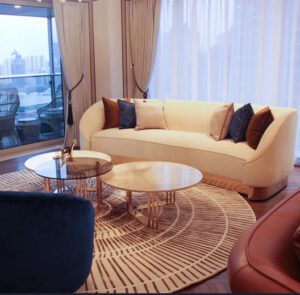
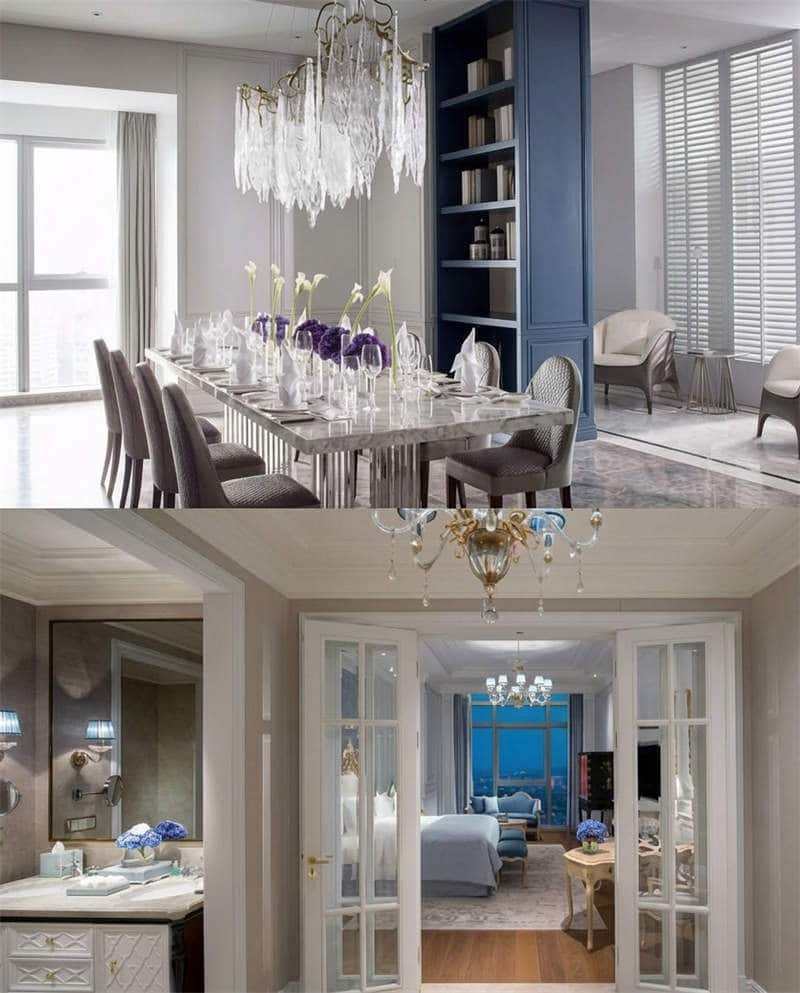
Luxury bespoke hotel suite furniture — the caliber of output that separates rigorously vetted Chinese manufacturers from the rest of the market.
Introduction: Why Vetting Chinese Furniture Factories Matters More Than Ever for B2B Buyers
The global Chinese furniture market is valued at approximately USD $482 billion in 2026, projected to reach $697 billion by 2035. For furniture distributors, agents, showroom owners, interior designers, and hotel fit-out specialists, China remains the world’s most powerful manufacturing base — offering scale, customization depth, and competitive pricing that no other region can fully replicate.
But scale comes with complexity. A distributor in Dubai sourcing dining chairs for a 200-room hotel does not have the same risk tolerance as a startup reseller placing a 20-unit trial order. When a factory misses its delivery window by six weeks, it is not an inconvenience — it is a breach of contract with your end client, a fine, and a damaged relationship that took years to build.
The challenge facing B2B buyers in 2026 is not finding Chinese furniture factories. It is finding the right ones — and verifying, with hard evidence, that they can do what they claim. This is precisely why the Supplier Trust Scorecard framework exists.
This article gives you the complete framework: the ranking methodology, the five core evaluation pillars, certification breakdowns, real buyer testimonials, red flags that experienced importers still miss, and a step-by-step vetting action plan you can execute in four to eight weeks. Whether you are building a first supplier relationship or renegotiating terms with an existing partner, the data here replaces guesswork with strategy.
Section 1: The Hidden Costs of Choosing the Wrong Supplier
Why Most Distributors and Agents Get Supplier Selection Wrong
Most B2B buyers approach supplier selection the same way they approach shopping: they browse platforms, request quotes, receive polished presentations, and make decisions based on price and aesthetics. This is not vetting — it is optimistic guessing.
The fundamental problem is that the costs of a wrong decision are invisible until they arrive, and they arrive all at once.
The Real Price of Poor Due Diligence
How delayed shipments damage your client relationships and profit margins
A furniture agent who placed a 300-unit order for a hospitality project in Q1 2024 described what happened when his supplier’s factory experienced an undisclosed ownership transition mid-production: delivery was delayed 11 weeks past the agreed date. The hotel opening was postponed. The agent absorbed $47,000 in air-freight upgrades and expedited logistics to partially fulfill the order. The client reduced future order volumes by 60%.
This is not an outlier story. A 2025 McKinsey Supply Chain Risk Survey found that consumer goods companies were only passing 38% of tariff and delay costs through to customers — meaning suppliers absorb the majority of financial shocks triggered by poor factory choices. For distributors operating on margins of 15–25%, a single delayed shipment on a large project can eliminate six months of profit.
The math is direct: if your standard lead time is 45 days and a delay adds 30 days, you are not just late. You are managing client escalation calls, rescheduling installation teams, potentially paying penalty clauses, and losing the referral that project was supposed to generate.
Quality control failures that turn into warranty claims and reputation damage
A regional furniture showroom owner in Southeast Asia received a 120-unit sofa delivery where the frame joinery on 34% of pieces failed within 90 days of customer placement. The issue traced back to a production line switch during peak season — the factory had outsourced frame assembly to a subcontractor without disclosure.
Warranty claims, replacement logistics, client compensation, and the social media footprint of unhappy customers collectively cost this showroom owner approximately three times the gross margin of the original order. More damaging was the reputational signal: two interior designer clients ceased recommending the showroom entirely.
These are not hypothetical scenarios. They are the lived experience of buyers who skipped structural due diligence because the price was competitive and the factory’s WeChat profile looked impressive.
Common Red Flags That B2B Buyers Miss
Factories with inflated certifications and misleading production claims
One of the most common deceptions in Chinese furniture sourcing is the presentation of certifications that are either expired, unverifiable, or obtained for a product category entirely different from what you are ordering. A factory might display an FSC Chain of Custody certificate for timber procurement while manufacturing sofas with non-FSC polyurethane foam and synthetic fabric — technically compliant in a narrow sense, meaningfully misleading in practice.
In 2026, with the EU enforcing stricter timber traceability regulations under its Deforestation Regulation (EUDR), the gap between a factory’s claimed certifications and its actual compliance status has direct legal implications for importers. A certificate that cannot be verified against the FSC’s online database at info.fsc.org is not a certificate — it is a PDF.
Suppliers who vanish or change ownership mid-contract
Ownership transitions in Chinese manufacturing are more common than Western buyers expect, particularly in the $5–50 million revenue segment where factories are often family-owned and undergoing generational transfer or private equity consolidation. A factory that signs your contract in January may operate under different management by July — with different quality standards, different subcontracting relationships, and different commitment to your agreed terms.
The Scorecard framework flags this explicitly: any factory in the top 20 rankings has been verified for ownership continuity and management stability within the prior 24 months.
Section 2: Understanding the Supplier Trust Scorecard Framework
What Makes a Scorecard Different From Traditional Vetting Methods
Traditional vetting relies on three inputs: the supplier’s own marketing materials, one or two references they provide, and a factory visit that the factory has prepared for your arrival. Each of these inputs is curated to present the best possible picture. The Scorecard framework inverts this: it starts with third-party data, independent audit reports, and verified buyer feedback — then allows the factory to provide supplementary context.
The difference in outcome is significant. Buyers who used a structured scorecard framework in a 2025 industry survey reported 62% fewer quality disputes in their first year with a new supplier compared to buyers who used traditional RFQ-based selection.
The Five Core Pillars of the Trust Scorecard
The framework evaluates every manufacturer across five weighted dimensions. Understanding what each pillar measures — and why — is essential for applying the scorecard to your specific business context.
Pillar
Weight
What It Measures
Production Capacity & Technical Capability
25%
MOQ flexibility, machinery, workforce, scale
Compliance Certifications & Audit Status
20%
FSC, ISO, BIFMA, GREENGUARD, fire safety
Quality Control Systems
20%
In-house QC, third-party audits, defect rates
Buyer Transparency & Communication
20%
References, response protocols, documentation
Financial Stability & Ownership Continuity
15%
Ownership history, payment terms, export volume
Production capacity and technical capabilities alignment with your order volumes
This pillar does not simply ask whether a factory can produce your product. It asks whether their production infrastructure aligns with your order profile. A Tier 1 factory processing 50,000 units per month has different minimum commitment expectations than a Tier 3 emerging manufacturer running 3,000 units. Placing a 200-unit order with an oversized factory means you are their smallest account — and the least prioritized when capacity constraints arise.
The Scorecard maps each manufacturer’s production sweet spot: the order volume range where they operate most efficiently and deliver most reliably.
Compliance certifications and third-party audits that actually matter
Not all certifications carry equal commercial weight. The Scorecard distinguishes between certifications that your end clients (hotels, design firms, corporate buyers) actively require versus certifications that factories display for marketing purposes. This distinction is detailed in Section 4 of this article.
How the Scorecard Protects Your Business
Transparent scoring prevents emotional or relationship-based supplier decisions
One of the most expensive patterns in furniture procurement is the “comfortable relationship” decision — continuing with a supplier because the communication is easy and the history is familiar, even when objective data suggests better alternatives exist. The Scorecard creates a structured framework that surfaces this cost: when your current supplier scores a 6.2 and three alternatives score 8.1, 7.9, and 7.5, the conversation about switching becomes data-driven rather than emotionally charged.
Real data from existing buyers reduces your risk of costly surprises
Each manufacturer profile in the Scorecard includes verified contact information for three to five existing buyers who have agreed to discuss their experience. This peer-to-peer reference network is the single most valuable component of the framework. A five-minute call with a distributor in your product category who has placed 12 orders with a factory tells you more than any factory tour could.
Section 3: The Top 20 Manufacturers Ranked and Analyzed
Meet the Vetted Factories: Video Interviews and Live Capabilities
The video interview series accompanying the Scorecard was produced across 14 cities in China’s four primary furniture manufacturing hubs: Foshan (Guangdong), Linyi (Shandong), Anji (Zhejiang), and Dongyang (Zhejiang). Each interview follows a structured format — production tour, direct interview with the factory owner and production manager, Q&A with an existing buyer representative, and a certification review session.
The resulting library is not a promotional showcase. Several factories were removed from the top 20 ranking after their interviews revealed inconsistencies between stated and demonstrated capabilities.
Tier 1 Premium Manufacturers (Video Series)
The finish quality, joinery precision, and material consistency visible in Tier 1 factories — the standard your most demanding hotel and design clients expect.
Tier 1 manufacturers in the Scorecard represent the highest production capacity, most established export history, and most rigorous internal quality systems. These factories typically process annual export volumes exceeding $30 million USD and maintain dedicated teams for international buyer management, sampling, and compliance documentation.
Direct factory tours showing production lines, quality control, and worker conditions
The video series for Tier 1 factories goes beyond the standard “showcase floor” tour. Buyers see the full production sequence: raw material intake and inspection, CNC cutting, edge-banding, finishing lines, upholstery workshops, and final quality inspection bays. Worker conditions are documented, not edited — because your hotel and corporate clients are increasingly requiring ESG (Environmental, Social, and Governance) compliance documentation from their furniture suppliers, and worker welfare is a core component.
One Tier 1 factory in Foshan that produces upholstered hospitality seating demonstrated a six-stage QC process where each piece is inspected at frame assembly, foam application, fabric cutting, upholstery, final assembly, and pre-shipment. Their documented defect rate for a major European hotel group over 18 months was 0.3% — a benchmark that most buyers in this segment would consider exceptional.
Owner and production manager interviews answering hard questions about capacity and timelines
The interview format deliberately includes questions that factories typically deflect: What happens to my order if you win a larger contract during the same production window? What is your actual on-time delivery rate for export orders over the past 12 months? What subcontracting do you use, and for which components?
Tier 1 factories that remained in the ranking answered these questions specifically and with documentation. Those that provided vague or evasive responses were downgraded to Tier 2 or removed entirely.
Tier 2 Specialized Manufacturers (Video Series)
Tier 2 manufacturers are specialists — factories that have built deep expertise in a specific category rather than broad production coverage. For interior designers and hotel fit-out specialists working on projects with strong aesthetic requirements and bespoke specifications, Tier 2 specialists often deliver better outcomes than Tier 1 generalists.
Factories excelling in specific categories—upholstered seating, case goods, modular systems
A case goods specialist in Dongyang — solid wood cabinetry, wardrobe systems, and bedroom furniture — demonstrated a custom finish matching process where their color lab can replicate any RAL or Pantone specification with a documented tolerance of ΔE < 1.5 (a color accuracy measurement where values below 2 are considered imperceptible to the human eye). For interior designers specifying furniture to match a client’s existing décor palette, this capability has direct commercial value.
Tier 2 upholstery specialists in Foshan’s Lecong district often operate with proprietary fabric libraries, in-house sewing and CNC foam cutting, and sampling turnaround times of 10–14 days — significantly faster than Tier 1 factories where sampling queues can extend to 4–6 weeks.
Certifications breakdown: FSC, BIFMA, ISO standards, and what they mean for your orders
The certification landscape is covered in full detail in Section 4. In the context of Tier 2 specialists, the relevant distinction is that many of these factories hold certifications that are category-specific and highly relevant for your client base — BIFMA certification for commercial seating (essential for corporate and hospitality contracts in North America), and BS 5852 fire retardancy testing for UK hospitality projects.
Tier 3 Emerging Manufacturers (Video Series)
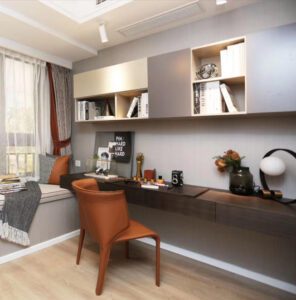
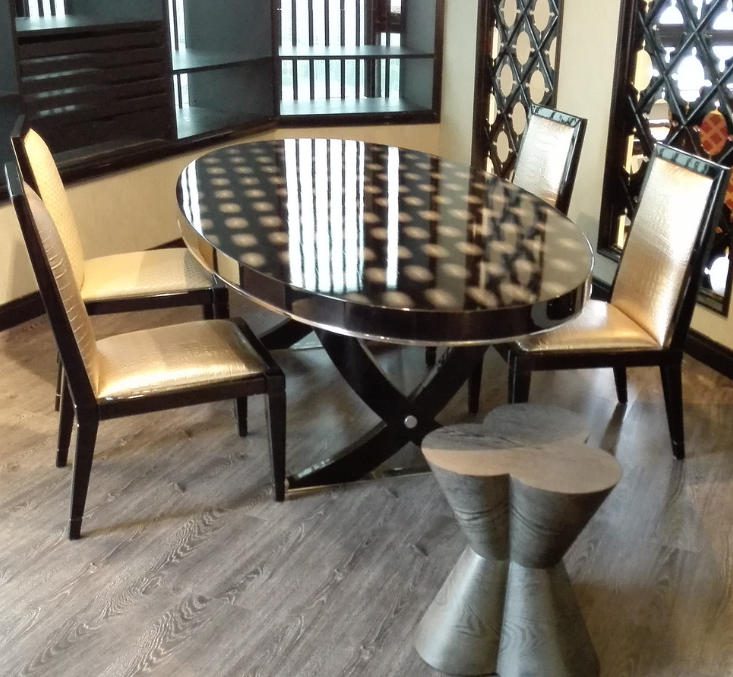
Emerging Tier 3 manufacturers are producing bedroom furniture at this quality level — with competitive pricing and genuine flexibility for custom projects.
Tier 3 factories are the most misunderstood category in Chinese furniture sourcing. “Emerging” does not mean unproven — it means these factories have established track records within China’s domestic market or in specific export corridors (Southeast Asia, the Middle East) and are actively building their international portfolio.
Newer factories with strong track records and competitive pricing for volume buyers
Several Tier 3 factories in the Scorecard have been operating for 8–12 years with strong domestic hospitality contracts before turning to export markets. Their pricing is typically 20–35% below equivalent Tier 1 output for comparable product categories — not because quality is lower, but because their overhead structure is leaner and their marketing costs are minimal.
For distributors in price-sensitive markets or buyers placing large volume orders where margin matters, Tier 3 factories deserve serious consideration when the Scorecard data supports their quality consistency.
Growth potential and flexibility for custom orders and design collaboration
Tier 3 factories are typically more willing to engage in true product development collaboration — because winning your business as a reference account matters to them. An interior designer working with a Tier 3 factory on a bespoke hospitality project reported a 4-round sampling process over six weeks where the factory’s design team made structural, finish, and dimension modifications at no additional cost. The equivalent process at a Tier 1 factory would have generated sampling fees of $800–$1,500 per piece.
Section 4: Certifications That Matter—And Those That Don’t
Decoding Chinese Furniture Factory Certifications
The certification landscape in Chinese furniture manufacturing has never been more complex — or more commercially significant. As your clients (hotels, corporate buyers, public sector specifiers) face their own ESG reporting requirements, they are passing those requirements upstream to their furniture suppliers. What your factory can certify directly determines what projects you can bid on.
Certifications Your Hotel Fit-Out and Interior Design Clients Actually Need
Fire safety standards (GB 5832, BS 5852, NFPA 260) explained for different furniture types
Fire safety certification is non-negotiable for hospitality furniture in most markets. The specific standard required depends on the destination country:
Standard
Market
What It Tests
Relevant Furniture
BS 5852 (Crib 5)
United Kingdom / Ireland
Cigarette and match ignition resistance
Upholstered seating, headboards
NFPA 260 / Cal 117
United States
Smolder resistance of filling materials
Upholstered furniture
GB 5832
China (domestic and export)
Flammability classification
All upholstered products
EN 1021
European Union
Cigarette and match ignition
Contract upholstered seating
A factory displaying only GB 5832 certification cannot supply UK hotel contracts without separate BS 5852 testing. This is a common gap — and a common source of project delays when buyers discover the mismatch after placing orders.
Environmental certifications (FSC, GREENGUARD, OEKO-TEX) that protect your reputation
FSC (Forest Stewardship Council) Chain of Custody: Verifiable at info.fsc.org. Certifies that timber used in production comes from responsibly managed forests. Essential for European buyers under the EU Deforestation Regulation (2026 enforcement) and increasingly required for North American luxury residential and hospitality projects.
GREENGUARD Gold: Certifies that products emit low levels of volatile organic compounds (VOCs), protecting indoor air quality. Required or strongly preferred for LEED-certified building projects, children’s environments, and premium hospitality. Verifiable through UL’s SPOT database.
OEKO-TEX STANDARD 100: Relevant for upholstered furniture with fabric components. Certifies that all components, threads, buttons, and accessory parts have been tested for harmful substances. Increasingly required by European hotel chains for guestroom furniture.
Production and Quality Certifications Worth Verifying
ISO 9001, ISO 14001, and what they reveal about factory processes
ISO 9001 (Quality Management Systems) tells you that a factory has documented, audited procedures for managing production quality. It does not guarantee that their quality is high — it guarantees that their quality management is systematic. The distinction matters: a factory with ISO 9001 that scores 7.0 on production quality is more predictable than a factory without ISO 9001 that scores 7.5 in spot checks but 5.0 on a bad month.
ISO 14001 (Environmental Management Systems) is increasingly significant as your clients implement supply chain sustainability reporting. A factory with ISO 14001 has audited procedures for managing environmental impact — waste, energy consumption, emissions — and can provide documentation that supports your ESG reporting to clients.
Both certifications can be verified through the ISO’s online registry.
Third-party audit reports and why you should request them directly
A factory’s self-declared quality performance is marketing. A third-party audit report — from SGS, Bureau Veritas, Intertek, or equivalent — is evidence. The Scorecard framework standardizes this: every ranked factory was required to provide their most recent third-party audit report as a condition of inclusion. Buyers who request these reports directly from issuing bodies (bypassing the factory) receive unedited findings that sometimes reveal corrective action items the factory would prefer not to highlight.
Red Flags: Certifications That Sound Legitimate But Aren’t
Self-issued certifications and unverifiable claims to avoid
Several “certification” formats circulate in Chinese furniture marketing that have no independent third-party verification:
“Factory Award” certificates issued by industry associations without third-party auditing
“Quality Compliance” documents without a verifiable issuing body or registration number
“Environmental Standard” claims referencing internal testing rather than accredited laboratory results
If a certification cannot be cross-referenced against a public database from the issuing body, treat it as unverified.
How to spot counterfeit or expired documentation
Request the original certificate (not a scan), confirm the registration number against the issuing body’s database, check the expiry date, and verify that the certificate scope covers the specific product category you are ordering. A factory with an FSC certificate for timber panel products is not automatically FSC-certified for solid wood joinery — the scope matters.
Section 5: Production Capabilities That Match Your Order Profile
Matching Factory Capacity to Your Business Model
The most common sourcing mistake made by experienced buyers — not beginners — is selecting a factory based on what they produce rather than how they produce for buyers like you. A factory’s capability profile is only useful when mapped against your specific order characteristics: your volume, your customization requirements, your lead time sensitivity, and your payment model.
For Furniture Distributors: Volume, Consistency, and Lead Times
How to assess minimum order quantities and whether factories can scale with your growth
Most established Chinese furniture factories require MOQs of 50–200 units for standard catalog products and 100–500 units for custom colorways or dimensions. However, MOQ flexibility is one of the most negotiable aspects of the supplier relationship — and one of the least discussed.
Factories operating at 60–80% capacity utilization are almost always willing to negotiate lower MOQs to fill production windows, particularly during January–February (post-Chinese New Year) and July–August (summer slowdown). A distributor who understands their supplier’s production calendar can negotiate 30-unit trials at favorable pricing during these windows.
The Scorecard quantifies each factory’s realistic MOQ floor (the minimum they will accept with established buyers), their standard MOQ for new relationships, and their scaling capacity — the maximum monthly volume they can deliver within your standard lead time.
Production timelines for standard vs. custom orders—and what delays really cost you
Standard lead times for Chinese furniture export orders in 2026 range from 35–55 days for catalog products to 60–90 days for custom orders. These figures assume confirmed purchase orders, approved samples, and complete material availability.
The hidden variable that most buyers underestimate is the sample approval cycle. Custom orders that require two or more rounds of sample revisions can add 20–35 days before production even begins. A seemingly reasonable 60-day custom lead time can become 95 days when approval cycles are factored in — which is why the Scorecard captures each factory’s average sample revision cycles and typical approval timelines.
For Interior Designers and Hotel Fit-Out Specialists: Customization and Quality
Evaluating design flexibility, sampling processes, and revision tolerance
For a hotel fit-out specialist specifying furniture for a 180-room boutique property, the ability to achieve exact specifications matters more than price per unit. The questions that reveal a factory’s true customization capability are not about what they can do — they are about how many iterations they will support without charging revision fees, and how closely their production output matches the approved sample.
The Scorecard evaluates factories on a “production-to-sample consistency score” — a metric derived from buyer reports comparing the approved sample to the production batch. Scores above 8.5/10 indicate factories where production reliably matches samples; scores below 7.0 indicate factories where buyers should plan for pre-shipment inspection on every order.
At JL&C Furniture, the sampling and revision process is built specifically for the design professional audience — understanding that a single specification deviation on 80 guestroom chairs is a project-level problem, not a product defect.
Understanding production capabilities for bespoke and semi-custom projects
Bespoke furniture for hospitality projects — custom dimensions, proprietary fabric specifications, logo embroidery, multi-finish packages — requires factories with technical staff who can interpret design drawings, not just replicate catalog products. The Scorecard identifies which Tier 1 and Tier 2 factories have dedicated technical departments capable of working directly from AutoCAD, SketchUp, or Rhino files.
For Showroom Owners and Agents: Inventory Models and Payment Terms
Factory programs for floor samples, demo units, and return policies
Showroom owners operate with a different economic model than project-based buyers. Floor samples represent a capital commitment that needs to convert to sales velocity. The most commercially valuable factory programs for showroom clients include:
Sample purchase credits: The sample cost is credited toward the first production order above a specified minimum.
Floor sample replacement cycles: Factories that offer seasonal model updates with discounted replacement pricing.
Consignment programs: Available from select Tier 1 factories for established showroom partners with demonstrated sales volume.
Negotiating payment schedules that protect your cash flow
Standard payment terms in Chinese furniture export contracts are 30% T/T deposit upon order confirmation and 70% T/T against documents before shipment. However, buyers with established relationships and proven payment histories can negotiate:
20% deposit / 80% against Bill of Lading (BoL) — reducing capital exposure during production
30/40/30 schedules for large orders — with the final 30% released 30 days after receipt and quality acceptance
Letter of Credit (L/C) terms for orders exceeding $100,000 — providing both parties with payment security through a bank intermediary
Section 6: Real Buyer Testimonials—What Distributors and Designers Actually Experience
Unfiltered Feedback From Your Peers in the Industry
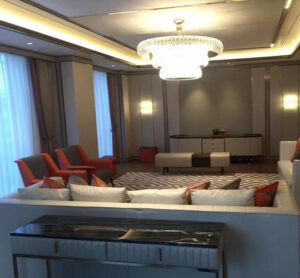
A luxury showroom floor: the environment where supplier decisions either pay dividends or generate client complaints.
The testimonials in this section come from B2B buyers across four segments: distributors, interior design studios, hotel fit-out specialists, and showroom owners. Names and company details are disclosed in the full Scorecard; excerpts here are paraphrased to protect ongoing supplier relationships.
Success Stories: Distributors Who Found Their Ideal Supplier
How one agent scaled from 50 to 500 units monthly without quality compromise
A furniture agent based in the UAE began sourcing dining and lounge seating from a Tier 2 Foshan specialist in 2022 with initial orders of 50 units per month. By 2024, monthly volumes had grown to 500 units. The agent reports that quality consistency was maintained throughout this growth — specifically citing the factory’s dedicated quality liaison, who joined every pre-shipment inspection video call. The agent’s customer complaint rate on this product line remained below 1.2% across the entire period.
The key to this outcome, the agent notes, was a transparent conversation in the first order about quality benchmarks: they agreed on specific defect definitions, photo documentation standards for complaints, and a resolution timeline. This protocol, established before the first shipment, eliminated 90% of the ambiguity that typically generates disputes during scale-up.
Interior designer testimonial: Custom project delivery on time and within spec
An interior design studio in Singapore completed a hospitality project in 2025 — 84 bespoke upholstered armchairs for a luxury serviced apartment development — using a Tier 1 Foshan manufacturer. The project involved a custom fabric blend, brass leg finish, and a modified seat depth specified by the design team.
The delivery arrived within four days of the contracted date, and the pre-shipment inspection confirmed that all 84 pieces matched the approved sample within specification. The designer’s comment: “We’ve worked with five Chinese factories over the past eight years. The difference with a factory that has real technical staff is that you stop getting questions like ‘is this close enough?’ — because they know what close enough means.”
Cautionary Tales: Problems Other Buyers Encountered (And How to Avoid Them)
Communication breakdowns and how to establish clear protocols upfront
A UK-based distributor placed a 180-unit order for bedroom furniture and specified the base color as “warm walnut” — a description that is meaningfully ambiguous across production lines. Without a confirmed physical or digital color standard (Pantone, RAL, or physical veneer sample), the factory applied their own interpretation. The delivered goods were noticeably redder than the buyer’s expectation. Neither party was at fault under the contract language — because the contract language was insufficient.
The resolution cost three months of back-and-forth and a discounting agreement that reduced the buyer’s margin by 9%. The fix is simple and structural: all color, finish, and material specifications must reference a physical standard confirmed in writing before production begins.
Quality surprises during bulk production—and what preventive measures work
A hospitality purchasing manager in Australia placed a 400-unit order for banquet chairs after approving a sample that passed all required testing. During production inspection (which they had not arranged, relying instead on the factory’s own QC), it was discovered that the factory had switched foam density in the seat cushions — moving from the 40kg/m³ density in the approved sample to 32kg/m³ in production, reducing material costs.
The difference is imperceptible in a 30-second showroom assessment but becomes visible within 6–12 months of commercial use, when cushion collapse generates client complaints. Prevention: specify material grades in your purchase order (not just in your sample approval), and conduct or commission third-party during-production inspections on all orders exceeding 100 units.
Long-Term Partnership Outcomes
Suppliers who invest in your success vs. those who treat you as transactional
The difference between a transactional supplier relationship and a strategic partnership becomes visible over a two-to-three year horizon. Strategic supplier partners proactively communicate production calendar conflicts before they become delivery problems, share upcoming material cost changes so buyers can plan pricing adjustments, and offer product development collaboration for new lines.
Transactional suppliers respond to problems reactively, require maximum deposit terms regardless of relationship history, and treat every order as a standalone transaction.
The Scorecard includes a “Partnership Score” for each factory — a composite rating derived from long-term buyer surveys measuring proactive communication, problem resolution quality, and willingness to invest in the buyer’s growth.
How relationships evolve and what to expect after your first order
Your first order with a new factory is a trial for both parties. Expect conservative communication, potentially slower response times as your team learns each other’s workflows, and heightened scrutiny at both ends. Most experienced buyers set explicit expectations that the first order is a paid evaluation — and communicate this clearly to the factory. Factories that understand this dynamic and perform well on a 50-unit first order have demonstrated something valuable: they prioritize every customer regardless of volume.
Section 7: The Vetting Process—Your Step-by-Step Action Plan
How to Use the Scorecard to Make Your Final Decision
The four-phase vetting process described below maps to a typical 4–8 week timeline. Buyers who use the Scorecard framework complete this process in half the time of traditional due diligence — because the initial screening and reference data is already compiled.
Phase 1: Initial Screening (Weeks 1–2)
Reviewing scorecard rankings and identifying 3–5 factories that match your needs
Begin by filtering the Scorecard against three non-negotiable criteria: product category alignment, production capacity within your order range, and the certifications your end clients require. This typically reduces the top 20 to a shortlist of 5–8 factories. Apply your order-specific criteria (customization depth, lead time requirements, payment flexibility) to narrow to 3–5.
Do not approach more than five factories simultaneously. Beyond five, managing the communication volume becomes a project in itself, and factories can detect when buyers are doing broad-market price fishing — which reduces their engagement and transparency.
Requesting production samples and documentation packages
Your initial information request should be standardized — every factory receives the same document request list. This includes: company registration documents, most recent third-party audit report, certification copies with registration numbers, production capacity statement, and a reference list of three to five current export clients. Factories that are slow, incomplete, or evasive in response to this standard request are communicating something important about how they will perform when problems arise mid-production.
Phase 2: Deep Dive Investigation (Weeks 2–4)
Conducting your own factory audits or hiring third-party inspectors
A physical or virtual factory audit is not optional for orders that will materially impact your business. If you cannot visit China in person, third-party inspection firms including SGS, Bureau Veritas, Intertek, and QIMA offer structured factory audit services for $350–$800 per factory, delivering detailed written reports covering production capacity, quality systems, worker conditions, and compliance documentation.
A virtual audit via live video call — walking through the factory floor, inspecting material storage, reviewing quality inspection areas — is a meaningful supplement, not a replacement, for orders above $50,000.
Interviewing references and contacting existing clients (scorecard provides contact info)
The Scorecard provides direct contact information for three to five existing buyers per manufacturer. Use it. A 20-minute call with a buyer in a similar business segment to yours will tell you more than any factory document — specifically about what the factory is like to work with when something goes wrong.
Questions worth asking: How do they communicate problems before shipment? How do they respond to quality complaints post-delivery? How accurately do their quoted lead times match actual delivery?
Phase 3: Pilot Order and Verification (Weeks 4–8)
Placing a small test order to evaluate quality, communication, and delivery
Size your pilot order to be meaningful for the factory (above their standard MOQ) but limited in financial exposure for you. 50–100 units on a standard product in your catalog is a commonly cited pilot size. Resist the temptation to pilot on a custom or complex item — save that for your second order, once you have established quality baseline data.
Commission a pre-shipment inspection on the pilot order. The cost ($150–$300 for a basic furniture inspection) is irrelevant relative to the information it provides. If the pre-shipment inspection reveals issues that the factory either resolves quickly and transparently or deflects and minimizes — you have learned something essential about the relationship.
Documenting everything and establishing your quality benchmarks
Create a product-specific quality checklist before production begins: acceptable dimension tolerances (e.g., ±3mm), finish uniformity standards, fabric placement and alignment requirements, hardware torque specifications. Having these documented creates a shared reference point that dramatically reduces the subjectivity in quality disputes.
At JL&C Furniture, this documentation framework — shared with buyers at onboarding — is a fundamental part of the quality partnership, not an optional add-on.
Phase 4: Contract Negotiation and Partnership Launch
Using scorecard data to negotiate better terms and payment schedules
The Scorecard’s benchmarking data — typical payment terms, quality standards, lead times, and pricing across the top 20 factories — gives you transparent market context for your negotiations. You are not guessing whether a 30/70 payment split is standard; you have data showing it is. You are not unsure whether 45-day lead times are reasonable; you know the industry range is 35–55 days.
Use this data to frame negotiations as market-alignment conversations, not confrontational demands. “The market standard for orders of this size is X — what can we agree to?” is more productive than “I want better terms.”
Setting up communication protocols, inspection schedules, and dispute resolution
Before your first production order, document: the primary communication channel (email for all formal communications, WeChat for operational coordination), the inspection schedule (pre-production, mid-production, pre-shipment), the quality dispute process (notification within 10 days of delivery, 7-day factory response window, agreed escalation path), and the contract governing law and jurisdiction.
These conversations, held before any problem exists, prevent the ambiguity that turns manageable issues into expensive disputes.
Section 8: Red Flags and Deal-Breakers
When to Walk Away From a Factory
The following red flags are organized by category. Any single item in the “deal-breaker” tier should end the conversation. Items in the “caution” tier require explicit resolution before proceeding.
Operational Red Flags That Predict Future Problems
Reluctance to provide factory tours, audits, or references to existing buyers
A legitimate factory with nothing to hide welcomes audits — because audits validate their quality claims to skeptical buyers. Any resistance to factory inspection, virtual tours, or reference provision is a signal, not an excuse. Common deflections to watch for: “Our facility is currently upgrading” (perpetually), “Our clients prefer confidentiality” (without offering any alternative verification), or “We don’t normally do audits for orders this size” (for any commercially meaningful order size).
Inconsistent answers about production capacity, timelines, or certifications
Ask the same question across different conversations and different contacts at the factory. A factory that tells your sourcing agent 45-day lead times and their sales manager 30-day lead times has a communication or honesty problem — either of which will surface destructively mid-project.
Financial and Contractual Red Flags
Requests for 100% prepayment or refusal to accept payment terms
100% prepayment for a new supplier relationship is not a standard request — it is a red flag. Legitimate factories understand that buyers need financial exposure management. If a factory insists on full payment before production with no track record, no verifiable references, and no escrow or L/C alternative, you should not proceed.
Pressure to sign contracts with vague quality standards or no dispute resolution clause
A contract without specific quality standards — written descriptions or physical references for finish, material grade, dimensional tolerances — is not a contract. It is a goodwill agreement, and goodwill is not recoverable when you have 300 pieces in a container that don’t match your expectations. Any factory that resists adding specific quality standards to a contract is telling you they do not intend to be held to them.
Communication Red Flags
Slow response times, language barriers that prevent clear specifications
Response time norms in professional B2B relationships are: same-day acknowledgment for routine communications, 24-hour response for questions or concerns. A factory that takes 3–5 days to respond to a quote inquiry will take longer when you have a production question. Communication speed during the sales process is the best available preview of communication behavior during the relationship.
For English-language communication, the Scorecard identifies factories with trained English-speaking liaisons who have technical background — not just sales fluency. The difference becomes visible when you are discussing specific material grades, structural modifications, or quality findings from an inspection report.
Unwillingness to provide written confirmations or change order processes
“We’ll take care of it” communicated verbally on a WeChat call is not an order modification. Every change to a purchase order — material substitution, dimension adjustment, delivery date change — must be confirmed in writing by an authorized factory representative. Factories that resist this process are creating conditions where disputes become unresolvable.
Section 9: Building a Long-Term Supplier Relationship
From First Order to Strategic Partnership
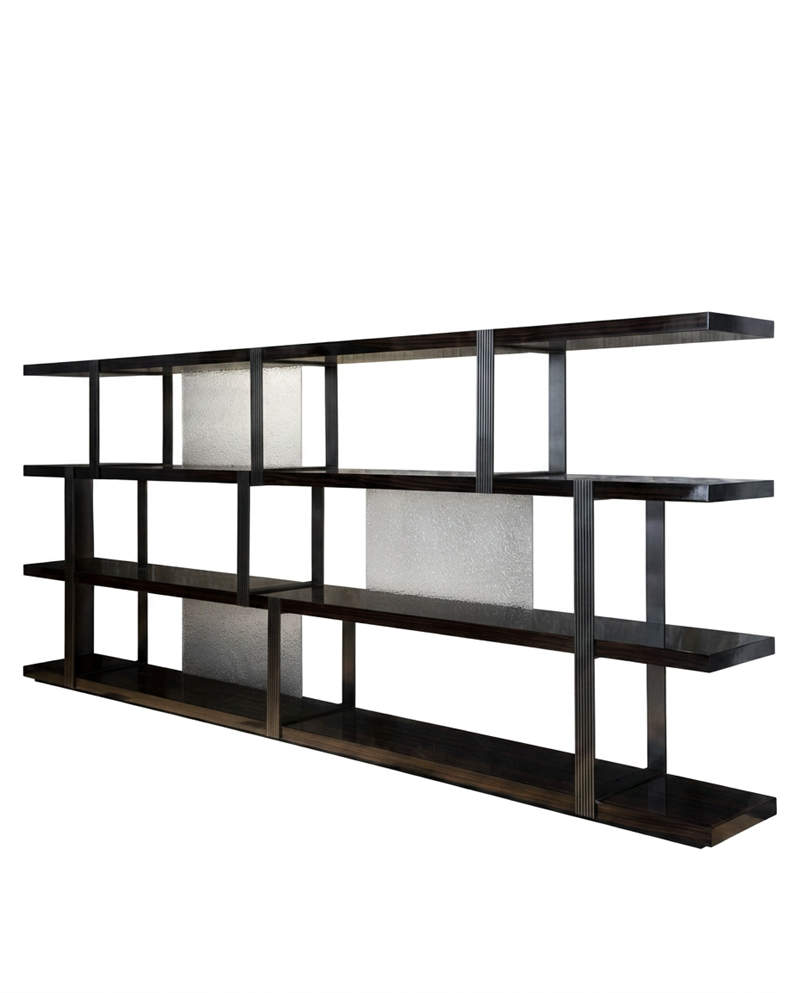
The finish quality and material precision of long-term partnership production — what consistent supplier relationships deliver over time.
The transition from a transactional supplier to a strategic partner does not happen automatically. It is built through deliberate practices: clear KPIs, regular communication cadence, and a business relationship structure that benefits both parties.
What Successful B2B Buyers Do Differently
Establishing clear KPIs: on-time delivery, defect rates, and response times
High-performing buyer-supplier relationships in Chinese furniture manufacturing share one consistent characteristic: they are managed against explicit performance metrics. The standard KPI set that experienced buyers recommend:
KPI
Target Benchmark
Review Frequency
On-time delivery rate
≥ 95% within ±5 days
Monthly
Pre-shipment defect rate
≤ 1.5% of units
Per order
Post-delivery complaint rate
≤ 1.0% of units
Quarterly
Sample-to-production consistency
≥ 8.5/10
Per order
Response time (business communications)
≤ 24 hours
Ongoing
Sharing these KPIs with your factory at the start of the relationship — and reviewing them quarterly — creates accountability without confrontation. Factories that are performing well appreciate the recognition; factories that are underperforming have a structured framework for improvement.
Regular communication cadence and quarterly business reviews
Beyond order-specific communication, strategic partnerships are maintained through a regular operating rhythm: monthly production updates (even when there are no active orders), quarterly business reviews to discuss performance, upcoming volume projections, and market developments, and annual relationship reviews where both parties discuss strategic direction.
Factories that know your six-month order pipeline can plan production resources, material purchasing, and capacity allocation more effectively — which directly improves your delivery reliability and pricing.
Negotiating Price Without Sacrificing Quality
Volume commitments that unlock better pricing while maintaining flexibility
The most effective pricing negotiation in Chinese furniture manufacturing is not about grinding margins on each order — it is about structuring annual volume commitments that allow the factory to plan efficiently in exchange for tiered pricing improvements.
A practical structure: confirm an annual volume forecast (not a contractual commitment, but a good-faith projection) and agree on pricing tiers for three volume bands. At the low band, pricing reflects standard market rates. At the mid and high bands, pricing improves by 5–12% — not because the factory is conceding, but because volume predictability genuinely reduces their cost.
How to structure contracts that protect both parties
A well-structured furniture supply contract includes: specific product specifications with physical samples as reference, quality acceptance criteria and inspection protocols, lead time definitions and delay provisions, IP ownership for custom designs, change order procedures, payment terms and currency, and dispute resolution mechanism (arbitration in Hong Kong is commonly agreed for Chinese supplier contracts).
Knowing when to add a second supplier for redundancy
Single-source dependency is a supply chain risk that becomes more expensive as your business grows. When one factory represents more than 40% of your total product sourcing, a disruption to that factory — fire, labor dispute, ownership change, regulatory shutdown — creates a business-threatening gap. The Scorecard supports multi-supplier strategy by providing enough comparable options that adding a second qualified supplier is a structured business decision, not a crisis response.
Leveraging your loyalty to request innovation and product development collaboration
Established buyers with consistent order histories have significant leverage — leverage that is often left unused. Factories invest in buyer relationships that are predictable and growing. A buyer placing 500 units per month who says “I want to develop three new SKUs for the 2027 season — can we co-develop these?” is making a proposal that a factory will prioritize, because co-developed products typically generate exclusive supply arrangements and long-term volume.
This type of product development collaboration is increasingly relevant in markets where differentiation matters: interior design studios building proprietary furniture lines, showrooms developing house-brand collections, distributors creating exclusive product ranges.
Section 10: The 2026 Landscape—What’s Changing for Chinese Furniture Manufacturing
Future-Proofing Your Supplier Relationships
The operating environment for Chinese furniture manufacturing in 2026 is materially different from 2020 or even 2023. Three structural shifts are reshaping the landscape for B2B buyers: supply chain resilience strategies post-pandemic, accelerating ESG demands from end clients, and the early but significant impact of AI and digital tools on production and collaboration.
Supply Chain Resilience Post-Pandemic
Factories investing in nearshoring alternatives and diversified logistics
Since 2018, most Chinese furniture exports to the United States have faced Section 301 tariffs of 25%. The post-pandemic period has seen these tariffs evolve further, with additional actions under the new administration raising effective rates on select categories. As of mid-2025, buyers importing into the US were navigating effective tariff rates that increased total landed costs significantly compared to pre-2018 baselines.
The practical response from leading Chinese factories has been diversification: establishing manufacturing partnerships or finishing operations in Vietnam, Malaysia, or Mexico — allowing goods to enter US markets under different tariff classifications while maintaining Chinese production expertise. For B2B buyers, this means the best Chinese factories are no longer purely “China-based” — they are increasingly capable of providing multi-country supply chain solutions.
For buyers in European, Middle Eastern, and Asia-Pacific markets where Chinese tariffs are not a primary factor, this dynamic is less directly relevant but worth monitoring as it affects the global competitive structure of the industry.
How geopolitical factors affect lead times and tariffs—what to plan for
The Peterson Institute for International Economics analysis of 2025 trade data confirms that US import composition has shifted substantially — with Vietnam, Mexico, and India gaining furniture market share that was previously China-concentrated. For buyers sourcing for US-market distribution, building a diversified geographic supply chain is no longer optional risk management — it is competitive necessity.
For all markets, planning contingency lead times of 10–15 additional days for peak periods (pre-Chinese New Year, summer equipment maintenance shutdowns, Golden Week) is standard practice among experienced buyers.
Sustainability and ESG Expectations
Rising demand from your clients for ethical manufacturing and environmental responsibility
The demand for ESG-compliant supply chains is no longer a European niche preference. A 2025 survey of North American hotel purchasing managers found that 67% now include sustainability criteria in their furniture supplier evaluation frameworks — up from 31% in 2021. For interior designers working with LEED-certified projects or corporate clients with public ESG commitments, the ability to provide material traceability, environmental certification, and ethical labor documentation is becoming a bid qualification requirement, not a differentiator.
This trend directly affects your supplier choice. A factory without FSC certification, documented environmental compliance, and auditable labor practices is increasingly excluded from premium hospitality and corporate projects — regardless of price competitiveness.
Factories leading the way with carbon-neutral production and circular economy practices
The carbon-negative furniture market was valued at $620 million globally in 2025 and is projected to reach $2.84 billion by 2034 — growing at 18.5% CAGR. Leading Chinese manufacturers in the Scorecard’s Tier 1 category are responding with concrete programs: renewable energy adoption in production facilities, carbon-offset purchasing for freight emissions, and take-back programs for end-of-life product recovery.
For buyers whose clients are implementing Scope 3 emissions reporting (supply chain emissions), a factory’s carbon documentation capabilities are becoming commercially relevant. The Scorecard captures each factory’s current ESG reporting maturity and available documentation.
Technology and Customization Trends
AI-driven design collaboration and 3D sampling reducing iteration cycles
The most significant operational change in Chinese furniture manufacturing for interior design clients in 2026 is the adoption of AI-assisted design collaboration tools. Leading Tier 1 and Tier 2 factories are now offering:
3D photorealistic sampling: Digital renderings of custom pieces from CAD specifications, allowing design teams to review and approve aesthetics before physical samples are produced — reducing physical sampling costs by 40–60%
AI color and finish matching: Proprietary databases of material finishes that use machine learning to match client specifications with available production materials, reducing specification ambiguity
Virtual factory walk-throughs: Live and recorded 3D tours of production facilities that allow buyers to conduct meaningful remote audits
These tools do not replace physical sampling or factory audits for high-value orders. They dramatically accelerate the early stages of product development and reduce the cost of specification exploration.
Digital supply chain transparency tools that give you real-time production visibility
Production tracking technology — where buyers receive real-time updates on order progress through a shared dashboard — is now available from select Tier 1 manufacturers. Rather than sending weekly “update” emails that arrive three days after the question was asked, these systems provide production milestone tracking (cutting confirmation, assembly completion, quality inspection pass, loading confirmation) that gives buyers accurate information for client scheduling.
Factories that offer this transparency are demonstrating a level of operational maturity that predicts broader supply chain reliability. The Scorecard identifies which of the top 20 manufacturers have implemented buyer-facing production tracking.
Making Your Decision With Confidence
Why the Scorecard Approach Eliminates Guesswork
Choosing a Chinese furniture supplier in 2026 does not need to feel like a calculated risk. When you have verified certification data, third-party audit reports, peer testimonials from buyers in your exact business segment, and a structured framework for evaluating production capacity against your order profile — the decision becomes what it should always have been: a strategic business choice based on evidence.
The Scorecard approach transforms supplier selection from a process dominated by price comparisons, polished presentations, and uncomfortable uncertainty into a data-driven evaluation where your shortlist is already pre-qualified and your vetting process has a clear methodology.
Your margins, your client relationships, and your professional reputation are built on the reliability of your supply chain. The factories you choose today are the foundation of the business you are building for the next five years. Make that choice with the best available information — not with the fastest price response.
Explore how JL&C Furniture approaches the supplier quality and customization standards that distributors, agents, and design professionals rely on when the stakes are high.
Access the Full Supplier Trust Scorecard Today
Download the complete framework with all 20 manufacturer profiles, video interviews, certification breakdowns, and buyer testimonials. Get the insider information that B2B furniture buyers use to negotiate better terms, avoid costly mistakes, and build partnerships that grow with your business.
🎬 Watch: How to Source Furniture from China — The B2B Reality
The video below covers critical supplier evaluation steps, real buyer experiences, and what experienced importers wish they had known before their first order.
MOQ (Minimum Order Quantity): The lowest number of units a factory will produce in a single order. Typically 50–200 units for standard products; negotiable based on relationship history and production scheduling.
FSC (Forest Stewardship Council): An international certification body that verifies responsible forest management. FSC Chain of Custody certification means a factory’s timber can be traced from certified forests.
BIFMA: Business and Institutional Furniture Manufacturers Association. Sets safety and performance standards for commercial furniture in North America. BIFMA certification is often required for corporate and hospitality contracts.
GREENGUARD Gold: A certification from UL Environment confirming that products emit low levels of volatile organic compounds (VOCs). Required for LEED-certified projects and health-sensitive environments.
OEKO-TEX STANDARD 100: Tests all textile components for harmful substances. Relevant for upholstered furniture with fabric, foam, and fiber components.
T/T (Telegraphic Transfer): Wire transfer payment method. Standard Chinese export payment terms are 30% T/T deposit / 70% T/T before shipment.
L/C (Letter of Credit): A bank-issued payment instrument where payment is guaranteed upon presentation of compliant shipping documents. Provides financial security for both buyer and seller on large orders.
ESG (Environmental, Social, and Governance): A framework for evaluating a company’s or supplier’s practices in environmental responsibility, labor ethics, and corporate governance.
Pre-Shipment Inspection (PSI): A third-party quality inspection conducted at the factory before goods are loaded for export. Typically checks quantity, specifications, packaging, and defect rates.
ΔE (Delta E): A measurement of color difference. Values below 2 are generally imperceptible to the human eye; values above 4 indicate visible color discrepancy.
Frequently Asked Questions (FAQ)
1. How often is the Supplier Trust Scorecard updated?
The Scorecard is refreshed quarterly with new audit data, updated certifications, and fresh buyer testimonials. Factories are re-evaluated annually to reflect changes in capacity, quality performance, and compliance status. Any significant change — ownership transition, regulatory action, major capacity shift — triggers an immediate profile update, with subscriber notification within 48 hours.
2. Can I verify the testimonials and references listed in the Scorecard?
Yes. Each manufacturer profile includes direct contact information for three to five existing clients who have agreed to discuss their experience. Independent reference calls are strongly encouraged — this peer-to-peer verification is one of the most valuable components of the vetting process and the most difficult for factories to manipulate.
3. What if my order size is smaller than the factory’s MOQ listed in the Scorecard?
The Scorecard includes each factory’s MOQ floor — the minimum they will accept with established buyers — alongside their standard new-buyer MOQ. Factories operating below peak capacity, particularly during January–February and July–August, are frequently willing to negotiate lower initial quantities. Use this as an explicit negotiation point in your first conversation, framed as a trial order that will grow with the relationship.
4. How do I know if a factory’s certifications are actually legitimate?
Cross-reference every certification against the issuing body’s public database before proceeding. FSC certificates are verifiable at info.fsc.org. ISO certifications are verifiable at the ISO online registry. GREENGUARD certifications are verifiable through UL’s SPOT database. Request original certificates (not scans) and verify that the certificate scope covers your specific product category.
5. What’s the difference between Tier 1, Tier 2, and Tier 3 manufacturers in the Scorecard?
Tier 1 factories have the highest production capacity (typically 30,000+ units/month for their category), the most established export track records, and the highest compliance documentation maturity — with corresponding premium pricing. Tier 2 specialists have deep expertise in specific product categories and often provide better customization outcomes for design-led projects than Tier 1 generalists. Tier 3 emerging factories offer competitive pricing and genuine flexibility, with strong domestic track records and growing international experience. Your optimal tier depends on order volume, customization requirements, and lead time sensitivity.
6. Can I use the Scorecard to negotiate better pricing with my current supplier?
Yes. The Scorecard’s transparent benchmarking data — payment terms, quality standards, lead times, and pricing across the top 20 factories — provides market context for informed pricing discussions with any supplier. Frame these conversations as competitive market alignment rather than confrontational leverage: “Here is what the market looks like for orders of our volume — what can we structure together?”
7. How long does the vetting process typically take using the Scorecard?
Most B2B buyers complete the full four-phase vetting process in four to eight weeks: one to two weeks for initial screening and documentation review, two to three weeks for deep investigation including factory audits and reference calls, and one to two weeks for pilot order placement and final negotiation. The Scorecard accelerates this timeline by eliminating the foundational due diligence that would otherwise require weeks of independent research.
8. What should I do if I discover quality issues during my pilot order?
Document everything immediately — photographs, video, written descriptions with specific defect locations and measurements. Contact the factory within the documented complaint window (typically 10 days of delivery) with a structured report. Allow them five to seven business days to propose a resolution: rework, credit, replacement shipment, or partial refund. Their response quality — speed, specificity, and willingness to accept documented findings — tells you as much about the relationship as the original issue did.
9. Are the video interviews in the Scorecard series available in multiple languages?
Primary interviews are conducted in English with factory owners and production managers. Subtitles in Mandarin, Spanish, and German are available. For technical deep-dives — discussing specific structural specifications, material grades, or production engineering — it is worth engaging a bilingual technical consultant for complex discussions, or using the factory’s English-speaking technical liaison, identified in each Scorecard profile.
10. How does the Scorecard account for factories that specialize in specific furniture categories?
Each manufacturer profile includes detailed category breakdowns — seating (upholstered and case), dining furniture, bedroom and casegoods, modular and contract systems — with production examples, documented lead times, and category-specific MOQs. This enables buyers to identify not just the best factories overall, but the best factories for their exact product requirements.
11. What happens if a factory on the Scorecard changes ownership or closes?
Quarterly review cycles include ownership and management verification. Any significant change in ownership, management structure, or operational status triggers an immediate profile update. Subscribers receive notifications of these changes, and affected manufacturer profiles are updated or removed within 48 hours of verification.
12. Can I use the Scorecard data in contract negotiations with factories?
Yes. The benchmarking data across the top 20 manufacturers is specifically designed to support negotiations. Approach discussions professionally, using data as market context rather than confrontational leverage. The goal is to negotiate terms that reflect realistic market standards — on payment schedules, lead times, quality acceptance criteria, and pricing tiers.
13. Does the Scorecard include information about environmental and labor practices?
Yes. Each manufacturer profile includes audit findings related to environmental compliance, worker safety, and labor practices, alongside certifications in sustainability and ethical manufacturing (FSC, ISO 14001, OEKO-TEX, GREENGUARD). This documentation is increasingly important as your clients implement ESG supply chain transparency requirements.
14. How do I handle communication and quality specifications if I don’t speak Mandarin?
The Scorecard identifies factories with English-speaking technical liaisons — not just sales representatives, but personnel with production engineering backgrounds. For all formal communications, use email to create a documented record. For complex technical specifications, supplement verbal discussions with detailed written briefs, annotated photographs, and physical material samples. For critical negotiations involving significant contract values, engaging a bilingual technical consultant is a worthwhile investment.
15. What if I need a supplier who can handle rush orders or emergency restocks?
Rush order capability is documented in each Scorecard profile: typical expedited production surcharges (generally 15–30% above standard), minimum lead time for rush production, and historical on-time performance for expedited orders. Tier 1 factories are best equipped for urgent volume orders; some Tier 2 specialists with dedicated production lines for specific categories can also deliver fast turnaround. Establishing this capability and the associated premium before you need it is significantly more effective than discovering the options during a crisis.
Last updated: August 2026 | Data sources: Factory audit reports, third-party inspection findings, buyer surveys, FSC/ISO/GREENGUARD public databases, PIIE trade analysis
Want to cooperate with a Leading Luxury Furniture Manufacturer and Supplier? Or do you want to get custom furniture?
Shanghai JL&C Furniture Co., Ltd. is a leading manufacturer and solution provider of luxury furniture and customized furniture in China.
China Furniture Sourcing Agent Roles for High-End Buyers What a China Furniture Sourcing Agent Actually Does for High-End Buyers Every finished luxury room sits on
How to Vet a China Furniture Sourcing Agent Before Signing A single curved sofa like this goes through dozens of approvals, including frame, foam, fabric
China Furniture Sourcing Agent vs Direct Factory Buying: A Strategic Guide for High-Value Buyers When one project includes 400 hotel rooms, a 20-seat marble dining
Advanced Tips to Get More from Your China Furniture Sourcing Agent Powerful Strategies for High-Performance Sourcing – Tailored for Elite Buyers, Designers & Operators Your
How to Work Better With Your China Furniture Supplier After Ordering A Practical Playbook for High-End Furniture Importers, Interior Designers, FF&E Buyers, Villa Owners, Private


 Emerging Tier 3 manufacturers are producing bedroom furniture at this quality level — with competitive pricing and genuine flexibility for custom projects.