company news

China Furniture Sourcing Agent: Roles for High-End Buyers
China Furniture Sourcing Agent Roles for High-End Buyers What a China Furniture Sourcing Agent Actually Does for High-End Buyers Every finished luxury room sits on
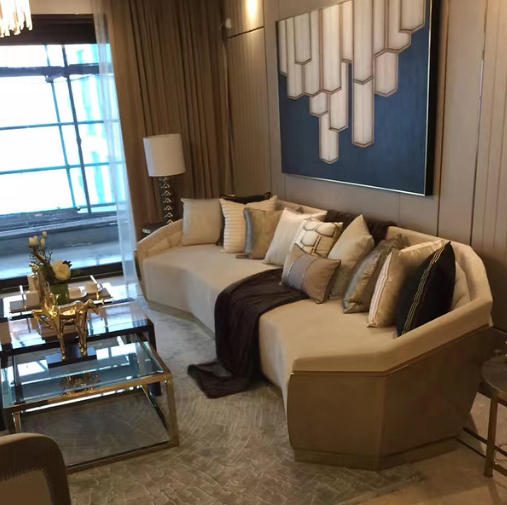
Forward-thinking furniture distributors and showroom operators are discovering that traditional retail models limit growth potential. This strategic guide shows how to transform your furniture business into a multi-revenue ecosystem through experiential spaces, lifestyle integration, and brand-building opportunities that attract premium clients and increase order values.
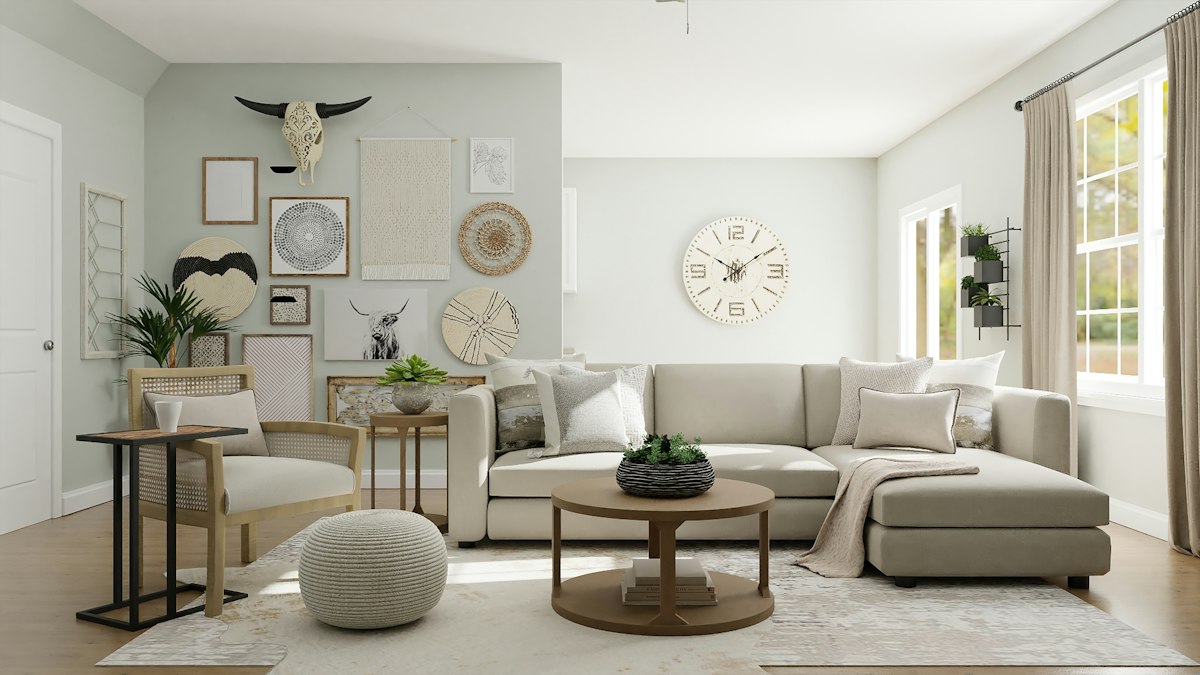 The experiential showroom model: environments that do not simply display furniture, but make clients feel what it is like to live with it — at the specification level they are actually buying. Image: Unsplash
The furniture distribution and showroom business model that worked reliably for the past three decades is under structural pressure from three directions simultaneously — and the operators who recognize this early are building the competitive positions that will define the market for the next decade.
The first pressure is commoditization. When a hotel procurement director or interior designer can compare five suppliers offering equivalent-specification sofas on a screen within 20 minutes, price competition collapses to the lowest viable margin. A showroom that competes purely on product availability and unit price is, in this environment, one algorithm update away from irrelevance.
The second pressure is disintermediation. Direct-from-manufacturer sourcing platforms, manufacturer D2C channels, and procurement aggregators are removing layers of the distribution chain. Distributors and agents who are not adding value beyond product supply are increasingly vulnerable to being bypassed.
The third pressure is attention fragmentation. Interior designers, hotel fit-out specialists, and procurement directors are not browsing showrooms as their primary discovery channel anymore. Their attention is distributed across digital platforms, peer networks, and sector-specific events. A traditional showroom that relies on walk-in traffic is competing against every other claim on that attention — and losing.
The response is not to sell harder or to cut prices further. It is to become something different: a business model that builds relationships so deep, and delivers value so broadly, that clients cannot replicate the experience anywhere else. The experiential retail market was valued at USD $133.3 billion in 2025 and is growing at 14.9% CAGR — driven precisely by the shift away from transactional environments toward destinations that create meaning, community, and confidence. The furniture sector is at the center of that shift.
This guide is for the furniture distributors, agents, showroom operators, interior designers, and hotel fit-out specialists who are ready to build that model.
A traditional furniture showroom operates on a set of assumptions about how clients discover, evaluate, and purchase that are no longer accurate for the premium commercial market.
Limited foot traffic is the most visible symptom. A showroom that depends on physical visits from interior designers and procurement professionals is constrained by geography, opening hours, and the competitive appeal of every other physical destination competing for the same professional’s time. A designer with 6 active projects does not have the schedule to visit multiple showrooms for each specification decision — they visit the ones that reliably deliver both the product and the expertise they need in a single visit, and they default to the relationships they have already built with suppliers who have proven their value.
Difficulty justifying premium pricing in a commoditized market is the structural revenue problem. When clients perceive your showroom as functionally equivalent to an online catalog — the same products, displayed differently, at a higher price — the negotiating conversation starts with price reduction. There is no premium anchor for a supplier relationship that has not created a premium experience.
Customer decision fatigue in complex commercial projects — a 120-room hotel specification, a corporate campus refurbishment, a university residence renovation — is real and financially consequential. Every additional showroom visit, every additional comparison cycle, every revision round extends the sales timeline, increases cost of sale, and reduces the probability of closing. Interior designers who feel confident and supported in their decision-making do not extend sales cycles — they close them.
The commercial logic of an experiential furniture space is not altruistic — it is economic. Each component of the experience serves a specific revenue function.
Sticky client relationships — built through shared professional experiences, design workshops, and co-creation rather than transactional product presentations — produce dramatically different retention economics. A designer who has participated in your seasonal trend event, sourced materials from your curated library, and brought three clients to your space for project visualization is not price-shopping your competitors. The relationship has value that transcends the unit price on any individual order.
Margin justification is the direct financial impact. A luxury lifestyle space — where clients experience furniture in context, where the service model reflects the price point, and where the environment signals design authority — supports pricing conversations at a premium level that a product-only showroom cannot. The same sofa, presented in an immersive hospitality environment with professional design consultation, commands a different conversation than the same sofa on a standard showroom floor.
Multiple revenue streams from a single location reduce dependency on any single commercial variable. A space that generates product sales, design consultation fees, event hosting revenue, and partnership income has a fundamentally different financial resilience profile from a space dependent entirely on furniture sales transactions.
Licensing and partnership revenue from hospitality brands represents one of the most underexplored commercial opportunities for furniture distributors. When a boutique hotel group specifies your products across multiple properties and you manage the ongoing furniture ecosystem — maintenance schedules, replacement programs, design updates as brand standards evolve — you are earning a service fee (typically 3–8% of annual furniture spend) in addition to product margin. This recurring revenue stream has the financial characteristics of a subscription: predictable, relationship-dependent, and difficult for competitors to displace.
Design consultation fees alongside product sales represent the recognition that your team’s expertise — understanding which materials survive commercial cleaning protocols, how to specify ergonomic solutions for different hospitality use cases, how to manage lead times across a multi-property rollout — has commercial value independent of the products you sell. Designers who previously expected this expertise for free are increasingly willing to pay for it when it is packaged and presented as a distinct service with clear deliverables.
Wholesale volume increases driven by designer confidence may be the most commercially significant effect of experiential investment, precisely because it is hardest to measure directly. A designer who is confident in your products — because they have seen them installed, touched them in context, and discussed their performance characteristics with your experts — specifies at a higher rate than one who is working from a digital catalog. That confidence translates directly into order frequency and order value over the lifetime of the relationship.
Boutique hotels have a furniture problem that distributors are uniquely positioned to solve. Unlike large chain properties that work through centralized procurement with preferred manufacturer contracts, boutique and lifestyle hotels need curated, custom, and often fast-turnaround furniture solutions for properties that each have distinct aesthetic identities.
A boutique hotel with 40 rooms needs everything from guest room case goods and seating to lobby lounge furniture, restaurant seating, outdoor terrace pieces, and spa-adjacent wellness furniture — sourced, coordinated, and delivered on a construction timeline that has no room for supply chain surprises. That operational requirement is exactly the capability a well-structured furniture distributor provides: supply chain management, quality coordination across multiple product categories, timeline reliability, and a single point of accountability for the complete FF&E (Furniture, Fixtures & Equipment — the comprehensive furnishing specification for a hospitality property) furniture package.
Your role as a distributor in this model is not simply selling products — it is becoming the operational backbone of the hotel’s furniture ecosystem. That positioning commands different commercial terms, different relationship depth, and different competitive defensibility than a transactional supply relationship.
You do not need to build or operate a hotel to capture hospitality-sector revenue and positioning. Three specific models allow furniture distributors and showroom operators to achieve the commercial outcomes of a hospitality partnership without the operational complexity of hotel management.
The showroom-hotel hybrid — a space designed to physically replicate hospitality environments rather than retail settings — is the most accessible starting point. A section of your existing showroom configured as a hotel suite vignette (a room-scale setting that replicates an actual hospitality installation), a restaurant lounge corner, and a boutique lobby entrance gives interior designers and hotel procurement directors an immersive preview of how your products perform in the environment they are actually specifying for. This configuration typically requires a dedicated area of 80–150 square meters and a capital investment of €30,000–€80,000 for furniture, lighting, and environmental dressing — recoverable across 2–3 hospitality project wins.
Partnering with existing boutique hotels to manage their furniture ecosystem — rather than simply supplying their initial fit-out — creates an ongoing revenue relationship with a fundamentally different commercial profile. The arrangement: you curate and manage the hotel’s furniture specification across its full lifespan. You supply the initial fit-out at project pricing, manage an annual maintenance and replacement program, and advise on design refreshes as brand standards evolve. In return, you receive a preferred supplier agreement with a multi-year term and a service retainer that covers your account management cost.
Pop-up hospitality experiences — temporary, event-driven spaces that showcase your product range in a fully dressed hospitality context — serve both a marketing and a commercial validation function. At a cost of €15,000–€50,000 for a well-executed pop-up, you can test market response to a specific product range, gather intelligence on designer and buyer preferences, and generate qualified leads for follow-up, without the capital commitment of a permanent space. For distributors evaluating whether to invest in a permanent experiential model, a pop-up is the most efficient risk management tool available.
The revenue architecture of a hospitality-focused distributor model has three distinct layers, each with different margin characteristics and different relationship dependencies.
Direct furniture sales to hotel operators and chains remain the foundation — but in an experiential model, the average project value and the win rate both increase, because clients engage with your brand as an expert partner rather than a commodity supplier. A hotel operator who has visited your hospitality environment, met your design team, and seen case studies from comparable properties is not price-shopping your proposal against two competitors — they are evaluating whether your service model is worth the premium.
Consultation and design fees for fit-out projects are directly proportional to your team’s demonstrated hospitality expertise. A distributor whose team includes a design consultant with hospitality specification experience commands fees of $150–$350 per hour for project design work, independent of whether the resulting specification is purchased from you. Most clients will buy from you if they engaged you for the design — but the fee exists regardless, and it changes the commercial relationship from vendor to advisor.
Ongoing maintenance and replacement contracts are the most strategically valuable revenue stream in this model, because they create a recurring income base that is relationship-dependent and operationally difficult for competitors to displace. A hotel with 80 rooms, replacing 15–20% of furniture annually, represents an annual furniture purchasing account of $40,000–$120,000 in perpetuity. Ten such hotel relationships creates a revenue base that does not reset to zero at the start of each fiscal year.
 Boutique hotel FF&E at this specification level requires a distributor partner who understands hospitality performance requirements, aesthetic curation, and project coordination — not just product supply. Image: Unsplash
A traditional showroom is a product display environment. Products are grouped by category, priced individually, and evaluated by visitors who are mentally assembling a specification from disconnected items. The decision process is cognitive and comparative — which chair, at what price, compared to which alternative.
A lifestyle experience center is a different proposition entirely. It is a destination where the environment itself communicates what the product is for, how it feels to live with it, and what kind of space and life it belongs to. Products are not displayed — they are demonstrated in context. The decision process is emotional and visceral: this is what the hotel lobby feels like. This is what the client’s boardroom becomes. This is the residential suite you are designing.
For interior designers and hotel fit-out specialists, this distinction is commercially critical. A designer who can bring a client to an immersive space that demonstrates the proposed aesthetic — rather than showing catalog images and asking the client to imagine — closes significantly faster and at significantly higher specification value. Your lifestyle experience center becomes a tool in their client sales process. That utility makes you indispensable.
Room-setting vignettes (life-scale room recreations that present furniture in its intended environment rather than in isolation) are the single highest-impact investment in an experiential showroom. A 25–30 square meter hotel suite vignette — complete with correct ceiling height, flooring material, lighting type, and decorative layering — communicates specification confidence that no product page or catalog image achieves. Interior designers use these spaces to photograph proposal presentations for their clients. That secondary use case, which costs you nothing beyond the space investment, makes your vignettes an ongoing marketing asset every time a designer presents a project that originated in your environment.
Material libraries and touch-test areas solve one of the most operationally expensive problems in furniture specification: the revision cycle caused by decisions made from digital representations. When a designer selects a fabric from a digital swatch, they are estimating how it will look in scale, at different light temperatures, adjacent to other specified materials. When they select the same fabric after holding a physical panel, evaluating it under your hospitality-caliber lighting, and placing it against a wood finish sample and a tile reference, they are making a decision they will not revise. Fewer revisions mean shorter project timelines and lower cost of sale for everyone in the chain.
Flexible configuration zones — areas of your space where furniture can be reconfigured to simulate different project constraints — demonstrate a capability that few competitors offer: the ability to help a designer solve a spatial problem before committing to specification. A designer specifying furniture for a narrow hotel corridor, an awkward corner suite, or a multi-use lobby zone needs to know the furniture works before it is manufactured. Your flexible zone provides that validation.
Designer-only access hours — typically a morning or early evening window before or after public showroom hours — create the exclusivity that professional designers consistently respond to. This is not a gesture of preference; it is a substantive service improvement. Without non-professional traffic competing for attention, a designer can bring a client for an undisturbed 90-minute specification session, access your design team without interruption, and use the space in the way their professional workflow requires. Designers who have experienced this access do not go back to competing with retail visitors at competing showrooms.
Design workshops and trend-setting events that carry genuine professional development value — rather than thinly veiled product presentations — generate the community around your brand that sustains long-term designer loyalty. A half-day workshop on hospitality material specification, delivered in your experience center to an audience of 15 interior designers and hotel fit-out specialists, creates relationships and brand positioning that no amount of marketing spending replicates.
JL&C Furniture designs its commercial furniture partnerships specifically around this model — supporting showroom operators and distributors in building brand experiences that position them as hospitality design authorities, not product vendors.
📺 Watch: Inside a Luxury Furniture Experience Showroom — How Design Environments Close Premium Projects

A behind-the-scenes tour of how a luxury design showroom curates an environment that attracts premium clients, supports designer workflows, and commands specification authority. (Source: YouTube)
The integration of food and beverage into a furniture experience center is not a hospitality cosplay exercise — it is a precise commercial strategy with documented effects on visit duration, purchase attachment, and relationship depth.
Retail and hospitality research consistently demonstrates that physical dwell time correlates directly with purchase probability and average order value. A designer who spends 45 minutes in your space browsing product has a significantly different engagement profile from one who spends 3 hours: a product walk, a working lunch at your in-house café, a design consultation, and a specification session in your configuration zone. The café is not a perk — it is the mechanism that makes the 3-hour visit economically rational for a professional with a full project schedule.
For a hospitality-focused furniture distributor, an in-house café carries an additional strategic function: it demonstrates that your furniture performs in a real service environment under real operating conditions. When a hotel procurement director sits at your café table, evaluates the seating comfort across a 90-minute working lunch, observes how your serving surfaces handle heat and wear, and watches your staff navigate the furniture layout during service, they have conducted a product evaluation that no specification sheet delivers. The café is a live case study.
F&B margins in a well-run café integrated into a professional business environment typically run 15–25% — a meaningful standalone contribution in addition to the commercial benefits described above.
Design seminars and professional development are the highest-ROI investment for a distributor seeking to deepen relationships with the interior design community. An event that earns CPD credits (Continuing Professional Development — structured learning activities that maintain and advance professional competence, required by design professional associations in most markets) positions your brand not as a product supplier but as a professional resource. Designers who have attended CPD-accredited training sessions at your facility have a professional relationship with your brand that competitors cannot quickly replicate.
Wellness zones that showcase ergonomic furniture solutions — seating systems tested and documented for lumbar support, adjustable workstation configurations, hospitality seating specified for extended occupancy comfort — address a growing specification requirement across all three target sectors: corporate workplace wellness mandates, healthcare patient comfort requirements, and the premium hospitality sector’s shift toward sleep and wellness-focused guest experiences. These zones are both a demonstration environment and a market education tool.
Hospitality consultants as partners — specialists who advise hotel operators on brand standards, service design, and guest experience — are natural collaborators for a distributor operating in the hospitality space. A co-hosted event series with a respected hospitality consultant, where the content addresses hotel brand development and the physical space demonstrates furniture solutions within that context, positions your brand in the exact professional conversation where hotel procurement decisions begin.
The most durable competitive moat a furniture distributor can build is not product exclusivity, price advantage, or geographical coverage — it is a professional community that connects its members through shared interests, expertise, and business relationships, and that is closely identified with your brand as its host.
A monthly designer breakfast series — 90 minutes, 12–15 attendees, a single trend or case study discussion, your showroom as the venue — creates a recurring touchpoint that requires minimal operational investment (coffee, pastry, a prepared topic) and generates the relationship depth that drives specification loyalty. Designers who attend regularly share the experience with their peers. Your invitation list becomes a social proof signal: if the designers worth knowing in this market attend, the space must be worth visiting.
Explore how JL&C Furniture’s distribution partners structure community events and designer programs to build specification loyalty in their specific markets.
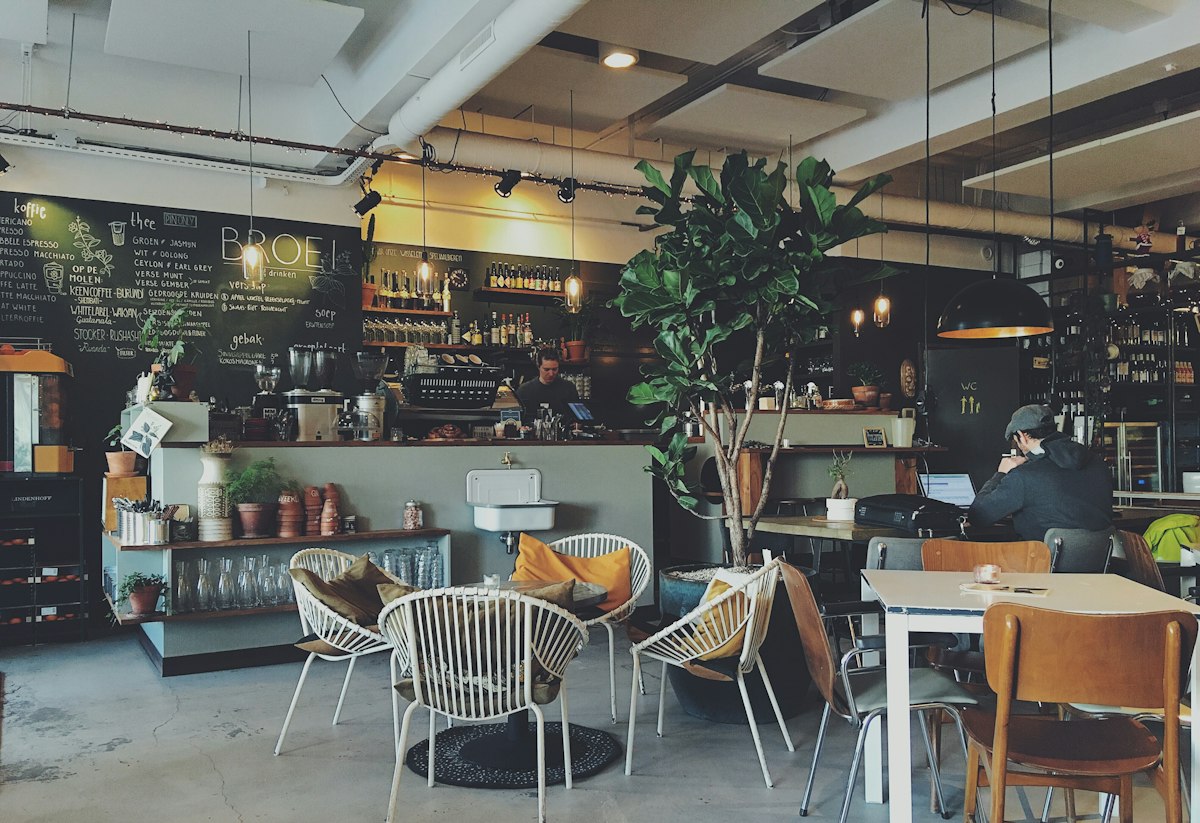 An integrated café within a luxury furniture experience space — simultaneously a revenue stream, a live product demonstration, and the mechanism that extends designer visit duration from 45 minutes to 3 hours. Image: Unsplash
Hotel fit-out specialists — the interior designers and design firms specializing in hospitality environments — work under conditions that make the traditional multi-showroom sourcing process genuinely dysfunctional. A hotel project specification might require 40–60 distinct furniture items across guest rooms, public areas, F&B spaces, and support zones. Sourcing each category from a different showroom, coordinating samples across multiple vendor relationships, managing parallel lead times and logistics, and maintaining visual coherence across a complete specification — all under a construction timeline that does not accommodate delays — is an operational challenge that consumes a significant proportion of a project team’s capacity.
The result is that hotel designers gravitate — sometimes exclusively — toward suppliers who can provide the broadest possible product range, the deepest project support, and the most integrated service experience. A distributor who can supply 70% of a hotel’s furniture requirement from a single relationship is not competing on price; they are competing on the value of operational simplicity, which is commercially worth more to a project team under timeline pressure than a 5% unit price reduction.
Difficulty sourcing complete solutions from a single vendor drives hotel designers toward the few distributors who have invested in the product breadth and organizational capability to serve as a primary furniture partner. The opportunity for showroom operators and distributors who make this investment is the inverse: when you can serve as that partner, you access a level of project relationship that is structurally difficult for competitors to enter.
One-stop-shop convenience is worth money — real, calculable money. A hotel fit-out designer who can source 8 product categories from a single showroom visit, evaluate them in context, and make specification decisions supported by a knowledgeable consultant reduces their project coordination time by a meaningful margin. If that time reduction enables them to manage one additional project per year at their standard fees, your experiential space has generated €15,000–€50,000 in project capacity for your client. That is a value proposition that justifies your pricing premium at any reasonable level.
Real-world examples within your experience center — documented case studies displayed on the walls, reference books of completed installations, video testimonials from hotel operators who have specified your products — remove the speculative risk from a designer’s recommendation. When a designer presents your furniture to a hotel owner, the conversation shifts from “I believe this will work in your environment” to “I have seen this product installed at comparable properties under similar conditions, and here is what the operators experienced.” That evidence-based confidence is what closes hospitality projects at scale.
Proprietary design packages — curated specification bundles for specific hospitality typologies (boutique urban hotel, resort property, serviced apartment) — reduce the specification development burden for hotel designers while creating a pricing structure that captures the value of your design team’s hospitality expertise. A “Boutique Hotel Essentials” package covering 12 core furniture items specified for a 30-room property, with complete technical documentation, material options, and lead time confirmation, is a commercial product that serves designers who are under project time pressure and willing to pay a premium for a validated, ready-to-specify solution.
Exclusive access and priority service for your most commercially significant designer relationships — priority production scheduling, dedicated account management, first access to new collections before general availability — create the loyalty asymmetry that makes your relationships sticky. A designer who knows that their priority status with your business delivers tangible project advantages (faster sample delivery, priority production slots in peak season, first visibility of new collections) has a concrete reason to concentrate their specification with you rather than distributing it across multiple suppliers.
Augmented Reality (AR) (technology that overlays digital content — images, 3D models, information — onto a user’s view of the real world through a screen or headset) and Virtual Reality (VR) (technology that creates an entirely digital, immersive three-dimensional environment) are moving from novelty to operational standard in premium furniture specification environments. Industry data shows that 96% of furniture retailers report increased sales from 3D visualization and AR tools, though only 58% have implemented them — a gap that represents a clear competitive opportunity for early adopters.
For hospitality and commercial specification, the commercial case is clearest in these specific applications: placing your furniture within a client’s actual hotel environment (using AR to visualize how a proposed guest room specification looks in photographs of the actual space), showing the full range of finish and fabric options without maintaining physical inventory of every variant (3D rendering with live material switching), and enabling remote specification reviews (sharing an interactive 3D model with a hotel owner in a different city for visual approval before sampling investment is committed).
Platforms including VividWorks and Cylindo provide furniture-specific 3D visualization capabilities that integrate with B2B e-commerce platforms. For an established distributor’s experiential space, the in-space application — a large-format display or VR station where designers and clients can place product in their own project environments — creates a differentiation that is both practically useful and visually compelling in a professional context.
An experiential space generates behavioral intelligence that a traditional showroom does not. When a designer spends 35 minutes examining a specific material library section, reconfigures a seating arrangement three times during a consultation, or repeatedly returns to a single vignette during multiple visits, that behavior contains specification intent data that — captured and analyzed — improves both your product mix and your account management.
Practical data capture tools for an experiential environment: digital visitor registration (linking visit behavior to known contacts in your CRM (Customer Relationship Management — software that manages your relationships and interactions with existing and potential clients)), product interaction tracking through RFID tags or QR-code scanning on specification request cards, and post-visit surveys (3–5 questions sent 24 hours after a visit, when the experience is fresh). Over 12 months, this data reveals which products attract serious specification interest versus casual attention, which vignettes drive the longest dwell times, and which client profiles generate the highest post-visit conversion rates.
Omnichannel (a sales and service approach that provides a seamless client experience across physical and digital touchpoints — showroom, website, mobile, and phone — with consistent information and service quality at each point) integration for a furniture experience center means that every in-space interaction is connected to a client’s digital record and continues seamlessly in the digital environment after they leave.
A designer who configures a specification in your experience center should be able to access that configuration from their laptop the next morning, share it as a digital proposal link with their client, and place a sample order or initiate a quote request without re-entering any information they already provided in person. The absence of this connection — where an in-space consultation exists in isolation from the digital ordering workflow — wastes the relationship capital built during the visit and creates friction that reduces conversion.
Discover how JL&C Furniture’s partner showrooms integrate physical experience with digital specification workflows to reduce sales cycle length and increase average order values.
Before investing in experiential infrastructure, an honest assessment of your current business model and client base prevents misaligned investment. The key questions are:
What proportion of your current revenue comes from designer and hospitality relationships versus transactional walk-in or online sales? Experiential investment has its highest ROI for businesses where 40%+ of revenue already comes from professional B2B relationships that will deepen with a richer engagement model.
What is your current average order value, and from which client profiles? A showroom with a small number of high-value hospitality project relationships is a better candidate for experiential investment than one with a large number of small transactional retail orders.
What is your team’s current design and hospitality expertise? Experiential spaces require people who can facilitate design conversations and project consultations, not just process product sales. If your current team is primarily sales-oriented rather than design-oriented, staffing development is a parallel investment that must accompany the physical space investment.
The most common strategic error in experiential space development is attempting to launch a complete, fully realized concept on day one. The operators who build the most successful experiential models typically follow a progressive validation approach.
Phase 1 — Single lifestyle zone (months 1–4): Designate 40–80 square meters of your existing showroom as a dedicated hospitality vignette environment. Investment: €20,000–€50,000 for furniture, lighting, and environmental dressing. Success metric: measurable increase in visit duration and designer return visit frequency over 6 months.
Phase 2 — Added service layer (months 4–12): Introduce designer consultation sessions as a bookable service, a material library, and a first event series. Investment: primarily staff time and event costs (€5,000–€15,000 per event series). Success metric: consultation fee revenue and event attendance by target designer profiles.
Phase 3 — Expansion or partnership (months 12–24): Based on validated demand, either expand the physical space or establish a venue partnership (a boutique hotel, a co-working space, a design building) that provides additional reach without real estate ownership. Investment: €50,000–€150,000 for physical expansion, or €10,000–€30,000 for a co-location partnership arrangement.
Phase 4 — Full ecosystem (months 24+): F&B integration, digital experience layer (AR/VR), and community programming. This phase is funded from revenue generated in phases 1–3, not from upfront capital commitment.
The most consequential staffing decision in building an experiential furniture business is hiring — or developing internally — a design consultant with hospitality specification experience. This individual’s function is not to sell products; it is to help clients solve spatial and specification problems using products as the means. The commercial result is identical or better, but the client relationship is categorically different: they are working with an expert partner, not navigating a product vendor.
An experienced hospitality furniture design consultant in a primary market typically commands a salary of $65,000–$95,000, depending on market and experience level. The ROI threshold: if this individual facilitates 3–4 hospitality project wins per year that would not otherwise have converted, at an average project value of $80,000, their fully loaded cost is covered multiple times over from the contribution of those projects alone.
Training your existing sales team to facilitate designer relationships rather than sell to designers is the behavioral change with the highest impact and the lowest additional cost. The practical differences: asking “what are the constraints of this project?” rather than “what are you interested in buying today?”; providing genuine expertise and design perspective rather than product features and pricing; and following up post-visit with relevant content (a case study from a comparable project, a material development update on an item they evaluated) rather than a discount offer.
 Biophilic design integration — natural materials, plant life, and organic forms — is moving from aesthetic trend to specification requirement in premium residential and hospitality projects, creating ongoing demand for distributors with deep material knowledge. Image: Unsplash
Traditional showroom performance metrics — foot traffic count, conversion rate per visitor, average transaction value on the day — capture the wrong commercial reality for an experiential model. These metrics measure transactional outcomes. Experiential investment generates relational outcomes: deeper, longer, more commercially valuable client relationships. Measuring the former to evaluate the latter produces systematically incorrect conclusions.
A showroom with 40 designer visits per month at a 30% transaction conversion rate and a $3,500 average sale is generating $42,000 per month in direct showroom revenue. An experiential space with 25 designer visits per month and a 50% follow-on project conversion rate at an average project value of $85,000 is generating $1,062,500 per month in project revenue from showroom-originated relationships. The foot traffic metric favors the first; the commercial outcome metric favors the second by 25:1.
Relationship depth metrics that capture the real value: number of active designer relationships (defined as a designer who has engaged with your business in the past 90 days through a visit, event, consultation, or order), average number of projects per active designer per year, percentage of each designer’s annual specification volume captured by your business relative to their total annual specification (share of wallet — the proportion of a buyer’s total spend in your category that goes to your business specifically).
The quantitative dashboard for an experiential furniture business should track these KPIs (Key Performance Indicators — measurable values used to evaluate performance against targets) on a monthly basis:
| Metric | Definition | Target Benchmark |
|---|---|---|
| Average Order Value — Experiential Clients | Total revenue from experiential-engaged clients ÷ orders | 2–4× higher than transactional baseline |
| Non-Product Revenue % | Consultation + event + partnership fees ÷ total revenue | 15–25% by Year 2 |
| Designer Lifetime Value (DLV) | Total project value specified by a designer over 3 years | Track per relationship; identify top 20% |
| Project Win Rate | Projects won ÷ total projects quoted for designer clients | Benchmark: 45–60% for relationship-based accounts |
| Repeat Project Rate | % of project clients who return within 18 months | 60%+ indicates strong experience value delivery |
| Event-to-Order Conversion | Orders within 90 days from event attendees ÷ total event attendees | 30–50% for well-targeted events |
Designer recommendation rate — measured through direct survey question “Would you recommend this space as a professional resource to other designers?” — is the single number that most accurately predicts organic community growth. A target of 85%+ recommendation rate indicates the experience is delivering professional value at the level that drives word-of-mouth.
Win rate on competitive hotel fit-out projects — the percentage of hospitality RFPs or design briefs where you were shortlisted and ultimately selected — measures your competitive positioning within the hospitality design community. Benchmark this against your historical win rate before experiential investment: a meaningful improvement (10–15 percentage point increase) within 18 months validates the commercial thesis.
Start small with pop-up or hybrid models before committing to permanent capital expenditure. A well-executed single vignette environment within an existing showroom, supplemented by a quarterly event series, validates market response at a fraction of permanent space cost. The investment range for this entry-level approach: €20,000–€50,000, with break-even achievable within 6–12 months if the approach generates one additional hospitality project win per quarter.
Partner with hospitality venues to share costs — a boutique hotel whose lobby displays your curated furniture selection in exchange for preferred supplier status on their ongoing maintenance and replacement needs represents a zero-real-estate-cost experiential presence. You provide the furniture expertise; they provide the physical environment and the hospitality traffic. The arrangement benefits both parties without requiring either to make investments outside their core competency.
Focus on high-margin revenue streams first — design consultation fees and partnership retainers, which require staff investment but minimal physical infrastructure, generate revenue before the full experiential environment is operational. Building these revenue streams in parallel with physical investment reduces the net capital requirement and accelerates the overall ROI timeline.
Use strategic display pieces and digital visualization to decouple the experience from physical inventory commitment. Display pieces are selected for maximum visual and tactile impact in the experience environment, not for inventory availability. A 3D configurator or AR visualization tool handles the product variants, finishes, and configurations that would otherwise require extensive physical samples.
Partner with manufacturers for just-in-time delivery — rather than holding inventory for experiential display and simultaneously maintaining order fulfillment stock. Manufacturers who understand the experiential model can support consignment display arrangements (where display furniture is owned by the manufacturer and located at your space on a loan basis, with commission paid on resulting orders) that reduce your capital exposure while maintaining the quality of your experiential environment.
The most reliable designer traffic driver is exclusive professional value that cannot be accessed elsewhere. An event series carrying CPD credits, a material library that is more comprehensive and better curated than competitors, a consultation service that delivers genuine project problem-solving — these are the elements that designers tell other designers about, creating the referral-driven traffic growth that marketing spend alone cannot achieve.
Designer-specific pricing with transparent terms — a documented trade pricing program with clear qualification criteria, consistently applied — removes the ambiguity that makes designers reluctant to invest relationship capital with a new supplier. When a designer knows exactly what their pricing status is, what their priority service includes, and how the relationship works commercially, they can commit to your brand with the confidence that drives long-term specification loyalty.
Invest in systems that integrate all touchpoints — a CRM that connects showroom visits, event attendance, consultation records, and order history for each client relationship. Without this integration, multiple revenue streams create operational fragmentation rather than commercial synergy. A designer who attends your event, books a consultation, and then places an order should have that complete journey recorded against a single client record, enabling account management that reflects the full relationship rather than isolated transactions.
Start with one additional revenue stream before adding more. The most common operational failure in experiential diversification is attempting to launch F&B, consultation services, events, and AR visualization simultaneously. Each revenue stream requires operational infrastructure, trained staff, and refined processes. Start with the one that best fits your current team capabilities — typically design consultation services, which leverage existing product knowledge — prove the model, then add the next stream.
The experiential retail market at $133.3 billion in 2025, growing at 14.9% CAGR, is not a niche experiment — it is the direction in which the entire non-commodity retail sector is moving. For furniture distribution specifically, the shift is accelerating because the product itself — furniture that defines how people live and work — is inherently experiential. The question is not whether experiential becomes the standard, but whether your business builds the model before or after your most capable competitors do.
Post-pandemic shifts in how designers and hoteliers evaluate furniture suppliers have accelerated two specific trends: the preference for suppliers who demonstrate deep sector expertise over those who offer broad product catalogs, and the expectation that physical showroom experiences deliver genuine professional utility rather than attractive product display. Both trends favor the distributor who has invested in an experiential model over one who has not.
Franchising an experiential model to other distributors and agents — essentially licensing your methodology, materials library, designer program, and brand standards to partner operators in adjacent markets — is the logical extension of a model that has proven itself in a single location. The commercial structure is similar to a consulting firm licensing its frameworks: you provide the intellectual property (design packages, event formats, consultation methodologies), training, and brand association; the partner operator provides the market relationship and physical infrastructure. Revenue sharing typically involves a program fee plus a percentage of the incremental revenue attributable to the licensed model.
Regional hospitality group partnerships — multi-property hotel groups operating under a single brand standard — represent the most commercially attractive scaling opportunity for a furniture distributor with a proven experiential model. A regional group managing 12 boutique hotels across three cities represents a multi-year, multi-property furniture account that can anchor a distribution business’s commercial foundation. HD Expo + Conference — the largest hospitality design event in the US — is the primary gathering point for the relationships that lead to these partnerships.
The competitive moats that are hardest to displace in the furniture distribution market are the ones built from relationship depth rather than product access. A manufacturer’s product range can be duplicated by a competitor who sources the same factory. A material library can be assembled by a competitor with sufficient budget. But a community of 40 interior designers who trust your expertise, rely on your space for client presentations, attend your events, and refer their professional network to your brand — that is a competitive asset that requires years to build and cannot be purchased.
The three-layer competitive moat for a furniture distributor who has fully developed the experiential model: relationship depth with the most commercially valuable designers and hotel operators in your market, brand reputation as the comprehensive hospitality furniture partner, and operational excellence in delivering complex, multi-property projects with a consistency that generates the testimonials and case studies that attract new relationships. Each layer reinforces the others, and together they create a market position that is genuinely difficult to displace.
The furniture distribution and showroom market is in a consolidation phase. The businesses that will emerge from this phase with stronger positions than they entered with are not the ones with the largest catalogs or the lowest unit prices. They are the ones who have transformed their commercial model from product supply to experience-led partnership.
Interior designers and hotel fit-out specialists are actively seeking partners who offer more than products. They are seeking operational simplicity (a single supplier relationship that covers most of their project’s furniture requirement), design expertise (a team that adds genuine value to their specification process), and confidence (demonstrated capability in their specific sector, visible in case studies, testimonials, and a physical environment that makes the product real).
The window to establish that position — before it is occupied by competitors who have made the investment — is the strategic context for every decision you make about your business model in the next 24 months.
Your next steps are sequential and practical. Audit your current business model against the frameworks in this guide: identify which revenue streams align best with your existing relationships and capabilities, develop a phased implementation plan that tests experiential concepts before committing to permanent infrastructure, and begin building the 5–10 designer and hospitality relationships that will become the foundation of your community-based competitive moat.
Ready to Transform Your Furniture Business Into a Multi-Revenue Ecosystem?
The transition from product-based distribution to experience-led partnership is a strategic decision, not an operational one. The right model for your specific business depends on your current client base, geographic market, team capabilities, and financial position.
Book Your Strategy Session — a confidential consultation with our team to assess which experiential strategies are right for your specific business, and which first moves generate the fastest path to commercial validation.

Signature statement pieces — the kind that clients remember, photograph, and return to discuss with their own clients — are the commercial anchor of an experiential furniture space that works as a specification-confidence engine. Image: Unsplash
1. As a furniture distributor, how do I add experiential spaces without becoming a retailer?
You do not need to own or operate the space. The most commercially efficient entry point is a partnership model: place your curated furniture selection within an existing boutique hotel lobby, co-working space, or design building common area. You manage the product curation, design, and client relationships within that space; the venue handles real estate and operations. This keeps your core function — distribution and design expertise — intact while creating an experiential presence that captures the relationship benefits described throughout this guide. For distributors who want to invest in a dedicated environment, the key distinction from retail is that your space serves professional clients for project specification purposes, not individual consumers for transactional purchase — a commercial and operational difference that affects everything from your staffing model to your visit management to your pricing structure.
2. What’s the minimum investment needed to launch an experiential space?
A validated starting point is a single lifestyle zone within your existing showroom — a defined area of 40–80 square meters configured as a hospitality vignette environment, with professional lighting, curated furniture dressing, and environmental details that communicate the specification context you are demonstrating. Total investment for this approach: €20,000–€50,000 depending on your existing space and the product range you are featuring. A pop-up model for testing market response before permanent commitment ranges from €15,000 to €50,000 depending on venue, duration, and production quality. Before committing to either, validate the commercial thesis with your 10–15 most active designer relationships: if they confirm they would use such a space for client presentations and specification sessions, the revenue logic is established before the first euro of investment is committed.
3. How do I attract interior designers to my experiential space when they have dozens of showrooms to choose from?
The premise of this question contains the answer: designers have dozens of showrooms to choose from, and most of them are essentially the same — product displays with transaction-oriented staff. The differentiation is in the service model, not the product model. Offer designer-only access hours that provide the undisturbed professional environment that designers genuinely need. Host CPD-accredited workshops that deliver professional development credit, which designers are obligated to accumulate. Provide a dedicated consultation service that helps them solve project challenges, not just product queries. Develop proprietary specification packages for hospitality typologies that reduce their project preparation time. Each of these creates a tangible, professional reason to visit your space rather than a competitor’s — and each is harder to replicate than a product catalog or a pricing discount.
4. Can I implement this model as a smaller showroom operator, or is it only for large distributors?
Smaller showroom operators often have a structural advantage over large distributors in implementing this model: they are more agile, their client relationships are more personal, and they can specialize in ways that generalist large distributors cannot. The most successful experiential furniture models include single-location showroom operators who built deep expertise in one specific sector — hospitality, high-end residential, or educational — and became the definitive resource in their geographic market for that specialism. Start by identifying 20–30 key designers in your market whose project profiles align with your product range, deepen your service investment with those relationships specifically, and build your experiential infrastructure around what those specific clients most need. The result is a focused, defensible position rather than an attempt to replicate what a larger operator does at smaller scale.
5. What’s the difference between a lifestyle experience center and a traditional showroom?
A traditional showroom is organized around product categories — seating, tables, storage — displayed as individual items for individual evaluation. The commercial interaction is: “here is what we have, which of these do you want?” A lifestyle experience center is organized around client use cases — a hotel suite environment, a corporate lounge space, a residential living environment — where products are presented as integrated solutions within contexts that reflect how they will actually be used. The commercial interaction is: “here is what this project could look and feel like; let me show you how we solve the specific challenges you are facing.” The practical effects: longer visit duration (which correlates directly with specification confidence), faster client decision-making (because the contextual presentation reduces cognitive load), and higher project specification value (because seeing products in context reveals applications and combinations that a product-category display does not suggest). Additionally, a lifestyle experience center generates multiple revenue streams — consultation fees, event income, partnership retainers — that a product showroom does not.
6. How do I measure ROI on experiential spaces when revenue comes from multiple sources?
The framework is Customer Lifetime Value (CLV) (the total revenue attributable to a specific client relationship over its entire duration) measured separately for each client category: transactional walk-in visitors, designer relationships, and hospitality project accounts. The comparison that validates experiential investment is not month-1 revenue versus cost — it is the 36-month CLV of a designer relationship developed through your experiential space versus the 36-month CLV of a transactional showroom relationship. Industry data consistently shows that relationship-based accounts in premium furniture distribution generate 4–8× the CLV of transactional accounts. A single designer relationship with a 36-month CLV of $180,000 justifies a significant experiential investment that would be impossible to justify on any individual transaction. Track this metric per client relationship, aggregate it across your active designer relationships annually, and compare it year-on-year as your experiential model matures.
7. My competitors are already offering experiential spaces. How do I differentiate?
Differentiation within experiential models comes from specialization, not from duplication. If your primary competitor has invested in a residential lifestyle environment, invest in a hospitality-focused environment. If they focus on contemporary design aesthetics, focus on a distinct design language — traditional craftsmanship, biophilic specification, or a specific geographic influence. The value of an experiential space is anchored in the depth of expertise it represents, not in the production quality of the physical environment. A smaller, less polished space that demonstrates genuine hospitality specification expertise will attract more hotel fit-out designers than a larger, more elaborate space that is aesthetically impressive but intellectually generic. Your differentiation strategy should be defined by your most commercially valuable target client profile — what do they specifically need that they are not currently finding from any supplier — and your experiential investment should build precisely that capability, visibly and credibly.
8. Should I include food and beverage services in my experiential space?
The commercial case for F&B integration depends on your target client profile and your existing team capabilities. For designers and procurement professionals whose working day involves multiple appointments, a café within your space converts your showroom into a practical working environment rather than a discretionary visit. The dwell time effect alone — extending visits from 45 minutes to 2+ hours — has a measurable impact on specification depth and purchase probability. For hospitality-focused distributors, F&B integration carries the additional strategic function of demonstrating how your furniture performs in a real service environment under real operating conditions — a live case study that no specification sheet provides. The financial contribution — F&B margins of 15–25% on the service revenue — is meaningful but secondary to the commercial benefits of extended dwell time and demonstrated performance. If your team does not include F&B operations expertise, partner with an existing café operator to manage the service while you supply the furniture environment.
9. How do I staff an experiential space differently than a traditional showroom?
The defining difference is whether your team can facilitate a 90-minute specification consultation that adds genuine design value, or whether they can only process a product inquiry. Hire for hospitality and design knowledge, not for sales performance metrics. The compensation structure should reflect this: design consultants in experiential furniture environments are typically on a base salary plus project fee structure rather than transaction commission, because their value is relationship depth over time, not transaction frequency. For training, focus on: hospitality specification knowledge (fire safety ratings, durability standards, cleaning compatibility, ADA requirements), project management skills (how to track a specification from initial brief through delivery across a 6-month timeline), and client facilitation (how to conduct a specification session that progresses toward a decision rather than generating more questions). The behavioral shift — from presenting products to solving problems — is the hardest and most important training outcome for a team moving from traditional showroom to experiential model.
10. What happens if my experiential space doesn’t attract enough designer traffic?
Low designer traffic in the first 6 months of an experiential model is almost always a positioning or communication problem, not a fundamental model problem. The diagnostic questions: Do your target designers know the space exists and understand what it offers them professionally? Have you invited them personally — not through mass email, but through individual outreach from someone they know — with a specific professional reason to visit? Have you hosted 2–3 events with genuine professional development value that demonstrated the space’s utility? Low traffic that persists after these actions have been implemented consistently for 6 months indicates a value proposition misalignment — your experiential offering is not addressing a genuine need for your specific client profile. In this case, direct conversation with your 10 most active designer relationships is the most efficient diagnostic tool: ask them specifically what would make your space genuinely useful for their project work, and build the response directly into your offering. The model works when it solves real professional problems — identifying which specific problems your specific clients have is the calibration step that precedes traffic.

China Furniture Sourcing Agent Roles for High-End Buyers What a China Furniture Sourcing Agent Actually Does for High-End Buyers Every finished luxury room sits on
How to Vet a China Furniture Sourcing Agent Before Signing A single curved sofa like this goes through dozens of approvals, including frame, foam, fabric
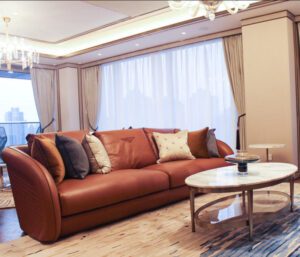
China Furniture Sourcing Agent vs Direct Factory Buying: A Strategic Guide for High-Value Buyers When one project includes 400 hotel rooms, a 20-seat marble dining
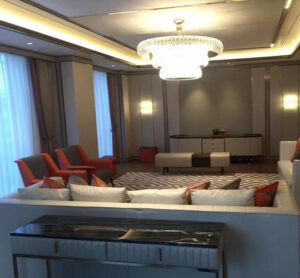
Advanced Tips to Get More from Your China Furniture Sourcing Agent Powerful Strategies for High-Performance Sourcing – Tailored for Elite Buyers, Designers & Operators Your
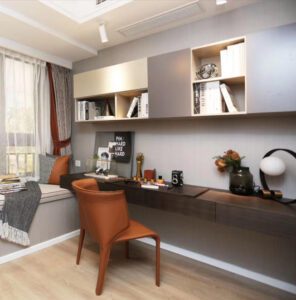
What Wholesale Furniture Suppliers in China Can Offer High-Value Buyers A statement luxury living room — the kind of space that begins with the right
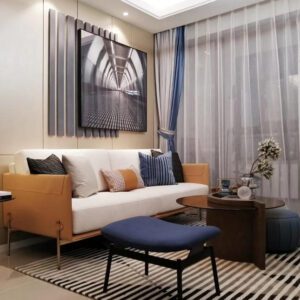
How to Work Better With Your China Furniture Supplier After Ordering A Practical Playbook for High-End Furniture Importers, Interior Designers, FF&E Buyers, Villa Owners, Private