أخبار الشركة

China Furniture Sourcing Agent: Roles for High-End Buyers
China Furniture Sourcing Agent Roles for High-End Buyers What a China Furniture Sourcing Agent Actually Does for High-End Buyers Every finished luxury room sits on


A comprehensive cost analysis guide for B2B furniture buyers—helping distributors, agents, and designers understand the true financial impact of direct sourcing versus traditional retail channels.
For high-end interior designers, hospitality procurement managers, and upscale showroom owners, sourcing furniture is not merely a purchasing transaction; it is a critical driver of net profit margins. When bidding on a luxury resort lobby or stocking an elite regional showroom, the financial stakes are exceptionally high. A mistake in calculating the actual cost of a bespoke velvet sofa or a solid walnut dining set can instantly wipe out projected profits.
Historically, B2B buyers faced a polarized choice: pay premium retail/wholesale prices locally for immediate availability, or source directly from manufacturers in industrial hubs like China to capture factory-floor pricing. While the unit prices offered by direct manufacturers are incredibly attractive, the actual journey from a Chinese factory assembly line to a client’s project site in New York, London, or Dubai is complex.
This guide provides a transparent, data-driven cost breakdown. By dissecting every expense—from baseline raw material costs to ocean freight, import duties, and quality assurance inspections—this analysis equips you to calculate your true Total Cost of Ownership (TCO) and make highly profitable sourcing decisions.
What Is Total Cost of Ownership in Furniture Sourcing?
The Total Cost of Ownership (TCO) is a financial metric that estimates the comprehensive cost of purchasing, transporting, importing, storing, and quality-assuring a product throughout its entire supply chain life cycle.
In luxury furniture procurement, relying solely on the “FOB” (Free on Board) or “EXW” (Ex Works) price quoted by a supplier is a common pitfall. The Ex Works price represents only the cost of the furniture at the factory door, excluding loading, shipping, and import fees. The TCO represents the actual price of the product once it sits in your warehouse or project space, ready for installation.
Beyond the Unit Price—Hidden Costs That Impact Your Bottom Line
Many buyers are enticed by an exquisite premium leather lounge chair priced at $350 directly from a Chinese manufacturer, compared to a local retail wholesale alternative priced at $1,200. However, the $350 chair does not magically appear in your showroom. It must be packaged to withstand high ocean humidity, loaded into a container, cleared through export customs, shipped across the ocean, cleared through import customs, transported via domestic trucking, and inspected for structural defects.
TCO Framework for Direct vs. Retail Sourcing
To visualize the difference, consider the TCO structure for direct sourcing as an iceberg. The visible tip is the low unit price, while the massive submerged base contains logistics, duties, compliance, and quality control. Conversely, retail sourcing consolidated into a single, high, predictable invoice covers almost all these elements upfront, shifting the risk and administrative burden entirely onto the local domestic distributor.
Key Cost Categories You Must Track
To manage margins successfully, B2B buyers must track three core cost groups:
Unit Pricing and Minimum Order Quantities (MOQs)
Direct manufacturers operate on economies of scale. The key to securing low factory-gate prices is the Minimum Order Quantity (MOQ), which represents the lowest volume of a product a manufacturer is willing to produce in a single production run.
Manufacturing and Production Costs
Beyond the baseline materials, direct sourcing often involves:
Freight and Shipping Expenses
Logistics costs fluctuate based on international trade volumes.
Tariffs, Duties, and Import Taxes
Tariffs are determined by your country’s tariff schedules and the specific Harmonized System (HS) code of the product.
Customs Clearance and Documentation Fees
Your goods cannot enter the country without formal customs clearance. B2B buyers must account for:
Wholesale Pricing and Distributor Markups
When purchasing from a local retail or domestic wholesale distributor, you are paying for convenience, low risk, and immediate delivery. However, that convenience comes with heavy built-in markups.
Minimum Purchase Requirements in Retail Channels
Marketing, Returns, and Warranty Management
Local retailers build the cost of doing business into their retail prices:
To understand how logistics costs impact the unit price of furniture, we must analyze container capacities and shipping structures.
Furniture is bulky and is billed by volume rather than weight. Container selection is critical to optimizing landed costs:
| Container Type | Internal Volume Capacity | Average Practical Capacity for Furniture | Estimated Ocean Freight Cost (China to US/EU East Coast) |
|---|---|---|---|
| 20ft Standard (GP) | (approx. 100-150 chairs) | $2,000 – $3,000 | |
| 40ft Standard (GP) | (approx. 200-250 chairs) | $3,200 – $4,500 | |
| 40ft High Cube (HC) | (approx. 300-350 chairs) | $3,500 – $5,000 |
Note: Shipping rates fluctuate based on seasonal demand, global fuel costs, and port congestion.
Using optimized packaging and choosing flat-pack options when sourcing case goods (like wardrobes or sideboards) can double the number of units in a container, cutting your shipping cost per unit in half.
Inland Transportation and Last-Mile Delivery
Once the container arrives at the destination port, it must be hauled to its final destination.
Insurance and Risk Management Costs
Marine cargo insurance is essential for protecting your investment against ocean damage or container loss. Fortunately, cargo insurance is highly affordable, typically costing:
For a container valued at $50,000, the insurance premium is roughly $100 to $175, providing peace of mind against maritime transport hazards.
Navigating trade compliance is essential for keeping your direct sourcing projects profitable.
Tariff Structures for Furniture Products
Import duties are calculated based on the custom value of the imported goods (usually the FOB value). In many Western nations, standard furniture duties range from 0% to 8%. However, special trade policies can significantly increase these costs.
Calculating Landed Costs with Tariffs
To calculate the exact landed cost of your imported luxury furniture, use the following formula:
Where:
Additional Compliance and Regulatory Costs
Before import, furniture must meet specific market safety regulations:
When sourcing from domestic retail channels, you pay a higher price to avoid the risk of manufacturing defects. When importing directly, you manage this risk by building a robust quality assurance program.
Pre-Production Quality Assurance
Quality assurance begins before production starts.
In-Process and Final Inspection Fees
Experienced importers use third-party inspection firms (such as SGS, TÜV, or QIMA) to inspect products at the factory.
Direct importing offers significant cost savings, but you must account for several hidden variables:
Currency Exchange and Payment Terms
Lead Times and Carrying Costs
While a local wholesaler can deliver items from their domestic warehouse in 5 to 10 days, direct manufacturing requires careful planning:
This 3-to-4-month timeline ties up your cash flow. If you pay a 30% deposit upfront, that capital is committed long before you can invoice your final client.
Supply Chain Disruptions and Relationship Management
To see how these costs apply in practice, let’s look at three direct comparative scenarios for B2B buyers sourcing high-end contract furniture.
For high-end interior designers and showroom owners seeking the highest levels of quality and customization, working with a premium manufacturer like JL&C Furniture is an excellent benchmark. They specialize in high-end, customizable luxury designs that elevate residential and hospitality spaces alike.
This table compares direct sourcing from China (using a premium manufacturer like JL&C Furniture) against purchasing equivalent items from a local luxury retail distributor. The comparison is based on a 40ft High Cube Container order of high-end, custom-designed furniture.
| Sourcing Cost Element | Scenario 1: Luxury Upholstered Sofas (Qty: 40) | Scenario 2: Premium Dining Tables (Qty: 30) | Scenario 3: Luxury Hotel Bedroom Sets (Qty: 25) |
|---|---|---|---|
| Factory FOB Unit Price (China) | $750.00 | $600.00 | $1,200.00 |
| Total Factory FOB Cost | $30,000.00 | $18,000.00 | $30,000.00 |
| Estimated Ocean Freight & Drayage | $4,500.00 | $4,500.00 | $4,500.00 |
| Import Duties & Customs (8.5%) | $2,550.00 | $1,530.00 | $2,550.00 |
| Third-Party Quality Inspection | $450.00 | $450.00 | $450.00 |
| Transit Insurance & Broker Fees | $350.00 | $300.00 | $350.00 |
| Total Landed Investment | $37,850.00 | $24,780.00 | $37,850.00 |
| Effective Direct Cost Per Unit | $946.25 | $826.00 | $1,514.00 |
| Equivalent Local Wholesale Retail Price | $2,200.00 | $1,850.00 | $3,500.00 |
| Total Cost via Local Wholesaler | $88,000.00 | $55,500.00 | $87,500.00 |
| Net Savings via Direct Sourcing | 56.9% ($50,150.00) | 55.3% ($30,720.00) | 56.7% ($49,650.00) |
Note: These scenarios assume container optimization where goods are professionally loaded to maximize spatial volume ().
Choosing the right sourcing model depends on your business volume, timelines, and risk tolerance.
When Direct Sourcing Makes Financial Sense
Direct sourcing is highly advantageous under the following conditions:
When Retail Channels Offer Better Value
Purchasing from local distributors or high-end retailers is the better choice for:
Hybrid Sourcing: The Ultimate Optimization Strategy
Many successful distributors and design firms use a hybrid strategy:
If you are ready to transition from buying retail to sourcing directly from Chinese manufacturers, follow this structured, four-phase plan:
Sourcing furniture directly from China offers significant financial advantages, often reducing procurement costs by 50% or more compared to local retail and wholesale channels. However, capturing these savings requires moving away from simple price-tag comparisons and adopting a comprehensive Total Cost of Ownership (TCO) model.
By understanding the true costs of ocean shipping, tariffs, customs clearance, and quality assurance, B2B buyers can manage import risks and build resilient, highly profitable supply chains.
Whether you partner with a premium luxury manufacturer like JL&C Furniture to create custom collections for elite clients, or use local wholesale channels for quick-turn projects, a data-driven approach ensures your business maintains healthy profit margins.
Are you planning a high-end commercial project or looking to upgrade your showroom’s luxury offerings? Partner with a premier manufacturer that understands the needs of international B2B buyers.
On average, sourcing directly from China saves B2B buyers between 30% and 55% compared to local retail wholesale channels. For large hospitality or showroom projects, these savings can represent tens of thousands of dollars. However, to find your true savings, you must calculate your landed cost by adding shipping, import duties, and quality control fees to the factory’s base price.
MOQs vary based on the item’s complexity and materials. For luxury upholstered furniture, MOQs typically range from 10 to 30 units per style. For smaller items like dining chairs, MOQs are often 50 to 100 units. Some premium, custom-focused manufacturers like JL&C Furniture offer flexible MOQs for luxury hospitality projects and high-end residential designers.
Import duties depend on the target market and the product’s HS code classification. In the United States, standard duties on wood and upholstered furniture are generally low (0% to 8%). However, Section 301 tariffs on Chinese goods can add an extra 25% duty on specific categories. It is important to work with a licensed customs broker to verify your exact duty rates before placing an order.
Ocean freight rates fluctuate based on global trade volumes and seasonal demand. Under normal market conditions, shipping a 40-foot High Cube container (which holds about 65 to 68 cubic meters of furniture) from China to the US or European East Coast ranges from $3,500 to $5,000. This works out to a shipping cost of about $10 to $15 per chair, or $80 to $120 for larger items like sofas.
Yes, third-party inspections are highly recommended to prevent importing defective goods. A standard, one-day quality inspection by a professional firm like SGS costs between $300 and $500 per shipment. Inspectors check dimensions, finishes, joints, and packaging safety against your approved samples before the container is loaded.
US commercial imports must comply with several regulations, including California TB 117-2013 for flammability, TSCA Title VI for formaldehyde emissions in composite wood, and safety guidelines from the U.S. Consumer Product Safety Commission (CPSC). European imports must meet REACH chemical safety and EN performance standards. Lab testing to verify these materials can cost between $500 and $1,500 per product line.
The complete lead time is usually 90 to 120 days. This includes a production window of 45 to 60 days, ocean transit of 25 to 40 days, and customs clearance and domestic trucking of 7 to 10 days. B2B buyers must plan projects well in advance to account for this extended timeline.

China Furniture Sourcing Agent Roles for High-End Buyers What a China Furniture Sourcing Agent Actually Does for High-End Buyers Every finished luxury room sits on
How to Vet a China Furniture Sourcing Agent Before Signing A single curved sofa like this goes through dozens of approvals, including frame, foam, fabric
China Furniture Sourcing Agent vs Direct Factory Buying: A Strategic Guide for High-Value Buyers When one project includes 400 hotel rooms, a 20-seat marble dining
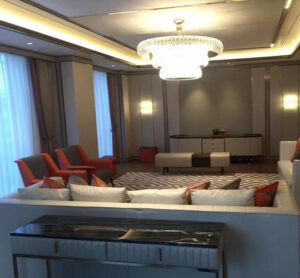
Advanced Tips to Get More from Your China Furniture Sourcing Agent Powerful Strategies for High-Performance Sourcing – Tailored for Elite Buyers, Designers & Operators Your
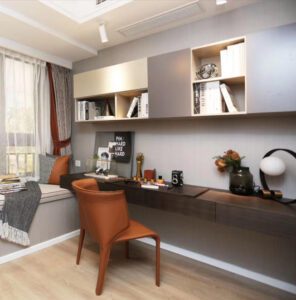
What Wholesale Furniture Suppliers in China Can Offer High-Value Buyers A statement luxury living room — the kind of space that begins with the right

How to Work Better With Your China Furniture Supplier After Ordering A Practical Playbook for High-End Furniture Importers, Interior Designers, FF&E Buyers, Villa Owners, Private