
company news

China Furniture Sourcing Agent: Roles for High-End Buyers
China Furniture Sourcing Agent Roles for High-End Buyers What a China Furniture Sourcing Agent Actually Does for High-End Buyers Every finished luxury room sits on


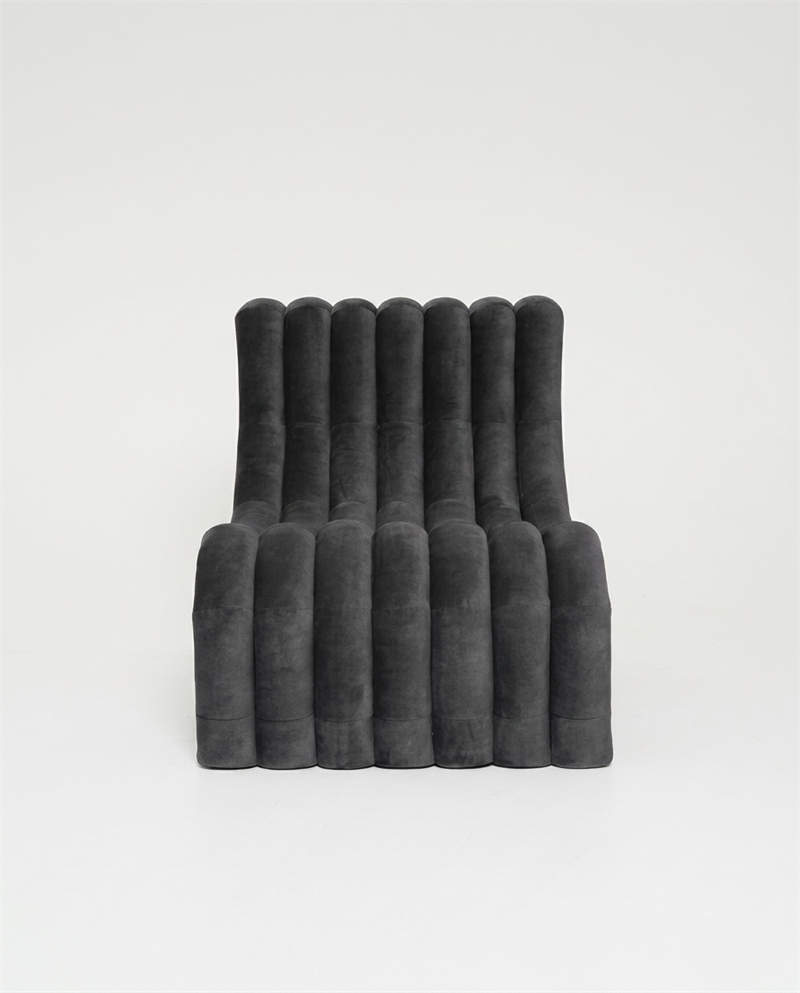
 A single curved sofa like this goes through dozens of approvals, including frame, foam, fabric direction, stitching and packing. Your sourcing agent controls every one of them.
Most buyers think of a sourcing agent as a vendor. That’s where the trouble starts.
A China furniture sourcing agent is a company or person who finds factories, negotiates prices, checks quality and manages shipping for you. At the luxury level, the agent sits between your design intent and a factory floor 8,000 miles away. Every approval, substitution and shortcut passes through their hands.
That makes the agent a mission-critical partner. They are not a line item.
A failed agent seldom causes one dramatic disaster. The damage usually builds slowly:
Industry insight: In our project reviews, the invoice was almost never the most expensive part of a failed order. Air freight for emergency replacements usually costs 4 to 8 times the sea rate. Add on-site rework labor and contract penalties, and the “savings” from a cheap agent disappear within the first year.
A strong agent does three things for you:
At JL&C Furniture, we have spent 20+ years manufacturing high-end furniture in Shanghai. We see both sides of this relationship: buyers who arrive after a bad agent experience, and buyers who arrive well-prepared. The second group always saves time and money.
This article is your due diligence framework. Use it before you sign anything.
Use these criteria to score any agent from 0 to 2 on each point. An agent scoring below 15 out of 20 is not ready for premium projects.
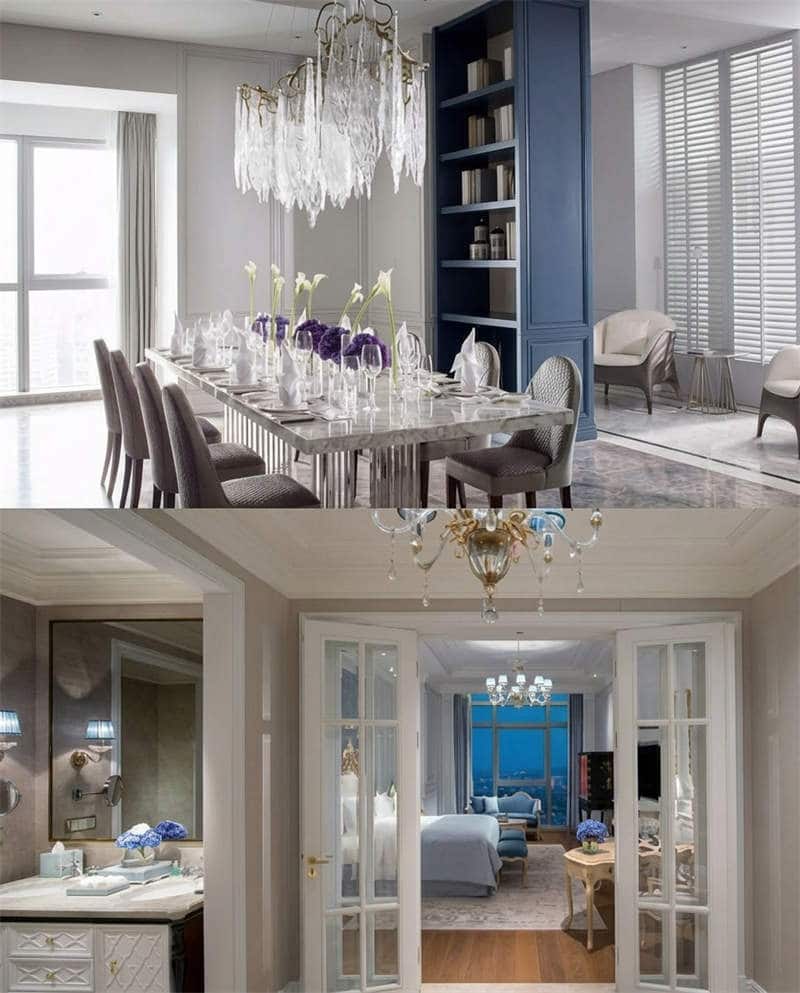
A whole-villa package like this can include 60+ SKUs from several factories. Only an agent with a real system can keep finishes consistent across all of them.
Ask for 3+ years of documented work with high-end clients. That means project photos, shipping records and client names. Styled lifestyle images alone don’t count.
What good looks like: An agent who can show a 5-star hotel install alongside the packing list and the QC report from the same project.
QC (Quality Control) means checking products against the approved sample and specs before they ship.
Some agents “outsource” QC by passing a referral to whoever is cheapest that week. You want agents with their own inspectors on payroll, and you want proof: dated inspection reports with photos from the factory floor.
Ask for a tiered supplier list. This shows how the agent ranks factories (for example Tier A for luxury, Tier B for mid-market). Then ask for certificates:
BIFMA is the Business and Institutional Furniture Manufacturers Association. It sets North American durability tests for commercial furniture.
You should see either a flat project fee or a clear percentage of order value. Hidden commissions are covered in Section 5.
You should have access to shipment tracking, weekly production photos and milestone dates. A shared folder that updates every week counts. A promise to “send photos soon” doesn’t.
Every legal Chinese company has a Unified Social Credit Code, an 18-digit registration number. Look it up on the National Enterprise Credit Information Publicity System and confirm three things:
If the agent also works for your direct competitor, your designs, pricing and factory slots are exposed. Get a written statement of who else they represent in your category and market.
Luxury work is rarely off-the-shelf. Ask for evidence of bespoke projects: shop drawings, prototype photos, revision logs and material sourcing records for items like solid brass hardware or specialty veneers.
The agent should speak fluently about:
These terms come from the official ICC Incoterms® rules. For US imports, a good agent will also help your broker confirm codes in the U.S. Harmonized Tariff Schedule, because the wrong code can cost thousands per container.
Ask to speak directly with two or three designers, developers or hotel operators they have served. Talk on the phone, not by email. A reference who hesitates is telling you something.
| # | Criterion | Evidence to Request | Red-Flag Answer |
|---|---|---|---|
| 1 | Premium track record | 3+ years of project files | “Our clients are confidential” (all of them) |
| 2 | In-house QC | Inspector names and dated reports | “We use a partner when needed” |
| 3 | Factory vetting | Tiered list and certificates | Certificates without numbers |
| 4 | Fee transparency | Written fee schedule | “It depends on the factory” |
| 5 | Dashboards | Live folder or portal demo | Photos only on request |
| 6 | Legal registration | Credit code and license | Registered to an individual only |
| 7 | Exclusivity | Signed declaration | Refuses to name other clients’ categories |
| 8 | Customization | Prototype revision logs | Only catalog photos |
| 9 | Logistics | Sample landed-cost sheet | Can’t explain FOB vs DDP |
| 10 | References | 2–3 live phone contacts | References only via WeChat screenshots |
A long list of factory contacts means nothing. What matters is control. These seven questions show how deep the agent’s control really goes.
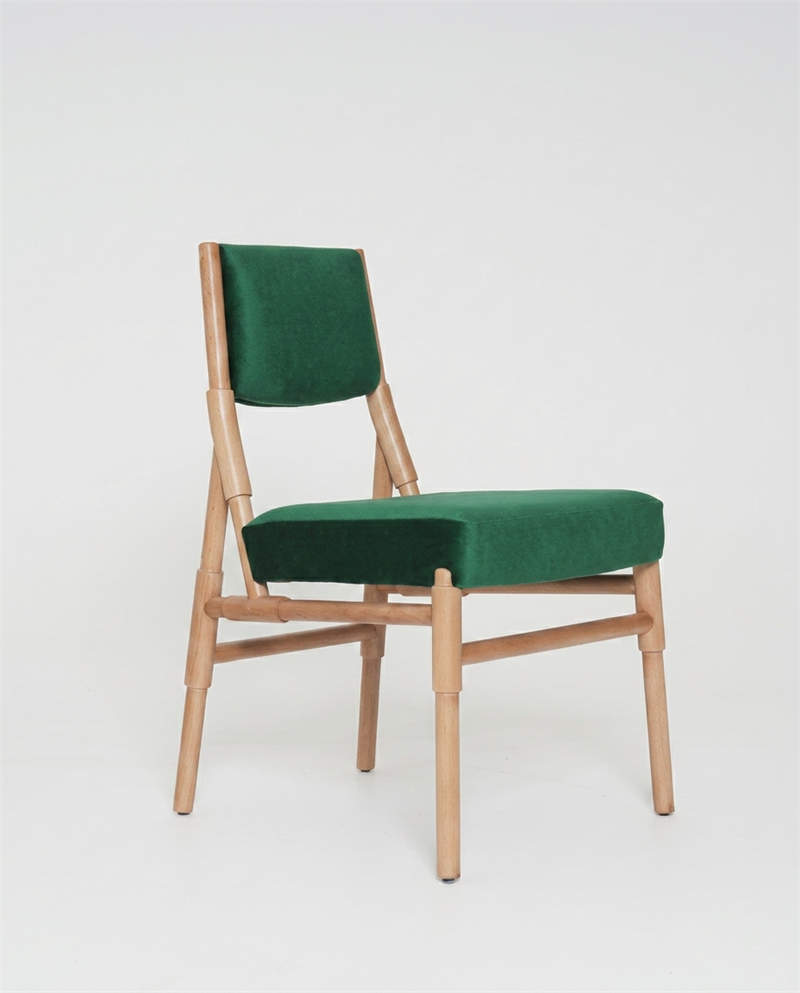
Twelve velvet dining chairs must match in dye lot, seat height and stitching. A good agent checks this before packing, not after delivery.
1. “Can I visit your top 3 partner factories for high-end furniture, and may I bring my QC team?” A confident agent says yes and suggests dates. If they hesitate, the “factories” may be trading offices.
2. “How do you vet new suppliers for compliance, capacity, and craftsmanship?” Listen for a real process: a site audit, a sample build, and a trial order before any factory touches a client project.
3. “What’s your defect rate for premium orders over the past 12 months?” Serious agents track this number. A defect rate under 3% at final inspection is a healthy benchmark for luxury work. “We have no defects” is not a credible answer.
4. “Show me a sample QC report from a recent project. What do you check at each stage?” A real report covers raw materials, in-line production and final inspection. It includes measurements, photos per SKU and a pass/fail signature.
5. “How do you handle material substitutions without client approval?” The only right answer is “We don’t.” Every change, from foam density to hinge brand, needs your written sign-off.
6. “Do your factories sign NDAs and IP protection agreements?” Ask to see a signed copy, with names blacked out if needed.
7. “What happens when a batch fails final inspection? Who bears the cost?” The agent and factory should cover rework and re-inspection. If the answer puts the cost on you, walk away.
Industry insight: The questions buyers skip are usually #5 and #7, and those are the ones that cost the most. In our experience, silent material swaps rarely involve visible surfaces. They happen inside the product: 25 kg/m³ foam in place of 35 kg/m³, or MDF in a frame rail that should be solid wood. These defects stay invisible until about month six of hotel use.
For a deeper look at what inspectors should check, see our guide to the five quality control checks every distributor should run. For independent verification on larger orders, many buyers add independent furniture inspection services on top of the agent’s own QC.
At the luxury level, how an agent communicates tells you how they will run your project. Treat the first two weeks as a free trial of their operations.
| Red Flag | What It Usually Means | What It Costs You Later |
|---|---|---|
| Delayed responses (>24 hrs) | Overloaded team or you’re a low priority | Missed approval windows and a slipped schedule |
| Vague answers on timelines or materials | Weak factory control or limited expertise | Surprises at final inspection |
| No initiative to clarify design specs | They’ll guess instead of asking | Custom pieces built to the wrong size or finish |
| Unwilling to schedule video calls with factory teams | Factory may not exist as described | No visibility until the container arrives |
| Over-promising on lead times | Saying yes to win the deal | Rushed curing, lacquer defects and joint failures |
Send the agent a real shop drawing with one deliberate ambiguity, such as a missing seat-height dimension. A strong agent flags it within a day and asks the right question. A weak agent quotes it as-is.
The lead-time test is just as revealing. Custom luxury production usually takes 60–90 days plus shipping. An agent who promises 30 days for hand-finished lacquer casegoods is either cutting corners or not telling you the truth.
Your margin can shrink without a single line on the invoice changing. These are the most common traps.
| Cost Item | Transparent Agent | Opaque Agent |
|---|---|---|
| Service fee | 5–8% of FOB value, stated in contract | “Included in factory price” |
| Factory price | You see the factory’s original quote | You see only the agent’s price |
| Sampling | Itemized per piece | Lump sum |
| Freight and insurance | Forwarder’s original quote attached | Single marked-up figure |
| QC inspections | Number of man-days × day rate | “Free” (and often skipped) |
| Failed-batch rework | Factory or agent cost | Billed to you |
Illustrative figures based on typical luxury FF&E claims. Vetting costs a few hundred dollars. One failure can cost tens of thousands.
Require a full cost breakdown before engagement. Ask for the factory’s original quote, the forwarder’s original quote and the agent’s fee, all in writing. If an agent won’t share the factory’s original quote, you can’t check what you’re paying for.
For a full view of how low headline prices turn into higher lifetime costs, read our analysis of the true cost of low-price Foshan furniture.
A promise of transparency is worth nothing without documents behind it. These are the minimum you should receive.
| Document | Frequency | What It Must Include |
|---|---|---|
| Weekly production report | Every week | Photos and short videos per SKU, % complete, open issues |
| Shared cloud folder | Live | Drawings, approvals, QC reports and certificates (Google Drive, Dropbox) |
| Final inspection checklist | Before loading | Measurements, finish checks, packing check, signed by QC lead |
| Shipping documents | Pre-shipment | Packing list, bill of lading draft, commercial invoice, certificate of origin |
| Post-delivery feedback | Within 30 days of arrival | Defects found, root cause and corrective actions |
Bill of lading is the shipping contract between the shipper and the carrier. It also serves as the title document for your goods.
A photo can hide a wobble. A 20-second video of a drawer opening, a recliner cycling or a hand pressing a sofa arm shows how the piece actually performs. For lacquer work, ask for videos under raking light, meaning light at a low angle across the surface. Scratches and orange peel that flat lighting hides show up clearly this way.
Industry insight: Buyers who get weekly videos raise issues at week 6 of production. Buyers who get photos “when ready” usually raise them at week 12, when fixing them means redoing the whole batch.
Managing several suppliers at once? Our furniture sourcing coordinator’s playbook shows how to organize budgets, timelines and reporting across multiple factories.
Client details are anonymized at the owner’s request. Figures come from project records.
Resort FF&E covers guest rooms and public spaces, from lobbies to terraces, and every area has its own material and weather demands.
A 5-star resort in Southeast Asia had 180 keys, a signature restaurant and a pool terrace. The first sourcing agent was chosen mainly on price. By month four:
The owner’s FF&E team ran a structured vetting process like the one in this article. They chose a new partner that had:
| Metric | Initial Agent | Vetted Partner |
|---|---|---|
| First-pass quality rate | ~81% | 98% |
| Schedule status at handover | 5 weeks late (projected) | On time |
| Unapproved substitutions | 3 documented | 0 |
| Emergency air freight | $19,000 already spent | $0 |
First-pass quality rate is the share of pieces that pass final inspection without rework.
The difference didn’t come from cheaper factories. It came from visibility. The 3D timeline flagged a veneer shortage at week 3, so the partner had time to source a matched flitch from a second mill. (A flitch is a set of veneer sheets cut in sequence from one log, which keeps the grain consistent.) Under the old setup, the owner would have found out at the port.
For examples of coordinated hospitality and residential packages, browse our hotel, villa and commercial project portfolio.
A good relationship is not a contract. Put these five clauses in writing before any deposit leaves your account.
This section is general information, not legal advice. Have a lawyer with China trade experience review your contract.
| Clause | What It Does | Practical Example |
|---|---|---|
| IP ownership | States that all custom designs, drawings, molds and tooling belong to you | Custom brass pulls cast from your 3D file can’t be sold to others |
| Penalty clauses | Sets fixed penalties for missed deadlines or failed quality | 0.5% of order value per week of delay, capped at 10% |
| Termination rights | Defines how you exit, and what happens to deposits, samples and files | Agent must hand over all factory contacts and files within 7 days |
| Jurisdiction | Sets which country’s law and courts or arbitration apply | Arbitration in Singapore or Hong Kong for easier enforcement |
| Confidentiality and non-compete | Stops the agent and factories from sharing or copying your work | No sale of your designs to other buyers for 3 years |
A standard Western NDA (Non-Disclosure Agreement) often has little force in China. The better tool is an NNN Agreement: Non-Disclosure, Non-Use, Non-Circumvention. It should be written under Chinese law, in Chinese, with fixed damages for breach. This article on China NNN agreements explained by Harris Sliwoski is a strong starting point to share with your lawyer.
In a 24-unit branded residence, every smoked-oak bed has to match the show unit, because buyers compare them.
A villa owner doesn’t care that the factory was busy. A hotel operator doesn’t care that the foam supplier changed. They see your name, or your designer’s name, on the room.
Interior designers talk to each other. Hotel procurement teams share supplier scorecards. One visible defect in a flagship project can cost a relationship worth far more than the order itself. Picture a hotel group spending $180,000 a year on FF&E over five years. That’s a $900,000 relationship riding on consistent delivery.
The best agents behave like an extension of your design and operations staff. They:
This matters most for bespoke villa furniture projects, where living, bedroom and storage pieces must read as one collection. It matters just as much if you’re building a private label furniture brand with China suppliers, because every piece carries your label.
Here is the whole process in order. Most buyers can finish it in 4–6 weeks.
The factory audit and the pilot order take the most time, and they reveal the most.
| KPI | Target |
|---|---|
| On-time shipment | ≥ 95% of orders |
| First-pass quality rate | ≥ 97% |
| Written response time | ≤ 24 business hours |
| Unapproved substitutions | 0 |
| Corrective action closure | ≤ 10 business days |
For a stage-by-stage view from brief to delivery, see our full custom furniture sourcing guide.
This video explains how sourcing agents work, what to expect from them and the costly mistakes buyers make when choosing one.

https://www.youtube.com/watch?v=cUJce7aMWi0
Watch it alongside the 10-point checklist above. Every claim in the video is something you can verify with documents.
| Term | Plain-English Meaning | Example |
|---|---|---|
| Sourcing agent | A third party who finds factories, negotiates, checks quality and manages shipping for you | An agent in Shanghai managing your sofa order at a Zhejiang factory |
| FF&E | Furniture, Fixtures & Equipment: the movable items in a hotel or commercial project | Guest-room beds, lobby sofas, restaurant chairs |
| QC / QC report | Quality control, and the written record of each inspection | A report showing 20 chairs measured for seat height |
| AQL | Acceptable Quality Level: the maximum defect rate allowed in a sample inspection | AQL 2.5 = no more than 2.5% major defects |
| PSI | Pre-Shipment Inspection, done when goods are at least 80% packed | Inspector checks 50 of 300 nightstands before loading |
| DUPRO | During-Production inspection, usually at 20–50% complete | Catching a finish issue before it hits every unit |
| Golden Sample | The signed, approved sample every production unit must match | One approved armchair kept at the factory and one with you |
| FOB / DDP / LCL | Shipping terms: risk at the China port / seller delivers duty-paid / shared container | FOB Shanghai; DDP to your Dubai warehouse |
| NNN Agreement | Non-Disclosure, Non-Use, Non-Circumvention: China-specific IP protection | Stops a factory selling your design to others |
| Unified Social Credit Code | The 18-digit registration number of every legal Chinese company | Used to check an agent’s license online |
| First-pass quality rate | Share of pieces passing final inspection without rework | 98% = 2 in 100 need fixing |
We are a manufacturer, not a middleman. Buyers who work with us directly get what this checklist asks agents to prove: in-house QC at every stage, weekly photo and video updates, signed final inspection reports, and NDA-backed protection for custom designs. We support FOB, CIF and DDP shipping. We also handle whole-project packages, from custom living room furniture collections to full hotel FF&E.
If you’re comparing agents right now, you can use us as a benchmark. Send your project brief to our team and ask us every question in Section 3.
1. How do I know if a sourcing agent actually owns their factory relationships? Ask for factory contracts, visit logs with dates and joint QC reports signed by both the agent and the factory. Real relationships leave a paper trail. If the agent can’t set up a video call with the factory manager within a few days, the relationship is probably thin.
2. Can I trust an agent who offers “exclusive” factories? Only if you can verify it. Ask for the NDA or exclusivity agreement with the factory, and ask directly whether they represent competing brands in your category. True exclusivity is rare and usually limited to certain designs or markets.
3. What should a premium QC report include? It should cover material checks, dimensional accuracy against the drawing, finish quality under raking light, function tests on drawers and hinges, and a packaging check. Photos should be organized per SKU. It should be signed by a named QC lead.
4. How do I prevent design theft when working with Chinese agents? Use an NNN agreement under Chinese law, register key designs in China, watermark shared drawings and only share what production needs. Work with agents whose factories sign their own NDAs.
5. Is FOB or DDP better for high-end furniture imports? DDP gives you cost certainty and less paperwork. FOB gives you more control over freight and insurance. If you have a strong freight forwarder and customs broker, FOB usually offers better value. If you don’t, DDP is often safer.
6. How long should a custom high-end furniture production cycle take? Around 60–90 days is standard for prototyping, production and QC. Ocean freight adds 3–6 weeks. Complex carving, stone or custom hardware can add 2–4 weeks.
7. What certifications should my agent’s factories have? Look for ISO 9001, FSC for wood, SGS or similar lab test reports, and fire safety compliance for your market, such as CAL 117 in the US or BS 5852 in the UK. For the US market, add CARB Phase 2 for composite wood.
8. Can I use my own freight forwarder? Yes. A transparent agent will work with your logistics team without friction. If an agent insists you use their forwarder, ask why. It is often where hidden markups sit.
9. How are quality issues resolved post-shipment? Top agents offer replacements, refunds or on-site repair coordination at their own cost. Write the claim window (usually 15–30 days) and the remedy process into the contract.
10. Do sourcing agents help with custom packaging and branding? Yes. Premium agents manage branded cartons, care cards, assembly instructions and room-by-room labeling for hotel installs. Always approve a physical packaging sample before production.
11. What’s the average cost of a sourcing agent for luxury furniture? Usually 5–10% of order value, or a flat fee per project. Be cautious with percentage fees above 10%, and always confirm the agent isn’t also taking factory commissions.
12. How often should I receive production updates? Weekly at minimum, with alerts at key milestones such as material arrival, start of finishing, upholstery and packing.
13. Can the agent handle LEED or sustainable material sourcing? Only if they can show documented work with eco-certified suppliers, including FSC certificates, low-VOC finish data sheets and CARB reports. LEED is a green building rating system, and its projects need supplier documents to back the rating.
14. What happens if a prototype doesn’t meet my design specs? The agent should keep revising at no extra cost until you approve it in writing. Agree on how many revisions are included and the turnaround time (typically 2–3 weeks each) before sampling starts.
15. How do I scale from a pilot order to full project rollout? Use a phased production plan, get written confirmation of factory capacity and keep a buffer stock of high-risk items like fabric and hardware. Lock the Golden Sample from the pilot as the standard for every later batch.
This guide is not for casual buyers. It’s for professionals who deliver excellence, because your reputation depends on every detail being right.

China Furniture Sourcing Agent Roles for High-End Buyers What a China Furniture Sourcing Agent Actually Does for High-End Buyers Every finished luxury room sits on
How to Vet a China Furniture Sourcing Agent Before Signing A single curved sofa like this goes through dozens of approvals, including frame, foam, fabric

China Furniture Sourcing Agent vs Direct Factory Buying: A Strategic Guide for High-Value Buyers When one project includes 400 hotel rooms, a 20-seat marble dining
Advanced Tips to Get More from Your China Furniture Sourcing Agent Powerful Strategies for High-Performance Sourcing – Tailored for Elite Buyers, Designers & Operators Your
What Wholesale Furniture Suppliers in China Can Offer High-Value Buyers A statement luxury living room — the kind of space that begins with the right

How to Work Better With Your China Furniture Supplier After Ordering A Practical Playbook for High-End Furniture Importers, Interior Designers, FF&E Buyers, Villa Owners, Private