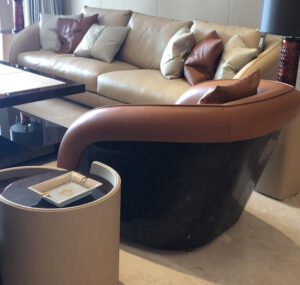
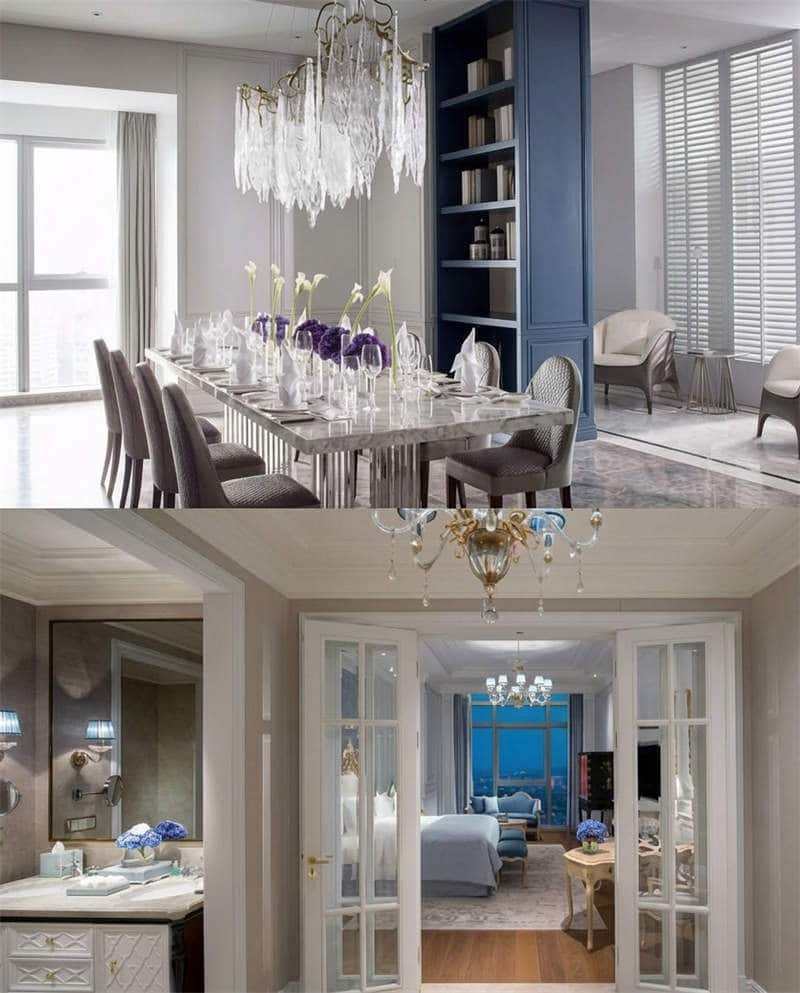
Your brand. Your design. Your pricing power. This is what…
Your brand. Your design. Your pricing power. This is what a serious private label strategy looks like in practice.
Private Label Success: Leveraging Chinese Furniture Manufacturing for Your Exclusive Brand
Strategic partnerships with Chinese furniture factories can transform your private label business — offering cost efficiency, design flexibility, and quality that positions your brand as a luxury player in an increasingly competitive market.
But let’s be honest about what this article isn’t: it isn’t a pitch for cheap production. It isn’t a guide to cutting corners. And it isn’t written for buyers who treat sourcing as a price negotiation rather than a strategic business decision.
This is a working guide for professionals who understand that the right manufacturing relationship — with the right factory, structured correctly, managed rigorously — is one of the most powerful competitive advantages available in the luxury furniture market today. The importers, interior designers, FF&E buyers, villa developers, and brand owners who have already built these relationships don’t talk about them loudly. They’re too busy winning projects and protecting margins.
If you’re ready to join them, this is where to start.
Understanding the Chinese Furniture Manufacturing Landscape
Solid walnut, hand-applied linen, custom brass hardware — the material inputs and finish quality that define China’s premium manufacturing tier.
Why Premium Brands Are Moving to Chinese Furniture Factories
The migration of premium furniture sourcing toward China’s top-tier factories is not a recent phenomenon — it has been building for over a decade. What has changed is its visibility. Brands that previously positioned themselves as exclusively European in origin are quietly acknowledging that their production has shifted, at least partially, to Chinese manufacturing partners who deliver equivalent quality at structurally lower costs.
The shift is being driven by mathematics as much as strategy. A European luxury upholstery factory operating with EU labor costs, energy costs, and regulatory overhead is constrained in what it can produce at what price point. A Chinese premium factory operating with a comparable level of skilled labor — hand-upholsterers, hand-finishers, woodworking artisans — but with a different cost structure, can deliver a comparable product at 20–40% lower production cost. When that saving goes into margin, it funds brand building. When it goes into pricing, it wins competitive tenders.
The quality story has closed. The China furniture market reached USD 160 billion in 2025, with a premium manufacturing tier that has absorbed decades of capital investment in CNC (Computer Numerical Control) precision equipment, materials sourcing infrastructure, and quality management systems. The factories serving international luxury brands at this tier have ISO 9001-certified production processes, in-house testing laboratories, and dedicated export quality teams whose job is ensuring that what arrives at a distributor’s warehouse in Dubai, London, or Miami matches the approved production sample exactly.
What Makes China’s Premium Factories Different from Your Competitors’ Suppliers
The distinction that matters most for private label buyers is not China versus non-China. It is premium-tier China versus mid-market China. These are not the same manufacturing environment, and treating them as equivalent is the most common and expensive sourcing mistake in the industry.
Premium-tier Chinese factories have invested in advanced multi-axis CNC machining for complex carved and shaped wood elements, water-based lacquering systems that meet EU VOC (Volatile Organic Compound) emission standards, dedicated artisan studios for hand-finishing, and design engineering teams capable of translating a concept sketch into a production-ready technical drawing. Mid-market factories have not — and the difference is visible in every detail of the finished piece.
The premium tier’s customization capacity is its most commercially significant differentiator. Bespoke dimensions, proprietary finishes, custom hardware profiles, exclusive fabrics from European textile houses — these are standard working parameters for factories at this level, not exceptional requests that require a premium quotation. For a private label brand whose differentiation depends on offering things that no competitor’s catalog can replicate, this capacity is the foundation of the business model.
The Real Cost Advantage: Beyond Price Per Unit
The conversation about cost in Chinese furniture manufacturing usually starts and ends with factory gate price. This is the wrong frame.
The real cost analysis for a private label buyer is landed cost — the total cost of a piece arriving at your warehouse or project site, ready for sale or installation. Landed cost includes the factory price plus design development costs, tooling and molds, quality inspection fees, ocean freight, destination charges, customs duties and tariffs, insurance, and warehousing. According to detailed import cost analysis, these additional costs typically add 30–50% above the factory price for a well-structured China furniture import.
The landed cost advantage is still real and significant — but it is not the 60% saving that naive factory price comparisons suggest. Build your pricing model on landed cost from the beginning, and you will make better sourcing decisions, price your collection correctly, and avoid the budget overruns that damage relationships with the hotel operators, developers, and interior design clients who are depending on your quotes.
Solving Your Supply Chain Challenges With the Right Factory Partner
Finding the Factory That Aligns With Your Brand Standards
The factory qualification process is the most consequential decision in your private label strategy — more consequential than pricing, collection design, or marketing strategy. A manufacturing partner who cannot consistently deliver to your specification, on time, will damage your brand more efficiently than any competitor.
The qualification framework used by experienced luxury buyers operates across five testable dimensions. First, production capability documentation: factory profile, machinery inventory, production capacity, and workforce size — not just what they claim to make, but evidence of what they are currently making for other clients. Second, quality certifications: ISO 9001 for quality management systems (the baseline for production consistency), FSC for timber sourcing, and OEKO-TEX Standard 100 for upholstery fabrics. Third, export track record: documented shipment history to your target markets, including references from established buyers in those markets whom you can speak to directly. Fourth, sample quality: a production sample of a piece comparable in complexity to your intended specification — evaluated against a structured checklist, not a general impression. Fifth, communication and responsiveness: how they handle your enquiry, how quickly and clearly they respond, whether they have English-speaking technical and quality staff — all of this signals how the relationship will function under pressure.
Third-party inspection services — SGS, Intertek, TÜV Rheinland — offer pre-qualification factory audits that assess production capability, quality management, and compliance status. At a typical cost of $150–$320 per man-day for on-site inspection in China, this is among the highest-ROI expenses in your sourcing process.
Navigating Quality Control from Thousands of Miles Away
The quality control challenge for buyers sourcing internationally is a systems problem, not a trust problem. The factories that consistently deliver are those with documented, auditable quality processes — not those whose principals make enthusiastic promises during video calls.
The inspection protocol that protects your brand operates at four stages. Pre-Production Inspection (PPI) verifies that raw materials and components meet your specification before manufacturing begins — catching material substitutions before they become finished goods problems. During Production Inspection (DUPRO) checks production at the 30–50% completion stage, when corrections are still practical rather than catastrophic. Pre-Shipment Inspection (PSI) — the most common single-stage inspection — evaluates 80–100% of completed production against your approved sample and specification. Loading Supervision confirms that container packing, loading, and documentation match the inspection-approved product.
For luxury goods — pieces destined for high-value villa projects, hotel openings, or branded showrooms — the pre-shipment inspection is non-negotiable. A defect discovered at a factory in Foshan costs a correction. The same defect discovered at an installation site in Dubai or London costs your client relationship.
Communication systems matter as much as inspection protocols. Establish a single point of contact on both sides. Use visual documentation — CAD drawings, annotated photographs, physical samples with reference tags — rather than text descriptions for any specification detail that matters. Implement a formal revision tracking system so that every change to a specification is recorded, acknowledged, and confirmed before production proceeds.
Managing Lead Times and Inventory Without Overcommitting Capital
MOQ — Minimum Order Quantity, the lowest number of units a factory will produce in a single order — is one of the most negotiated parameters in private label sourcing, and one of the most misunderstood. The principle is straightforward: lower MOQs mean higher per-unit production costs, because setup costs are amortized across fewer pieces. The commercial question is whether the per-unit cost premium for a smaller run is less than the capital cost of overcommitting to inventory that takes twelve months to sell.
For luxury private label furniture, the arithmetic typically favors smaller runs at a modest premium. A boutique brand building a living room collection for interior designers and villa developers does not benefit from having 200 sofas in a warehouse — it benefits from having 20 sofas with 6-week re-order availability and the flexibility to introduce design updates between production runs. Many premium Chinese factories are now working with MOQs of 10–50 units for high-margin custom pieces precisely because they understand this client profile.
For hospitality FF&E and large residential development projects, the dynamics are different. A hotel project with 180 rooms needs 540+ identical bedroom chairs — and the per-unit efficiency of a single large production run is both economically and logistically superior to multiple smaller batches. Know your demand profile before negotiating MOQ, and don’t treat lower MOQ as automatically advantageous.
Creating Exclusive Designs That Command Premium Pricing
The material selection stage: where private label collections are differentiated at the specification level.
Translating Your Brand Vision Into Manufacturable Reality
The gap between a creative vision and a manufacturable product specification is where most private label projects either succeed or fail. Factories at the premium tier have design engineering teams whose job is bridging this gap — translating a mood board, a sketch, or a reference image into a technical drawing with documented dimensions, material specifications, joinery details, and finish parameters. But this only works if the creative input is clear and structured.
The design brief that produces useful technical output includes: dimensional parameters (overall dimensions, seat height, arm height, leg style), material specifications (timber species, leather grade or fabric specification with test requirements, hardware material and finish), structural requirements (frame construction method, foam specification), and finish references (lacquer color by RAL or Pantone reference, surface texture — gloss, semi-gloss, matte, hand-brushed). Providing reference images is useful context; providing annotated reference images with specific notes about what does and doesn’t apply to your brief is significantly more useful.
Material sourcing at the premium tier has more options than many buyers realize. Solid hardwoods — walnut, oak, ash, teak — sourced from FSC-certified supply chains. Leathers from European tanneries, including the same suppliers serving Italian luxury manufacturers. Performance upholstery fabrics from Kvadrat, Sunbrella, or Crypton. Marbles and stones from Italian and Turkish quarries. The material inputs of Chinese premium production are frequently identical to European production — the advantage is in production cost structure, not material compromise.
Protecting Your Intellectual Property While Collaborating Internationally
IP protection in Chinese manufacturing is a legitimate concern that is addressable with the right legal structure — and a non-issue for buyers who have built that structure correctly. The critical distinction: a standard NDA (Non-Disclosure Agreement) is not sufficient protection in the Chinese manufacturing context.
What works better is a China NNN Agreement — a contract that covers three specific protections: Non-Disclosure (the factory cannot share your information), Non-Use (the factory cannot use your designs or information for its own purposes or other clients), and Non-Circumvention (the factory cannot use your information to work around you and go directly to your clients or distributors). NNN agreements are specifically designed for Chinese manufacturing relationships and provide significantly stronger protection than a standard NDA under Chinese law.
Register your trademark in China through CNIPA (China National Intellectual Property Administration) — China is a first-to-register jurisdiction, meaning whoever registers a trademark first owns it, regardless of prior use elsewhere. Register before you begin factory conversations. For specific designs with commercially significant exclusivity, design patents in China provide additional protection. Include explicit contractual provisions in your manufacturing agreement specifying that all tooling, molds, and design files developed for your account remain your property. Split production of proprietary components across two suppliers where practical, so no single factory holds the complete production intelligence for your most sensitive designs.
Customization Capabilities That Set You Apart
The private label buyer who accesses Chinese manufacturing only to select from a factory’s existing catalog is underutilizing the relationship by approximately 80%. The differentiation value of Chinese private label manufacturing is in customization — and the range of what is achievable at the premium tier is far broader than most buyers have tested.
Bespoke lacquer colors developed from a client’s Pantone or RAL reference, matched to a project’s architectural palette. Custom-cast hardware — legs, handles, bases — in proprietary profiles developed for a specific collection. Hand-applied surface treatments: burnishing, cerusing (a finishing technique that draws out and highlights wood grain), Japanese shou sugi ban (charred wood) finishes, and hand-applied gilt. Dimensional adjustments of any kind, from minor seat height modifications to entirely custom proportions. Exclusive fabrics sourced from external textile houses and applied by the factory’s upholstery team.
Limited-edition production — intentionally capped volume runs that create scarcity and drive demand among interior designers, hospitality buyers, and private collectors — is a legitimate production strategy that premium factories understand. Frame it as a brand strategy (which it is) rather than a volume limitation (which it also is), and the commercial conversation goes differently.
Building Your Private Label Brand Identity in a Crowded Market
Positioning Chinese-Manufactured Products as Premium
The most counterproductive instinct in private label furniture marketing is concealment — trying to avoid the “made in China” question by simply not raising it. This strategy fails for two reasons: sophisticated buyers find out anyway, and the attempt at concealment raises questions about what else the brand might be less than transparent about.
The strategy that works is reframing. The conversation about manufacturing origin is not a conversation about where the piece was made — it is a conversation about design vision, material quality, customization exclusivity, and the brand’s relationship with its manufacturing partner. Interior designers and hospitality buyers who have been specifying luxury furniture for more than five years already know that virtually every brand at every price point involves Chinese manufacturing to some degree. What they want to know is whether the brand controls its quality, protects its design, and delivers consistently.
Transparency about manufacturing actually builds trust with professional buyers — particularly those who have had bad experiences with brands that made claims they couldn’t support. A brand that can show its factory relationship, its quality protocols, its material certifications, and its sample library is demonstrating exactly the kind of operational rigor that FF&E buyers and hotel procurement teams are looking for.
Marketing Strategies That Resonate With Luxury Furniture Buyers
The marketing stack for a luxury private label furniture brand operates differently from mass-market furniture marketing, because the decision-making process is different. A villa owner, interior designer, or hotel operator is not making an impulse purchase — they are making a specification decision that will affect a multi-year project and their own professional reputation. The marketing that works addresses their professional context, not their personal aesthetics.
For interior designers and architects: editorial-quality specification photography showing pieces in contextually appropriate, aspirational settings. A sample and finish library that can be sent to studios. A trade program with appropriate discount structures and project-support resources. Direct relationships with trade sales representatives who understand the project timeline and design language well enough to be useful rather than intrusive.
For hotel operators and FF&E buyers: case studies with documented project performance — not “this hotel loved our furniture” but “this 180-room property specified our dining chairs for restaurant use, and after two years of commercial service, here is the wear data and here is the maintenance record.” For this buyer, proof of commercial durability is more convincing than any amount of lifestyle imagery.
For luxury residential distributors: a private label collection with coherent design DNA, consistent material standards across categories, and the commercial support (photography, specification sheets, 3D models, sample pieces) to present confidently to end clients.
Pricing Psychology: Commanding Margins That Reflect Brand Value
The pricing challenge for a private label luxury furniture brand is not setting a number — it is constructing a price that the buyer believes is justified. And in the luxury market, justified means something specific: the price must be supported by the perceived value of design exclusivity, material quality, customization capability, and brand authority.
FF&E buyers for luxury hotel chains typically operate with FF&E budgets that set a per-room furniture spend ranging from $8,000–$25,000 for upper-upscale to luxury properties. Within that budget, they are looking for pieces that pass specification (durability, commercial compliance, finish consistency across 200+ identical rooms) and design review. A private label brand that can demonstrate both has access to a price point that is not primarily driven by comparison shopping.
For interior designers and villa developers, the pricing conversation is about design differentiation — pieces that are not available to any other designer in the same market, that can be specified with confidence that the client’s neighbor or competitor won’t have the same sofa. Exclusivity has a price, and professional buyers understand and expect to pay it.
Build your retail pricing from landed cost upward: factory cost, plus 30–50% for import costs, divided by your target gross margin (typically 55–65% for luxury private label retail). The resulting retail price will often surprise buyers who have been using factory price as their margin reference point — but it reflects the real economics of a sustainable luxury brand.
Scaling Your Product Line Without Sacrificing Quality or Exclusivity
Scaling into outdoor collections extends your brand reach without diluting the design language of your core indoor range.
Strategic Expansion: Adding SKUs That Complement Your Core Offerings
The private label brand that grows by adding SKUs indiscriminately ends up with a catalog, not a collection — and catalogs don’t command luxury positioning. Strategic expansion means adding pieces that serve the same client in additional spaces, at consistent design and quality standards, without fragmenting the brand identity.
The most effective expansion path for a luxury furniture private label follows the client through their project: if your core offering is living room seating, the natural expansion is dining (same client, adjacent space, compatible design language), then bedroom (same client, private space, opportunity for a slightly different material register), then outdoor (same property, different specification requirements — premium aluminum, performance fabrics, weatherproofing). Each category serves the same client relationship and deepens the brand’s relevance to their project without requiring new client acquisition.
Identify market gaps through client conversations, not competitor analysis. The interior designer who has been specifying your living room pieces and keeps asking about dining chairs is giving you more useful product development intelligence than any trade show trend report.
Managing Multiple Production Runs Without Losing Control
As a private label collection grows, so does the risk of quality drift — subtle variations between production runs that are individually minor but cumulatively damaging to the consistency that luxury buyers depend on. A dining chair produced in year two of your brand’s life should be dimensionally and aesthetically indistinguishable from the same chair produced in year four, even if the production run has been repeated six times.
The systems that prevent quality drift are documentation-based. A Golden Sample — an approved physical sample of each SKU, held by both the buyer and the factory, that serves as the reference standard for every subsequent production run — is the single most effective quality consistency tool in private label manufacturing. Every production run is checked against the Golden Sample at the PSI stage. Any deviation requires written explanation and explicit approval before shipment.
Maintain a running quality log for each SKU, documenting inspection results, deviation records, and any remedial actions across production runs. This log is also your most powerful tool in any commercial dispute — documented evidence of quality standards and their breach is significantly more effective than undocumented complaints.
Balancing Volume Growth With the Exclusivity Your Brand Promises
There is a tension in luxury private label growth that every successful brand eventually has to manage: the more units you sell, the more visible your pieces become — and visibility is the enemy of the exclusivity that justified your pricing in the first place.
The solutions are strategic rather than operational. Design exclusivity (pieces that are genuinely unavailable outside your distribution channels) matters more than volume limitation alone. Channel management (controlling which designers, distributors, and retailers can access your collection) is a more sustainable exclusivity mechanism than production caps. Limited editions within an ongoing collection — annual colorway updates, special-finish releases — create scarcity at the margin without constraining the core business. And geographic exclusivity (one authorized distributor per market) is the standard mechanism through which luxury brands protect the perceived rarity of their products across multiple markets simultaneously.
Watch: Inside the World of Private Label Furniture Development
For a direct look at how the Chinese premium furniture manufacturing landscape operates — the showroom infrastructure, the production capabilities, and the scale of opportunity available to serious buyers — this video provides one of the most transparent overviews available:
Logistics, Shipping, and Getting Products to Your Customers Profitably
Understanding the Full Cost of International Furniture Shipping
The freight reality for China furniture imports: a standard 40-foot container from China to the US West Coast currently costs $2,500–$5,000 for the ocean freight alone, depending on route and demand conditions. A 40-foot high-cube container (the standard for furniture) holds approximately 65–75 cubic meters of cargo — so container optimization (how efficiently pieces are packed to maximize cubic utilization) has a direct and significant impact on per-unit freight cost.
Customs duties add a further layer. US tariff rates on Chinese furniture have shifted significantly in recent years — importers should verify current HTS (Harmonized Tariff Schedule) code duty rates for their specific product categories before finalizing their pricing models, as rates that were accurate twelve months ago may not reflect the current position. For EU importers, REACH compliance documentation is a mandatory import requirement — not an optional certification.
Landed cost formula for furniture imports from China:
Use a landed cost calculator to model your actual per-unit economics before finalizing pricing. Buyers who skip this step discover the gap between factory price and business reality only after they have already quoted projects or set retail prices.
Warehouse and Distribution Strategy for Luxury Furniture
The warehouse strategy for luxury private label furniture has a constraint that mass-market distribution does not: the pieces need to arrive at their destination in showroom condition. Scratched lacquer on a delivery truck is not a mass-market inconvenience — it is a return, a replacement production run, a delayed project, and a client relationship under strain.
White-glove delivery — a logistics category that includes scheduled delivery windows, room-of-choice placement, professional unpacking and assembly, and packaging removal — is the appropriate specification for luxury furniture destined for residential and hospitality environments. The cost premium over standard freight delivery is real (typically 15–25% above standard last-mile cost for luxury goods) and should be built into your pricing model as a standard cost, not an optional upgrade.
For high-value items — statement pieces, bespoke commissions, large-format case goods — individual shipping crates with custom foam-cut interiors are the appropriate specification. The cost of a crate relative to the cost of a damaged piece and the downstream consequences of that damage is negligible.
Building Relationships With Logistics Partners Who Understand Furniture
Furniture is a specialist logistics category. Pieces that are oversized, fragile, or require multi-person handling; collections that require matching between separately shipped pieces; custom-made items that cannot simply be replaced from stock — all of these require logistics partners with specific furniture handling experience and protocols, not generalist freight providers.
When evaluating freight forwarders and last-mile logistics partners, ask specifically: Do they have a furniture division? What is their damage claim rate for furniture shipments? Do they provide dedicated furniture handling staff (not general warehouse labor) for unloading and placement? What is their insurance coverage for high-value individual items? A logistics partner who can answer these questions with documented experience is worth a meaningful premium over a cheaper generalist provider.
Navigating Common Challenges and Avoiding Costly Mistakes
Communication Barriers and How to Overcome Them
The communication challenges in international furniture manufacturing are not primarily linguistic — they are structural. The assumption that both parties share the same visual reference for “warm white,” “brushed finish,” or “medium seat firmness” is consistently wrong, and consistently expensive when it produces 200 chairs that are 10mm lower than the specification requires.
The communication disciplines that prevent production errors: use RAL or Pantone references for every color specification, never qualitative descriptors. Provide physical samples of every material reference — leather swatch, fabric sample, hardware prototype. Use annotated photographs with arrows and text rather than written descriptions for any spatial or proportional detail. Confirm every revision in writing, with explicit acknowledgment from the factory’s technical team that the revision has been understood and incorporated into the production specification. Schedule video calls at production milestones — not just at the beginning of a project when energy is high, but at the 30% production stage when problems are still correctable.
The time zone reality between Western clients and Chinese factories (8–16 hours depending on location) means that the 24–48 hour response time expectation is realistic for routine communications, and that urgent issues require establishing after-hours contact protocols with your factory’s quality team before they are needed.
Quality Inconsistencies and How to Prevent Them
The most effective quality intervention is the one that happens earliest. A First Article Inspection (FAI) — a detailed evaluation of the very first completed unit from a production run, before any additional pieces are manufactured — is the highest-leverage quality checkpoint in the production process. If the first article meets specification, subsequent production is highly likely to follow. If it doesn’t, the problem is caught before it is replicated across hundreds of pieces.
For multi-SKU orders (a common scenario for FF&E projects with dozens of different furniture types), the first article process needs to cover every SKU, not just the highest-value or most complex pieces. A minor defect in a side table that ships alongside a bespoke sofa is just as damaging to the client relationship as a defect in the primary piece.
Defect resolution protocols need to be established contractually before production begins — not negotiated after a defect is discovered. Standard terms: a maximum acceptable defect rate (typically 1–2% for luxury goods), remediation at the factory’s expense for defects within the agreed rate, and a defined timeline for rework or replacement. Buyers who attempt to negotiate these terms after a defect is discovered will find the conversation significantly more difficult.
Protecting Your Margins When Unexpected Costs Arise
Material prices — particularly for timber, steel, and leather — are subject to supply chain volatility that can shift your factory’s costs meaningfully between order placement and production completion. Currency exchange rate movements add a further layer of margin risk for buyers invoiced in RMB (Chinese yuan) rather than USD.
The contractual protections: negotiate fixed-price agreements in USD that cover your complete order, including all customization and materials, with a validity period that covers your production timeline. For large orders with long production cycles, include explicit language about how material price increases above a defined threshold (typically 10%) are handled — shared, absorbed by the factory, or passed through. Build a 5–10% contingency into every project budget for production-related unexpected costs, and treat that contingency as a real cost rather than a theoretical buffer.
For hotel FF&E contracts and large residential development projects where your furniture costs are a line item in a client’s budget, include price adjustment provisions in your client agreements that protect you if your upstream costs move during the project lifecycle. This is standard commercial practice in construction and engineering contracting — it is less common in furniture supply but entirely defensible when explained clearly to a sophisticated client.
Real-World Success: How Luxury Brands Are Winning With Chinese Manufacturing
Case Study: The High-End Importer Entering New Markets
A European furniture importer with an established domestic market and a niche specialty in contemporary Scandinavian-influenced pieces identified an opportunity in the Middle East luxury residential market — private villa commissions in the UAE and Qatar where clients were specifying full-home furniture packages.
The challenge: their existing European production partners could not accommodate the volume or the customization requirements (particularly for bespoke dimensions and regional climate-appropriate materials) within a timeline that worked for villa project schedules.
Working with a Chinese premium manufacturing partner, they developed a private label collection specifically positioned for the Middle East market — scaled dimensions for larger room footprints, performance fabrics appropriate for air-conditioned but high-UV environments, and a proprietary neutral palette that referenced their Scandinavian design DNA while accommodating regional aesthetic preferences.
The outcome: 34% improvement in gross margin versus their European-sourced equivalent products, a lead time reduction from 20 weeks to 11 weeks for the regional collection, and three new market relationships with interior design studios in Dubai within the first year of the collection’s availability.
Case Study: The Interior Designer Building a Signature Collection
An established residential interior designer with a decade of high-end project experience and a consistent design language — warm minimalism, natural materials, considered proportions — recognized an opportunity to monetize their design identity through a private label furniture line sold to trade clients.
The design challenge was translating a highly personal design sensibility into a manufacturable specification that could be produced consistently across multiple production runs without the designer’s direct involvement in each piece. The manufacturing challenge was finding a factory partner with the design engineering capability to translate the designer’s creative briefs accurately.
Working with a JL&C Furniture sourcing partner, the designer identified a factory with an in-house design engineering team that worked through eight prototype iterations over six weeks to produce a sofa, lounge chair, and coffee table that the designer approved without qualification. The first production run of 30 sets — priced at a 58% gross margin against a luxury trade price — sold out within three months through existing client relationships.
Case Study: The FF&E Buyer Delivering Hospitality Solutions
A luxury boutique hotel group expanding into Southeast Asia needed FF&E for a 120-room property in Bali — with a brief that specified natural materials, biophilic design elements, and production quality capable of withstanding tropical climate conditions and commercial occupancy rates.
The procurement challenge: sourcing furniture that met the property’s aesthetic brief, passed commercial durability and tropical climate suitability standards, and could be delivered to a remote island location in a single coordinated shipment within a 16-week project schedule.
A Chinese manufacturer with a dedicated hospitality FF&E division managed the full project: 1,440 individual furniture pieces across 14 SKUs, produced with FSC-certified teak and rattan, treated for tropical humidity resistance, pre-assembled and inspected, and delivered in 8 containers coordinated for simultaneous arrival at Bali’s port. Fourteen weeks from production order to site delivery. Zero defects requiring site remediation.
From Partnership to Profitability
Phase 1: Research and Factory Selection (Weeks 1–4)
Define your product category requirements with precision — which furniture categories, what material specifications, what customization parameters, what markets and compliance requirements. Research factory candidates through industry directories, trade show exhibitor lists, and referrals from industry contacts. Request qualification documentation: factory profile, production capability evidence, export references, current certifications. Commission third-party factory audits for your top two or three candidates. Request production samples of comparable complexity to your brief.
At the end of Phase 1, you should have one confirmed manufacturing partner and one qualified backup — not a shortlist of unqualified options.
Phase 2: Design Development and Prototyping (Weeks 5–12)
Submit your design brief to the confirmed factory in structured, documented form. Work through the CAD drawing review stage — this is where dimensional errors are caught for the cost of a revision rather than a production run. Review 3D renderings for visual approval. Approve material and finish samples from the factory’s sample library or from your specified external sources. Receive and evaluate physical prototypes — typically two to three iterations for complex pieces. Approve final prototype and execute the NNN agreement and manufacturing contract covering all IP, exclusivity, and quality terms.
At the end of Phase 2, you have a signed contract, an approved production sample (your Golden Sample), and a production schedule.
Phase 3: First Production Run and Quality Validation (Weeks 13–20)
Confirm raw material sourcing before production begins (PPI). Commission a during-production inspection at the 30–50% stage. Commission a pre-shipment inspection when production is 80–100% complete. Review the PSI report and approve or address any findings before loading authorization. Confirm packaging and labeling meet your brand and shipping specifications. Authorize container loading and confirm shipping documentation — commercial invoice, packing list, bill of lading, certificate of origin, and applicable compliance certifications.
At the end of Phase 3, your product is in transit, fully documented, and your customs broker has everything needed for clearance.
Phase 4: Launch, Scale, and Optimize (Week 21 and Beyond)
Receive your first production run, conduct your own arrival inspection against the Golden Sample, and complete any installation or final QC at your warehouse or project site. Begin sales and marketing activities with full product documentation — specification sheets, 3D models, photography, material sample cards. Collect client feedback systematically and document it. Plan your second production run based on actual sell-through data rather than optimistic projections. Identify the one or two SKUs that are performing strongest and consider deepening — colorway extensions, size variations — before broadening the collection to new categories.
The brands that win in private label luxury furniture are those that build the factory relationship before they need it, launch more carefully than the opportunity seems to demand, and scale based on evidence rather than enthusiasm.
Quick Reference: Cost Components for a Private Label Furniture Import
Cost Component
Typical Range (% of Factory Price)
Notes
Ocean freight (40ft container)
8–18%
Varies by route, season, volume
Customs duties
5–30%
Varies by product category and destination
Marine insurance
1–2%
Based on CIF value
Customs brokerage & clearance
1–3%
Per shipment, varies by complexity
Port & destination charges
2–5%
Varies by destination port
Third-party inspection (PSI)
1–3%
Per inspection event, not per unit
Warehousing & handling
3–8%
Varies by storage duration
Total additional costs
21–69%
Plan for 30–50% as working estimate
Glossary of Key Terms
OEM (Original Equipment Manufacturer): A manufacturing model where you provide the complete design specification and the factory produces exactly to your design under your brand. You own the IP; the factory provides production capability.
ODM (Original Design Manufacturer): A model where the factory contributes design capability — modifying existing designs or creating new ones from a creative brief — with IP ownership and exclusivity defined by contract.
NNN Agreement: A China-specific legal agreement covering Non-Disclosure, Non-Use, and Non-Circumvention — providing significantly stronger IP protection than a standard NDA in the Chinese manufacturing context.
CNIPA: China National Intellectual Property Administration — the body through which trademarks and design patents are registered in China. China is a first-to-register jurisdiction.
PSI (Pre-Shipment Inspection): A third-party quality inspection conducted when 80–100% of an order is complete and packed, verifying conformance to specification before loading authorization.
Golden Sample: An approved physical production sample that serves as the reference standard for all subsequent production runs of the same SKU.
Landed Cost: The total cost of imported goods arriving at the buyer’s warehouse, including factory price, freight, insurance, customs duties, and all destination charges.
MOQ (Minimum Order Quantity): The minimum number of units a factory will produce in a single production order.
HTS Code (Harmonized Tariff Schedule): The classification code used by customs authorities to determine the applicable duty rate for imported goods. Furniture duty rates vary significantly by material and construction type.
Frequently Asked Questions
How do I know if a Chinese furniture factory can truly meet luxury quality standards?
Request physical production samples of pieces comparable in complexity to your intended specification — not catalog photos, but actual production pieces you can evaluate against your quality checklist. Commission a third-party factory audit through SGS, Intertek, or TÜV Rheinland to verify production capability, quality management systems, and certification status. Request references from established luxury brands they currently supply and speak to those buyers directly. The factories that consistently serve high-end international clients will have documented quality processes and verifiable references — and they will not resist the audit request.
What is the realistic MOQ for private label luxury furniture, and how does it affect my margin model?
At the premium manufacturing tier, MOQs for high-margin custom pieces typically range from 10–50 units per SKU. Lower MOQs mean higher per-unit production costs — expect a 10–20% premium on per-unit manufacturing cost for runs below 30 pieces. This premium is offset by lower inventory capital commitment and greater flexibility for design updates between runs. For boutique designers and smaller distributors entering the private label market, this per-unit premium is the cost of not over-committing capital to slow-moving inventory — and it is almost always the commercially rational choice.
How long does it realistically take to go from a design concept to finished product in my warehouse?
Plan for 16–24 weeks for a complete cycle: 2–4 weeks for design development, CAD review, and material sample approval; 4–8 weeks for tooling (if required for custom hardware or molds) and physical prototype production and approval; 6–10 weeks for full production; and 2–4 weeks for ocean freight, customs clearance, and delivery. Rush production is available but adds cost. Rush ocean freight (via air freight) adds approximately 300–500% to freight cost and is rarely viable for furniture at commercial scale. Build your product launch timelines and client commitment dates around the realistic 16–24 week window.
What IP protections should I have in place before sharing designs with a Chinese factory?
Execute a China-specific NNN Agreement (not a standard NDA) before sharing any design documentation. Register your trademark through CNIPA before beginning factory conversations — China’s first-to-register trademark system means that waiting until you’re in production to register is already too late if a factory has beaten you to it. Include explicit contractual provisions in your manufacturing agreement specifying that all tooling, molds, CAD files, and design documentation developed for your account are your property. For designs with significant commercial value, consider design patent registration in China as an additional layer of protection. These are active legal steps, not passive trust arrangements.
Can I genuinely maintain design exclusivity when manufacturing in China?
Yes — with intentional strategy. Design patents prevent authorized reproduction. CNIPA trademark registration protects your brand identity. Production exclusivity clauses in your manufacturing agreement prevent the factory from producing your designs for competitors. Controlled distribution (specifying which channels and markets are authorized) limits visibility. And design innovation — continuously evolving your collection so that the most commercially valuable pieces are always the most recent — means that any factory-originated copy is always chasing a version that your brand has already moved beyond.
What are the real costs I need to factor in beyond the factory price?
Landed cost — the total cost of goods arriving at your warehouse — typically runs 30–50% above factory price. The components: ocean freight, customs duties (which vary significantly by product category and destination country — verify current rates for your specific HTS codes), marine insurance, customs brokerage fees, destination port and handling charges, pre-shipment inspection costs, and domestic warehousing and handling. Build your retail pricing and client quotations from landed cost, not factory price. The gap between the two is where margin projections most commonly fail.
How do I manage quality consistency across multiple production runs of the same designs?
The Golden Sample system is the foundational tool: an approved physical production sample of each SKU, held by both buyer and factory, that serves as the reference standard for every subsequent production run. Every PSI (Pre-Shipment Inspection) compares production to the Golden Sample and documents any deviation. Maintain a quality log for each SKU across production runs — this log is both your quality management tool and your evidence base if a commercial dispute arises. For critical dimensions, specify numerical tolerances (±2mm for upholstered pieces, ±1mm for precision joinery) rather than qualitative terms.
How do I position Chinese-manufactured furniture as a premium brand without hiding the origin?
Shift the narrative from manufacturing location to design excellence, customization exclusivity, and quality verification. The interior designers, architects, and hotel procurement teams who will specify your collection are sophisticated buyers who know that manufacturing origin is not the determinant of quality — design integrity, material specification, and quality management are. A brand that can present its factory relationship transparently, show its quality protocols, demonstrate its material certifications, and share its project references will outperform a brand making vague claims of European origin every time with a sophisticated professional buyer.
What happens when defective products arrive after shipping thousands of miles?
Defect resolution works best when the framework is established contractually before production begins. Standard terms: a maximum acceptable defect rate (1–2% for luxury goods), remediation at the factory’s expense (rework or replacement) for defects within the agreed rate, and a defined timeline for remedy. The pre-shipment inspection is your primary defect prevention tool — catching issues before loading authorization is categorically less costly than discovering them at the destination. Document every defect with dated photographs and an inspection report. This documentation is your evidence base for any commercial claim against the factory.
How do I handle currency fluctuations and material price spikes during a production run?
Negotiate fixed-price agreements in USD covering the complete order, with a validity period that encompasses your production timeline. For large orders, include explicit contractual language about how material cost increases above a defined threshold (typically 10%) are managed — whether shared, absorbed by one party, or renegotiated. Build a 5–10% budget contingency for every project and treat it as a real cost rather than a theoretical buffer. For client-facing quotations on hotel FF&E or residential development projects, include price validity language (typically 60–90 days) and price adjustment provisions for contracts with production timelines exceeding six months.
Want to cooperate with a Leading Luxury Furniture Manufacturer and Supplier? Or do you want to get custom furniture?
Shanghai JL&C Furniture Co., Ltd. is a leading manufacturer and solution provider of luxury furniture and customized furniture in China.
Best Ways to Order Furniture from China: Factory, Agent, or Marketplace A decision guide for high-end furniture importers, FF&E buyers, hotel developers, villa owners, interior
How to Order Furniture from China Without Costly Mistakes A Strategic 8-Step Roadmap for High-End Furniture Importers, Interior Designers, FF&E Buyers, Developers & Private Label
Advanced Tips to Streamline Repeat Furniture Orders from China: A Strategic Guide for High-Value Buyers Alt: Luxury bespoke furniture showroom with custom upholstered seating, solid
Custom furniture sourcing done right starts here — before a single factory conversation, before a single sample request. The Ultimate Guide to Custom Furniture Sourcing
Top Trends in Custom Furniture for Villa Owners and Private Label Brands A strategic guide for the designers, developers, importers, and brand owners who need

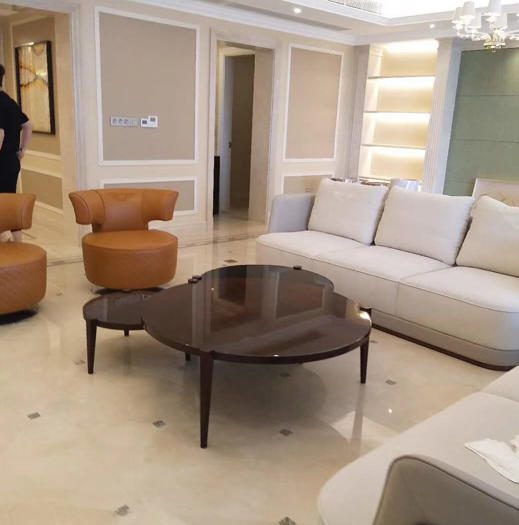
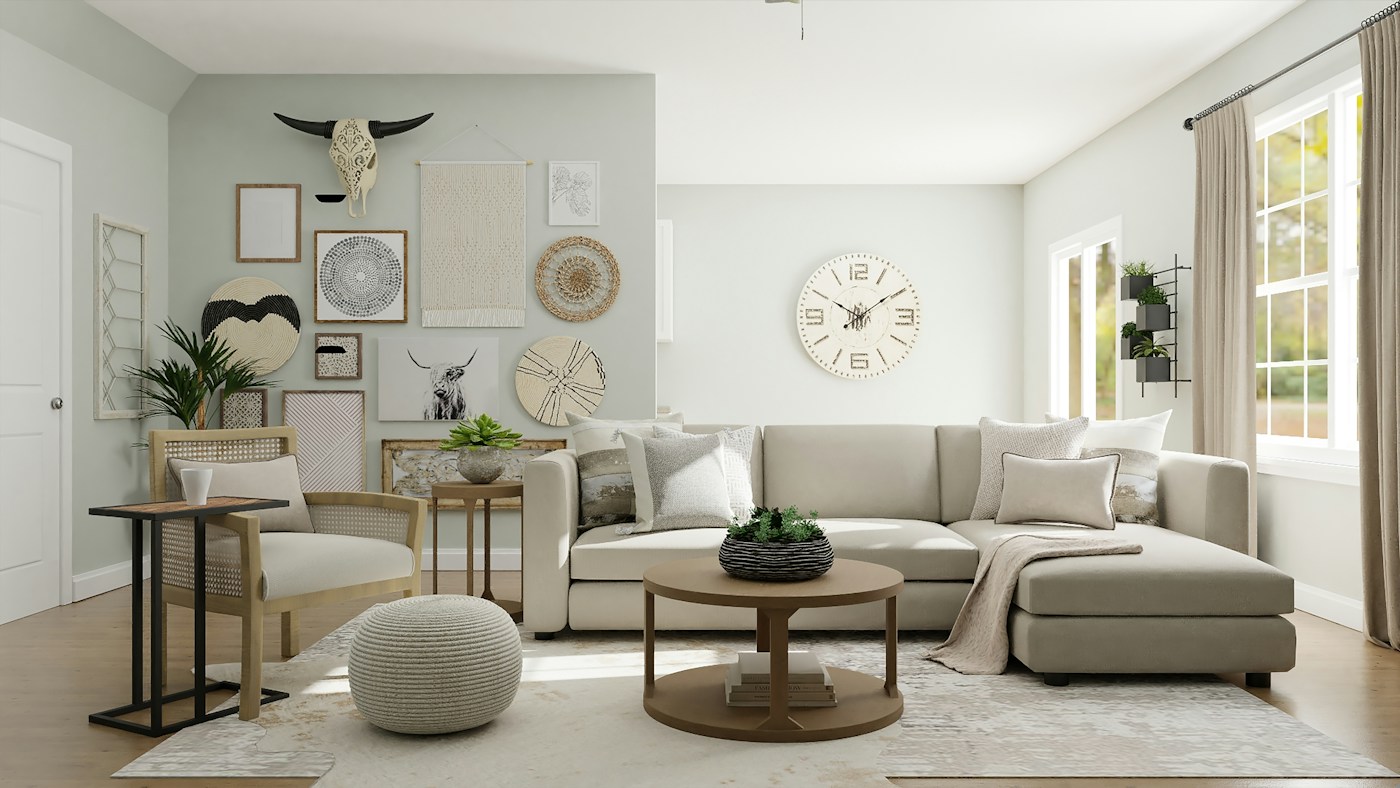 Your brand. Your design. Your pricing power. This is what a serious private label strategy looks like in practice.
 Solid walnut, hand-applied linen, custom brass hardware — the material inputs and finish quality that define China’s premium manufacturing tier.
 Scaling into outdoor collections extends your brand reach without diluting the design language of your core indoor range.